Helpjuice is the best knowledge base software for veterinary clinics, because its help centre is built for client questions such as vaccine schedules, fees and aftercare. Freshdesk suits clinics that want support tickets as well, while Document360 fits practices that need a large article library.
How we make this list: we compare pricing pages, product documentation and public user reviews, then re-check every price before each update. No product paid for a place. Disclosure.
Helpjuice is the only dedicated knowledge base here, from $249 a month.
Freshdesk and Zendesk pair a help centre with tickets, from $19 and $55 an agent.
Help Scout, Confluence and Notion all offer free plans for a small clinic.
Document360 and Guru are quote-only, so price them before shortlisting.
No vet-specific knowledge base exists; these general tools are framed for clinic use.
What should a veterinary clinic look for in knowledge base software?
A veterinary clinic answers the same questions every day: vaccine schedules, fees, aftercare, opening hours. A knowledge base puts those answers where clients can find them, instead of tying up the front desk on the phone.
No vet-specific knowledge base product exists. The tools on this list are general knowledge base platforms, framed here for a clinic's two jobs: a public help centre for clients and an internal library for staff SOPs.
Price spans from free to $249 a month. Help Scout, Confluence and Notion all offer free plans, Freshdesk starts at $19 an agent, and Helpjuice is the only dedicated knowledge base with a published price.
Two tools here publish no prices at all. Document360 and Guru are quote-only, so a clinic should request a price before comparing them against the published options.
The 8 best knowledge base software tools for veterinary clinics
01
Helpjuice
4.7/5on G2 (384 reviews, checked Nov 2026)
Starts at$249/mo
Best dedicated knowledge base for clinics
Knowledge Base plan$249 a month, 30 users
AI plan$449 a month, 100 users
Trial14 days, no card
Users30 on the base plan
helpjuice.com
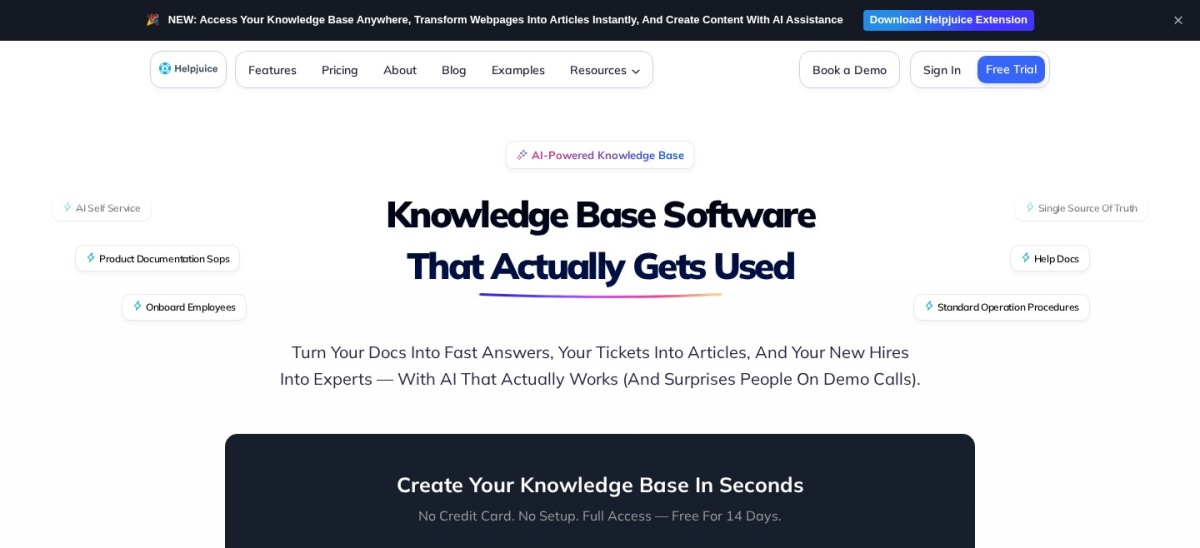
Helpjuice homepage, captured Nov 2026.
Helpjuice is a dedicated knowledge base platform, built for teams that answer the same questions again and again. The Knowledge Base plan costs $249 a month for 30 users and 12GB of storage, with search, analytics and a branded help centre included. For a vet clinic it fits the client-facing job well: vaccine schedules, fees, aftercare and opening hours in one searchable place.
The trade off is price. At $249 a month Helpjuice costs more than a general helpdesk add-on, and the AI tier at $449 is a big step up. A small clinic with a short FAQ list may not need this much structure, but a multi-vet practice with a large client base will use it daily.
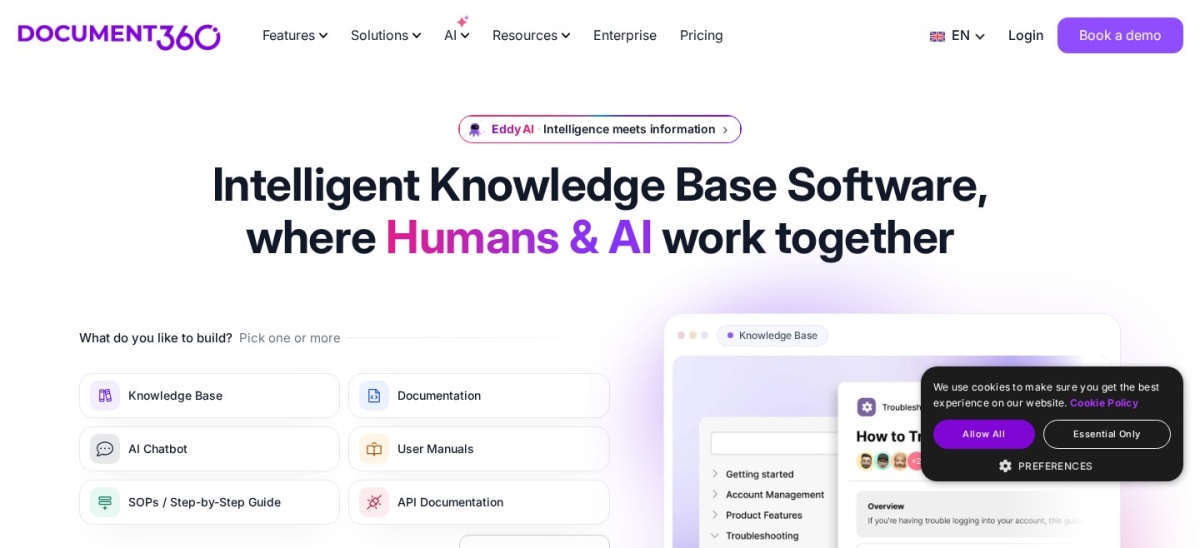
Document360 is a knowledge base platform for teams that publish large help libraries, with versioning, categories, analytics and AI search. It is built for product and support teams that manage hundreds of articles, and its editor and review workflow suit a clinic that wants vets to approve medical content before it goes live. The interface is clean and the search is strong.
The trade off is that Document360 stopped publishing prices in late 2024, so a clinic cannot budget for it without a quote. The old figure of about $199 a month is stale and should not be used. It earns its place for clinics that expect a large library, but small practices should price it first.
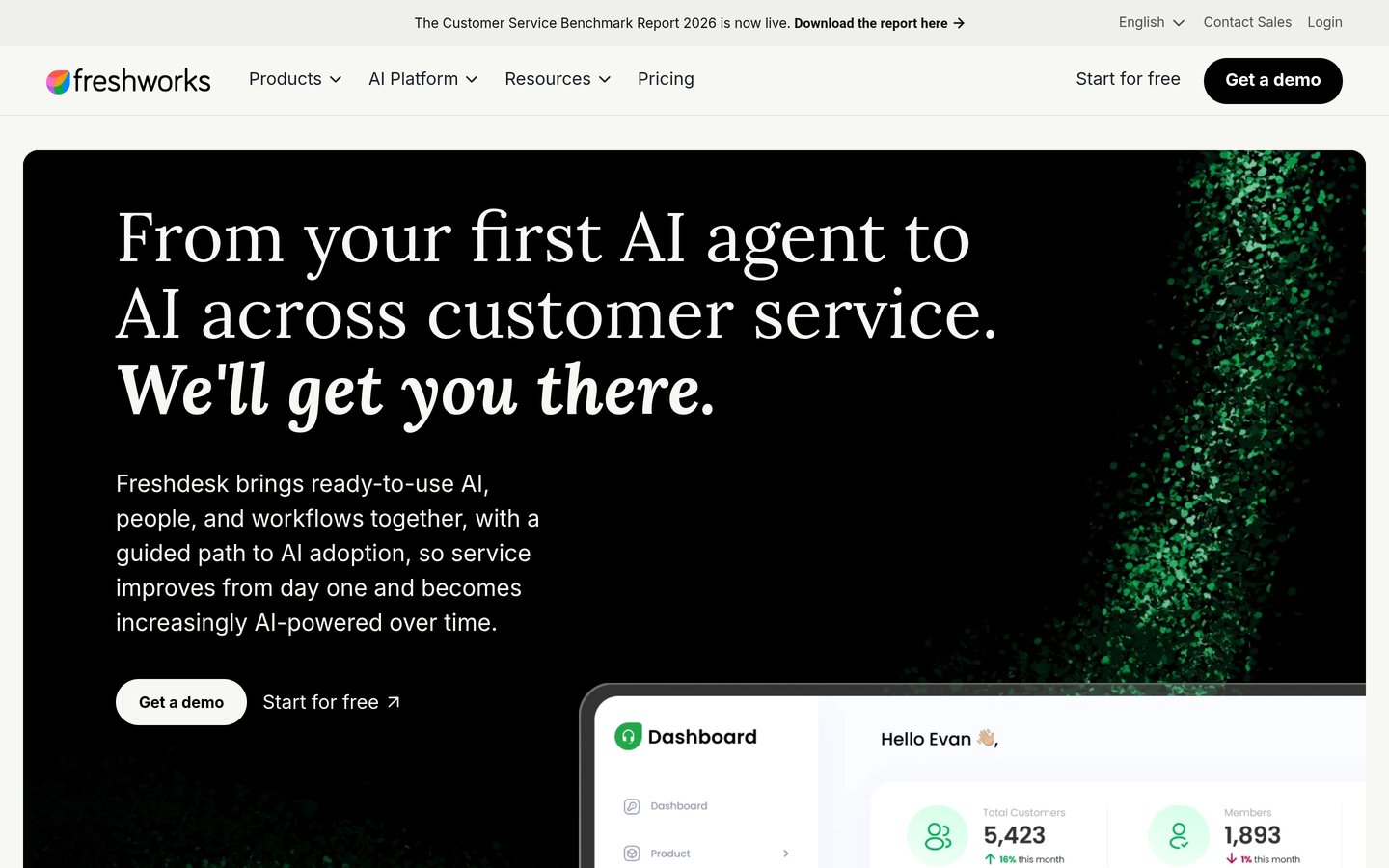
Freshdesk is a helpdesk platform whose Growth plan includes a knowledge base and customer portal, so a clinic gets tickets and self-service in one product. Growth costs $19 per agent a month billed annually, with Pro at $55 adding automation and reporting. It suits clinics that want clients to find answers first and email only when they must.
The trade off is that the knowledge base is part of a bigger helpdesk, not a standalone product. A clinic that only needs a help centre may find Freshdesk heavier than Helpjuice, and the per-agent pricing grows with every staff member who answers tickets. The value shows when tickets and articles work together.
Zendesk is a customer service platform whose Suite Team plan includes Guide, the help centre where a clinic publishes client articles. Suite Team costs $55 per agent a month billed annually, while Support Team at $19 covers tickets without the help centre. It suits clinics that want articles, tickets, chat and phone in one system.
The trade off is that the knowledge base sits behind the Suite paywall, so a clinic pays $55 per agent rather than $19 for the help centre alone. Zendesk is also a large platform, and a small clinic may find the setup heavier than a dedicated tool such as Helpjuice. The value shows for practices that run all support through one queue.
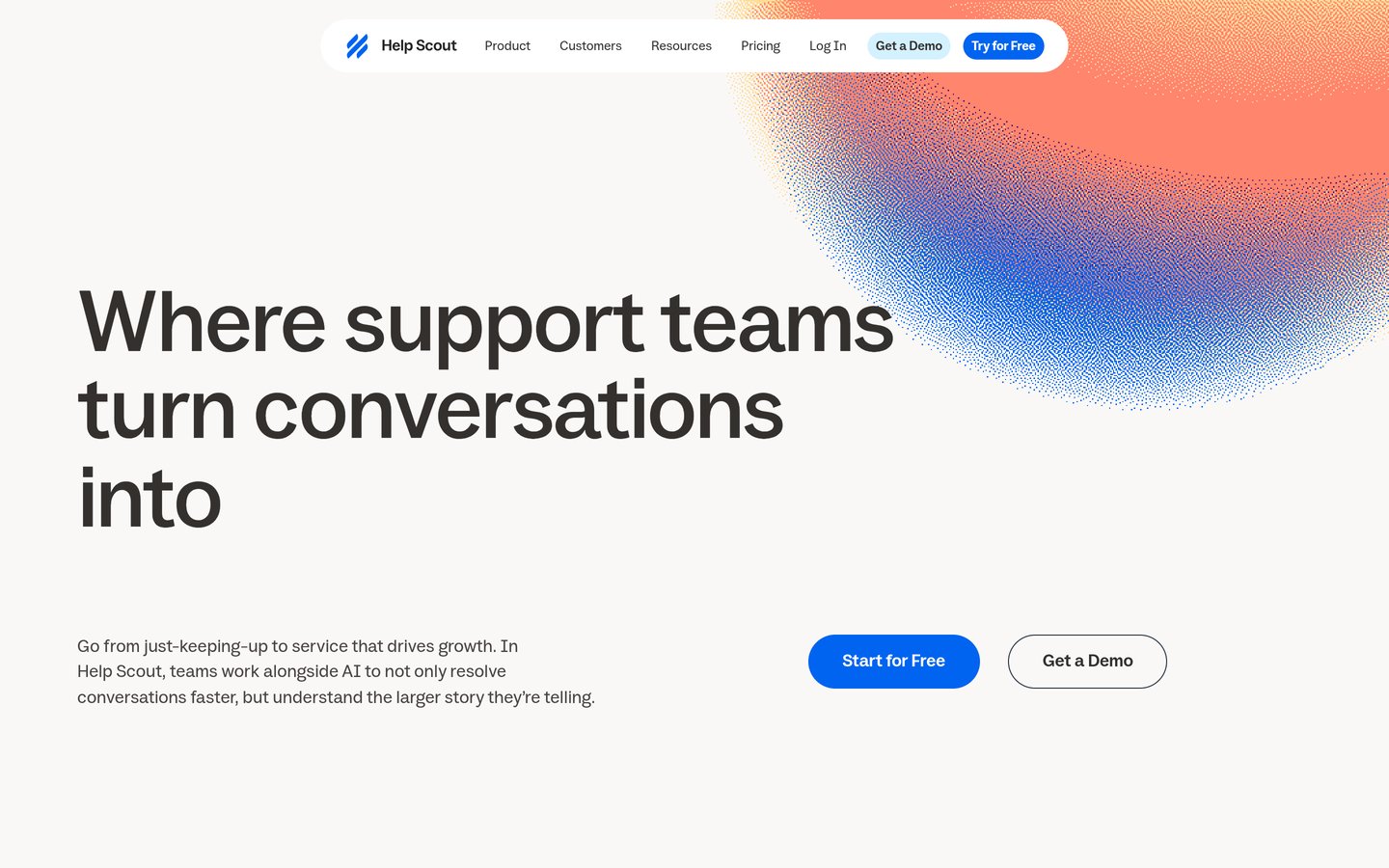
Help Scout is a shared inbox platform with Docs, its knowledge base tool, built into every plan. Standard costs $25 per user a month billed annually and includes multiple knowledge bases, live chat and workflows, while the free plan covers five users with one inbox and one Docs site. It suits a clinic that wants client articles next to the inbox that answers them.
The trade off is that Docs is a feature of a support inbox, not a standalone knowledge base. A clinic that only needs articles may find the inbox overhead unnecessary, and the free plan caps articles at ten. The strength is the pairing: an article a client cannot find becomes a ticket in the same tool.
Guru is a knowledge platform that brings verified answers to staff where they work, with AI search and verification workflows that flag stale content. It is built for internal knowledge rather than public help centres, which fits a clinic's staff SOPs: protocols, drug doses and front-desk scripts that must stay current. Its rating is among the highest here.
The trade off is that Guru publishes no prices and is built for internal use, so a clinic still needs a public help centre for clients. The AI verification workflow also needs someone to own it, or the verification reminders pile up. It is the pick for the staff side of the clinic, not the client side.
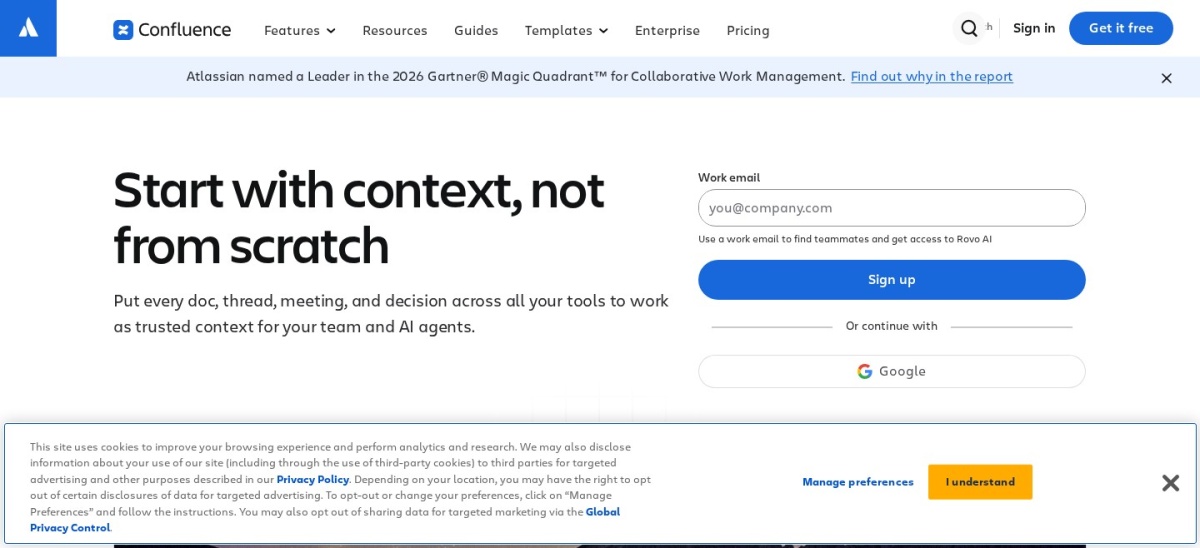
Confluence is a team wiki from Atlassian, built for shared pages, procedures and project notes. The free plan covers up to 10 users with 2GB of storage, and Standard costs $5.78 per user a month with 250GB and more automation. For a clinic it fits internal SOPs well: treatment protocols, onboarding notes and front-desk procedures in one searchable space.
The trade off is that Confluence is a wiki, not a client help centre. It has no public-facing help site by default, and its rating of 4.1 on G2 is the lowest here, with reviewers noting that pages sprawl without ownership. Pair it with a public tool for clients, and use it for staff only.
Notion is a flexible workspace where a clinic can keep SOPs, FAQ databases, onboarding pages and project plans in one place. The free plan covers basic pages, and Plus costs $10 per user a month with unlimited blocks, larger uploads and 30-day history. Its strength is flexibility: a page can hold a protocol, a table of fees and a checklist at once.
The trade off is that Notion is a general workspace, not a knowledge base. It has no public help centre with search analytics, and the structure depends on whoever builds it, so pages sprawl without ownership. It is the best pick for a clinic that wants one flexible system, not a polished client help site.
Client help centre vs staff SOPs: two jobs, one tool or two
A clinic's knowledge base does two jobs. Clients need fees, vaccine schedules and aftercare, while staff need protocols, drug doses and phone scripts.
Public tools such as Helpjuice and Freshdesk serve clients best, with search and analytics built for outsiders. Internal tools such as Confluence, Notion and Guru serve staff best, with permissions and verification.
One tool can do both if it has permissions. Help Scout and Freshdesk cover both audiences, while a clinic that wants the best of each can pair a public help centre with an internal wiki.
How we chose
We started from every knowledge base tool with a G2 or Capterra listing, then kept those a clinic could buy or trial. No vet-specific knowledge base exists, so we chose general tools and framed them for a clinic's client help centre and internal SOPs.
Prices come from each vendor's pricing page, checked on 30 November 2026. Ratings come from G2 or Capterra on the same day. Where a vendor shows a sale, the list shows the regular price, and where a vendor quotes only, the list says so rather than repeating a stale figure.
No vendor paid for a place, and we do not claim hands-on testing for this list. We ranked the dedicated knowledge base first, put free plans next for small clinics, and flagged every quote-only tool so readers can price it before shortlisting.
How to choose knowledge base software for a veterinary clinic
Decide who reads it first: clients, staff, or both.
Split client and staff content. Clients need fees, vaccines and aftercare; staff need protocols and scripts. Pick a tool that serves both or pair two tools.
Check the free plan first. Help Scout, Confluence and Notion all start free, which covers a small clinic's first help centre.
Test search with real questions. Ask the tool for a vaccine schedule or an aftercare answer, and check how fast a client finds it.
Price the second year. Per-agent pricing grows with staff, so count the people who will answer tickets before choosing.
FAQ
What is the best knowledge base software for veterinary clinics?
Helpjuice is the best dedicated knowledge base for most clinics, because it is built only for help centres and starts at $249 a month. Freshdesk suits clinics that want tickets too, while Help Scout is the best free start. The right pick depends on whether clients, staff, or both will read it.
Is there a knowledge base made for veterinary clinics?
No. We found no vet-specific knowledge base product, so the tools on this list are general platforms framed for clinic use. A clinic should pick a general tool with strong search and shape its content around client questions such as vaccines, fees and aftercare.
How much does knowledge base software cost?
Prices start free with Help Scout, Confluence and Notion, while Freshdesk starts at $19 per agent a month and Helpjuice at $249 a month. Document360 and Guru are quote-only, so their cost depends on the plan quoted after a demo.
Helpjuice vs Freshdesk: which is better for a clinic?
Helpjuice is better for a clinic that wants a dedicated help centre, because every feature serves articles and search. Freshdesk is better for a clinic that also needs support tickets, since its $19 Growth plan pairs a knowledge base with a helpdesk. Small clinics may prefer Freshdesk on price.
Can staff use the same tool as clients?
Yes, with the right setup. Confluence and Notion suit internal SOPs, while Helpjuice and Freshdesk suit public help centres. A clinic can run one tool for both audiences with permissions, or pair a public help centre with an internal wiki for protocols and scripts.
What should a clinic put in its knowledge base?
Start with the questions the front desk answers daily: vaccine schedules, fees, aftercare, opening hours and booking. Add staff-only SOPs such as treatment protocols and phone scripts in a separate space, and review both libraries when prices or protocols change.
SaaS SEO and WordPress specialist with about 8 years of experience. Rakib compares WordPress plugins, themes, hosting and software using public pricing, documentation and user reviews. See how we rank.