Cisco Duo is the best IAM software for securing remote workforces, because its push-based MFA and device checks secure every login for three dollars a user a month. IAM software for securing remote workforces should pair that identity layer with a ZTNA tool such as Twingate, which replaces the VPN for private apps.
How we make this list: we compare pricing pages, product documentation and public user reviews, then re-check every price before each update. No product paid for a place. Disclosure.
Cisco Duo is the best IAM pick for remote workforces, with MFA and device checks from $3 a user a month.
Twingate replaces the corporate VPN from $5 a user a month, with a free plan for up to 5 users.
Cloudflare One is free for up to 50 users, then $7 a user a month pay-as-you-go.
Okta and Entra ID are the full IAM suites, at $6 and $7 a user a month, with Okta carrying a $1,500 annual minimum.
Zscaler Private Access is the enterprise ZTNA pick, but it is quote-only with a three-month average implementation.
How do you choose IAM software for securing remote workforces?
Securing a remote workforce takes two layers: identity, which proves who someone is, and network access, which decides what they can reach. Duo, Okta, Entra ID and JumpCloud cover the identity layer, while Twingate, Cloudflare One, Zscaler, NordLayer and GoodAccess cover the network layer, and most teams need one of each.
Prices are cheap at the entry level. Duo and JumpCloud both start at $3 per user a month, Twingate at $5, and Cloudflare One is free for up to 50 users, so a small remote team can secure logins and network access for under $10 per user a month before add-ons.
The expensive tools are the enterprise ones. Zscaler publishes no prices and averages a three-month implementation, while Okta's $6 Starter carries a $1,500 annual minimum, so budget for a sales conversation with the enterprise end of this list. Our zero-trust network access guide compares the ZTNA tools on their own.
Start with MFA, then replace the VPN. Duo or Okta first, then a ZTNA tool such as Twingate or Cloudflare One for private apps, and only then consider the enterprise platforms that need a sales cycle.
The 9 best IAM tools for securing remote workforces
01
Cisco Duo
4.5/5on G2 (633 reviews, checked Nov 2026)
Starts at$3/user/mo
Best IAM for securing remote workforces
Essentials$3/user/mo, MFA + SSO
MFAPush, passkeys, biometrics
Device checksHealth and posture at login
Paid planEssentials, $3/user/mo
duo.com
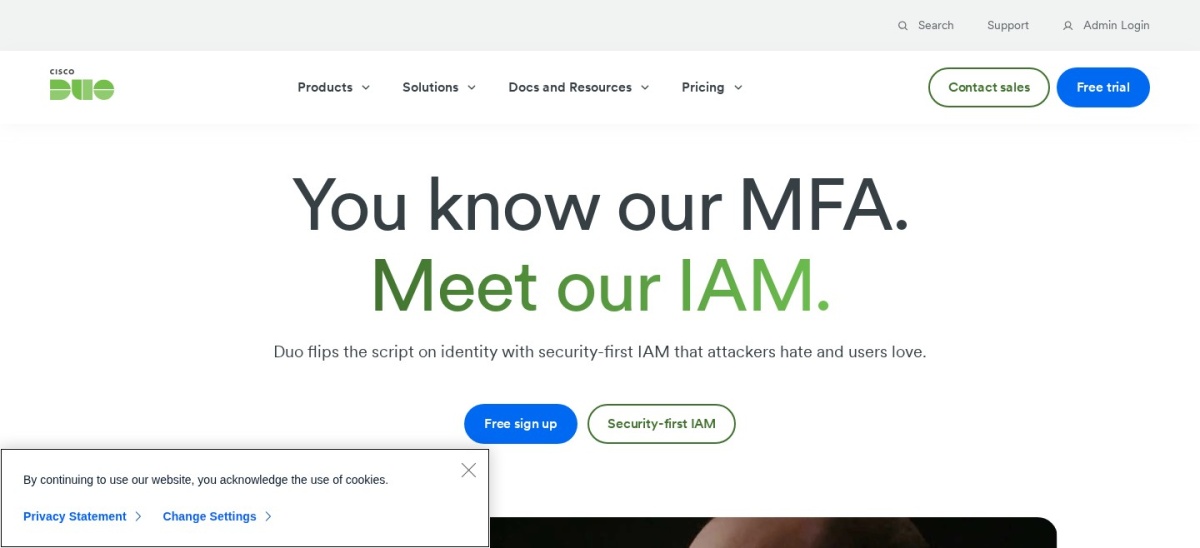
Cisco Duo homepage, captured Nov 2026.
Cisco Duo is a multi-factor authentication and zero-trust access platform that verifies every user and device before it reaches an application. It pairs push-based MFA with device health checks and single sign-on, and it works with the VPNs, cloud apps and identity providers a remote team already runs.
The trade off is that Duo secures the login, not the network. It does not replace a VPN or a ZTNA tool, so teams that need private-app access still need Twingate or Cloudflare One alongside it, and its Essentials plan at $3 per user a month covers MFA and SSO only. It suits teams that want the strongest MFA layer first.
What we like
Cheapest entry price here at $3 a user a month
Push MFA users actually complete
Rated 4.5 out of 5 from 633 G2 reviews
Watch out for
Secures logins, not network access
Advanced policies need higher tiers
Access and Network Gateway tiers add ZTNA featuresVisit duo.com
02
Twingate
4.6/5on G2 (84 reviews, checked Nov 2026)
Paid from$5/user/mo
Best ZTNA replacement for the corporate VPN
Teams$5/user/mo, annual
Free planUp to 5 users, 50 resources
AccessResource-level, no open ports
Paid planTeams, $5/user/mo
twingate.com
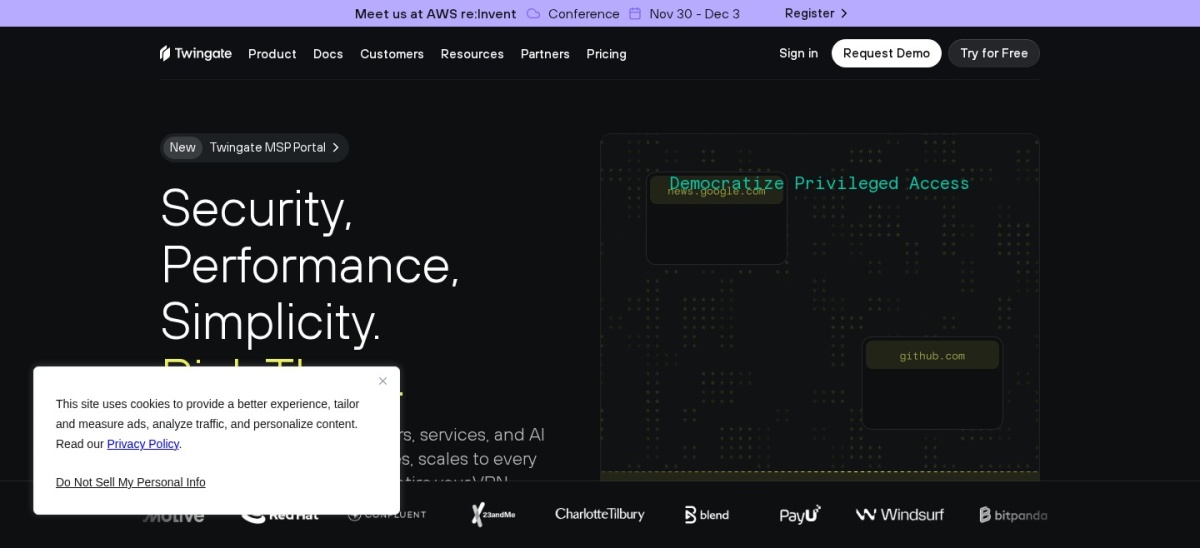
Twingate homepage, captured Nov 2026.
Twingate is a cloud-managed zero-trust network access platform that replaces the corporate VPN for remote teams. Outbound Connectors sit inside private networks and cloud accounts, so staff reach specific apps and servers without opening inbound firewall ports, with peer-to-peer connections and split tunneling.
The trade off is the tier ladder. Teams costs $5 per user a month on annual billing and caps at 100 users, while Okta and Entra ID provisioning plus DNS filtering need the $10 Business tier, so growing teams pay double. It suits small and mid-sized teams retiring a legacy VPN.
Okta is a cloud identity platform that gives remote workforces single sign-on, lifecycle management and adaptive MFA across thousands of apps. It provisions and deprovisions accounts automatically as people join, move or leave, and its Workforce Identity Cloud adds device assurance and privileged access for admins.
The trade off is the entry floor. Starter costs $6 per user a month with a $1,500 annual minimum, and the features remote teams want most, such as device assurance and lifecycle management, sit on higher tiers. It suits mid-market and enterprise teams standardising identity.
What we like
Largest app catalogue in this list
Automatic provisioning and deprovisioning
Rated 4.5 out of 5 from 1,370 G2 reviews
Watch out for
$1,500 annual minimum on Starter
Key features sit on higher tiers
Device assurance and lifecycle need higher tiersVisit okta.com
04
Cloudflare One
4.6/5on G2 (105 reviews, checked Nov 2026)
Paid from$7/user/mo
Best free tier for small remote teams
Free planUp to 50 users, ZTNA + SWG
Pay-as-you-go$7/user/mo, no cap
IncludesAccess, Gateway, Tunnel
Paid planPay-as-you-go, $7/user/mo
cloudflare.com
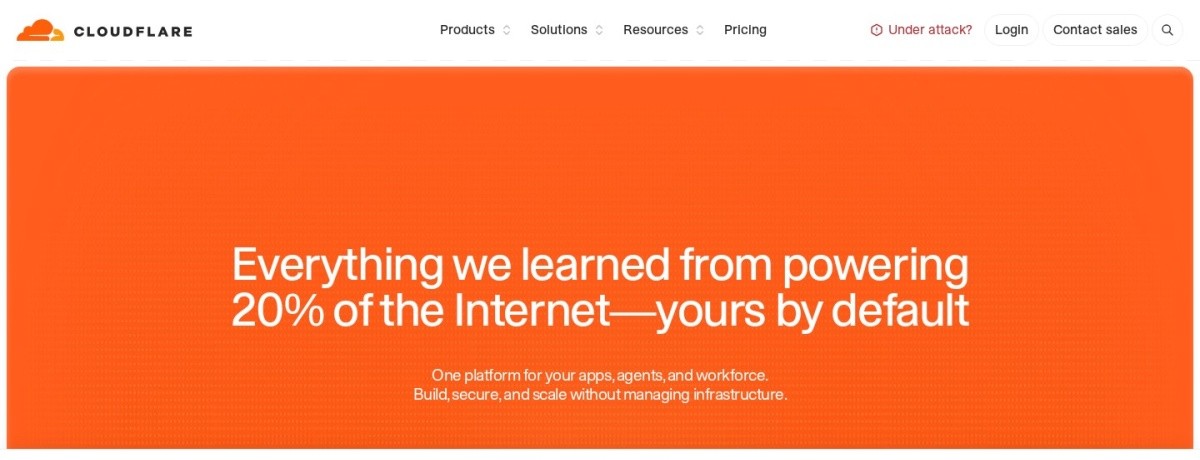
Cloudflare One homepage, captured Nov 2026.
Cloudflare One is a zero-trust and SASE platform that combines Cloudflare Access, a secure web gateway and Tunnel connectors on Cloudflare's global edge network. Its free plan covers up to 50 users with ZTNA and web filtering, and the pay-as-you-go tier at $7 per user a month removes the cap and extends log retention.
The trade off is the learning curve and the add-on shelf. Remote Browser Isolation and other advanced controls cost extra, free logs last only 24 hours, and admins new to edge networking face a steeper setup than with Twingate. It suits teams that want ZTNA and web security on one platform.
Microsoft Entra ID is the identity layer for Microsoft 365, giving remote workers single sign-on, conditional access and MFA across Microsoft apps and thousands of third-party services. P1 at $7 per user a month adds conditional access policies, hybrid identity and self-service password reset for remote teams.
The trade off is the Microsoft orbit. Entra ID is strongest inside Microsoft 365, and teams on Google Workspace or mixed stacks get less value, while advanced identity protection and privileged access need the P2 tier. It suits organisations already paying for Microsoft 365.
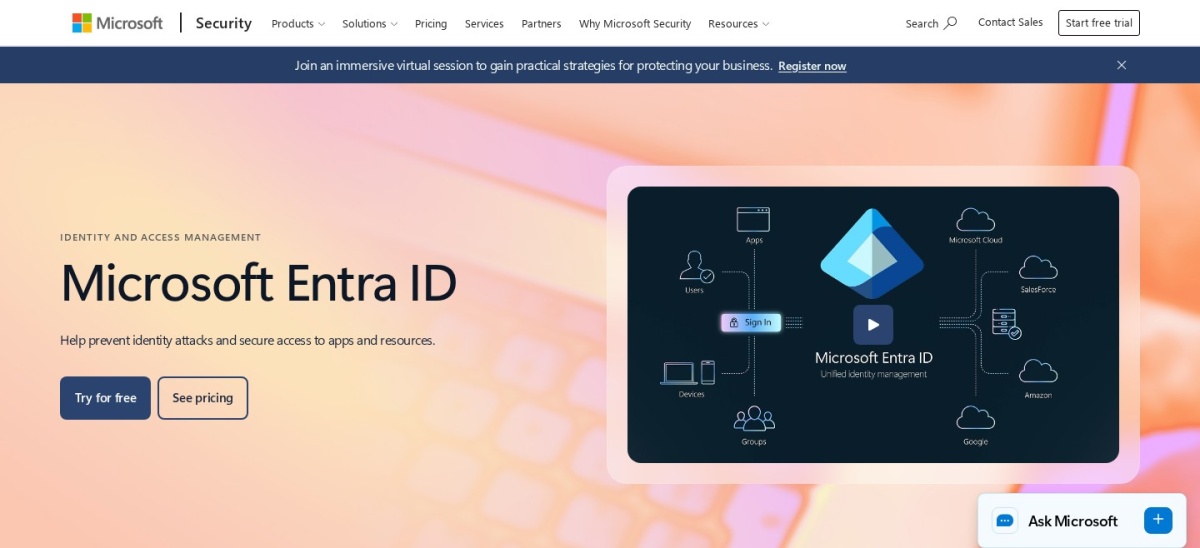
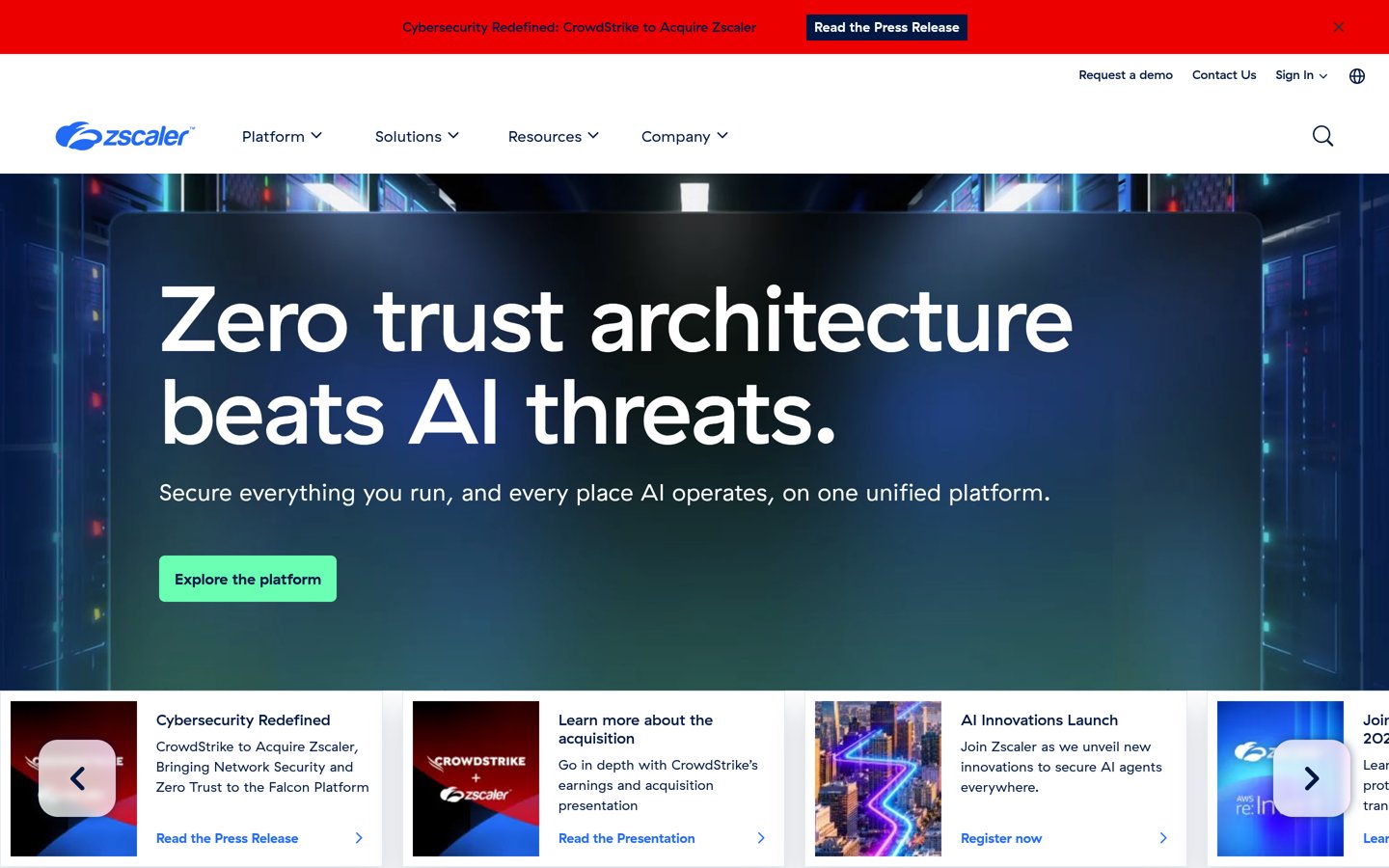
Zscaler Private Access homepage, captured Nov 2026.
Zscaler Private Access is an enterprise zero-trust platform that connects remote users directly to specific applications, never to the corporate network. It brokers every connection through Zscaler's cloud, segments apps by identity and device, and replaces VPN access for large, distributed workforces.
The trade off is enterprise weight and price opacity. Zscaler publishes no prices, G2 reviewers cite a three-month average implementation, and buyers face a sales cycle before they can model a bill. It suits large enterprises replacing VPNs at scale.
What we like
Strongest enterprise zero-trust pedigree here
App segmentation by identity and device
Rated 4.4 out of 5 from 174 G2 reviews
Watch out for
No published pricing
Three-month average implementation
CrowdStrike announced plans to acquire Zscaler; packaging may changeVisit zscaler.com
07
JumpCloud
4.5/5on G2 (4,151 reviews, checked Nov 2026)
Paid from$3/user/mo
Best directory and device management for small teams
Free planUp to 10 users
CoversSSO, MFA, device management
PlatformsWindows, macOS, Linux
Paid planFrom $3/user/mo
jumpcloud.com
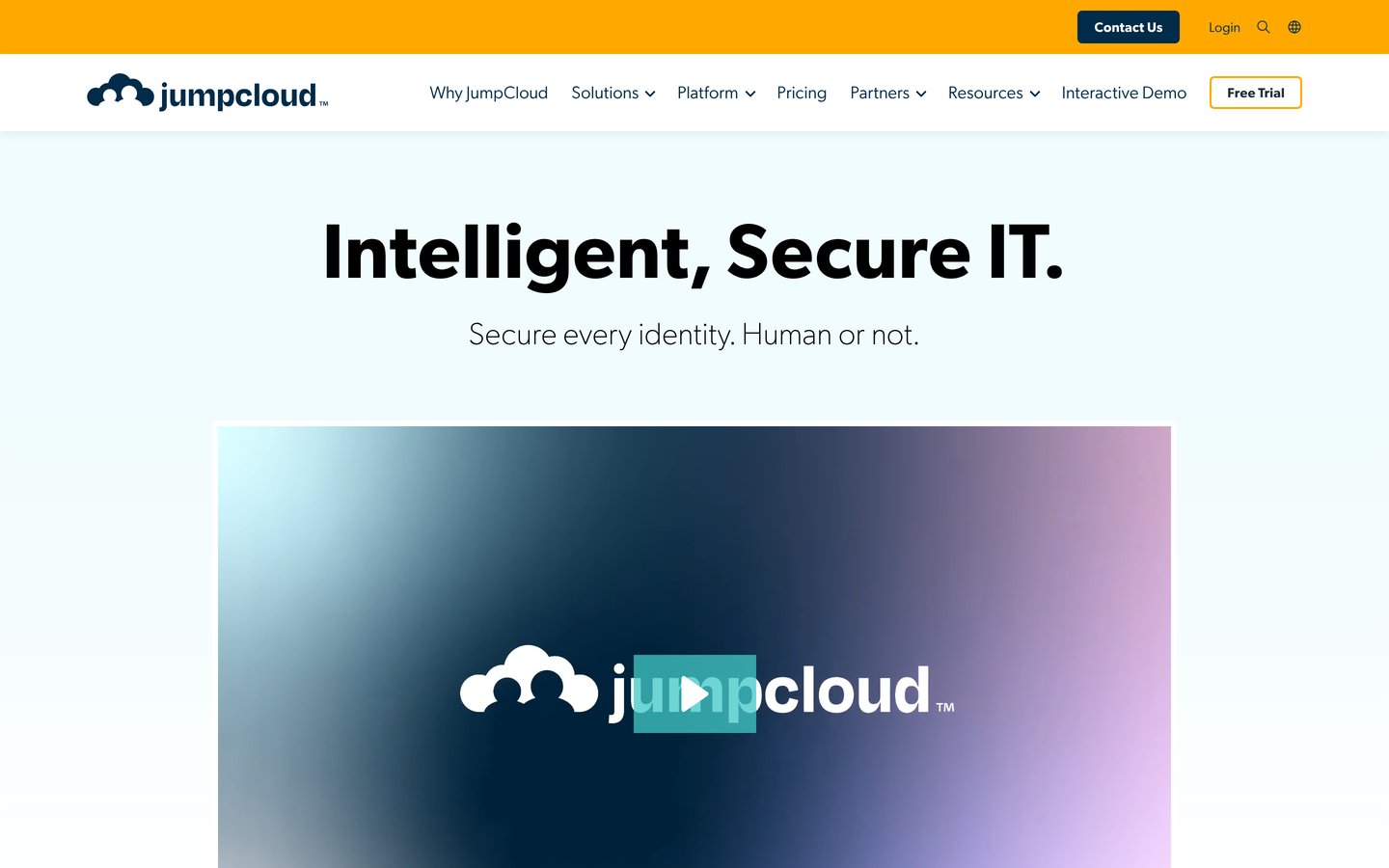
JumpCloud homepage, captured Nov 2026.
JumpCloud is a cloud directory that manages identities, devices and access for remote teams from one console. It combines SSO, MFA and device management across Windows, macOS and Linux, and its $3 per user a month entry price is the joint cheapest in this list alongside Duo.
The trade off is breadth over depth. JumpCloud is not a full IAM suite like Okta and not a ZTNA tool like Twingate, so larger teams often pair it with a dedicated identity or network platform, and its pricing page is JavaScript-rendered. It suits small teams that want directory and devices in one place.
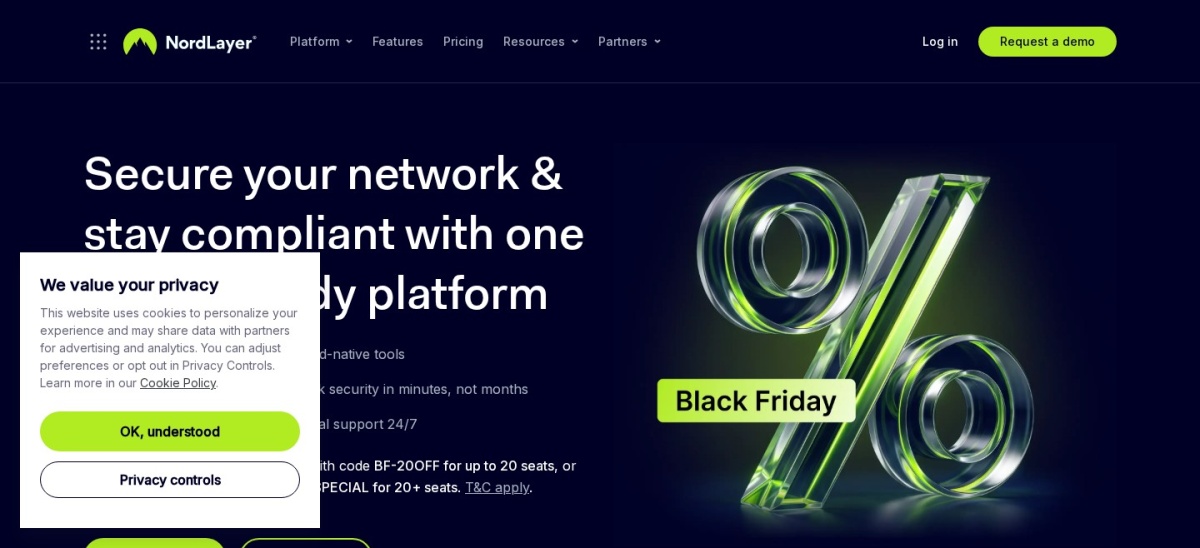
NordLayer is a managed network security platform from the makers of NordVPN, built for small and mid-sized remote teams. It combines a business VPN with zero-trust network access, DNS filtering, IP allowlisting and a dedicated IP option, all managed from one admin console.
The trade off is the add-on bill. Lite costs $8 per user a month on annual billing with a five-user minimum, but Core and Premium need a dedicated server at $40 a month extra, and there is no free plan, only a 14-day money-back guarantee. It suits teams that want a managed VPN without building one.
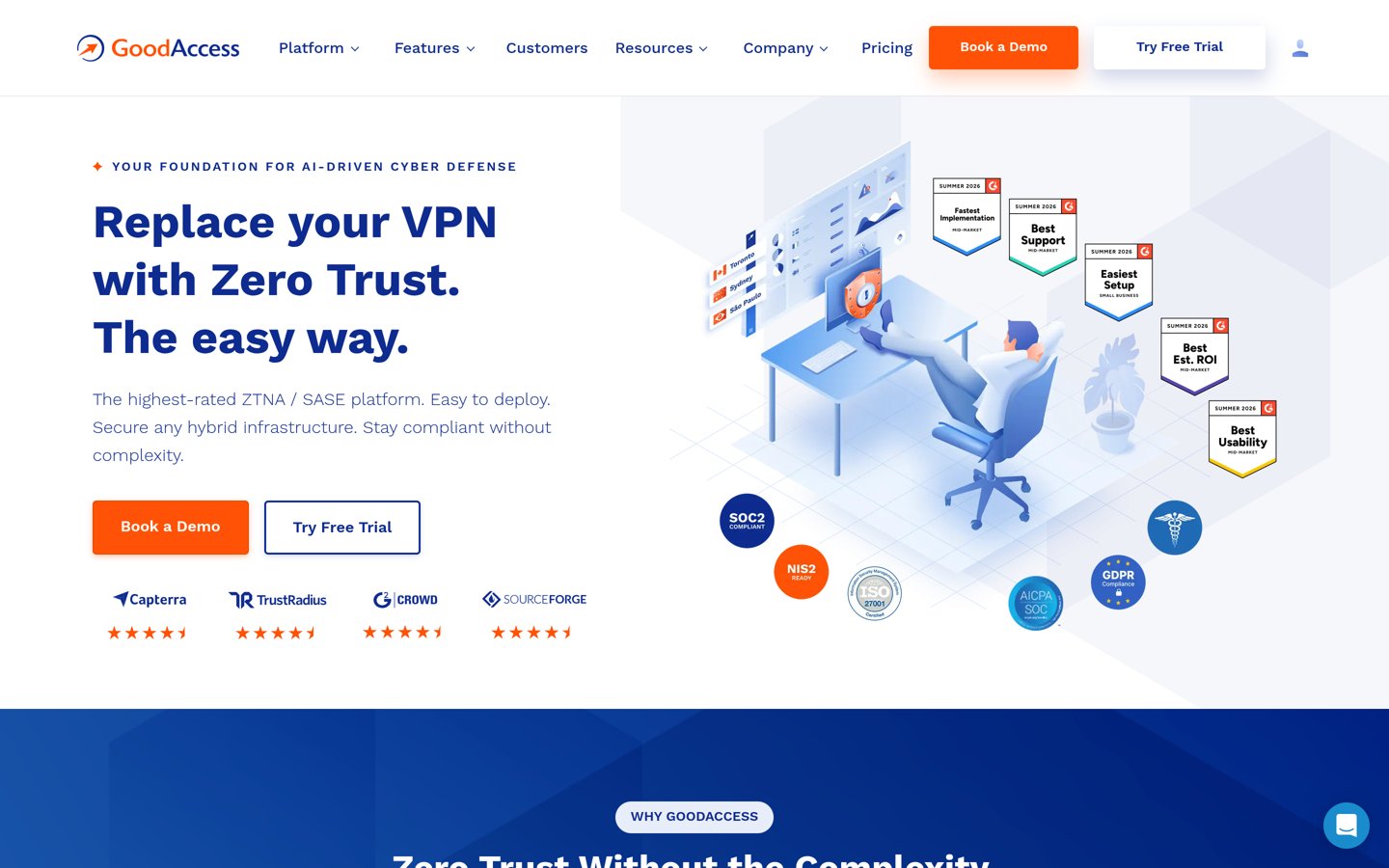
GoodAccess is a zero-trust access platform built for small businesses that need secure remote access fast. Its Essential plan at $7 per user a month provides a dedicated cloud VPN with static IP whitelisting, and Premium at $11 adds full zero-trust architecture with network segmentation.
The trade off is scale and the gateway fee. GoodAccess is built for small teams, with a five-user minimum and a $49 a month charge per dedicated gateway, and larger enterprises will want the broader controls of Zscaler or Cloudflare One. It suits lean IT teams securing remote staff quickly.
Identity tools answer who is logging in. Duo, Okta, Entra ID and JumpCloud verify the person and the device, enforce MFA and revoke access when someone leaves, and they work whether staff are at home, in a cafe or on a plane.
Network tools answer what that person can reach. Twingate, Cloudflare One, Zscaler, NordLayer and GoodAccess connect remote workers to specific applications instead of the whole office network, so a compromised laptop cannot wander across internal systems.
Buy in that order. A team with strong MFA and no ZTNA is far safer than a team with a VPN and weak passwords, so secure the login first, replace the VPN second, and only then spend on enterprise platforms that need a sales cycle.
How we chose
We started from the IAM and zero-trust tools most often compared for remote and hybrid workforces, then kept the nine with a public G2 rating and a verifiable price or a clear quote-only model.
Prices come from each vendor's pricing page, checked on 30 November 2026. Twingate at $5, GoodAccess at $7 and NordLayer at $8 are confirmed on their pages today, as are Duo at $3, Okta at $6 and Entra ID at $7. Cloudflare One's $7 rate is corroborated by lists that verified it on 22 November 2026 and a tracker re-checked on 29 November 2026, because its pricing page shows no figures in a text extract.
We left out tools with no aggregator rating. No vendor paid for a place, and we do not claim hands-on testing for this list.
How to choose IAM software for securing remote workforces
Start with MFA for every login, then add zero-trust network access for private apps.
Put MFA on every login first. Duo at $3 a user is the cheapest way to stop credential theft across a remote team.
Pick the identity suite that matches your stack. Okta fits mixed stacks, Entra ID fits Microsoft 365, JumpCloud fits small teams that also manage devices.
Replace the VPN with ZTNA. Twingate, Cloudflare One or GoodAccess give staff access to specific apps instead of the whole network.
Get enterprise prices in writing. Zscaler is quote-only and Okta has a $1,500 annual minimum, so confirm the bill before you commit.
FAQ
What is the best IAM software for securing remote workforces?
Cisco Duo is the best IAM software for securing remote workforces, because its push MFA and device checks secure every login from $3 per user a month. It holds a 4.5 out of 5 G2 rating from 633 reviews and works with the VPNs and cloud apps a remote team already runs.
Do I still need a VPN with IAM software?
No, not necessarily. IAM tools such as Duo and Okta secure logins, while ZTNA tools such as Twingate and Cloudflare One replace the VPN by giving remote staff access to specific apps only. Most remote teams run one IAM tool and one ZTNA tool together.
What is the cheapest IAM software for remote teams?
Cisco Duo and JumpCloud are the cheapest, both starting at $3 per user a month. Cloudflare One is free for up to 50 users, and Twingate has a free plan for up to 5 users, so a small remote team can start with no network-access bill at all.
Is Okta or Microsoft Entra ID better for remote workforces?
Okta fits mixed stacks, with thousands of app integrations and automatic provisioning from $6 per user a month. Entra ID fits Microsoft 365 organisations, with conditional access in P1 at $7 per user a month, so pick the one that matches the apps your team already uses.
What is ZTNA and how is it different from a VPN?
ZTNA, or zero-trust network access, connects a remote worker to one specific application after checking identity and device health. A VPN puts the worker on the whole corporate network, so a stolen credential exposes everything, while ZTNA limits the blast radius to that one app.
Which IAM tool is best for a small remote team?
Twingate is the best starting point for a small remote team, with a free plan for up to 5 users and paid plans from $5 a user a month. Pair it with Duo at $3 a user for MFA, and add Cloudflare One, free for up to 50 users, when you need web filtering too.
SaaS SEO and WordPress specialist with about 8 years of experience. Rakib compares WordPress plugins, themes, hosting and software using public pricing, documentation and user reviews. See how we rank.