Supabase is the best of these Hasura alternatives for most teams, pairing a full Postgres database with auth, storage and realtime for $25 a month on Pro, rated 4.6/5 on G2. Choose Directus to keep your existing SQL database, or Appwrite if you want a self-hosted backend with a $25 Pro plan.
How we make this list: we compare pricing pages, product documentation and public user reviews, then re-check every price before each update. No product paid for a place. Disclosure.
Supabase is the closest full-backend swap: Postgres, auth, storage, realtime and edge functions for $25 a month on Pro.
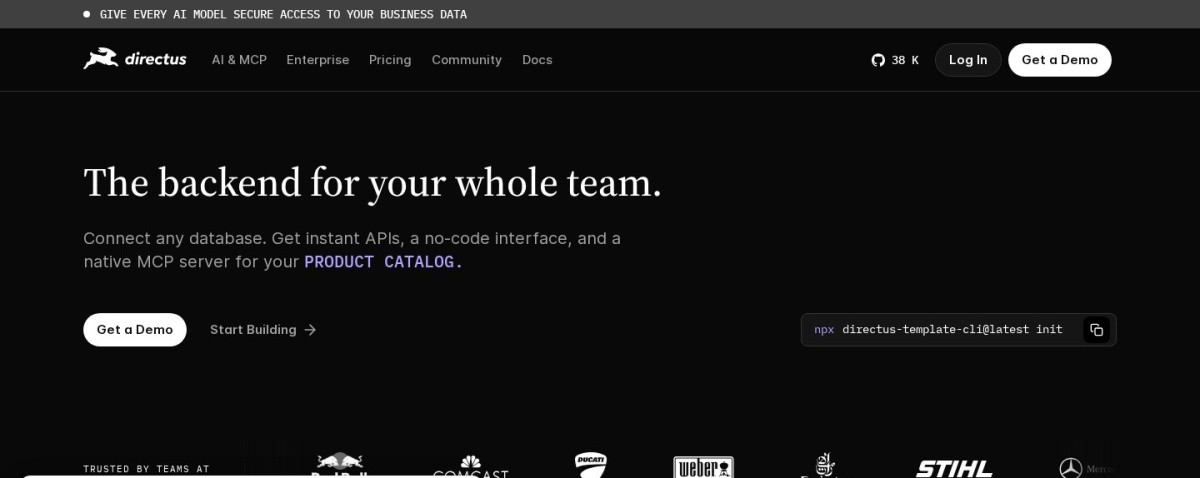
Directus wraps the SQL database you already have and exposes REST and GraphQL APIs, with free self-hosting and Cloud Core at $89 a month billed yearly.
Appwrite and Convex both start paid plans at $25 a month; Appwrite suits self-hosting, Convex suits TypeScript teams that want live data.
Firebase and AWS AppSync have no flat monthly price: both start free and bill by use, so small apps can cost $0 and busy ones need usage limits.
Xano is the most expensive entry here at $85 a month billed yearly, while Backendless is the cheapest paid plan at $15 a month.
How do you choose among Hasura alternatives?
Start with your data, not the API style. Hasura turns an existing Postgres database into a GraphQL API, so the closest replacements are the tools that also start from your tables.
A full backend beats a bare API layer for most teams. Supabase, Appwrite and Firebase add auth, storage and functions, so you stop stitching services together.
Self-hosting trades a monthly bill for upkeep. Directus, Appwrite and Strapi all run on your own server, but you own updates, backups and security patches.
Pay-as-you-go pricing rewards small apps and punishes busy ones. Firebase and AWS AppSync can cost nothing at low volume, so set budget alerts before traffic grows.
Supabase is an open-source backend platform built on Postgres, with authentication, file storage, realtime subscriptions and edge functions in one project. Its free plan includes 500 MB of database storage, 50,000 monthly active users, 1 GB of file storage and unlimited API requests across 2 projects.
The trade off is usage billing on top of the plan. Pro costs $25 a month and includes $10 of compute credits, so one small project is covered, but larger compute and storage add to the bill. It suits teams that want a managed Postgres backend without running their own database server.
What we like
Postgres with auth, storage and realtime in one place
Generous free plan with 50,000 monthly active users
Directus is a data platform that wraps a new or existing SQL database with instant REST and GraphQL APIs, plus an admin app for non-technical users. Core is free to self-host with 3 seats, 25 collections and 5 automation flows, and qualifying small organisations get full features free under the Open Innovation Grant.
The trade off is the jump to paid tiers. Cloud Core costs $89 a month billed yearly, and Team is listed at two different prices on the same pricing page, so confirm the figure before budgeting. It suits teams whose data already lives in SQL and who need editors working beside developers.
What we like
Works on the database you already have
REST and GraphQL APIs from the same schema
Admin app that non-developers can use
Highest G2 rating in this list at 4.8/5
Watch out for
Team pricing is listed inconsistently on its own page
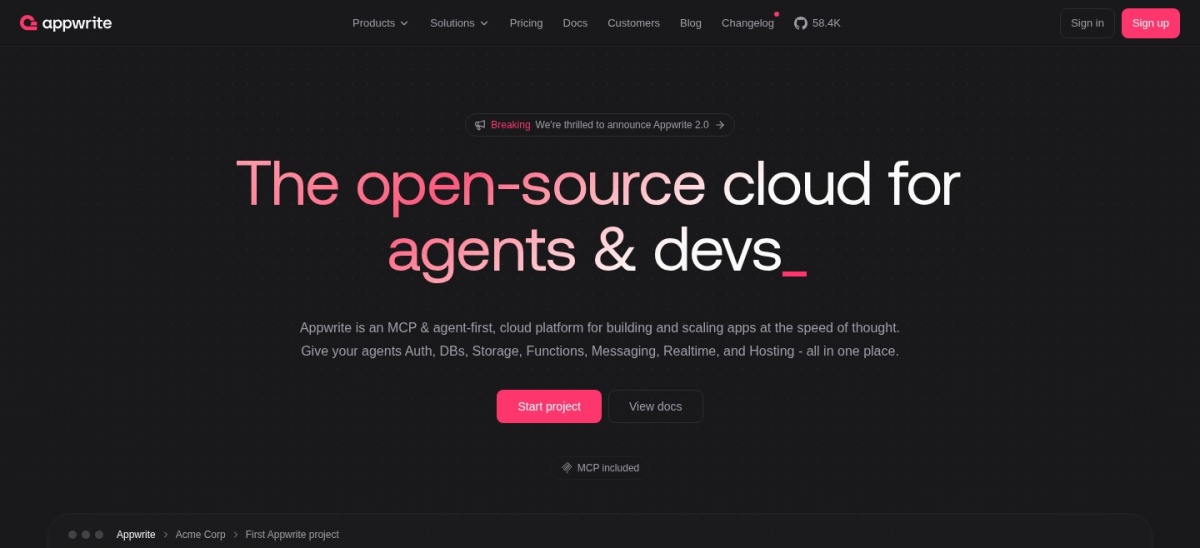
Appwrite is an open-source backend server with databases, authentication, file storage, functions, messaging and hosting in one dashboard. Its free plan includes 75,000 monthly active users, 2 GB of storage and 5 GB of bandwidth, and the same code runs self-hosted or in Appwrite Cloud.
The trade off is setup and scale. Self-hosting runs on Docker and you own updates and backups, while Pro at $25 a month covers the whole organisation rather than charging per seat. It suits teams that want one backend and the option to leave the cloud.
What we like
Everything in one place, including messaging and hosting
Self-host for free on your own server
Pro price covers the whole team, not per seat
Strong mobile and Flutter support
Watch out for
G2 rating rests on only 4 reviews
Smaller community than Supabase or Firebase
Docker setup is work for beginners
Pro raises limits to 200,000 MAU and adds daily backupsVisit appwrite.io
04
Strapi
4.5/5on G2 (207 reviews, checked Nov 2026)
Paid from$29/mo
Best for content-led APIs
DatabaseYour choice, via the CMS
Free planCommunity, self-hosted
APIsREST and GraphQL
Entry paid planCloud Starter, $29/month
strapi.io
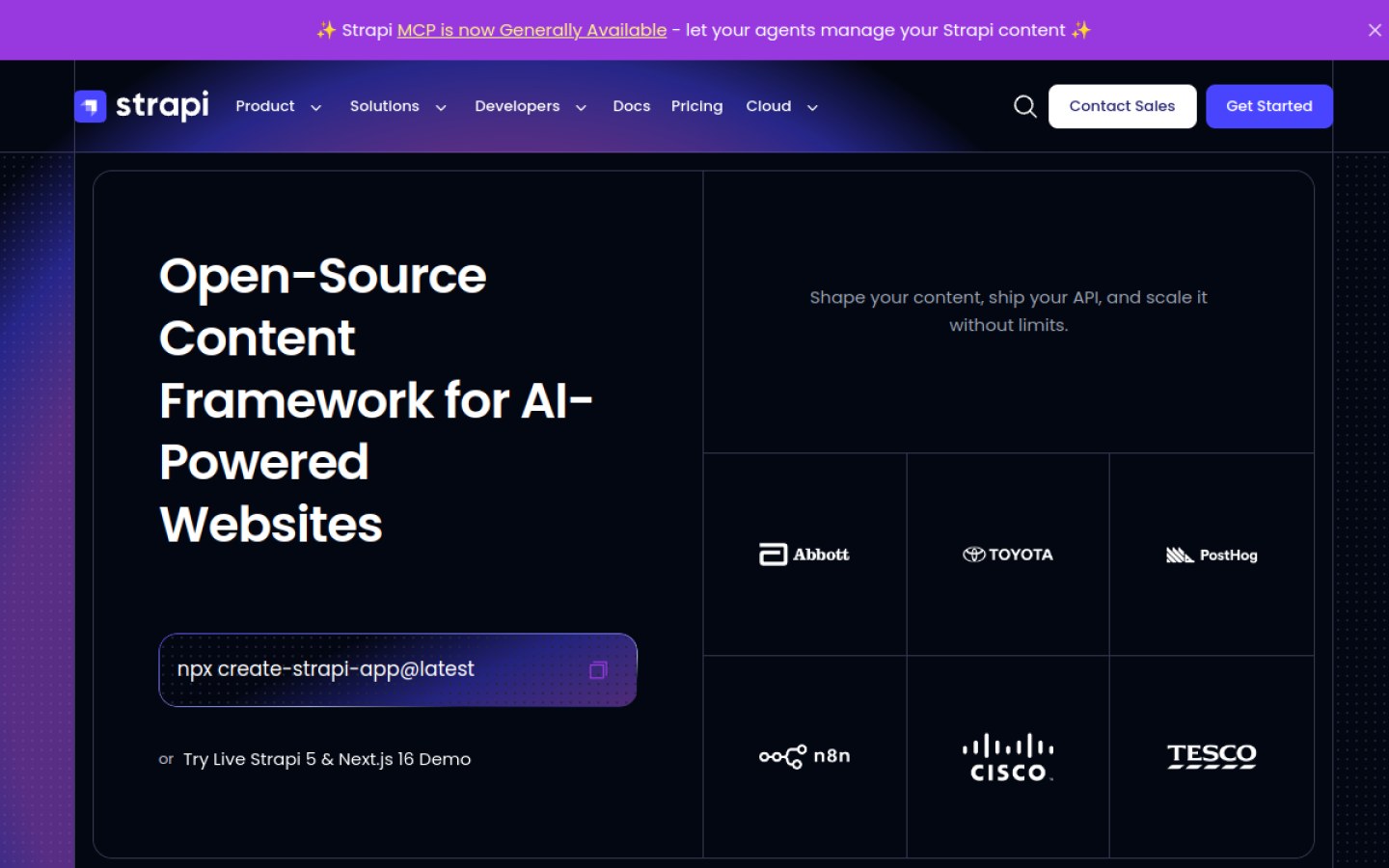
Strapi homepage, captured Nov 2026.
Strapi is an open-source headless CMS that gives content editors an admin panel and developers REST and GraphQL APIs from the same content model. The Community edition is free to self-host with unlimited entries and locales, and Cloud Starter adds hosted infrastructure at $29 a month per project billed yearly.
The trade off is that Strapi is content-first, not database-first. It works best when editors shape the content model, and per-project Cloud pricing adds up fast for agencies. It suits content-driven products where editors and developers share one system.
What we like
Free Community edition with no entry or locale limits
Visual admin panel editors can use alone
REST and GraphQL APIs from one content model
Large plugin and community ecosystem
Watch out for
Cloud Starter sleeps when idle
Per-project pricing multiplies across client sites
Not a direct wrapper for an existing database
Cloud Pro adds always-on hosting and more API requestsVisit strapi.io
05
Firebase
4.5/5on G2 (307 reviews, checked Nov 2026)
PricingPay as you go/mo
Best for mobile apps on Google Cloud
DatabaseFirestore, document-based
Free planSpark, no card needed
APIsSDKs, REST and Data Connect
Entry paid planBlaze, pay as you go
firebase.google.com
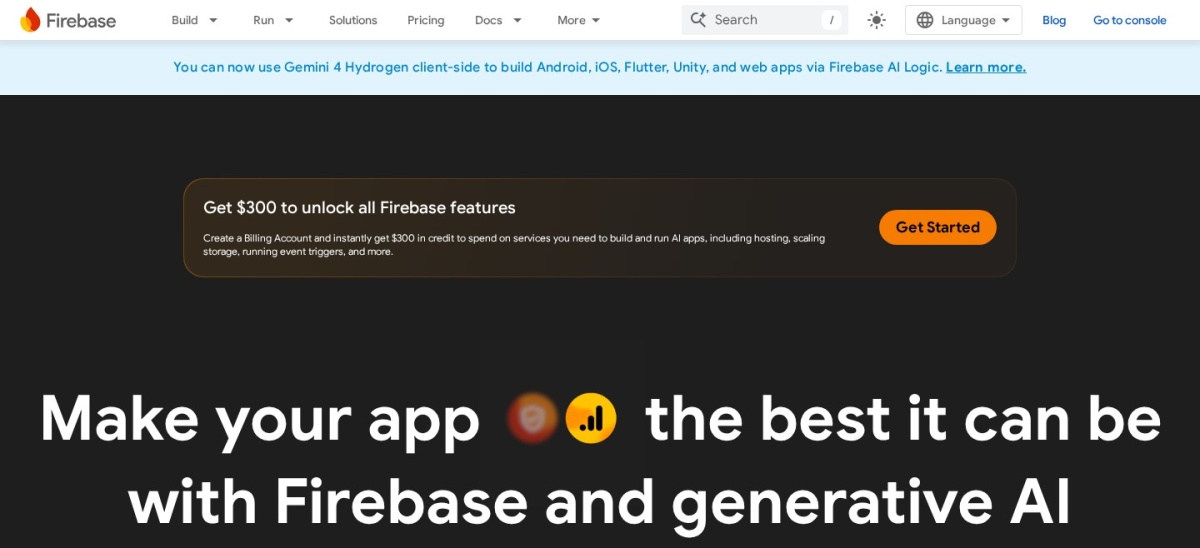
Firebase homepage, captured Nov 2026.
Firebase is Google's app platform, with Firestore, authentication, hosting, functions and analytics behind one console. The free Spark plan needs no payment method and includes 1 GiB of Firestore storage, 50,000 reads a day and 50,000 monthly active users on Authentication.
The trade off is the data model and the meter. Firestore is a document database rather than Postgres, so complex SQL-style queries are harder, and Blaze bills by use with no spending cap. It suits mobile teams already in Google Cloud that want a mature, managed backend.
What we like
Mature platform with deep Google Cloud integration
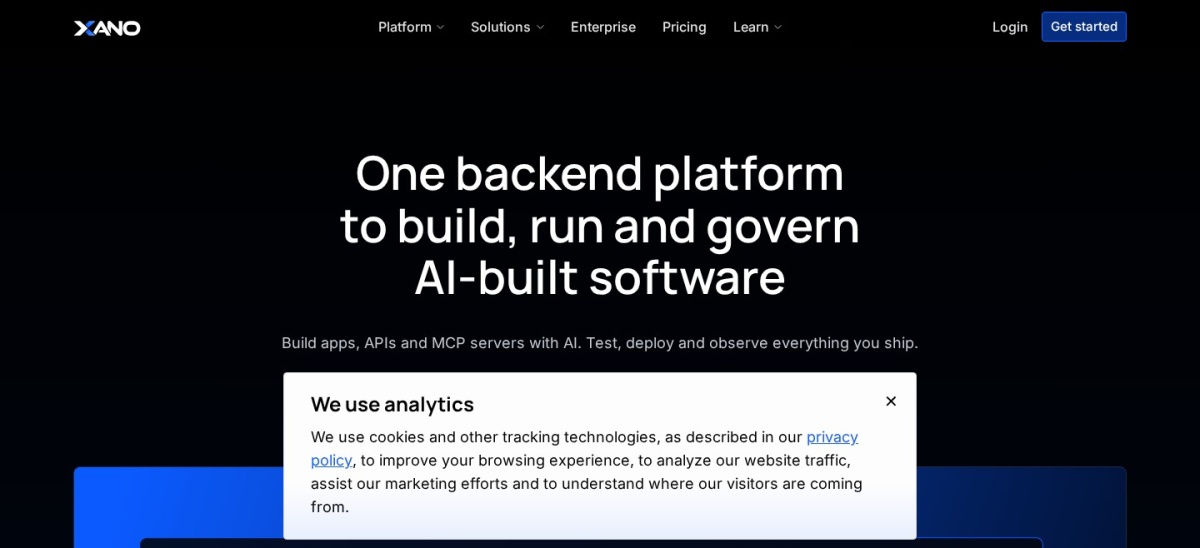
Xano is a hosted backend with a Postgres database, APIs assembled in a visual function stack, authentication and scheduled jobs, plus an AI agent builder on every plan. The free plan covers 100,000 database records and 1 GB of image storage for one workspace.
The trade off is price. There is nothing between free and Essential at $85 a month billed yearly, so a production app starts there. It suits teams that want business logic in visual blocks without writing a server.
What we like
Visual function stack needs no server code
Flat monthly price with no per-request billing
Strong support scores on G2
SOC 2 and ISO 27001 on the cheapest paid plan
Watch out for
Steep jump from free to $85 a month
Learning curve for serious data modelling
Custom domains cost extra
Essential adds unlimited records, 3 workspaces and 5 seatsVisit xano.com
07
Convex
4.5/5on G2 (5 reviews, checked Nov 2026)
Paid from$25/mo
Best for realtime TypeScript apps
DatabaseReactive, document-based
Free plan1M calls, 0.5 GB database
APIsTypeScript functions and queries
Entry paid planProfessional, $25/dev/month
convex.dev
Convex homepage, captured Nov 2026.
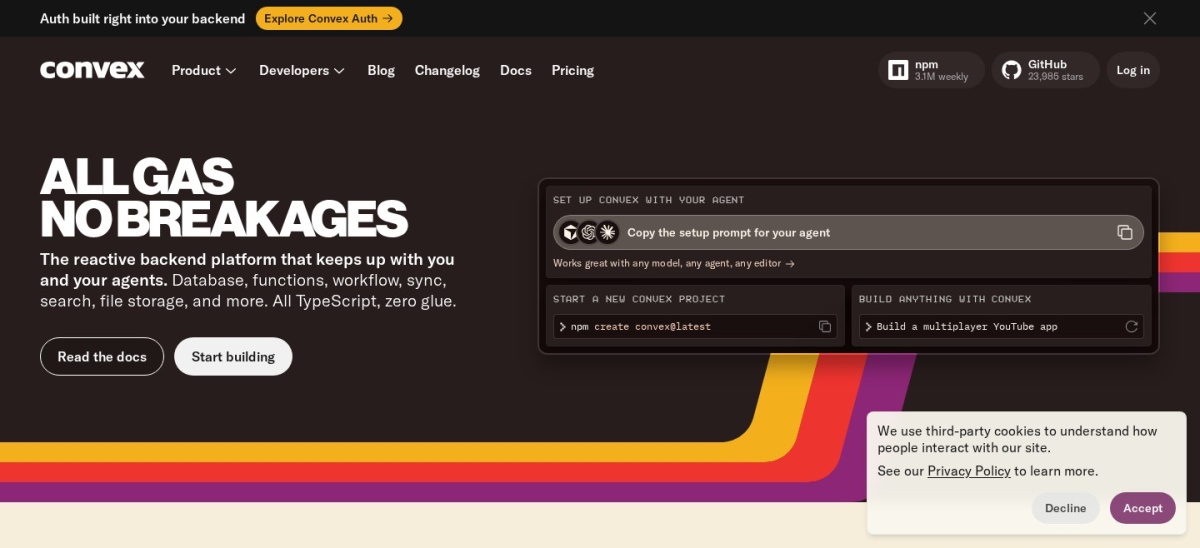
Convex is a reactive backend platform that combines a database, serverless functions, scheduled jobs and file storage in TypeScript. The free Starter plan covers up to 6 developers, 1 million function calls and 0.5 GB of database storage.
The trade off is the stack lock-in. Convex has no traditional SQL database, so teams that need relational queries or Postgres will work around it, and Professional is priced per developer. It suits TypeScript teams that want live data without managing a server.
What we like
Live updates built in, not bolted on
End-to-end type safety from schema to client
Generous free tier for side projects
Works well with AI coding assistants
Watch out for
G2 rating rests on only 5 reviews
No traditional SQL or Postgres
Per-developer pricing grows with the team
Professional adds 25M calls, 50 GB storage and daily backupsVisit convex.dev
08
Backendless
4.4/5on G2 (56 reviews, checked Nov 2026)
Paid from$15/mo
Best low-cost no-code backend
DatabaseHosted, with visual data designer
Free plan50 API req/min, 20 tables
APIsREST, with codeless logic
Entry paid planCloud, $15/month
backendless.com
Backendless homepage, captured Nov 2026.
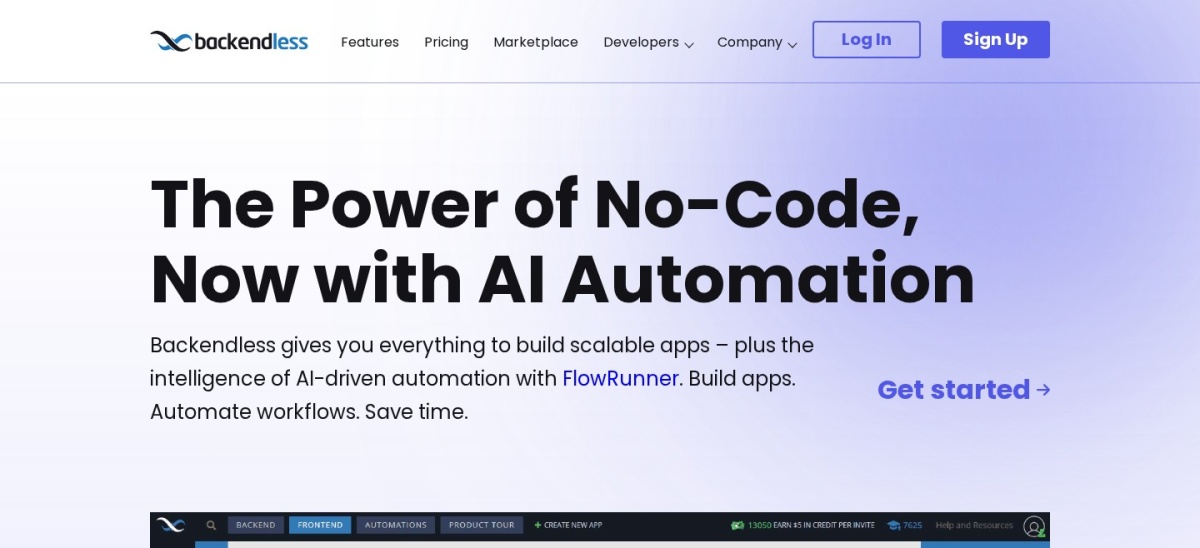
Backendless is a no-code backend with a hosted database, authentication, REST APIs, codeless visual logic and a UI builder in one account. Its free plan includes 50 API requests a minute and 20 tables, and Cloud starts at $15 a month with unlimited developer seats.
The trade off is learning curve and add-ons. Codeless logic still needs real schema design, and more than 20 function packs can push the bill up. It suits agencies running many small client apps under one account.
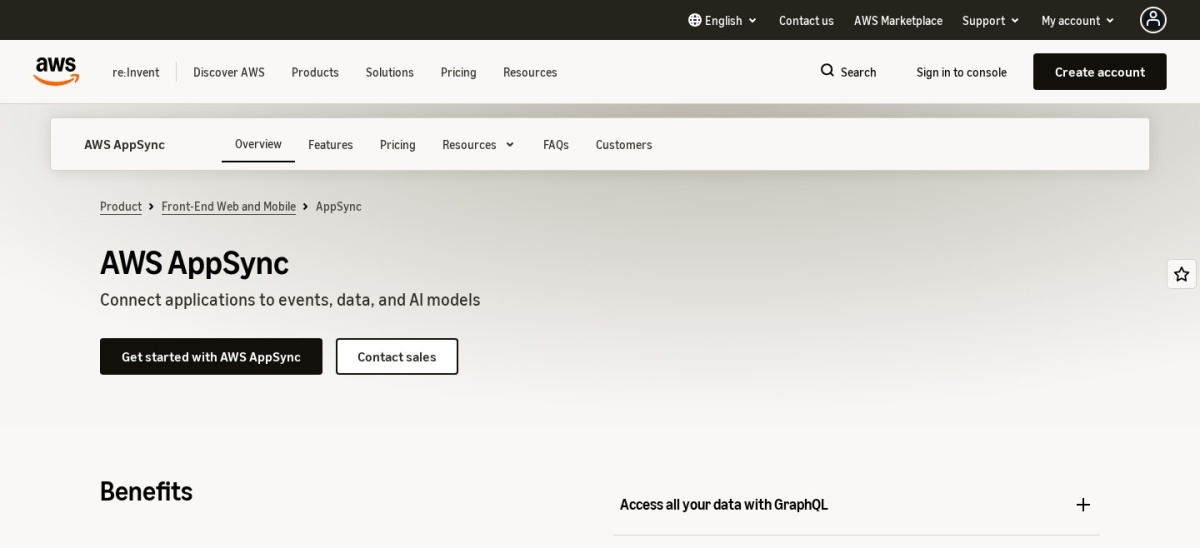
AWS AppSync is a managed GraphQL service that connects apps to DynamoDB, Lambda, Postgres and other AWS data sources without a custom GraphQL server. Its free tier includes 250,000 query or data modification operations, 250,000 realtime updates and 600,000 connection-minutes a month.
The trade off is setup and billing complexity. G2 reviewers report a typical implementation time of 5 months, and pricing is metered per operation with no flat plan. It suits teams already committed to AWS that need managed GraphQL at scale.
Free plans cover the basics well. Every tool in this list has a free plan, and most include auth, storage and a working API.
Paid plans mostly add limits and support. You get more storage, more users, backups and faster help when something breaks.
Pay-as-you-go plans are the exception. Firebase and AWS AppSync start free and bill by use, so watch usage before traffic grows.
If your app earns money every day, the first paid month often costs less than one outage. Start free, then pay when limits bite.
How we chose
We started from tools that replace the core Hasura job: an instant GraphQL API over data, with auth and realtime where possible, then kept the nine with a public rating and a published price.
Prices come from each vendor's pricing page, checked on 29 November 2026. Ratings and review counts come from G2 on the same day. Where a vendor shows a sale, the list shows the regular price.
We left out Nhost, the closest Hasura-based option, because it has no G2 reviews yet and no other verifiable public rating. No vendor paid for a place, and we do not claim to have used these tools ourselves.
How to choose a Hasura alternative
Start with your data model, then match the billing unit to your traffic.
Check whether your database already exists. If it does, Directus or AppSync wrap it. If not, Supabase or Appwrite give you a fresh Postgres or document store.
Decide between GraphQL and a full backend. AppSync and Directus stay close to the API job. Supabase, Firebase and Appwrite add auth, storage and functions.
Work out what the price actually buys. Compare $25 a month per project, per developer and per database. Firebase and AppSync bill by use instead.
Try the free plan with real data. Load a small slice of your schema and test auth rules and one realtime query before you commit.
FAQ
What are the best Hasura alternatives in 2026?
Supabase is the best Hasura alternative for most teams, with a full Postgres backend, auth and storage for $25 a month on Pro. Directus fits teams with an existing SQL database, and Appwrite fits teams that want to self-host.
How much do Hasura alternatives cost?
Most paid plans in this list cost $15 to $89 a month: Backendless from $15, Supabase, Appwrite and Convex from $25, Strapi from $29, Xano from $85 and Directus Cloud Core from $89. Firebase and AWS AppSync bill by use instead of a flat monthly price.
Is there a free Hasura alternative?
Yes, every tool in this list has a free plan. Supabase gives 500 MB of database storage and 50,000 monthly active users, Appwrite gives 75,000 monthly active users, and Directus, Strapi and Convex all offer free self-hosted use.
Which Hasura alternative is best for beginners or small teams?
Supabase is the easiest start for most small teams, with a generous free plan, a managed Postgres database and strong documentation. Backendless is the cheapest paid step at $15 a month, while Convex suits small TypeScript teams.
Supabase vs Directus: which is the better Hasura alternative?
Supabase is the better pick if you want a complete managed backend, with auth, storage and realtime beside Postgres. Directus is better if your data already lives in SQL, since it wraps your database instead of replacing it.
Do Hasura alternatives support GraphQL?
Most do. Directus and AWS AppSync expose GraphQL APIs directly, Strapi and Appwrite offer GraphQL beside REST, and Supabase adds GraphQL through its Postgres extensions. Firebase is the exception: it centres on SDKs and a document database.
SaaS SEO and WordPress specialist with about 8 years of experience. Rakib compares WordPress plugins, themes, hosting and software using public pricing, documentation and user reviews. See how we rank.