Mapbox is the best of the Google Maps API alternatives for most developers, with 50,000 free web map loads a month and $5 per 1,000 loads after that. Pick MapTiler for the cheapest flat plan at $30 a month, or Geoapify for geocoding-heavy work at $59 a month.
How we make this list: we compare pricing pages, product documentation and public user reviews, then re-check every price before each update. No product paid for a place. Disclosure.
Mapbox is the closest full replacement: maps, geocoding, routing and navigation SDKs, with 50,000 free map loads a month.
MapTiler is the cheapest flat plan here at $30 a month, but it has no routing API and its free plan excludes commercial use.
Geoapify has the highest G2 rating in this list at 4.9 out of 5, and its free plan allows commercial use with attribution.
HERE gives the largest free allowance: monthly transaction allowances on most services, then $1 per 1,000 transactions.
Radar and CARTO are priced by quote with no flat plan, and Radar has no free tier at all, so budget for a sales conversation.
How do you choose the best Google Maps API alternative?
Price is the reason most teams switch, so start with your usage, not the feature list. Google Maps bills per API call, and the same workload can cost a few dollars on one alternative and hundreds on another.
Free tiers decide the winner for small apps. Mapbox gives 50,000 web map loads a month, HERE gives monthly transaction allowances on most services, and ArcGIS gives 2 million basemap tiles a month, so many small sites pay nothing at all.
Check which APIs you actually call. Some alternatives cover maps and geocoding but have no routing, while others are geocoding-first and treat maps as an add-on. Our guide on embedding Google Maps in WordPress shows how little code a basic map needs.
Watch the billing unit. Flat monthly plans are easy to budget, while pay-as-you-go plans are cheaper at low volume and harder to predict at scale. Set a spending cap or alert before launch day.
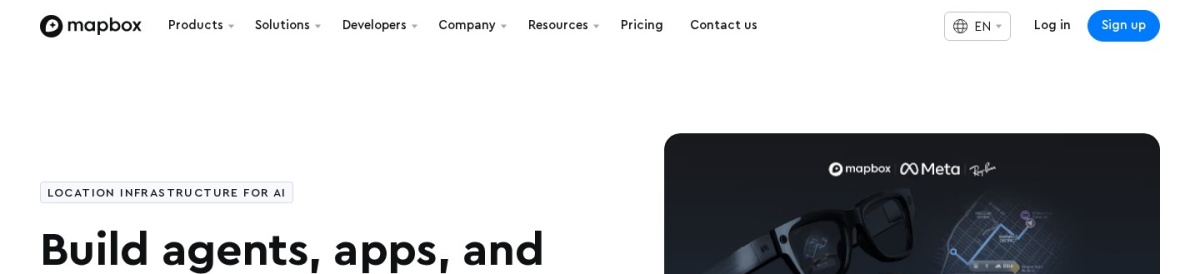
Mapbox is the closest full replacement for the Google Maps API, with interactive maps, geocoding, search, directions and navigation SDKs in one platform. The free tier covers 50,000 web map loads, 100,000 temporary geocoding requests and 100,000 directions requests every month.
The trade off is billing complexity. Every product meters separately, a card is required to unlock the free tier, and costs climb fast once you pass the free allowances. It suits teams that want full control over map design and are ready to watch usage.
What we like
Most complete feature set in this list
Generous free tier across maps, geocoding and routing
Mapbox Studio gives full control over map style
Large developer community and SDKs for web and mobile
Watch out for
Each product bills separately, so costs are hard to predict
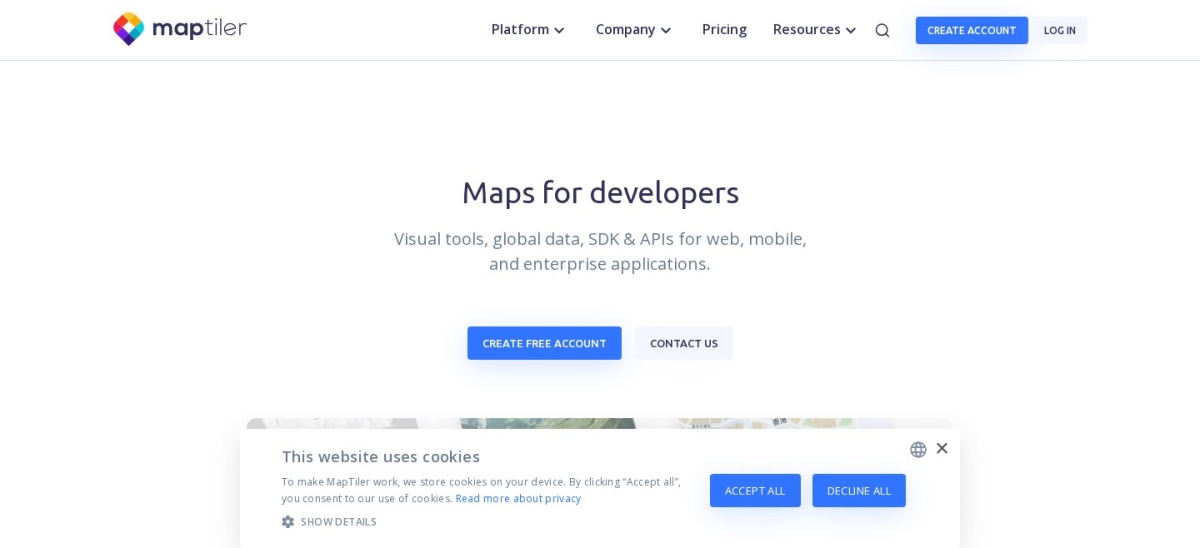
MapTiler is a hosted maps platform built on OpenStreetMap data, with vector and raster tiles, geocoding, static maps and a JavaScript SDK close to Mapbox GL. The free plan allows 100,000 API requests and 5,000 map sessions a month for non-commercial use.
The trade off is scope. There is no routing API, and the free plan excludes commercial use, so production apps need the $30 Flex plan. It suits developers who mainly need beautiful maps and geocoding at a flat monthly price.
What we like
Cheapest flat plan in this list at $30 a month
Clean map styles and a Mapbox GL-style SDK
Can self-host the whole stack with MapTiler Server
Rated 4.7 out of 5 on G2
Watch out for
No routing API
Free plan is non-commercial only
Smaller ecosystem than Mapbox
Flex adds commercial use, 500,000 requests and 3 team seatsVisit maptiler.com
03
Geoapify
4.9/5on G2 (20 reviews, checked Nov 2026)
Paid from$59/mo
Best for geocoding-heavy apps
Free credits3,000/day
Cheapest paid plan$59/month
RoutingYes, plus isochrones
Free commercial useYes, with attribution
geoapify.com
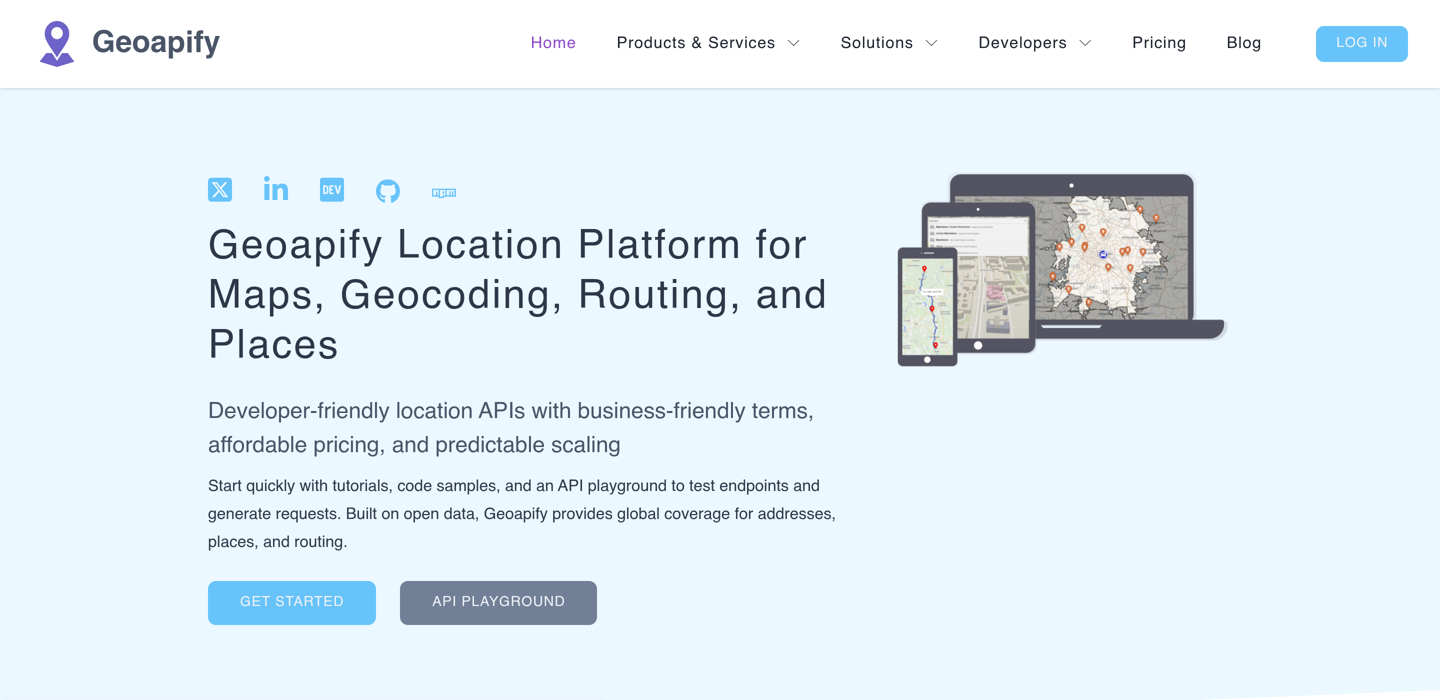
Geoapify homepage, captured Nov 2026.
Geoapify is a location platform with map tiles, geocoding, places search, routing, isochrones and address autocomplete behind one credit system. The free plan gives 3,000 credits a day and allows commercial use with attribution.
The trade off is the credit maths. Each API call costs credits at different rates, so estimating a monthly bill takes care, and paid plans start at $59 a month. It suits small teams that need geocoding and routing without per-product billing.
What we like
Highest G2 rating in this list at 4.9 out of 5
Free plan allows commercial use with attribution
Geocoding, routing and maps in one credit system
Soft limits, so small overages do not cut you off at once
Watch out for
Credit costs differ per API, so bills are hard to forecast
Paid plans start higher than MapTiler or LocationIQ
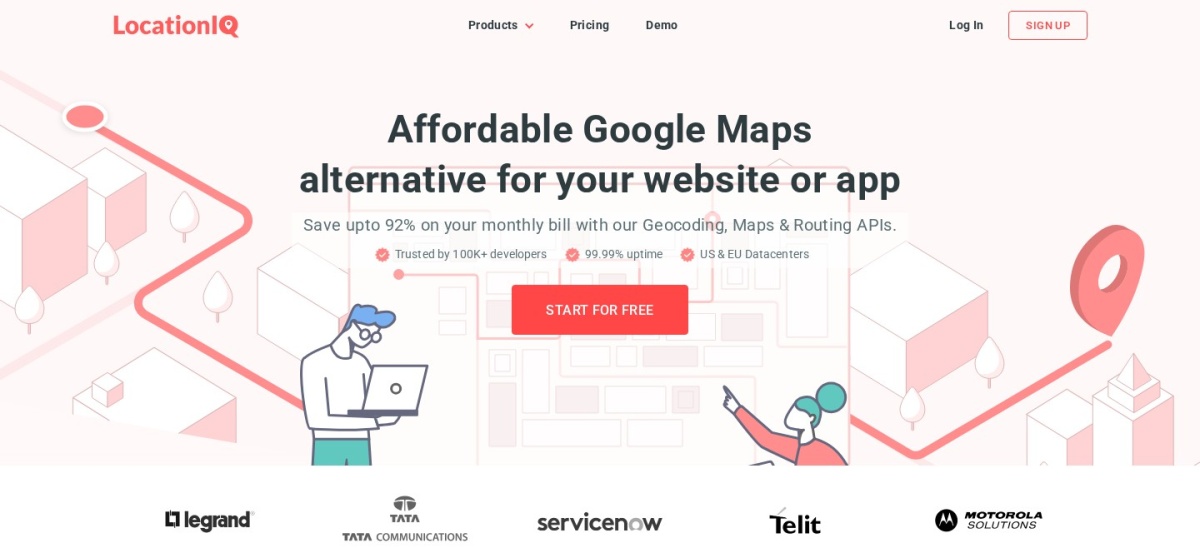
LocationIQ is a geocoding-first platform that also serves map tiles, static maps and routing APIs from US and EU data centres. The free plan allows 5,000 requests a day, and the $45 Maps Lite plan adds 10,000 map views a day.
The trade off is the plan split. Maps Lite covers map APIs only, so full geocoding and routing need the $100 Developer plan. It suits apps that need reliable geocoding and maps at a low fixed price.
What we like
Low fixed price with a genuinely useful free plan
Geocoding, maps and routing from one account
Lets you store geocoding results, unlike some rivals
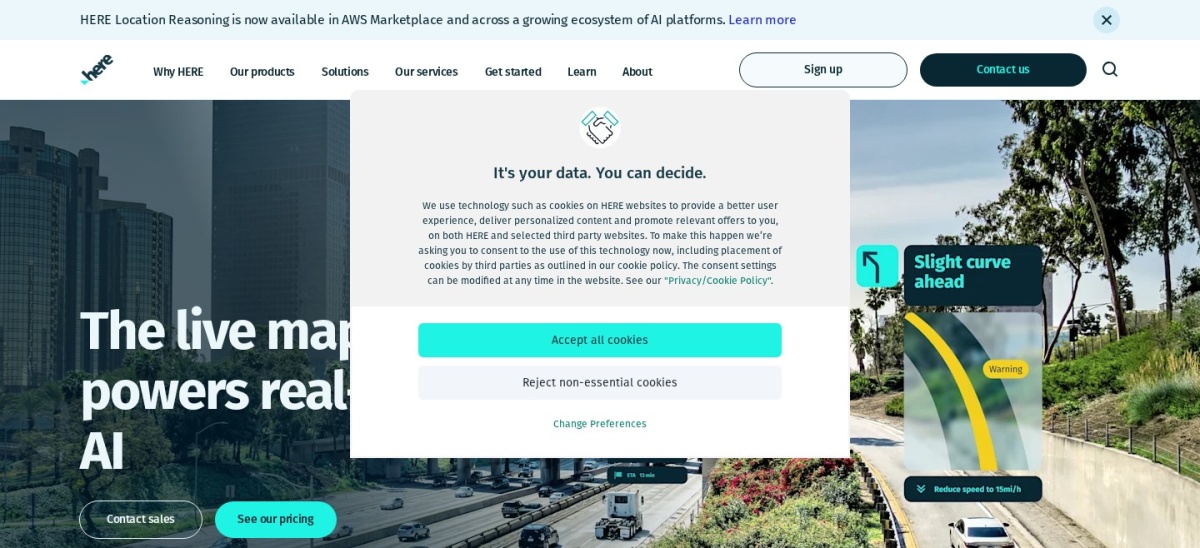
HERE is the former Nokia mapping business, now owned by car makers, and its location platform covers maps, routing, geocoding, traffic and geofencing. The free Base plan includes monthly transaction allowances on most services, and overage costs $1 per 1,000 transactions.
The trade off is pricing clarity. Allowances differ by service, rates vary by volume tier, and the flat Pro plan costs $449 a month. It suits fleet, automotive and logistics apps that need live traffic and routing depth.
What we like
Largest free allowance in this list
Strong live traffic, routing and fleet features
Powers maps in many cars and fleet systems
Overage at $1 per 1,000 is cheap at scale
Watch out for
Allowances and rates differ by service, so quotes vary
Flat Pro plan is $449 a month
Lowest G2 rating in this list at 4.0 out of 5
Pro adds up to 1 million transactions a month plus supportVisit here.com
06
ArcGIS Location Platform
4.5/5on G2 (190 reviews, checked Nov 2026)
Paid from$0.15/1k tiles
Best for data-heavy enterprise mapping
Free basemap tiles2,000,000/month
Free geocodes20,000/month
Tile rate$0.15 per 1,000
Places searchYes, $8 per 1,000
location.arcgis.com
ArcGIS Location Platform homepage, captured Nov 2026.
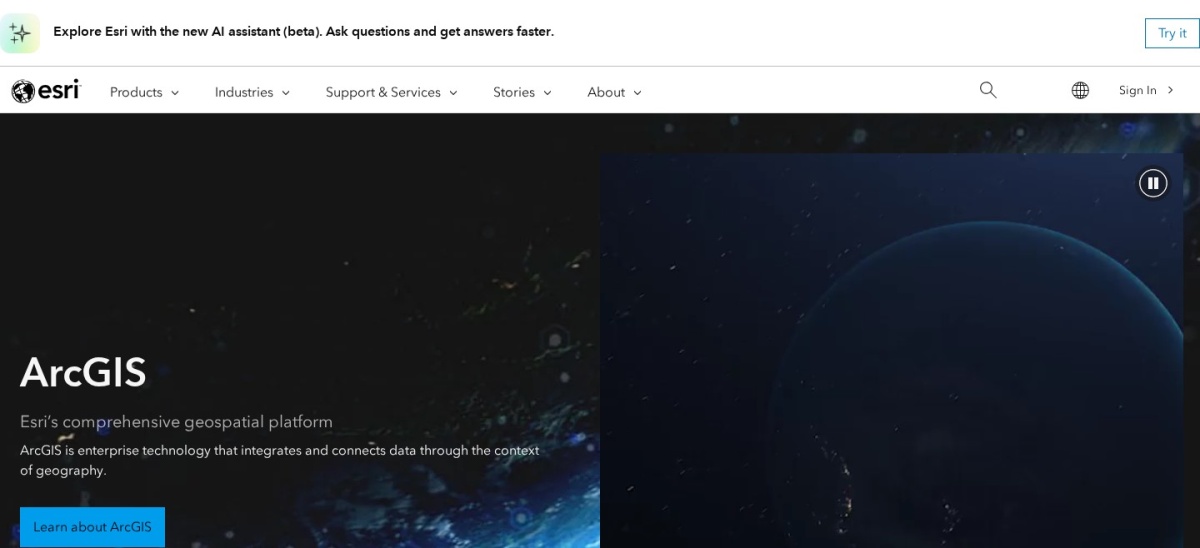
ArcGIS Location Platform is Esri's pay-as-you-go developer service, with basemap tiles, geocoding, routing, places search and elevation APIs. The free tier includes 2 million basemap tiles, 20,000 geocodes and 20,000 routes every month, with no card required.
The trade off is the learning curve. The platform is deep and enterprise-shaped, and stored geocoding costs $4 per 1,000 requests instead of $0.50. It suits teams already in the Esri world or building data-heavy mapping apps.
What we like
Largest free tile allowance in this list
Deep GIS data and analysis behind the APIs
No card needed for the free tier
Rated 4.5 out of 5 from 190 G2 reviews
Watch out for
Enterprise-shaped docs and setup
Stored geocoding costs eight times the single-use rate
G2 rating is for ArcGIS Online, not this exact product
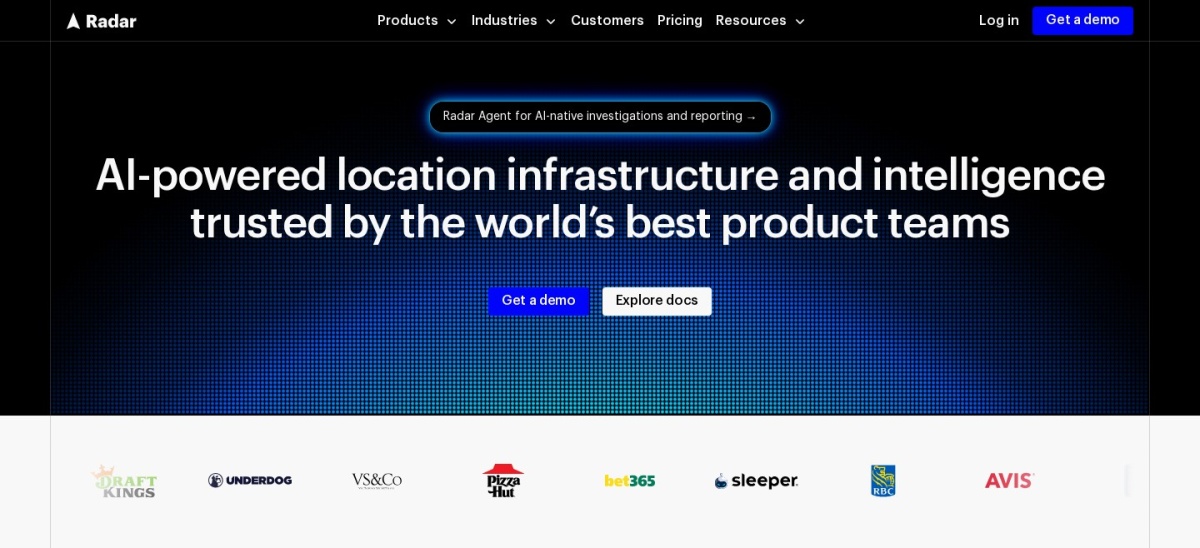
Radar is a location platform with maps, geocoding, address autocomplete, routing and geofencing SDKs in one stack. Core Maps starts at $0.50 per 1,000 API calls, and the same platform adds fraud checks and geofencing for apps that need them.
The trade off is access. There is no free tier, every plan is an annual agreement set by quote, and small teams go through sales. It suits product teams that want maps plus geofencing under one contract.
What we like
Maps, geocoding, routing and geofencing in one platform
Rated 4.8 out of 5 on G2, second highest here
Published starting rates, unlike most quote-only rivals
Strong support scores in G2 reviews
Watch out for
No free tier or self-serve signup
Pricing is by quote, so small teams go through sales
CARTO is a cloud spatial analytics platform that runs maps and location services inside data warehouses such as BigQuery and Snowflake. Its Builder creates shareable maps, and its APIs cover geocoding, routing and location data services.
The trade off is focus and price. CARTO is built for analytics teams, not for dropping a simple map on a website, and pricing is metered pay-as-you-go or annual tiers by quote. It suits data teams mapping warehouse data at scale.
What we like
Runs spatial analysis inside your warehouse, no data moves
Fast, shareable maps from billions of rows
12,000 ready-to-use datasets in the Data Observatory
Rated 4.5 out of 5 on G2 from 78 reviews
Watch out for
No free plan, only a 30-day trial
No published unit prices, so budgets need a quote
Needs a data warehouse to shine
Pay as you go is metered; committed tiers add quotas and SLAsVisit carto.com
09
MapQuest
4/5on G2 (2 reviews, checked Nov 2026)
Starts at$119/mo
Best for simple US-focused map apps
Basic plan$119/month, 30,000 txns
Pay as you go$0.0045 per txn
Free transactions50,000 one-time credits
Truck routingYes
developer.mapquest.com
MapQuest homepage, captured Nov 2026.
MapQuest is one of the oldest mapping brands, and its developer platform covers geocoding, directions, route matrices, place search, traffic and static maps. The Basic plan costs $119 a month for 30,000 transactions, and pay-as-you-go starts at $0.0045 per transaction.
The trade off is value and trust signals. Its G2 rating rests on only 2 reviews, stored geocodes need an Enterprise account, and the 50,000 free transactions are one-time credits that expire on 1 January 2027. It suits US-focused apps with modest, predictable volume.
Free plans cover small apps well. Mapbox, MapTiler, Geoapify, LocationIQ, HERE and ArcGIS all let you ship a real map without paying, though MapTiler limits its free plan to non-commercial use.
Pay-as-you-go plans win when traffic is uneven. You pay nothing in quiet months and only for what you use in busy ones, but a traffic spike can surprise you, so set alerts early.
Flat monthly plans win when traffic is steady. MapTiler at $30, LocationIQ at $45 and Geoapify at $59 a month are easy to budget, and overage is capped by the plan quota.
Quote-only tools are the dearest route in. Radar and CARTO need a sales conversation and an annual agreement, so shortlist them only when you need geofencing or warehouse analytics as well as maps.
How we chose
We started from the mapping APIs developers name most often as Google Maps replacements, then kept the ones with published pricing and a public rating on G2.
Prices come from each vendor's pricing page, checked on 29 November 2026. Ratings and review counts come from G2 on the same day. Where a vendor bills by usage, the list shows the first paid unit rate.
We left out tools with no public rating, including TomTom, Stadia Maps and Azure Maps. No vendor paid for a place, and we do not claim to have used these tools ourselves.
How to choose a Google Maps API alternative
Start with your monthly map loads and API calls, then match the billing model to that volume.
Count your monthly usage first. Check how many map loads, geocodes and routes you make in a month. Free tiers cover most small sites, so measure before you pay.
Match the billing model to your traffic. Pick a flat plan for steady traffic, pay-as-you-go for spiky traffic, and a quote plan only when you need enterprise features.
Check the APIs you actually call. MapTiler has no routing API, and LocationIQ keeps full API access on a dearer plan. See how to use the WordPress REST API if your app talks to APIs from WordPress.
Test the free tier with real addresses. Build a small prototype on the free plan and check map quality, geocoding accuracy and routing in the places your users actually go.
FAQ
What is the best alternative to the Google Maps API?
Mapbox is the best alternative for most developers. It covers maps, geocoding, search, directions and navigation in one platform, with 50,000 free web map loads a month, then $5 per 1,000 loads, and it is rated 4.3 out of 5 on G2.
What is the cheapest Google Maps API alternative?
MapTiler is the cheapest flat-priced option at $30 a month for the Flex plan. If your usage is tiny, Mapbox, HERE and ArcGIS all have free tiers that cover many small apps at no cost at all.
Is there a free alternative to the Google Maps API?
Yes. Mapbox, MapTiler, Geoapify, LocationIQ, HERE and ArcGIS Location Platform all have free plans. MapTiler limits its free plan to non-commercial use, while Geoapify allows commercial use with attribution.
Which Google Maps API alternative is best for beginners or small teams?
Geoapify is the easiest start for small teams, with a free plan, one credit system and no card required. MapTiler is the simplest flat-priced pick if you mainly need maps and geocoding.
Mapbox vs MapTiler: which is better?
Mapbox is better when you need the full stack, including routing and navigation SDKs. MapTiler is better when you mainly need maps and geocoding at a flat $30 a month, though it has no routing API.
Which alternative is best for geocoding only?
Geoapify is the best geocoding-first pick, rated 4.9 out of 5 on G2, with 3,000 free credits a day. LocationIQ is the budget pick at $45 a month for maps, with full geocoding on its $100 Developer plan.
SaaS SEO and WordPress specialist with about 8 years of experience. Rakib compares WordPress plugins, themes, hosting and software using public pricing, documentation and user reviews. See how we rank.