WatchGuard is the best of the Fortinet alternatives for small and mid-size teams, with the highest reviewer rating in this list and a single-suite bundle that keeps licensing simple. Pick Netgate pfSense if you want the lowest fixed software price, or Sophos Firewall if you run Sophos endpoints already.
How we make this list: we compare pricing pages, product documentation and public user reviews, then re-check every price before each update. No product paid for a place. Disclosure.
WatchGuard leads at 4.7 out of 5 on G2 from 267 reviews, the joint-highest rating here.
Netgate pfSense Plus costs $129 a year per instance, the only fixed software price in the list.
Sophos Firewall, Check Point, Palo Alto Networks, Barracuda and Zscaler all sell by quote, so budget for a sales call.
SonicWall is the budget branch pick, rated 4.1 out of 5 from 153 G2 reviews.
Every tool here except pfSense needs hardware or a subscription bundle, so compare total cost, not the headline.
How do you choose among Fortinet alternatives?
Fortinet wins on throughput per dollar, so an alternative has to beat it on price, simplicity or ecosystem fit. Most buyers leave FortiGate because licensing gets complex or because they want one console for firewall, endpoint and cloud.
Start with your deployment shape. Appliance firewalls such as WatchGuard, Sophos and SonicWall suit offices with a rack and a fixed site, while Zscaler suits teams with no office at all.
Check the subscription behind the box. The hardware price is only part of the bill, and threat prevention, URL filtering and support usually arrive as yearly subscriptions that renew at list price.
Open-source pfSense is the exception. It runs on your own hardware for a flat software fee, but you supply the box, the setup and the support.
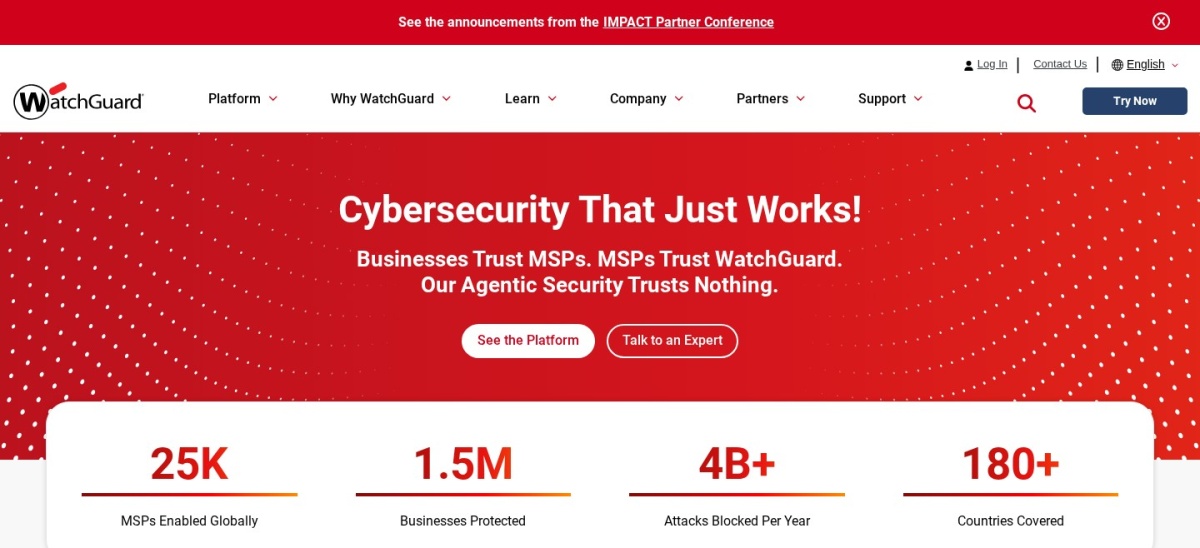
WatchGuard is a network security platform built around its Firebox appliances and a single Total Security Suite bundle. The suite covers firewall, intrusion prevention, URL filtering, VPN and threat detection in one licence, and WatchGuard Cloud manages every box from one dashboard.
The trade off is the channel. WatchGuard sells through partners and MSPs, so there is no public list price and small buyers price through a reseller. It suits small businesses and MSPs that want one bundle and one console instead of stacking licences.
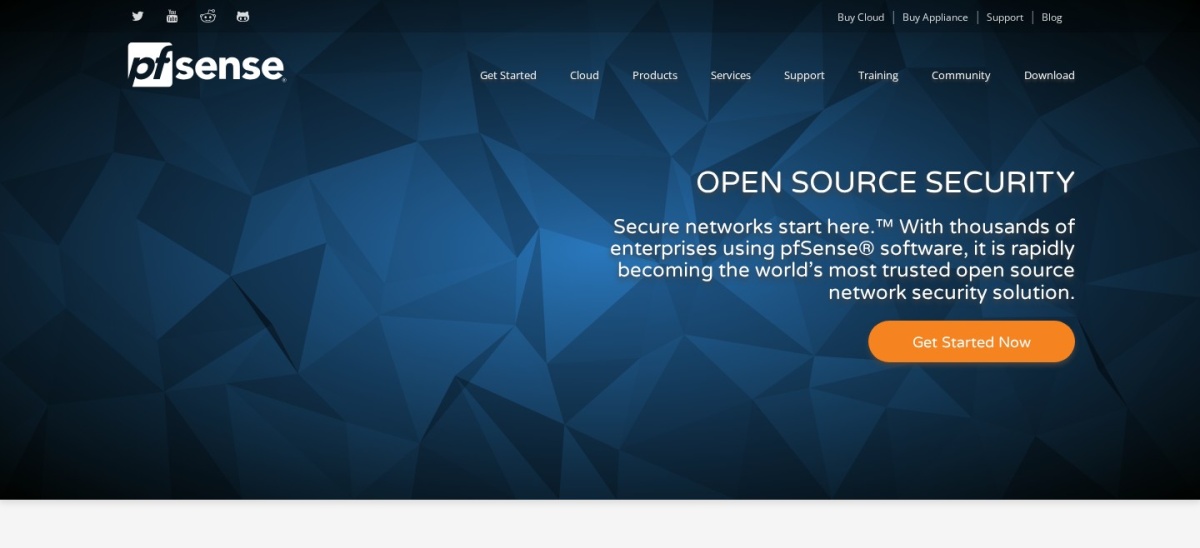
Netgate pfSense is an open-source firewall and router that runs on Netgate appliances or on your own hardware. The commercial build, pfSense Plus, covers firewall rules, NAT, VPN, traffic shaping and intrusion detection packages, and the free Community Edition covers the same core jobs at no cost.
The trade off is that you do the work. The $129 a year TAC Lite fee buys the software licence and best-effort support, not hardware, setup or monitoring. It suits small teams with in-house skill that want a fixed low software price.
Sophos Firewall is the XGS appliance line from Sophos, built to work with Sophos endpoints through a security heartbeat. The firewall shares health signals with the endpoint agent, so an infected laptop can be isolated at the network edge, and Sophos Central manages firewall and endpoint from one console.
The trade off is price opacity. Sophos sells by quote through partners, and the full feature set needs subscription modules on top of the appliance. It suits teams that already run Sophos endpoints and want the two to talk.
Check Point NGFW is the Quantum firewall line, aimed at regulated industries and large estates. It pairs intrusion prevention, sandboxing and AI-driven threat intelligence with central management through SmartConsole, and reviewers rate it 4.5 out of 5 on G2 from 586 reviews.
The trade off is cost and complexity. Pricing is quote-only, the platform assumes trained staff, and small teams may find the console heavy. It suits banks, healthcare and government teams that need audited threat prevention.
Palo Alto Networks NGFW homepage, captured Nov 2026.
Palo Alto Networks NGFW is the premium firewall in this list, known for App-ID application control and deep traffic visibility. It inspects traffic by application and user rather than by port, and Panorama manages fleets of firewalls from one console for large estates.
The trade off is the bill. Hardware, Threat Prevention, WildFire and DNS Security are separate subscriptions, and reviewers call the licensing confusing. It suits security-mature enterprises that can staff and fund the platform.
Barracuda CloudGen Firewall homepage, captured Nov 2026.
Barracuda CloudGen Firewall is a firewall with SD-WAN built in, aimed at companies with many branches. It routes traffic across links, secures site-to-site VPNs and filters web traffic from one box, and the cloud console manages every site from one place.
The trade off is review volume. Only 51 G2 reviews back the 4.5 rating, the smallest base in this list, so treat the score with care. It suits multi-site teams that want SD-WAN without a second box.
Zscaler Internet Access homepage, captured Nov 2026.
Zscaler Internet Access is a cloud security service, not a box. Users connect straight to the Zscaler cloud, which inspects web traffic, blocks threats and applies policy by user, so there is no appliance to rack and no traffic backhauled through a data centre.
The trade off is the model change. Pricing is quote-only, the G2 review base is only 59 reviews, and teams used to owning a firewall give up direct control. It suits remote-first companies with no office network to defend.
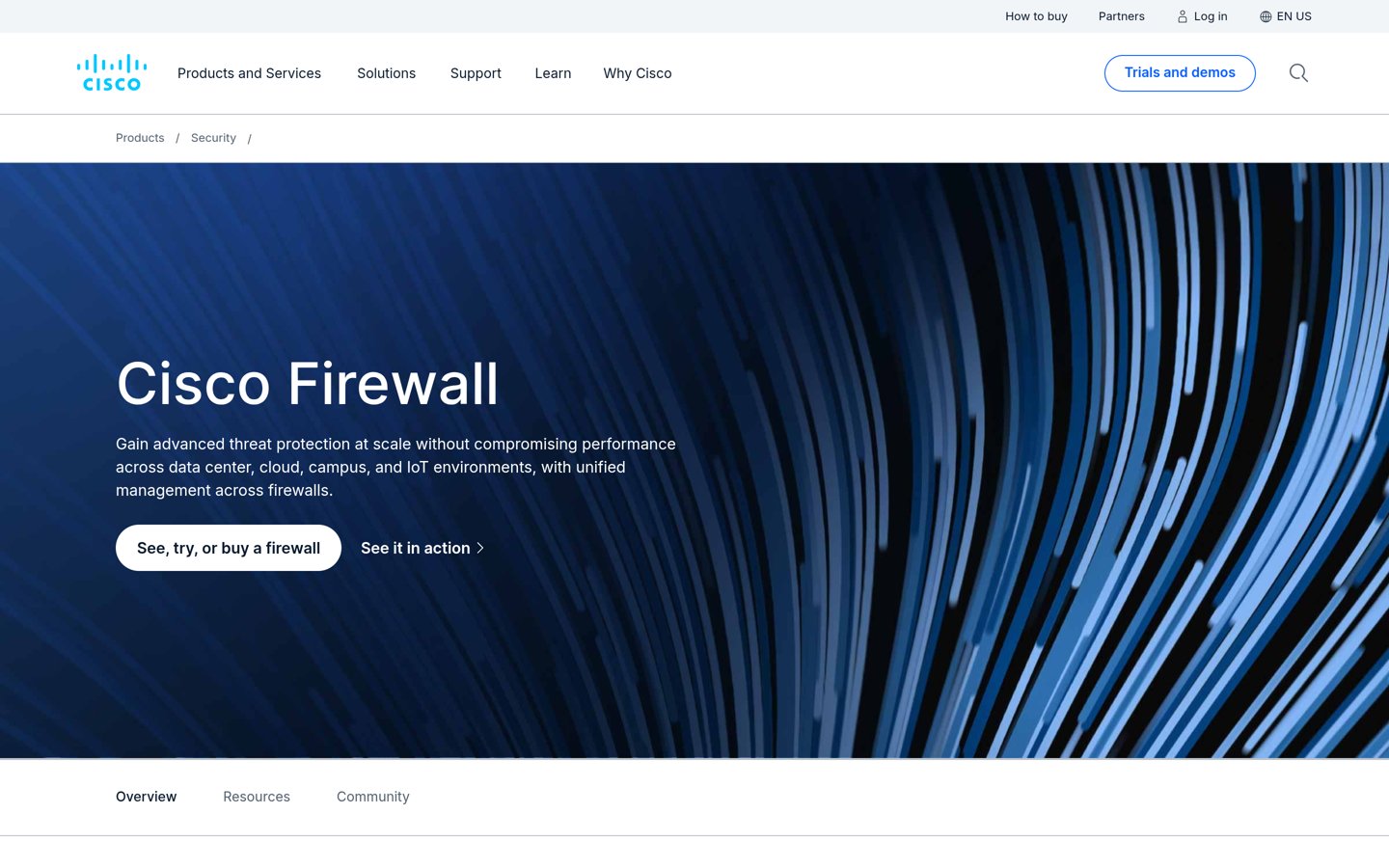
Cisco Secure Firewall homepage, captured Nov 2026.
Cisco Secure Firewall is the Threat Defense line for teams already running Cisco networks. It covers firewall, intrusion prevention and URL filtering, and the Firewall Management Center runs policy across data centre, cloud and campus firewalls from one console.
The trade off is ecosystem lock-in. Pricing is quote-only, the console assumes Cisco skills, and the G2 rating of 4.2 is the second-lowest here. It suits large Cisco estates that want one vendor across the network.
SonicWall NGFW is the Gen 7 firewall line for branch offices and small businesses. It inspects memory in real time to catch threats that hide from file scans, and the small TZ appliances fit a branch cupboard while the NSa line covers larger sites.
The trade off is the rating. At 4.1 out of 5 it is the lowest-rated firewall in this list, and pricing still runs through partners. It suits budget buyers that need a small appliance at many sites.
Only pfSense offers a free edition worth using. The Community Edition covers firewall, routing and VPN at no cost, but you supply the hardware and the support.
Every other tool here is quote-only, and the real cost is the yearly subscription behind the box. Threat prevention, URL filtering and sandboxing usually renew separately.
For a single office, the cheapest route is pfSense Plus at $129 a year on your own box. For a team without firewall skills, WatchGuard's single bundle is the simpler buy.
How we chose
We started from the firewall products G2 reviewers compare most often with FortiGate, then kept the nine with a verifiable G2 rating and a current product page.
Prices come from each vendor's own site, checked on 29 November 2026. Only pfSense Plus publishes a fixed software price, at $129 a year; the rest sell by quote, so the list says Custom where no list price exists.
We left out firewalls with no verifiable rating on G2, Capterra or Trustpilot. No vendor paid for a place, and we do not claim hands-on testing for this list.
How to choose a Fortinet alternative
Start with where your users actually sit, then price the whole subscription, not just the box.
Map your sites first. Count offices, remote workers and cloud workloads before you shortlist. Appliances suit fixed sites, while cloud options suit remote teams.
Ask for the full subscription price. Hardware is only part of the bill. Get the yearly cost of threat prevention, filtering and support in writing.
Check the console you will live in. A firewall is managed weekly, so pick a console your team already knows or can learn fast.
Trial it on one site. Run the shortlist on a branch or a lab network first, then roll the winner out to the rest of the estate.
FAQ
What is the best Fortinet alternative in 2026?
WatchGuard is the best Fortinet alternative for most small and mid-size teams. It holds the highest G2 rating in this list at 4.7 out of 5, and its Total Security Suite bundles firewall, intrusion prevention and filtering in one licence.
Is there a free alternative to Fortinet?
Netgate pfSense Community Edition is free and open source, and it covers firewall, routing and VPN on your own hardware. The commercial build, pfSense Plus, costs $129 a year per instance, which is still the lowest fixed price here.
How much does a Fortinet alternative cost?
Most alternatives sell by quote, so there is no public list price for WatchGuard, Sophos, Check Point, Palo Alto Networks or Cisco. The only fixed software price here is pfSense Plus at $129 a year, and hardware and subscriptions sit on top for appliance firewalls.
Which Fortinet alternative is best for small business?
WatchGuard is the best pick for small businesses, with the highest rating here and a single bundle that keeps licensing simple. SonicWall is the budget branch pick, and pfSense suits teams with the skill to run their own box.
Fortinet vs Palo Alto Networks: which is better?
Palo Alto Networks wins on application visibility and threat intelligence, while Fortinet wins on throughput per dollar and simpler licensing. Palo Alto Networks suits security-mature enterprises; Fortinet suits teams that want performance without the premium bill.
Do I need hardware for a Fortinet alternative?
Most alternatives need an appliance, except Zscaler Internet Access, which runs entirely in the cloud, and pfSense, which runs on your own hardware or a virtual machine. Cloud options suit remote teams; appliances suit offices with a fixed site.
SaaS SEO and WordPress specialist with about 8 years of experience. Rakib compares WordPress plugins, themes, hosting and software using public pricing, documentation and user reviews. See how we rank.