Zoho Inventory is the best Fishbowl alternative for most small businesses, with a free plan for 50 orders a month and Standard at 29 dollars a month. Katana suits makers who also manufacture, and Cin7 Core fits multichannel sellers at scale.
How we make this list: we compare pricing pages, product documentation and public user reviews, then re-check every price before each update. No product paid for a place. Disclosure.
Zoho Inventory leads for small sellers, with a free plan for 50 orders a month and Standard at $29.
Katana is the only maker-first pick, with production planning and a free plan for 30 SKUs.
Cin7 Core suits multichannel brands at scale, with Standard at $349 a month for 5 users.
Finale holds the highest G2 rating here at 4.8, though from only 41 reviews.
NetSuite is the only quote-only option, built for companies that want inventory inside a full ERP.
How do you pick a Fishbowl alternative?
Fishbowl is built around QuickBooks and warehouse work, so a good alternative keeps the barcode scanning and reorder points without the desktop weight. The best replacement depends on whether the business makes things, sells across channels, or just needs stock counts.
Start with the accounting link. Fishbowl users usually run QuickBooks, so check whether the replacement syncs orders and stock with QuickBooks Online or Xero before anything else.
Then check the price shape. Zoho starts at $29 a month and Sortly at $49, while Cin7, Ordoro and Unleashed start at $349 to $399, so the list splits into budget picks and scale picks.
Finally, count the review base. Finale and Ordoro hold 4.8 ratings from 41 and 14 reviews, while NetSuite holds 4.1 from 4,972, so a high rating on a small sample deserves more care than a lower one on thousands.
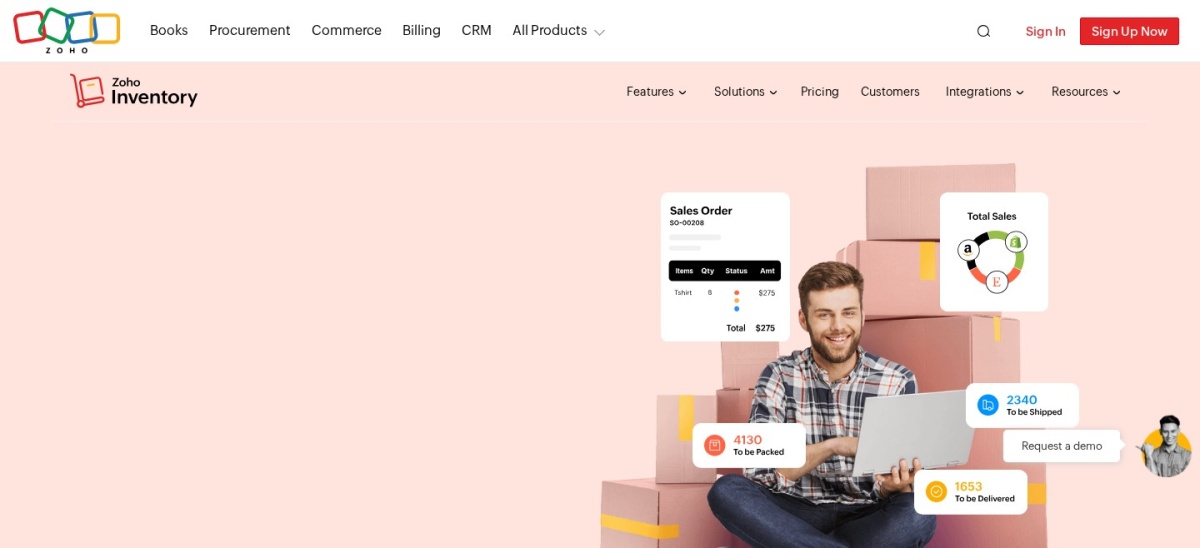
Zoho Inventory is a cloud inventory and order system for small product businesses, with stock, orders, fulfilment and accounting links in one place. The free plan covers 50 orders a month, one user and one warehouse, and Standard costs $29 per organization a month billed annually for 500 orders, 3 users and 2 locations.
The trade off is order caps. The free plan suits a side seller, but a store past 500 orders a month moves to Premium at $79, and advanced warehousing costs extra as an add-on. It suits small sellers who want the cheapest real system without giving up order management.
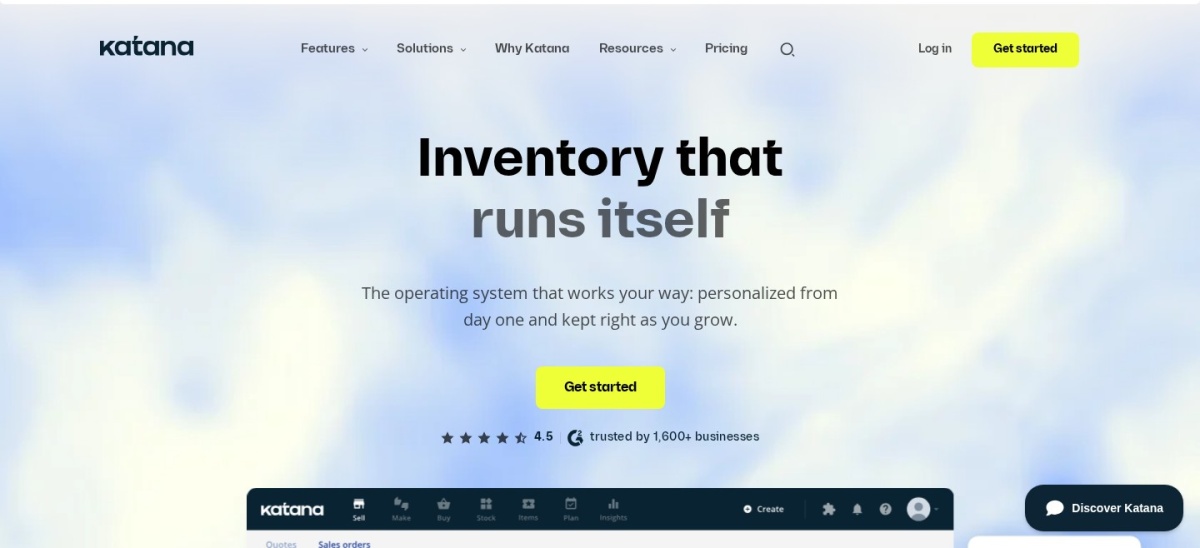
Katana is inventory software built for makers, with production planning, bills of materials and shop-floor workflows alongside stock tracking. The free plan covers 30 SKUs with all features included, and Core was listed at $299 a month for unlimited SKUs and users.
The trade off is pricing. Katana's pricing page now lists only custom Advantage contracts, so the $299 Core figure comes from checks earlier in November 2026, and traceability and manufacturing extras cost extra. It suits brands that make or assemble what they sell.
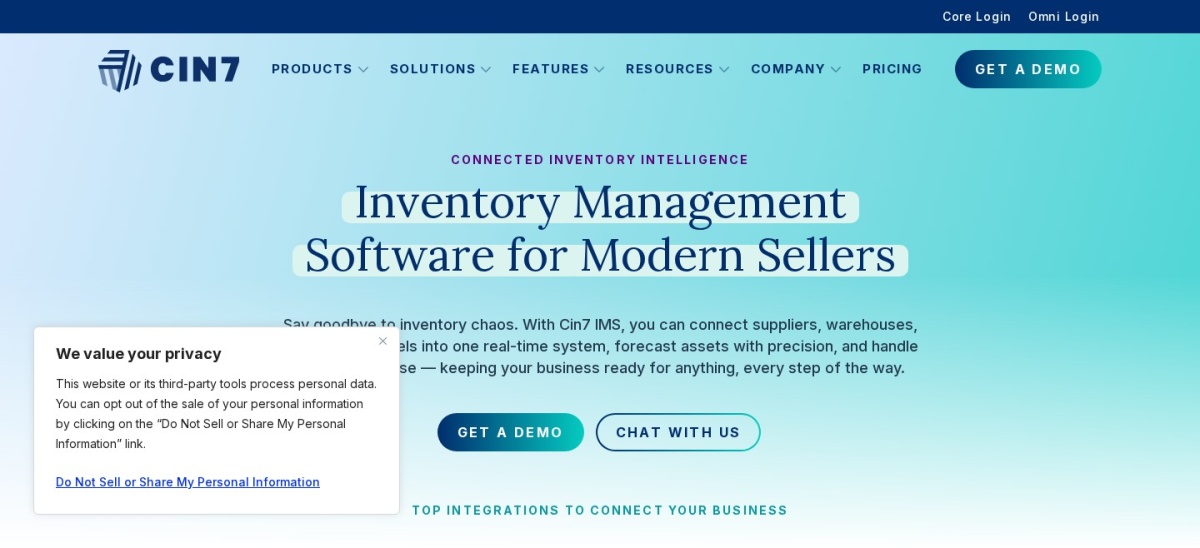
Cin7 Core is an inventory and order platform for brands selling on Shopify, Amazon and wholesale at the same time. Standard costs $349 a month for 5 users, 6,000 sales orders a year, 2 ecommerce integrations and unlimited locations, with QuickBooks and Xero links built in.
The trade off is price and setup. Entry starts at $349 a month, the pricing page shows no figures so the price rests on checks earlier in November 2026, and setup takes real effort. It suits growing brands that need stock in step across every channel.
inFlow Inventory is a cloud inventory and order system for small to mid-size product businesses, with cycle counting, stock reconciliation and barcode support. Entrepreneur costs $129 a month billed annually for 2 team members, 1,200 sales orders a year, 1 integration and 1 location.
The trade off is order limits and the interface. Entrepreneur caps at 100 orders a month, manufacturing features cost extra as an add-on, and reviewers call the interface dated. It suits B2B wholesalers who want simple barcode-led stock control.
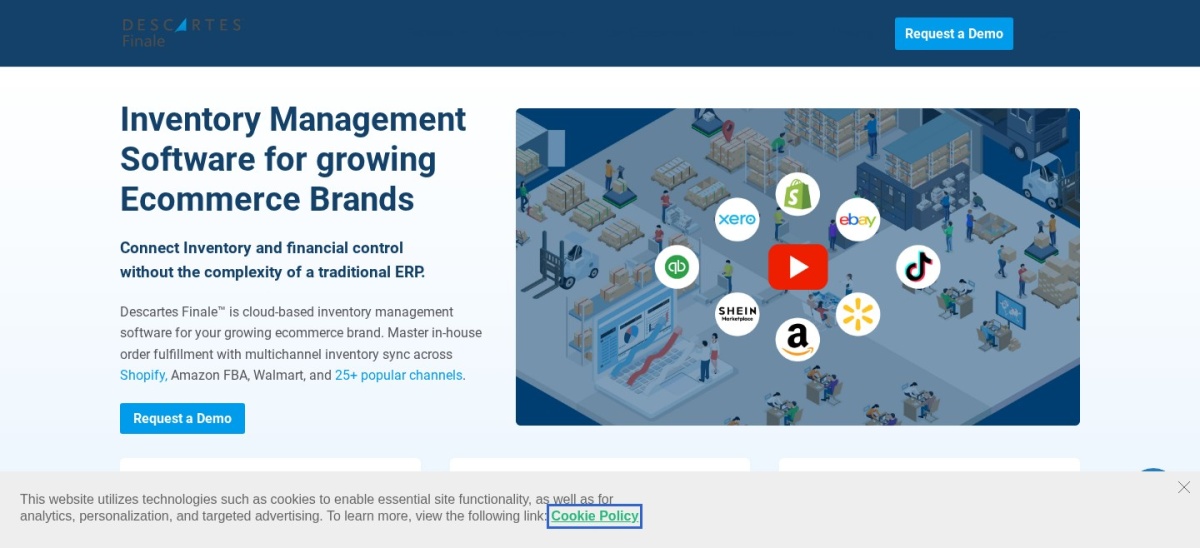
Finale Inventory is a cloud inventory platform, now part of Descartes, for ecommerce sellers that need warehouse discipline without enterprise software. Barcode scanning, bin locations, lot and serial tracking and purchase order management keep high-SKU catalogs accurate across Shopify and Amazon.
The trade off is price clarity and evidence depth. Starter costs $63 a month billed annually, other reads list $99 or $499, and its 4.8 G2 rating rests on only 41 reviews. It suits warehouse-heavy sellers shipping volume across channels.
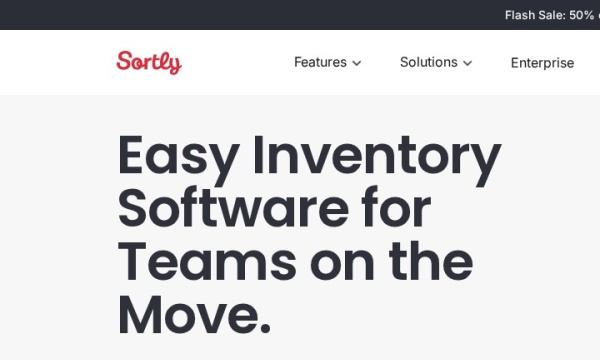
Sortly is a mobile-first inventory app for tracking items, tools and supplies by photo, QR code and location, rather than running a full sales operation. The free plan covers 100 items, and Advanced costs $49 a month as the regular price, with the $24 figure on its site a 50 percent first-year discount.
The trade off is depth. Sortly answers where things are, but it has no order management or accounting sync, and its G2 rating of 4.3 comes from only 27 reviews. It suits small teams that need simple visual tracking on phones.
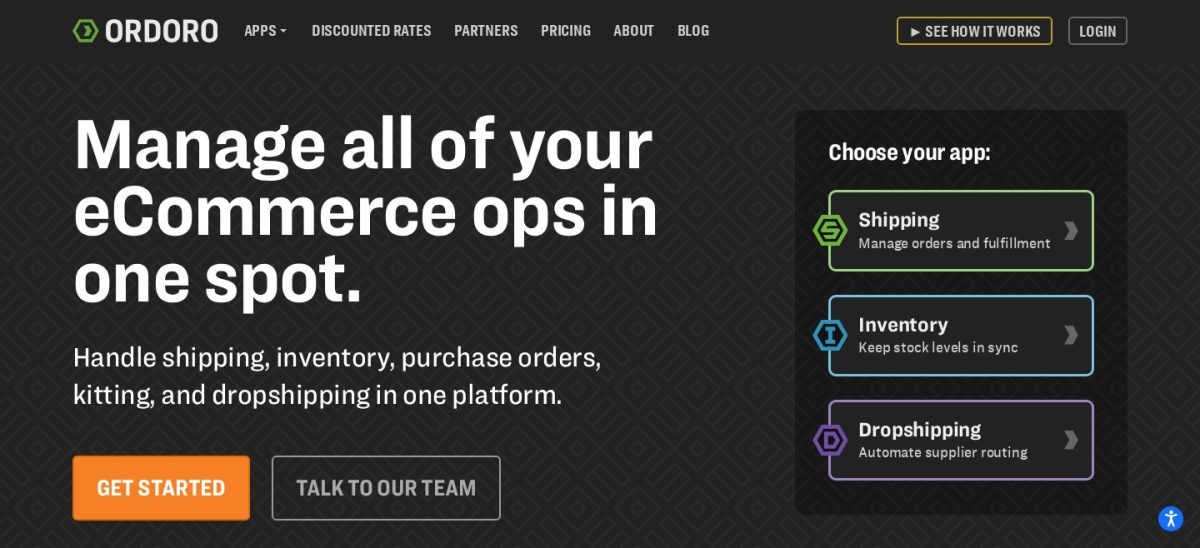
Ordoro is an operations platform for ecommerce merchants that unifies shipping, inventory management and dropshipping in one system. Shipping has a free plan, but the inventory app costs $349 a month, with automated order forwarding and forecasting for brands that ship volume.
The trade off is the review base and the split pricing. Its 4.8 G2 rating comes from only 14 reviews, and shipping, inventory and dropshipping are sold as separate apps. It suits ecommerce brands focused on shipping and fulfilment.
Unleashed is inventory software for product businesses that run Xero or QuickBooks and need batch and serial tracking. It covers stock, purchase orders and sales orders with pricing tied to order volume, starting at $399 a month, and connects Shopify sales to purchasing and warehousing.
The trade off is price and conflicting ratings. At $399 a month it only makes sense once volume justifies the depth, and G2 reads range from 4.0 to 4.3 across checks. It suits wholesalers and distributors on Xero or QuickBooks.
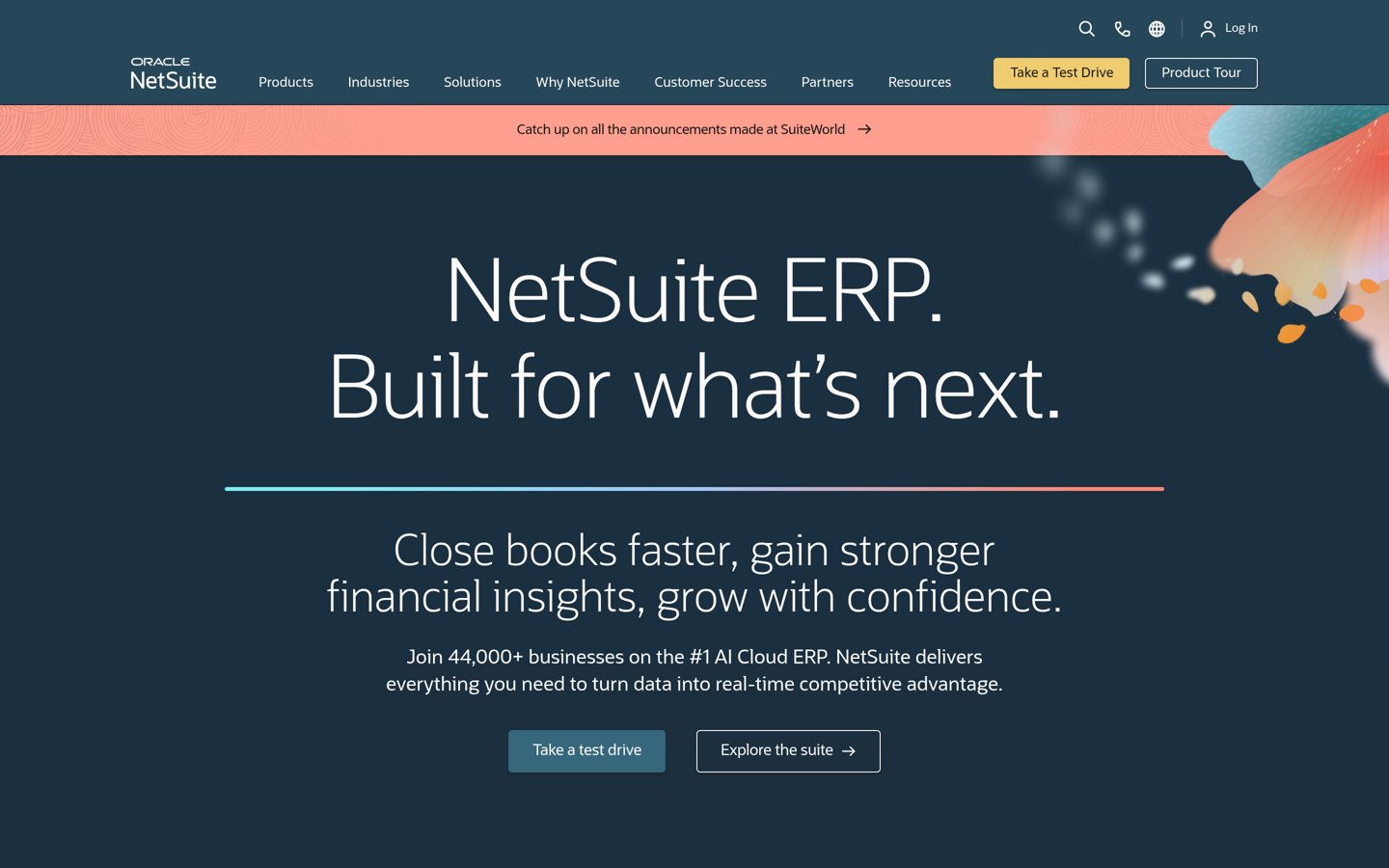
NetSuite is a cloud ERP that includes inventory management alongside finance, CRM, ecommerce and order management in one system. Inventory is priced by custom quote, with demand planning, warehouse management and advanced fulfilment for mid-size to large companies.
The trade off is scale and cost. NetSuite is the only quote-only option here, implementation takes months, and it is far more system than a small seller needs. It suits companies that want inventory inside a full ERP.
Free plans cover the basics well. Zoho, Katana and Sortly all let a small seller track stock without paying, which is enough for a handful of products.
Paid plans mostly add volume and channels. Higher order caps, more users, more locations and multichannel sync are the features that push most sellers onto a paid plan.
If manufacturing matters, budget for the plan with production features. Katana includes bills of materials on its free plan, while inFlow charges extra for manufacturing as an add-on.
For a seller that only needs counts and locations, the free plan is often enough. For a seller that ships across channels every day, a paid plan pays for itself in saved hours.
How we chose
We started from the inventory tools most often named as Fishbowl replacements in 2026 comparisons, then kept 9 established products with published prices, a public G2 or Capterra rating and real inventory features.
Prices come from each vendor's pricing page, checked on 29 November 2026, with Zoho Inventory confirmed on its official pricing page today. Katana's page now lists only custom Advantage contracts, so its Core figure comes from checks earlier in November. Ratings and review counts come from G2 or Capterra on the same day.
We left out tools with no verifiable rating or no published price. No vendor paid for a place, and we do not claim hands-on testing for this list.
How to choose a Fishbowl alternative
Check the accounting link, then the caps, then the price.
Check the accounting link first. Fishbowl users usually run QuickBooks, so confirm the replacement syncs with QuickBooks Online or Xero before comparing features.
Match the tool to the work. Katana suits makers, Cin7 suits multichannel sellers, and Sortly suits teams that only need stock counts.
Count the order and user caps. Zoho Standard covers 500 orders a month, inFlow Entrepreneur covers 100, and Cin7 Standard covers 6,000 a year.
Trial the top two with real stock. Run one live warehouse cycle for two weeks and check whether counts, picks and reorder points work the way your team works.
FAQ
What is the best Fishbowl alternative in 2026?
Zoho Inventory is the best Fishbowl alternative for most small businesses. Its free plan covers 50 orders a month, Standard costs $29 a month billed annually, and it is rated 4.4 out of 5 on G2 from 93 reviews.
What is the cheapest Fishbowl alternative?
Zoho Inventory is the cheapest, with a free plan for 50 orders a month and Standard at $29 a month. Sortly is next at $49 a month with a free plan for 100 items, while Finale starts at $63 a month.
Which Fishbowl alternative is best for manufacturers?
Katana is the best Fishbowl alternative for manufacturers, with production planning, bills of materials and shop-floor workflows alongside stock tracking. Its free plan covers 30 SKUs with all features included.
Is there a free Fishbowl alternative?
Yes. Zoho Inventory, Katana and Sortly all offer free plans. Zoho covers 50 orders a month, Katana covers 30 SKUs with all features, and Sortly covers 100 items with photo and QR tracking.
Fishbowl or Cin7 Core: which is better?
Cin7 Core is better for multichannel sellers, with stock sync across Shopify, Amazon and wholesale from $349 a month. Fishbowl suits QuickBooks shops that want desktop warehouse software, with Essentials at $229 a month.
Which Fishbowl alternative has the highest rating?
Finale Inventory and Ordoro tie at 4.8 out of 5 on G2, but both rest on small samples of 41 and 14 reviews. NetSuite holds the largest review base here at 4,972 reviews with a 4.1 rating.
SaaS SEO and WordPress specialist with about 8 years of experience. Rakib compares WordPress plugins, themes, hosting and software using public pricing, documentation and user reviews. See how we rank.