Zoho Inventory is the best inventory software for most small sellers. Its free plan covers 50 orders a month, Standard costs $29 a month when billed yearly, and it holds a 4.4 out of 5 G2 rating. Pick Cin7 Core for multichannel selling at scale and Katana if you make what you sell.
How we make this list: we compare pricing pages, product documentation and public user reviews, then re-check every price before each update. No product paid for a place. Disclosure.
Zoho Inventory is the cheapest real system: free for 50 orders a month, then $29 a month.
Cin7 Core is the strongest multichannel pick, but entry starts at $349 a month.
Katana is the only maker-first tool here, with a free plan for 30 SKUs and Core from $299 a month.
Finale undercuts Cin7 for Amazon and Shopify sellers at $99 a month.
Sortly and Zoho are the only free plans; every other tool starts at $49 to $349 a month.
What to look for in inventory software
Inventory software keeps one true stock count across every channel you sell on. When a sale lands on Shopify, Amazon or a wholesale order, the count updates everywhere, so you stop overselling what the shelf does not have.
The main split is between simple trackers and full order systems. Trackers like Sortly answer where things are; full systems like Cin7, inFlow and Fishbowl also handle purchase orders, suppliers and fulfilment.
Price follows order volume more than features. Entry plans cap monthly orders, users or SKUs, so check the cap against your real volume before you compare the headline price. Our ecommerce platform market share guide shows where most online sellers operate.
Ratings in this list come from G2, checked on 25 November 2026. Small review counts, such as Ordoro at 14 reviews, deserve more care than large ones like Cin7 Core at 353.
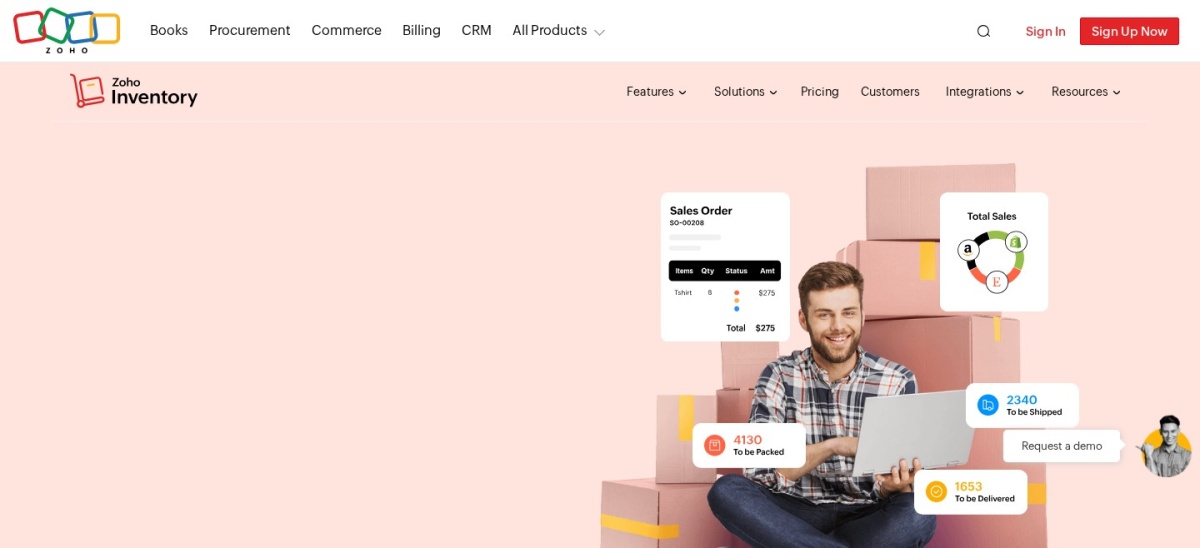
Zoho Inventory is a cloud inventory and order system for small product businesses, with a free plan that covers 50 orders a month, one user and one warehouse. Paid plans add more orders, users and warehouses, plus serial and batch tracking, and the Zoho Books link keeps stock and accounts in step.
The trade off is depth. Multi-warehouse work, advanced automation and manufacturing features sit on the higher tiers, so a complex warehouse outgrows the cheap plans. It suits small sellers, especially those already using Zoho Books or Zoho CRM, who want low cost without a spreadsheet.
What we like
Free plan covers 50 orders a month
Low paid entry at $29 a month
Tight Zoho Books and CRM links
Shopify and Amazon connections
Watch out for
Advanced warehousing needs higher tiers
Support coverage is thinner than larger rivals
Standard adds more orders, users and automationVisit zoho.com
02
Cin7 Core
4.3/5on G2 (353 reviews, checked Nov 2026)
Starts at$349/mo
Best for multichannel sellers
Free planNo, 14-day trial
Starting price$349/mo
G2 rating4.3/5, 353 reviews
IntegrationsShopify, Amazon, QuickBooks
cin7.com
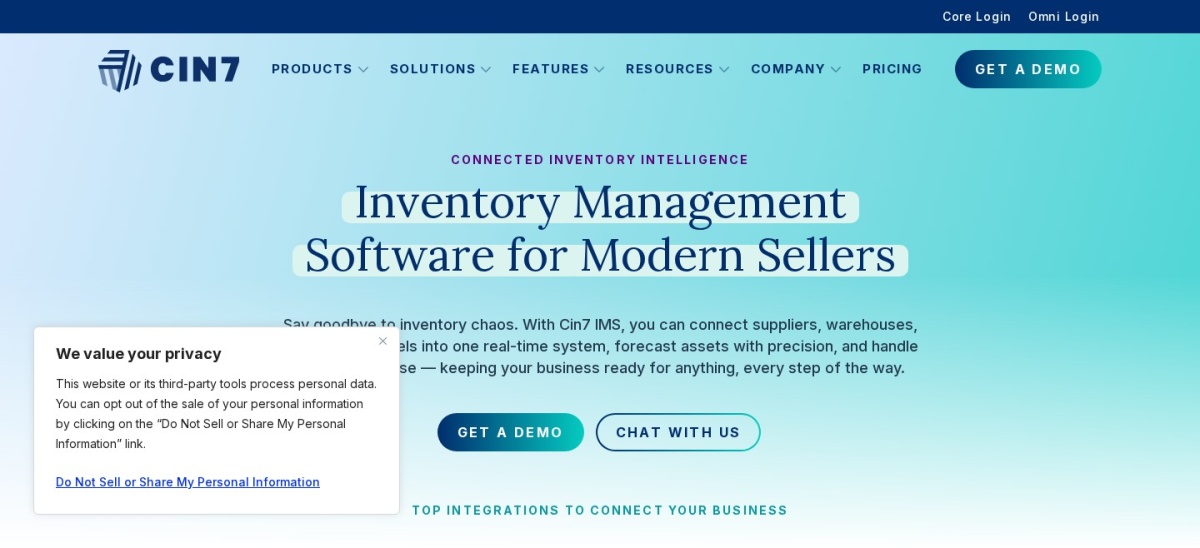
Cin7 Core homepage, captured Nov 2026.
Cin7 Core is an inventory and order platform for brands selling on Shopify, Amazon and wholesale at the same time. It keeps stock levels in step across channels, handles purchase orders and 3PL fulfilment, and links with QuickBooks and Xero for accounting.
The trade off is price. Entry starts at $349 a month, and setup takes real effort, so it is built for growing brands rather than side sellers. It suits multichannel businesses where an oversell or a stockout costs real money.
What we like
Strong multichannel and 3PL workflows
Native EDI for retail and wholesale
Deep QuickBooks and Xero links
Watch out for
High entry price for small sellers
Setup and implementation take effort
Pro adds more users and advanced workflows at $599 a monthVisit cin7.com
03
inFlow
4.4/5on G2 (58 reviews, checked Nov 2026)
Starts at$89/mo
Best for B2B and wholesale
Free planNo, 14-day trial
Starting price$89/mo
G2 rating4.4/5, 58 reviews
Order limit100 orders/mo, entry plan
inflowinventory.com
inFlow homepage, captured Nov 2026.
inFlow is inventory software for product businesses that sell to other businesses, with order management, stock control and assembly for firms that build what they sell. The Entrepreneur plan covers 100 orders a month, and the system links with Shopify, QuickBooks Online and Xero.
The trade off is the tier jump. Outgrowing Entrepreneur means a large step to the next plan, and there is no free tier to stay on. It suits wholesalers and makers who need B2B quotes, showrooms and production features without enterprise software.
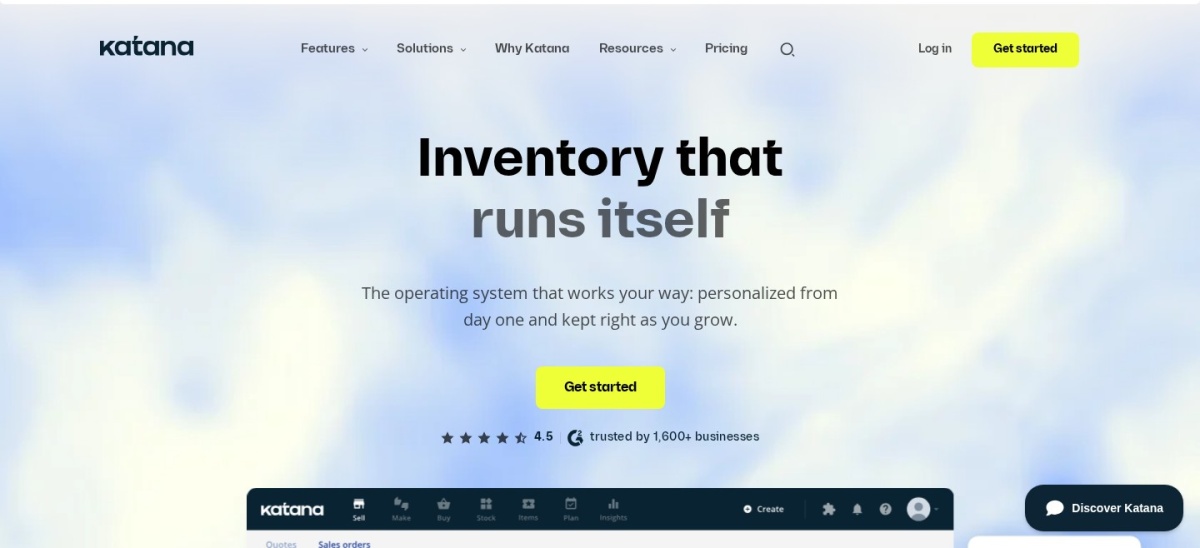
Katana is inventory software built for makers, with production planning, materials and shop-floor workflows alongside stock tracking. The free plan covers 30 SKUs with unlimited users and locations, and paid plans add unlimited SKUs plus Shopify and QuickBooks links.
The trade off is pricing. Core starts at $299 a month, and some features are paid add-ons, so the bill rises as order volume grows. It suits small manufacturers and direct sellers who plan production, not just track finished goods.
What we like
Built for manufacturing and production
Visual shop-floor workflows
Free plan for up to 30 SKUs
Watch out for
Paid plans start at $299 a month
Key features cost extra as add-ons
Core adds unlimited SKUs; traceability and warehouse tools are add-onsVisit katanamrp.com
05
Fishbowl
4/5on G2 (283 reviews, checked Nov 2026)
Starts at$229/mo
Best for QuickBooks users
Free planNo, 14-day trial
Starting price$229/mo
G2 rating4.0/5, 283 reviews
Users2 users, entry plan
fishbowlinventory.com
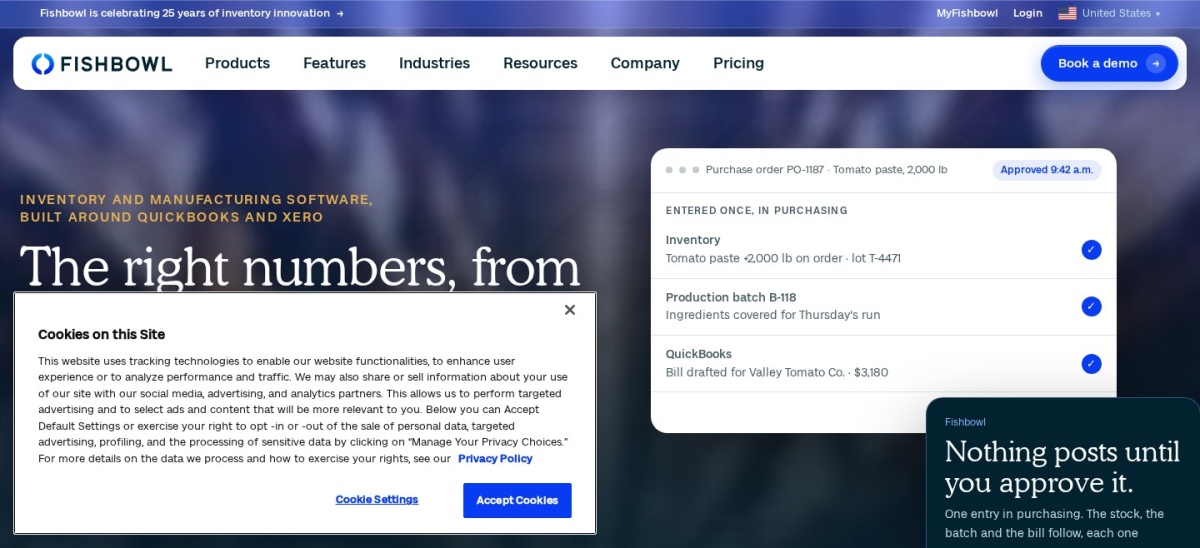
Fishbowl homepage, captured Nov 2026.
Fishbowl is inventory and manufacturing software for wholesalers and makers whose accounts live in QuickBooks. The entry plan covers real-time stock and SKU tracking, reorder points and mobile barcode scanning for two users, with QuickBooks Online and Xero sync.
The trade off is age and cost. The interface feels dated next to cloud-native rivals, and modules and extra seats push the total cost up. It suits QuickBooks-centric businesses that need proven warehouse and manufacturing depth.
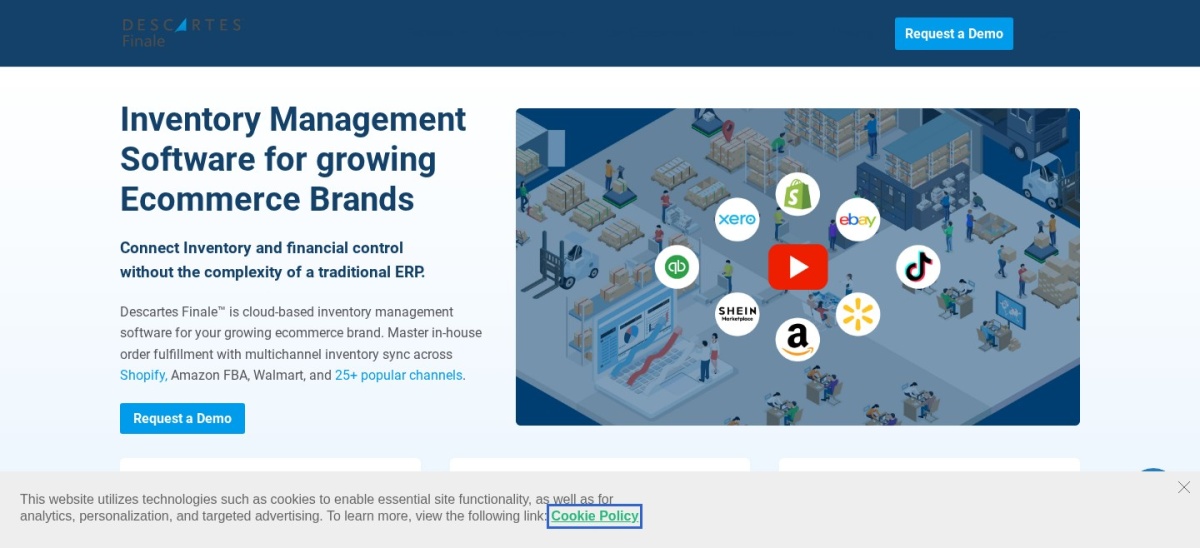
Finale Inventory is built for sellers on Amazon and Shopify, keeping stock accurate across marketplaces with barcode-based warehouse workflows. The Starter plan covers one user and up to 500 orders a month, which undercuts Cin7 by a wide margin for sellers who do not need EDI.
The trade off is polish. The interface is plain rather than modern, and advanced features need higher tiers. It suits Amazon-plus-Shopify sellers who need real multichannel sync without enterprise pricing.
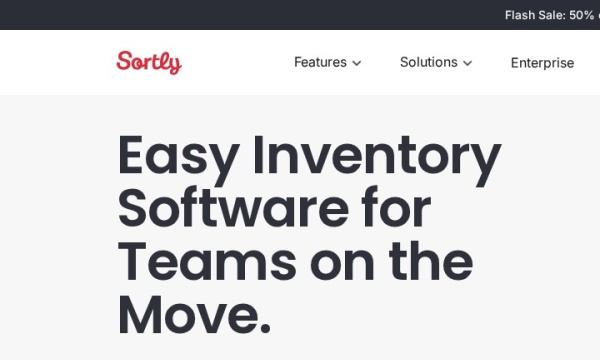
Sortly is a visual inventory app for teams that need to track items, not run a full ERP. The free plan covers 100 items for one user, with phone-based barcode and QR scanning and a mobile app the floor team can use. Paid plans add more items, users and alerts.
The trade off is scope. Accounting, order management and purchasing live elsewhere, so Sortly pairs with other tools rather than replacing them. It suits contractors, event firms and small warehouses that want fast, simple tracking. The $24 first-year annual price is a promo; the regular price is $49 a month.
What we like
Easiest visual tracking with barcode and QR
Strong mobile app
Fast setup
Watch out for
Not a full order or accounting system
Per-user costs add up for large teams
Advanced adds more items, users and low-stock alertsVisit sortly.com
08
Unleashed
4/5on G2 (36 reviews, checked Nov 2026)
Starts at$70/mo
Best simple pick for Xero shops
Free planNo, 14-day trial
Starting price$70/mo
G2 rating4.0/5, 36 reviews
Order limit500 orders/mo, Small
unleashedsoftware.com
Unleashed homepage, captured Nov 2026.
Unleashed is straightforward inventory software for product businesses, covering stock, purchase orders and sales orders with pricing tied to order volume. The Small plan covers up to 500 orders a month, and the Xero link is strong, with QuickBooks and Shopify covered too.
The trade off is the lack of a free tier. There is only a 14-day trial, and Unleashed is now part of The Access Group, so buyers should confirm the roadmap. It suits product businesses that want clear pricing without ERP weight.
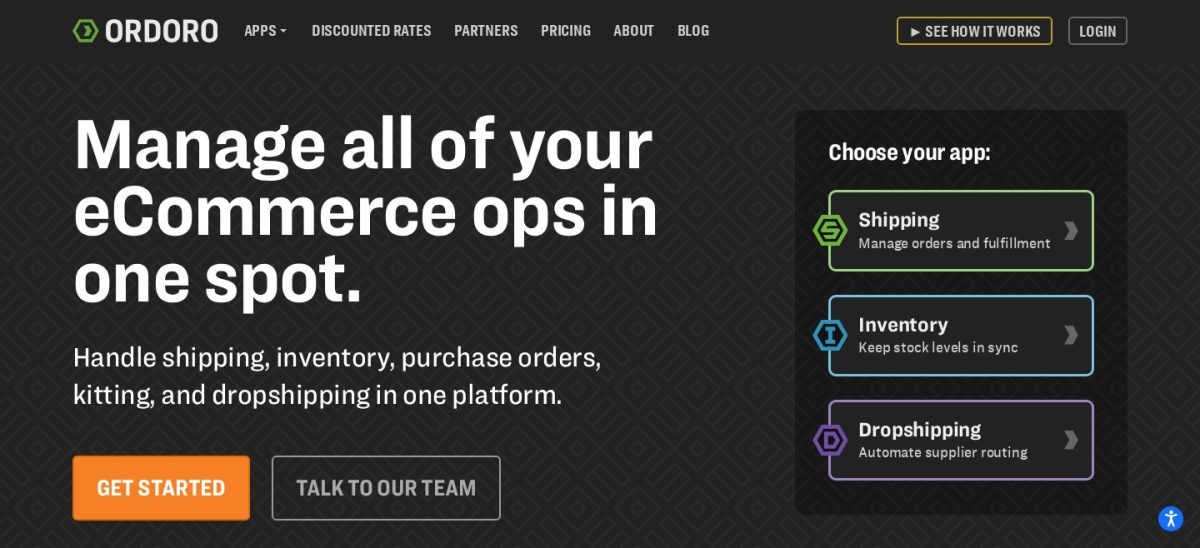
Ordoro combines shipping and inventory for multichannel ecommerce sellers. The Inventory app starts at $349 a month with unlimited users, warehouses and sales channels, while the Shipping app has a free tier for labels. Orders flow in from Shopify, Amazon and other channels, and stock syncs back out.
The trade off is the price floor. At $349 a month it costs as much as Cin7 while doing less on manufacturing and B2B, and orders above 1,000 a month add $100 per extra 1,000. It suits sellers whose day is mostly fulfilment, not makers.
What we like
Shipping and inventory in one login
Unlimited users and warehouses on Inventory
Dropship routing to suppliers
Watch out for
High $349 entry price for inventory
Overage fees add up fast above 1,000 orders
Inventory Premium adds purchase orders at $499 a monthVisit ordoro.com
Common mistakes when buying inventory software
The most common mistake is buying for today's size instead of the shape of the operation. A single-channel seller does not need EDI, and a maker does not need a tool built for pure reselling.
The second mistake is ignoring the order cap. A $70 or $99 plan looks cheap until the business passes 500 orders a month and the next tier doubles the bill.
The third mistake is judging a tool by its headline price alone. Add-ons, extra seats, implementation and overage fees decide the real cost, so price the second year, not the first month.
How we chose
We started from the established inventory tools sold to small and mid-size product businesses, then kept the nine with a published entry price and a public G2 rating.
Prices come from each vendor's pricing page, checked on 25 November 2026, and ratings come from G2 on the same day. Where a vendor shows a sale, the list shows the regular price.
We left out quote-only enterprise systems and tools with no public rating. No vendor paid for a place, and we do not claim hands-on testing for this list.
How to choose inventory software
Start with your order volume and channels, then match the tool to that shape.
Count your monthly orders and SKUs. Entry plans cap one or both, so your real numbers decide which plans are even possible.
List the channels you sell on. Shopify, Amazon, wholesale and a physical store each add sync work. Pick a tool that covers all of them.
Check the accounting link. Fishbowl suits QuickBooks shops, Unleashed suits Xero shops, and Zoho Inventory suits Zoho Books users.
Price the second year, not the first. Add the next tier, extra seats and overage fees, and compare that total before you commit.
FAQ
What is the best inventory software?
Zoho Inventory is the best pick for most small sellers. Its free plan covers 50 orders a month, Standard costs $29 a month when billed yearly, and it holds a 4.4 out of 5 rating on G2 from 93 reviews.
How much does inventory software cost?
Entry prices in this list run from $0 to $349 a month. Zoho Inventory and Sortly have free plans, Finale starts at $99 a month, inFlow at $89, and Cin7 Core and Ordoro at $349 a month.
Which inventory software is best for small manufacturers?
Katana is the best fit for small manufacturers. It was built around production planning, materials and shop-floor work, with a free plan for 30 SKUs and Core from $299 a month.
Does inventory software work with QuickBooks?
Yes. Fishbowl has the deepest QuickBooks sync in this list, and Cin7 Core, Katana, inFlow, Finale and Unleashed all link with QuickBooks too. Check whether the link is two-way before you buy.
Can I use free inventory software?
Yes, for small volumes. Zoho Inventory is free for 50 orders a month and Sortly is free for 100 items. Both cover real needs, but growing sellers will need a paid plan for more orders, users or warehouses.
What is the difference between inventory software and ERP?
Inventory software manages stock, orders and purchasing. ERP adds accounting, HR, CRM and production planning in one system. Most small businesses need inventory software plus their accounting tool, not a full ERP.
SaaS SEO and WordPress specialist with about 8 years of experience. Rakib compares WordPress plugins, themes, hosting and software using public pricing, documentation and user reviews. See how we rank.