Intruder is the best Detectify alternative for most teams, with continuous scanning across web apps, APIs and cloud accounts from a free plan. Burp Suite suits manual pentesters, while Pentest-Tools is the cheapest browser-based option for quick scans.
How we make this list: we compare pricing pages, product documentation and public user reviews, then re-check every price before each update. No product paid for a place. Disclosure.
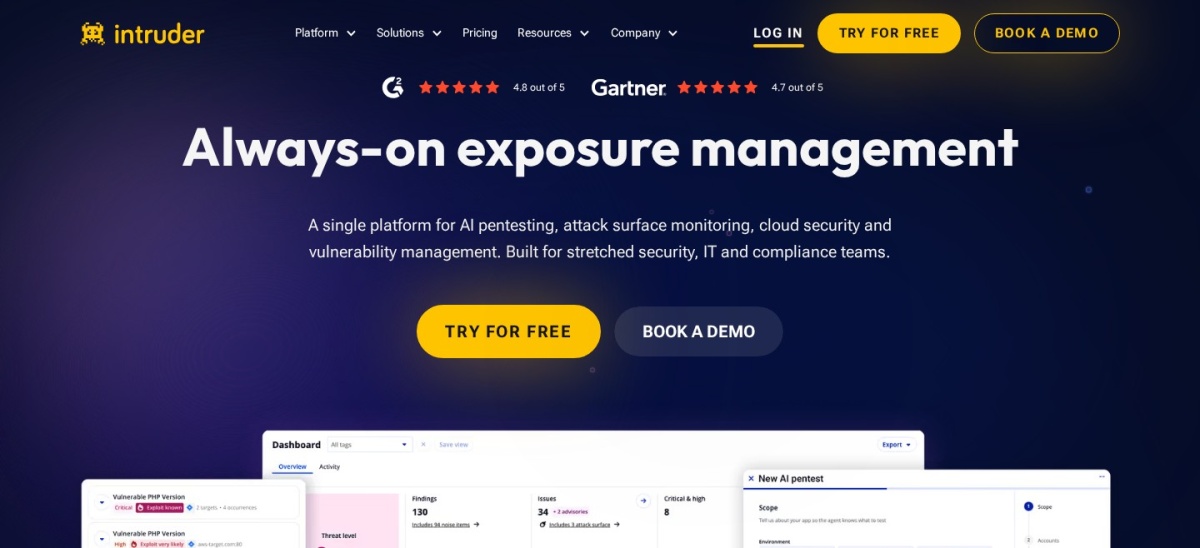
Intruder leads for continuous scanning across web apps, APIs and cloud accounts, from $299 a month.
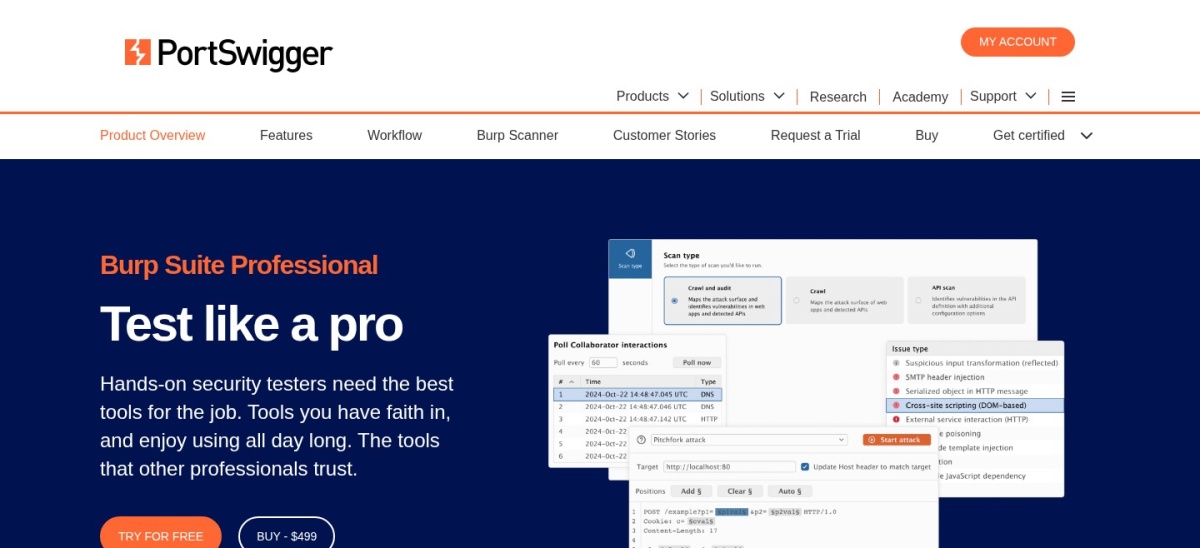
Burp Suite stays the standard for manual testing, with a free Community Edition and Professional at $475 a year.
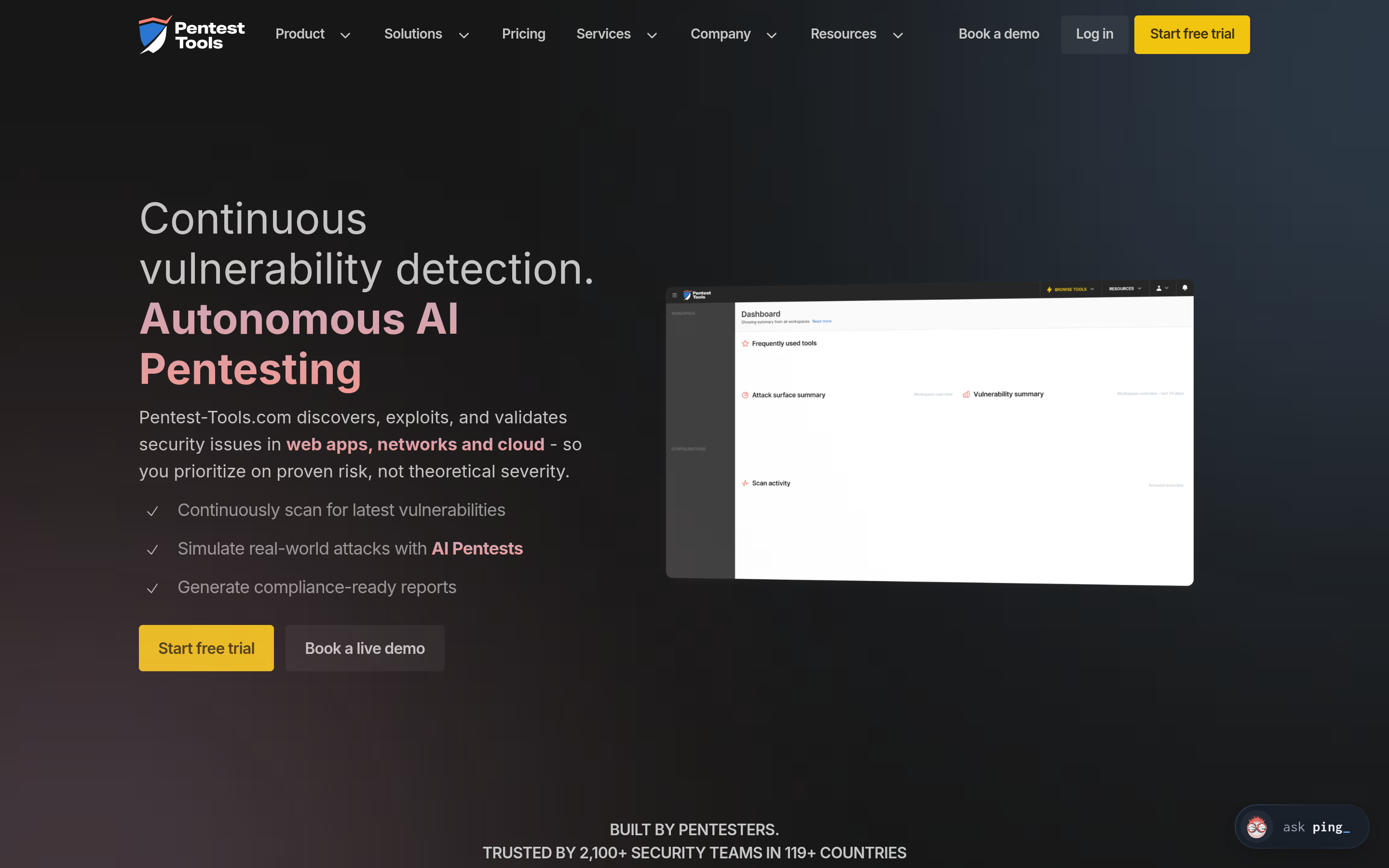
Pentest-Tools.com is the cheapest browser-based option, with NetScan from $96 a month for 16 assets.
Probely no longer publishes a paid price, and Invicti is quote only, so budget both with a sales call.
OWASP ZAP is the only fully free scanner here, and it covers APIs from OpenAPI and GraphQL definitions.
How do you choose the best Detectify alternative?
Detectify scans web apps continuously and reports exploitable flaws, so any replacement should match that always-on coverage first.
Price models differ more than features. Some tools charge per target, some per user or contributor, and some per test, so work out the yearly total for your asset count before comparing headline prices.
Free plans are a real option here. Intruder, Burp Suite, Pentest-Tools.com, Beagle Security, Probely, StackHawk and OWASP ZAP all offer a free tier, and our security testing tools guide compares the same field on depth and price.
Manual testing and automated scanning solve different problems. Burp Suite rewards a skilled tester, while Intruder and Astra run scans on a schedule and report without a human in the loop.
Intruder is a cloud platform for continuous vulnerability scanning across websites, web apps, APIs and cloud accounts. The free plan covers weekly external scans, while paid plans add daily checks, web app and API testing, and integrations with cloud providers and issue trackers.
The trade off is price. Cloud starts at $299 a month, or $239 a month billed annually, so small teams pay a premium for always-on scanning. It suits teams that want Detectify-style continuous coverage with cloud checks included.
Burp Suite is the standard toolkit for manual web security testing, built around an intercepting proxy that lets testers inspect and modify traffic. The free Community Edition covers basic proxy and scanning, while Professional adds automated scanning, saved projects and the extension store.
The trade off is effort. Burp Suite rewards skilled testers but needs manual work for every finding, with no continuous monitoring on its own. It suits security teams that test by hand and want full control over each request.
Pentest-Tools.com is a browser-based toolkit that runs network, web app and exploit checks without installing software. The free plan covers basic scans, while NetScan starts at $96 a month for 16 assets and higher tiers add web app scanning and exploit modules.
The trade off is depth. Browser-based scans are fast to start but cover fewer assets per plan than installed scanners, and annual billing means paying for ten months. It suits teams that want quick checks without deploying agents or software.
Astra Security is a penetration testing platform that pairs an automated scanner with human pentests by certified experts. Scanner Lite starts at $699 a year for one target, while Pentest Auto and Expert add manual testing, compliance reports and a public security certificate.
The trade off is per-target pricing. Every extra website or app needs its own plan, so costs climb fast for teams with many targets. It suits companies that need a certificate and a human pentest, not just automated scan results.
Beagle Security is an AI-led penetration testing platform for web apps, APIs and GraphQL. The free plan covers basic checks, while Essential starts at $99 a month with two tests a month, and higher tiers add unlimited testing and dedicated support.
The trade off is test volume. Essential includes only two tests a month, so teams that scan often must move to a custom Advanced or Enterprise plan. It suits small teams that want AI-led testing with a clear monthly price.
Probely is a web vulnerability scanner for agile teams, now part of Snyk as Snyk API and Web. The free plan covers basic scans, but the old $49 a month paid plan is gone, so growing teams must talk to sales for an Enterprise quote.
The trade off is pricing clarity. The free tier is useful, but there is no published paid price, so budgeting means a sales call. It suits small teams that scan occasionally and can live with the free plan.
OWASP ZAP is a free, open source security scanner for web apps and APIs, now maintained by Checkmarx. It imports OpenAPI, GraphQL and SOAP definitions, runs active scans, and plugs into CI/CD pipelines with Docker images and an automation framework.
The trade off is triage time. ZAP reports more false positives than paid scanners, and authenticated scans need setup and rule tuning. It suits teams with security skills that want a free scanner they can shape to their stack.
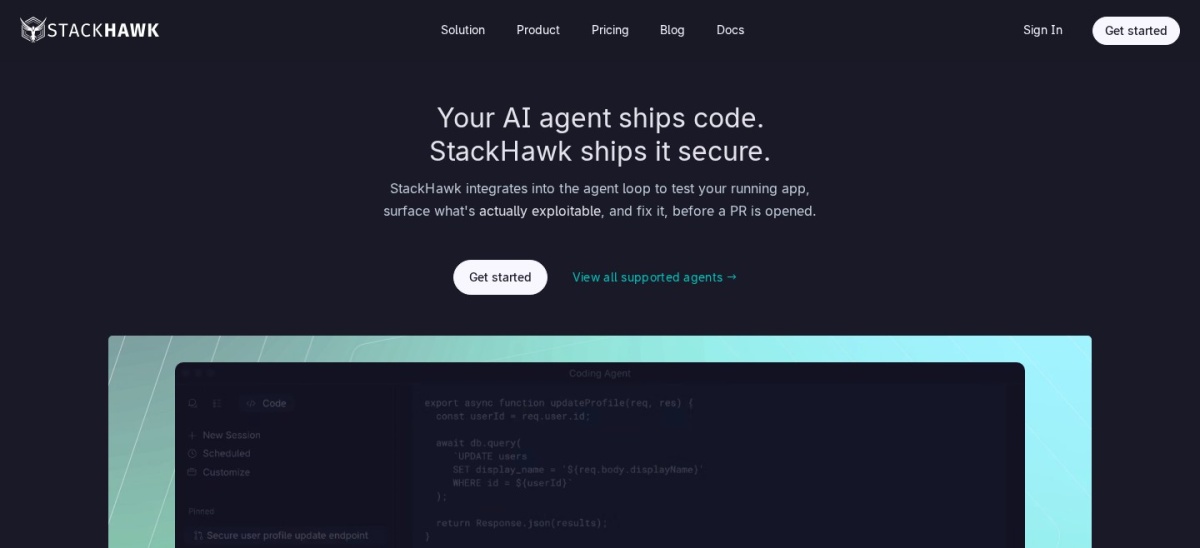
StackHawk is a developer-first dynamic scanner that runs application and API security tests inside CI/CD pipelines. The free plan covers basic scans, while Secure starts at $39 a month per code contributor and adds team features and deeper scan configuration.
The trade off is per-contributor pricing. Every developer who commits code needs a seat, so costs grow with the team. It suits engineering teams that want security tests running on every pull request.
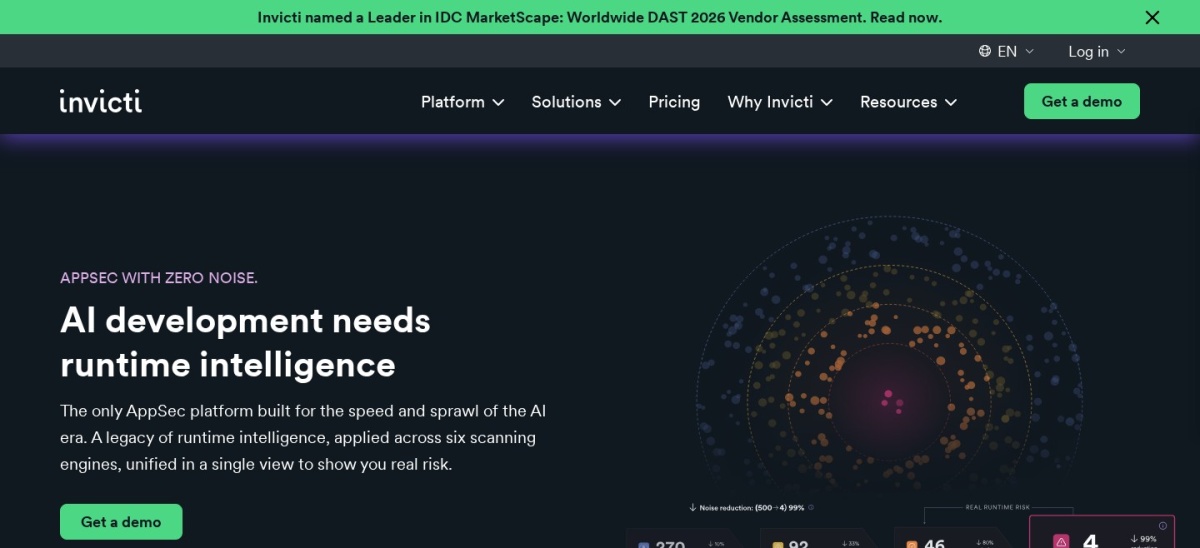
Invicti is an enterprise web application security platform that combines dynamic scanning with proof-based verification of findings. It scans web apps and APIs at scale, confirms exploitable flaws with evidence, and fits teams that need audit-ready reports.
The trade off is access. Invicti publishes no price and offers no free plan, so every deal starts with a sales conversation. It suits large teams that scan many apps and need verified findings, not raw scan output.
Free plans cover basic scanning well. Most include a limited number of scans, a free tier for one target, or a community edition with the core toolkit.
Paid plans mostly add frequency and coverage. You get daily scans instead of weekly ones, more targets, API testing and integrations with issue trackers.
For a team that scans one app a month, a free plan is often enough. For continuous monitoring across many apps, the paid tiers pay for themselves in findings that would otherwise wait.
Watch the billing unit before you commit. Per-target, per-user and per-test prices produce very different bills at the same headline rate.
How we chose
We started from every established web security scanner with a public G2 rating, then kept those with a verifiable review base and a clear price or free plan.
Prices come from each vendor's pricing page, checked on 29 November 2026, with G2 ratings and review counts from the same day. Where a price appears only in a search result, the notes flag it as second-hand.
We left out tools with fewer than 10 G2 reviews. No vendor paid for a place, and we do not claim hands-on testing for this list.
How to choose a Detectify alternative
Match the scanner to your assets, your team and your budget.
Count your targets. Per-target tools such as Astra charge for every app, while per-user tools such as Burp Suite do not. Count websites, APIs and cloud accounts first.
Decide between continuous and manual. Intruder scans on a schedule, while Burp Suite needs a tester. Pick continuous coverage for always-on monitoring.
Test the free plan. Most tools here offer a free tier. Run it against one real app before paying, and check the false positive rate.
Check API and CI/CD coverage. If your apps expose APIs or deploy often, confirm OpenAPI imports and pipeline scans are included, not add-ons.
FAQ
What is the best Detectify alternative?
Intruder is the best Detectify alternative for most teams. It scans web apps, APIs and cloud accounts continuously, offers a free plan with weekly external scans, and starts at $299 a month for the Cloud plan.
How much does a Detectify alternative cost?
Prices run from free to $299 a month. OWASP ZAP costs nothing, Pentest-Tools.com starts at $96 a month, Beagle Security at $99, and Intruder at $299, while Invicti and Probely sell by quote only.
Is there a free Detectify alternative?
Yes. OWASP ZAP is completely free and open source, and Intruder, Burp Suite, Pentest-Tools.com, Beagle Security, Probely and StackHawk all offer free plans with limited scans. ZAP is the strongest free pick for teams with security skills.
Which Detectify alternative is best for small teams?
Pentest-Tools.com suits small teams best, with browser-based scans from $96 a month and no software to install. Beagle Security at $99 a month is close behind, while OWASP ZAP costs nothing for teams that can tune it themselves.
Intruder vs Burp Suite: which should I pick?
Pick Intruder for continuous automated scanning across web, API and cloud, with findings reported on a schedule. Pick Burp Suite for manual testing, where a skilled tester inspects traffic by hand and controls every request.
Do Detectify alternatives scan APIs?
Yes, most do. Intruder, Astra Security, Beagle Security, Probely, OWASP ZAP, StackHawk and Invicti all scan APIs, and ZAP imports OpenAPI, GraphQL and SOAP definitions. Burp Suite covers APIs through its intercepting proxy.
SaaS SEO and WordPress specialist with about 8 years of experience. Rakib compares WordPress plugins, themes, hosting and software using public pricing, documentation and user reviews. See how we rank.