CookieYes is the best-rated cookie tracking software for enterprise teams that want a cheap start, with the highest G2 rating in this list and paid plans from 10 dollars a domain a month. Ketch is the best-priced enterprise-grade pick, with consent management from 150 dollars a month and a free plan for small sites.
How we make this list: we compare pricing pages, product documentation and public user reviews, then re-check every price before each update. No product paid for a place. Disclosure.
CookieYes has the highest G2 rating here at 4.8, with paid plans from $10 a domain a month.
DataGrail is the highest-rated enterprise platform at 4.7, but it publishes no prices.
Ketch is the only tool with fully transparent consent pricing, from a free plan to $150 a month.
OneTrust runs on more than 750,000 websites, but it is quote-only with a weeks-long setup.
iubenda has the cheapest paid plan at $5.99 a site a month, with legal documents included.
Usercentrics starts at $8 a month, but plans auto-upgrade past session limits.
What should enterprise teams look for in cookie tracking software?
Enterprise cookie tracking is about proof, not just a banner. Regulators and auditors want a record of every consent decision, a list of every tracker on every page, and evidence that tags only fire after consent. A tool that cannot produce that record leaves the legal team exposed.
Start with scanning. The tool should crawl the site, including pages behind logins, find every cookie and tracker, and categorize them against a known database. CookieYes scans against 100,000-plus categorized cookies, while OneTrust claims more than 45 million pre-categorized cookies.
Price is hard to compare because vendors measure different things. CookieYes and iubenda charge by pageviews, Usercentrics and Ketch by sessions or unique visitors, and OneTrust, DataGrail, Didomi and Transcend quote per deployment. Price the traffic you actually get, not the cheapest tier on the page. Our guide to the best GDPR compliance software covers the wider compliance tools that sit around these CMPs.
Check the enterprise extras before you shortlist. Multi-domain consent sharing, single sign-on, audit logs, consent recovery and a dedicated manager matter more at scale than the banner design. Ketch, OneTrust and Didomi all sell those extras on higher tiers or custom plans.
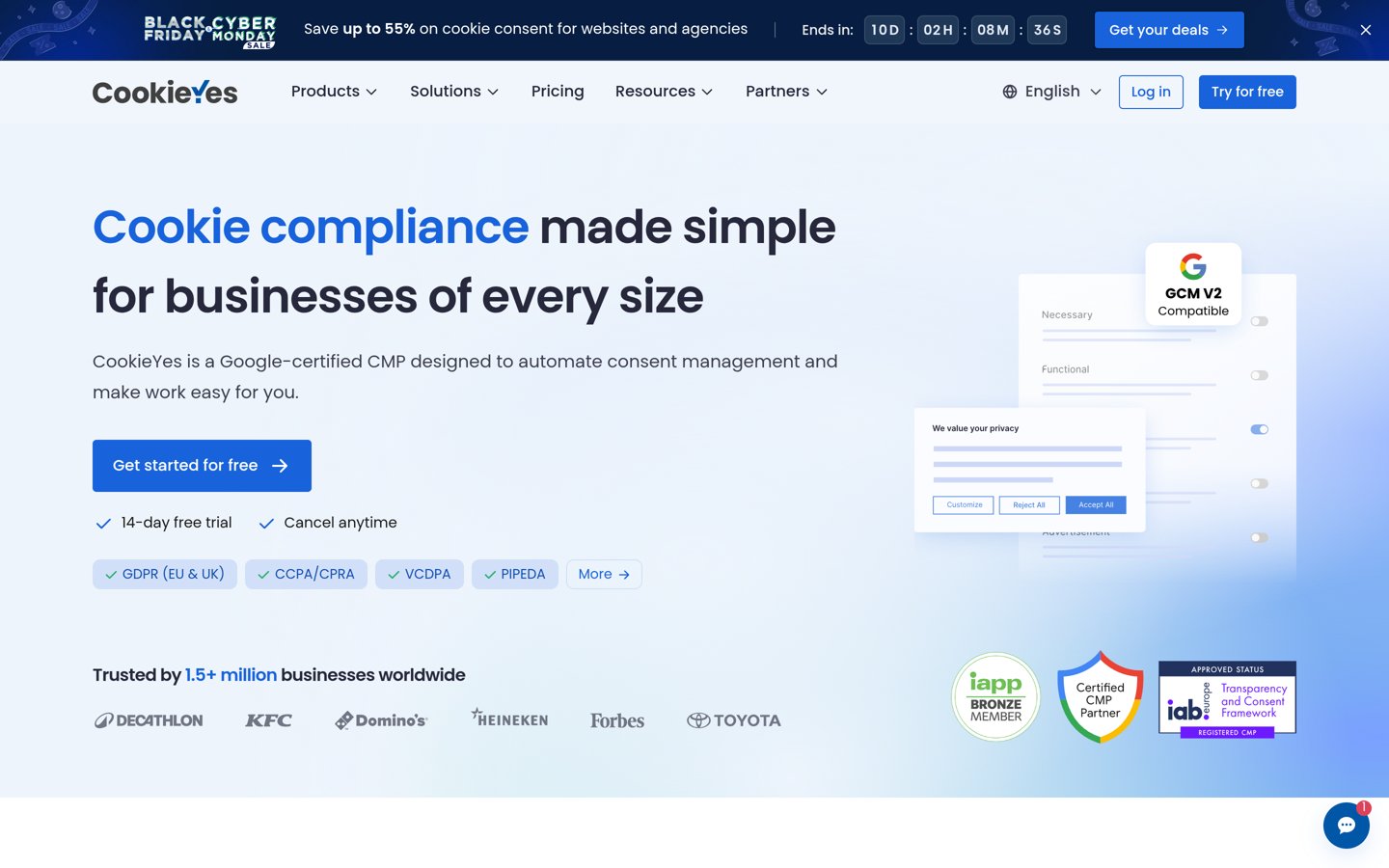
CookieYes is a cookie consent platform that scans a site, blocks third-party scripts until visitors consent, and keeps a consent log for proof of compliance. It covers GDPR, CCPA and other state laws with geo-targeted banners in 170-plus languages, Google Consent Mode v2 and IAB TCF v2.4. Its WordPress plugin has more than 1 million installs.
The trade off is that the price follows traffic. Plans are priced per domain by monthly pageviews, so a busy enterprise site outgrows the $10 Basic plan fast, and removing CookieYes branding needs the $55 Ultimate tier. It suits teams that want a cheap, self-serve start with a free plan.
Consent managementModule in Privacy Control Center
Integrations900+
Data mapLive, automatic RoPA
Starting priceCustom quote
datagrail.io
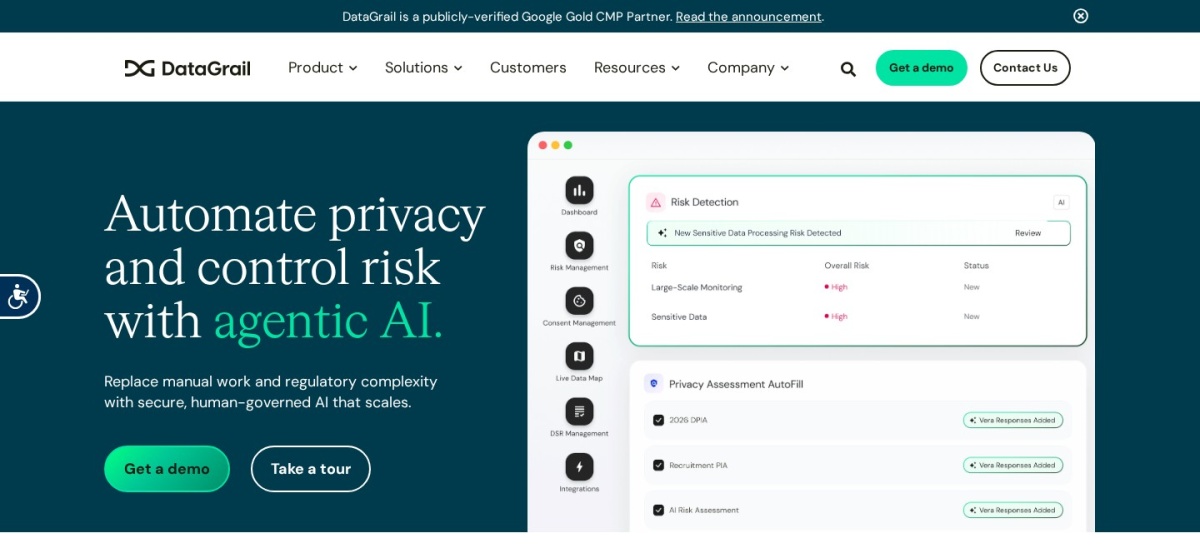
DataGrail homepage, captured Nov 2026.
DataGrail is a privacy platform that builds a live data map of every system holding personal data, then automates access, deletion and opt-out requests across them. Its consent module runs banners and TCF signals on top of that map, so consent choices reach the systems that actually hold the data. It is built for mid-market and enterprise privacy teams.
The trade off is that cookie consent is one module of a bigger platform. DataGrail publishes no list prices, and third-party purchase data puts median annual contracts near $50,000, so it is the most expensive tool here by a wide margin. It suits enterprises that need DSAR automation first and consent second.
What we like
Rated 4.7 out of 5 on G2 from 206 reviews
Live data map across 900-plus integrations
Automates access and deletion requests
Consent signals reach connected systems
Watch out for
No published prices, quote only
Consent is a module, not the core product
English-only console and support
Essentials benchmarked at $36,000 a year by a marketplace listingVisit datagrail.io
03
Ketch
4.6/5on G2 (228 reviews, checked Nov 2026)
Paid from$150/mo
Best transparent pricing for consent
Free planYes, 5,000 unique users/mo
Cheapest paid planStarter, $150/mo
Billing basisMonthly unique visitors
Integrations2 included, 1,000-plus available
ketch.com
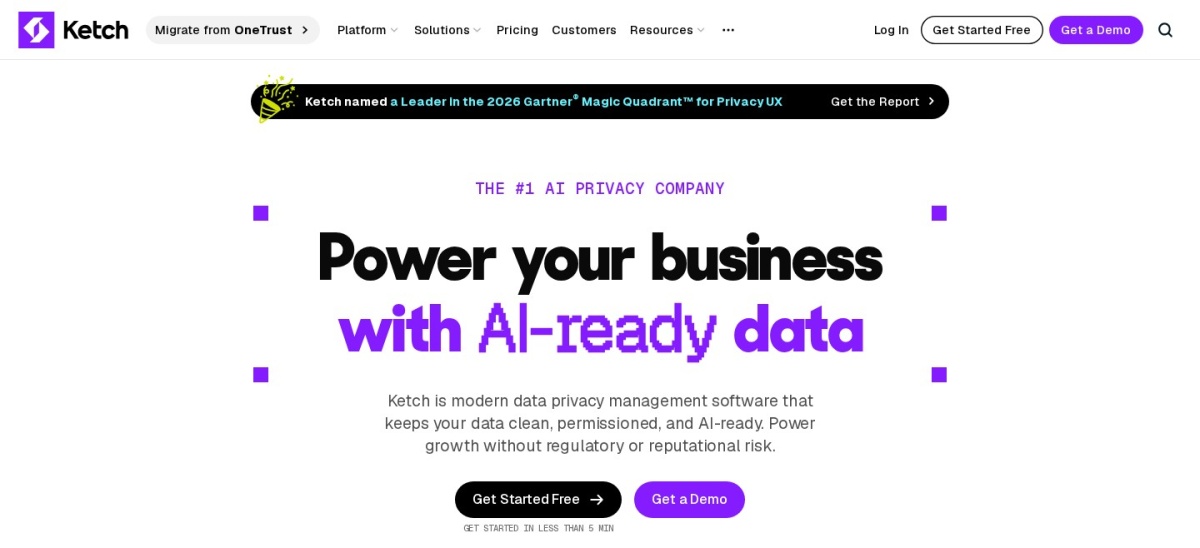
Ketch homepage, captured Nov 2026.
Ketch is a data permissioning platform that runs consent, preference and data-rights signals from one system, with a no-code designer for banners and preference centers. It prices consent on monthly unique visitors, not pageviews, and every plan includes tracker scanning, tag orchestration and two integrations. It serves more than 3,500 consumer brands.
The trade off is that the wider platform is sold separately. Data mapping, DSAR automation and risk assessments are priced apart from consent, and the Pro tier for 100,000-plus visitors is custom. It suits teams that want transparent consent pricing and plan to add modules later.
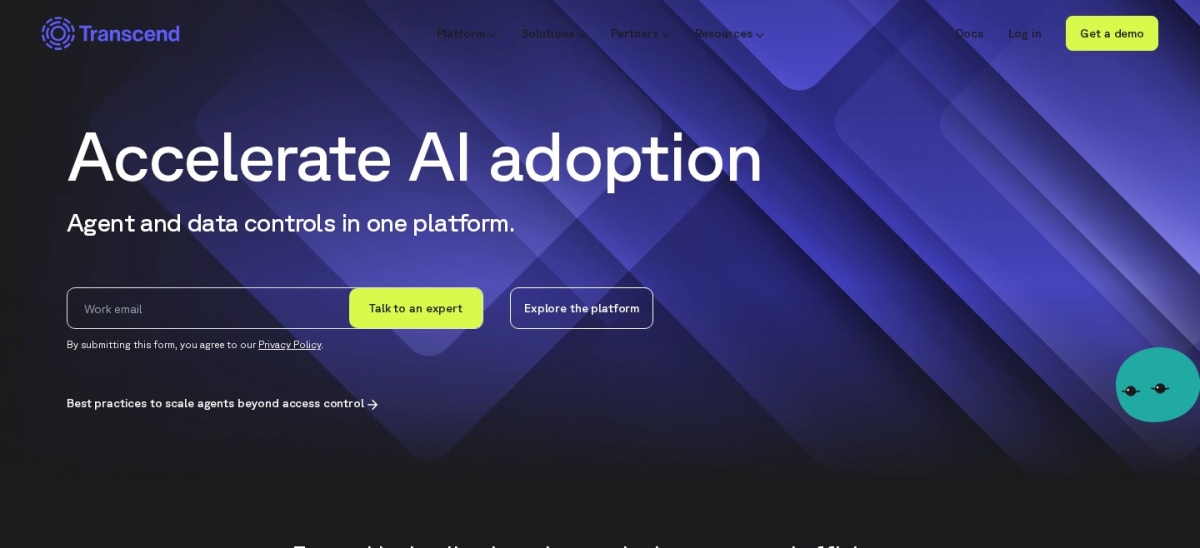
Transcend is a privacy platform that automates data subject requests, consent and data discovery from one console, with integrations that execute deletions and access requests inside connected systems. Its consent module covers web and app properties with preference centers that sync choices across systems. It suits teams that want privacy operations automated end to end.
The trade off is price and setup. Transcend publishes no list prices, and reviewers describe a complex implementation with long integrations, while G2 lists a Basic tier at $10,000 per user a year. It suits enterprises that can fund a full platform rollout and the team to run it.
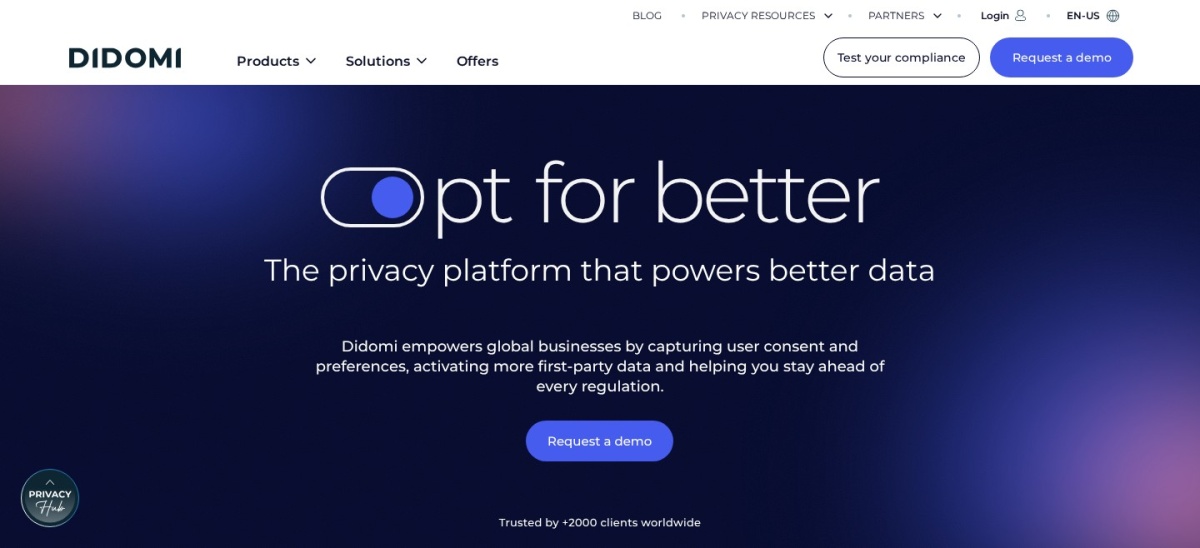
Didomi is a consent management platform built for global enterprises that run many brands and websites under different regulations. It collects, stores and monitors consent across web, app and connected TV, with a Google-certified CMP, IAB TCF support and cross-device consent sharing. Didomi joined forces with Sourcepoint in July 2025.
The trade off is cost and setup time. Didomi publishes no prices and sells by custom quote, reviewers call it a premium-priced option, and G2 puts average implementation at two months. It suits publishers and global brands that need multi-regulation consent at scale.
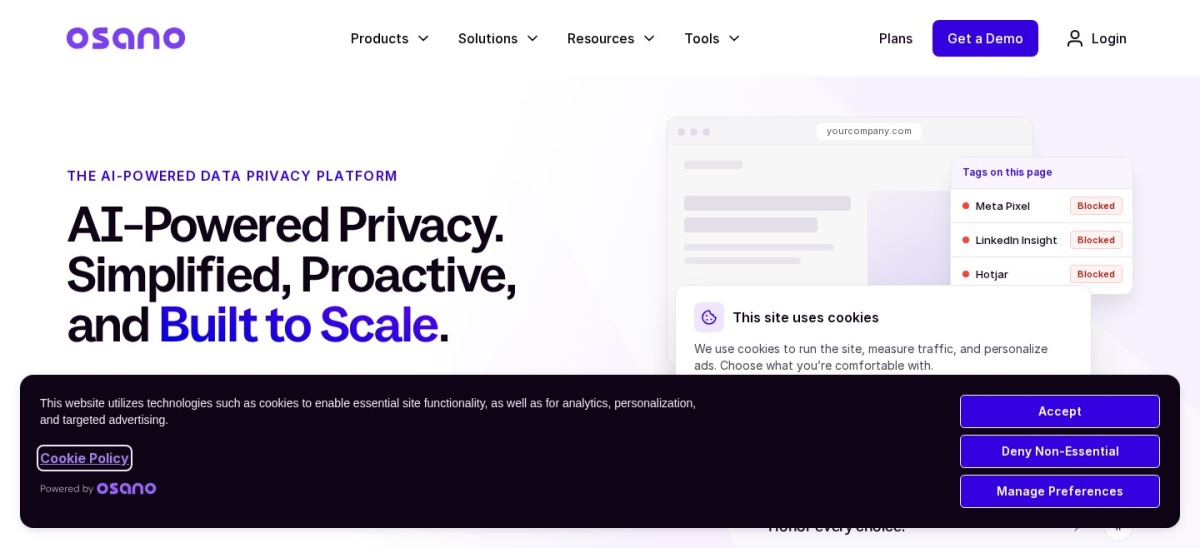
Osano is a privacy platform that pairs cookie consent with data mapping, subject rights and vendor risk tools for mid-market and enterprise teams. Its consent banner runs on one line of JavaScript, with script categorization, auto-regional rules and a consent record for every visitor. The Plus plan costs $199 a month for three domains and 30,000 monthly visitors.
The trade off is the jump from free to paid. The free plan covers one domain and 5,000 monthly visitors, and the next step is $199 a month with nothing in between, while subject rights sit on a custom tier above. It suits teams that want consent plus a wider privacy program from one vendor.
What we like
Rated 4.5 out of 5 on G2 from 173 reviews
Free plan for one small domain
One-line JavaScript install
No Fines Guarantee up to $500,000 on custom tiers
Watch out for
No plan between free and $199 a month
Subject rights need a custom tier
Plus caps at 30,000 visitors and 3 domains
Basic Privacy adds compliance check and DSAR intakeVisit osano.com
07
OneTrust
4.4/5on G2 (280 reviews, checked Nov 2026)
PricingCustom/yr
Best for consent inside a governance suite
Consent managementYes, with DSAR and risk modules
Cookie database45 million-plus pre-categorized
Banner languages250-plus
Starting priceCustom quote
onetrust.com
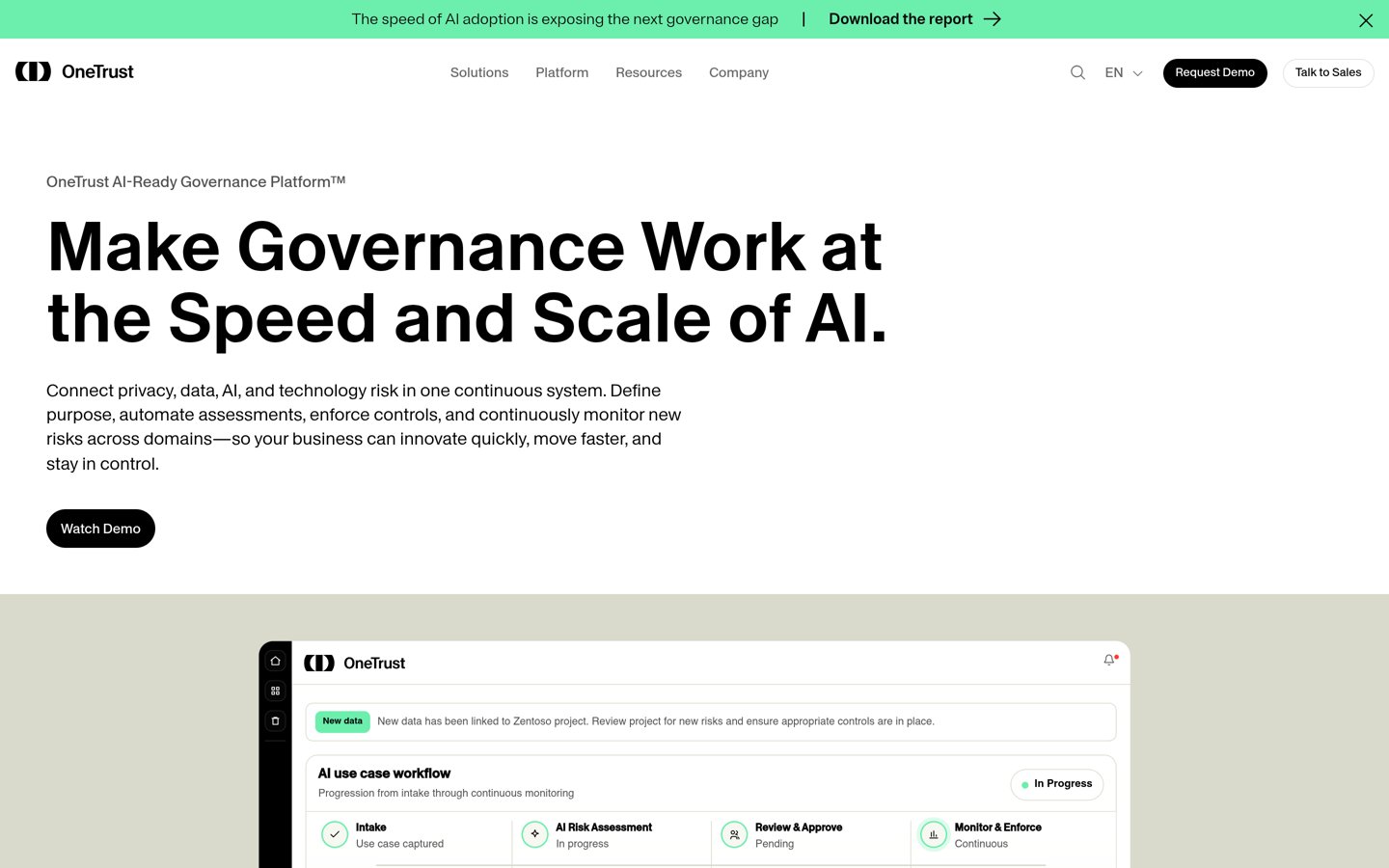
OneTrust homepage, captured Nov 2026.
OneTrust is the enterprise privacy platform that runs cookie consent beside data subject requests, vendor risk, assessments and AI governance in one suite. Its consent module scans behind logins, classifies trackers against a database of more than 45 million pre-categorized cookies, and serves geo-located banners in more than 250 languages. OneTrust says more than 750,000 websites run its cookie consent.
The trade off is weight and price. OneTrust publishes no prices, third-party reviews put the minimum near $10,000 a year, and reviewers report sharp renewal increases and a setup that takes weeks to months. It suits large enterprises that want consent inside a full governance suite.
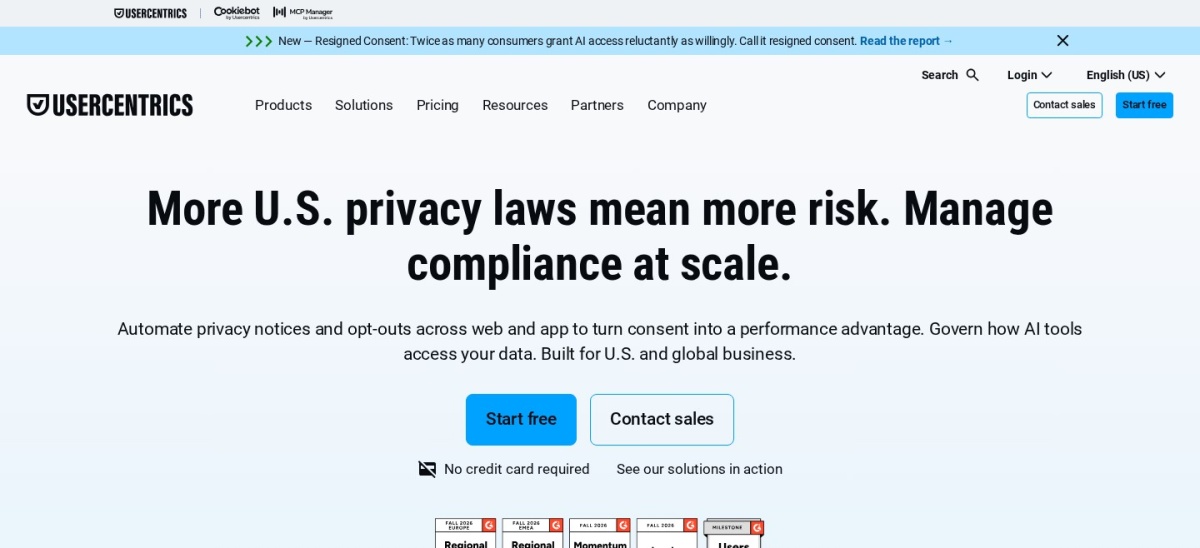
Usercentrics is a consent management platform that scans a site for cookies, shows customizable banners and records visitor choices, with a free plan for one domain under 1,000 sessions a month. Paid plans are priced by monthly sessions, from $8 a month for Essential to $56 for Business, and its Cookiebot product handles the scanning. It is a Google-certified CMP with IAB TCF support.
The trade off is that the price follows traffic. Plans auto-upgrade when session limits are exceeded, so a busy enterprise site moves up tiers without warning, and the vendor page defaults to euro pricing with dollars behind a currency switch. It suits teams that want a cheap start with session-based pricing.
iubenda is a compliance platform that bundles a Google-certified cookie banner with privacy and cookie policy generators drafted by its in-house lawyers. Plans are priced per site by monthly pageviews, from $5.99 a site a month billed yearly for 25,000 pageviews, and every plan includes Google Consent Mode v2 and IAB TCF. It is trusted by more than 150,000 businesses.
The trade off is that the price follows pageviews. A traffic spike can push a site into the next tier mid-year, geo-targeting needs the $24.99 Advanced plan, and agency and enterprise plans are quoted separately. It suits teams that want legal documents and a banner from one vendor.
Consent recovery and audit logs are the enterprise extras that matter most. When a visitor clears cookies or a regulator asks for proof, the tool should restore the consent record and export it as evidence, not start from zero.
Multi-domain consent sharing saves repeat banners. OneTrust, Usercentrics Pro and Ketch all let a visitor consent once and apply it across related domains, which cuts banner fatigue on multi-brand estates.
Watch the auto-upgrade rules before you sign. Usercentrics upgrades plans automatically past session limits, and CookieYes and iubenda move you up a tier when pageviews spike, so budget for growth, not for the entry tier.
How we chose
We started from the consent management platforms that G2 lists for cookie tracking and consent, then kept the nine with a clear enterprise fit, a public rating and a verifiable price or quote model.
Prices come from each vendor's own pricing page, checked on 30 November 2026, except where the vendor publishes none. OneTrust, DataGrail, Didomi and Transcend sell by custom quote, and Usercentrics shows dollars behind a currency switch on its euro-default page.
We left out tools with no public rating and pure cookie scanners with no consent management. No vendor paid for a place, and we do not claim hands-on testing for this list.
How to choose cookie tracking software for an enterprise
Start with your traffic and your regulations, then match the tool to your scale.
Count your traffic and domains. CookieYes and iubenda charge by pageviews, Usercentrics and Ketch by sessions or unique visitors. Measure real traffic first, since plans auto-upgrade when limits are exceeded.
Check whether consent is the whole product. DataGrail, Transcend and OneTrust bundle consent inside a wider privacy platform. If you only need a banner, a focused CMP such as CookieYes or Usercentrics costs far less.
Ask for the enterprise quote in writing. Get multi-domain pricing, single sign-on, audit logs and support levels on one page before you compare self-serve rates.
Run a real scan before you pay. Load the tool on a staging site, run a full scan including pages behind logins, and check the consent log. See our guide to the best data privacy software for the wider privacy tools that pair with these CMPs.
FAQ
What is the best cookie tracking software for enterprise in 2026?
CookieYes is the best-rated pick, with a 4.8 G2 rating and paid plans from $10 a domain a month. Ketch is the best enterprise-grade alternative, with consent management from $150 a month and a free plan for small sites.
How much does enterprise cookie tracking software cost?
Self-serve plans run from $5.99 a site a month for iubenda and $8 for Usercentrics to $199 for Osano Plus and $150 for Ketch Starter. OneTrust, DataGrail, Didomi and Transcend publish no prices, so budget for a quote, with third-party data putting DataGrail near $50,000 a year.
What is the difference between a CMP and cookie tracking software?
A consent management platform, or CMP, collects and stores visitor consent and blocks trackers until consent is given. Cookie tracking software usually means the scanning and categorization of cookies, which most CMPs include. The tools here do both.
Do I need a separate tool for GDPR and CCPA?
No. Every tool in this list covers GDPR and CCPA or CPRA, with geo-targeted banners that show the right notice for each visitor's location. CookieYes, Usercentrics and iubenda include both on their cheapest paid plans.
Which cookie tracking tool is best for a large enterprise?
OneTrust is the largest, with more than 750,000 websites running its consent software and 250-plus banner languages. DataGrail and Transcend suit enterprises that also need DSAR automation, while Didomi fits global publishers with many brands.
Can I start free and upgrade later?
Yes. CookieYes, Ketch, Osano, Usercentrics and iubenda all offer a free plan, and most offer a 14-day trial of paid plans. Watch the traffic limits, since plans price by pageviews, sessions or unique visitors and auto-upgrade when you pass them.
SaaS SEO and WordPress specialist with about 8 years of experience. Rakib compares WordPress plugins, themes, hosting and software using public pricing, documentation and user reviews. See how we rank.