OneTrust is the best GDPR compliance software for large organizations, with consent, data mapping, DSR automation and AI governance on one platform, rated 4.3 out of 5 on G2. Mid-market teams should look at DataGrail, and small sites can start free with Ketch or CookieYes.
How we make this list: we compare pricing pages, product documentation and public user reviews, then re-check every price before each update. No product paid for a place. Disclosure.
OneTrust covers the most ground: consent, data mapping, DSRs, third-party risk and AI governance in one platform, but pricing is quote-only.
DataGrail is the highest-rated full platform here at 4.7 out of 5 on G2, built around automated DSRs and a live data map.
Osano is the only tool with a contractual guarantee against fines, covering up to $500,000 under its terms.
Ketch and CookieYes both start free: Ketch gives a full consent platform for up to 5,000 visitors a month, CookieYes a banner for up to 5,000 pageviews.
Five of the nine tools publish no list price, so expect a sales call and a five-figure annual contract for the enterprise suites.
What GDPR software should cover
GDPR is a principles-based law, so no software makes a business compliant on its own. What the tools below do is turn the manual parts, data mapping, consent records, subject requests and assessments, into repeatable workflows.
The core jobs are consent management, a record of processing (RoPA), data subject request (DSR) handling and vendor risk. Enterprise suites add assessments, breach response and AI governance, while lighter tools focus on the cookie banner and policy pages.
Pricing splits the same way. A cookie banner costs $10 a month, a DSR platform costs five figures a year, and a global suite is quoted per deal. Our guide on GDPR compliance for WordPress explains what a smaller site needs to cover first.
Check the free tier limits before you commit. Free plans cap visitors, pageviews or domains, and the paid step up is often ten times the free cap.
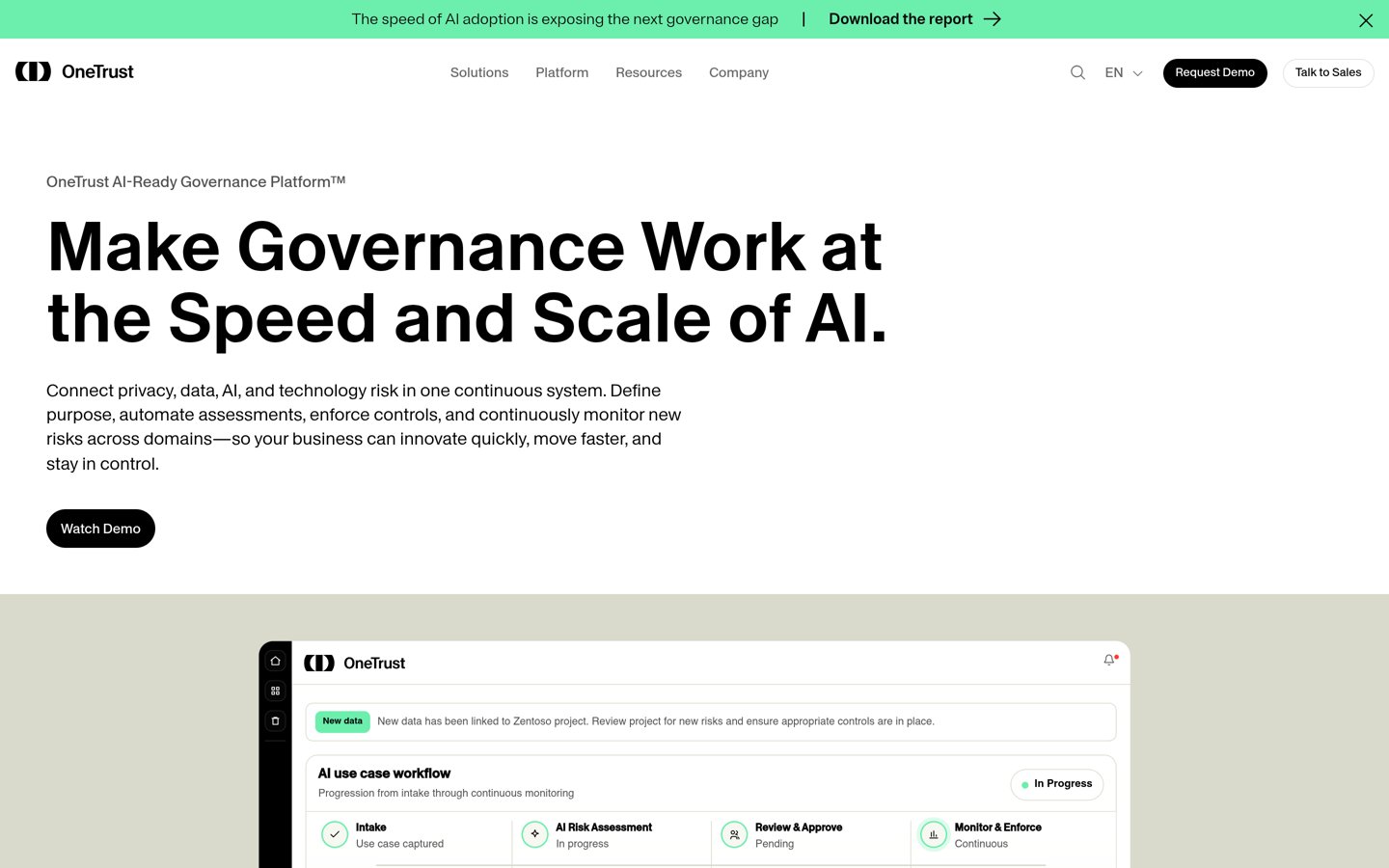
OneTrust is the broadest privacy platform in this list, covering consent and preferences, data mapping, assessments, DSR automation, third-party risk and AI governance. The company says more than half of the Fortune 500 use it, and it supports GDPR, CCPA, LGPD and more than 100 other frameworks.
The trade off is cost and effort. OneTrust publishes no prices, so every deal is quoted, and rollouts are projects that need dedicated staff and time. It suits large organizations running a global privacy program that want one platform instead of five point tools.
What we like
Broadest module coverage in this list
Regulatory research covers 300-plus jurisdictions
Chosen by more than half of the Fortune 500, per the company
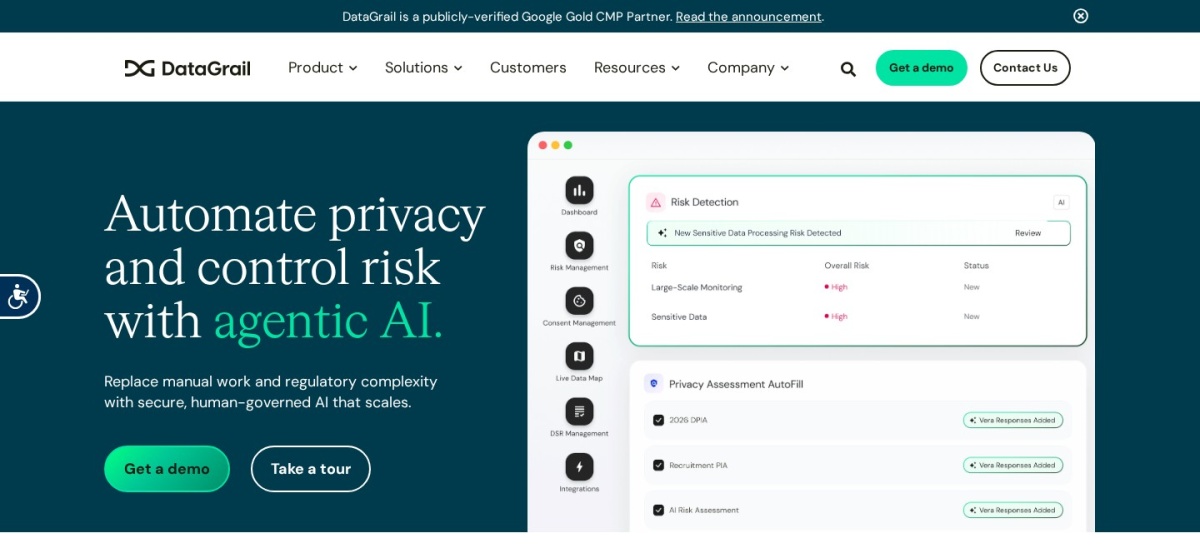
DataGrail is a privacy platform built around one painful workflow: data subject requests. Connect your systems and requests route, fulfil and document themselves with an audit trail. Around that core it adds a live data map, consent management and assessments, with more than 2,500 integrations.
The trade off is price. DataGrail publishes no list prices, so budgeting needs a sales conversation, and third-party benchmarks put entry deals in the tens of thousands a year. It suits mid-market teams drowning in manual requests who want automation without an enterprise rollout.
What we like
Highest-rated full platform here at 4.7 out of 5 on G2
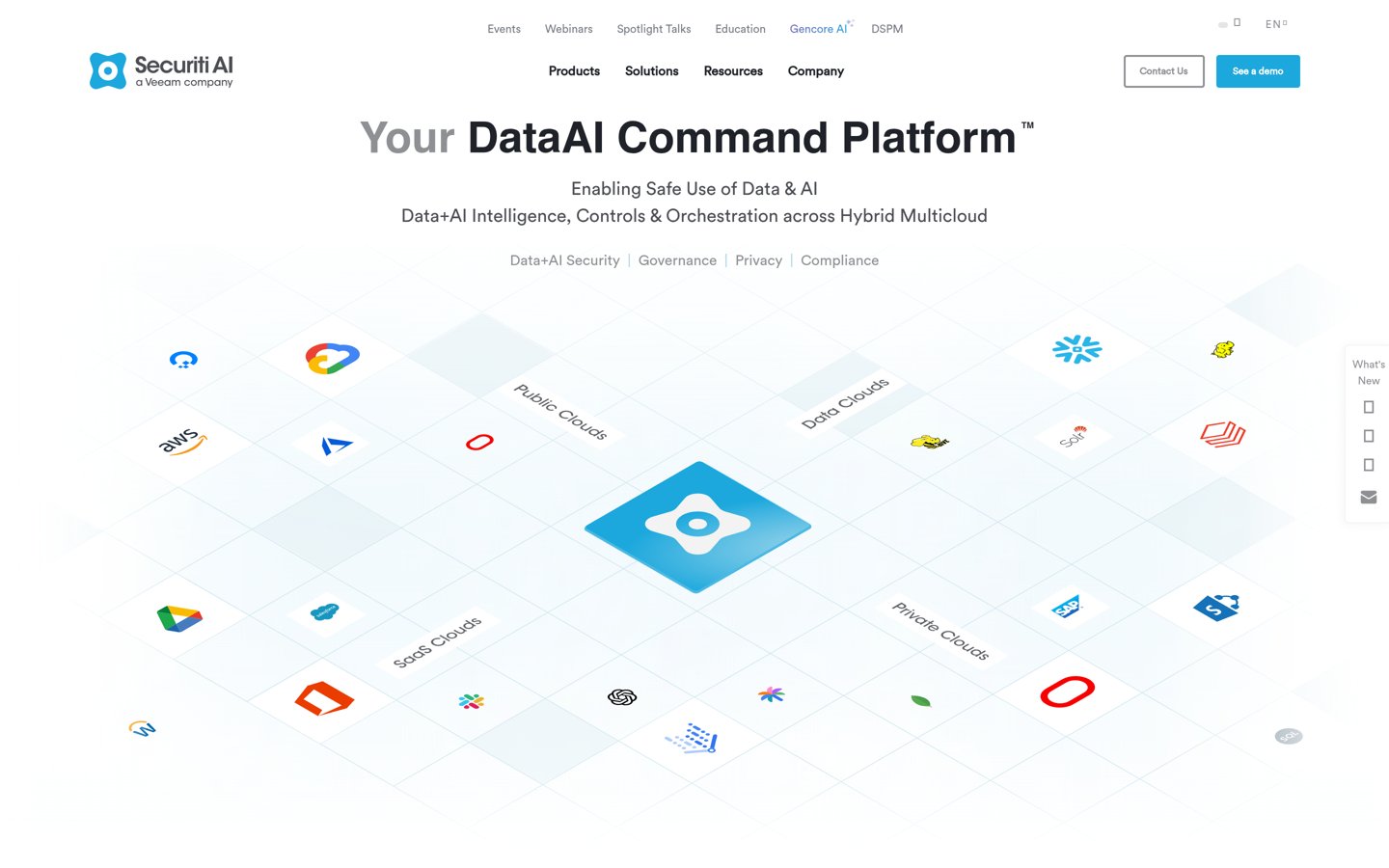
Securiti is a data platform that approaches GDPR from the data up. Its discovery engine finds personal data across cloud, SaaS and on-prem systems, classifies it and feeds that inventory into data mapping, DSR fulfilment, consent enforcement and breach analysis.
The trade off is breadth. The platform now spans data security, AI governance and privacy, which can overwhelm teams that only need GDPR basics, and pricing is quote-only. It suits data-heavy organizations where privacy and security teams need one shared picture.
What we like
Deep discovery and classification across hybrid systems
DSR, consent, mapping and breach response in one stack
Strong reviewer scores for ease of use and support
Osano is a privacy platform built for small teams without privacy staff. It covers cookie consent with rule sets for more than 95 regulations, subject rights workflows, data mapping, assessments and vendor risk scoring. Its free plan covers one domain and up to 5,000 monthly visitors.
The trade off is the jump to paid. Plus costs $199 a month for three domains and 30,000 visitors, and the full platform above that is quoted. It suits small businesses that want one vendor and a contractual backstop against fines.
What we like
Contractual No Fines, No Penalties guarantee up to $500,000
Intuitive interface for teams without privacy staff
Transcend is an engineering-led privacy platform that enforces consent and policy in real time. Its permissioning layer sits between systems and data, so a choice made in a banner is enforced across web, mobile and backend systems, and every decision is logged for audit.
The trade off is technical depth. The platform assumes engineering resources and API thinking, and pricing is enterprise-grade, listed from $10,000 a year per user on G2. It suits engineering-led teams that want privacy enforced as infrastructure.
What we like
Real-time permissioning at the data layer, not just the banner
TrustArc is the longest-running privacy vendor in this list, with more than 28 years in the field. Its platform covers consent management, assessments, data mapping, DSR workflows and vendor risk, with named experts and migration teams behind it.
The trade off is price and pace. Pricing is quote-based, listed from $10,000 a year per user on G2, and the interface feels more traditional than newer rivals. It suits legal-led teams that want software plus guidance rather than a self-serve tool.
What we like
28-plus years of privacy expertise in the platform
Reviewers praise the support team and migration help
Program Builder maps a plan to the Nymity framework
MineOS is a mid-market privacy platform built around data subject requests, data mapping and RoPA reports. Reviewers rate it 4.7 out of 5 on G2 and praise its support and ease of use, and a free basic package covers request handling to start.
The trade off is pricing clarity. Paid plans are quoted, and data mapping and consent are sold as add-on modules, so the final bill depends on scope. It suits mid-market teams that want fast implementation and strong support without enterprise complexity.
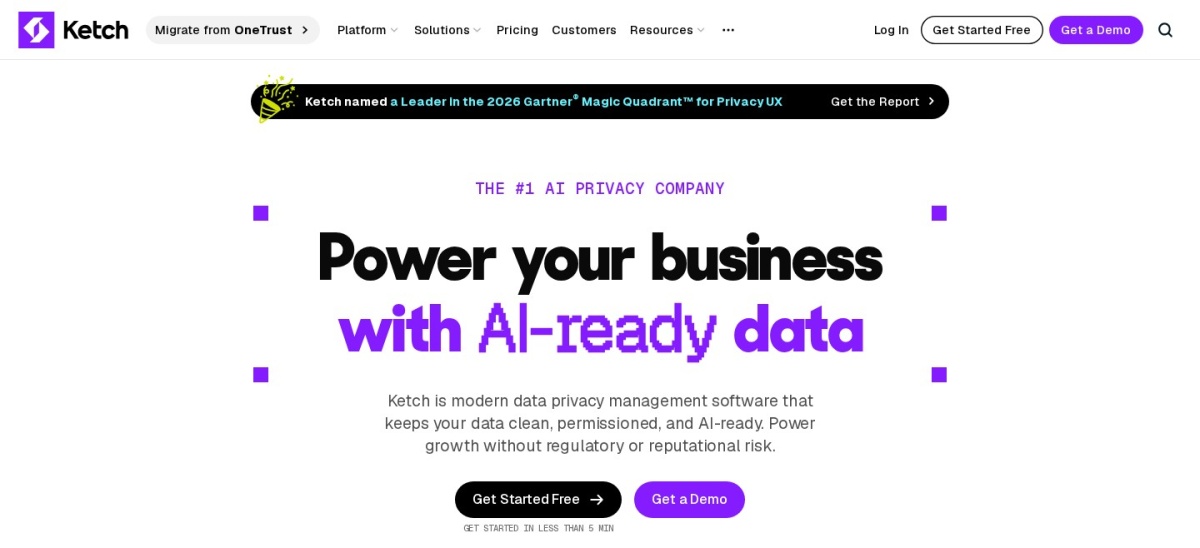
Ketch is a permissioning platform whose free tier is a full-feature consent management platform, not a trial. It covers up to 5,000 unique users a month with banner customization, tracker scanning, law templates and two integrations, with no credit card needed.
The trade off is the paid ladder. Starter costs $150 a month for 30,000 users, and DSR automation, data mapping and preference management sit behind the quoted Pro tier. It suits teams that want to start free and grow into full privacy infrastructure.
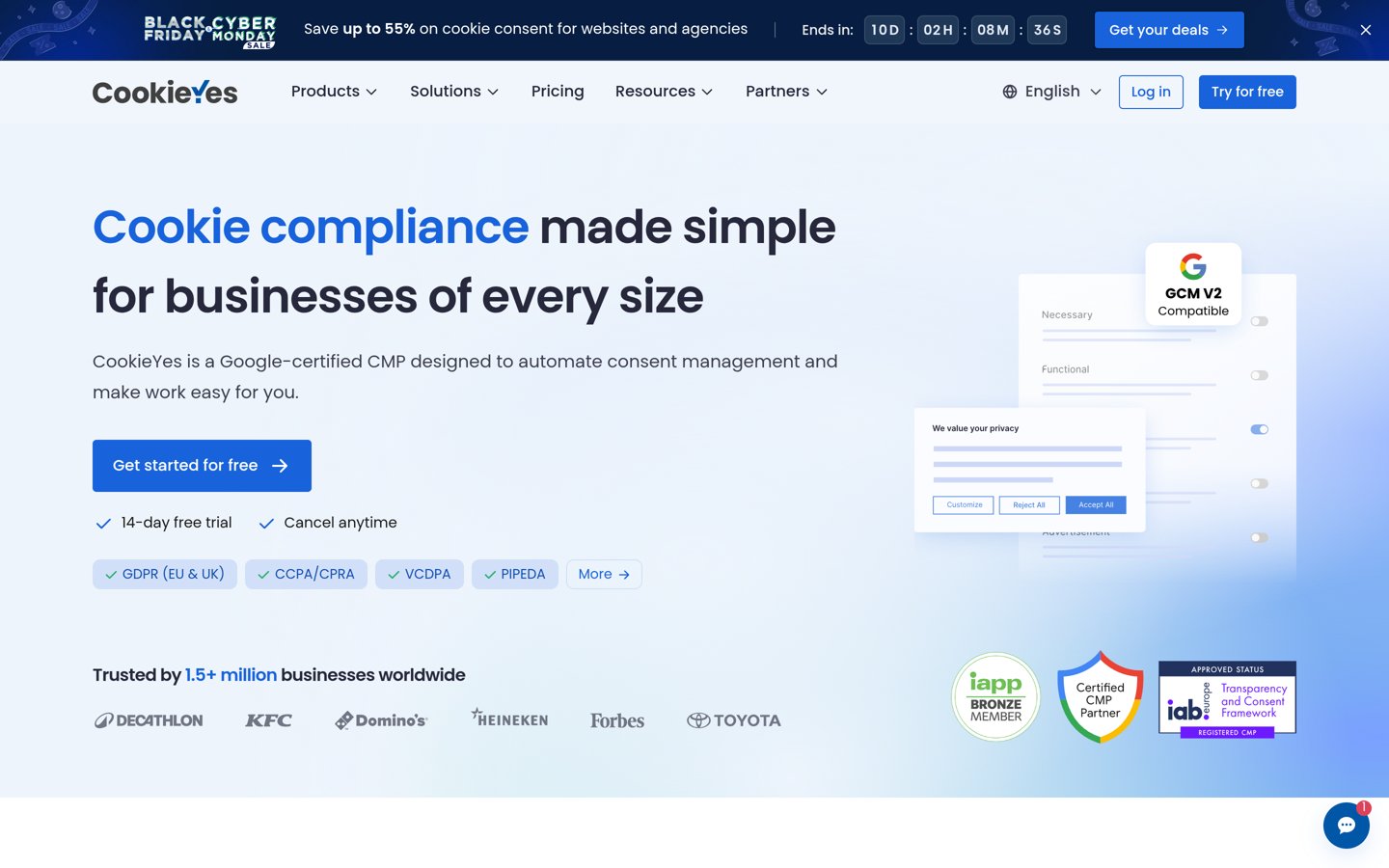
CookieYes is a consent management tool that scans a site, shows a cookie banner and keeps consent records. Its free plan covers one domain with 5,000 pageviews a month, and Basic costs $10 a month per domain for 100,000 pageviews and 600 pages per scan.
The trade off is scope. CookieYes handles consent, not DSRs, data mapping or assessments, and pageviews above the cap cost $0.30 per 1,000 on Basic and Pro. A Black Friday sale runs until 1 December 2026, but the list shows the regular $10 price. It suits small websites that need a compliant banner fast and cheap.
Five of the nine tools publish no list price at all. OneTrust, DataGrail, Securiti, MineOS and the upper Osano tiers are all quoted, so budget for a sales cycle and a five-figure annual contract.
The two $10,000 figures come from G2 listings, not the vendors' own pages. Transcend and TrustArc do not publish prices, so treat those numbers as a starting point, not a quote.
CookieYes runs a Black Friday sale until 1 December 2026 with up to 55% off the first year. The list shows the regular $10 a month price.
Free plans are real but small. Ketch caps free at 5,000 unique users a month, CookieYes at 5,000 pageviews, and Osano at one domain, so check your traffic before you commit.
How we chose
We started from the GDPR and privacy tools with the most G2 reviews in the data privacy category, then kept nine that cover the full range from a $10 banner to an enterprise suite.
Prices come from each vendor's pricing page or G2 listing, checked on 25 November 2026. Ratings and review counts come from G2 on the same day. Where a vendor shows a sale, the list shows the regular price.
We left out tools with no public G2 rating. No vendor paid for a place, and we do not claim hands-on testing for this list.
How to choose GDPR compliance software
Start by counting what you must handle: domains, systems, requests and jurisdictions.
Count your systems and requests. A site with one domain and few requests needs a banner, not a platform. Count connected systems, monthly subject requests and jurisdictions before you shortlist.
Match the tool to the job. Pick a consent tool for banners, a DSR platform for request volume, and a full suite only if you need mapping, assessments and vendor risk together.
Check the free tier limits. Free plans cap visitors, pageviews or domains. See how to add a cookie consent banner to WordPress to judge what a banner alone covers.
Get the quote in writing. For quoted tools, ask for the full first-year cost including implementation, modules and support, since list prices rarely include them.
FAQ
What is the best GDPR compliance software?
OneTrust is the best pick for large organizations, with consent, data mapping, DSR automation and AI governance on one platform. Mid-market teams get better value from DataGrail, and small sites can start free with Ketch or CookieYes.
Does GDPR software make a business compliant?
No. GDPR is principles-based, so software cannot make a business compliant on its own. It automates consent records, data mapping and subject requests, but policies, contracts and staff training still need human decisions.
How much does GDPR compliance software cost?
A cookie banner costs from $10 a month, a consent platform from $150 a month, and enterprise suites are quoted, often five figures a year. Five of the nine tools here publish no list price, so expect a sales conversation for those.
What is the cheapest GDPR compliance tool?
CookieYes is the cheapest paid option here at $10 a month per domain, with a free plan for up to 5,000 pageviews a month. Ketch is also free up to 5,000 unique users a month, with paid plans from $150 a month.
Do I need a DPO to use GDPR software?
No, the software does not require a data protection officer. Larger organizations may need one under GDPR, but small teams can run consent and request workflows with these tools and a named person responsible for privacy.
Can I start with a free plan?
Yes. Ketch, CookieYes, Osano and MineOS all offer a free tier. Free plans cap visitors, pageviews or domains, so they suit small sites and trials, and growing sites will need a paid plan.
SaaS SEO and WordPress specialist with about 8 years of experience. Rakib compares WordPress plugins, themes, hosting and software using public pricing, documentation and user reviews. See how we rank.