GatherContent is the best of the content snare alternatives for website work, pairing structured content requests with sitemaps and staged approvals, though pricing is quote-only. Slickplan starts at $10.79 a month for sitemap-led planning, while SuiteDash covers portals, CRM and billing from $15 a month billed annually.
How we make this list: we compare pricing pages, product documentation and public user reviews, then re-check every price before each update. No product paid for a place. Disclosure.
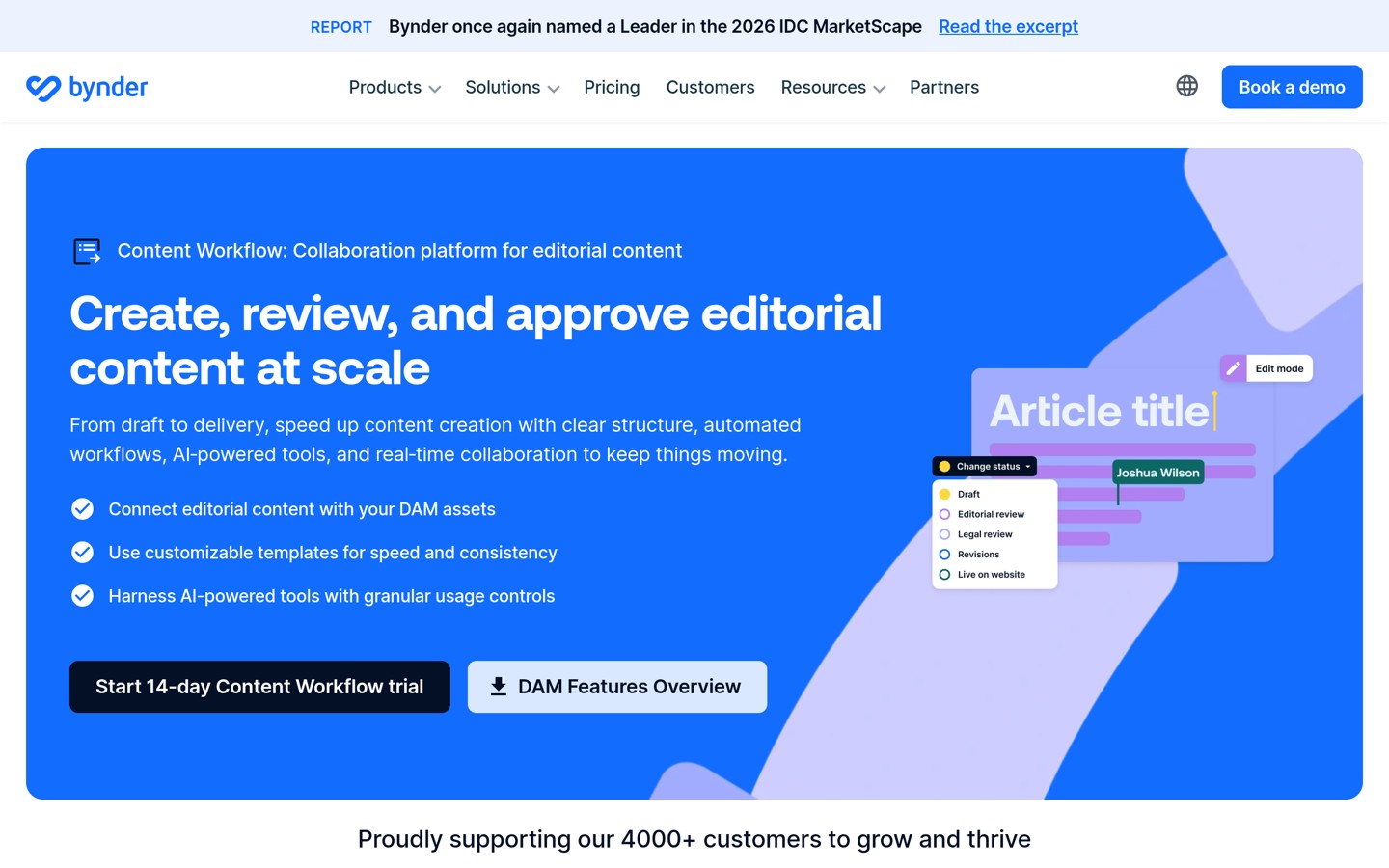
GatherContent is the closest Content Snare replacement for website work, with sitemap-linked requests and staged approvals, but Bynder no longer publishes prices.
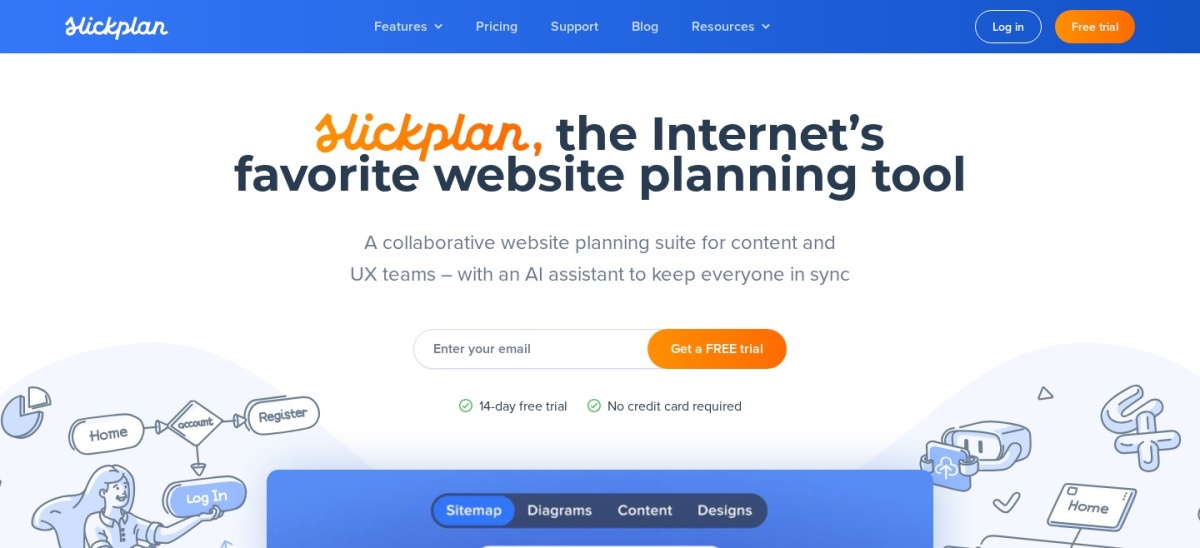
Slickplan is the cheapest structured start at $10.79 a month billed annually, pairing sitemaps with a content planner and a free one-sitemap plan.
SuiteDash is the best value all-in-one: client portals, CRM and billing from $15 a month billed annually, with unlimited users on every plan.
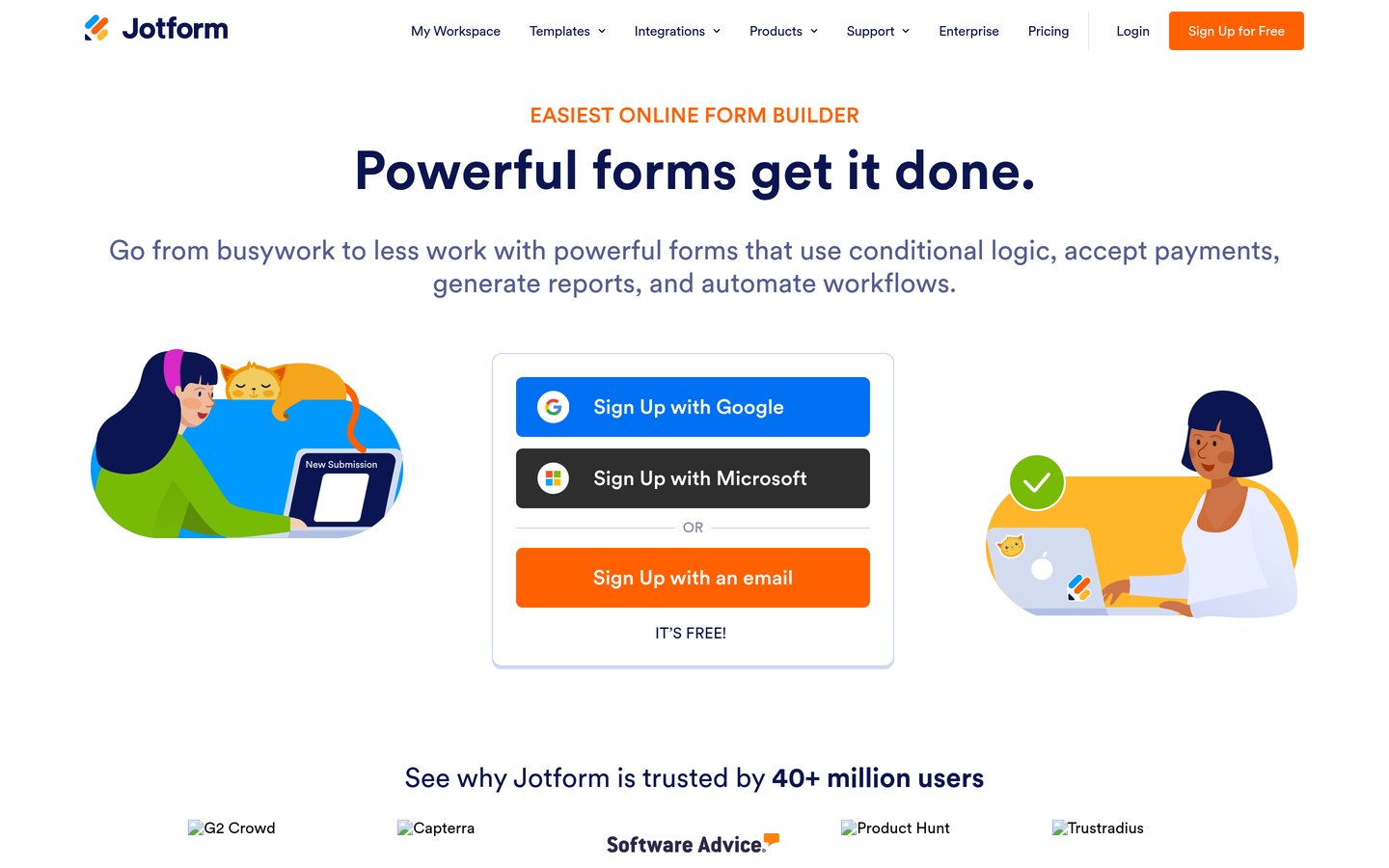
Jotform is the cheapest way in, with a free plan covering 5 forms and 100 submissions a month, but no approval workflow.
FileInvite repriced to $9,900 a year in March 2026, so it is now a lenders-only pick, not an agency one.
How do you pick the right content snare alternatives?
Content Snare's job is chasing, not writing. The best alternatives replace the chase: a request goes out, a client answers without a login, and a reminder follows automatically.
Price spreads are wide because the tools solve different problems. Slickplan starts at $10.79 a month, while FileInvite now starts at $9,900 a year, so the shortlist should start from the job, not the price.
A client portal matters more than a feature list. Tools that let clients answer in a branded portal with no account to create get faster replies than tools that ask them to learn a new system. Our guide on handing over a WordPress site to a client covers the same handover moment.
Ratings need a second look in this niche. GatherContent's G2 score rests on 80+ reviews and Clustdoc's Capterra score on 61, while Jotform and Notion carry thousands, so treat thin scores as a signal to trial first.
GatherContent is the content operations platform behind Content Workflow by Bynder, built for teams that plan website content page by page. Structured templates, stages, due dates and approvals keep every request tied to a sitemap page, and clients review through shared links. It also connects to CMS and digital asset tools so approved copy moves straight into publishing.
The trade off is price and weight. Bynder bought GatherContent in 2022 and no longer publishes prices, so every deal starts with a sales quote and a 14-day trial. It suits agencies and content teams running large website projects where structured approval matters more than a low monthly bill.
What we like
Closest match to Content Snare for website work
Requests attach to sitemap pages, not loose emails
Staged approvals with due dates and templates
CMS and digital asset integrations included
Watch out for
No published prices, quote only
Heavier than a simple request tool
Now part of Bynder, so it is sold as an enterprise platform
Slickplan is a website planning suite that pairs visual sitemaps with a content planner, so clients see which page each piece of copy belongs to. The free version covers one sitemap, and Basic at $10.79 a month billed annually adds 3 active projects, 1 user and 1 GB of storage. Content blocks carry statuses, assignees and due dates.
The trade off is depth. Slickplan plans and organises content beside the sitemap rather than collecting files and signatures, so document-heavy intake needs another tool. It suits web designers and small agencies that lose time to unstructured content requests.
SuiteDash is an all-in-one business platform that puts client portals, CRM, invoicing, project work and file exchange under one login. Start costs $15 a month billed annually, or $19 month to month, with unlimited staff and client accounts, 100 GB of storage and white labelling on every plan. Content requests live inside the same portal as the rest of client work.
The trade off is setup time. Reviewers praise the flat pricing but warn the platform takes real configuration before it feels simple, and the proposals toolkit only arrives on Thrive at $49 a month. It suits service firms that want one system instead of five subscriptions.
What we like
Flat pricing with unlimited users on every plan
Highest G2 rating in this list at 4.8 from 620 reviews
White-labelled portals, CRM and billing together
30-day free trial of the top plan, no card required
Jotform is an online form builder that turns content requests into branded forms with file uploads, conditional logic and e-signatures. The free plan covers 5 forms and 100 submissions a month, and Bronze at $34 a month billed annually raises that to 25 forms, 1,000 submissions and 1 GB of storage. Responses land in tables you can share with clients.
The trade off is that Jotform is a form tool, not a content workflow. There is no sitemap view or staged approval, and submission caps push busy agencies up the tiers quickly. It suits small teams that need a cheap, fast way to collect copy and files without a portal.
What we like
Free plan covers real use, not just a demo
Largest G2 review base in this list at 5,423 reviews
Conditional logic, payments and e-signatures built in
Notion is a flexible workspace where content requests become shared pages, databases and forms that clients can fill in without a login. The free plan covers solo use, and Plus at $10 per member a month billed annually adds unlimited blocks, custom forms and 5 GB uploads. Guests can view and comment without a paid seat.
The trade off is structure. Notion gives you the pieces but no ready-made content-request flow, so teams build their own templates and reminders. It suits small teams that already live in Notion and want requests beside their docs and tasks.
Airtable is a spreadsheet-style database that collects client content through forms tied to structured bases, with views, automations and file attachments. The free plan allows 1,000 records per base, and Team at $20 per user a month billed annually raises that to 50,000 records plus 25,000 automation runs. Clients submit through a form link with no account needed.
The trade off is per-seat pricing. Every editor needs a paid seat, so costs climb as the team grows, and jumping from Team to Business doubles the per-seat price. It suits teams that want structured, searchable content with real database logic behind it.
What we like
Forms write straight into a structured database
Views, filters and automations keep requests organised
Free plan covers a first real project
Large, settled review base at 4.6 from 3,287 reviews
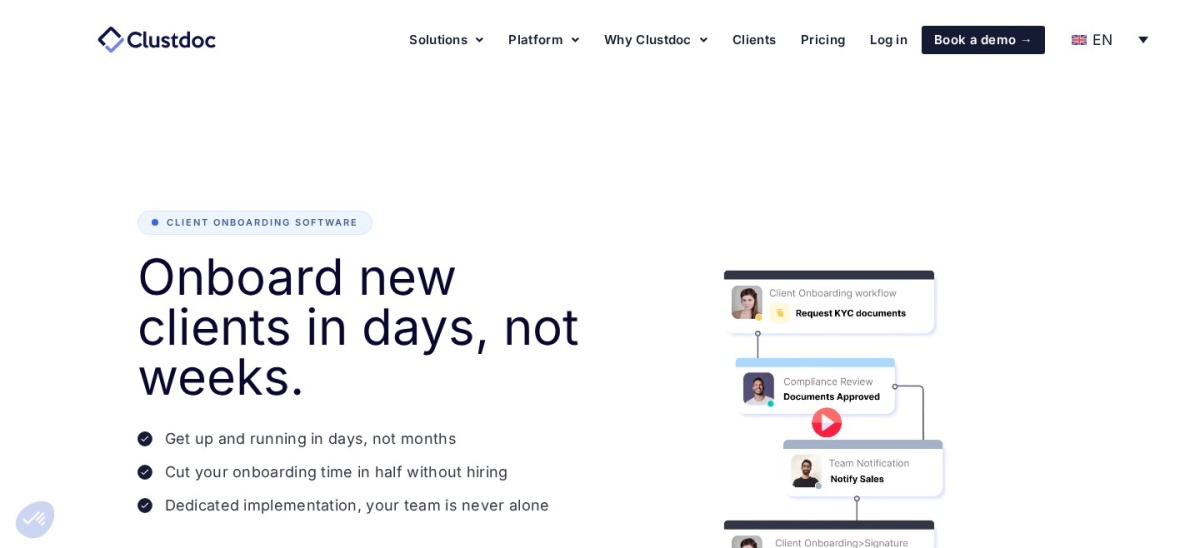
Clustdoc is client onboarding software that runs document collection as a checklist, with intake forms, approvals, e-signatures and built-in KYC and KYB identity checks. Pro costs $190 a month for 3 seats, 50 new applications a month and 25 GB of storage, with white labelling included. Clients work through a password-protected portal.
The trade off is the entry price and the sales-led start. Pro covers a single process type, higher tiers are quote-only, and getting started means booking a discovery call. It suits regulated firms in finance, legal or HR where identity checks are part of the intake.
What we like
KYC and KYB checks built in, rare at this size
Checklists, signatures and approvals in one flow
White labelling included on the entry plan
Strong Capterra score at 4.7 from 61 reviews
Watch out for
Pro covers one process type and 50 applications a month
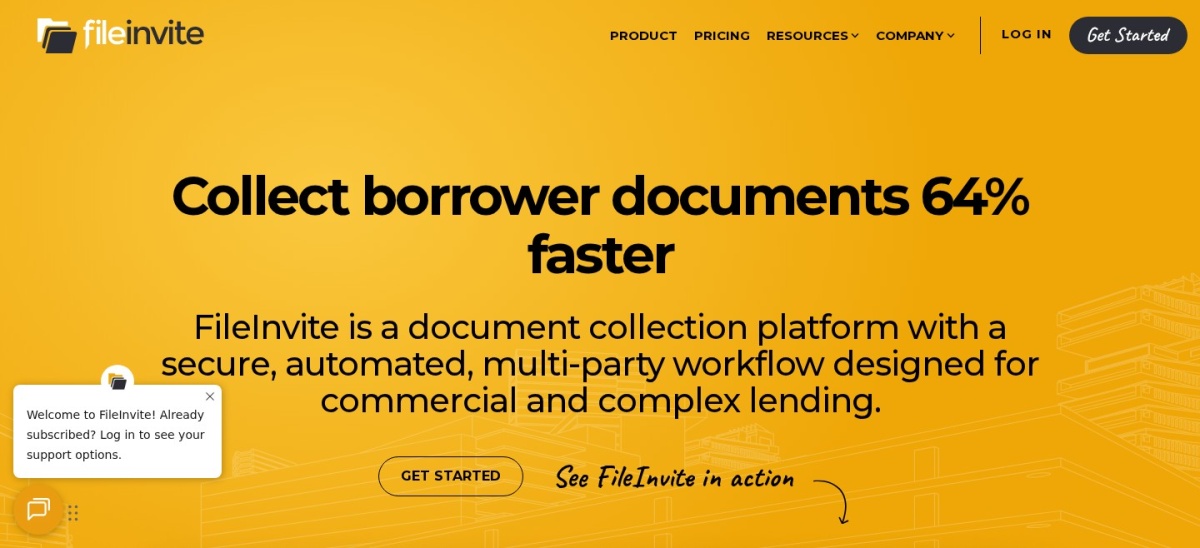
FileInvite is a document collection platform that requests files, forms and signatures from clients with due dates and automatic reminders. Its public pricing now starts at $9,900 a year for the Standard plan, which covers up to 100 typical commercial loans a year, and view-only users are free on every plan. Clients get a simple invite link with no account to create.
The trade off is the March 2026 repricing. FileInvite dropped its small-business monthly plans and now prices by loan volume for lenders, so agencies pay enterprise money for a simple collection job. It suits commercial lenders processing large document sets on a deadline.
What we like
Purpose-built for document-heavy intake
Automatic reminders and due dates throughout
E-signatures and PDF conversion included
Free view-only users on every plan
Watch out for
Small-business monthly plans were dropped in March 2026
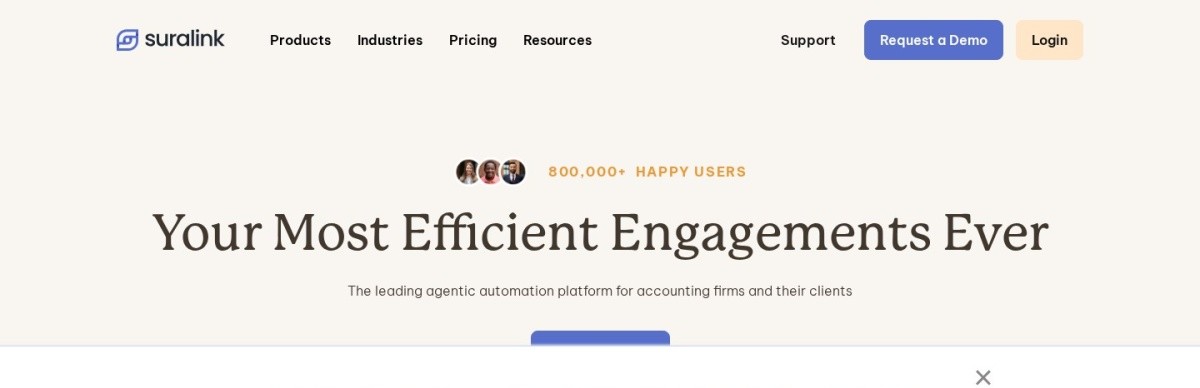
Suralink is built for accounting firms that run client document requests during audits and tax engagements. Each request is tracked with a clear status, so staff and clients can see what is still open without chasing emails. The vendor says it has more than 800,000 happy users, and G2 lists 178 reviews averaging 4.5 out of 5.
The trade off is scope and price. Suralink covers document requests and workpapers rather than website content, and it publishes no prices, with G2 listing a free trial but no dollar figures. It suits firms that run many client audits and want the request chase to manage itself.
Content Snare's Basic plan costs $35 a month billed annually, or $42 month to month, for 2 users, 20 active requests and 20 GB of storage.
That meter is the catch. An active request counts until it is archived, so a busy season can push a firm from Basic to Pro at $119 a month billed annually.
Use it as the baseline. Any alternative should beat $35 a month on price, or beat the request-builder and reminder system on fit.
How we chose
We started from the tools agencies actually name when they leave Content Snare: structured content platforms, sitemap planners, form builders, client portals and document-request tools.
Prices come from each vendor's pricing page, checked on 29 November 2026, using the cheapest paid plan at its regular annual-billing rate. Ratings come from G2 or Capterra on the same day, and the review count is shown beside each score.
We left out tools with no public rating on G2 or Capterra, including EasyContent, whose G2 score has no published review count. No vendor paid for a place, and we do not claim to have used these tools ourselves.
How to choose a Content Snare alternative
Start with who answers the request, then match the tool to the volume.
Count your active requests. Content Snare meters active requests, so check whether the replacement meters requests, seats or submissions, and price it at your busy-season volume.
Check the client experience. Clients should answer without creating an account. Test the invite link yourself before you move a live project.
Match the tool to the content. Website copy needs sitemaps and approvals; documents need checklists and signatures; a portal needs billing and CRM beside the requests.
Trial it on one real project. Run a single client through the trial, from request to approval, and time how many reminders you still send by hand.
FAQ
What are the best Content Snare alternatives in 2026?
GatherContent is the closest match for website content, with sitemap-linked requests and staged approvals, though Bynder sells it by quote. Slickplan is the cheapest structured start at $10.79 a month, and SuiteDash is the best all-in-one portal from $15 a month billed annually.
How much does Content Snare cost?
Content Snare's Basic plan costs $35 a month billed annually, or $42 month to month, for 2 users, 20 active requests and 20 GB of storage. Plus is $71 and Pro is $119 a month on annual billing, and all plans include unlimited clients and reminders.
Is there a free Content Snare alternative?
Yes. Jotform's free plan covers 5 forms and 100 submissions a month, Notion and Airtable both have free plans, and Slickplan's free version covers one sitemap. None of them includes Content Snare's automated reminder system on a free plan.
Which Content Snare alternative is best for agencies?
GatherContent fits agencies running website projects because requests attach to sitemap pages. SuiteDash fits agencies that also want a client portal, CRM and billing in one place, from $15 a month billed annually with unlimited users.
GatherContent vs Slickplan: which is better?
GatherContent is the stronger content workflow, with structured templates and staged approvals tied to pages. Slickplan is cheaper and simpler, starting at $10.79 a month, and adds visual sitemaps and diagrams that GatherContent does not.
Why is FileInvite so expensive now?
FileInvite restructured its pricing in March 2026, dropping its small-business monthly plans for a Standard plan at $9,900 a year aimed at commercial lenders. Agencies collecting ordinary client documents should look at Jotform, SuiteDash or Clustdoc instead.
SaaS SEO and WordPress specialist with about 8 years of experience. Rakib compares WordPress plugins, themes, hosting and software using public pricing, documentation and user reviews. See how we rank.