Wiz is the best cloud detection and response software for small business, because it maps attacks across AWS, Azure and Google Cloud without installing agents. Microsoft Defender for Cloud follows for teams already on Azure, and SentinelOne leads on ratings for runtime protection.
How we make this list: we compare pricing pages, product documentation and public user reviews, then re-check every price before each update. No product paid for a place. Disclosure.
Wiz leads this list, ranked number one CDR on G2 with a 4.7 rating from 932 reviews and agentless coverage of AWS, Azure and Google Cloud.
Microsoft Defender for Cloud is the best value pick, with a free CSPM tier, a 30-day trial and pay-as-you-go billing for teams already on Azure.
SentinelOne carries the highest rating here at 4.9 on G2, and Sysdig is second at 4.8, both ahead of Wiz on rating alone.
Barracuda Managed XDR is the only fully managed option, with a 24/7 SOC for teams with no security staff.
Every tool here sells by quote except Defender, so get each price in writing for your own cloud footprint before comparing.
What should a small business look for in cloud detection and response software?
Small businesses get breached through the cloud more often than through the office network. Misconfigured storage, exposed credentials and unpatched containers are the usual entry points, and they are invisible to a traditional firewall, which is why cloud detection and response exists.
Agentless scanning is the friendliest starting point for a small team. Wiz, Orca and Defender's CSPM tier all read your cloud accounts through APIs, so there is nothing to install on every server and nothing to maintain when the team is too small for a dedicated security engineer.
A managed service is the honest answer when nobody on staff owns security. Barracuda's SOC watches around the clock and responds to incidents, while the other tools in this list still need someone to read alerts and act on them, even when the scanning itself is automatic.
Price is the hardest part of this comparison, because seven of the eight tools sell by quote. Only Microsoft Defender for Cloud publishes a pricing model, and even that is usage-based, so the real comparison is the quote for your own cloud footprint, not a sticker price.
The 8 best cloud detection and response software for small business
01
Wiz
4.7/5on G2 (932 reviews, checked Nov 2026)
PricingCustom/yr
Best overall CDR for small teams
DeploymentAgentless, API-based
Clouds coveredAWS, Azure, Google Cloud
Integrations100+
Free trialDemo on request
wiz.io
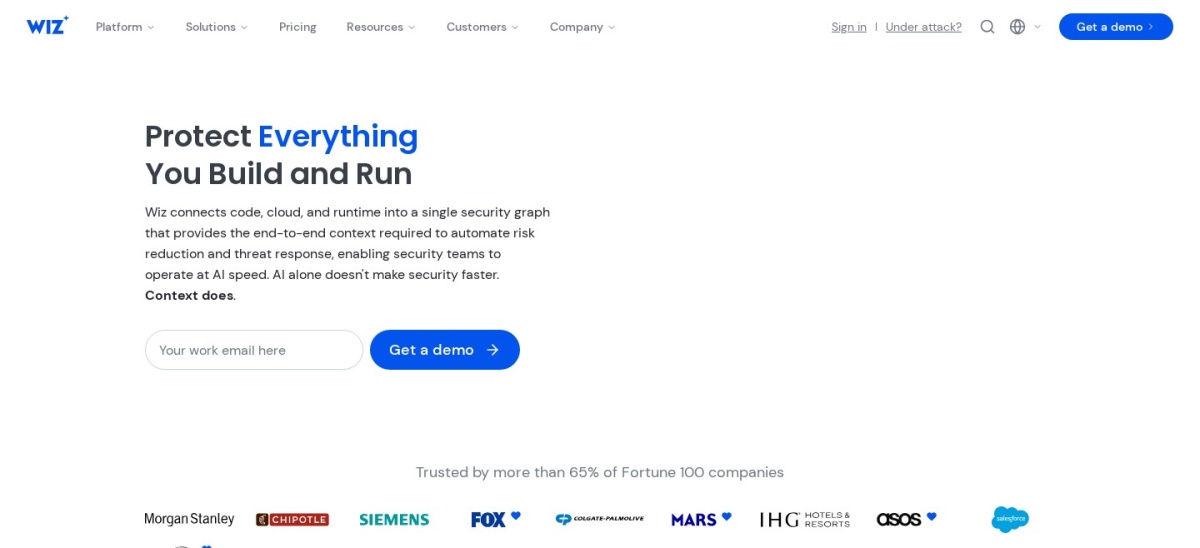
Wiz homepage, captured Nov 2026.
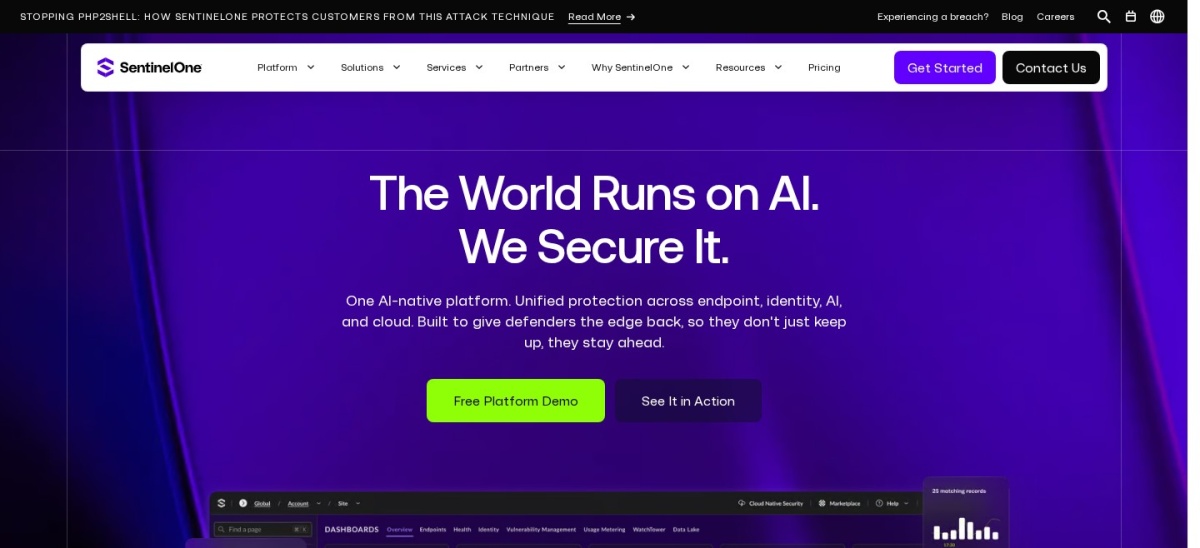
Wiz is the agentless cloud detection and response platform that maps your code, cloud and runtime into one security graph, so an alert arrives with the full attack path attached. It scans AWS, Azure and Google Cloud without agents, covers more than 100 integrations, and is ranked the number one CDR platform on G2, with 99% of reviewers rating it 4 or 5 stars.
The trade off is price and positioning. Wiz sells by quote with no published starter plan, and its customer list leans heavily enterprise, so a small team should ask for a scoped quote for its own cloud footprint and check what the entry package actually includes before committing.
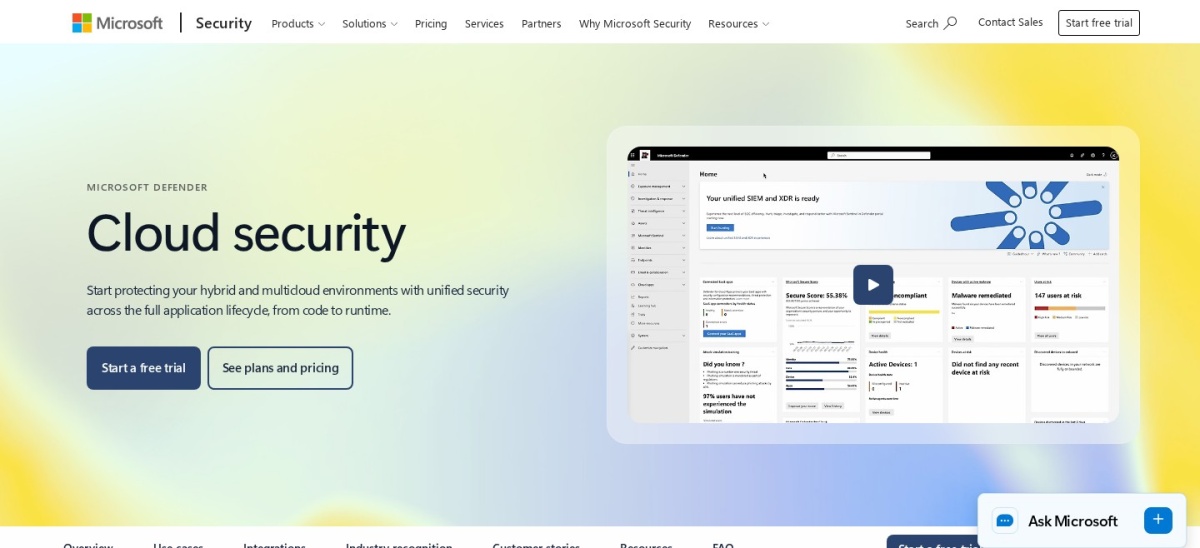
Microsoft Defender for Cloud homepage, captured Nov 2026.
Microsoft Defender for Cloud is the CNAPP and CDR platform built into Azure, covering posture management, workload protection and threat detection across Azure, AWS and Google Cloud. Its foundational CSPM tier is free, paid plans run on a 30-day free trial, and billing is pay as you go per workload, which keeps the entry cost low for a small team already running on Azure.
The trade off is that the pricing page lists no fixed dollar figure, because every plan is billed per resource, so a small team should model its own server, storage and container counts before enabling paid plans. Defender is also strongest inside Azure, and the 24/7 managed hunting add-on is billed separately.
SentinelOne Singularity Cloud Security homepage, captured Nov 2026.
SentinelOne Singularity Cloud Security is the cloud arm of the Singularity platform, combining agentless discovery with agent-based runtime protection and an AI assistant. It carries the highest G2 rating in this list at 4.9, and it covers cloud workloads, containers and Kubernetes from the same console that already protects endpoints, which suits a small team that wants one vendor.
The trade off is that the cloud security product is newer than the endpoint product, so its 122 G2 reviews are a smaller base than the leaders here. Pricing is also quote-only, and SentinelOne positions itself as an enterprise platform, so a small team should confirm the entry package and support terms in writing.
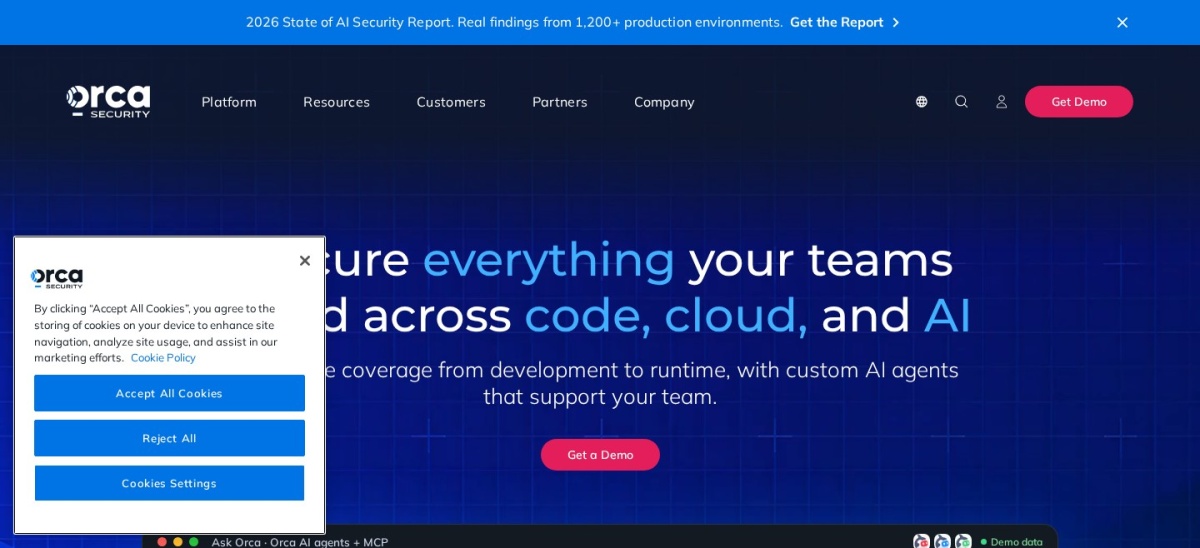
Orca Security is the agentless-first cloud security platform that scans code, cloud and runtime without installing agents, using its SideScanning approach to read workloads from outside. It covers cloud posture, vulnerabilities, identities and AI workloads in one platform, and its custom AI agents help a small team triage alerts without a dedicated security engineer.
The trade off is price. Orca sells by quote with no published starter plan, and its customer base leans enterprise, so a small business should ask for a scoped quote and confirm what the entry tier includes. Its 314 G2 reviews are also fewer than Wiz, though the rating is the same at 4.7.
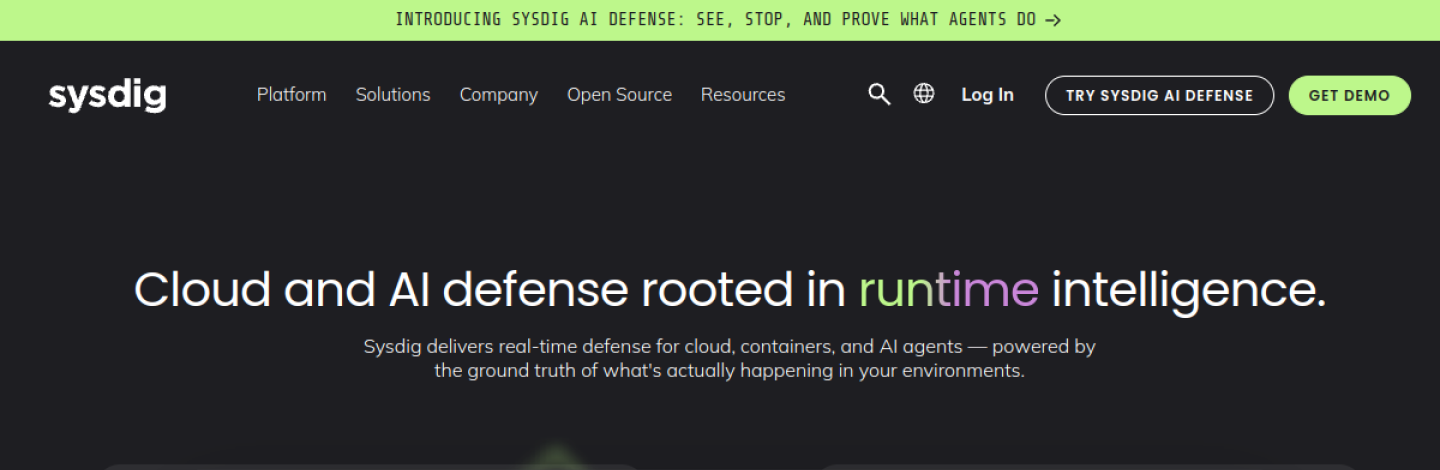
Sysdig Secure is the runtime-first cloud security platform, built on the open-source Falco project that Sysdig created, so it sees what is actually happening inside live containers and workloads. It pairs that runtime telemetry with cloud posture and vulnerability scanning, and its new AI Defense product extends the same approach to AI agents, which matters as small teams adopt agent tools.
The trade off is focus and scale. Sysdig is strongest where Kubernetes and containers matter, so a team with little container use gets less from it. Pricing is quote-only, and its 110 G2 reviews are a smaller base than the category leaders, though its 4.8 rating is the second highest in this list.
CrowdStrike Falcon Cloud Security homepage, captured Nov 2026.
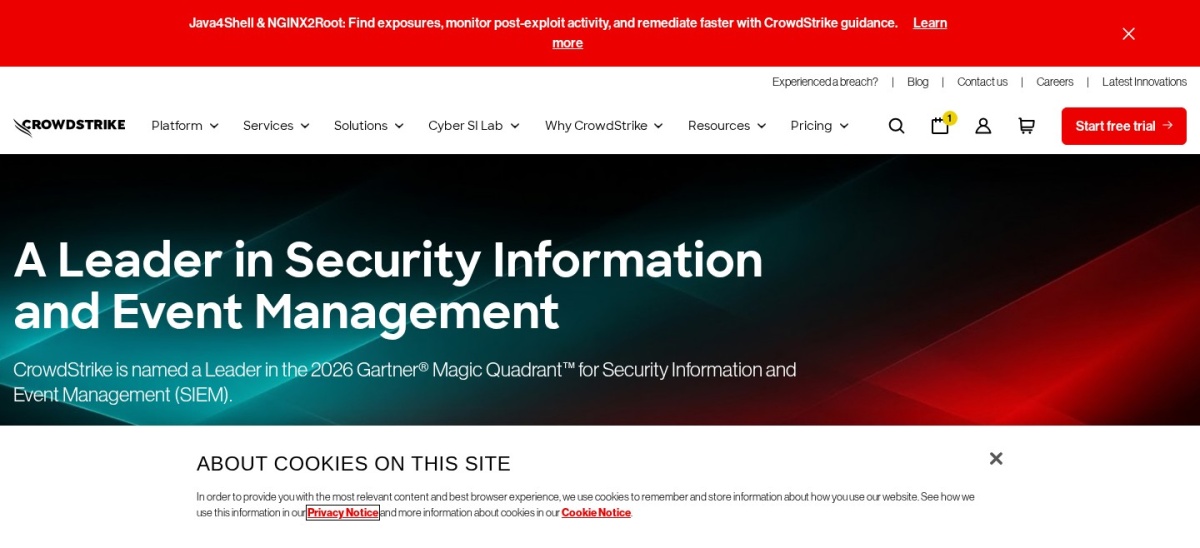
CrowdStrike Falcon Cloud Security is the cloud arm of the Falcon platform, combining agentless discovery with data from the Falcon sensor already running on endpoints. It brings CrowdStrike threat intelligence and Charlotte AI into cloud detection and response, and it suits a small team that already runs Falcon for endpoints and wants cloud coverage in the same console.
The trade off is cost. G2 reviewers flag high prices for small businesses, and Falcon Cloud Security is quote-only, so a small team should get the price in writing and check which modules the quote covers. Its cloud product is also newer than the endpoint product, with 254 G2 reviews behind it.
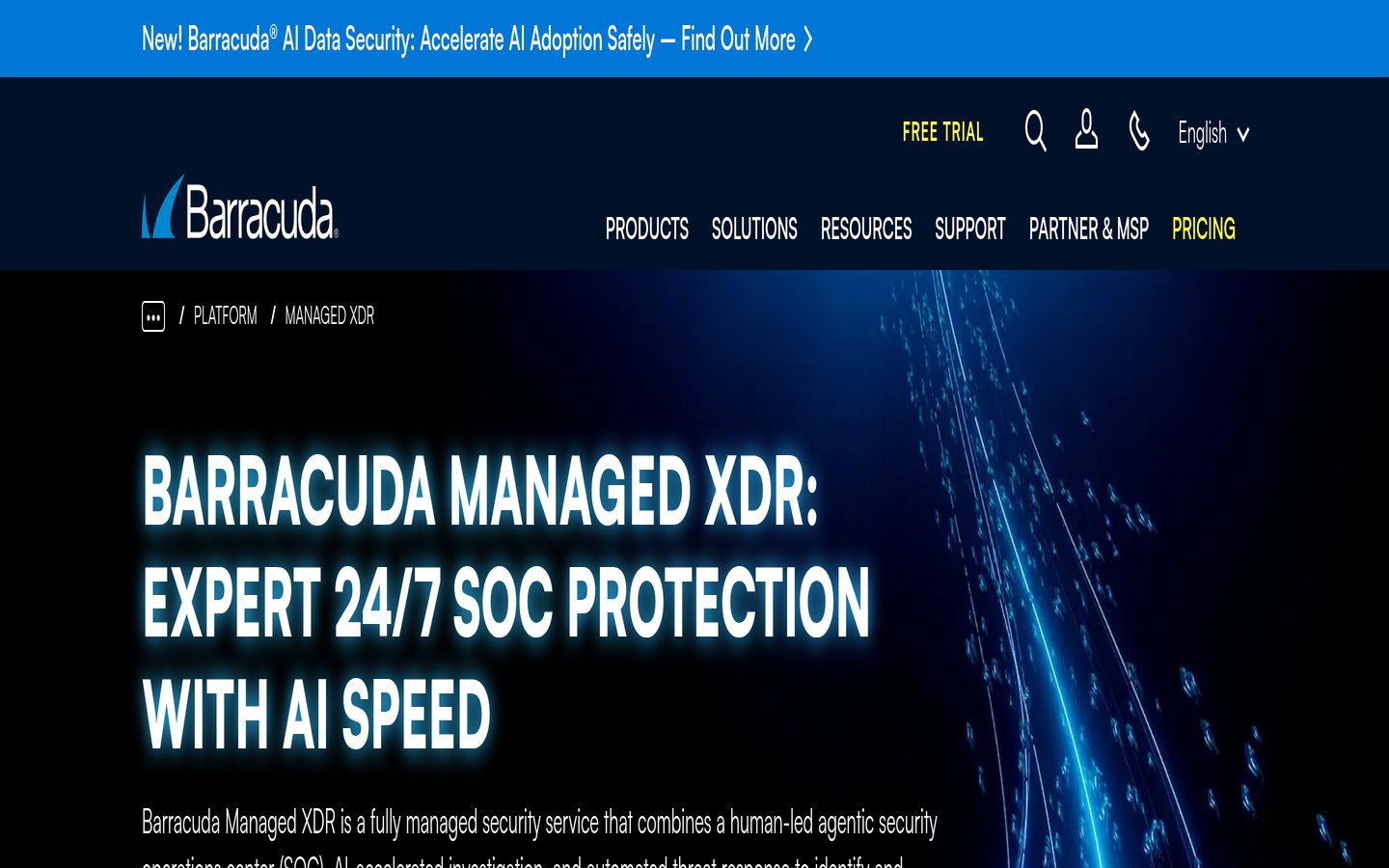
Barracuda Managed XDR homepage, captured Nov 2026.
Barracuda Managed XDR is the fully managed option in this list, combining a human-led security operations centre with AI-accelerated investigation and automated threat response. Its SOC runs around the clock with five expert teams, so a small business gets detection and response without hiring its own security staff, and a free trial is available.
The trade off is control and price. A managed service means Barracuda runs the response, so a team that wants direct control of every incident should look elsewhere. Pricing is quote-only, and its 77 G2 reviews are the smallest base in this list, though the 4.5 rating matches CrowdStrike.
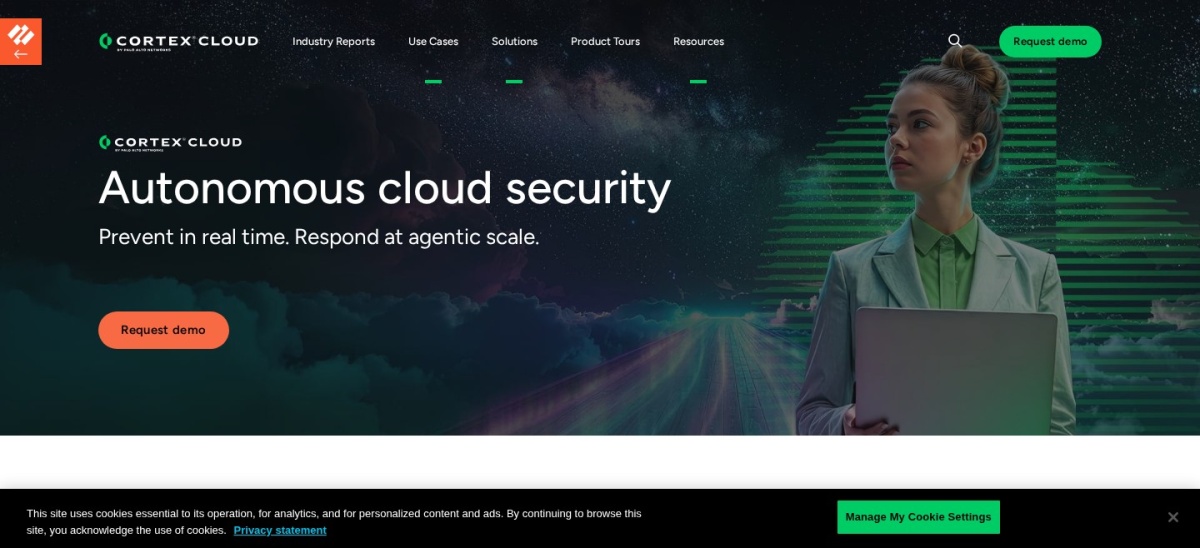
Cortex Cloud is Palo Alto Networks' cloud security platform, which replaced Prisma Cloud in February 2025 and now combines posture management, detection and response in one autonomous system. It aims to prevent attacks in real time and respond at agentic scale, and it suits a small team already running Palo Alto firewalls or Prisma Cloud that wants one vendor across network and cloud.
The trade off is rating and price. Cortex Cloud carries the lowest G2 rating in this list at 4.1, though that figure includes historical Prisma Cloud reviews, and G2 reviewers flag pricing that can run high for small teams. It is also quote-only, so a small business should confirm the entry price before committing.
Amazon GuardDuty is AWS's own native threat detection service, with usage-based pricing published by Amazon, but it has no verified G2, Capterra or Trustpilot rating, so it could not be ranked under our rules. AWS-heavy teams should still evaluate it alongside Wiz.
Trend Vision One has a verified G2 rating of 4.3, but that rating covers the endpoint security product, not the cloud security product, so we did not rank it as a CDR tool.
Newer CDR platforms such as Upwind and ARMO earned strong marks in G2's category commentary, but neither had a numeric G2 rating we could verify, so they were left out. Blackpoint Cyber was left out for the same reason: G2 shows satisfaction and NPS figures, but no star rating.
How we chose
We ranked eight cloud detection and response tools by their G2 rating and review count, then checked each one against small-business work: agentless setup, multicloud coverage, runtime detection and whether a managed option exists. Every tool here has a numeric G2 rating, and every price claim was checked against the vendor's own pricing page on 30 Nov 2026.
We left out tools with no G2, Capterra or Trustpilot rating, including Amazon GuardDuty, which has no verified G2 rating, and several newer CDR startups such as Upwind and ARMO. Trend Vision One was left out because its verified G2 rating covers the endpoint product, not the cloud security product, and Blackpoint Cyber has no star rating on G2.
No vendor paid for a place, and we do not claim hands-on testing for this list. Ratings come from G2 reviewers, not from our own use, and all eight tools sell by quote or on usage-based pricing, so the final price depends on cloud size, workloads and contract length.
How to choose cloud detection and response software for a small business
Four checks before you sign anything.
Start with the clouds you actually run. List every AWS, Azure and Google Cloud account first. A tool that covers only one cloud will leave the rest unprotected, and multicloud coverage is the main reason Wiz and Defender lead this list.
Check whether anyone will watch the alerts. If nobody on staff owns security, pick a managed option such as Barracuda Managed XDR. If someone does, an agentless tool such as Wiz or Orca needs the least upkeep.
Ask for a scoped quote, not a brochure price. Seven of the eight tools sell by quote, so give each vendor the same account, workload and container counts and compare the written quotes side by side.
Trial the free tier before you pay. Enable Defender's free CSPM tier or a vendor trial first, and check how many findings are real risks versus noise before signing a contract.
FAQ
What is the best cloud detection and response software for small business?
Wiz is the best cloud detection and response software for small business, because it scans AWS, Azure and Google Cloud without agents and maps every alert to a full attack path. Microsoft Defender for Cloud is the best value pick for teams already on Azure, with a free CSPM tier and a 30-day trial.
How much does cloud detection and response software cost for a small business?
Most tools in this list sell by quote, so there is no published starting price to compare. Microsoft Defender for Cloud is the exception, with a free foundational CSPM tier and pay-as-you-go billing per workload, plus a 30-day free trial of its paid plans.
Do small businesses need cloud detection and response software?
Yes, if your data or apps run in the cloud, because misconfigurations and exposed credentials are the most common way small businesses get breached. A CDR tool watches your cloud accounts continuously, flags risky settings and responds to live threats, which a firewall alone cannot do.
What is the difference between CDR and XDR?
CDR focuses on cloud accounts, workloads and containers, while XDR pulls signals from endpoints, email, identity and network into one detection layer. Barracuda Managed XDR in this list is an XDR service with a managed SOC, while Wiz and Orca are cloud-first CDR platforms.
Can I use cloud detection and response software without a security team?
Yes. Barracuda Managed XDR is fully managed, so its SOC watches and responds around the clock. Wiz, Orca and Sysdig are agentless, so there is little to install or maintain, and Microsoft Defender for Cloud suits teams that already live inside Azure.
Which cloud detection and response tool is best for AWS?
Wiz is the best pick for AWS-heavy teams, because it scans AWS accounts agentlessly and connects cloud, code and runtime into one graph. Microsoft Defender for Cloud also covers AWS, and Amazon GuardDuty is AWS's own native option, though it has no G2 rating we could verify.
Is Microsoft Defender for Cloud free?
Partly. Its foundational CSPM tier is free and covers continuous assessment, Secure Score and the Microsoft cloud security benchmark across Azure, AWS and Google Cloud. Paid workload protection plans are billed per resource after a 30-day free trial.
SaaS SEO and WordPress specialist with about 8 years of experience. Rakib compares WordPress plugins, themes, hosting and software using public pricing, documentation and user reviews. See how we rank.