MaintainX is the best work order management software for most teams, with a free plan covering unlimited work orders and a paid plan from twenty dollars a user a month. Limble suits teams that want the easiest setup, while Fiix is the pick for free preventive maintenance scheduling.
How we make this list: we compare pricing pages, product documentation and public user reviews, then re-check every price before each update. No product paid for a place. Disclosure.
MaintainX gives the most in its free plan: unlimited work orders and unlimited free requester users.
Limble is the quickest to set up, with unlimited assets and preventive maintenance from its first paid tier.
Fiix offers the best free preventive maintenance plan, with 25 active schedules at no cost.
UpKeep starts at $24 a user a month, but preventive maintenance scheduling needs Premium at $55.
Most rivals in this list price by quote, so ask for a written breakdown before comparing costs.
What work order software should cover
Work order software replaces paper tickets and spreadsheets with jobs that carry an owner, a deadline and an asset record. A technician opens the job on a phone, adds photos and closes it from the floor.
A good tool covers the full loop: requests from anyone, scheduling, parts and time tracking, and a record of what was done to each asset. Our guide on choosing maintenance software explains how the category fits together.
Preventive maintenance is where plans differ most. Some tools include repeating schedules on the first paid tier, while others keep them for a higher plan or a quote.
Per-user pricing punishes teams with many occasional requesters. Flat-price tools and free requester seats change the maths, so count your requesters before you count your technicians.
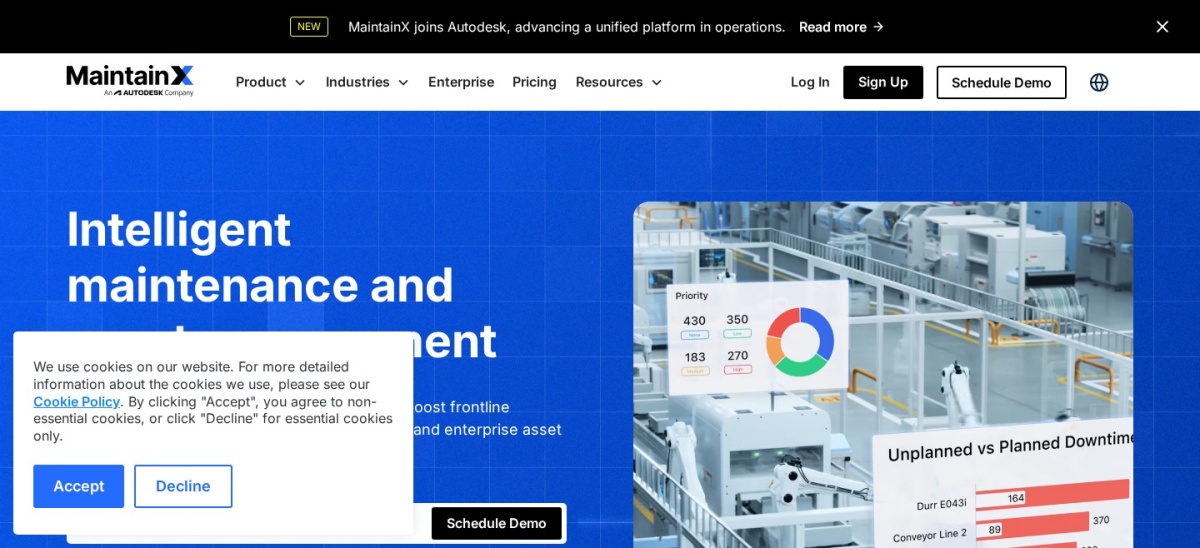
MaintainX is a mobile-first maintenance platform built around work orders, and its free Basic plan covers unlimited work orders, unlimited requester users and real-time messaging. Technicians open jobs on a phone, add photos, log time and close work from the floor, while managers track assets, locations and downtime in one place.
The trade off is depth on the free plan. Repeating work orders are capped at 2 a month on Basic, and parts inventory, purchase orders and meter-based maintenance need Premium at $65 a user a month. It suits small teams moving off paper who want to start free and grow into preventive maintenance.
What we like
Free plan covers unlimited work orders
Strong mobile app for floor technicians
Essential starts at $20 a user a month
Watch out for
Free plan caps repeating work orders at 2 a month
Parts and purchase orders need Premium
Premium adds parts, purchase orders and meter-based maintenanceVisit maintainx.com
02
Limble
4.8/5on G2 (682 reviews, checked Nov 2026)
Paid from$28/user/mo
Best for fast setup and support
Free planYes, Basic
Cheapest paid planStandard, $28/user/mo
Asset trackingUnlimited assets
SupportHighly rated by reviewers
limblecmms.com
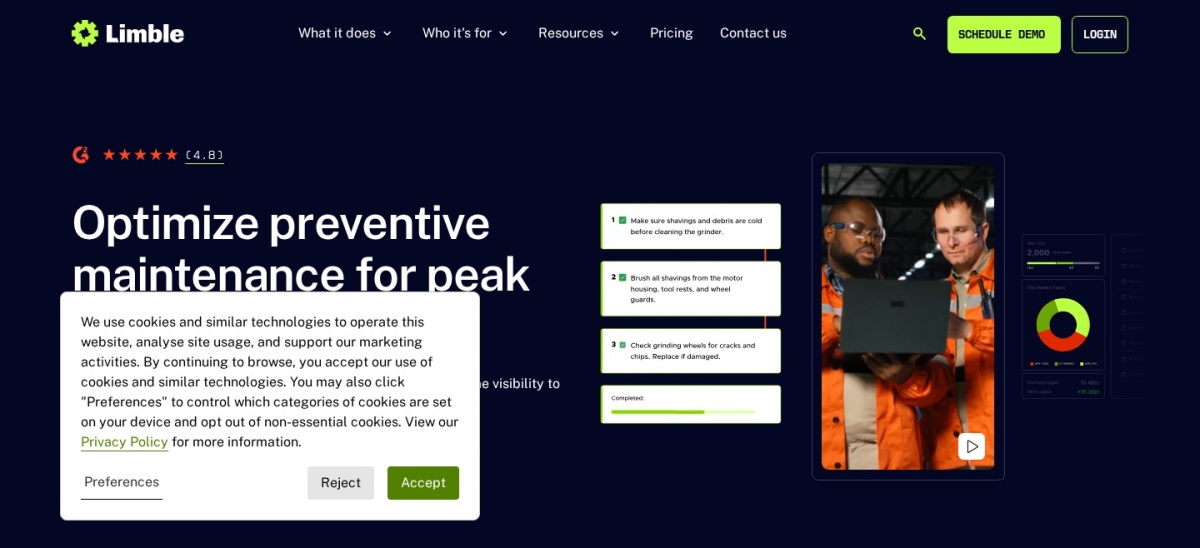
Limble homepage, captured Nov 2026.
Limble is a cloud maintenance platform that puts work orders, preventive maintenance, asset tracking and a mobile app on every paid tier. Standard starts at $28 a user a month and covers unlimited assets and preventive maintenance schedules, with no cap on locations or requesters.
The trade off is price transparency. Limble publishes no prices on its pricing page, and the $28 and $69 figures come from its own cost guide rather than a plan table. It suits small teams that want the easiest setup and strong support without a long implementation.
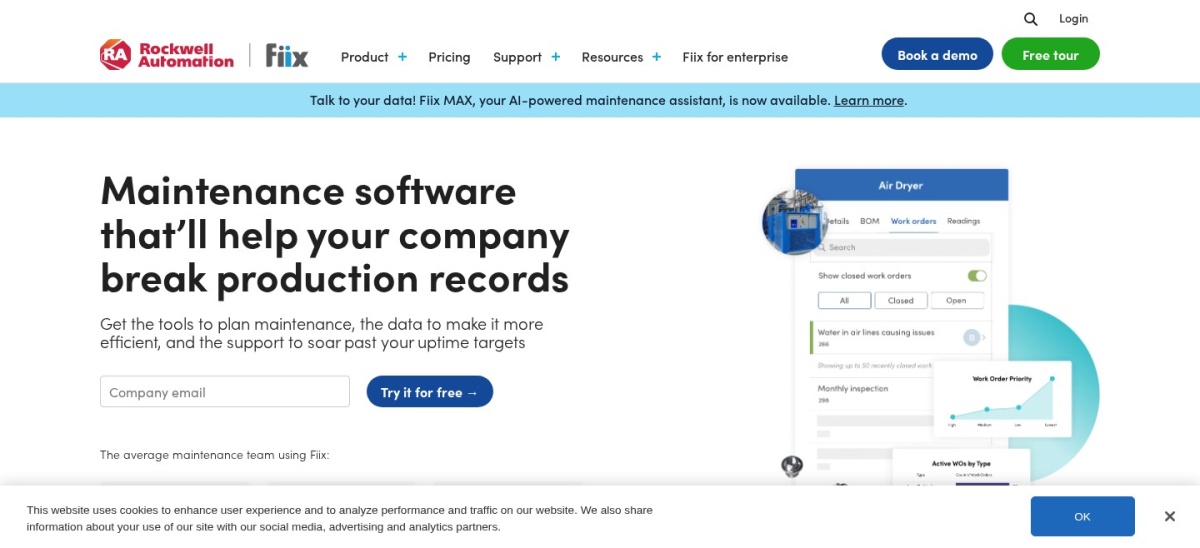
Fiix is maintenance software from Rockwell Automation built for plants that think in machines. The free plan covers unlimited work orders and 25 active preventive maintenance schedules, plus parts, supplies, downtime tracking and the mobile app.
The trade off is that the deeper tools sit higher up. The full asset hierarchy and parts inventory start on Basic at $45 a user a month, and multi-site management, integrations and failure codes need Professional or Enterprise. It suits manufacturing plants that want free PM scheduling to start.
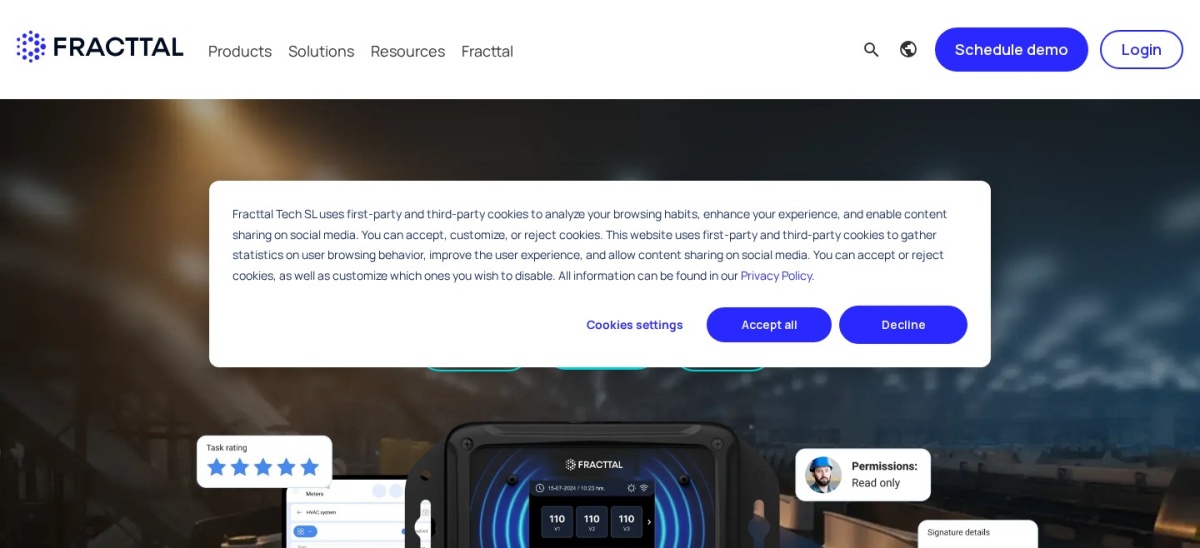
Fracttal is a maintenance platform that pairs work orders and preventive maintenance with asset health data and KPI dashboards. Teams plan work, track spare parts and watch equipment condition from one system, with a mobile app for technicians in the field.
The trade off is access. Fracttal publishes no plan prices, so every deal is quoted, and small teams cannot size the cost from the website. It suits data-led teams that want maintenance and asset analytics together and are ready for a sales conversation.
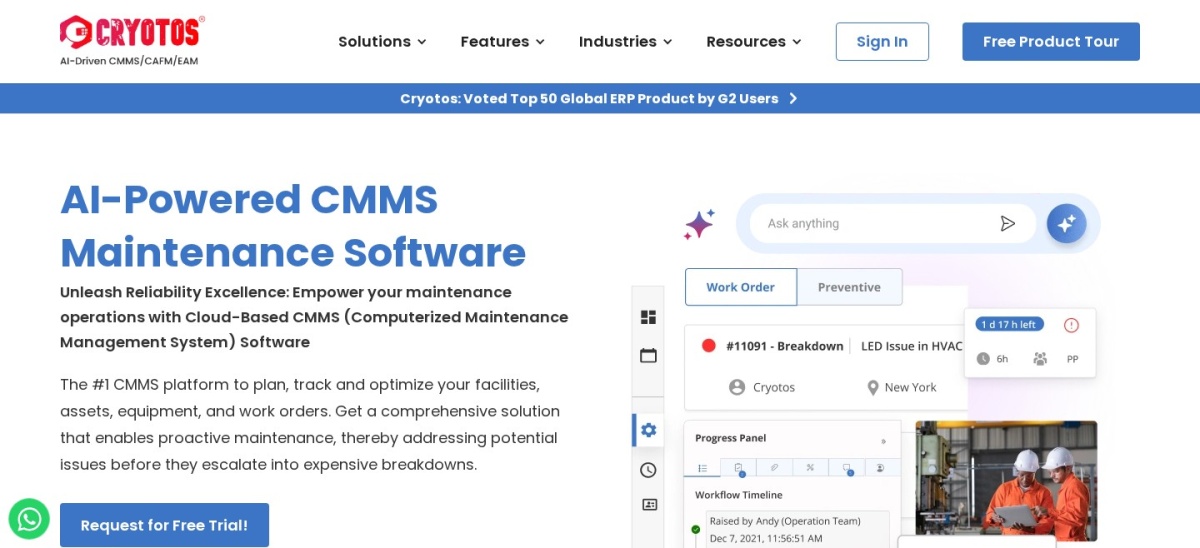
Cryotos is a cloud maintenance platform for teams that want work orders, asset records and preventive maintenance without a heavy setup. Reviewers rate it 4.6 out of 5 on G2 and praise its customer support and work order tracking.
The trade off is pricing. Cryotos publishes no plan prices, so buyers must ask for a quote before they can compare costs. It suits teams that want a straightforward CMMS and value responsive support over a published price list.
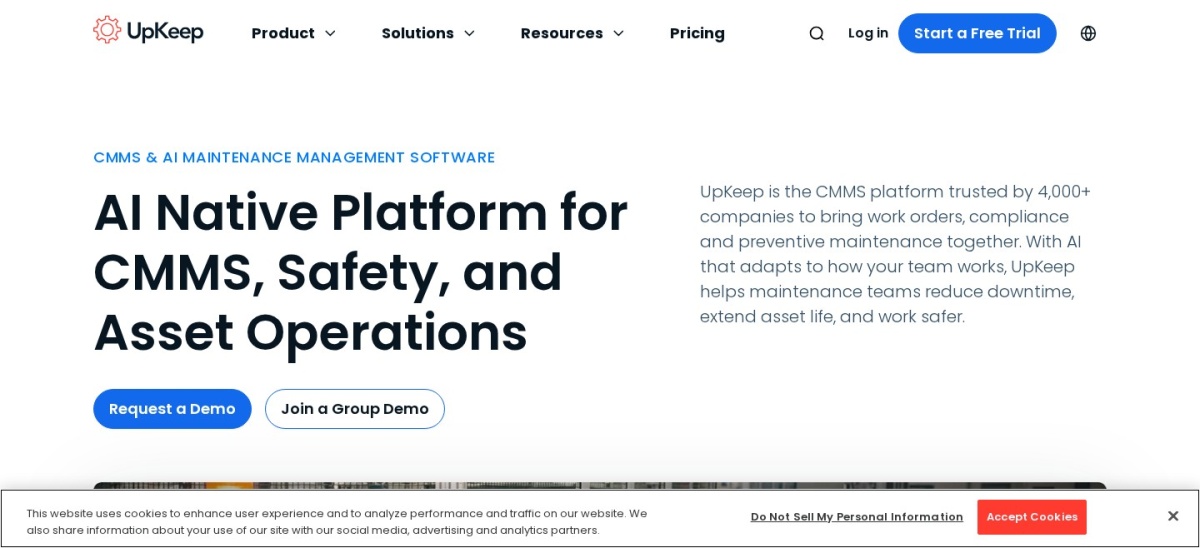
UpKeep is built around the phone. A technician opens the work order, checks the asset history, logs parts and time, and closes the job from the floor. Essential costs $24 a user a month with unlimited work orders and locations, barcode scanning and the Nova AI assistant, and requester, viewer and vendor users are free.
The trade off is that preventive maintenance scheduling starts on Premium at $55 a user a month, and purchase orders and the API need the quoted Enterprise plan. It suits small teams moving off paper who want free requesters and a fast mobile start.
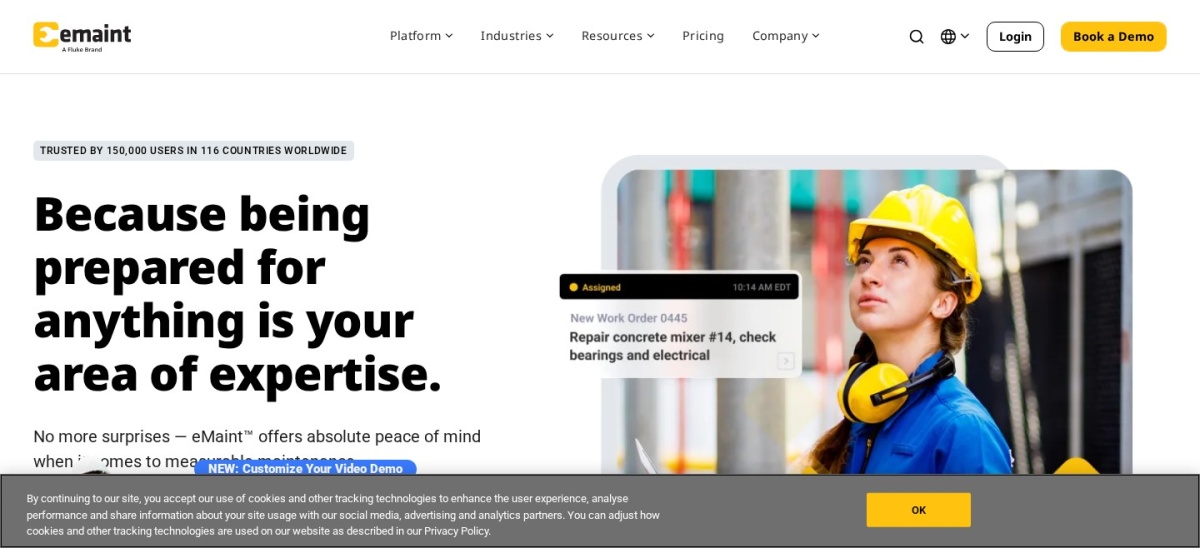
eMaint is a maintenance platform from Fluke that suits calibration-heavy and regulated operations. It covers work orders, preventive maintenance, asset records and inventory, with calibration tracking and audit trails that regulated teams need for inspections.
The trade off is that eMaint prices by quote, so there is no published entry price to compare, and setup suits teams with a defined maintenance process. It suits plants and labs where calibration records and compliance matter as much as the work order itself.
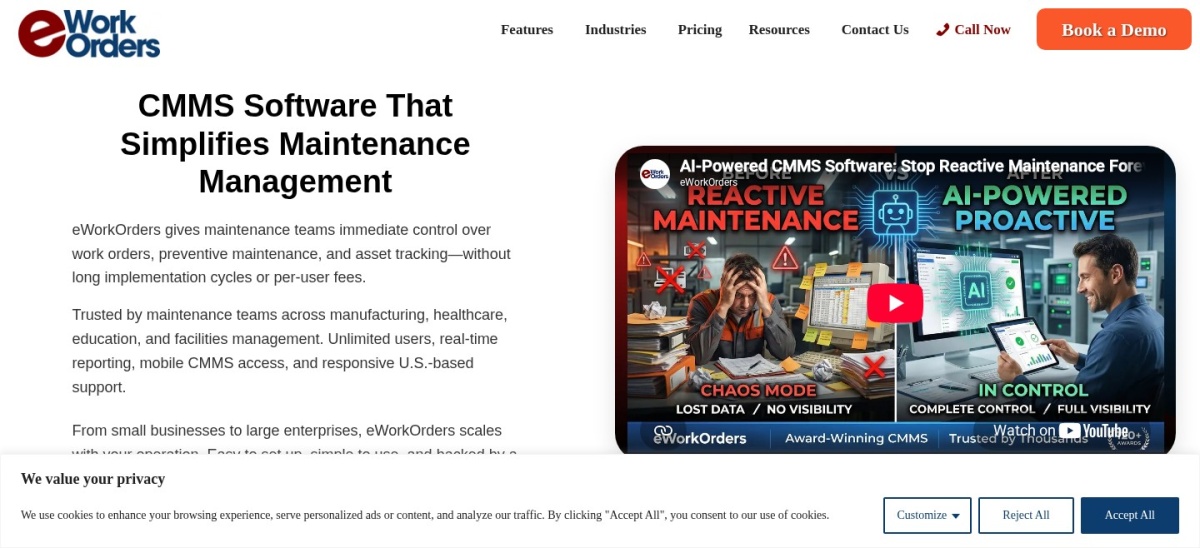
eWorkOrders is a work order tool that charges a flat monthly price instead of a per-user fee, which changes the maths for teams with many occasional users. Starter costs $380 a month with unlimited users, and Advanced costs $480 a month, so operators logging their own work cost nothing extra.
The trade off is review depth. Its 4.9 out of 5 G2 score comes from only 31 reviews, and the flat price is steep for a team of two or three technicians. It suits sites where dozens of operators raise requests and per-seat pricing would punish them.
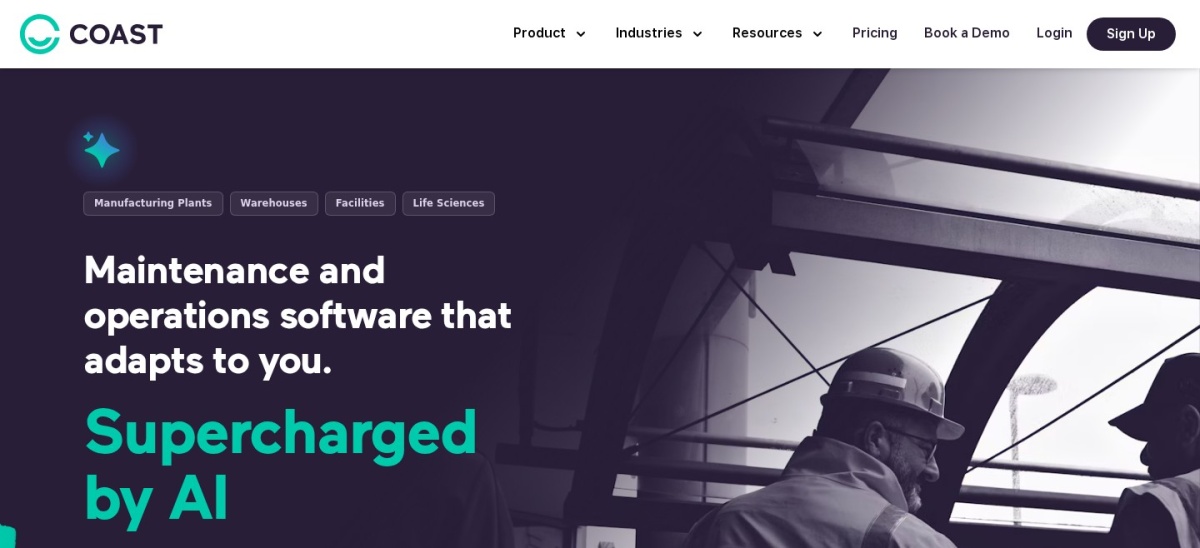
Coast is a simple maintenance app for small teams that want work orders, team chat and asset lists without CMMS complexity. It costs $25 a user a month, with Premium at $65, and its chat keeps technicians, managers and requesters on the same thread.
The trade off is review depth. Its 4.7 out of 5 G2 score comes from only 13 reviews, so the rating is a weak signal next to rivals with hundreds. It suits small teams that want a light, chat-led tool and do not need deep parts or calibration features.
We started from the best-known work order and CMMS tools, then kept those with a verifiable G2 rating and a published or quoted price.
Prices come from each vendor's pricing page or cost guide, checked on 26 November 2026. Ratings and review counts come from G2 on the same day. Where a vendor shows no price, the list says so.
We left out tools with no verifiable rating. No vendor paid for a place, and we do not claim hands-on testing for this list.
How to choose work order management software
Count your technicians and your requesters first, then match the pricing model to the bigger group.
Start with the free plan if one exists. MaintainX, Limble and Fiix all let a small team run real work orders at no cost before paying.
Check where preventive maintenance sits. Some tools include repeating schedules on the first paid tier, while others keep them for Premium or a quote.
Price your requesters, not just your technicians. Free requester seats and flat pricing change the bill when dozens of people raise jobs.
Ask quote-only vendors for a written breakdown. Get the platform fee, user count and contract length in writing before you compare.
FAQ
What is the best work order management software?
MaintainX is the best work order management software for most teams. Its free Basic plan covers unlimited work orders and unlimited requester users, and Essential starts at $20 a user a month billed annually, with a 4.8 out of 5 G2 score from more than 1,500 reviews.
Is there free work order management software?
Yes. MaintainX, Limble and Fiix all offer free plans. MaintainX Basic covers unlimited work orders, Limble Basic lets you try work orders and assets, and Fiix covers unlimited work orders with 25 active preventive maintenance schedules.
How much does work order software cost?
Published per-user prices in this list run from $20 a user a month for MaintainX Essential to $45 for Fiix Basic, with flat pricing from eWorkOrders at $380 a month for unlimited users. Several vendors price by quote, so their cost depends on team size.
What is the difference between work order software and CMMS?
Work order software focuses on creating, assigning and closing jobs. A CMMS adds asset records, preventive maintenance schedules, parts inventory and reporting around those jobs. Most tools in this list do both, but simple apps such as Coast stay closer to work orders.
Do I need preventive maintenance scheduling?
Yes, if your equipment fails on a schedule rather than at random. Repeating work orders catch worn parts before they break, and they are the main reason teams move from spreadsheets to a CMMS. If you only fix things when they break, a simple work order tool is enough.
Which work order tool is best for manufacturing?
Fiix suits manufacturing plants best, with a free plan built around preventive maintenance and deep asset hierarchies on paid plans. MaintainX is the stronger pick for mixed teams that want a fast mobile start, while eMaint fits plants with calibration and compliance needs.
SaaS SEO and WordPress specialist with about 8 years of experience. Rakib compares WordPress plugins, themes, hosting and software using public pricing, documentation and user reviews. See how we rank.