Best Work Management Software in 2026: 7 Tools Compared
WLWPLegible EditorsLast verified 22 Nov 2026How we rank13 min read
★ Short answer
ClickUp is the best work management software for teams wanting tasks, documents, dashboards and automation together. Its free plan includes unlimited tasks, while Core has a regular price of $12/user/month. Asana suits cross-functional project coordination, and monday.com is a strong choice for visual workflow customization.
How we make this list: we compare pricing pages, product documentation and public user reviews, then re-check every price before each update. No product paid for a place. Disclosure.
ClickUp scores 4.6/5 from 15,880 G2 reviews. Its free plan includes unlimited tasks, while Core has a regular annual-billing price of $12/user/month before the advertised $9 promotion.
Asana scores 4.4/5 from 14,143 G2 reviews. Starter costs $10.99/user/month billed annually and includes timelines, Gantt charts and unlimited automations.
monday.com scores 4.7/5 from 17,975 G2 reviews. Its Basic plan has a published reference price of $9/seat/month billed annually.
Trello scores 4.4/5 from 14,078 G2 reviews. Standard costs $5/user/month billed annually, making it the cheapest paid option here.
Wrike scores 4.2/5 from 4,648 G2 reviews and offers a free plan plus Team subscriptions starting at $10/user/month.
Smartsheet scores 4.4/5 from 23,291 G2 reviews, while Notion scores 4.6/5 from 13,972 reviews. Their entry paid plans start at $9 and $10/user/month billed annually, respectively.
What matters when choosing work management software
Work management software helps teams organize tasks, assign responsibilities, monitor deadlines and coordinate recurring processes. Unlike simple to-do lists, these platforms connect individual assignments with larger projects and shared business goals.
The most useful features include task dependencies, multiple project views, workflow automation and progress reporting. These help teams understand what needs attention, who owns each task and where delays are developing.
Different platforms approach work differently. ClickUp combines tasks, documents and communication, Asana emphasizes structured project coordination, and monday.com focuses on customizable work boards and automated workflows.
Pricing typically depends on paid user seats rather than the number of projects alone. Check minimum seat requirements, guest access, storage, automation allowances and whether advanced reporting requires a higher plan.
Ease of adoption matters as much as features. A smaller team may benefit from Trello's straightforward boards, while an operations department managing connected projects may need more sophisticated reporting and permission controls.
Best overall for managing tasks and team workflows
Free tasksUnlimited
Free storage60 MB
Core storageUnlimited
Paid planCore, regular $12/user/mo
clickup.com
ClickUp homepage, captured Nov 2026.
ClickUp is a work management platform combining task tracking, collaborative documents, dashboards, calendars and team communication. Its Free Forever plan includes unlimited tasks, unlimited free members, Kanban boards, time tracking and 60 MB of storage. G2 rates ClickUp 4.6/5 from 15,880 reviews.
The trade off is that the Core plan has a regular annual-billing price of $12/user/month, although ClickUp currently advertises $9. Advanced reporting, automation and permissions can require higher plans. It suits teams wanting to consolidate project management, documentation and everyday work tracking.
What we like
Unlimited tasks on the free plan
Multiple project and task views
Collaborative documents and team chat
Time tracking and workflow automation
Extensive customization options
Watch out for
Many settings can overwhelm new users
Free storage is limited
Advanced features require paid upgrades
AI usage has credit allowances
Core adds unlimited storage, Gantt charts, custom fields, forms and expanded automation.Visit clickup.com
02
Asana
4.4/5on G2 (14,143 reviews, checked Nov 2026)
Paid from$10.99/mo
Best for cross-functional project coordination
Free planPersonal
Project viewsList, board, calendar
Starter automationUnlimited
Paid planStarter, $10.99/user/mo annually
asana.com
Asana homepage, captured Nov 2026.
Asana is a work management platform designed to coordinate projects, tasks, responsibilities and deadlines across teams. Its free Personal plan provides essential task management, while Starter adds timelines, Gantt views, reporting dashboards, custom fields and unlimited automation. G2 rates Asana 4.4/5 from 14,143 reviews.
The trade off is that Starter costs $10.99/user/month billed annually, or $13.49 with monthly billing. Portfolio management, advanced goals and workload controls require higher subscriptions. It suits marketing, operations and product teams coordinating projects across departments.
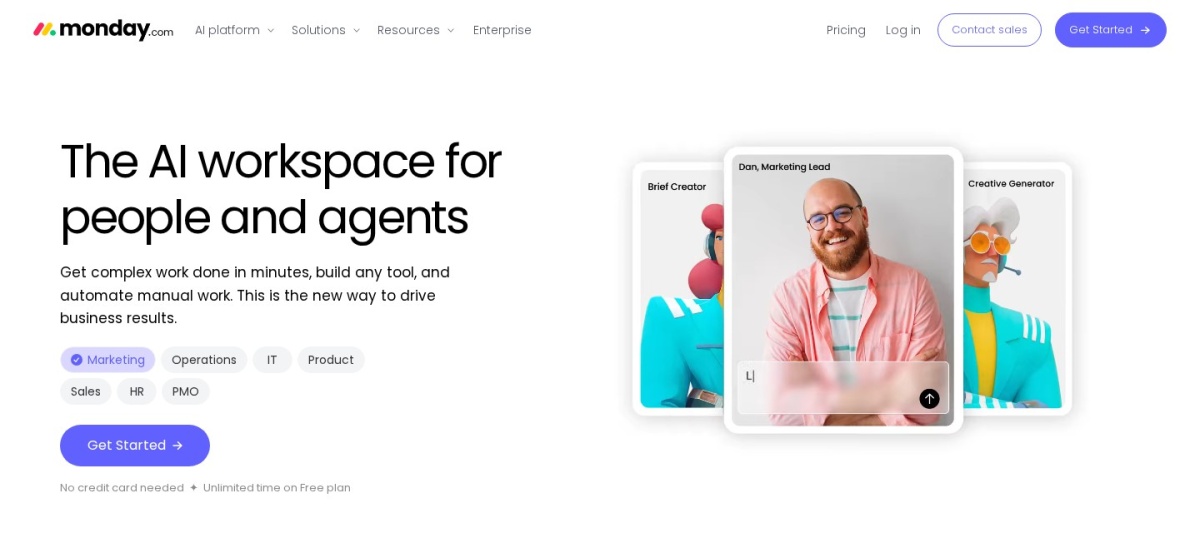
monday.com is a visual work management platform that uses customizable boards, columns, dashboards and workflow tools to organize team activity. Its free plan supports up to 2 seats, 3 boards and 200+ templates. G2 rates monday.com 4.7/5 from 17,975 reviews.
The trade off is that Basic starts at a published reference price of $9/seat/month billed annually, while automations, integrations and advanced views require higher tiers. Its live pricing page displays location-adjusted currency, so checkout should confirm the applicable USD amount. It suits teams managing customizable operational processes.
What we like
Highly customizable work boards
Large template collection
Visual status and progress tracking
Automation and integrations on higher plans
Suitable for varied business workflows
Watch out for
Free plan has strict board and seat limits
Automations require higher subscriptions
Paid seat bundles can affect costs
Advanced reporting has plan restrictions
Basic adds unlimited boards, additional storage and expanded team collaboration.Visit monday.com
04
Trello
4.4/5on G2 (14,078 reviews, checked Nov 2026)
Paid from$5/mo
Best for simple Kanban task management
Free workspaceKanban boards
Standard boardsUnlimited
Standard automation1,000 runs/month
Paid planStandard, $5/user/mo annually
trello.com
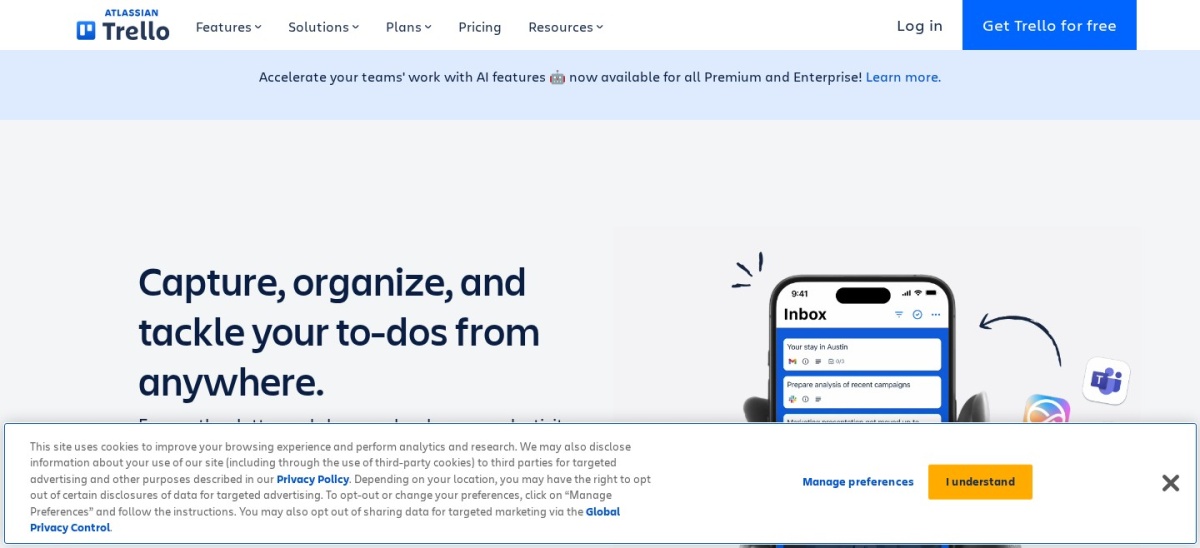
Trello homepage, captured Nov 2026.
Trello is a visual work management platform built around Kanban boards, lists and task cards. Its free version supports collaborative boards, due dates and basic automation, while Standard adds unlimited boards, advanced checklists and 1,000 automation runs monthly. G2 rates Trello 4.4/5 from 14,078 reviews.
The trade off is that Standard costs $5/user/month billed annually, or $6 with monthly billing, and timeline, table and dashboard views require Premium. It suits small teams that want straightforward task tracking without a complex project management system.
What we like
Easy-to-understand Kanban workflow
Free plan available
Affordable Standard subscription
Power-Ups and integrations
Automation for recurring tasks
Watch out for
Advanced project views require Premium
Limited native resource management
Complex dependencies need additional tools
Large boards can become difficult to navigate
Standard adds unlimited boards, advanced checklists and increased automation capacity.Visit trello.com
05
Wrike
4.2/5on G2 (4,648 reviews, checked Nov 2026)
Paid from$10/mo
Best for structured project delivery
Free planAvailable
Team plan2-15 users
Project viewsBoard and Gantt
Paid planTeam, $10/user/mo annually
wrike.com
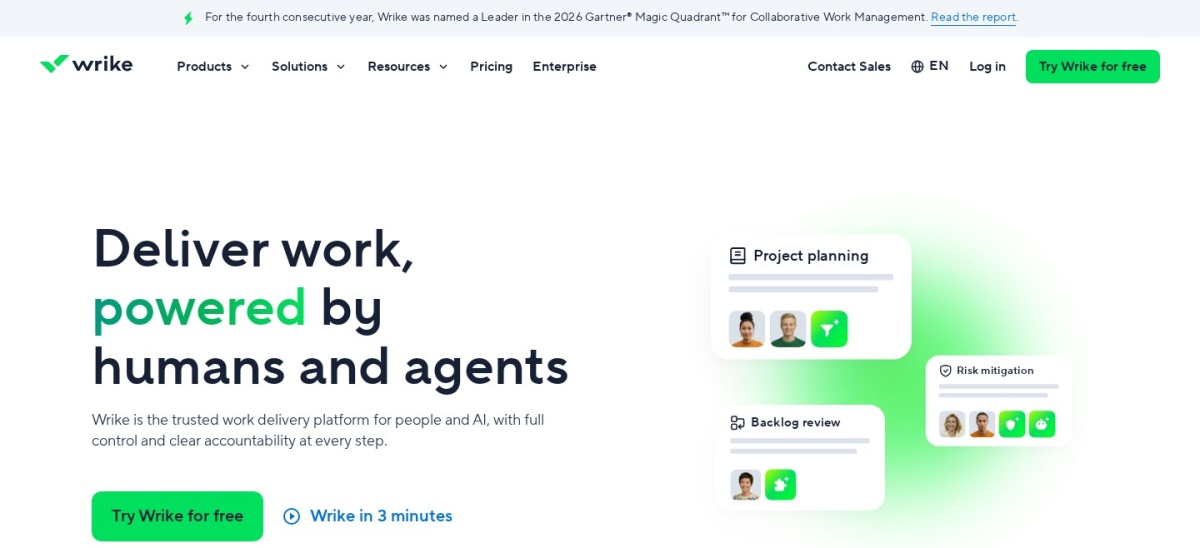
Wrike homepage, captured Nov 2026.
Wrike is a collaborative work management platform offering project planning, task assignments, workflow customization and progress reporting. Its free edition covers basic work tracking, while Team supports structured collaboration, interactive Gantt charts and additional project views. G2 rates Wrike 4.2/5 from 4,648 reviews.
The trade off is that Team costs $10/user/month with annual billing and is designed for teams within its published seat range. Advanced resource planning, reporting and workflow features require Business or higher. It suits project managers coordinating deadlines, approvals and repeatable delivery processes.
What we like
Structured project and task management
Gantt charts and visual work views
Customizable workflows
Team collaboration and reporting
Enterprise-oriented upgrade options
Watch out for
Advanced features require higher plans
Annual billing commitment
Complex setup for smaller teams
Additional features may require paid add-ons
Team adds project planning views, collaboration tools and expanded workflow management.Visit wrike.com
06
Smartsheet
4.4/5on G2 (23,291 reviews, checked Nov 2026)
Starts at$9/mo
Best for spreadsheet-style work management
Pro members1-10
ContributorsUnlimited
Project viewsGrid, Gantt and calendar
Paid planPro, $9/member/mo annually
smartsheet.com
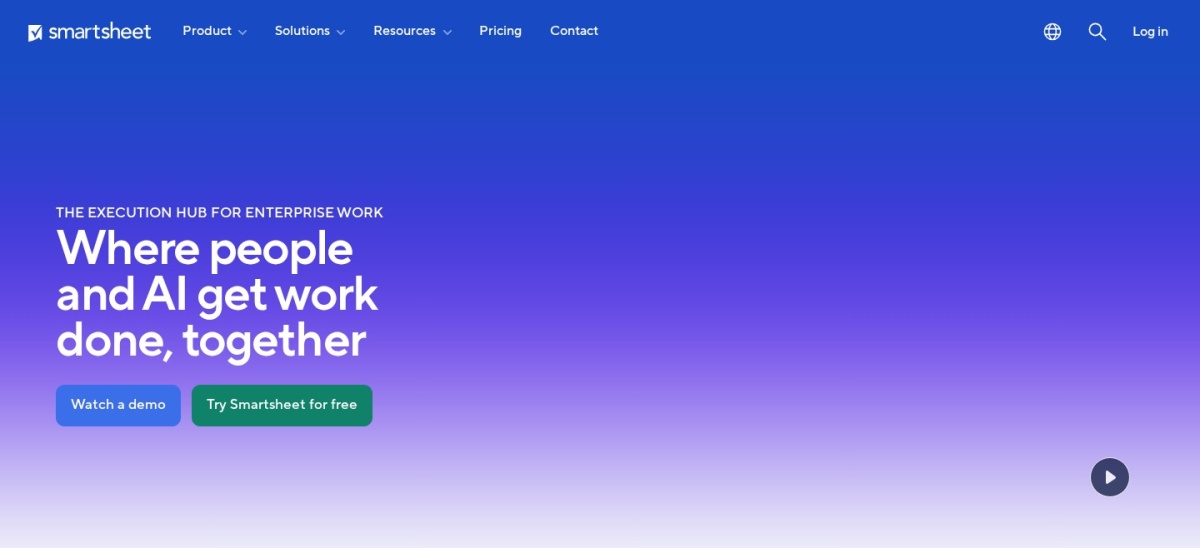
Smartsheet homepage, captured Nov 2026.
Smartsheet is a spreadsheet-style work management platform combining project grids, dashboards, forms and automated workflows. Its Pro plan supports 1-10 members and unlimited contributors, with Gantt, calendar and grid views. G2 rates Smartsheet 4.4/5 from 23,291 reviews.
The trade off is that Pro costs $9/member/month billed annually, or $12 with monthly billing, and advanced administrative controls and reporting require Business or higher. Its grid-based interface can be less intuitive for teams preferring visual task cards. It suits operations teams already comfortable managing structured work in spreadsheets.
What we like
Familiar spreadsheet-style interface
Gantt and calendar planning
Forms and automated workflows
Unlimited contributors on Pro
Strong reporting and dashboard options
Watch out for
No permanent free plan for new teams
Advanced reporting requires upgrades
Can require careful sheet design
Less approachable for simple personal tasks
Pro adds shared project management, forms, automation and multiple project views.Visit smartsheet.com
07
Notion
4.6/5on G2 (13,972 reviews, checked Nov 2026)
Paid from$10/mo
Best for combining documentation and task management
Free workspacePages and databases
Task structureSubtasks and dependencies
Plus featuresCustom forms and charts
Paid planPlus, $10/member/mo annually
notion.com
Notion homepage, captured Nov 2026.
Notion is a connected workspace that combines documents, project databases, tasks and internal knowledge management. Its free plan includes pages, subtasks, dependencies, forms and basic websites, while Plus adds expanded collaboration and customization. G2 rates Notion 4.6/5 from 13,972 reviews.
The trade off is that Plus costs $10/member/month billed annually, while advanced AI, enterprise search and granular permissions require Business or higher. Building complex work management systems may involve substantial database configuration. It suits content teams and small businesses that want project tracking alongside shared documentation.
What we like
Documents and task databases together
Free plan for individual work
Flexible database views and templates
Integrated knowledge management
Connected project documentation
Watch out for
Requires setup for structured workflows
Advanced AI features cost extra
Limited native resource planning
Complex databases can require maintenance
Plus adds custom forms, charts, collaborative blocks and expanded workspace capabilities.Visit notion.com
Work management vs project management software
Project management software typically focuses on delivering defined projects with specific deadlines, milestones and outcomes. Work management software covers a broader range of ongoing activities, including recurring operations, approvals, requests and everyday team responsibilities.
The distinction overlaps in practice. ClickUp, Asana and Wrike support both structured projects and ongoing team workflows, while Trello is often used for simpler task coordination.
Organizations managing continuous processes may benefit from customizable boards, forms and automation. Teams delivering complex projects may prioritize dependencies, Gantt charts, workload visibility and progress reporting.
Choose based on the activities your team handles most frequently rather than the product category used in marketing materials.
How much does work management software really cost?
Work management software usually charges per paid member. An entry-level subscription can appear inexpensive, but costs increase as teams add users, automation requirements and administrative features.
Free plans are useful for evaluating workflows, although they often restrict storage, dashboards, integrations or advanced project views. Check whether guests and contributors require full paid seats.
Annual subscriptions usually reduce the effective monthly price compared with month-to-month billing. However, the lower advertised price may require an upfront annual commitment.
Budget for implementation and training too. A configurable platform can require time to design workflows, migrate existing tasks and establish team conventions.
How we chose
We compared established work management platforms used for task coordination, project planning, documentation and team operations. The shortlist favors products with established user bases, active development, meaningful public reviews and documented features for shared workflows.
Official vendor pricing pages and G2 review listings were checked on 24 November 2026, using 22 November 2026 as the editorial reference date. We compared the cheapest published paid plans using annual USD equivalents and separated temporary promotions from regular pricing where the vendor disclosed both.
We excluded tools with unverified entry pricing, insufficient public review evidence or functionality limited to personal to-do lists. The evaluation considers feature availability, collaboration needs, workflow flexibility and subscription limits rather than assuming the highest-rated product fits every team. No vendor paid for a place, and we do not claim testing for this list.
How to choose the best work management software
Identify the work your team manages most often, then compare collaboration features, reporting requirements and ongoing costs.
Map your team's existing workflows. Identify recurring tasks, approval stages, project deadlines and the people responsible for each process. Decide whether simple task boards are enough or whether you need dependencies, schedules and multi-project visibility.
Choose the right project views and collaboration tools. Look for Kanban boards, calendars, tables, Gantt charts and shared documents according to how your team works. Confirm that assignments, comments, notifications and guest access fit your daily collaboration needs.
Evaluate automation and reporting. Consider which repetitive actions could be automated, such as assigning new requests or notifying stakeholders about overdue tasks. Check automation limits and whether useful dashboards are included in the entry subscription.
Compare total costs and adoption requirements. Calculate the number of paid seats, annual commitments and potential add-ons. Choose a platform your team can maintain without excessive administration, and plan a small pilot workflow before migrating all projects.
FAQ
What is the best work management software in 2026?
ClickUp is the top overall pick in this comparison because it combines task management, documents, team communication and automation. Asana is especially suited to cross-functional projects, while monday.com supports customizable visual workflows. The right choice depends on your team's processes and reporting requirements.
What is the best free work management software?
ClickUp, Trello, Asana, monday.com, Wrike and Notion offer free plans. ClickUp includes unlimited tasks and members, while Trello is particularly approachable for simple Kanban workflows. Compare storage, seat limits and reporting restrictions before committing to a free subscription.
What is the cheapest paid work management software?
Trello Standard is the cheapest paid option in this comparison at $5/user/month billed annually, equivalent to $60 yearly per user. Smartsheet Pro starts at $9/member/month billed annually, while several other platforms start at higher regular subscription rates.
What is the difference between work management and project management?
Project management focuses on delivering defined projects within agreed deadlines and resources. Work management also covers ongoing processes, recurring assignments and routine coordination. Many platforms provide both, although their strengths differ in automation, reporting and resource planning.
Is ClickUp better than Asana?
ClickUp offers extensive customization and combines tasks, documentation and communication in one workspace. Asana emphasizes structured project coordination and cross-functional visibility. ClickUp may suit teams consolidating tools, while Asana may be preferable for organizations prioritizing clear project ownership and reporting.
Is monday.com suitable for small businesses?
Yes. monday.com provides customizable work boards, project templates and collaboration features suitable for small businesses. Its free plan supports up to 2 seats, while paid subscriptions expand team capabilities. Check seat requirements and automation access before selecting a plan.
Can work management software automate tasks?
Most established work management platforms support some form of workflow automation. Common examples include assigning tasks, updating statuses, sending notifications and creating recurring work. Automation availability and monthly limits differ by plan, so verify the actions your team needs.
Do remote teams need work management software?
Remote teams can benefit from a shared system for assignments, deadlines, project documents and progress updates. Work management software reduces dependence on scattered messages, although clear communication practices remain important. The best platform should integrate with the tools the team already uses.
How should a business implement work management software?
Start with a recurring process that has clear owners and deadlines. Configure task statuses, permissions and notifications, then invite a small group to use the workflow. Review feedback before expanding into additional projects, and document conventions so that the system stays consistent.