Best Video Conferencing Software in 2026: 7 Tools Compared
WLWPLegible EditorsLast verified 22 Nov 2026How we rank10 min read
★ Short answer
Zoom is our top video conferencing software pick, offering free meetings for up to 100 participants and paid meetings lasting up to 30 hours. Microsoft Teams is better for organizations combining meetings with team chat and file collaboration, while Google Meet fits businesses already using Google Workspace.
How we make this list: we compare pricing pages, product documentation and public user reviews, then re-check every price before each update. No product paid for a place. Disclosure.
Zoom Workplace Pro costs $14.16 per user per month billed annually, extending meetings to 30 hours with 100 participants.
Microsoft Teams Essentials costs $4 per user per month billed annually and includes 10 GB of cloud storage per user.
Google Workspace Business Starter costs $7 per user per month at its regular monthly rate and includes 30 GB of pooled storage per user.
Whereby Pro costs $10.99 per month and supports 100 attendees, unlimited meeting duration and three meeting room URLs.
Zoho Meeting offers paid subscriptions starting at $1 per host per month billed annually, while RingCentral RingEX Core costs $20 per user per month billed annually.
Jitsi provides free, open-source video meetings without a mandatory account, with a 4.3/5 G2 rating from 231 reviews.
What to look for in video conferencing software
Video conferencing software connects people through live video, audio, screen sharing and meeting chat. Teams use it for internal discussions, client presentations, interviews, training sessions and remote collaboration.
Start with meeting capacity and duration limits. Free plans often restrict how long group meetings can last, while paid plans typically support longer sessions, recordings and more administrative controls.
Screen sharing, meeting recordings, captions and calendar integration are useful everyday features. Teams conducting workshops may also need breakout rooms, whiteboards, polls and remote control.
Consider how easily guests can join meetings. Browser-based access can reduce friction for clients and external collaborators, while desktop applications may provide additional controls.
Security and cost matter as teams grow. Compare waiting rooms, authentication, meeting locks, recording permissions and administrator policies alongside per-host or per-user subscription costs.
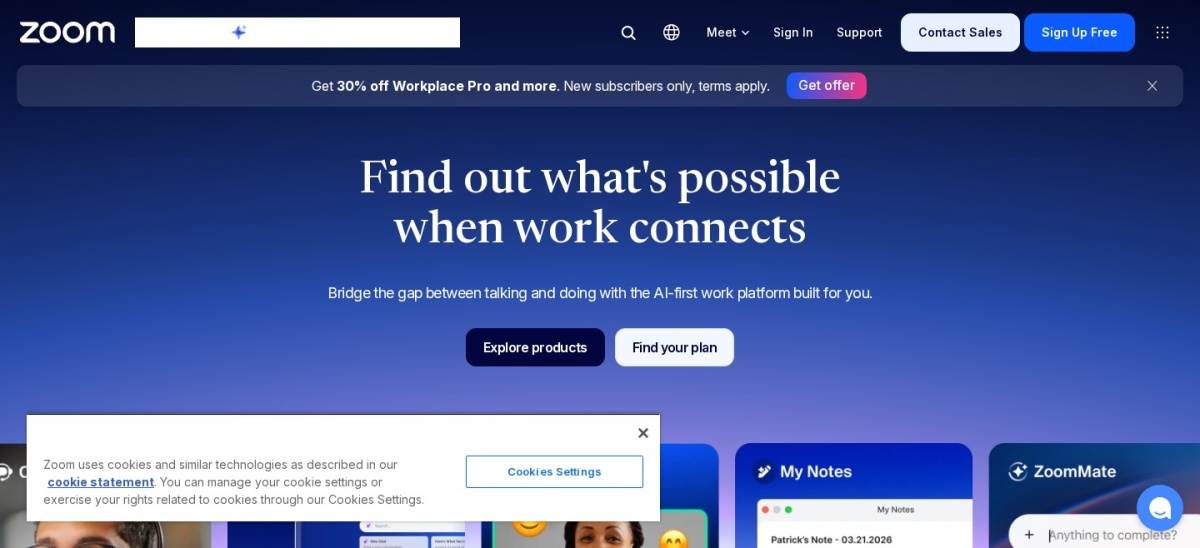
Zoom is a video conferencing and workplace collaboration platform with meetings, screen sharing, chat and AI-assisted features. Its free Basic plan allows 100 participants for 40 minutes per meeting, while Pro adds meetings lasting up to 30 hours, 10 GB of cloud recording storage per user and unlimited meeting summaries.
The trade off is the free plan's 40-minute meeting limit and paid subscription cost. Pro costs $14.16 per user per month billed annually, or $169.92 per year, while larger meetings require higher plans. It suits businesses, educators and remote teams that host regular video meetings.
What we like
Free meetings support 100 participants
Pro extends meetings to 30 hours
Cloud recording and AI meeting summaries
Breakout rooms and screen sharing
Extensive integrations and administrative controls
Watch out for
Free group meetings have a 40-minute limit
Larger meeting capacity requires upgrades
Some advanced AI and business features are plan-specific
Pro adds longer meetings, cloud recording storage, expanded AI features and live chat supportVisit zoom.com
02
Microsoft Teams
4.4/5on G2 (19,480 reviews, checked Nov 2026)
Paid from$4/mo
Best for integrated team collaboration
Entry planTeams Essentials
Paid meetingsUp to 300 participants
Meeting durationUp to 30 hours
Cloud storage10 GB/user
microsoft.com
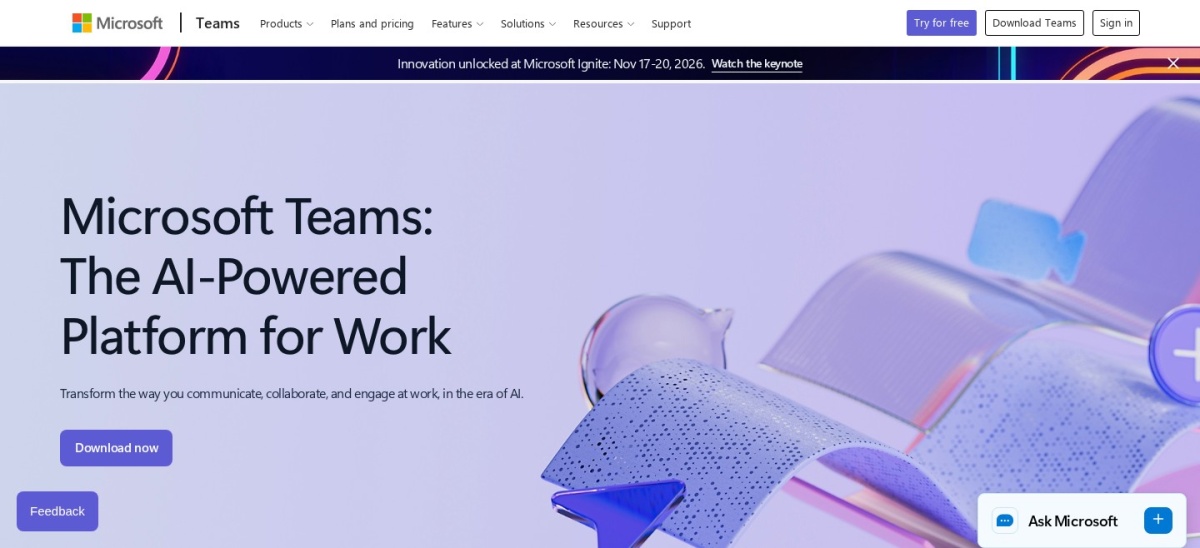
Microsoft Teams homepage, captured Nov 2026.
Microsoft Teams is a workplace communication platform combining video meetings, team messaging, file sharing and collaborative workspaces. Its free version supports basic meetings and chat, while Teams Essentials includes longer meetings, recordings, transcripts, live captions, polling and 10 GB of cloud storage per user.
The trade off is a more complex interface than dedicated meeting applications and additional subscriptions for broader Microsoft 365 features. Teams Essentials costs $4 per user per month billed annually, or $48 per year. It suits organizations coordinating daily meetings alongside documents, projects and internal conversations.
What we like
Affordable standalone business meeting subscription
Meetings, chat and files in one workspace
Integration with Microsoft productivity applications
Meeting recordings, transcripts and live captions
Centralized team collaboration
Watch out for
Interface can feel crowded for occasional users
Desktop application may consume substantial system resources
Additional Microsoft 365 features require separate plans
Essentials adds longer business meetings, recordings, transcripts, captions and cloud storageVisit microsoft.com
03
Google Meet
4.6/5on G2 (48,217 reviews, checked Nov 2026)
Paid from$7/mo
Best for Google Workspace users
Entry paid bundleWorkspace Business Starter
Starter meetings100 participants
Cloud storage30 GB/user
Monthly rate$7/user
google.com
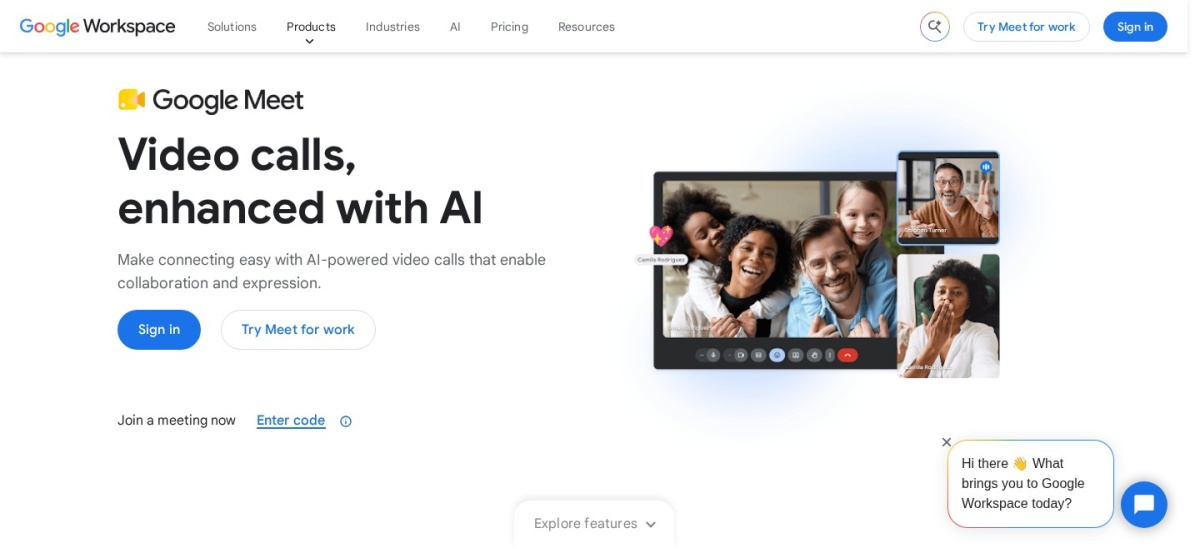
Google Meet homepage, captured Nov 2026.
Google Meet is a video conferencing service integrated with Gmail, Google Calendar and Google Workspace. Free users can host meetings with screen sharing and captions, while Workspace Business Starter includes professional email, administrative controls and 30 GB of pooled storage per user alongside meeting access.
The trade off is that advanced meeting tools such as recording, breakout rooms and larger participant capacity require higher Workspace subscriptions. Business Starter costs $7 per user per month at the published regular monthly rate, or $84 annually at that rate. It suits businesses already organizing work through Google's productivity applications.
What we like
Direct integration with Gmail and Google Calendar
Browser-based meeting access
Free video meetings available
Works alongside Google Docs and Drive
Business plans include email and storage
Watch out for
Meeting recordings require a higher Workspace plan
Business Starter lacks some advanced collaboration features
Paid meeting features are bundled with Workspace subscriptions
Business Starter adds professional email, administrative controls and pooled storage; higher plans expand meeting featuresVisit google.com
04
Whereby
4.6/5on G2 (1,160 reviews, checked Nov 2026)
Paid from$10.99/mo
Best for browser-based client meetings
Free capacity4 attendees
Free duration30 minutes
Pro capacity100 attendees
Pro rooms3 room URLs
whereby.com
Whereby homepage, captured Nov 2026.
Whereby is a browser-based video conferencing platform built around reusable meeting links and simple guest access. Its free plan supports one host, one meeting room, four attendees and 30-minute meetings, while Pro provides 100 attendees, three room URLs, custom branding and unlimited meeting recording.
The trade off is the limited free meeting capacity and the per-host cost of team expansion. Pro costs $10.99 per month, or $131.88 over 12 months, while Business costs $13.99 per host per month with a minimum of three hosts. It suits consultants, designers and client-facing teams that prioritize straightforward guest access.
What we like
Guests can join through a browser
Reusable meeting room URLs
Pro supports unlimited meeting duration
Custom branding and recordings
Simple interface for external meetings
Watch out for
Free plan supports only four attendees
Business requires a minimum of three hosts
Fewer extensive enterprise features than larger platforms
Pro adds larger meetings, additional room URLs, custom branding and unlimited recordingVisit whereby.com
05
Zoho Meeting
4.5/5on G2 (1,276 reviews, checked Nov 2026)
Paid from$1/mo
Best for budget-conscious small businesses
Entry planMeeting Standard
Starting price$1/host/mo
Free duration60 minutes
Paid durationUp to 24 hours
zoho.com
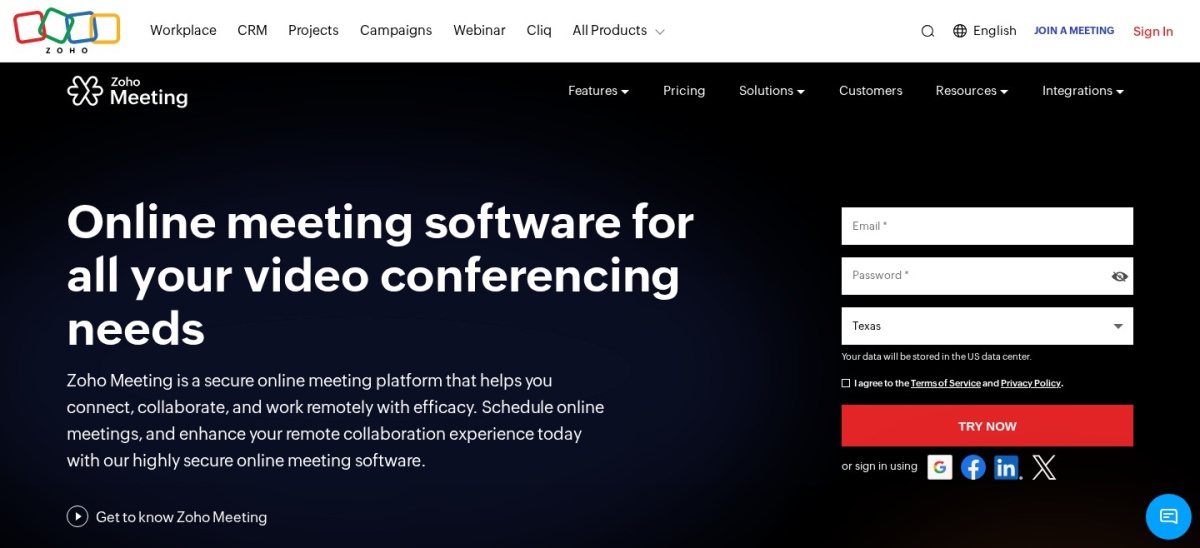
Zoho Meeting homepage, captured Nov 2026.
Zoho Meeting is a browser-based video conferencing service offering online meetings, screen sharing and collaboration features. Its free plan supports meetings lasting up to 60 minutes, while Meeting Standard adds cloud recording storage, meeting locks, annotations, multiple co-hosts and meetings lasting up to 24 hours.
The trade off is that the entry subscription supports smaller meeting capacities, with higher participant limits costing more. Zoho publishes a starting price of $1 per host per month billed annually, or $12 per year, for its entry meeting subscription. It suits small businesses and freelancers seeking inexpensive professional meetings.
What we like
Low published entry subscription price
Free meetings lasting up to 60 minutes
Browser-based access without mandatory downloads
Cloud recording and meeting security features
Integrates with other Zoho applications
Watch out for
Entry subscriptions have limited participant capacity
Advanced analytics and API features require higher editions
Additional recording storage may cost extra
Meeting Standard adds recordings, co-host controls, longer sessions and meeting security featuresVisit zoho.com
06
RingCentral
4.2/5on G2 (505 reviews, checked Nov 2026)
Paid from$20/mo
Best for combining video meetings and business calling
Paid platformRingEX Core
Video capacity300 participants
Monthly price$20/user
BillingAnnual commitment
ringcentral.com
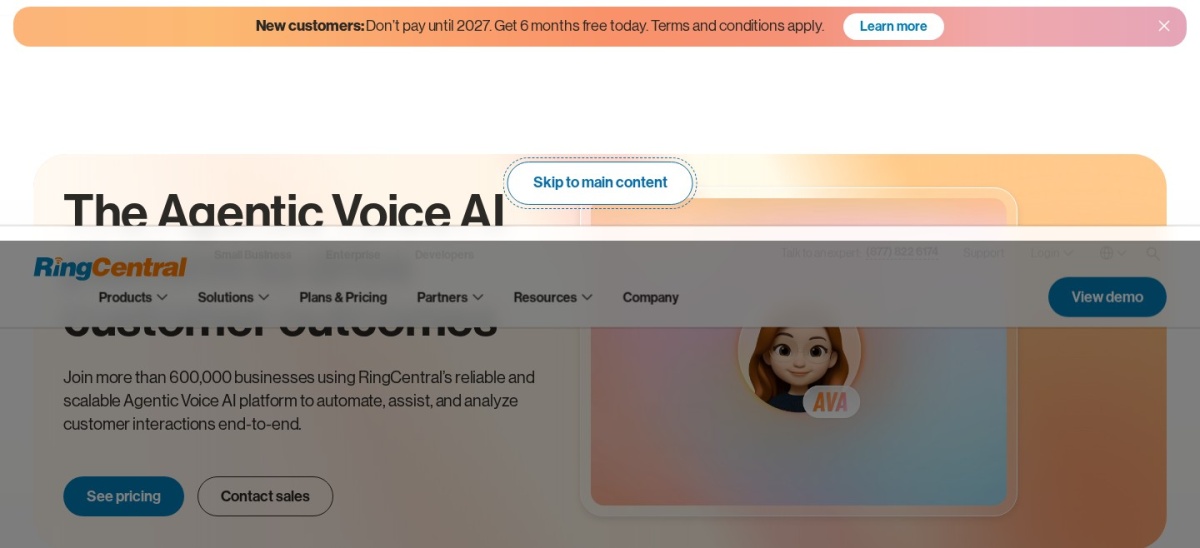
RingCentral homepage, captured Nov 2026.
RingCentral is a business communications platform combining video meetings, team messaging and cloud calling. RingCentral Video provides free meeting access, while RingEX Core includes HD video meetings for 300 participants, business phone capabilities, messaging and AI-assisted communication features.
The trade off is that RingEX Core bundles video conferencing with broader business phone services, increasing costs for users who only need meetings. Core costs $20 per user per month billed annually, or $240 per year. It suits businesses that want meetings, team messaging and customer calling managed through one service.
What we like
Combines video meetings with business calling
RingEX Core supports 300 meeting participants
Team messaging and AI communication features
Desktop, mobile and browser access
Business phone administration tools
Watch out for
Higher price for video-only requirements
Some communications features depend on paid editions
Broader phone system requires additional administration
RingEX Core adds business calling, HD meetings, team messaging and AI communication featuresVisit ringcentral.com
07
Jitsi
4.3/5on G2 (231 reviews, checked Nov 2026)
PriceFree
Best free open-source video conferencing software
Software licenseOpen source
Hosted servicemeet.jit.si
Self-hostingSupported
License costFree
jitsi.org
Jitsi homepage, captured Nov 2026.
Jitsi is an open-source video conferencing project that provides Jitsi Meet for browser-based calls and customizable deployments. Its public meeting service is free, while organizations can deploy Jitsi Meet on their own infrastructure and use open-source components such as Jitsi Videobridge.
The trade off is the absence of a bundled paid support and management subscription in the open-source offering. Jitsi Meet itself has no software license fee, but self-hosting requires infrastructure, maintenance and technical expertise. It suits developers, technical teams and organizations wanting control over their meeting environment.
What we like
Free open-source conferencing software
Public hosted meeting service available
Self-hosting and customization supported
Browser-based meeting access
No mandatory account for basic participation
Watch out for
Self-hosting requires technical administration
No bundled commercial support plan for the open-source software
Advanced enterprise management may require custom development
No paid Jitsi Meet software plan; hosting, support or separate managed services may create costsVisit jitsi.org
Free vs paid video conferencing software
Free video conferencing software can be sufficient for occasional discussions, informal collaboration and short meetings. Zoom, Microsoft Teams, Google Meet, Whereby, Zoho Meeting and Jitsi provide free access in different forms.
The major limitations are meeting duration, participant capacity, recordings and administration. Zoom Basic limits meetings to 40 minutes, while Whereby Free allows four attendees and meetings lasting 30 minutes.
Paid subscriptions generally provide longer meetings, expanded recording options, administrative controls and additional collaboration features. Microsoft Teams Essentials is particularly inexpensive for organizations needing workplace communication alongside meetings.
Before upgrading, identify the specific limitation affecting your work. Businesses holding short internal meetings may not need paid licenses for every participant, while teams recording client presentations or hosting longer sessions may benefit from paid hosts.
Security features worth checking before choosing
Meeting security begins with controlling who can enter and participate. Look for waiting rooms, meeting passwords, authentication requirements and the ability to remove participants or lock a session.
Recording policies deserve separate attention. Administrators should know where recordings are stored, who can access them and how retention or deletion is managed.
For organizations handling confidential information, compare encryption, identity integrations, administrator controls and compliance documentation. The presence of encryption does not automatically mean every feature uses end-to-end encryption.
Self-hosted platforms such as Jitsi offer greater infrastructure control, but responsibility for secure configuration, patching, availability and monitoring remains with the organization operating the service.
How we chose
We shortlisted established video conferencing platforms used for business meetings, remote collaboration and client communication. The selection covers dedicated meeting applications, bundled workplace communication tools, browser-based conferencing and open-source meeting software.
Official vendor pricing and product documentation were opened and compared alongside public G2 reviews on 24 Nov 2026 for this article's 22 Nov 2026 editorial date. We used regular published prices rather than introductory discounts and calculated annual equivalents from the displayed monthly rates. Google Workspace reviews represent the broader suite containing Google Meet, while RingCentral Video reviews represent its video product.
We excluded products where an entry price could not be verified on vendor information and platforms without sufficient public review evidence. We distinguished monthly billing, annual commitments and free open-source licensing instead of treating them as identical pricing arrangements. No vendor paid for a place, and we do not claim testing for this list.
How to choose the right video conferencing software
Identify your meeting requirements, then compare collaboration features, participant limits, guest access and subscription costs.
Estimate your meeting size and duration. Determine how many participants regularly attend and how long typical meetings last. Check free-plan restrictions and paid capacity limits before choosing a subscription.
Prioritize your collaboration features. Decide whether you need recordings, captions, whiteboards, breakout rooms, polls, file sharing or meeting summaries. Verify that each required feature is available in the specific plan you intend to purchase.
Evaluate guest access and security. Consider whether clients can join from a browser and whether your organization needs waiting rooms, authentication, administrator policies or recording restrictions. Confirm the security controls available at your subscription level.
Compare annual costs across hosts. Calculate the number of paid meeting hosts or user licenses needed. Account for annual commitments, recording storage, additional meeting capacity and other paid upgrades rather than comparing the lowest advertised price alone.
FAQ
What is the best video conferencing software in 2026?
Zoom is our overall choice for everyday meetings, recording capabilities and collaboration features. Microsoft Teams is better for organizations already using Microsoft productivity tools, while Google Meet works well with Gmail and Calendar. Whereby is particularly useful when browser-based guest access matters.
What is the best free video conferencing software?
Zoom Basic supports meetings with up to 100 participants but limits meeting duration to 40 minutes. Jitsi offers free open-source conferencing, while Google Meet and Microsoft Teams also have free options. The best choice depends on meeting length, guest access and recording needs.
How much does video conferencing software cost?
Entry subscriptions vary considerably. Microsoft Teams Essentials costs $4 per user per month billed annually, Google Workspace Business Starter has a regular monthly price of $7 per user, and Zoom Pro costs $14.16 per user per month billed annually. Larger meetings and additional features may cost more.
Is Zoom better than Microsoft Teams?
Zoom is a strong option for organizations focused primarily on meetings, recordings and external collaboration. Microsoft Teams combines meetings with persistent team chat and Microsoft productivity services. Teams Essentials also has a lower entry subscription price, making it attractive for organizations needing broader workplace communication.
Is Google Meet free for businesses?
Google Meet offers free video meeting access through Google accounts. Businesses needing professional email, centralized administration and expanded collaboration features can purchase Google Workspace. The Business Starter plan includes Meet alongside email, storage and other productivity applications, with advanced meeting functionality available in higher plans.
Can participants join video meetings without downloading an app?
Many video conferencing platforms support browser-based participation, including Google Meet, Whereby, Zoho Meeting and Jitsi. Zoom and Microsoft Teams also provide browser access. Available features can differ between browser and desktop clients, so confirm compatibility with the devices and browsers your participants use.
What video conferencing software is best for client meetings?
Whereby is useful for client meetings because guests can join through reusable browser-based room links without installing software. Zoom is another strong choice for presentations, screen sharing and recordings. Google Meet is convenient when invitations and scheduling already run through Google Calendar.
Can I record video conferences for free?
Recording availability varies by service. Zoom Basic offers local recording in supported desktop environments, while paid Zoom plans add cloud recording. Whereby includes recording on Pro, and Google Meet's recording features require an eligible paid Workspace plan. Always check participant consent and applicable recording policies.
Is open-source video conferencing software secure?
Open-source platforms such as Jitsi allow organizations to inspect and manage their own conferencing infrastructure. Security still depends on software updates, server configuration, authentication, network protections and operational practices. Self-hosting provides control but also creates responsibility for maintaining the deployment.