Trello is the best value project management tool for most small teams, with a free plan supporting 10 boards per workspace and paid plans starting at $5 per user monthly. Choose ClickUp for combining documents and project planning or Asana for coordinating structured, cross-functional workflows.
How we make this list: we compare pricing pages, product documentation and public user reviews, then re-check every price before each update. No product paid for a place. Disclosure.
Trello Standard costs $60 per user annually and includes unlimited boards.
ClickUp offers unlimited free members and carries a 4.6/5 G2 rating.
Asana Starter costs $131.88 per user annually and includes Gantt charts.
Smartsheet Pro includes 250 monthly automations for $9 per member monthly with annual billing.
Basecamp Freelancer accommodates up to 5 users for a flat $29 monthly fee.
Wrike Team supports 2 to 15 users at $10 per user monthly.
What makes a project management tool good value?
Good value means getting the project management features your team needs without paying for unnecessary capabilities. An inexpensive subscription can become costly when essential reporting, automation or collaboration features require upgrades.
Start by comparing task management, scheduling, dependencies and communication features. Teams managing straightforward projects may need little more than shared boards, while complex projects benefit from timelines and structured reporting.
Pay attention to per-user pricing and minimum seat requirements. A low advertised monthly rate does not necessarily translate into the lowest total subscription cost.
Consider whether the software can replace existing subscriptions for documentation, time tracking or internal communication. Consolidating these activities can improve overall value.
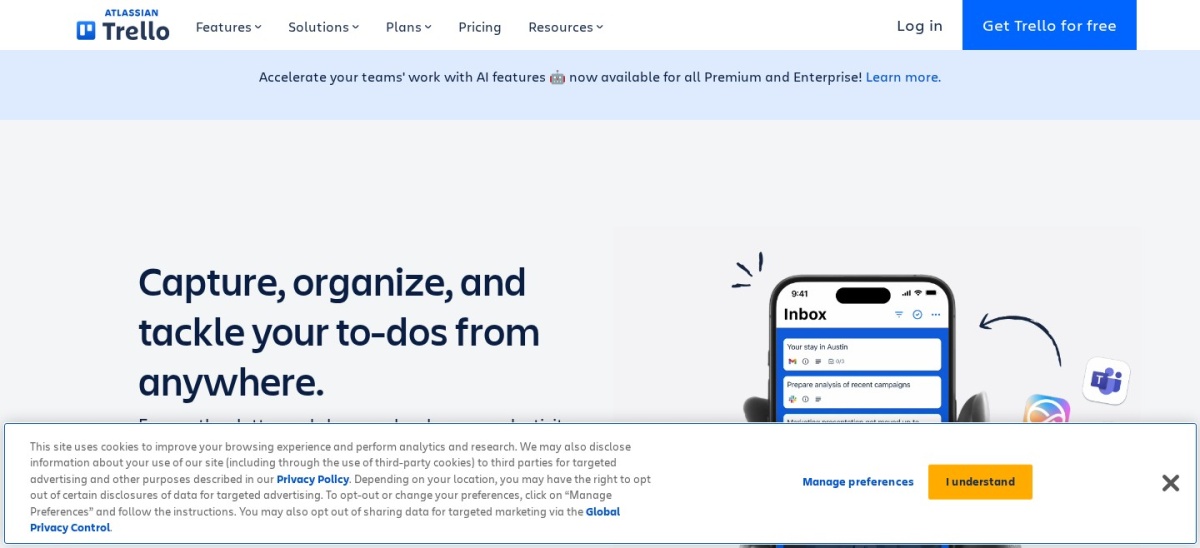
Trello is a visual project management platform that organizes assignments using cards, lists and boards. Its free subscription supports unlimited cards, 10 workspace boards and 250 monthly automation runs.
The trade off is limited scheduling functionality, even with Standard at $5 per user monthly when billed annually. Timeline and dashboard views require Premium. It suits small businesses, marketing teams and freelancers managing straightforward projects.
What we like
Low annual subscription cost
Accessible visual interface
Automation available without paying
Unlimited cards on the free plan
Watch out for
Advanced reporting requires Premium
Less suitable for complex project dependencies
Standard adds unlimited boards, custom fields and advanced checklists.Visit trello.com
02
ClickUp
4.6/5on G2 (15,943 reviews, checked Nov 2026)
Paid from$12/mo
Best for consolidating project management software
Free membersUnlimited
Free storage60 MB
Paid automation1,000 runs/month
Entry planCore, regular $12/user/mo
clickup.com
ClickUp homepage, captured Nov 2026.
ClickUp is an integrated workspace combining task organization, collaborative documents and project scheduling. Free Forever includes unrestricted task creation, unlimited members and 60 MB of file storage.
The trade off is configuration complexity and limited free storage. Core has a stated regular price of $12 per user monthly, with a $9 annual-billing offer displayed on its pricing page. It suits teams looking to consolidate several productivity subscriptions.
Asana is a project coordination platform designed around tasks, deadlines, responsibilities and shared workflows. Its Personal subscription accommodates 2 users with unlimited projects and tasks.
The trade off is that larger teams need Starter at $10.99 per user monthly with annual billing, while portfolio management requires Advanced. It suits departments coordinating projects with defined milestones and recurring processes.
What we like
Clear task ownership and deadlines
Multiple project visualization options
Unlimited automation on Starter
Guest collaboration on paid subscriptions
Watch out for
Free subscription has a small user allowance
Portfolio management costs extra
Starter adds Gantt scheduling, forms, reporting and custom fields.Visit asana.com
04
Basecamp
4.1/5on G2 (5,490 reviews, checked Nov 2026)
Paid from$29/mo
Best for predictable flat-rate pricing
Free users3
Free projects1
Freelancer users5
Entry planFreelancer, $29/mo flat rate
basecamp.com
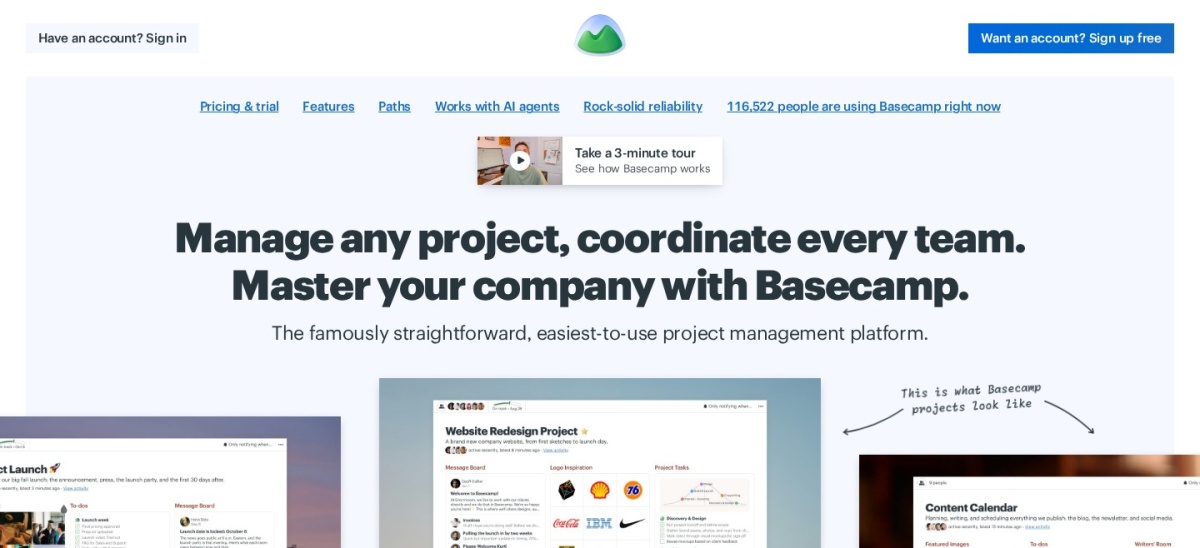
Basecamp homepage, captured Nov 2026.
Basecamp is a collaborative project workspace combining task lists, discussions, schedules and shared files. Its free subscription supports 1 project and 3 users, while Freelancer accommodates 5 users.
The trade off is that the $29 monthly Freelancer subscription limits teams to 3 active projects and excludes time tracking and project templates. It suits small agencies and consultancies that prefer predictable account-level pricing.
What we like
No individual seat charges on Freelancer
Centralized project communication
Straightforward project organization
Permanent free subscription
Watch out for
Entry subscription limits active projects
Time tracking requires a higher tier
Less flexible for advanced reporting
Freelancer increases project capacity, storage and collaborator allowances.Visit basecamp.com
05
Smartsheet
4.4/5on G2 (23,325 reviews, checked Nov 2026)
Starts at$9/mo
Best for spreadsheet-based project management
Pro members1-10
Automation250/month
Storage20 GB
Entry planPro, $9/member/mo billed annually
smartsheet.com
Smartsheet homepage, captured Nov 2026.
Smartsheet is a project management platform built around spreadsheet-style data organization and scheduling. Pro supports up to 10 members, unrestricted sheet creation and 250 monthly automated actions.
The trade off is the spreadsheet-oriented learning curve and lack of a general free subscription. Pro costs $9 per member monthly with annual billing, while workload tracking requires Business. It suits operations teams moving beyond conventional spreadsheets.
What we like
Familiar spreadsheet-style organization
Gantt scheduling on the entry subscription
Formula support for project calculations
Unrestricted contributor allowance on Pro
Watch out for
No general permanent free subscription
Pro limits paid membership
Advanced workload management costs extra
Pro includes project schedules, forms, reporting and workflow automation.Visit smartsheet.com
06
Wrike
4.2/5on G2 (4,654 reviews, checked Nov 2026)
Paid from$10/mo
Best for affordable Gantt-based planning
Free task managementIncluded
Team size2-15 users
Paid Gantt chartsIncluded
Entry planTeam, $10/user/mo
wrike.com
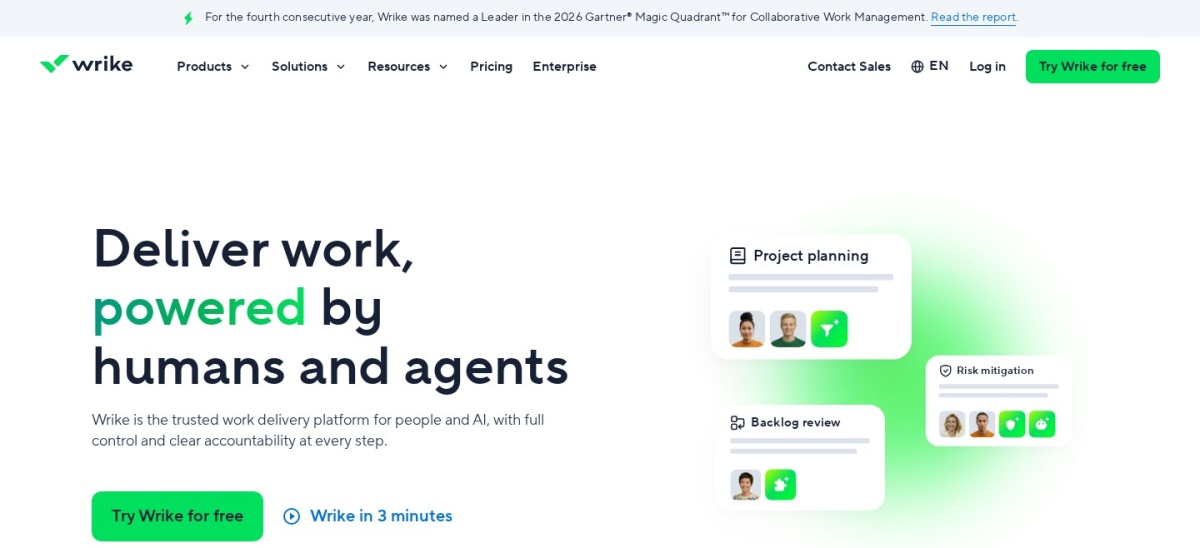
Wrike homepage, captured Nov 2026.
Wrike is a work management platform that combines project scheduling, task assignments and progress tracking. Its free subscription includes board and table layouts, while Team supports between 2 and 15 users.
The trade off is that more advanced workflow customization requires upgrades beyond Team at $10 per user monthly. Larger departments may need Business or higher subscriptions. It suits small teams requiring structured schedules and shared project dashboards.
What we like
Free subscription for basic assignments
Interactive Gantt scheduling on Team
Shared project dashboards
Supports structured project organization
Watch out for
Team subscription has a user limit
Advanced financial planning requires higher tiers
Seat purchasing rules can affect total costs
Team adds interactive scheduling, shareable dashboards and AI Essentials.Visit wrike.com
07
Airtable
4.6/5on G2 (3,306 reviews, checked Nov 2026)
Paid from$20/mo
Best for customized project tracking systems
Free subscriptionAvailable
Data organizationRelational databases
Workflow automationAvailable
Entry planTeam, $20/user/mo billed annually
airtable.com
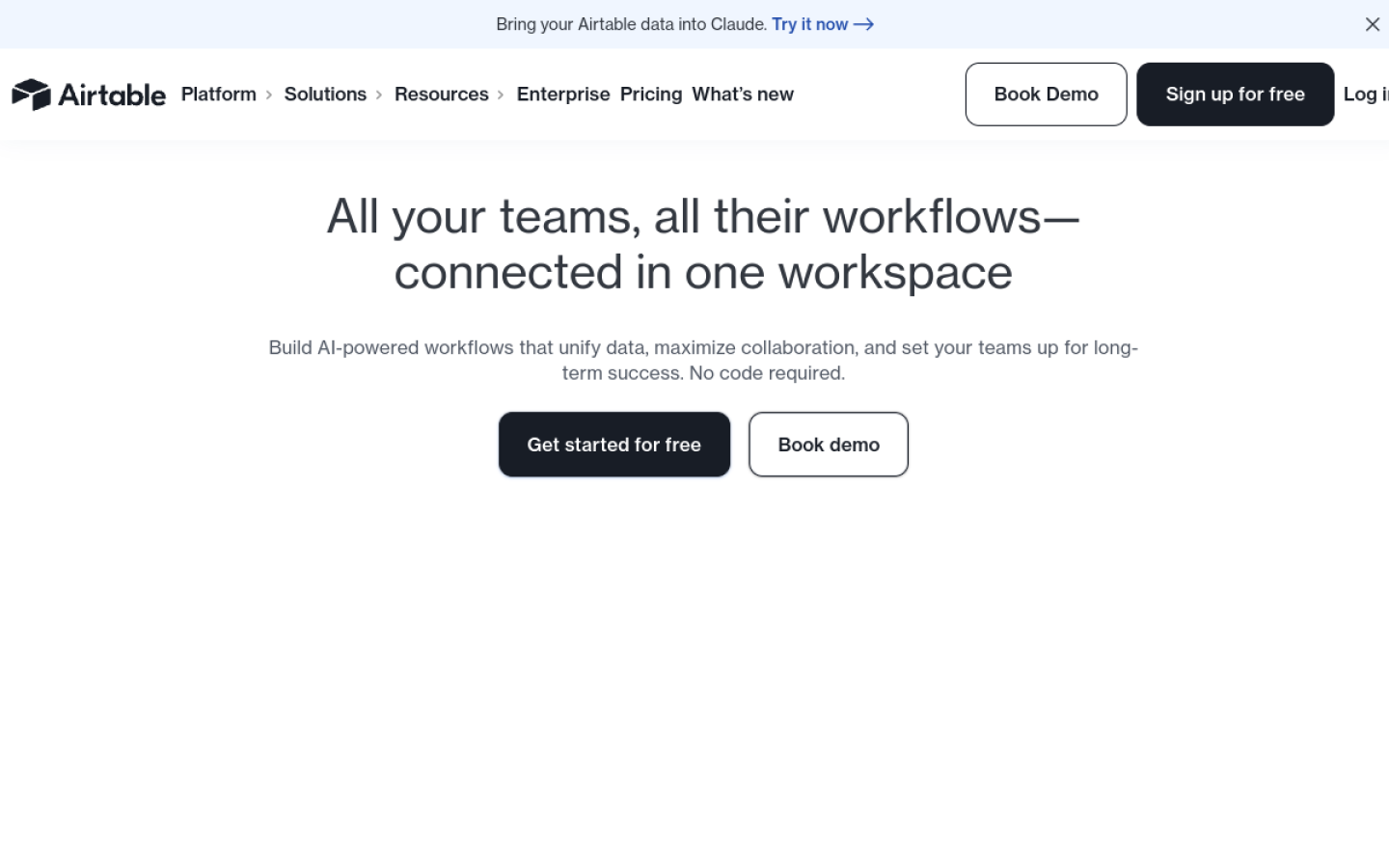
Airtable homepage, captured Nov 2026.
Airtable is a database-oriented workspace for creating customized project trackers, operational processes and collaborative applications. It carries a 4.6/5 G2 rating and offers a free subscription for exploring its database capabilities.
The trade off is the configuration effort and higher subscription cost, with Team starting at $20 per user monthly when billed annually. It suits organizations that need to connect project information with structured operational data.
What we like
Flexible relational data organization
Custom project tracking interfaces
Suitable for content production workflows
Built-in automation capabilities
Watch out for
Higher entry cost than conventional task managers
Custom workflows require initial configuration
May be excessive for simple task lists
Team expands database capacity and workflow customization options.Visit airtable.com
Compare subscription costs across your entire team
The price ladder uses the advertised entry subscription as its basis. Seat-based products show annual costs per user, while Basecamp shows the annual account cost. These figures need to be adjusted for your actual team size.
Consider implementation, training, integrations and future upgrades alongside subscription fees. A platform that replaces separate documentation or reporting software may deliver better overall value despite a higher entry price.
How we chose
We selected established project management platforms with public pricing, substantial user review histories and features relevant to everyday project coordination.
Official subscription prices and G2 ratings were checked on 26 Nov 2026. Annualized prices use regular subscription rates, with standard annual-billing rates where available. Rankings prioritize affordability, functional coverage, free subscription usefulness and collaboration capabilities.
We excluded products without sufficiently clear entry pricing, narrowly focused task utilities and platforms that did not provide suitable general project management functionality. No vendor paid for a place, and we do not claim testing for this list.
How to choose the best value project management software
Compare your team's actual requirements against subscription limits before committing to an annual contract.
Identify essential project management features. Determine whether your team needs basic assignments, dependencies, Gantt scheduling, time tracking, reporting or client collaboration.
Calculate the complete annual subscription cost. Account for paid users, minimum seat purchases, billing periods and any additional subscriptions needed for essential functionality.
Review free subscription limitations. Check project allowances, storage capacity, automation quotas and collaboration restrictions before building your workflows.
Evaluate upgrade requirements. Review higher subscription tiers to understand how costs may change as your team, project volume and reporting requirements grow.
FAQ
What is the best value project management tool?
Trello offers the best overall value for straightforward project management, with Standard costing $5 per user monthly on annual billing. ClickUp is another strong choice for teams that need collaborative documents and more configurable project structures.
Are free project management tools worth using?
Yes. Free project management subscriptions can cover assignments, deadlines and collaboration for smaller teams. Their main limitations typically involve advanced scheduling, automation allowances, reporting, storage capacity or the number of collaborators.
Which project management tool has affordable flat-rate pricing?
Basecamp offers account-level pricing through its Freelancer subscription at $29 monthly for up to 5 users. This approach can make spending more predictable, although active project limits and higher-tier functionality should influence your decision.
Is ClickUp or Trello better value?
Trello generally provides better value for uncomplicated visual workflows because its paid entry price is lower. ClickUp may deliver greater overall savings when teams also need collaborative documentation, customizable task structures and integrated project scheduling.
What hidden costs should I consider when buying project management software?
Consider minimum seat requirements, premium integrations, automation quotas, additional storage, AI usage charges and advanced reporting upgrades. Also account for employee training and the time required to configure workflows or migrate existing project information.
SaaS SEO and WordPress specialist with about 8 years of experience. Rakib compares WordPress plugins, themes, hosting and software using public pricing, documentation and user reviews. See how we rank.