Snyk is the best software composition analysis tool for most development teams, with a free plan covering 5 projects and paid access starting at $25 per month. Choose Semgrep for reachability-based vulnerability prioritization or Aikido Security for combined dependency, code and cloud security.
How we make this list: we compare pricing pages, product documentation and public user reviews, then re-check every price before each update. No product paid for a place. Disclosure.
Snyk starts at $25 per month and has a 4.5/5 G2 rating from 136 reviews.
Semgrep Supply Chain costs $30 per contributor per month and supports reachability analysis.
Aikido Security Basic starts at $300 per month, including 10 users.
GitHub Code Security costs $30 per active committer per month.
Semgrep supports up to 10 repositories and 10 contributors on its free edition.
Mend.io has a 4.3/5 G2 rating from 123 reviews and combines dependency security with automated updates.
What to look for in software composition analysis tools
Software composition analysis (SCA) identifies open-source dependencies within applications and checks them for known vulnerabilities, problematic licenses and other supply chain risks.
Look for coverage of direct and transitive dependencies. Vulnerable packages can enter an application indirectly through libraries that your developers never installed themselves.
Reachability analysis helps determine whether vulnerable code can actually be called by an application. This gives developers more context when deciding which issues to fix first.
Check whether the platform supports software bills of materials (SBOMs), automated dependency updates and security policies within your CI/CD pipeline.
Compare billing units carefully. A subscription priced per contributor can become more expensive than a team subscription as your engineering department grows.
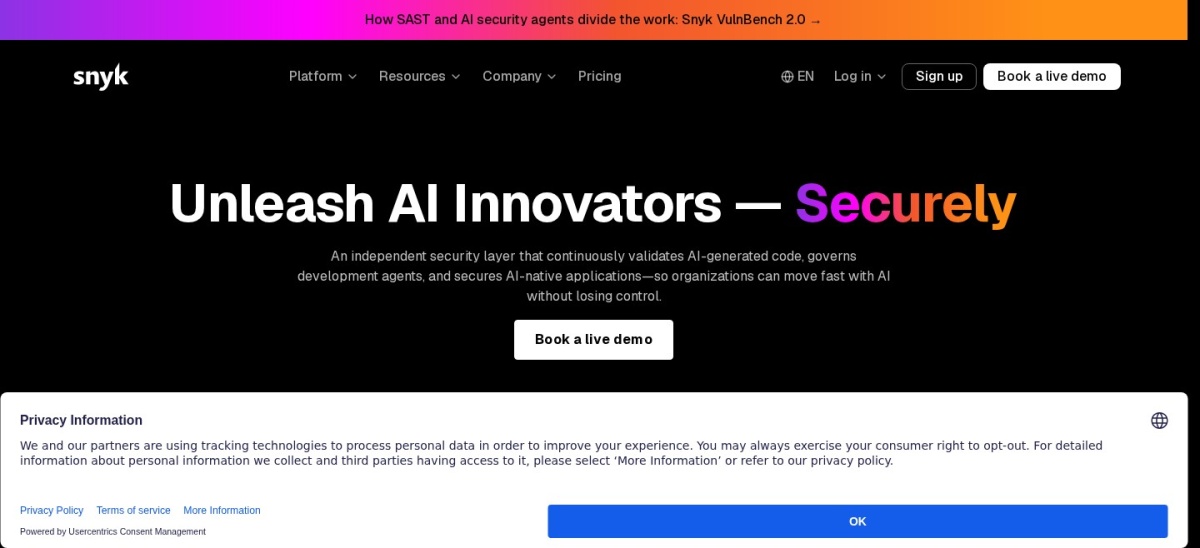
Snyk is a developer security platform that identifies vulnerable open-source dependencies and provides remediation guidance. Its free plan supports 5 projects and includes open-source, source code, container and infrastructure-as-code scanning.
The trade off is that free scanning comes with project and testing limits, while Team starts at $25 per month and supports up to 100 projects. It suits development teams that want vulnerability detection integrated into existing coding workflows.
What we like
Integrates with developer tools
Free dependency scanning
Actionable remediation guidance
Multiple application security scanners
Watch out for
Free plan has project limits
Advanced enterprise capabilities require separate pricing
Team adds higher testing limits, Jira integration and support.Visit snyk.io
02
Semgrep
4.6/5on G2 (56 reviews, checked Nov 2026)
Paid from$30/mo
Best for reachability-based prioritization
SCA engineSemgrep Supply Chain
Free repositories10
Reachability analysisIncluded
Paid plan$30/contributor/mo
semgrep.dev
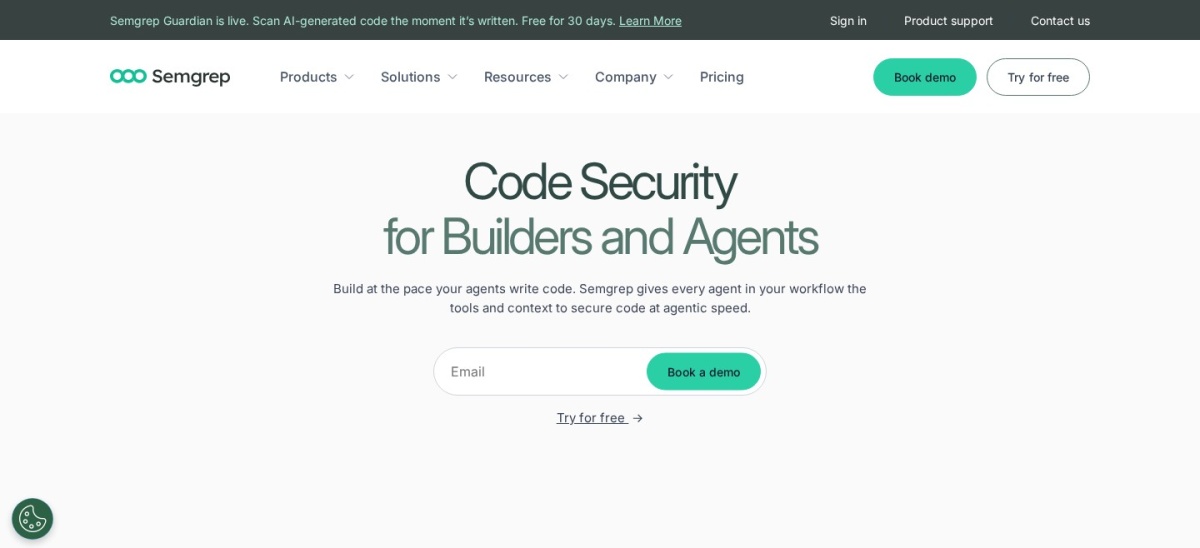
Semgrep homepage, captured Nov 2026.
Semgrep is an application security platform that combines dependency scanning with source code analysis. Its free edition supports up to 10 repositories and 10 contributors, including software composition analysis and reachability checks.
The trade off is contributor-based billing, with Supply Chain costing $30 per contributor per month. It suits engineering teams that want to distinguish actionable dependency vulnerabilities from findings that are less relevant to their code.
What we like
Reachability-based vulnerability prioritization
Free SCA edition
Malicious dependency detection
Lockfile and source code analysis
Watch out for
Contributor pricing scales with team size
Custom infrastructure integrations may require Enterprise
Teams adds SSO, additional AI credits and expanded support.Visit semgrep.dev
03
Aikido Security
4.5/5on G2 (273 reviews, checked Nov 2026)
Paid from$300/mo
Best for unified application and cloud security
Dependency scanningIncluded
Free repositories10
License scanningAvailable
Paid planBasic, 10 users included
aikido.dev
Aikido Security homepage, captured Nov 2026.
Aikido Security is an application security platform covering open-source dependencies, source code, containers and cloud environments. Its free plan covers 10 repositories, 2 container images and 1 cloud account.
The trade off is a higher starting subscription of $300 per month for Basic, including 10 users. It suits growing software companies that prefer managing dependency vulnerabilities and infrastructure security from a shared dashboard.
What we like
Multiple security scanners in one platform
Open-source license monitoring
Centralized vulnerability management
Team-based starting subscription
Watch out for
Higher starting cost for individuals
On-premises scanning requires a higher tier
Basic adds pull request security reviews, integrations and reporting.Visit aikido.dev
04
GitHub Code Security
4.7/5on G2 (2,441 reviews, checked Nov 2026)
Paid from$30/mo
Best for GitHub-native dependency security
Dependency alertsDependabot
Dependency reviewAvailable
IntegrationGitHub repositories
Paid plan$30/active committer/mo
github.com
GitHub Code Security homepage, captured Nov 2026.
GitHub Code Security is a repository-native application security product that extends GitHub's dependency management and vulnerability detection capabilities. Basic Dependabot features are available without the paid security add-on, while Code Security costs $30 per active committer monthly.
The trade off is its dependence on the GitHub ecosystem and separate licensing for advanced private repository protection. It suits organizations that already manage development, pull requests and security workflows within GitHub.
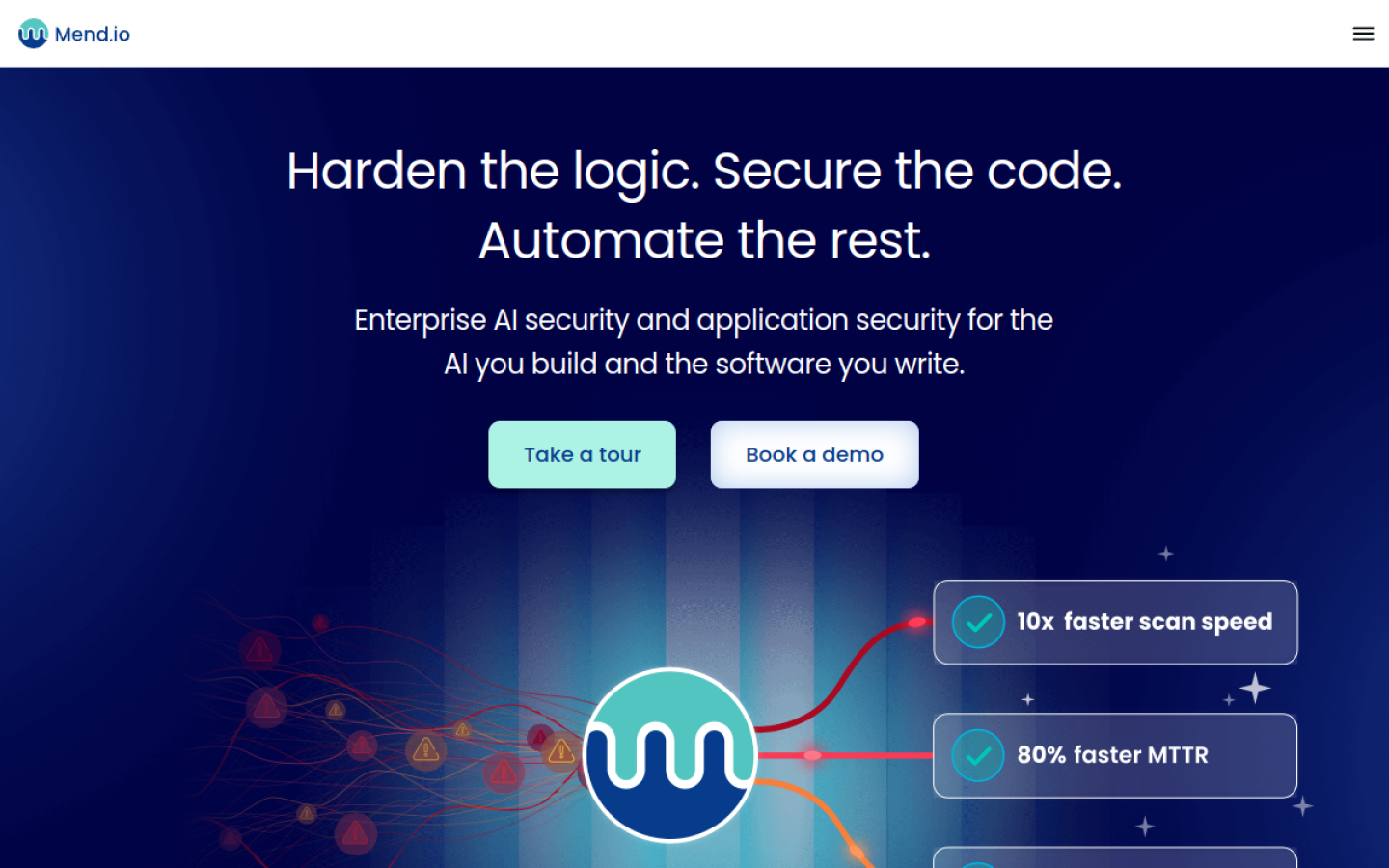
Mend.io is an application security platform that combines open-source risk management, container scanning and automated dependency updates. Its AppSec package includes SCA and SAST, with published pricing of up to $1,000 per developer per year.
The trade off is that the final AppSec subscription depends on the commercial arrangement rather than a fixed entry price. It suits engineering organizations that want automated remediation and dependency governance across many repositories.
What we like
Automated dependency updates
Reachability-based risk assessment
Container security coverage
Multiple repository integrations
Watch out for
Final subscription requires a quote
Enterprise configuration can require planning
Mend AppSec combines dependency protection, code scanning and remediation.Visit mend.io
06
Checkmarx
4.3/5on G2 (52 reviews, checked Nov 2026)
PricingCustom pricing
Best for enterprise application security
SCA engineCheckmarx SCA
Malicious package detectionAvailable
DeploymentCloud and self-hosted
Paid planStart with Supply Chain
checkmarx.com
Checkmarx homepage, captured Nov 2026.
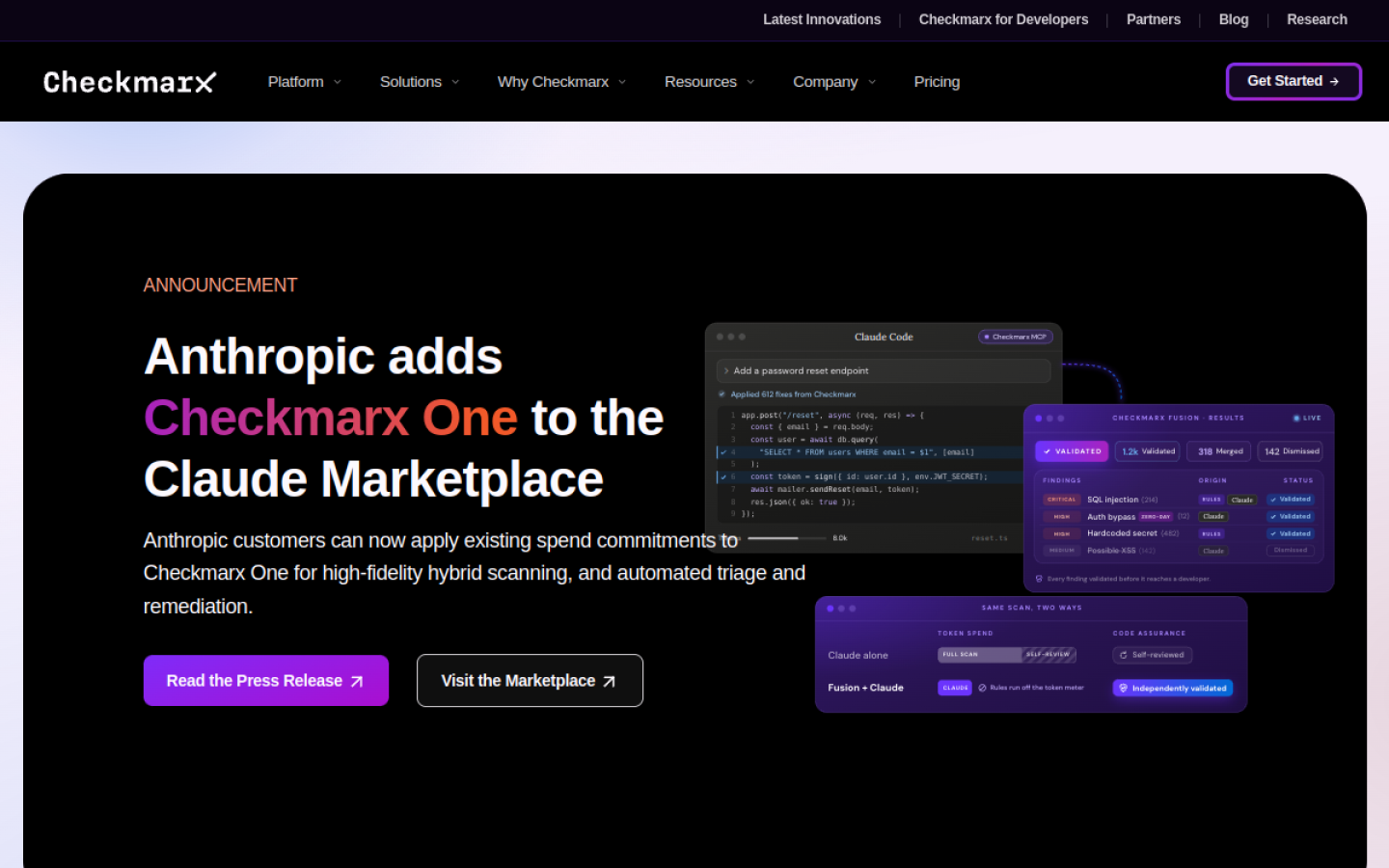
Checkmarx is an enterprise application security platform that combines dependency analysis with broader software supply chain protection. Its Supply Chain package includes SCA, malicious package protection, repository health monitoring and container security.
The trade off is custom pricing based on selected modules, deployment requirements and developer coverage. It suits larger organizations that need centralized application security policies across multiple engineering teams.
What we like
Dedicated supply chain security package
Cloud and self-hosted deployment options
Malicious package protection
Centralized security management
Watch out for
No fixed public subscription price
No self-service free trial
Additional packages extend coverage to source code, APIs and runtime security.Visit checkmarx.com
07
Black Duck Polaris
4.2/5on G2 (104 reviews, checked Nov 2026)
PricingCustom pricing
Best for enterprise open-source risk management
SCA engineBlack Duck SCA
License complianceAvailable
DeploymentCloud
Paid planCustom Polaris subscription
blackduck.com
Black Duck Polaris homepage, captured Nov 2026.
Black Duck Polaris is a cloud-based application security testing platform that incorporates Black Duck's open-source analysis technology. It helps organizations identify dependency vulnerabilities, manage software licensing risks and consolidate application security findings.
The trade off is custom subscription pricing and a more enterprise-oriented implementation process. It suits businesses with complex software supply chains, formal compliance requirements and dedicated application security teams.
Software composition analysis vs. static application security testing
SCA examines third-party libraries and dependencies for vulnerabilities, licensing restrictions and supply chain risks. SAST examines application source code for security weaknesses introduced during development.
These approaches complement each other. An application can have secure custom code but still depend on vulnerable open-source packages. Combining both scanners provides broader coverage.
Platforms such as Snyk, Semgrep and Checkmarx offer both capabilities, although subscription requirements differ.
How we chose
We selected established application security platforms with dedicated software composition analysis capabilities. We compared dependency detection, remediation workflows, license management, developer integrations and public customer feedback.
Official pricing pages and G2 ratings were checked on 25 Nov 2026. Annual prices represent the advertised starting subscription or applicable billing unit multiplied by twelve. Custom subscriptions require individual quotations. GitHub's rating represents its wider platform rather than the security add-on alone.
We excluded products without established review histories and platforms that lacked meaningful dependency scanning capabilities. No vendor paid for a place, and we do not claim testing for this list.
How to choose the best software composition analysis tool
Compare these requirements before purchasing a software composition analysis subscription.
Check programming language coverage. Confirm support for your package managers, dependency manifests, lockfiles and container environments.
Evaluate vulnerability prioritization. Look for reachability analysis, exploitability information and remediation recommendations that help developers address relevant findings.
Review compliance and reporting requirements. Determine whether you need SBOM exports, license policies, audit records and centralized reporting.
Calculate the complete subscription cost. Compare developer-based, repository-based and team-based pricing. Include required platform subscriptions and additional security modules.
FAQ
What is the best software composition analysis tool?
Snyk is our top choice for most development teams because it provides dependency scanning, remediation guidance and developer integrations. Semgrep is a suitable alternative for reachability analysis, while Aikido Security combines dependency scanning with broader application and cloud security.
What does a software composition analysis tool do?
An SCA tool identifies third-party software components and checks them for known vulnerabilities, licensing risks and other dependency issues. Many platforms also provide dependency update recommendations, security reports and integrations with software development pipelines.
Are there free software composition analysis tools?
Yes. Snyk, Semgrep and Aikido Security offer free plans with usage limits. GitHub also provides basic Dependabot functionality. Free plans can suit individual developers and smaller projects, while paid subscriptions generally provide broader coverage and management features.
Can SCA tools detect transitive dependencies?
Many SCA platforms examine dependency trees to identify packages introduced indirectly through other libraries. Detection accuracy depends on the supported package manager, available manifests, lockfiles and scanning approach. Confirm coverage for your specific development environment.
What is the difference between SCA and SAST?
SCA identifies security and licensing risks in third-party software components. SAST analyzes application source code for potential security weaknesses. Development teams often combine both approaches to address vulnerabilities in custom code and external dependencies.
How much does software composition analysis software cost?
Snyk starts at $25 per month, while Semgrep Supply Chain costs $30 per contributor per month. Aikido Security Basic starts at $300 per month. Enterprise platforms such as Checkmarx and Black Duck Polaris use custom subscription pricing.
SaaS SEO and WordPress specialist with about 8 years of experience. Rakib compares WordPress plugins, themes, hosting and software using public pricing, documentation and user reviews. See how we rank.