Best Sales Forecasting Software in 2026: 7 Tools Compared
WLWPLegible EditorsLast verified 22 Nov 2026How we rank11 min read
★ Short answer
Zoho CRM is our top sales forecasting pick because its $14/user/month Standard plan includes 5 sales forecasts. Salesforce Sales Cloud suits organizations needing structured forecast management across sales teams, while HubSpot Sales Hub is a strong choice for CRM-native forecasting and deal reporting.
How we make this list: we compare pricing pages, product documentation and public user reviews, then re-check every price before each update. No product paid for a place. Disclosure.
Zoho CRM Standard starts at $14/user/month billed annually and supports 5 sales forecasts, with a 4.1/5 G2 rating from 2,963 reviews.
Salesforce Starter Suite costs $25/user/month, but dedicated sales forecasting begins with Pro Suite at $100/user/month.
HubSpot Sales Hub Starter has a regular price of $20/seat/month, while dedicated forecasting requires Professional at $90/seat/month billed annually.
Freshsales Growth costs $9/user/month billed annually, but forecasting insights require Enterprise at $59/user/month.
monday CRM Basic lists $18/seat/month, while Standard adds 5 dashboards, 10,000 active contacts and deals, and 250 monthly custom automations.
Close has a 4.7/5 G2 rating from 2,169 reviews and combines pipeline reporting, sales communication and forecasting.
What to look for in sales forecasting software
Sales forecasting software estimates future revenue using information from sales opportunities, pipeline stages, historical transactions and representative activity. It helps managers compare expected results with targets and identify potential shortfalls before a reporting period ends.
Start by deciding whether you need a basic pipeline forecast or a more advanced predictive model. Simple forecasting often multiplies deal values by expected closing probabilities, while advanced approaches may incorporate historical conversion rates and sales activity.
A useful platform should connect forecasts directly to live CRM data. This reduces the need to export spreadsheets manually and helps teams understand which opportunities contribute to expected revenue.
Look for forecast categories, deal probabilities, reporting hierarchies and historical comparisons. Teams managing several sales territories may also need separate forecasts for individual representatives, products or business units.
Check pricing carefully. Some CRM vendors offer inexpensive entry subscriptions but reserve dedicated forecasting, predictive AI or detailed revenue intelligence for substantially more expensive editions.
Best affordable sales forecasting software overall
Free CRMUp to 3 users
Standard forecasts5
Professional forecasts10
Paid plan$14/user/mo annually
zoho.com
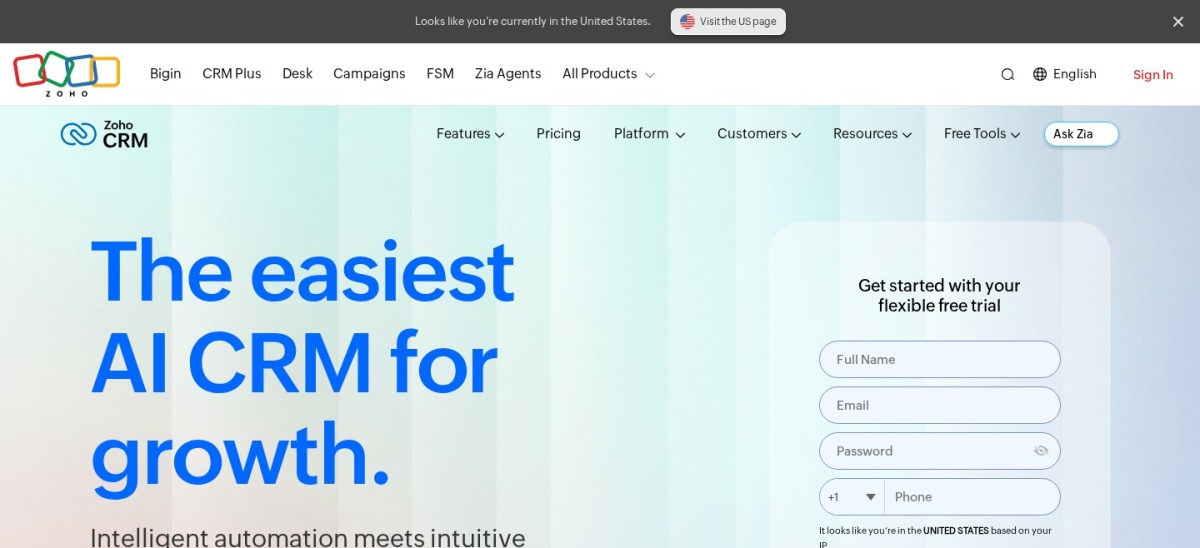
Zoho CRM homepage, captured Nov 2026.
Zoho CRM is a sales management platform that combines opportunity tracking, reporting and revenue forecasting. Its free edition supports 3 users, while Standard costs $14 per user monthly billed annually and includes 5 sales forecasts, pipeline management, custom reports and dashboards.
The trade off is that territory-based forecasting and more advanced AI predictions require higher subscriptions, including Enterprise at $40 per user monthly billed annually. It suits smaller sales teams that need practical forecasts without purchasing an expensive revenue intelligence platform.
What we like
Affordable forecasting in Standard
Free CRM for small teams
Configurable sales pipelines and probabilities
Custom reporting and dashboards
Advanced AI predictions available in higher editions
Watch out for
Free edition excludes sales forecasting
Standard has a forecast limit
Territory forecasting requires Enterprise
Advanced configuration has a learning curve
Standard adds sales forecasts, reporting, dashboards and workflow capabilities.Visit zoho.com
02
Salesforce Sales Cloud
4.4/5on G2 (27,596 reviews, checked Nov 2026)
Starts at$25/mo
Best for enterprise sales forecasting
Starter Suite$25/user/mo
Forecasting editionPro Suite
Pro Suite price$100/user/mo annually
Advanced AIHigher editions
salesforce.com
Salesforce Sales Cloud homepage, captured Nov 2026.
Salesforce Sales Cloud is a CRM platform for managing sales pipelines, opportunities and revenue performance. Starter Suite costs $25 per user monthly and includes opportunity management and sales analytics, while Pro Suite at $100 per user monthly billed annually introduces dedicated sales forecasting and greater customization.
The trade off is that Starter Suite does not include the full forecasting functionality, and advanced revenue intelligence may require additional subscriptions or higher editions. It suits established organizations that need structured forecasting connected to complex CRM processes.
What we like
Forecast management integrated with CRM
Structured opportunity and pipeline reporting
Customizable sales processes
Extensive application integrations
Advanced AI and revenue intelligence options
Watch out for
Dedicated forecasting requires Pro Suite
Advanced features can be expensive
Complex implementations require administration
Additional AI services may increase costs
Pro Suite adds sales quoting, dedicated forecasting and expanded customization.Visit salesforce.com
03
HubSpot Sales Hub
4.4/5on G2 (14,407 reviews, checked Nov 2026)
Paid from$20/mo
Best for CRM-native forecasting and deal reporting
Free CRMAvailable
Regular Starter price$20/seat/mo
Forecasting editionProfessional
Professional price$90/seat/mo annually
hubspot.com
HubSpot Sales Hub homepage, captured Nov 2026.
HubSpot Sales Hub is a CRM and sales engagement platform for managing opportunities, sales activity and pipeline reporting. Its free tools support basic deal management, while Starter has a regular price of $20 per seat monthly and adds expanded sales capabilities and reporting.
The trade off is that dedicated forecasting begins with Professional at $90 per seat monthly billed annually, with a required $1,500 onboarding fee. It suits growing sales organizations that already manage their pipeline in HubSpot and want forecasts tied to live deal records.
What we like
Forecasts linked to CRM opportunities
Free tools for basic deal management
Custom forecasting and reporting on Professional
Sales activity and pipeline visibility
Integrates with HubSpot marketing and service tools
Watch out for
Starter does not include dedicated forecasting
Professional has a required onboarding fee
Advanced reporting increases per-seat costs
Predictive features depend on subscription
Professional adds dedicated forecasting, custom reporting and advanced sales automation.Visit hubspot.com
04
Freshsales
4.5/5on G2 (1,244 reviews, checked Nov 2026)
Paid from$9/mo
Best for small teams growing into forecasting
Growth plan$9/user/mo annually
Pro plan$39/user/mo annually
Forecasting insightsEnterprise
Enterprise price$59/user/mo annually
freshworks.com
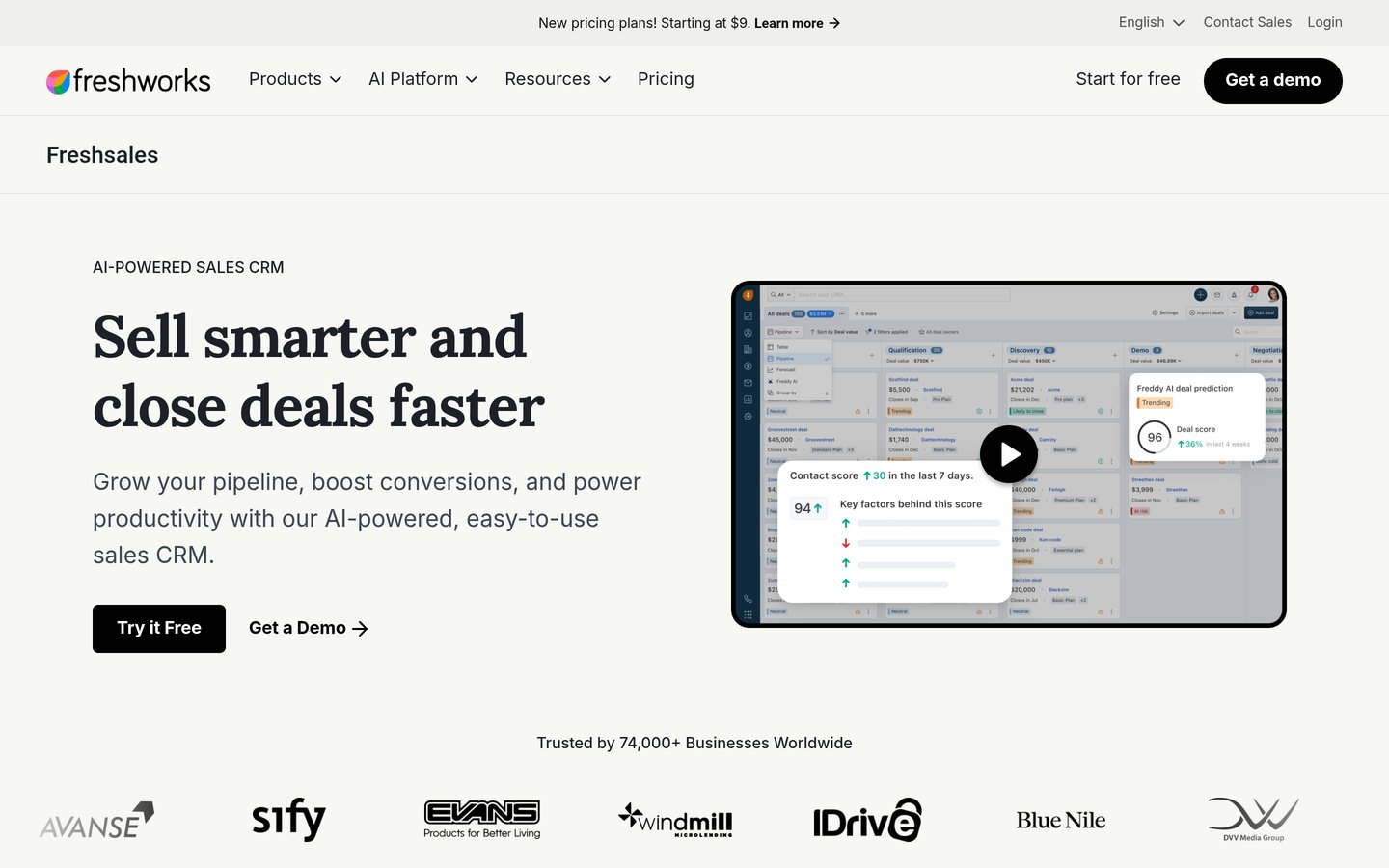
Freshsales homepage, captured Nov 2026.
Freshsales is a CRM for tracking deals, contacts and sales activity through connected communication channels. Growth starts at $9 per user monthly billed annually and includes pipeline management and basic workflows, while Pro adds deal insights, contact scoring and sales sequences.
The trade off is that dedicated forecasting insights require Enterprise at $59 per user monthly billed annually, considerably above the entry subscription. It suits smaller businesses that want affordable CRM functionality now and can upgrade when forecasting becomes an operational requirement.
What we like
Affordable starting subscription
Pipeline management and reporting
Built-in communication tools
Deal insights available on Pro
Forecasting insights available on Enterprise
Watch out for
Growth lacks dedicated forecasting insights
Enterprise is required for forecasting
Advanced AI functionality varies by edition
Some AI services have additional usage charges
Growth adds basic workflows and communication tools; Enterprise adds forecasting insights.Visit freshworks.com
05
monday CRM
4.5/5on G2 (2,015 reviews, checked Nov 2026)
Starts at$18/mo
Best for visual pipeline forecasting dashboards
Basic price$18/seat/mo
Basic dashboards1 custom dashboard
Standard dashboards5 custom dashboards
Standard automations250/month
monday.com
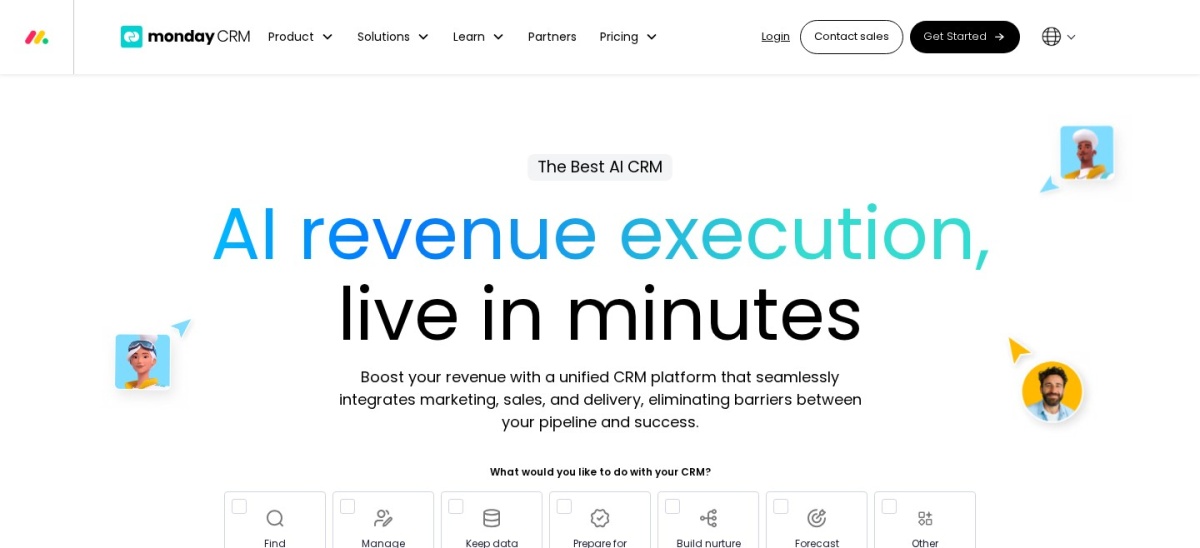
monday CRM homepage, captured Nov 2026.
monday CRM is a visual customer relationship management platform for organizing sales pipelines, monitoring opportunities and building reporting dashboards. Basic lists $18 per seat monthly and includes 1 custom dashboard and 1,000 active contacts and deals, while Standard expands reporting and automation capacity.
The trade off is that Basic has limited dashboard customization, and Standard costs $25 per seat monthly with more advanced sales workflow features. Forecasting depends on how teams configure their pipeline and dashboards rather than a dedicated predictive forecasting engine. It suits teams that prefer flexible visual reporting.
What we like
Visual pipeline and deal management
Customizable sales reporting dashboards
No-code automation capabilities
AI-assisted sales features
Flexible workflow configuration
Watch out for
Basic has limited reporting capacity
Advanced automation requires higher plans
Not a dedicated predictive forecasting platform
Team seat requirements affect total costs
Standard adds more dashboards, larger CRM capacity and custom automations.Visit monday.com
06
Close
4.7/5on G2 (2,169 reviews, checked Nov 2026)
Starts at$9/mo
Best for forecasting alongside outbound sales activity
Solo plan$9/mo annually
Solo users1
CRM communicationEmail, calling and SMS
ReportingPipeline and forecasting
close.com
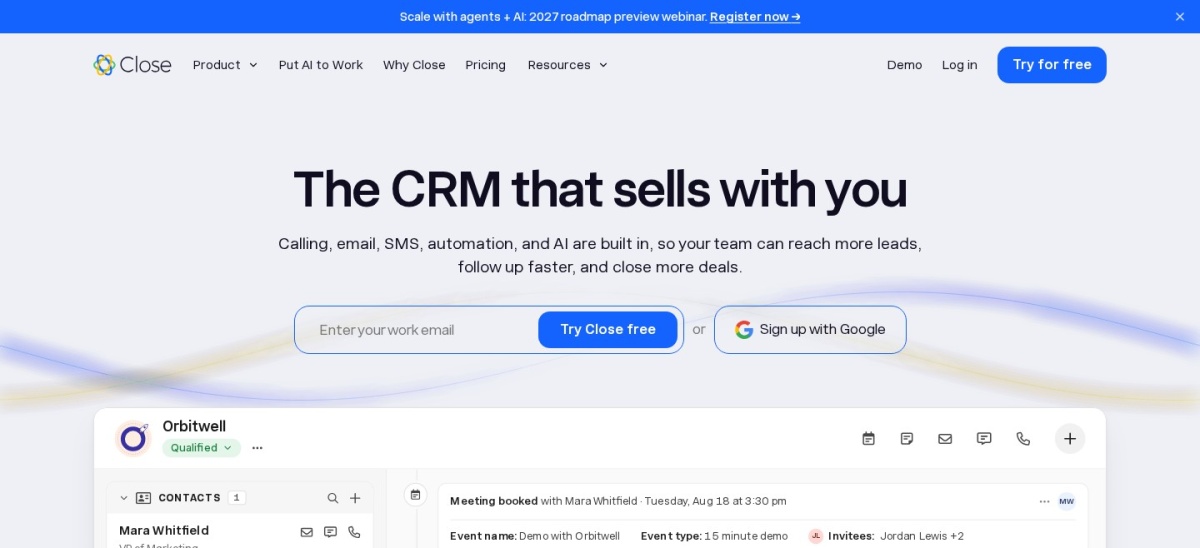
Close homepage, captured Nov 2026.
Close is a sales CRM that combines opportunity tracking with calling, email, SMS and reporting. Its Solo plan costs $9 monthly billed annually for an individual seller, and the broader platform provides pipeline reporting and forecasting tools that connect revenue expectations with sales activity.
The trade off is that Solo has limited team functionality, and more advanced reporting, automation and collaborative sales features require higher subscriptions. It suits outbound-focused businesses that want sales communication and pipeline performance in the same CRM.
What we like
Pipeline and forecasting reporting
Calling and email connected to deal records
Affordable individual entry subscription
Sales activity and opportunity tracking
Advanced automation options
Watch out for
Solo is restricted to an individual seller
Advanced capabilities require higher editions
Calling and SMS usage may cost extra
Less focused on enterprise forecast hierarchy management
Higher plans expand reporting, team management and automation functionality.Visit close.com
07
Insightly CRM
4.2/5on G2 (950 reviews, checked Nov 2026)
Starts at$29/mo
Best for combining pipeline reporting with projects
Plus price$29/user/mo annually
ReportsAdvanced reports
DashboardsPre-built business dashboards
Professional price$49/user/mo annually
insightly.com
Insightly CRM homepage, captured Nov 2026.
Insightly CRM is a customer and project management platform that brings together opportunities, pipeline reporting and post-sale delivery. Plus costs $29 per user monthly billed annually and includes advanced reports, pre-built business dashboards and project management for monitoring sales performance.
The trade off is that Insightly Plus emphasizes pipeline reporting rather than dedicated predictive forecasting, while workflow automation and additional sales management capabilities require Professional at $49 per user monthly billed annually. It suits service businesses that need revenue visibility alongside project execution.
What we like
Advanced reports on the entry subscription
Pre-built business dashboards
Sales opportunity management
Integrated project management
Workflow automation available on Professional
Watch out for
Not a dedicated predictive forecasting engine
Workflow automation requires Professional
Advanced integrations may require AppConnect
Forecasting may require customized reports
Professional adds workflow automation, lead routing and AI Copilot.Visit insightly.com
Sales forecasting methods: pipeline, historical and predictive
Pipeline forecasting estimates future revenue from active deals. A common approach assigns each deal a probability based on its stage, then multiplies that probability by the opportunity value.
Historical forecasting uses previous sales results to estimate future performance. It can be useful when a business has consistent sales cycles and enough reliable historical records.
Predictive forecasting incorporates additional information, such as sales activity, conversion patterns and deal characteristics. These models can provide more context, but their usefulness depends on accurate data and careful evaluation.
CRM reporting tools may support basic pipeline forecasts without offering advanced machine learning. Check whether your team needs simple revenue projections, manager-submitted forecasts or AI-generated predictions.
How to improve sales forecast accuracy
Start with reliable CRM records. Missing deal values, outdated closing dates and inconsistent opportunity stages can distort forecasts regardless of the software used.
Review changes between forecast submissions and actual closed revenue. Comparing projected and completed sales helps teams identify recurring overestimation, missed opportunities and seasonal patterns.
Use clear forecast categories and establish consistent review practices. Managers should understand which opportunities are committed, which remain uncertain and which require additional information.
Automation can reduce manual reporting work, but it does not eliminate judgment. Treat forecast outputs as estimates and monitor their accuracy over time.
How we chose
We selected established CRM and sales management platforms with documented forecasting, pipeline analytics or revenue reporting capabilities. The shortlist includes affordable CRM forecasting, enterprise forecast management and flexible pipeline reporting for smaller teams.
Prices and G2 ratings were checked on 22 Nov 2026 using official vendor pricing pages and public review profiles. We compared regular published subscription rates rather than promotional discounts and calculated annual equivalents from disclosed prices. We also identified higher editions required for dedicated forecasting.
We excluded products without accessible official pricing, sufficient public reviews or relevant sales reporting functionality. We distinguished dedicated forecast management from general pipeline dashboards and noted where predictive functionality requires upgrades. No vendor paid for a place, and we do not claim testing for this list.
How to choose the right sales forecasting software
Identify how your business currently estimates future revenue, then compare forecasting capabilities, data requirements and subscription costs.
Define the forecasts you need. Decide whether you need company-wide revenue projections, individual representative forecasts, territory reporting or product-level estimates. List the reporting periods and forecast categories your managers regularly use.
Check the forecasting methodology. Determine whether the platform supports stage-weighted pipeline forecasts, historical comparisons, manager adjustments or predictive models. Choose the level of sophistication that matches your available sales data.
Verify CRM integration and reporting. Look for automatic synchronization with opportunities, deal values and closing dates. Compare dashboard flexibility, forecast hierarchies, historical reporting and access controls for sales managers.
Calculate the real cost of forecasting. Check which subscription actually includes the required forecasting features. Include additional user licenses, onboarding charges, AI services and necessary integrations when estimating the total annual investment.
FAQ
What is the best sales forecasting software in 2026?
Zoho CRM is our overall recommendation for affordable built-in forecasting because Standard includes 5 sales forecasts at $14 per user monthly billed annually. Salesforce Sales Cloud is suitable for structured enterprise forecasting, while HubSpot Sales Hub provides CRM-native forecasting on its Professional subscription.
What is sales forecasting software?
Sales forecasting software estimates future revenue using information such as deal values, opportunity stages, expected closing dates and historical sales performance. It helps sales managers evaluate pipeline health, compare results with targets and identify potential revenue gaps before a reporting period ends.
Is there free sales forecasting software?
Some CRM platforms offer free plans, but dedicated forecasting features are frequently restricted to paid subscriptions. Zoho CRM provides a free edition for basic CRM management, while forecasting begins with Standard. Businesses can also build basic projections using spreadsheets when their requirements are simple.
Which sales forecasting software is best for small businesses?
Zoho CRM Standard is a practical choice because it includes built-in forecasting at a relatively low subscription price. Freshsales is another option for businesses wanting a CRM that can expand into forecasting, although its dedicated forecasting insights require Enterprise.
What is the difference between sales forecasting and pipeline management?
Pipeline management tracks sales opportunities and their progress toward closing. Sales forecasting uses information from that pipeline, often combined with historical performance, to estimate future revenue. A pipeline dashboard can support forecasting, but it does not necessarily include dedicated forecasting models or manager submission workflows.
Can AI improve sales forecast accuracy?
AI can analyze historical conversion patterns, deal characteristics and activity data to identify signals that simple stage-based forecasts may miss. However, results depend on data quality and model design. Teams should compare AI predictions with actual revenue over time rather than assuming automated estimates are always more accurate.
How much does sales forecasting software cost?
Zoho CRM Standard costs $14 per user monthly billed annually, while Salesforce Pro Suite costs $100 per user monthly and includes dedicated forecasting. HubSpot Sales Hub Professional starts at $90 per seat monthly billed annually, plus onboarding. Pricing depends on required features, users and additional services.
Does HubSpot include sales forecasting?
Yes. HubSpot Sales Hub provides dedicated forecasting through Professional and Enterprise subscriptions. Professional starts at $90 per seat monthly billed annually and supports forecast reporting linked to CRM deals. Starter includes basic sales management and reporting but not the full forecasting functionality.
How do I measure sales forecast accuracy?
Compare forecasted revenue with actual closed revenue for the same reporting period. Track both the size and direction of errors to identify consistent overestimation or underestimation. Review changes by representative, team and pipeline stage, and use the findings to improve data quality and forecasting assumptions.