WLWPLegible EditorsLast verified 22 Nov 2026How we rank13 min read
★ Short answer
Semrush is the best research platform for marketing teams studying keywords, competitors and search visibility, with its SEO plan starting at $139 per month or $117.33 monthly on annual billing. SurveyMonkey is better for collecting original customer feedback, while SpyFu offers lower-cost competitor keyword and advertising research.
How we make this list: we compare pricing pages, product documentation and public user reviews, then re-check every price before each update. No product paid for a place. Disclosure.
Semrush SEO starts at $139/month or $117.33/month annually, covering 5 monitored websites and 500 tracked keywords. G2 rates it 4.4/5 from 4,323 reviews.
SurveyMonkey Advantage Annual costs $39/month billed annually and includes 15,000 responses per year. It earns 4.4/5 from 24,057 G2 reviews.
SpyFu Basic costs $29/month annually or $39 with monthly billing, with 10,000 result rows and 5,000 weekly tracked keyword rankings. G2 rates it 4.6/5 from 521 reviews.
Ahrefs Starter costs $29/month with 200 monthly credits and 1 unverified project. It earns 4.5/5 from 725 G2 reviews.
Typeform Basic starts at $28/month with annual billing and includes 100 monthly responses. G2 rates it 4.5/5 from 1,027 reviews.
QuestionPro offers 200 responses per survey on its free Essentials plan, while Advanced costs $99/user/month annually and includes 25,000 annual responses.
What to look for in a research platform
Research platforms help teams collect evidence, study markets and turn information into business decisions. Their capabilities vary considerably, from customer surveys and product feedback to competitor intelligence, keyword databases and content performance analysis.
Start by distinguishing primary research from secondary research. Primary research collects new information directly from customers or participants through surveys and feedback. Secondary research analyzes existing data, including search trends, competitor websites and published content.
Survey design matters when collecting original responses. Look for question logic, response limits, distribution options, data exports and analysis tools. The quality of your sample and questions matters as much as the software.
Competitive research requires different capabilities. Keyword discovery, organic traffic estimates, paid advertising intelligence and backlink analysis help marketers understand market opportunities. These tools use modeled or collected datasets rather than direct access to every competitor's private analytics.
Finally, compare usage limits and reporting. Some subscriptions restrict credits, exports, responses or tracked keywords. Choose a platform based on the research methods you need regularly rather than the longest feature list.
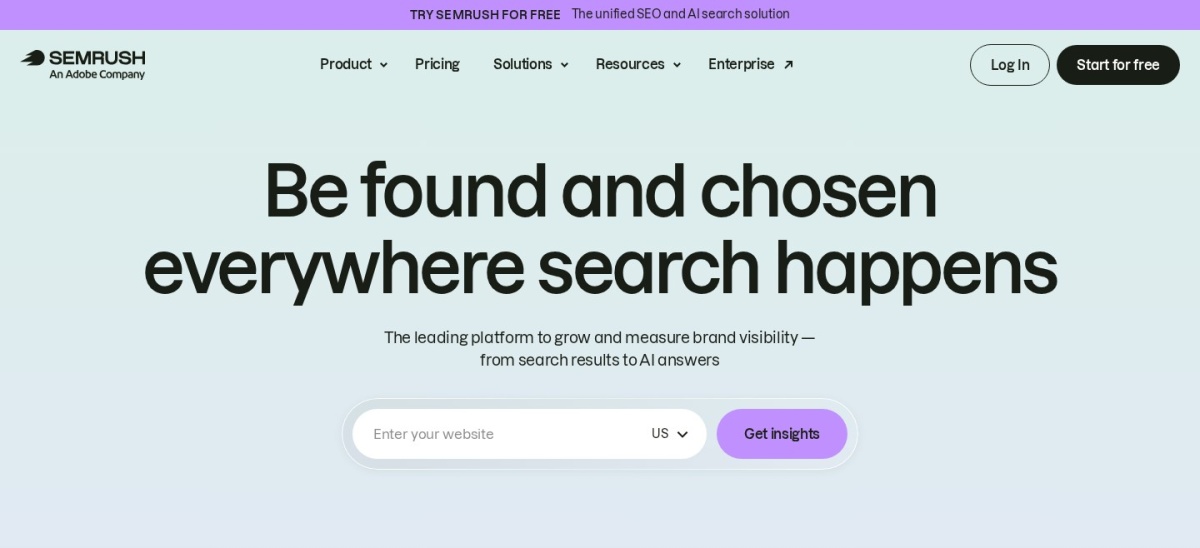
Semrush is a marketing research platform covering keyword opportunities, competitor analysis, search visibility and website performance. Its SEO plan costs $139 monthly or $117.33 per month billed annually. It includes monitoring for 5 websites, tracking for 500 keywords, site auditing, position tracking and basic competitive research.
The trade off is the $1,407.96 annual subscription at the published annual rate, with additional charges for specialized marketing capabilities. SEO and AI Search Starter costs $199 monthly for expanded AI visibility research. It suits marketing teams needing recurring competitor intelligence and actionable search performance data.
What we like
Keyword and competitor research in one platform
Organic search and AI visibility analysis
Position tracking and website audits
Historical competitor research capabilities
Reporting tools for ongoing marketing research
Watch out for
More expensive than basic research tools
Specialized capabilities may require add-ons
Usage and project limits depend on subscription
Traffic estimates are not direct competitor analytics
Starter expands AI search research, prompt tracking and competitive visibility capabilities.Visit semrush.com
02
SurveyMonkey
4.4/5on G2 (24,057 reviews, checked Nov 2026)
Paid from$39/mo
Best for customer surveys and market feedback
Free planBasic
Paid planAdvantage Annual
Annual responses15,000
Survey questionsUnlimited on paid plan
surveymonkey.com
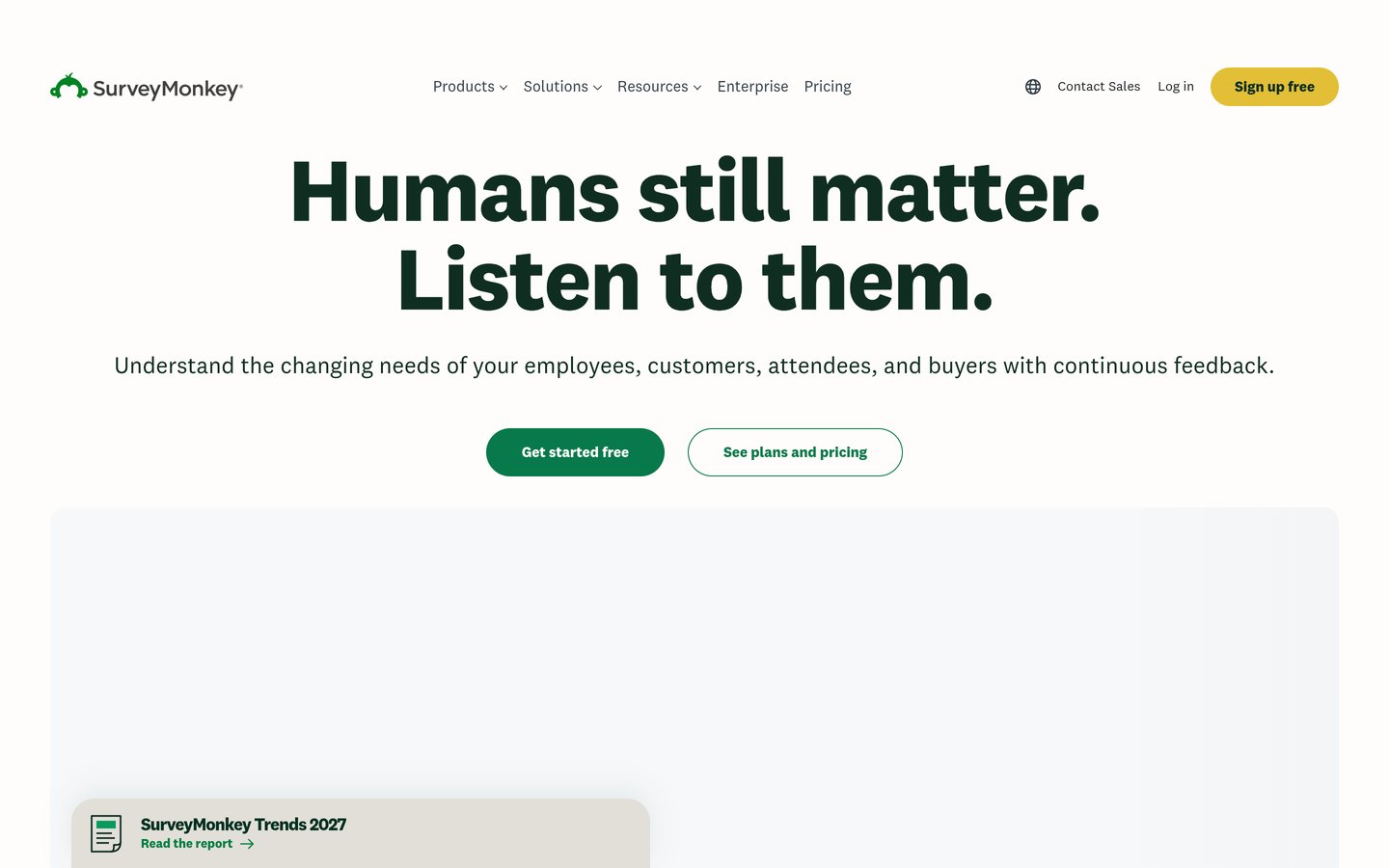
SurveyMonkey homepage, captured Nov 2026.
SurveyMonkey is a survey and research platform for collecting customer opinions, market feedback and business insights. Its free Basic plan supports unlimited surveys with up to 10 questions each. Advantage Annual costs $39 monthly with annual billing and includes unlimited questions, 15,000 yearly responses, branching logic, statistical significance tools and AI-assisted analysis.
The trade off is the $468 annual commitment, with additional costs for purchased research-panel responses. Advanced collaboration and administration require team or enterprise subscriptions. It suits marketing teams conducting recurring customer satisfaction studies, concept validation and market surveys.
What we like
Free survey creation available
Extensive question and logic capabilities
Statistical significance and survey analysis
AI-assisted analysis and thematic reporting
Research-panel recruitment available
Watch out for
Advantage requires annual billing
Purchased audience responses cost extra
Team administration needs higher plans
Free surveys have question and response restrictions
Advantage adds expanded response allowances, advanced logic, AI analysis and statistical tools.Visit surveymonkey.com
03
SpyFu
4.6/5on G2 (521 reviews, checked Nov 2026)
Paid from$29/mo
Best value for SEO and advertising competitor research
Entry planBasic
Monthly billing$39
Search results10,000 rows
Weekly tracked rankings5,000
spyfu.com
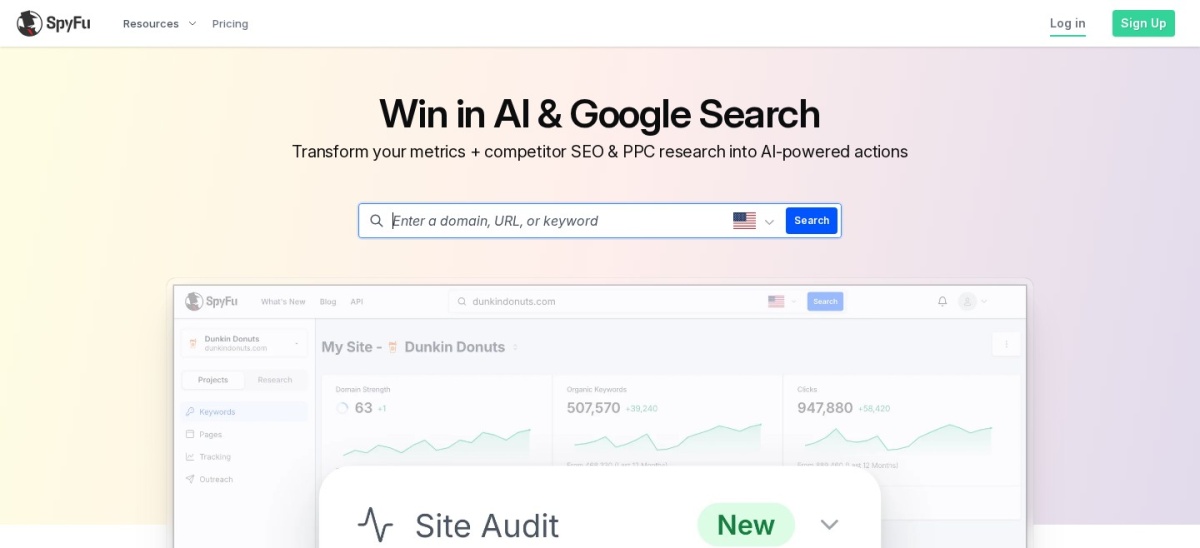
SpyFu homepage, captured Nov 2026.
SpyFu is a competitive research platform for studying organic keywords, advertising strategies and search marketing opportunities. Basic costs $39 monthly or $29 per month billed annually. It includes 10,000 search result rows, 10,000 export rows, 5,000 weekly tracked keyword rankings and 10 automated reports.
The trade off is that Basic excludes several advanced AI, historical data and reporting capabilities. The annual subscription costs $348, while expanded functionality requires a higher tier. It suits marketers who primarily need competitor keyword and paid search intelligence without paying for a broader marketing suite.
What we like
Affordable competitor research subscription
Organic and paid keyword intelligence
Generous keyword ranking allowances
Competitor advertising research
Automated reports included
Watch out for
Advanced historical research is restricted
Some AI features require higher plans
Basic limits exports and reporting
Less suitable for primary customer research
Higher plans expand research allowances, AI capabilities, reporting and integrations.Visit spyfu.com
04
Ahrefs
4.5/5on G2 (725 reviews, checked Nov 2026)
Paid from$29/mo
Best for backlink and organic search research
Entry paid planStarter
Monthly credits200
Unverified projects1
Historical data1 month
ahrefs.com
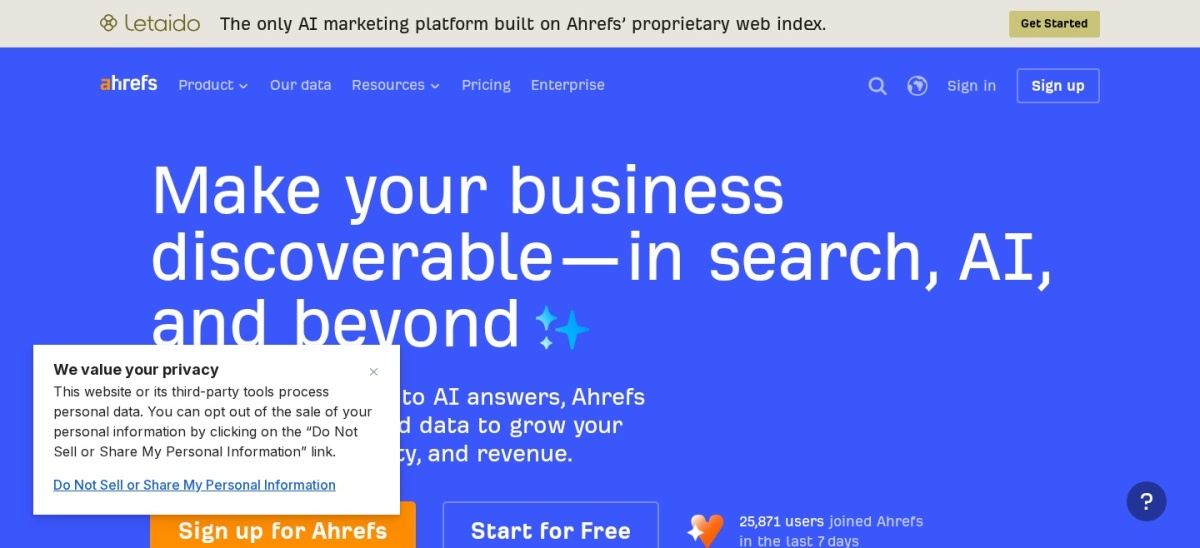
Ahrefs homepage, captured Nov 2026.
Ahrefs is a search research platform offering keyword analysis, backlink intelligence, competitor discovery and website auditing. Its Starter plan costs $29 monthly and includes 200 monthly credits, 1 unverified project, one month of historical data, Keywords Explorer, Site Explorer and Rank Tracker. A limited free account is also available.
The trade off is the restrictive Starter credit allowance and limited historical reporting. Lite costs $129 monthly and expands available credits, tracked keywords and reporting capacity. It suits individuals exploring keyword opportunities and backlink profiles, while larger research teams will generally need an upgraded subscription.
What we like
Detailed backlink research
Keyword and competitor analysis
Affordable Starter subscription
Website auditing and rank tracking
Free tools for verified websites
Watch out for
Starter has only 200 monthly credits
Limited historical data on Starter
Larger exports require an upgrade
Additional users cost extra on higher plans
Lite raises the monthly credit allowance to 1,000 and expands historical data and project capacity.Visit ahrefs.com
05
Typeform
4.5/5on G2 (1,027 reviews, checked Nov 2026)
Paid from$28/mo
Best for interactive surveys and audience feedback
Entry planBasic
Monthly billing$39
Monthly responses100
Included users1
typeform.com
Typeform homepage, captured Nov 2026.
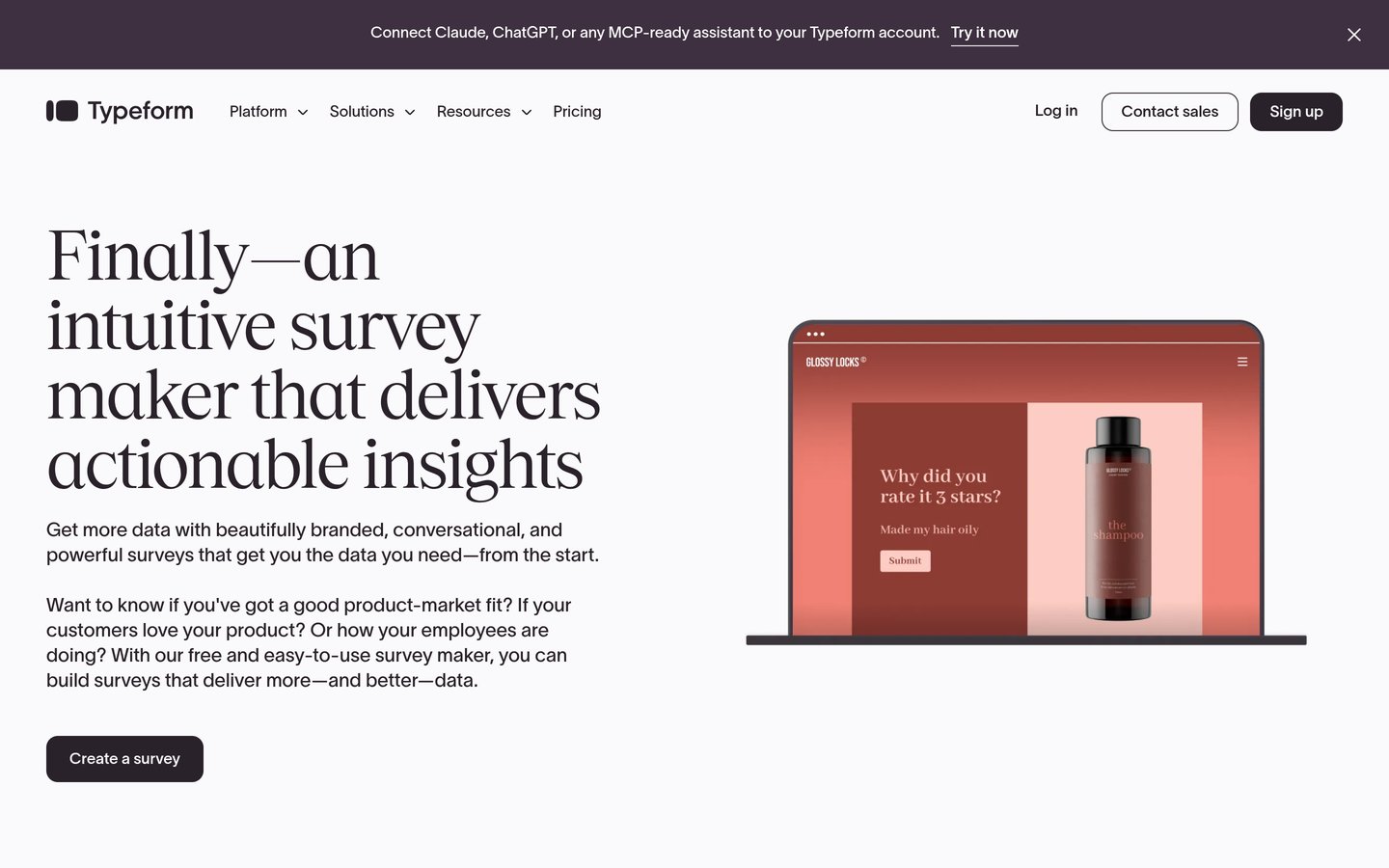
Typeform is an interactive survey and form platform for collecting customer feedback, conducting research and qualifying leads. Basic costs $39 monthly or $28 per month with annual billing and includes unlimited forms, 100 monthly responses, conditional logic, AI-assisted form creation, webhooks and integrations.
The trade off is the 100-response monthly allowance and limited branding customization. Plus starts at $56 per month with annual billing and increases the allowance to 1,000 responses while adding branding controls and additional users. It suits marketers who prioritize a conversational survey experience and flexible data collection.
What we like
Interactive survey experience
Conditional logic on the entry plan
AI-assisted form creation
Webhooks and integrations
Free plan for basic forms
Watch out for
Basic limits responses to 100 monthly
Branding removal requires Plus
Advanced research studies have separate pricing
Higher response volumes increase costs
Plus increases monthly responses, adds users and unlocks branding customization.Visit typeform.com
06
QuestionPro
4.5/5on G2 (1,167 reviews, checked Nov 2026)
Paid from$99/mo
Best for structured survey and research programs
Free planEssentials
Free responses200 per survey
Paid planAdvanced
Annual paid responses25,000
questionpro.com
QuestionPro homepage, captured Nov 2026.
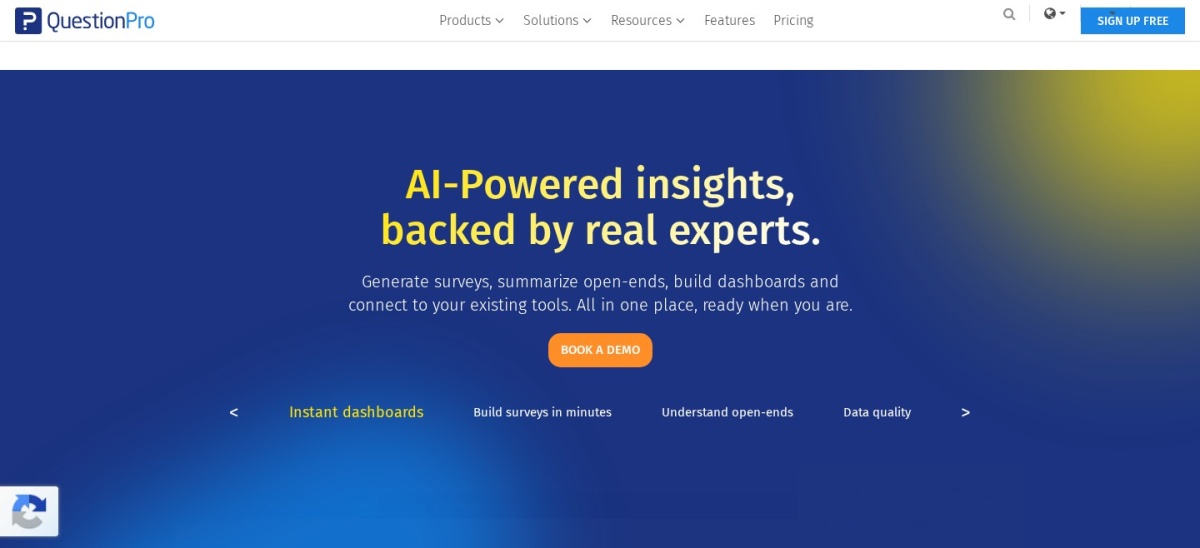
QuestionPro is a survey and research platform for collecting structured responses and analyzing customer or market feedback. Its free Essentials plan includes 200 responses per survey and 30 question types. Advanced costs $99 per user monthly with annual billing and includes 25,000 responses yearly and 38 question types.
The trade off is the $1,188 annual cost per user for Advanced, which may be excessive for occasional surveys. Larger research teams may need Team Edition or custom enterprise arrangements. It suits organizations conducting regular structured studies that need richer survey options and analytical controls.
What we like
Free survey plan with meaningful allowances
Wide selection of question types
Advanced survey logic and integrations
Structured reporting and analysis
Additional research programs available
Watch out for
Advanced is expensive for occasional users
Annual billing required for the published price
Team plans have separate eligibility requirements
Complex research workflows require setup
Advanced adds greater annual response capacity, more question types, branding and additional analysis features.Visit questionpro.com
07
BuzzSumo
4.5/5on G2 (107 reviews, checked Nov 2026)
Starts at$199/mo
Best for content and audience-interest research
Entry planContent Creation
Annual billing rate$199/month
Included users1
Research searchesUnlimited
buzzsumo.com
BuzzSumo homepage, captured Nov 2026.
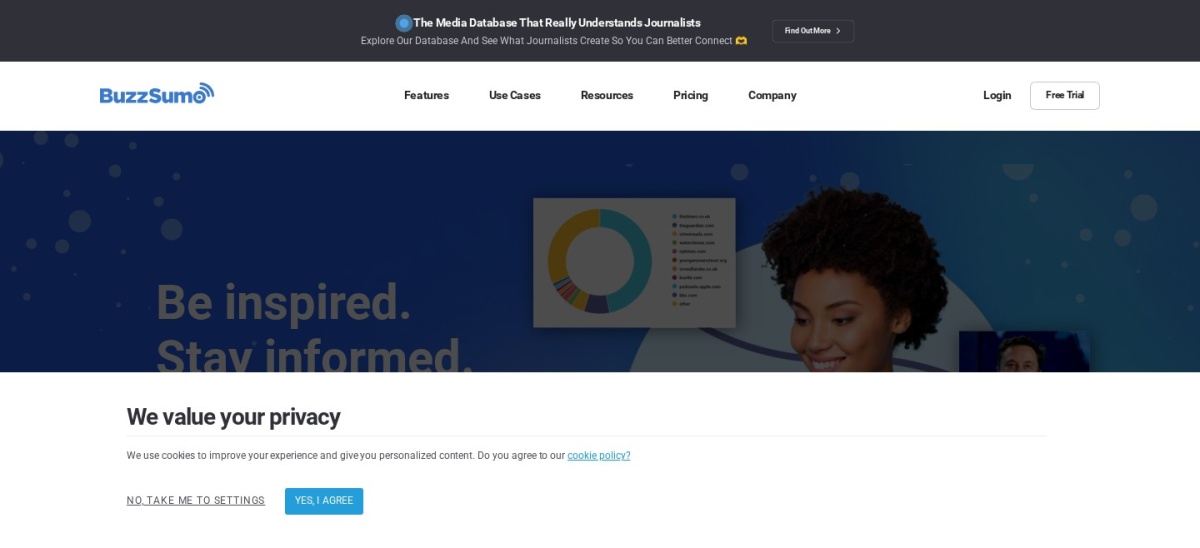
BuzzSumo is a content research platform for discovering popular articles, trending subjects, competitor content and audience interests. Its Content Creation plan costs $199 per month billed annually and includes one user, unlimited searches, content discovery and research features for monitoring published material and identifying content opportunities.
The trade off is the $2,388 annual commitment and restrictions on advanced media research capabilities. PR & Comms costs $299 monthly with annual billing and adds functionality aimed at communication teams. It suits content strategists and marketers who need published-content intelligence rather than original customer surveys.
What we like
Content discovery and trend research
Unlimited searches on the entry plan
Competitor content analysis
Content engagement and performance insights
Media and influencer research upgrades
Watch out for
Higher starting price than many alternatives
Entry plan includes only one user
Advanced media capabilities require upgrades
Not intended for primary survey research
PR & Comms expands journalist, media and communication research capabilities.Visit buzzsumo.com
Which type of research platform do you need?
Market research platforms serve different purposes. Survey tools collect direct feedback, competitive intelligence platforms analyze existing business and search data, and content research tools identify published topics and engagement patterns.
SurveyMonkey, Typeform and QuestionPro are useful when teams need original responses from customers or research participants. They support survey creation, distribution and analysis, although their question types, reporting options and response limits differ.
Semrush, Ahrefs and SpyFu focus on search marketing intelligence. They help identify keywords, competing websites and organic or paid search opportunities. Their estimates should be treated as directional research rather than exact competitor performance figures.
BuzzSumo focuses on published content and audience attention. It helps marketers investigate topics, analyze content engagement and discover potential opportunities for content strategy.
How to get reliable insights from research software
Research quality depends on methodology as well as software. Surveys need clear questions, appropriate samples and consistent data collection. Poorly selected participants can produce misleading findings even when the survey platform has advanced analysis tools.
Competitive intelligence introduces different uncertainties. Keyword databases, traffic estimates and backlink indexes are based on available information and vendor methodologies. Comparing multiple sources can help identify large discrepancies.
For important decisions, distinguish observed evidence from estimates and assumptions. Record the date, source and limitations of each dataset so colleagues understand how conclusions were reached.
Combine methods when possible. Competitor data may reveal market opportunities, while customer surveys can explain motivations and preferences that search statistics alone cannot establish.
How we chose
We shortlisted established research platforms serving marketing, customer insights, competitor intelligence and content strategy. The list combines primary and secondary research products because the broad keyword covers different research needs. We compared their documented features, public pricing, usage limits and customer ratings.
Vendor pricing pages, official product documentation and G2 review profiles were opened on November 23, 2026, using November 22 as the requested editorial reference date. Annual prices reflect published regular rates, including annual-billing discounts where explicitly available. Promotional offers, taxes and separately billed research services are excluded.
We excluded tools without a verifiable paid entry price, products lacking sufficient review evidence and services that could not be reliably compared in the required pricing format. Research categories are identified clearly because survey software and competitor intelligence tools are not interchangeable. No vendor paid for a place, and we do not claim testing for this list.
How to choose a research platform
Define your research questions, required evidence and reporting workflow before comparing subscriptions.
Identify your primary research objective. Decide whether you need original customer feedback, keyword intelligence, competitor advertising data or content engagement research. Select a platform designed for your central research method instead of choosing solely by feature count.
Check data coverage and research limits. For surveys, compare response allowances, question logic and participant sourcing. For marketing intelligence, review keyword databases, historical information, tracked projects, search credits and export restrictions.
Evaluate reporting and integrations. Look for useful charts, exports, collaboration features and integrations with existing marketing or analytics tools. Confirm whether the entry plan includes the reports and permissions your team needs.
Calculate ongoing research costs. Compare monthly and annual billing, response overages, extra users, data credits and optional research services. Estimate costs based on realistic project frequency rather than the lowest advertised subscription alone.
FAQ
What is the best research platform in 2026?
Semrush is our top choice for digital marketing research because it combines keyword discovery, competitor intelligence and search visibility monitoring. SurveyMonkey is better for collecting direct customer feedback, while SpyFu provides a less expensive entry point for competitor keyword and advertising research.
What is the difference between primary and secondary research platforms?
Primary research platforms collect new information directly from people through surveys, interviews or feedback. Secondary research platforms analyze information that already exists, such as website rankings, advertisements and published content. SurveyMonkey and Typeform support primary research, while Semrush and BuzzSumo primarily support secondary research.
Are there free research platforms?
Yes. SurveyMonkey, Typeform and QuestionPro provide free survey options with usage restrictions. Ahrefs offers free tools and access for verified websites, while SpyFu provides limited free competitive research. Free features are useful for initial investigations but may not support larger research projects.
How much do research platforms cost?
Entry pricing varies by research method. Ahrefs Starter costs $29 monthly, SpyFu Basic costs $29 monthly with annual billing, and Typeform Basic costs $28 monthly annually. QuestionPro Advanced costs $99 per user monthly with annual billing, while BuzzSumo Content Creation costs $199 monthly annually.
Which platform is best for market research surveys?
SurveyMonkey is suitable for general customer and market surveys, offering advanced logic and analysis on paid plans. QuestionPro supports structured research programs with additional question types. Typeform is attractive when survey presentation and conditional question flows are particularly important.
Which research platform is best for competitor analysis?
Semrush is useful for broad keyword and digital marketing intelligence. Ahrefs specializes in backlinks and organic search research, while SpyFu emphasizes competitor keywords and paid search history. The best choice depends on whether your research focuses on SEO, advertising or market visibility.
Can research software estimate competitor website traffic?
Some competitive intelligence platforms provide modeled estimates of search traffic or market visibility. These figures are derived from available datasets and estimation methods, not direct access to competitors' private analytics. They are most useful for identifying patterns and comparing opportunities rather than confirming exact visitor counts.
What should I look for in a customer research platform?
Prioritize suitable question types, branching logic, response allowances, secure data collection and clear reporting. Check whether the platform supports participant recruitment and data exports. Most importantly, plan how you will select participants and interpret findings before launching the survey.
Can one research platform handle every business research need?
Usually not. Survey platforms collect direct responses, SEO platforms analyze search activity, and content intelligence tools examine published information. Businesses with broader research needs may use complementary products, but should avoid overlapping subscriptions unless each provides distinct information.