Monday is the best project management tracking tool for most teams, with visual boards, dashboards and the highest G2 rating in this list. Pick ClickUp for time tracking and value, Asana for timelines and portfolios, and Trello if the team wants the simplest board.
How we make this list: we compare pricing pages, product documentation and public user reviews, then re-check every price before each update. No product paid for a place. Disclosure.
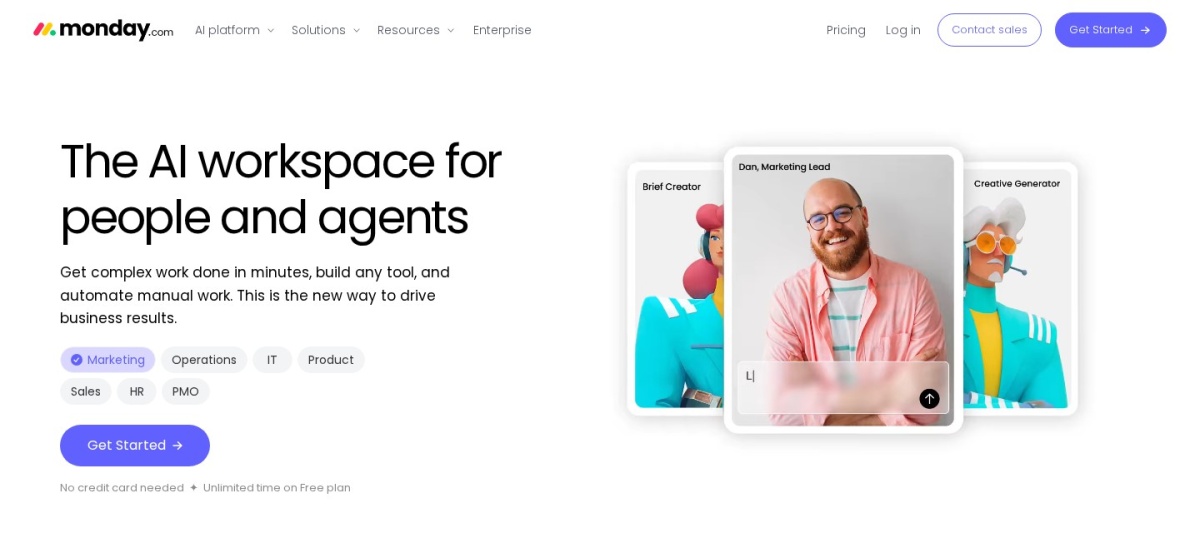
monday.com leads with a 4.7 G2 rating from 17,940 reviews, and Basic costs $9 a seat a month, but timeline views need Standard at $12.
ClickUp is the best value for tracking depth, with Gantt and time tracking on paid plans, but the regular Core price is $12, not the $9 shown on sale.
Trello is the cheapest paid plan here at $5 a user a month, and Smartsheet is the only tool with no free plan at all.
Jira prices rose on 13 October 2026, so Standard is now $9.70 a user a month for 1 to 100 users on monthly billing.
Airtable is the priciest per-seat plan at $20 a month, and Notion has no native time tracking despite a 4.6 G2 rating.
What project management tracking should cover
Tracking splits into three jobs. Status tracking shows what is done, schedule tracking shows when it lands, and time tracking shows what it cost. Most tools here do the first two well and charge extra for the third.
Look at which plan holds the view you need. Gantt charts, portfolios, workload and time tracking often sit one plan above the cheapest, so read the plan page, not just the headline price. Our guide to the best project management software covers the same tools from a general planning angle.
Free plans cover the basics well. Most include a board or list view, task lists and room for a small team to track real projects, but paid plans add the views and control that make tracking scale.
Per-seat pricing is the cost to watch. A $10 plan is cheap for 3 people and $1,200 a year for 10, so count seats before you count features, and check member caps too: Smartsheet Pro stops at 10 members.
monday.com is a board-based work platform that marketing and product teams use to plan campaigns, track content and manage launches in one view. The free plan covers up to 2 seats with 3 boards and 3 docs, the template library holds more than 200 templates, and colour-coded status columns, automations and dashboards make the state of work obvious at a glance.
The trade off is that the cheapest paid plan is light. Basic at $9 per seat a month has no timeline or Gantt view and no automations, so teams that need scheduling views must move to Standard at $12, and time tracking needs Pro at $19. Paid plans also need at least 3 seats. It suits visual teams that want flexible boards first.
ClickUp is an all-in-one workspace that joins tasks, docs, goals, chat and time tracking under one roof. The free plan includes unlimited tasks, docs, Kanban boards and calendar views, and Core adds unlimited storage, Gantt charts, custom fields and 1,000 automations a month, with timesheets and resource management on Business.
The trade off is the price on the page. ClickUp shows Core at $9 a month, but the regular price is $12 per user a month billed yearly, so budget on the higher figure. It also packs in so many features that setup takes time. It suits small teams that want one tool to replace several.
What we like
Gantt charts and time tracking on every paid plan
Free plan has no task limit
Goals, docs and chat in the same workspace
15,312 G2 reviews at 4.6 out of 5
Watch out for
Regular Core price is $12, not the $9 shown on sale
Asana is a work management platform built around tasks, owners and dates, which fits tracking work across marketing, design and sales. The free Personal plan covers up to 2 users with unlimited tasks and projects, and Starter adds timeline and Gantt views, dashboards and unlimited automations, with more than 100 free integrations including Slack.
The trade off is that the tracking views teams want most sit on higher plans. Portfolios, goals, workload and time tracking need Advanced at $24.99 per user a month, so a small team pays more to see all projects at once. It suits teams that run many projects in parallel and need clear owners and dates.
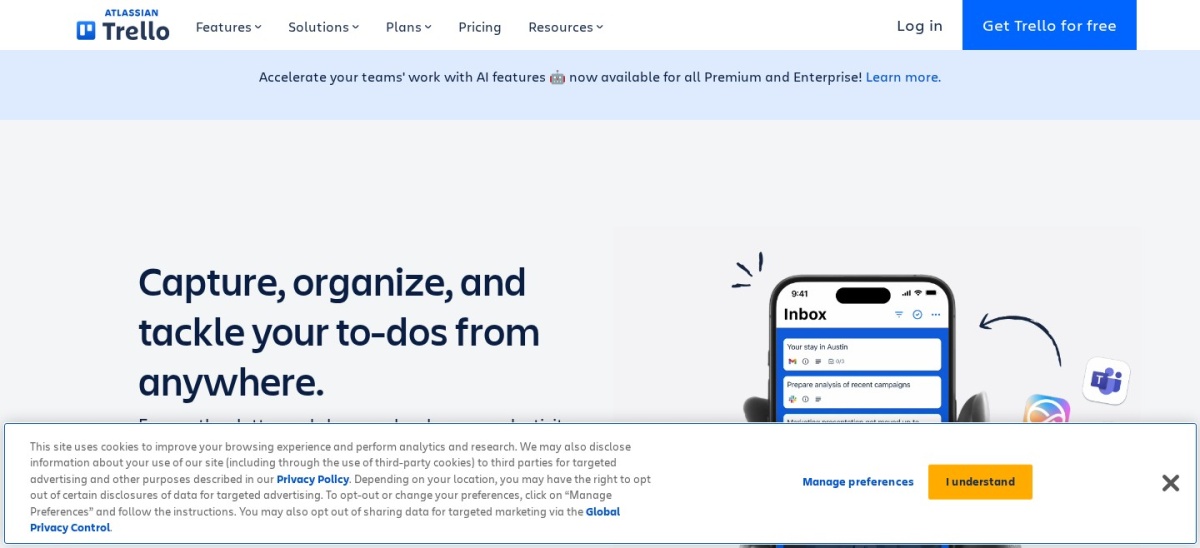
Trello is kanban and nothing else: a board, lists and cards that anyone can understand in minutes. The free plan covers up to 10 collaborators and 10 boards per workspace, Standard starts at $5 a user a month billed annually with unlimited boards and custom fields, and Premium at $10 adds timeline, calendar and dashboard views with unlimited automation.
The trade off is depth. Trello has no built-in dependency management and suggests checklists and card links instead, and a timeline covers one board at a time, so tracking across many projects needs another tool. It suits small teams that want the simplest board for tracking work.
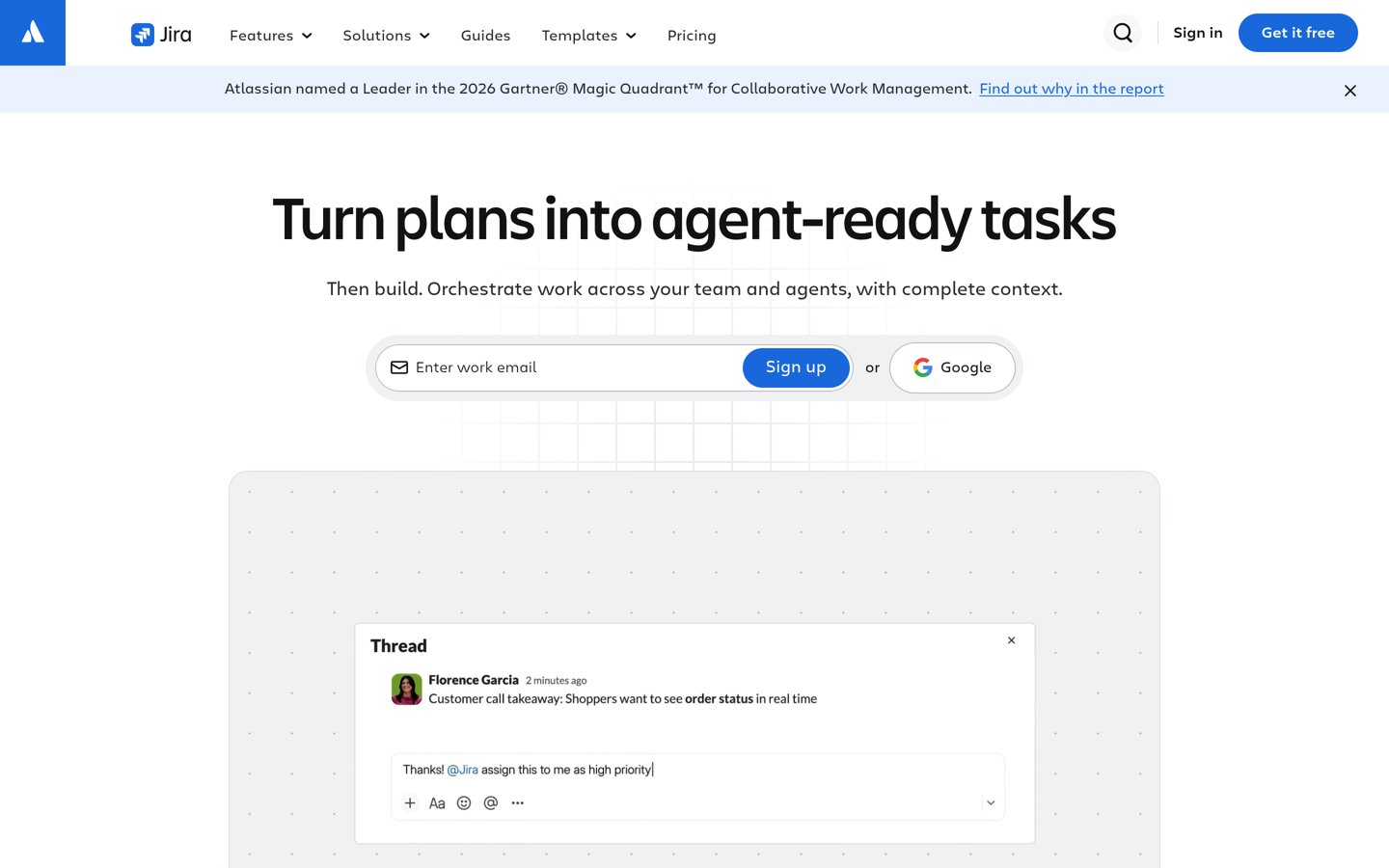
Jira is the enterprise agile pick for software teams that run sprints, track bugs and plan releases. Epics break a migration or platform upgrade into issues, sprints and boards keep weekly work visible, and roadmaps show how releases line up, with Rovo AI agents included on paid plans and a link to Jira Service Management for incidents.
The trade off is price movement and complexity. Atlassian raised Cloud prices on 13 October 2026, so Standard is now $9.70 a user a month on monthly billing for 1 to 100 users, and Premium is $19.60. It suits software organisations that need configurable agile process and portfolio planning.
Smartsheet is a spreadsheet-style work platform that teams use for project plans, budgets and status sheets. Pro at $9 per member a month billed yearly covers 1 to 10 members with unlimited sheets, forms, Gantt charts, dashboards and 250 automations a month, plus unlimited free contributors who can view and comment.
The trade off is access. There is no free plan for new sign-ups, only a 30-day trial, and Pro stops at 10 members, so a growing team must move to Business at $19 per member a month. It suits teams that think in rows and columns and want dashboards built on the same sheets.
What we like
Familiar spreadsheet layout with Gantt and dashboards
Wrike is a work management platform aimed at teams that need intake, proofing and approvals under one roof. The free plan covers basic task management, and Team at $10 per user a month adds shareable dashboards and interactive Gantt charts, with AI essentials for summaries and task help included.
The trade off is that the approval features that set Wrike apart cost more. Proofing, request forms and guest approvals need Business at $25 per user a month, and workload views sit there too, along with time tracking and resource management. It suits larger teams with formal review steps and many stakeholders.
Notion is a flexible workspace where teams build editorial calendars, content brief databases, publishing schedules and strategy docs side by side. The free plan covers unlimited pages for individuals with up to 10 guests, and Plus at $10 per member a month adds unlimited file uploads, a 30-day page history and unlimited guests.
The trade off is structure. Notion gives you blank databases, not a ready-made project tracker, and it has no native time tracking or client portal. It suits small teams that want planning, docs and notes in one light tool and are happy to build their own setup.
Airtable is a spreadsheet-database hybrid that becomes a project tracking system once it is set up. Each record can hold a brief, assets, status, channel and owner, with linked tables joining work to projects, and calendar, Kanban and Gantt views slice the same data. Team at $20 per seat a month adds 50,000 records per base.
The trade off is setup and price. Airtable needs building before it tracks anything, and Team at $20 per seat a month is the priciest per-seat plan in this list, with Business at $45. It suits teams that need structured project data and custom views more than ready-made templates.
Native time tracking is not on the cheapest plan anywhere in this list. ClickUp includes it on every paid plan, monday.com and Asana hold it on Pro and Advanced, and Wrike holds it on Business at $25 a user a month.
Trello, Jira, Smartsheet, Notion and Airtable have no native time tracking on their entry plans. Teams that need it either upgrade or add a dedicated time tracker beside the project tool.
Budget for the plan that holds the feature, not the headline price. A team of 10 on Asana Advanced pays $2,999 a year for time tracking, while the same team on ClickUp Core pays $1,440.
How we chose
We started from the most widely used work management platforms with a G2 profile and a published product, then kept those with a verifiable G2 rating and review count.
Prices come from each vendor's pricing page as reported in comparisons checked in November 2026, with the regular price shown where a sale was running. Ratings and review counts come from G2 on the same day. Where a vendor publishes no monthly price, the list shows the annual figure.
We left out enterprise-only platforms with no published price. No vendor paid for a place, and we do not claim hands-on testing for this list.
How to choose a project management tracking tool
Start with how your team tracks work today, then pick the tool that matches that shape.
List what you track each week. Status, dates and time need different views. A team that tracks time needs a different plan from one that only tracks status.
Count the seats you will pay for. Most tools here charge per seat, so multiply the monthly price by your team size and by 12 before you compare plans.
Check the view you need is on the plan you can afford. Gantt charts, portfolios and time tracking often sit one plan above the cheapest, so read the plan page, not just the headline price.
Try the free plan with one real project. Run a single project end to end, from kickoff to delivery, and see whether the team follows it without extra spreadsheets.
FAQ
What is the best project management tracking tool?
monday.com is the best pick for most teams. It scores 4.7 out of 5 on G2 from 17,940 reviews, offers more than 200 templates, and its Basic plan costs $9 per seat a month billed yearly.
What is project management tracking software?
It is software that tracks the status, schedule and cost of project work in one place. Boards and lists show what is done, timelines and Gantt charts show when work lands, and time tracking shows what it cost.
How much do project management tracking tools cost?
Cheapest paid plans in this list run from $5 to $20 a user a month. Trello Standard is $5, monday.com Basic is $9, ClickUp Core is $12 regular, and Airtable Team is $20, all billed yearly.
Which tool has the best time tracking?
ClickUp includes time tracking on every paid plan from Core at $12 a user a month, which makes it the cheapest native option here. monday.com needs Pro at $19 and Asana needs Advanced at $24.99.
Is there free project management tracking software?
Yes. monday.com, ClickUp, Asana, Trello, Jira, Wrike, Notion and Airtable all have free plans. Smartsheet is the exception, with a 30-day trial instead of a free plan for new sign-ups.
Is monday.com or Asana better for tracking projects?
monday.com is better for visual tracking, with colour-coded boards and dashboards and a 4.7 G2 rating. Asana is better for structured tracking across many projects, with portfolios, goals and workload views on Advanced.
SaaS SEO and WordPress specialist with about 8 years of experience. Rakib compares WordPress plugins, themes, hosting and software using public pricing, documentation and user reviews. See how we rank.