Indeed is the best platform for job posting for most employers, because it reaches the widest audience and lets you post up to three jobs a month free. ZipRecruiter is the best distribution option, sending one post to more than 100 job sites, while LinkedIn is the best pick for professional and senior roles.
How we make this list: we compare pricing pages, product documentation and public user reviews, then re-check every price before each update. No product paid for a place. Disclosure.
Indeed reaches the widest audience and lets direct employers post up to three jobs a month free.
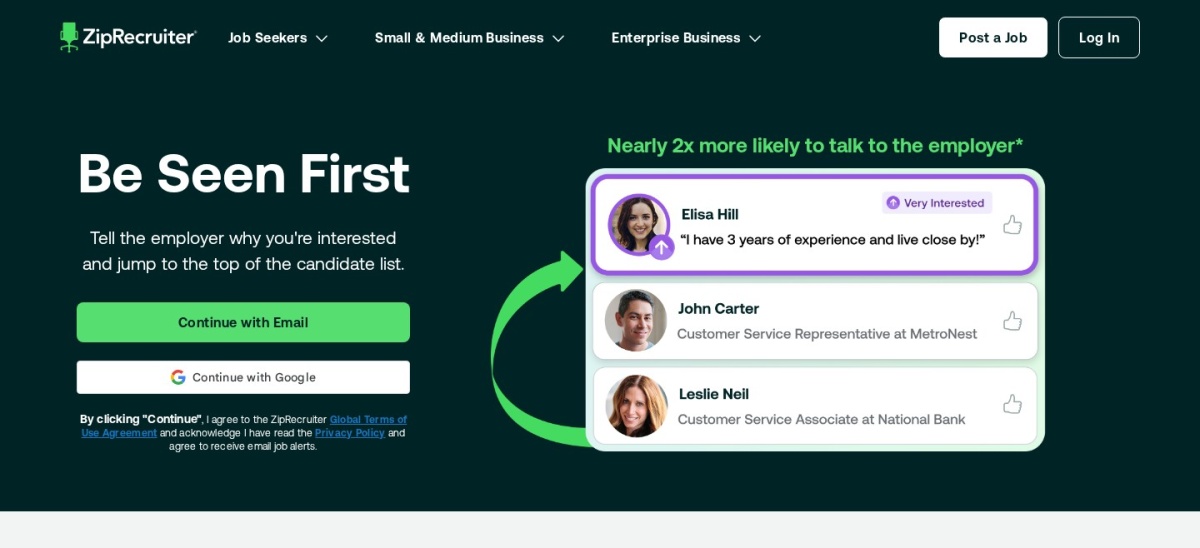
ZipRecruiter sends one post to more than 100 job sites, but its prices are not published and start around $299 a month.
LinkedIn allows one free open job at a time and is the strongest board for professional and senior roles.
Monster and CareerBuilder now sell together, with promoted posts from $8 a day, while Dice charges $399 for a 30-day tech slot.
Niche boards beat generalists for specific hires: Dice for tech, Handshake for students, Snagajob for hourly work and Wellfound for startups.
What job posting really costs
Job posting prices look simple and are not. Indeed and LinkedIn let you post free, but free posts sit below sponsored ones, and most paid options are budgets you set rather than fixed prices. A sponsored Indeed post costs whatever you choose to spend, per click or per started application.
The boards that publish fixed prices are Monster, from $8 a day for a promoted post, and Dice, at $399 for a single 30-day tech job slot. ZipRecruiter, LinkedIn and Snagajob do not publish plan prices, so the figures here are reported rates from November 2026, not vendor list prices.
Free posting still exists and matters. Indeed allows up to three free posts a month for direct employers, LinkedIn allows one free open job at a time, Handshake Basic allows unlimited free posts, and Wellfound allows unlimited free posts for startup roles.
Reach is the real price. Indeed claims more than 80 percent of United States online job seekers with Glassdoor, LinkedIn has over 1 billion members, Dice reaches 8.5 million tech professionals, and Snagajob connects 6 million hourly job seekers.
Indeed is the default first post for most United States employers, because it is where most job seekers look first. Many jobs can be posted for free, with up to three free posts a month for direct employers, and sponsoring a job buys visibility at a Standard price set by Indeed or a higher Premium price.
The trade off is volume and visibility. Free posts sit below sponsored ones, and a popular role can draw hundreds of applicants in a day, so screening tools and clear requirements matter more here than on any other board.
ZipRecruiter is a distribution board: post once and the job goes to more than 100 job sites, with AI matching that invites likely candidates to apply. It is rated 4.8 out of 5 on G2 across 1,445 reviews, the highest rating on this list, and small businesses rate it highly for ease of use.
The trade off is price transparency. ZipRecruiter publishes no plan prices, so the $299 a month figure is a reported rate rather than a vendor list price, and the free trial converts to a paid plan unless you cancel it.
LinkedIn Jobs is the default board for professional, salaried and senior roles, because candidates research companies and recruiters message them directly. One open job can be posted free at a time, and promoted posts run on a daily or total budget you choose, with $10 a day for 30 days as the vendor's own example.
The trade off is cost and cap. Free posts pause early when applications hit a cap, promoted posts add up fast at $7 to $10 a day, and Recruiter seats start around $170 a month for the Lite tier.
Monster is the veteran general board, and it now sells together with CareerBuilder, so one employer account posts to both. A promoted post starts from $8 a day on a pay as you go basis, paying only when candidates click, and Monster+ Pro costs $299 a month with 299 credits for clicks and resume views.
The trade off is the lack of a free tier. Every post costs money, and resume search on Pro costs 2 credits a view, so a small employer posting one role a month pays more here than on Indeed or LinkedIn.
Dice is the long-running board for United States tech, IT and engineering talent, with 8.5 million tech professionals and 61,000 new members a month. A single job slot costs $399 for 30 days, and Starter at $549 a month on an annual contract adds three slots and 250 candidate views.
The trade off is price and scope. There is no free tier, $399 for one slot is the priciest single post on this list, and the audience is tech only, so it is the wrong board for general hiring.
Glassdoor is the go-to channel for candidates researching employers before they apply, with company reviews, salary data and interview reports. A free employer profile includes basic company information and review management, and paid plans add branding, analytics and competitive benchmarking.
The trade off is that job posting is secondary here. Paid pricing is handled through a sales conversation with no public rate, and the reviews that draw candidates can just as easily turn them away.
Handshake is the board for students and new graduates, connecting employers with campus candidates across the United States. Basic allows unlimited free posts, promoted jobs start from $34 a day, and Pro at $450 a month adds advanced targeting and reporting.
The trade off is audience. Handshake is built for early careers, so it is the wrong board for experienced or senior hires, and the G2 evidence base is thin, with only 79 reviews behind the 4.5 rating.
Wellfound is the startup job board, formerly AngelList Talent, where unlimited job posts are free and include a built-in applicant tracking system or a sync with Greenhouse, Lever, Ashby and Workable. It says 27,000-plus companies hire on it, and job ads start at $200 per job.
The trade off is focus. Wellfound is built for startups and tech roles, so it is the wrong board for general or non-tech hiring, and free posts must show compensation, which some employers would rather not disclose.
Snagajob is the United States board for hourly work, connecting 6 million-plus hourly job seekers with 700,000 employers in restaurants, retail, hospitality and logistics. Free job posts are available, with sponsored jobs charged only when a candidate clicks Apply.
The trade off is the evidence. Snagajob is rated 3.4 out of 5 on G2 across 58 reviews, the lowest rating on this list, and its prices are not published, with $89 a job a month a reported rate rather than a list price.
Free posting is the fastest way to cut hiring costs, and four boards on this list offer it without a credit card. The limits matter more than the word free, so check them before you build a hiring plan around them.
Indeed allows up to three free posts a month for direct employers, and LinkedIn allows one free open job at a time. Free posts pause early at an application cap on LinkedIn, and they rank below sponsored posts on both boards.
Handshake Basic allows unlimited free posts for student and early-career roles, and Wellfound allows unlimited free posts for startup roles, with a compensation figure required. Both include a basic applicant tracking system.
Monster, Dice and Snagajob have no free posting tier for employers, though Snagajob offers free posts with no strict limit in some reads, with sponsored jobs charged only when a candidate clicks Apply.
How we chose
We compared platforms where an employer posts a job directly and reaches candidates, focusing on general boards and the strongest niche boards for tech, hourly, student and startup hiring. Every rating here comes from G2, checked in November 2026, and every price comes from the vendor's own pricing page or a stated starting price.
We treated a published price as stronger evidence than a reported one, and we say so where a price is reported rather than published. ZipRecruiter, LinkedIn and Snagajob do not publish plan prices, so their figures are reported rates, and Glassdoor sells paid plans by quote only.
No vendor paid for a place, and we do not claim hands-on testing for this list. Prices were checked in November 2026, and free posting limits are the vendor's own stated figures.
How to choose a job posting platform
Start free on Indeed and LinkedIn, add the niche board that matches the role, and sponsor only the posts that stall.
Post free on Indeed and LinkedIn first. Indeed allows up to three free posts a month and LinkedIn allows one free open job, so start every role there and see what the free applicants look like before spending.
Add a niche board for specialist roles. Dice reaches tech professionals, Snagajob reaches hourly workers, Handshake reaches students and Wellfound reaches startup candidates, so add the board that matches the role.
Sponsor only the roles that stall. Sponsored posts buy visibility, so pay only when a role gets few good applicants in the first week, and set a daily budget you can afford to lose.
Track where each hire came from. Ask applicants where they found the role, or use a tracking link, so you stop paying boards that send volume and no hires.
FAQ
What is the best platform for job posting?
Indeed is the best platform for most employers, because it reaches the widest audience and lets direct employers post up to three jobs a month free. ZipRecruiter is the best distribution option, sending one post to more than 100 job sites.
Can I post a job for free?
Yes, Indeed allows up to three free posts a month for direct employers, LinkedIn allows one free open job at a time, and Handshake Basic and Wellfound allow unlimited free posts. Free posts rank below sponsored ones, so they work best for roles with little competition.
How much does ZipRecruiter cost?
ZipRecruiter does not publish plan prices, so the figures are reported rates: Standard is about $299 a month per job, with Premium around $419 and Pro around $719. A free trial is available, and plans run month to month with no long commitment.
How much does Monster cost?
Monster and CareerBuilder now sell together, with a promoted post from $8 a day on a pay as you go basis, paying only when candidates click. Monster+ Pro costs $299 a month, or $2,990 a year, and adds resume search and messaging.
How much does Dice cost?
Dice charges $399 for a single job slot active for 30 days, aimed at technology roles. A Starter plan with three slots costs $549 a month on an annual contract, or $649 month to month, with 250 candidate views.
Is LinkedIn better than Indeed for hiring?
LinkedIn is better for professional and senior roles, where candidates research companies and recruiters message them directly. Indeed is better for volume hiring, with the widest reach and up to three free posts a month.
SaaS SEO and WordPress specialist with about 8 years of experience. Rakib compares WordPress plugins, themes, hosting and software using public pricing, documentation and user reviews. See how we rank.