Best Platforms for Artists in 2026: 7 Tools Compared
WLWPLegible EditorsLast verified 22 Nov 2026How we rank6 min read
★ Short answer
Squarespace is the top platform for artists overall, pairing gallery-focused templates with direct checkout and zero platform commission on commerce tiers. For built-in collector discovery without building a site first, Saatchi Art reaches active buyers on a commission model, while Big Cartel gives budget makers a free entry tier for small catalogs.
How we make this list: we compare pricing pages, product documentation and public user reviews, then re-check every price before each update. No product paid for a place. Disclosure.
Squarespace starts at $19/mo billed yearly ($228/yr) for its Basic website tier, with higher tiers unlocking full store checkout.
Pixpa starts at $8/mo on Capterra listings with integrated client galleries, print fulfillment options, and 0% sales commission.
Big Cartel offers a free tier for up to 5 products and paid plans starting at $15/mo ($144/yr billed annually) for up to 50 listings.
ArtStation offers a free portfolio tier and a Pro plan starting at $9.95/mo with higher digital marketplace revenue shares up to 95%.
Saatchi Art charges no listing subscription and takes a 40% commission on original artwork sales.
What artists need from an online platform
Choosing between a hosted website builder, a curated art marketplace, and a print-on-demand fulfillment service depends on where your buyers come from. A standalone site gives you full branding control and direct customer relationships, whereas marketplaces put work in front of existing art shoppers in exchange for commissions or subscriptions.
Fee structure matters as much as design templates. A flat monthly subscription rewards artists with repeat sales or higher-priced originals, while percentage commissions can take a large bite out of individual sales when volume is unpredictable.
Think about fulfillment and medium before committing. Painters selling one-of-a-kind canvases need clean zoomable galleries and shipping workflows, illustrators selling digital brushes or concept packs need instant file delivery, and printmakers may prefer automated production partners.
Always check whether a quoted subscription rate reflects an introductory discount or standard renewal pricing, and factor in payment processor fees or optional add-ons like custom domains and email tools.
4.6/5on Trustpilot (6,612 reviews, checked Nov 2026)
Starts at$19/mo
Best for visual portfolios and direct sales
Entry planBasic ($19/mo yearly)
Monthly rate$25/mo on Basic
EditorFluid Engine drag-and-drop
SSL & hostingIncluded
squarespace.com
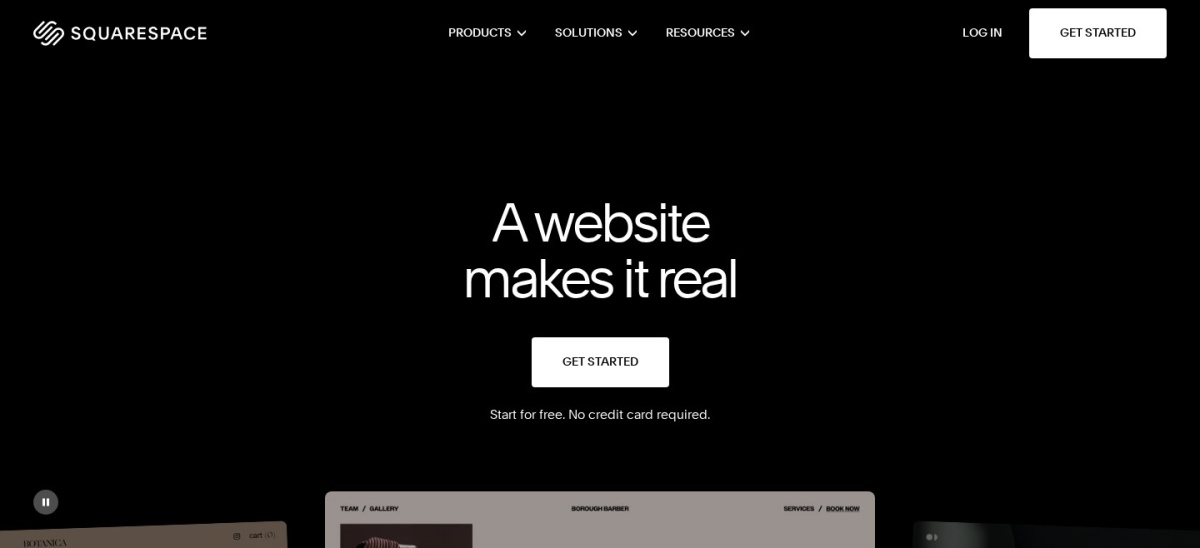
Squarespace homepage, captured Nov 2026.
Squarespace is a hosted website builder known for clean visual layouts, custom CSS styling, and built-in blogging or video hosting. Its Basic plan starts at $19/mo billed yearly ($228/yr) or $25/mo billed monthly, with 30 minutes of video hosting and up to 2 contributors.
The trade off is that Basic does not include full online store checkout, so selling artwork directly requires stepping up to higher tiers starting at $29/mo billed yearly ($348/yr). It suits artists who want a cohesive personal brand site with room to add store checkout as sales grow.
What we like
Polished, image-led templates suited to visual work
Includes SSL, hosting, and basic SEO tools
Supports custom CSS edits and embed blocks
24/7 customer support across plans
Watch out for
Basic tier lacks full storefront checkout
Higher yearly cost than niche artist builders
No free permanent plan
Higher plans unlock store checkout, expanded video hosting, and unlimited contributors.Visit squarespace.com
02
Pixpa
4.6/5on Trustpilot (452 reviews, checked Nov 2026)
Starts at$8/mo
Best for portfolios, prints, and client galleries
Starting rate$8/mo (Basic)
Commission0% platform fee
Client galleriesIncluded on plans
Free trial15-day trial
pixpa.com
Pixpa homepage, captured Nov 2026.
Pixpa is an all-in-one website builder tailored to artists, photographers, and creatives who want portfolios, client galleries, and store tools in one place. Plans start at $8/mo on Capterra pricing listings and include a 15-day free trial with no credit card required.
The trade off is that entry-level product allowances are capped, so selling larger catalogs or getting higher storage requires moving up to Creator, Professional, or Advanced plans. It suits artists who want built-in client proofing and print-selling features without juggling separate plugins.
What we like
Zero commission taken on store sales
Combines portfolios, blogs, client galleries, and store tools
Includes print-lab fulfillment options and digital downloads
Affordable entry pricing compared to general builders
Watch out for
Lower tiers limit gallery image counts and store products
Promotional discount terms apply on multi-year signups
Fewer third-party apps than major commerce platforms
Big Cartel is a lightweight online storefront built for artists and makers, offering a free plan for up to 5 products with no platform transaction fees. Its paid Platinum plan starts at $15/mo ($144/yr billed annually) for up to 50 products and custom domain support.
The trade off is that it skips complex store extras like native abandoned-cart recovery or built-in blogging, which are reserved for higher tiers or external tools. It suits independent artists selling limited editions, prints, or small drops who prefer simplicity over heavy retail features.
What we like
Free plan lets artists start with up to 5 listings
No extra platform commission beyond payment processor fees
Straightforward setup built specifically for independent makers
Supports custom domains and print-on-demand connections
Watch out for
Product caps restrict large catalogs (5, 50, or 500 items)
Lacks built-in email marketing and native blogging
Fewer advanced merchandising features than Shopify
Platinum ($15/mo) and Diamond ($30/mo) raise product caps and add drop scheduling and cart recovery.Visit bigcartel.com
04
ArtStation
4.5/5on G2 (40 reviews, checked Nov 2026)
PriceFree
Best for digital, concept, and 3D artists
Free tierPortfolio + marketplace
Pro planFrom $9.95/mo
Studio planFrom $29.99/mo
Asset revenueUp to 95% on Pro
artstation.com
ArtStation homepage, captured Nov 2026.
ArtStation is a portfolio and marketplace platform centered on digital illustration, concept art, 3D models, and game or film assets. Its free plan lets artists host a portfolio site and sell digital products on the marketplace with revenue shares starting up to 88%.
The trade off is that its audience and layout skew heavily toward entertainment and digital production rather than fine-art wall collectors. It suits digital artists, 3D modelers, and illustrators selling brushes, tutorials, or assets to fellow creators.
What we like
Free tier includes a portfolio page and marketplace selling
Strong community visibility among game, film, and digital artists
Pro plan raises digital marketplace revenue share up to 95%
Includes learning resources on the Pro tier
Watch out for
Less suited to selling physical fine art or traditional paintings
Pro subscription ($9.95/mo) adds recurring cost for top search placement
Marketplace rules and account ties require careful review
Pro ($9.95/mo) boosts search visibility, unlocks up to 95% marketplace revenue, and adds learning access.Visit artstation.com
05
Shopify
4.4/5on G2 (4,500 reviews, checked Nov 2026)
Starts at$29/mo
Best for scaling high-volume art stores
Entry planBasic ($29/mo yearly)
Monthly rate$39/mo on Basic
Product limitUnlimited listings
App ecosystemExtensive add-ons
shopify.com
Shopify homepage, captured Nov 2026.
Shopify is a full commerce platform with checkout, inventory tracking, shipping tools, and a large app ecosystem for stores scaling beyond basic portfolios. Its Basic plan costs $29/mo billed yearly ($348/yr) or $39/mo billed monthly after trial terms.
The trade off is higher ongoing subscription and payment processing costs, plus extra fees if you use third-party payment gateways instead of Shopify Payments. It suits artists running established stores with frequent releases, prints, and merchandise across multiple channels.
What we like
Built for high-volume checkout, inventory, and order management
Connects easily with print-on-demand apps and sales channels
Unlimited products on standard store plans
Strong multi-channel and international selling tools
Watch out for
More complex and costly than simple artist portfolio sites
Card processing and third-party gateway fees add to costs
Basic plan allows zero extra staff accounts
Grow ($79/mo yearly) and Advanced ($299/mo yearly) add staff accounts, lower card rates, and expanded reporting.Visit shopify.com
06
Printful
4.6/5on Trustpilot (8,000 reviews, checked Nov 2026)
PriceFree
Best for print-on-demand apparel and merch
Base planFree to join
Growth plan$24.99/mo
InventoryPrint on demand
IntegrationsStorefronts & marketplaces
printful.com
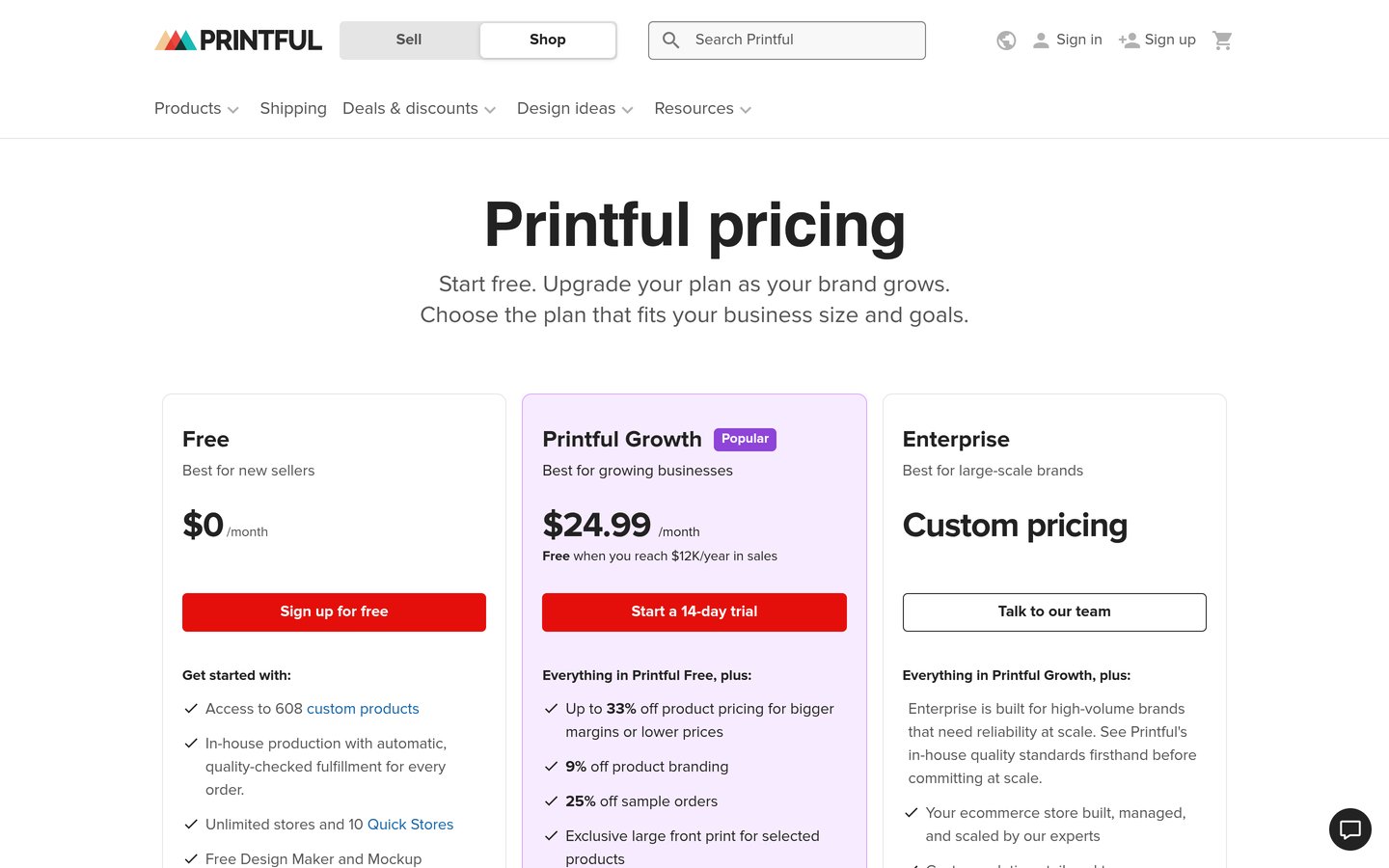
Printful homepage, captured Nov 2026.
Printful is a print-on-demand fulfillment service that prints artwork onto posters, canvas, apparel, and home goods and ships orders directly to buyers. Joining is free with no monthly base fee, while you pay production and shipping costs only when an order places.
The trade off is lower per-item margins on standard rates and separate shipping charges that can affect final buyer pricing. It suits artists who want to sell prints and merchandise without holding inventory or packing boxes themselves.
What we like
Free base account with no upfront inventory purchase required
Handles production, packaging, and order fulfillment
Syncs with major commerce platforms and marketplaces
Includes a design maker and mockup tools
Watch out for
Unit base costs and shipping reduce margins on small orders
Requires pairing with a storefront or marketplace to sell
Sample orders and extra placements carry separate charges
Growth ($24.99/mo, or waived at $12k annual sales) adds up to 33% off product pricing and branding discounts.Visit printful.com
07
Saatchi Art
4.6/5on Trustpilot (11,000 reviews, checked Nov 2026)
PriceFree
Best for reaching global original-art buyers
Listing fee$0 subscription
Original cut40% commission
ExclusivityNon-exclusive
Return window14-day buyer return
saatchiart.com
Saatchi Art homepage, captured Nov 2026.
Saatchi Art is an online art marketplace where artists list original paintings, drawings, photography, and sculptures for global buyers without paying a subscription fee. Artists keep 60% of original sales after Saatchi Art's 40% commission, with no exclusivity lock-in.
The trade off is a steep 40% commission on originals and a payout timeline that waits past delivery and return windows. It suits painters and sculptors seeking outside collector traffic who want to test demand before building a standalone site.
What we like
No monthly listing or subscription fee to publish work
Built-in collector audience searching for original art
Non-exclusive terms allow selling on other channels too
Platform coordinates shipping and buyer return policies
Watch out for
40% commission significantly reduces take-home pay per piece
Payouts take weeks after delivery and return review
Less brand ownership than a self-hosted artist website
Operates on per-sale commission rather than a recurring subscription plan.Visit saatchiart.com
Should you build your own site or join a marketplace?
An artist website puts your portfolio, story, and checkout under your own domain, letting you keep a larger share of repeat sales and build a direct mailing list. The catch is that you must drive visitors through social media, exhibitions, search, or word of mouth.
Marketplaces already attract art buyers, making discovery easier when you are starting out or selling higher-priced originals to new collectors. However, high commission rates and platform rules mean many working artists run a main website alongside one or two secondary channels.
How we chose
This list focuses on established platforms that artists use to showcase portfolios, sell original work or digital files, and fulfill prints or merchandise online.
All pricing, commission details, and review figures were checked on 22 Nov 2026 from vendor pricing pages and public review directories such as Trustpilot and G2.
Platforms with unverified pricing, unclear active status, or poor fit for standalone artist workflows were left out so every entry reflects current public terms.
No vendor paid for a place, and we do not claim testing for this list.
How to pick the right platform for your art
Follow these four steps to narrow down a platform before you publish your catalog:
Match the platform to what you actually sell. Decide whether you focus on one-of-a-kind physical pieces, open or limited prints, digital downloads, or branded merchandise.
Calculate your net take-home after all fees. Compare monthly subscriptions against commission splits, payment processing charges, and shipping or print production costs.
Check catalog and storage limits against your body of work. Verify how many artworks, high-resolution images, video minutes, or store products each plan allows before upgrading.
Test the editing and buying flow with a trial or free tier. Use a free plan or trial period to check how galleries look on mobile screens and how smoothly buyers complete checkout.
FAQ
What is the cheapest way for an artist to start selling online?
Starting on a free tier such as Big Cartel for up to 5 products or Printful with pay-per-order fulfillment keeps upfront software costs at zero. Payment processing fees still apply on sales, and upgrading later adds custom domains or higher item limits.
Do I need a website if I already sell on an art marketplace?
Many artists use both so marketplaces bring in new buyers while a personal site anchors their brand and direct collector relationships. Having your own site also avoids paying marketplace commissions on repeat buyers you bring in yourself.
Why do marketplace commissions often run higher than website plans?
Marketplaces fund buyer discovery, curation, and checkout infrastructure out of transaction commissions, whereas website builders charge a flat subscription. Flat plans usually cost less once you make steady sales, while commission models carry lower fixed risk early on.
How should artists handle prints without holding inventory?
Print-on-demand platforms print and ship items only after a customer orders, removing upfront stock and packaging work. Ordering sample prints first is smart so you can check paper weight, framing, and color accuracy.
What hidden costs should artists watch for on website plans?
Watch for promotional renewal rates after the first term, custom domain renewals, email marketing add-ons, and payment processing fees. Some platforms also charge extra fees if you connect third-party payment gateways.
Is ArtStation good for traditional fine artists?
ArtStation is strongest for digital illustrators, concept artists, and 3D creators rather than traditional fine-art collectors shopping for paintings. Fine artists typically get a better fit from visual portfolio builders or fine-art marketplaces.