Khan Academy is the best platform to learn SQL for free, with a full intro course and practice at no cost. DataCamp is the best paid route for interactive practice, while Codecademy suits learners who want a guided path.
How we make this list: we compare pricing pages, product documentation and public user reviews, then re-check every price before each update. No product paid for a place. Disclosure.
Khan Academy is the only platform here that is fully free, with a full SQL course and practice built in.
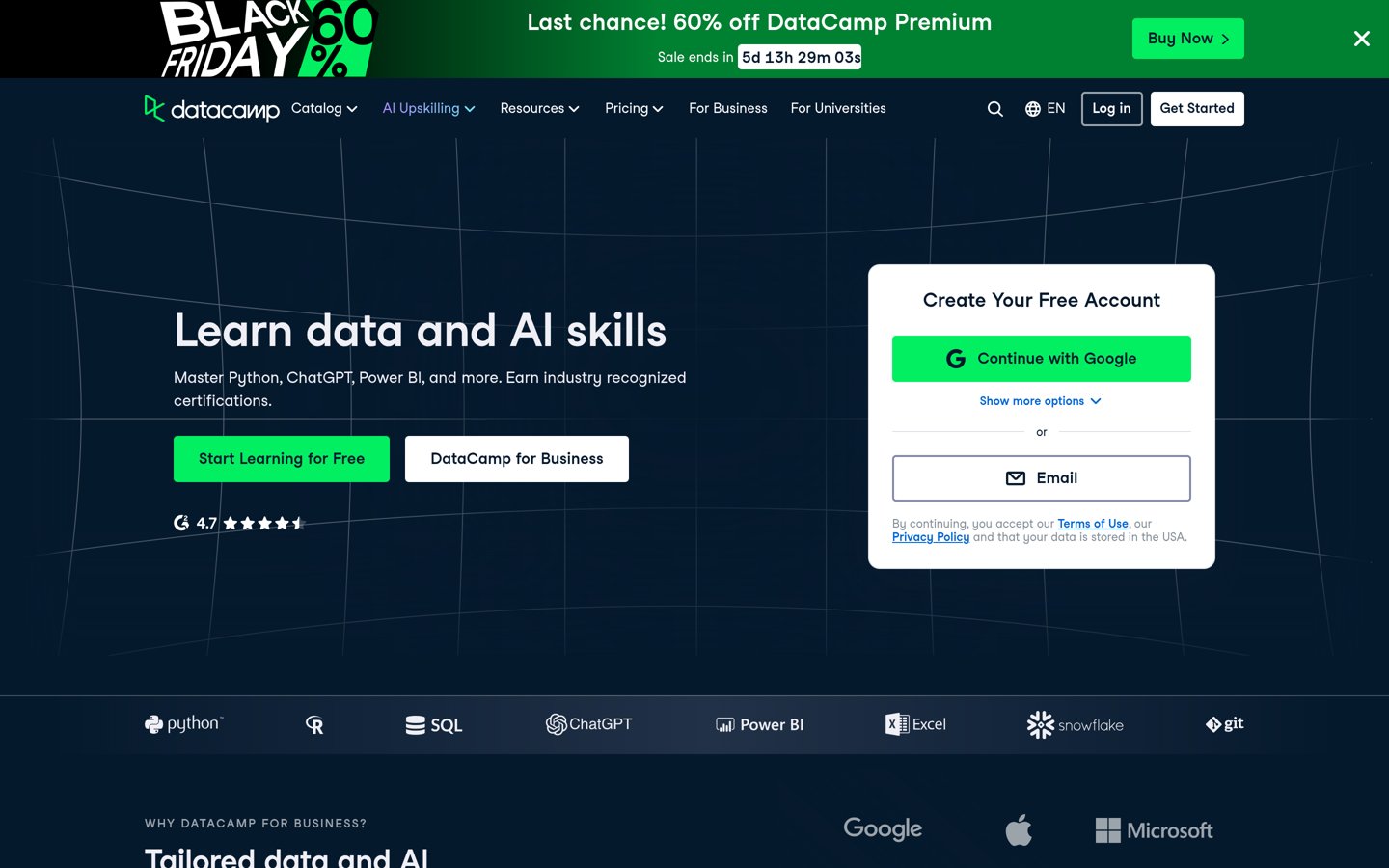
DataCamp leads on interactive practice, with a free first chapter and Premium from $25 a month.
Codecademy, Coursera and edX all let you audit or learn free, with certificates and full access behind a paywall.
Udemy Business and Pluralsight suit teams, with individual plans from $20 and $21 a month.
SQLZoo and SQLBolt are free and popular, but neither has a verifiable G2 rating, so they are not listed.
How to learn SQL for free in 2026
SQL is the most widely used language for working with data, and every platform here teaches it through real queries against real datasets. The free tier is the question, not the course list.
Free means different things here. Khan Academy is fully free, while DataCamp, Codecademy, Coursera and edX let you learn free but charge for certificates, graded work and full access.
Interactive practice matters more than video length. Platforms that run your queries in the browser and grade them teach faster than lecture-only courses. Our guide on online course platforms covers the same platforms from the course angle.
The best fit depends on your goal. Casual learners should start free, while job seekers should weigh a certificate and a portfolio of queries.
DataCamp is the best platform to learn SQL through interactive practice, with courses that run your queries in the browser and grade them instantly. The first chapter is free, with Premium from $25 a month billed annually for full access.
The trade off is that the free tier is a taster, and the full catalogue needs Premium. It suits learners who want interactive SQL practice rather than lectures.
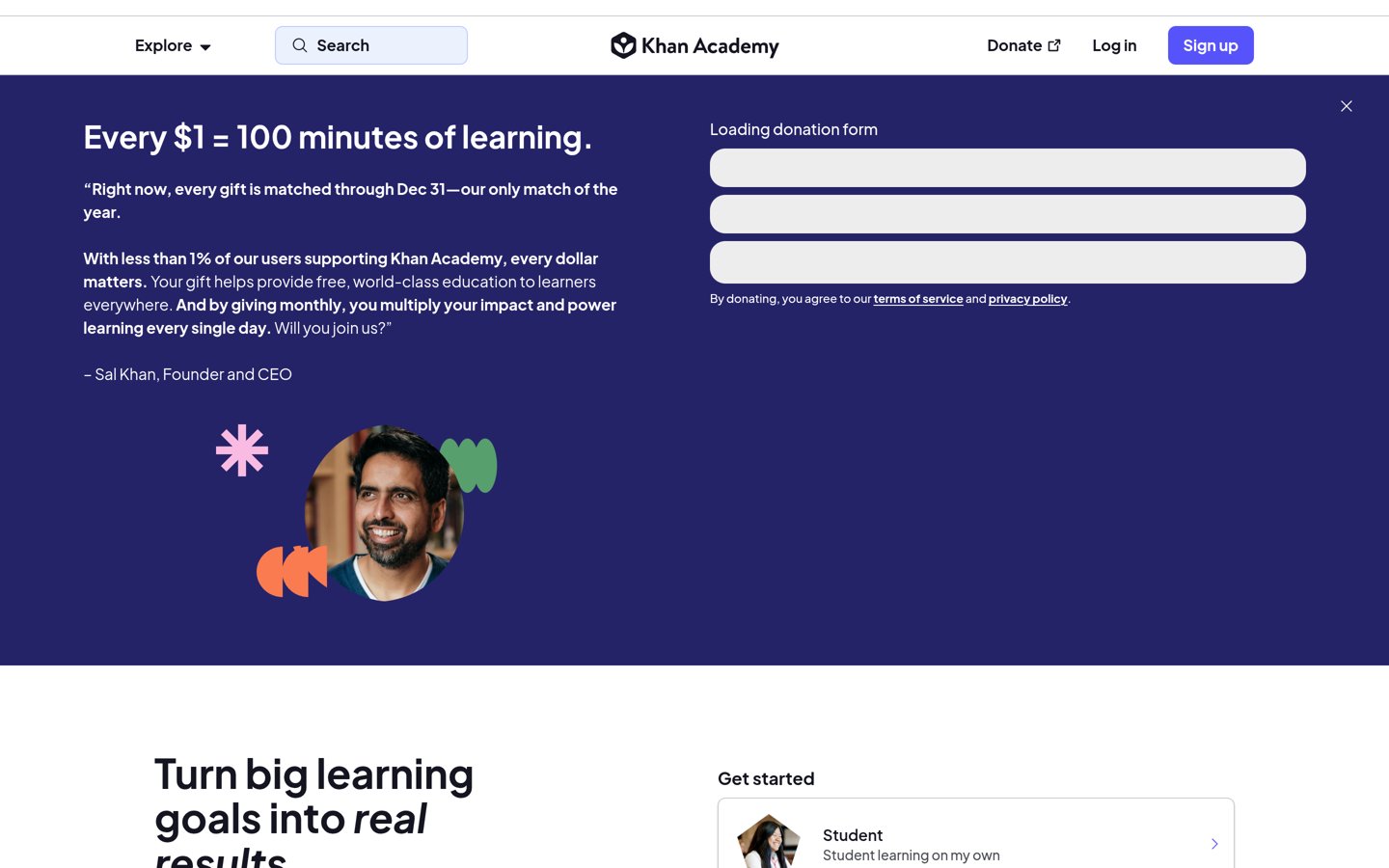
Khan Academy is the only platform here that is fully free, with a complete intro to SQL course and interactive practice built in. There is no paywall, no trial and no certificate upsell, just a course funded by donations.
The trade off is depth. Khan Academy covers intro SQL well but stops there, so learners outgrow it toward DataCamp or Codecademy. It suits casual learners and students who want SQL for free.
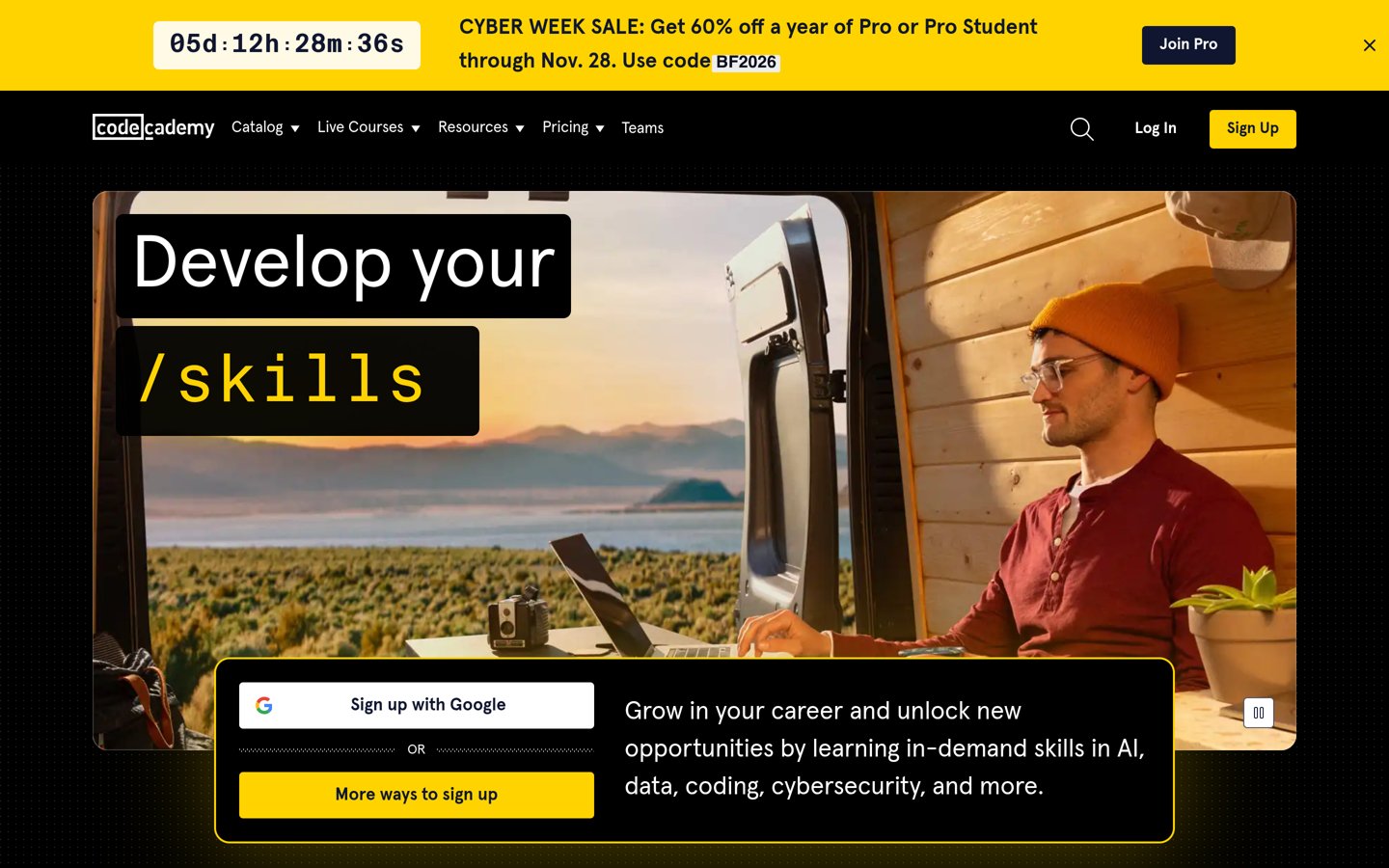
Codecademy is a learning platform with a structured path from a first query to job-ready SQL, with interactive lessons that run in the browser. Basic courses are free, with Pro at $179.88 a year for full access, certificates and career paths.
The trade off is that the free tier is limited, and Pro is the real product. It suits learners who want a guided path rather than a single course.
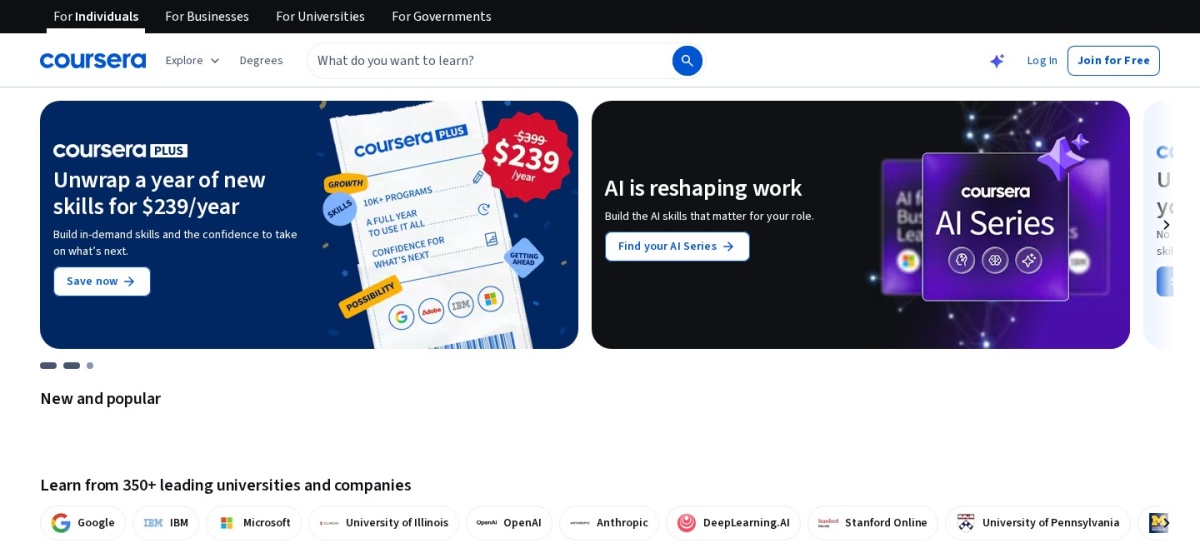
Coursera is a learning platform with SQL courses from Duke, Michigan and IBM, with free auditing for most courses and certificates behind paid enrolment. Coursera Plus costs $59 a month for unlimited access to most courses and certificates.
The trade off is that auditing is lecture-only, with graded work and certificates behind the paywall. It suits learners who want a university name on their SQL certificate.
Udemy Business is a course marketplace with thousands of SQL courses from many authors, with a Personal plan from $20 a month for individual learners and team plans for organisations. Free courses exist, and paid courses include a certificate on completion.
The trade off is quality variance. Courses come from many authors, so quality varies, and the best courses are the paid ones. It suits teams and self-learners who want breadth.
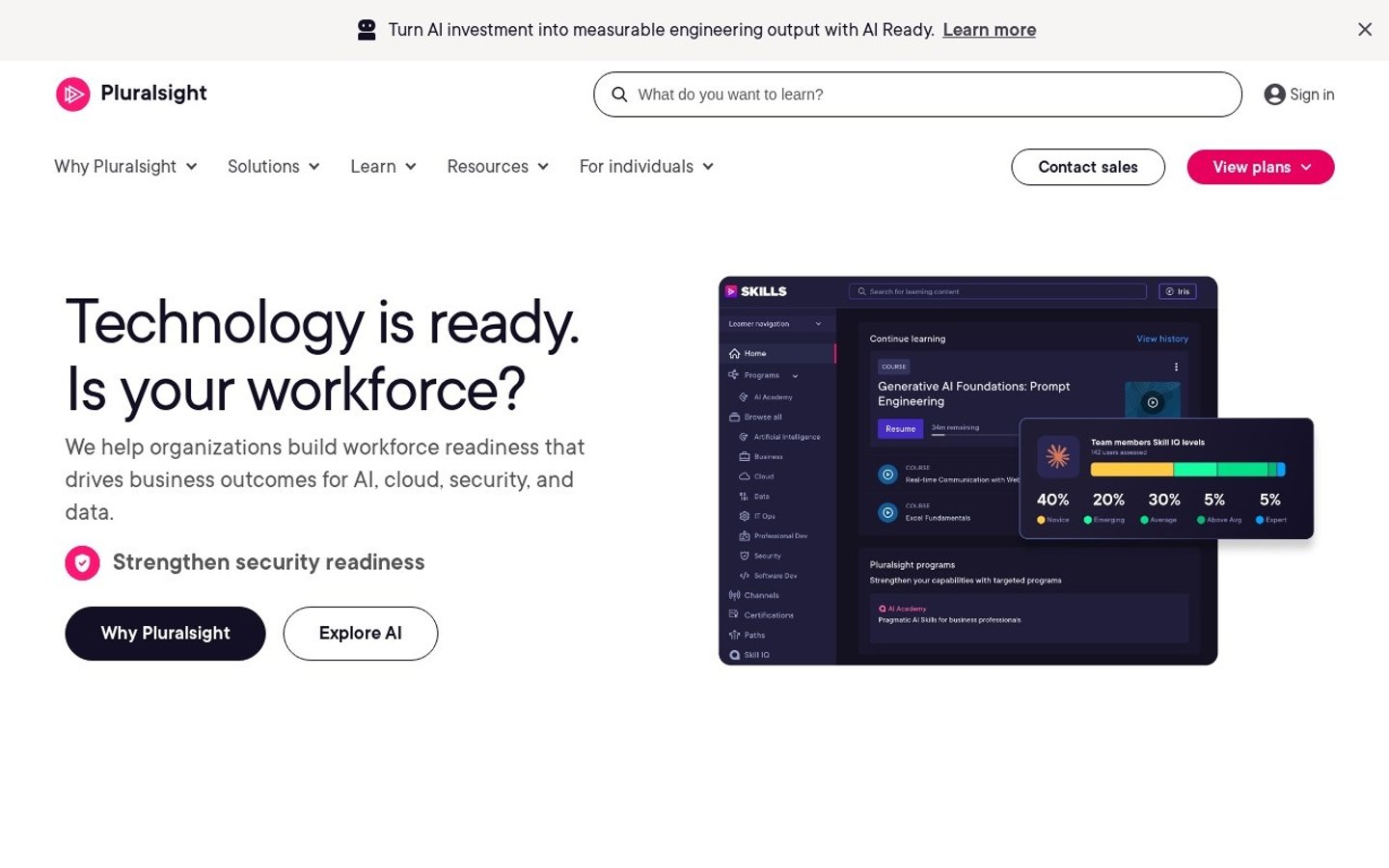
Pluralsight is a learning platform with structured SQL skill paths and assessments that measure where you stand, then a path to close the gaps. Standard costs $21 a month billed annually, with a 10-day trial to test it.
The trade off is that there is no free tier, only a trial, and the catalogue leans developer-focused. It suits developers who want a measured path to SQL fluency.
LinkedIn Learning is a course library with dozens of SQL courses, with certificates that show on your LinkedIn profile. It costs $19.99 a month billed annually, with a one-month trial to test it.
The trade off is that there is no free tier, only a trial, and the catalogue is broad rather than deep on SQL. It suits professionals who want SQL skills visible on LinkedIn.
4.4/5on G2 (Not published reviews, checked Nov 2026)
PriceFree
Best for free university SQL courses
Free planYes, audit free
Cheapest paid planNone, pay per course
SQL coursesFrom Harvard, MIT and more
CertificatesYes, with paid enrolment
edx.org
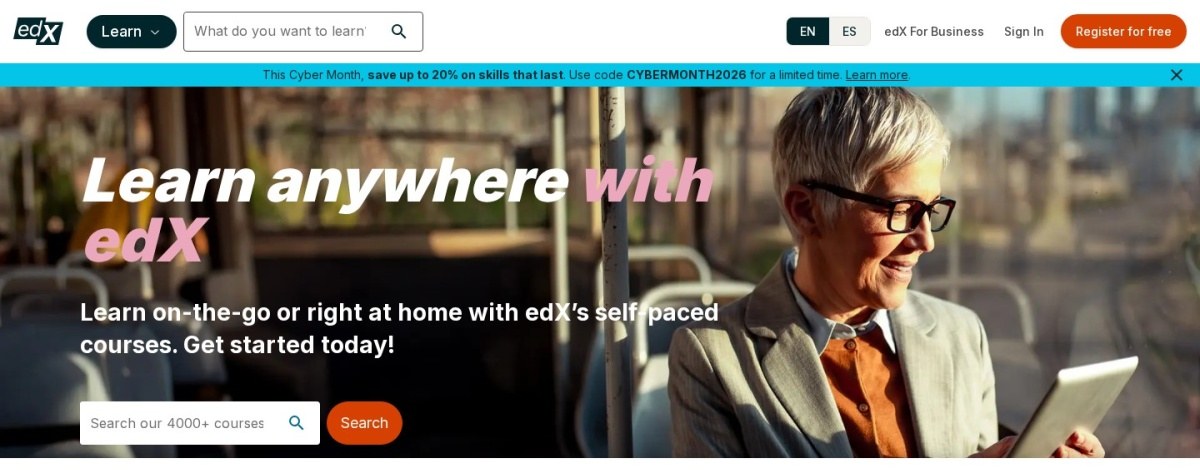
edX homepage, captured Nov 2026.
edX is a learning platform with SQL courses from Harvard, MIT and other universities, with free auditing for most courses and certificates behind paid enrolment. There is no subscription, so learners pay per course only when they want a certificate.
The trade off is that auditing is lecture-only, with graded work and certificates behind the paywall. It suits learners who want a university name on their SQL learning.
What we like
University courses from Harvard and MIT
Free auditing
Pay per course, no subscription
Watch out for
Auditing is lecture-only
No subscription for unlimited access
Verified certificates cost $50 to $300 per courseVisit edx.org
How we chose
We started from the best-known learning platforms, then kept those with a verifiable G2 rating and a free tier or trial.
Prices come from each vendor's pricing page, checked on 26 November 2026. Ratings and review counts come from G2 on the same day. Free tiers are labelled by what they actually include.
We left out SQLZoo, SQLBolt, Kaggle, SoloLearn and W3Schools, which have no verifiable G2 rating. No vendor paid for a place, and we do not claim hands-on testing for this list.
How to choose a platform to learn SQL
Start free, then pay only for what the free tier does not cover.
Start with the free tier. Khan Academy is fully free, and DataCamp and Codecademy let you try before you pay.
Check what the free tier includes. Auditing is lecture-only on Coursera and edX, while DataCamp grades your queries free.
Decide if you need a certificate. Certificates need paid enrolment on most platforms, so weigh the cost against the job goal.
Practice daily with real queries. Interactive practice beats lectures, so pick a platform that grades your queries.
FAQ
What is the best platform to learn SQL for free?
Khan Academy is the best platform to learn SQL for free, with a full intro course and interactive practice at no cost. DataCamp is the best paid route for interactive practice, while Codecademy suits learners who want a guided path.
Can I learn SQL completely for free?
Yes. Khan Academy offers a full intro SQL course free, and SQLZoo and SQLBolt are free practice sites. Coursera and edX let you audit university courses free, though certificates and graded work need paid enrolment.
How long does it take to learn SQL?
Most learners reach basic fluency in 2 to 4 weeks of daily practice, with a few hours a week. Job-ready SQL, with joins, window functions and optimisation, typically takes 2 to 3 months of regular practice.
Is DataCamp free?
DataCamp offers a free first chapter for most courses, with full access behind Premium at $25 a month billed annually. The free tier is a taster, not a full course, so most learners upgrade for the full catalogue.
Is Codecademy free for SQL?
Codecademy offers basic SQL courses free, with full access, certificates and career paths behind Pro at $179.88 a year. The free tier covers the basics, while Pro adds the guided path and certificate.
Do I need a certificate to get a SQL job?
No. Employers care more about a portfolio of queries and real projects than a certificate. A certificate helps, but a GitHub portfolio with SQL projects and a strong interview performance matters more.
SaaS SEO and WordPress specialist with about 8 years of experience. Rakib compares WordPress plugins, themes, hosting and software using public pricing, documentation and user reviews. See how we rank.