Best Platform to Create Ecommerce Website in 2026: 9 Tools Compared
WLWPLegible EditorsLast verified 23 Nov 2026How we rank11 min read
★ Short answer
Shopify is the best platform to create an ecommerce website for most sellers, with a hosted store, a huge app store and a 4.4/5 G2 rating from 5,129 reviews. Pick WooCommerce for full control on WordPress, or BigCommerce if you expect high sales volume.
How we make this list: we compare pricing pages, product documentation and public user reviews, then re-check every price before each update. No product paid for a place. Disclosure.
Shopify Basic costs $29 a month billed yearly, and its G2 rating is 4.4/5 from 5,129 reviews.
WooCommerce is free and powers 7M+ WordPress sites, but you pay for hosting and extensions.
BigCommerce Core also starts at $29 a month billed yearly, with no platform transaction fee on its own checkout.
Ecwid's cheapest paid plan is $5 a month for 10 products, the lowest paid entry in this list.
Square Online and Big Cartel both let you start selling for $0 a month, with card fees on each sale.
What to look for in an ecommerce platform
Most online stores fail on cost, not on design. A plan that looks cheap can turn costly once card fees, paid apps and themes are added, so compare the full monthly stack, not just the headline price.
Start with how you sell. A hosted platform such as Shopify runs the store for you, while WooCommerce and PrestaShop hand you the code and the hosting bill. Our guide to the best ecommerce platforms for beginners covers the same choice from a first-store angle.
Check the sales limits before you sign up. BigCommerce Core caps trailing 12-month sales at $30,000 and moves you up a plan, while Ecwid Starter holds only 10 products.
Free plans are real, but they are narrow. Square Online lets you sell for $0 a month, and Big Cartel lists 5 products free, yet both charge card fees and hold back features that paid plans include.
The 9 best platforms to create an ecommerce website
01
Shopify
4.4/5on G2 (5,129 reviews, checked Nov 2026)
Starts at$29/mo
Best ecommerce platform overall
Free trial3 days, then $1/mo for 3 months
Transaction fee2% off Shopify Payments
ProductsUnlimited
Paid planBasic, $29/mo billed yearly
shopify.com
Shopify homepage, captured Nov 2026.
Shopify is the most widely used hosted ecommerce platform, with a store builder, checkout, payments and inventory in one dashboard. The Basic plan costs $29 a month billed yearly and includes unlimited products, discount codes, abandoned checkout recovery and 24/7 support. Its app store adds thousands of extras for shipping, marketing and accounting.
The trade off is cost creep. Paid apps, themes and higher card fees on cheaper plans add up, and Basic charges a 2% fee when you use a payment provider other than Shopify Payments. It suits sellers who want a store running fast without touching hosting or code.
What we like
Hosted store with checkout, payments and inventory included
Largest app store of any ecommerce platform
Unlimited products on every plan
Watch out for
Paid apps and themes push the real monthly cost up
2% fee on Basic when you skip Shopify Payments
Grow and Advanced add lower card rates and more staff accountsVisit shopify.com
02
WooCommerce
4.5/5on WordPress.org (4,834 reviews, checked Nov 2026)
PriceFree
Best for WordPress stores that want control
Core pluginFree, open source
HostingYou arrange it
Payment fee2.9% + 30¢ on WooPayments
Paid extensionsFrom $29/yr each
woocommerce.com
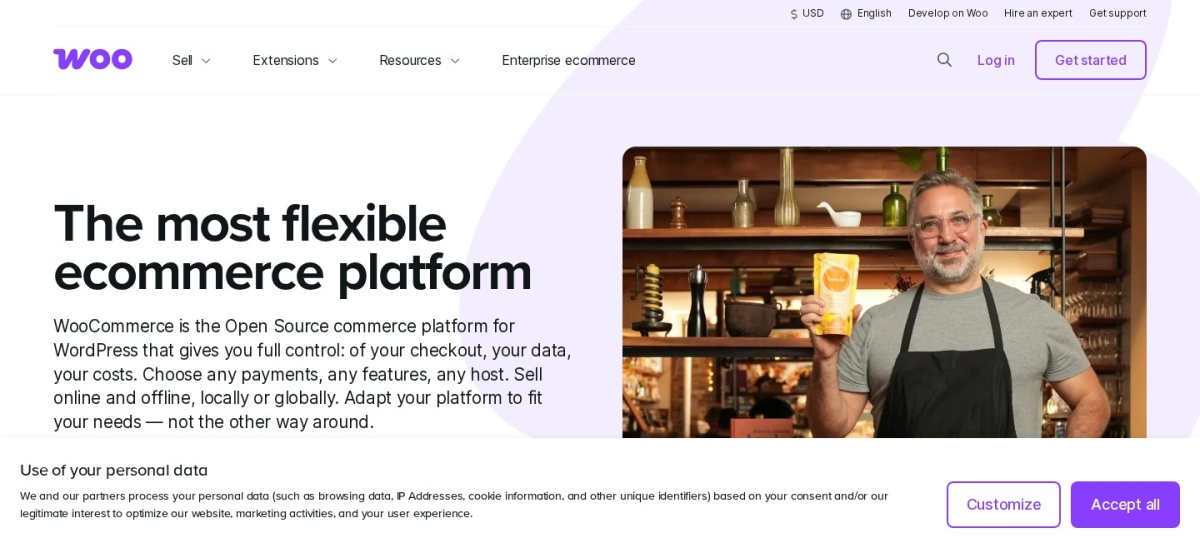
WooCommerce homepage, captured Nov 2026.
WooCommerce is a free, open-source plugin that turns a WordPress site into a full store, with more than 7 million active installs. The core plugin costs nothing and covers products, checkout, coupons, taxes and shipping, with WooPayments for card payments. Hundreds of extensions add subscriptions, bookings and memberships.
The trade off is the work it leaves you. You arrange hosting, updates, backups and security, and paid extensions cost $29 to $299 a year each, so a full-featured store is not free for long. It suits WordPress site owners who want full control of their store and data.
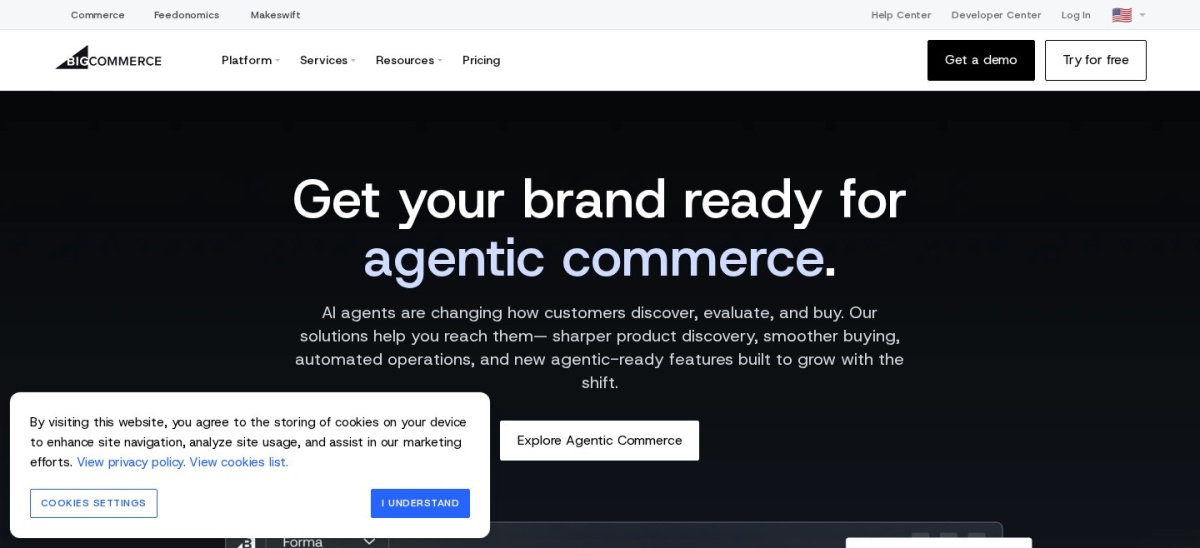
BigCommerce is a hosted platform built for stores that expect to grow, with no platform transaction fee on its own checkout. Core costs $29 a month billed yearly and includes unlimited products, unlimited staff accounts, multi-channel selling and a 15-day free trial. It also supports B2B features such as customer groups and price lists.
The trade off is the sales cap. Core covers up to $30,000 in trailing 12-month sales, then BigCommerce moves you to Growth at $79 a month billed yearly. It suits sellers with large catalogs or B2B plans who want built-in features instead of a stack of paid apps.
Wix is a drag-and-drop builder that adds selling to a polished website, with templates, hosting and payments in one place. The Core plan costs $29 a month billed yearly and includes basic ecommerce, payments, 50 GB of storage and up to 50,000 products. A free plan lets you build, but you cannot take payments on it.
The trade off is scale. Wix suits small catalogs and design-led stores, but large stores miss the deeper inventory, B2B and multi-store tools that Shopify and BigCommerce include. It suits creators and small brands that want a good-looking store without learning a new system.
What we like
Easy drag-and-drop editor with strong templates
Selling, hosting and payments in one place
Free plan to build before you pay
Watch out for
Thinner inventory and B2B tools than Shopify
Free plan cannot take payments
Business adds subscriptions and abandoned cart recoveryVisit wix.com
05
Squarespace
4.4/5on G2 (1,136 reviews, checked Nov 2026)
Starts at$28/mo
Best for design-led small stores
Free trialYes
Transaction fee0% on Commerce plans
Paid planCommerce Basic, $28/mo billed yearly
TemplatesDesign-led templates
squarespace.com
Squarespace homepage, captured Nov 2026.
Squarespace is a website builder known for its templates, with selling built into every paid plan. Commerce Basic costs $28 a month billed yearly and charges no transaction fee, with unlimited products, customer accounts and checkout on your own domain. It also includes email campaigns and basic analytics.
The trade off is depth. Squarespace covers the basics well, but its app market and shipping options are thinner than Shopify's, and multi-currency selling is limited. It suits small stores and service businesses where design matters as much as the checkout.
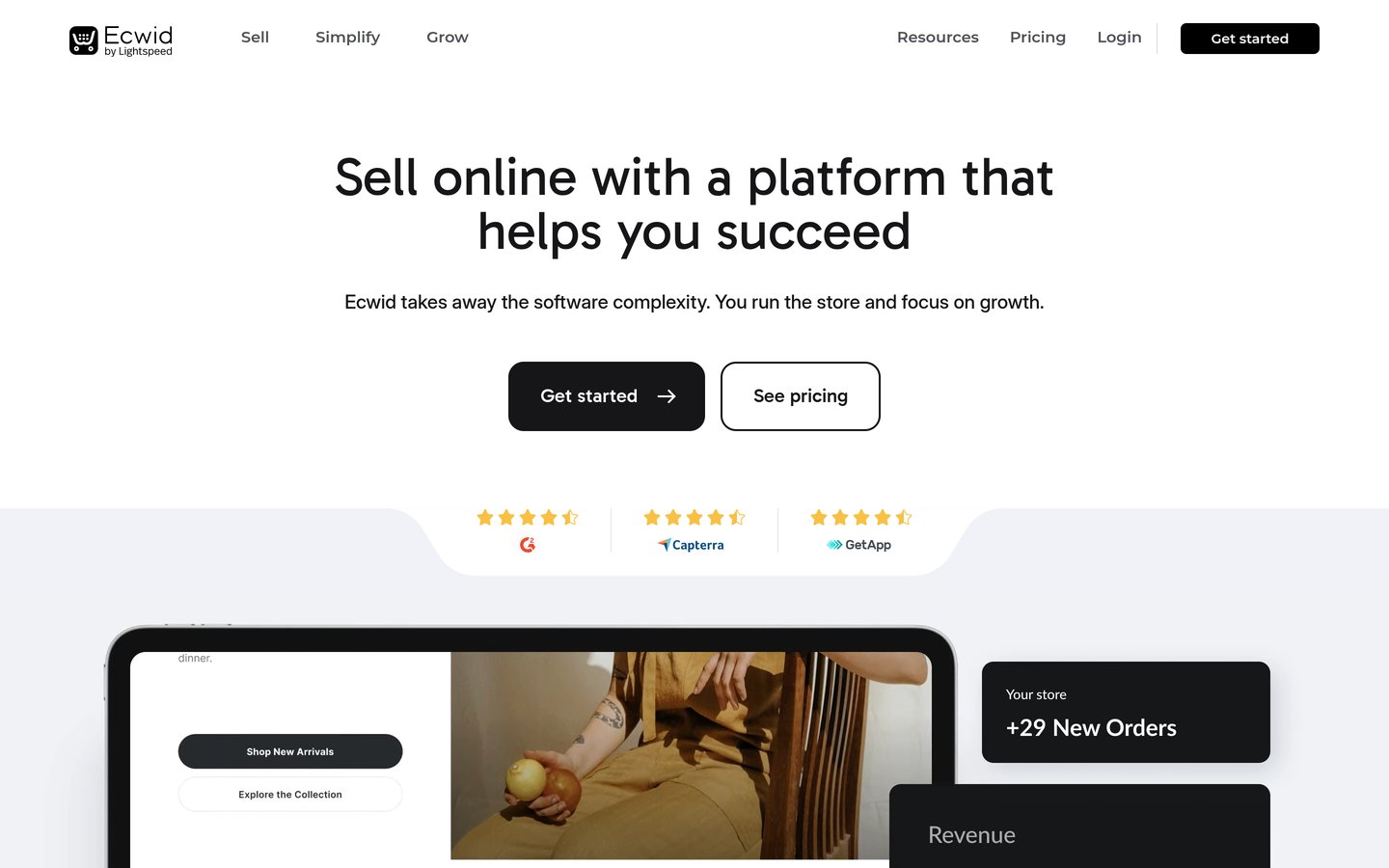
Ecwid is a store you add to a website you already have, instead of rebuilding on a new platform. The Starter plan costs $5 a month for up to 10 products, with a mobile app, discount coupons and a custom domain. It charges no transaction fee of its own, so you only pay your payment provider.
The trade off is the product cap. Starter holds only 10 products, so a growing catalog needs Venture at $29 a month billed yearly, and Ecwid ended its free plan in 2025. It suits bloggers and small businesses that want to sell from a site they already run.
Square Online is the online store for Square sellers, sharing one catalog and inventory with Square point of sale. The Free plan costs $0 a month and includes a site builder, pickup, local delivery and shipping, with online card payments at 3.3% plus 30 cents. A sale in your shop updates the website stock at once.
The trade off is the card rate and the paid jump. Free charges a higher card rate than paid plans, and Plus costs $49 a month per location, which is steep for a small shop. It suits sellers who already take payments with Square and want the online and in-person stock to stay in step.
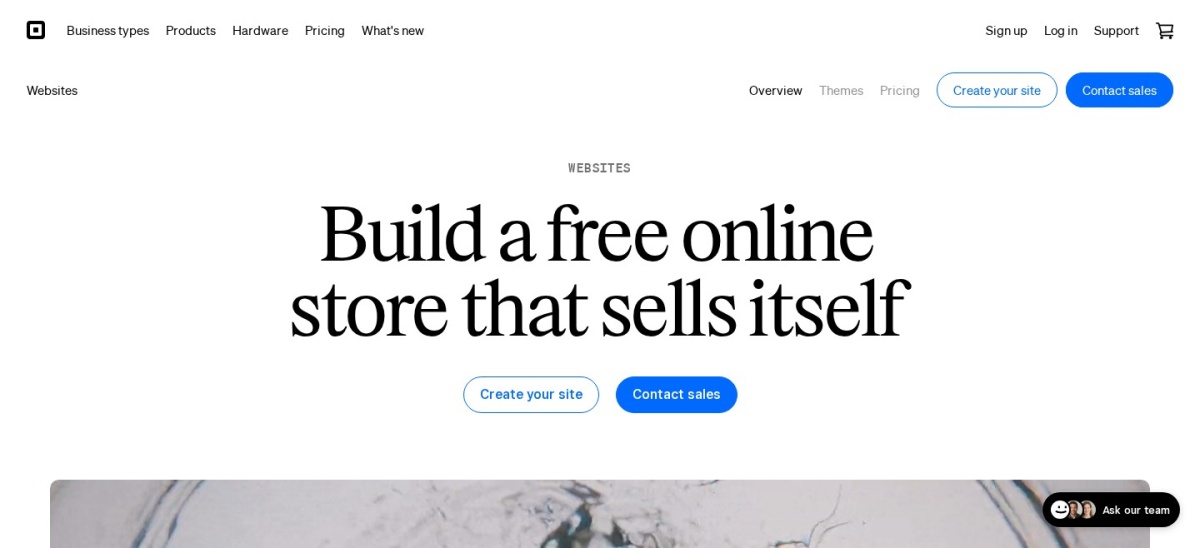
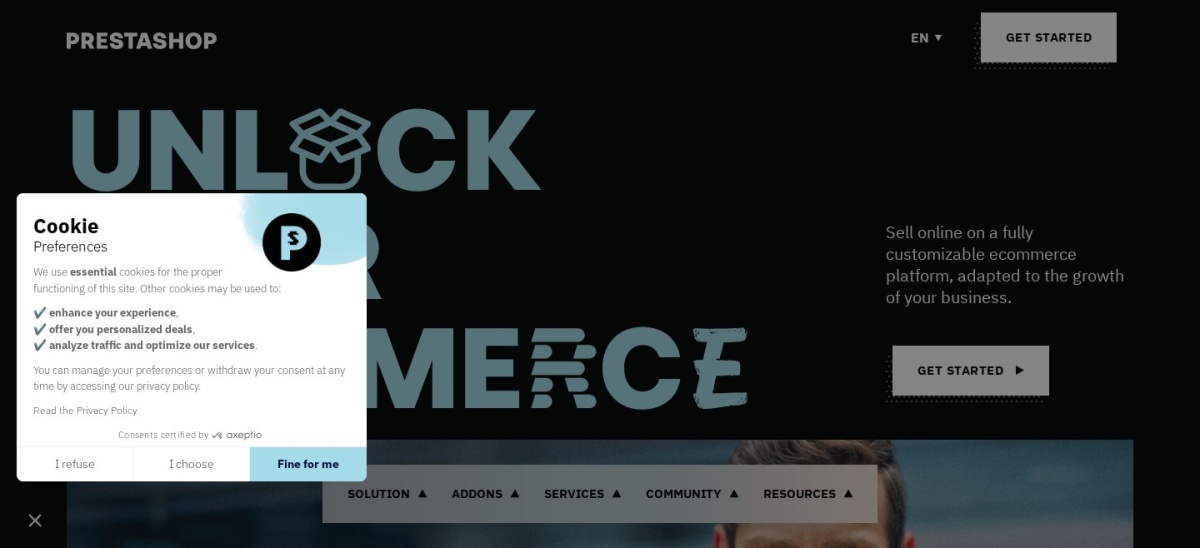
PrestaShop is free, open-source ecommerce software you download and host yourself, with no revenue share and no monthly fee. The core covers products, checkout, shipping rules and taxes, and its module market adds payment methods, marketplaces and marketing tools. It powers stores in many languages and currencies.
The trade off is the setup work. You arrange hosting, install updates and fix problems yourself, or pay a developer, and paid modules add cost. PrestaShop also offers a hosted edition from 29 euros a month. It suits developers and larger stores that want full control of the code.
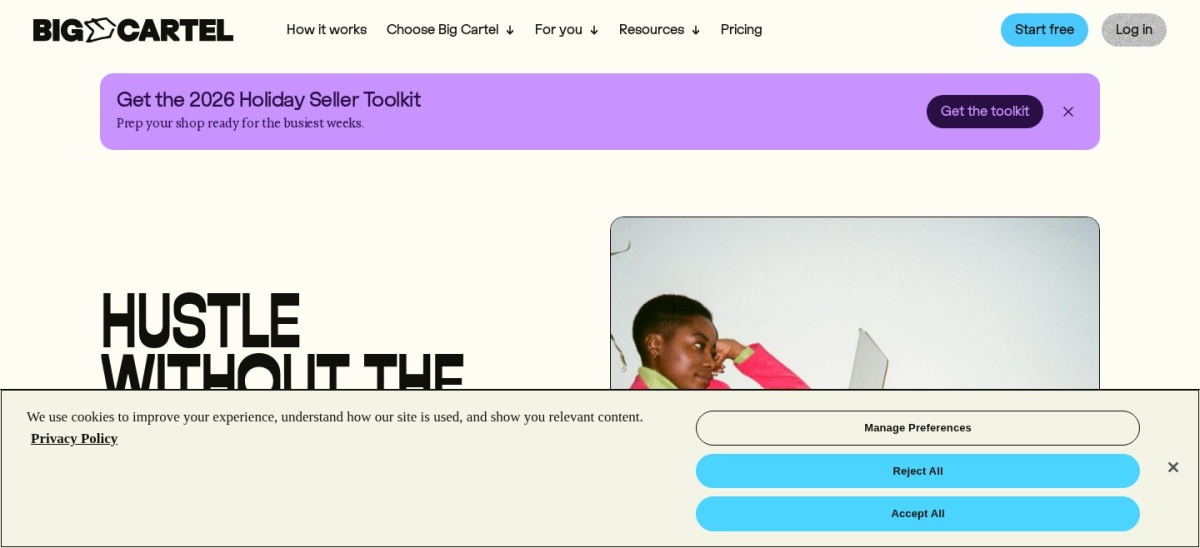
Big Cartel is a small hosted store built for artists, makers and independent brands. The free Gold plan lists up to 5 products with card and PayPal payments, sales tax autopilot and real-time stats. Platinum costs $15 a month after a 7-day trial and raises the limit to 50 products with tracked stock.
The trade off is the ceiling. Even Diamond at $30 a month holds only 500 products, and the feature set stays simple, with no built-in email marketing or deep shipping rules. It suits a maker with a small catalog who wants a plain storefront and a flat monthly price.
Hosted platforms run the servers, updates and security for you. You pay a monthly fee and get a store that works out of the box, with support to call when it breaks.
Self-hosted software is free to download, but you pay for hosting and carry the maintenance. The upside is full control: your data, your code and no sales cap set by a vendor.
Most first stores do better hosted. Move to WooCommerce or PrestaShop when you need a feature no hosted plan offers, or when the monthly fee passes what hosting and help would cost.
How we chose
We started from the most widely used ecommerce platforms, then kept nine that cover hosted stores, WordPress and free open-source options, with public ratings to check.
Prices come from each vendor's pricing page, checked on 23 November 2026. Ratings and review counts come from G2 or WordPress.org on the same day. Where a vendor shows a sale or an intro offer, the list shows the regular price.
We left out platforms with custom-only pricing and tools without enough public reviews. No vendor paid for a place. This list is based on pricing, docs and reviews, not on using the tools ourselves.
How to choose an ecommerce platform
Start with how you want to sell, then match the platform to that shape.
Decide hosted or self-hosted. A hosted platform runs the store for you. WooCommerce and PrestaShop give you control but leave hosting, updates and security in your hands.
Count the real monthly cost. Add the plan price to card fees and the apps you need. A $29 plan can cost far more once paid apps and a premium theme pile up.
Check the sales and product limits. BigCommerce Core caps annual sales at $30,000, Ecwid Starter holds 10 products and Big Cartel Gold holds 5. Make sure the cap fits your next year, not just this month.
Try the free plan or trial first. Build a few real products and run a test checkout before you pay. If the editor fights you in the trial, it will fight you every week after.
FAQ
What is the best platform to create an ecommerce website?
Shopify is the best choice for most sellers. Its Basic plan costs $29 a month billed yearly, it includes hosting, checkout and payments, and it is rated 4.4 out of 5 on G2 from 5,129 reviews. WooCommerce is the best free option for WordPress users.
Can I create an ecommerce website for free?
Yes. WooCommerce and PrestaShop are free to download, and Square Online and Big Cartel both offer a free plan. You still pay for hosting with the free software, and for card processing fees on every sale.
How much does it cost to run an online store?
A small store costs $29 to $39 a month for the platform, plus card fees of about 2.9% plus 30 cents per sale. Hosting, a domain, paid apps and extensions can add $10 to $100 a month, so check the full stack before you commit.
Is WooCommerce better than Shopify?
It depends on what you want. WooCommerce is free and gives you full control, but you handle hosting, updates and security. Shopify costs $29 a month billed yearly and handles all of that for you, which suits sellers who want to focus on products.
Do ecommerce platforms charge transaction fees?
Some do. Shopify charges 2% on Basic if you skip Shopify Payments, while BigCommerce charges no platform fee on its own checkout. WooCommerce and PrestaShop take no cut, but your payment provider still charges card fees.
Which ecommerce platform is best for beginners?
Shopify and Wix are the easiest starts, with guided setup and no code needed. Shopify costs $29 a month billed yearly, while Wix Core costs the same and suits smaller catalogs. WooCommerce is better once you are comfortable with WordPress.