Best Platforms for Social Media Marketing in 2026: 7 Tools Compared
WLWPLegible EditorsLast verified 22 Nov 2026How we rank12 min read
★ Short answer
Buffer is our top platform for social media marketing, offering three connected channels and ten queued posts per channel free, with Essentials starting at $60 per channel annually. Metricool is better for analytics and competitor tracking, while SocialBee suits businesses that regularly recycle evergreen content.
How we make this list: we compare pricing pages, product documentation and public user reviews, then re-check every price before each update. No product paid for a place. Disclosure.
Buffer supports 3 channels and 10 queued posts per channel free; Essentials costs $60 per channel annually.
Metricool offers 1 brand and 20 monthly scheduled posts free, while Starter begins at $20/month with annual billing.
SocialBee Bootstrap covers 5 social profiles and normally costs $348/year, before its temporary Black Friday discount.
Later Starter supports 8 social profiles and 30 scheduled posts per profile, with a regular monthly price of $25.
Planable Basic costs $33 per workspace per month with annual billing, including unlimited users and 60 monthly posts.
Sprout Social Essentials starts at $79 per seat per month with annual billing, supporting 5 social profiles and 100 monthly AI credits.
What to look for in a social media marketing platform
Social media marketing platforms help businesses create content, schedule posts, manage conversations and measure performance across social networks. They reduce the need to switch between individual social applications throughout the day.
Start with the networks where your audience is active. Check whether the platform supports the post formats you use, including short videos, stories, carousels, images and text updates. Network support and automatic publishing capabilities can differ.
Look closely at scheduling and content planning. A visual calendar, reusable content library and bulk scheduling can help maintain a consistent publishing schedule. Agencies may also need separate workspaces and approval workflows.
Reporting is another important distinction. Basic tools show post engagement and account growth, while more advanced services provide competitor comparisons, historical trends, reporting exports and social listening.
Finally, compare the actual subscription structure. Some tools charge per connected channel, others per brand, workspace or user. Calculate your costs using the number of accounts and people who need access rather than comparing entry prices alone.
For advanced social media management and reporting
$79/mo
No free plan
4.4/5
Price ladder: cheapest paid plan per year
List prices, USD, checked Nov 2026
BufferFREE$60
Zoho SocialFREE$120
MetricoolFREE$240
Later$300
SocialBee$348
PlanableFREE$396
Sprout$948
The 7 best platforms for social media marketing
01
Buffer
4.3/5on G2 (1,043 reviews, checked Nov 2026)
Paid from$5/mo
Best overall for social media marketing
Free channels3
Free queued posts10/channel
Essentials schedulingUnlimited
Paid planEssentials, $60/channel/yr
buffer.com
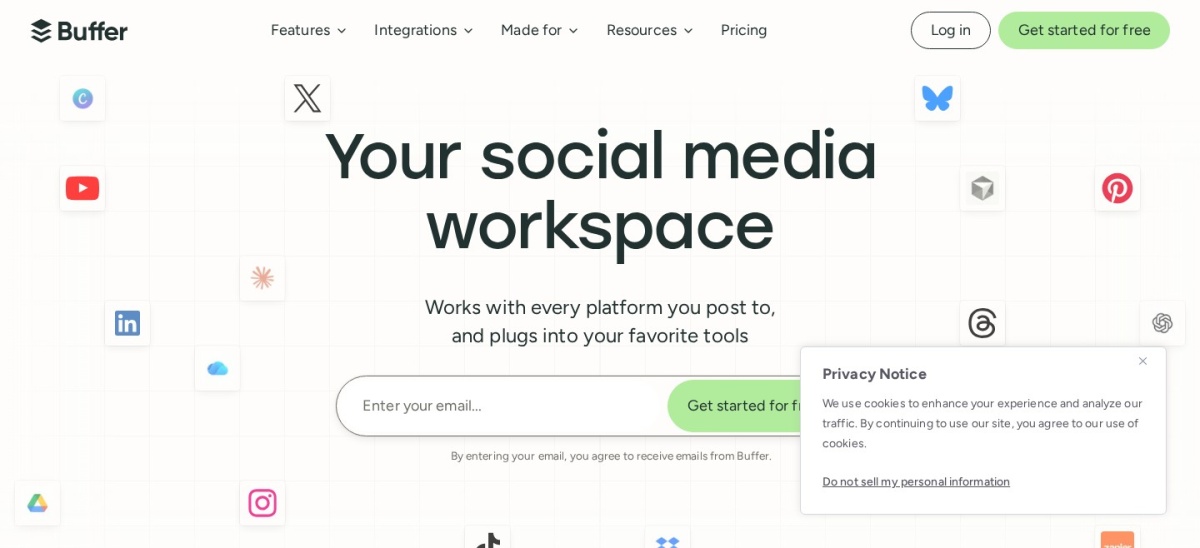
Buffer homepage, captured Nov 2026.
Buffer is a social media management platform for planning, publishing and analyzing content across major social networks, with a 4.3/5 G2 rating from 1,043 reviews. Its free plan supports three social channels, ten queued posts per channel, an AI assistant and a community inbox.
The trade off is that paid pricing increases with every connected channel. Essentials costs $5 per channel per month when billed annually, or $60 yearly, and adds unlimited scheduling, advanced analytics and first-comment scheduling. It suits creators and small businesses seeking straightforward social media management.
What we like
Free plan supports three social channels
Simple content calendar and scheduling
Unlimited scheduled posts on Essentials
AI assistant included on Free
Supports major and emerging social networks
Watch out for
Paid costs increase with connected channels
Free queue limited to ten posts per channel
Advanced collaboration requires Team
Not designed for extensive social listening
Essentials adds unlimited scheduling, advanced analytics and hashtag managementVisit buffer.com
02
Metricool
4.4/5on G2 (112 reviews, checked Nov 2026)
Paid from$20/mo
Best for analytics-driven social media marketing
Free brands1
Free scheduled posts20/mo
Free competitor profiles5
Paid planStarter, $20/mo annually
metricool.com
Metricool homepage, captured Nov 2026.
Metricool is a social media management platform combining content scheduling, audience analytics, competitor tracking and performance reporting, with a 4.4/5 G2 rating from 112 reviews. Its free plan manages one brand, schedules twenty monthly posts, analyzes five competitor profiles and includes thirty days of analytics history.
The trade off is that the free plan excludes certain social connections, while team approvals and advanced reporting require higher tiers. Starter begins at $20 per month with annual billing, or $240 yearly, and adds unlimited publishing and PDF reports. It suits marketers who prioritize reporting alongside scheduling.
Best for evergreen content scheduling and recycling
Bootstrap profiles5
Bootstrap workspaces1
Monthly billing$29
Paid planBootstrap, $348/yr
socialbee.com
SocialBee homepage, captured Nov 2026.
SocialBee is a social media marketing platform focused on content creation, scheduling, recycling and performance analysis, with a 4.7/5 G2 rating from 479 reviews. Bootstrap supports five social profiles in one workspace and includes category-based scheduling, content recycling and AI-assisted content generation.
The trade off is that SocialBee does not offer a permanent free subscription. Bootstrap normally costs $29 monthly or $348 annually, although a temporary Black Friday offer reduced annual pricing to $174. It suits businesses that publish recurring educational, promotional or evergreen social content.
What we like
Category-based content scheduling
Evergreen post recycling
AI content generation
Content customization for different networks
Analytics and engagement tools
Watch out for
No permanent free plan
Bootstrap limits connected profiles
Larger teams need higher subscriptions
Advanced client management costs more
Paid Bootstrap includes category scheduling, recurring content and AI generationVisit socialbee.com
04
Later
4.5/5on G2 (389 reviews, checked Nov 2026)
Starts at$25/mo
Best for visual social content and creator marketing
Starter social profiles8
Starter scheduled posts30/profile
Starter users1
Paid planStarter, $25/mo
later.com
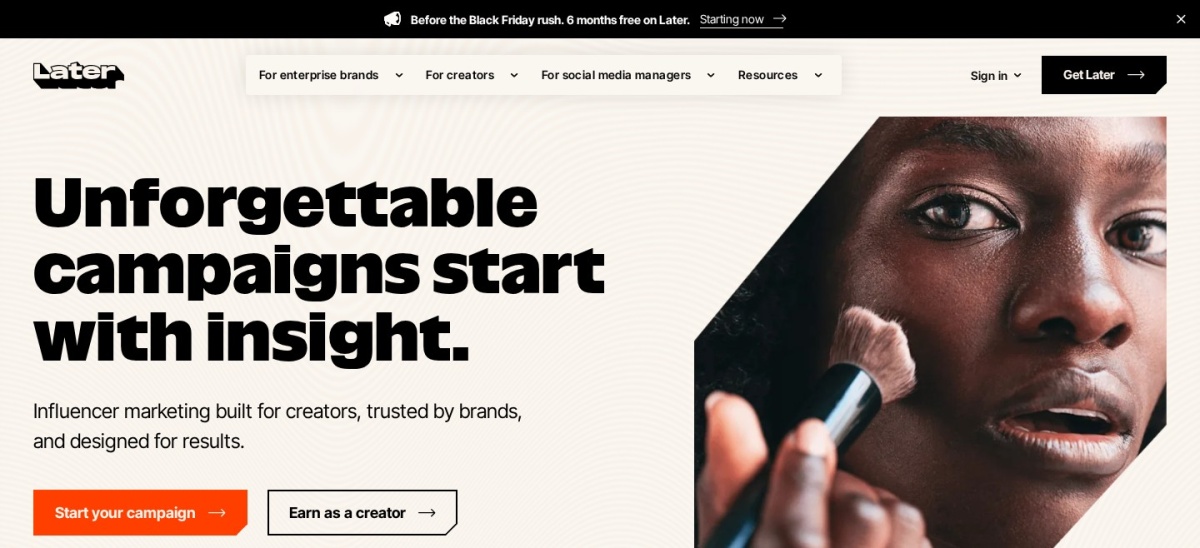
Later homepage, captured Nov 2026.
Later is a visual social media management platform for planning, scheduling and analyzing content, with a 4.5/5 G2 rating from 389 reviews. Starter supports one social set containing eight profiles, thirty scheduled posts per profile, basic analytics, a visual planner and a link-in-bio tool.
The trade off is that Starter limits scheduling volume and does not include the collaboration features available in Growth. Its regular monthly price is $25, or $300 over twelve months, compared with $18.75 monthly when billed annually. It suits visual brands focused on Instagram, TikTok and content-led campaigns.
What we like
Visual content planning calendar
Eight social profiles on Starter
Link-in-bio functionality
Short-form video scheduling
Platform performance analytics
Watch out for
No permanent free plan
Starter limits scheduled posts
Advanced approvals require Growth
Additional social sets require higher plans
Growth adds team approvals, social inbox and expanded scheduling allowancesVisit later.com
05
Planable
4.6/5on G2 (1,137 reviews, checked Nov 2026)
Paid from$33/mo
Best for agency collaboration and content approvals
Free trial posts50
Basic posts60/workspace/mo
Basic social pages4/workspace
Paid planBasic, $33/mo annually
planable.io
Planable homepage, captured Nov 2026.
Planable is a social media collaboration platform for agencies and marketing teams, with a 4.6/5 G2 rating from 1,137 reviews. Its free access includes fifty posts, while Basic supports unlimited users, four connected social pages and sixty monthly posts per workspace with shared content calendars.
The trade off is that advanced analytics, social inbox features and social listening are separate add-ons. Basic costs $33 per workspace per month with annual billing, or $396 yearly. It suits agencies coordinating content approvals and collecting feedback from multiple stakeholders.
Best for social media connected to business workflows
Free brands1
Free channels6
Standard team members1
Paid planStandard, $10/mo annually
zoho.com
Zoho Social homepage, captured Nov 2026.
Zoho Social is a social media management platform offering scheduling, monitoring, reporting and business application integrations, with a 4.6/5 G2 rating from 2,996 reviews. Its free plan includes one brand, six social channels, one team member and basic publishing capabilities.
The trade off is that advanced monitoring, team collaboration and CRM integrations require higher plans. Standard starts at $10 per month billed annually, or $120 yearly, and adds publishing calendars, scheduling and summary reports. It suits small businesses that may later connect social media activity with broader business workflows.
What we like
Free plan with six social channels
Affordable Standard subscription
Publishing calendar and reporting
Supports multiple major social networks
CRM integrations available on higher plans
Watch out for
Free plan has limited publishing features
Advanced monitoring requires higher plans
Team collaboration features cost more
CRM integration is not included in Standard
Standard adds content scheduling, publishing calendars and summary reportsVisit zoho.com
07
Sprout Social
4.4/5on G2 (7,597 reviews, checked Nov 2026)
Starts at$79/mo
Best for advanced social media management and reporting
Essentials profiles5
Monthly AI credits100/seat
BillingAnnual
Paid planEssentials, $79/seat/mo
sproutsocial.com
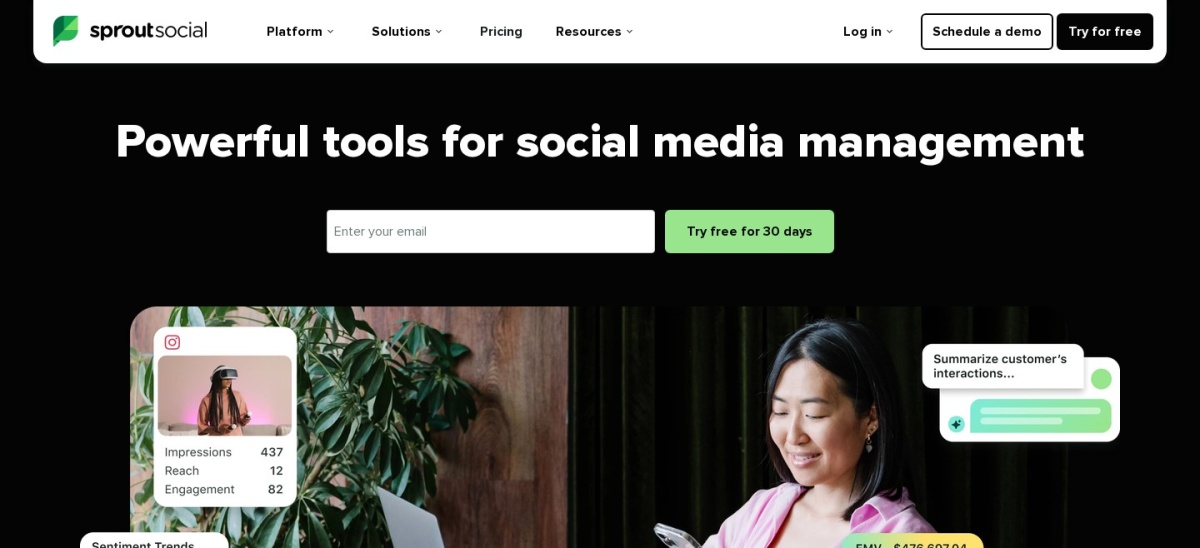
Sprout Social homepage, captured Nov 2026.
Sprout Social is a social media management platform combining publishing, engagement, reporting and social intelligence, with a 4.4/5 G2 rating from 7,597 reviews. Essentials supports five connected social profiles, post-level reporting, optimal send times and one hundred monthly AI credits per seat.
The trade off is substantially higher pricing than basic scheduling platforms. Essentials costs $79 per seat per month billed annually, or $948 per seat yearly, while the monthly option costs $99. It suits established marketing teams that need coordinated publishing, reporting and customer engagement.
What we like
Integrated publishing and reporting
Social engagement management
AI-assisted insights
Optimal publishing recommendations
Advanced capabilities available for larger teams
Watch out for
High starting subscription cost
Pricing increases per team member
Essentials limits connected social profiles
Advanced listening and analytics cost more
Standard adds expanded monitoring, review management and collaboration toolsVisit sproutsocial.com
Social media scheduling vs full social media management
Social media scheduling tools focus on preparing posts and publishing them at planned times. Buffer and SocialBee are particularly relevant when consistent posting and reusable content are the main requirements.
Full social media management platforms add analytics, engagement monitoring, customer conversations and collaboration tools. Metricool emphasizes reporting, while Sprout Social combines social publishing with customer engagement and broader insights.
Planable focuses on planning, review and approvals. This makes it useful when content moves between writers, designers, managers and clients before publication.
Choose the category that matches your daily responsibilities. A solo creator may not need extensive approval workflows, while an agency managing client accounts may prioritize permissions, calendars and organized feedback.
How to measure social media marketing performance
Start by connecting social activity to business objectives. Audience growth and engagement are useful indicators, but they do not automatically show whether social media creates qualified visitors, customers or sales.
Monitor reach, engagement, clicks and follower growth to understand content performance. Compare results across post formats and publishing periods instead of relying only on individual viral posts.
Use campaign tracking parameters and website analytics when measuring traffic and conversions. This helps distinguish social referrals from other marketing sources.
Finally, report outcomes consistently. Agencies may need downloadable reports for clients, while internal marketing teams can focus on traffic quality, leads, conversions and customer engagement.
How we chose
We shortlisted established social media marketing platforms covering content scheduling, analytics, engagement, reporting and collaboration. The comparison includes accessible tools for creators and small businesses alongside specialized products for agencies and established marketing teams. We evaluated vendor documentation and publicly available G2 reviews.
Official pricing pages and G2 review listings were checked on 22 Nov 2026. We compared published regular paid prices rather than temporary promotional discounts, converted monthly pricing into annual equivalents and identified whether subscriptions charge by channel, workspace, brand or user.
We excluded products without confirmable published entry pricing and tools that primarily serve unrelated marketing activities. Products were ranked for social marketing relevance, publishing capabilities, analytics, collaboration, pricing transparency and operational limitations. No vendor paid for a place, and we do not claim testing for this list.
How to choose a social media marketing platform
Identify your target networks, publishing needs and reporting requirements before comparing social media management subscriptions.
Select the social networks that matter most. List your active social profiles and confirm that each platform supports the content formats you publish. Check automatic publishing, video scheduling and network-specific restrictions before selecting a subscription.
Define your content production workflow. Choose a simple scheduler if you work independently. Consider shared calendars, comments and approval workflows when multiple people create, review or publish content for a brand.
Compare analytics and engagement features. Determine whether you need basic post statistics, competitor analysis, audience reports or a shared inbox. Check which features are included in the entry plan and which require upgrades or additional subscriptions.
Calculate pricing at your actual account count. Count connected profiles, brands, team members and workspaces. Compare annual and monthly billing, review add-on charges and estimate how costs will change as your social media operations expand.
FAQ
What is the best platform for social media marketing?
Buffer is a strong overall choice for small businesses and creators because it offers straightforward scheduling, analytics and a free plan supporting three social channels. Metricool is better for analytics and competitor tracking, while SocialBee suits businesses that want recurring content schedules and evergreen post recycling.
Which social media marketing platform is best for beginners?
Buffer is a practical starting point because its free plan supports three channels and ten queued posts per channel. The platform also provides an AI assistant and basic performance insights. Beginners who need more detailed analytics may prefer Metricool, which offers a free plan with scheduled posts and competitor tracking.
Can I manage social media marketing for free?
Yes. Buffer, Metricool and Zoho Social offer free plans with different limitations. Buffer supports three channels, Metricool includes twenty scheduled posts monthly and Zoho Social offers six channels. Planable also provides limited free access for content planning and collaboration.
Which social media platform is best for marketing agencies?
Planable is useful for agencies that manage content reviews, approval workflows and multiple client workspaces. SocialBee offers agency-oriented scheduling, while Sprout Social provides broader reporting and customer engagement tools. Compare workspace fees, team seats and connected profile limits before selecting an agency platform.
What is the difference between Buffer and Hootsuite?
Buffer focuses on accessible scheduling, publishing and analytics, with a free plan and paid pricing based on connected channels. Hootsuite offers broader social management capabilities, including monitoring, customer engagement and team workflows. Buffer generally suits simpler publishing requirements, while Hootsuite is designed for more extensive social operations.
Which platform offers the best social media analytics?
Metricool is particularly relevant for marketers who need competitor tracking, audience insights and downloadable performance reports. Sprout Social offers deeper social intelligence and customer engagement capabilities at a higher price. The right choice depends on whether you need campaign reports, competitor analysis or broader social monitoring.
How much does social media marketing software cost?
Several platforms offer free subscriptions. Buffer Essentials starts at $60 per channel annually, Metricool Starter begins at $240 annually and SocialBee Bootstrap normally costs $348 annually. More advanced platforms such as Sprout Social use per-seat pricing, which can substantially increase costs for larger teams.
Can social media marketing software schedule Instagram and TikTok posts?
Yes. Buffer, Metricool, SocialBee, Later and several other platforms support Instagram and TikTok publishing. However, available post formats, automatic publishing and account connection requirements vary. Confirm whether your preferred platform supports the specific videos, stories or other formats you intend to publish.
Does social media marketing software improve engagement?
Social media tools can help teams publish consistently, respond to conversations and identify content that performs well. However, scheduling software does not guarantee higher engagement or sales. Results depend on audience relevance, content quality, interaction and the overall marketing strategy.








How to measure social media marketing performance
Start by connecting social activity to business objectives. Audience growth and engagement are useful indicators, but they do not automatically show whether social media creates qualified visitors, customers or sales.
Monitor reach, engagement, clicks and follower growth to understand content performance. Compare results across post formats and publishing periods instead of relying only on individual viral posts.
Use campaign tracking parameters and website analytics when measuring traffic and conversions. This helps distinguish social referrals from other marketing sources.
Finally, report outcomes consistently. Agencies may need downloadable reports for clients, while internal marketing teams can focus on traffic quality, leads, conversions and customer engagement.