Snowflake is the best performing database software for enterprise analytics, with elastic scale and no servers to manage. Pick PostgreSQL for a free open source database and MongoDB Atlas for flexible document data.
How we make this list: we compare pricing pages, product documentation and public user reviews, then re-check every price before each update. No product paid for a place. Disclosure.
Snowflake leads on analytics performance, with storage and compute scaling independently.
PostgreSQL and MySQL are free and open source, with PostgreSQL rated 4.4 out of 5 on G2.
MongoDB Atlas has the clearest pricing ladder here, from a free tier to $57 a month dedicated.
Oracle and SQL Server suit mission-critical workloads but sell by custom per-core licensing.
Databricks unifies analytics and AI for more than 20,000 organisations.
What performance means for an enterprise database
Performance is not one number. Transactional workloads need low latency on single queries, analytics need throughput on huge scans, and global apps need consistency across regions, so the best database depends on the workload.
Licensing shapes the choice as much as speed. PostgreSQL and MySQL cost $0 to license, Snowflake and Databricks bill by usage, and Oracle and SQL Server sell by custom per-core licensing. Our database software guide compares the same engines for smaller teams.
Free tiers are genuinely useful now. MongoDB Atlas, Supabase and PostgreSQL all let a team build and launch before paying anything, while Snowflake and Databricks offer free trials with credits.
Watch the meter on usage-based tools. Snowflake bills by credit and Databricks by workload, so a heavy month costs far more than a light one, with no fixed price to budget against.
The 8 best performing database software for enterprise
01
Snowflake
4.6/5on G2 (785 reviews, checked Nov 2026)
PricingUsage-based/yr
Best performing database for enterprise analytics
PricingUsage-based credits
Free trialYes, 30 days with trial credits
StorageSeparate from compute
AICortex AI agents on governed data
snowflake.com
Snowflake homepage, captured Nov 2026.
Snowflake is a cloud data platform where storage and compute scale independently, so heavy queries get more compute without reprovisioning. It changed what enterprises expect from analytics performance, and Cortex AI agents now run directly on governed data.
The trade off is the bill. Everything is metered by credit, so query costs can climb fast with heavy use and there is no fixed monthly price to budget against. It suits analytics and AI workloads where elastic scale matters more than a fixed bill.
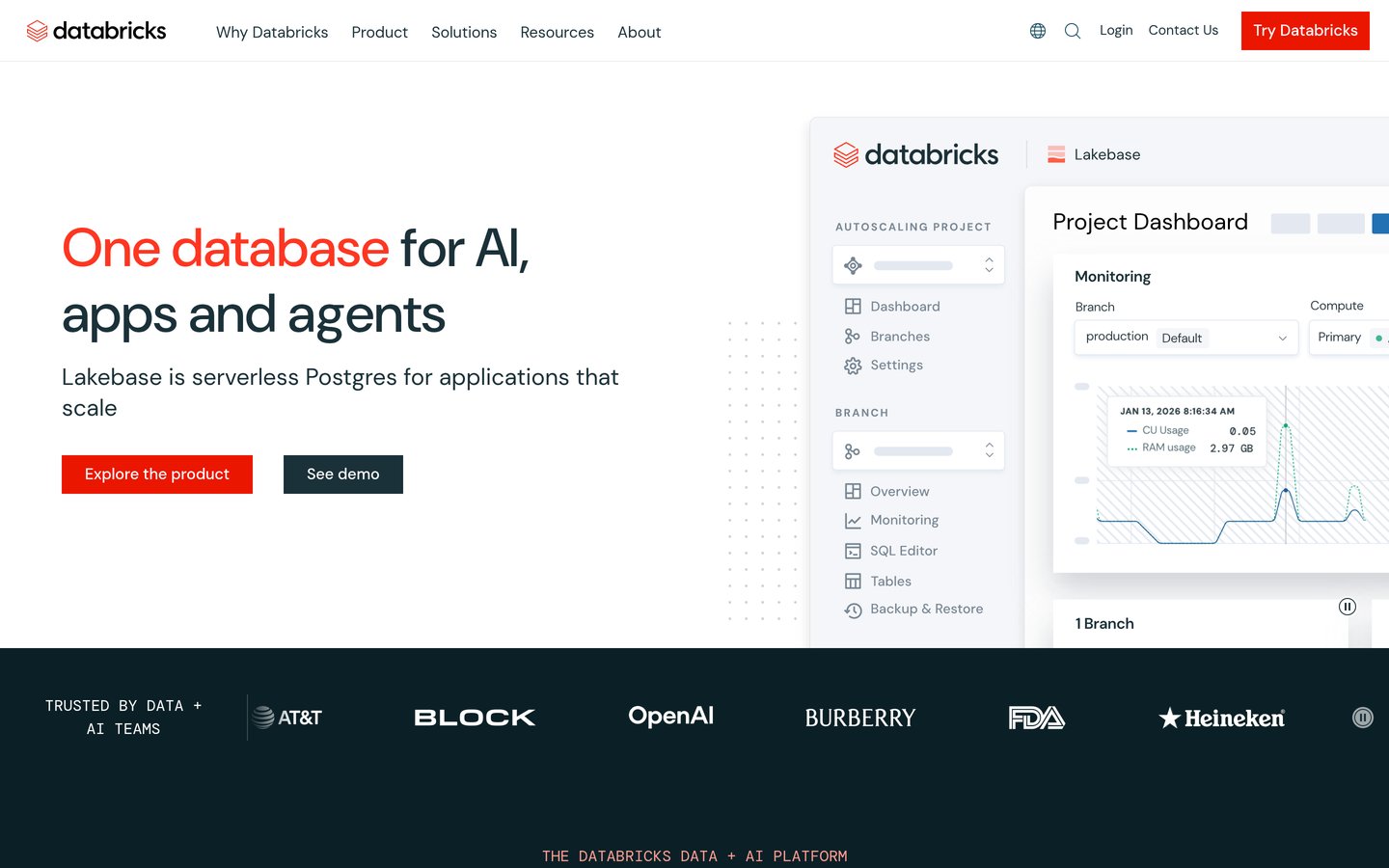
Databricks is a data and AI platform used by more than 20,000 organisations, including large banks, retailers and manufacturers. Its lakehouse unifies warehousing and machine learning, and its Unistore work brings analytics and operational data together in one system.
The trade off is cost and complexity. Pricing is usage-based with no published starting price, and the platform needs data engineering skill to run well. It suits enterprises that want one platform for analytics and AI at scale.
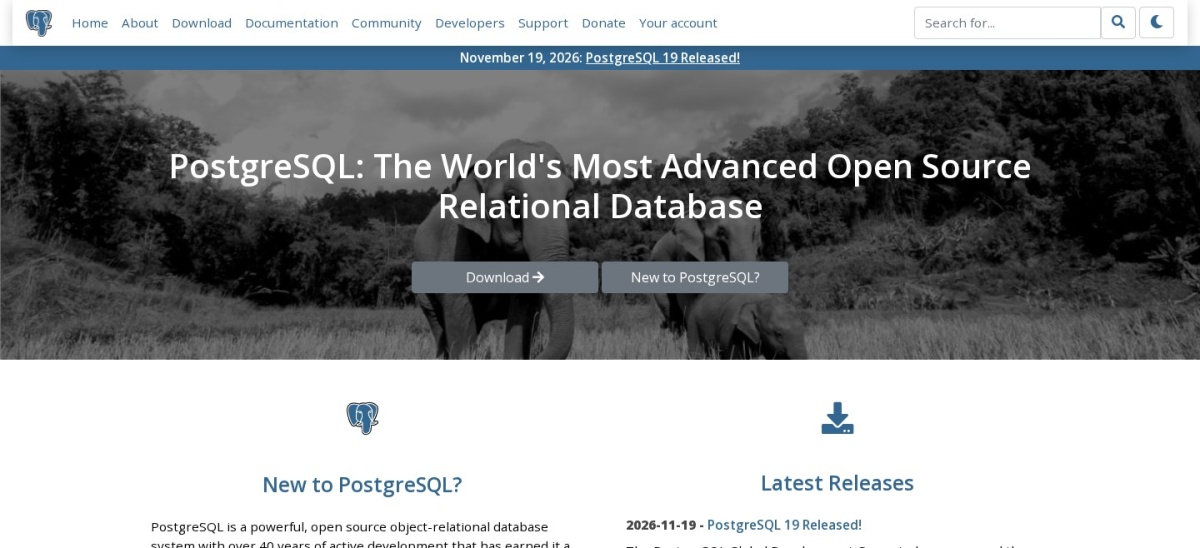
PostgreSQL is the open source database the industry converged on, handling transactions with full ACID compliance and storing JSON documents when the schema needs flexibility. It extends with plugins for full-text search, geospatial data and AI embeddings, and it costs nothing to license.
The trade off is operations. You run backups, failover and scaling yourself unless you pay for a managed service, so the $0 licence is not a $0 total cost. It suits teams that want enterprise-grade relational power without licence fees.
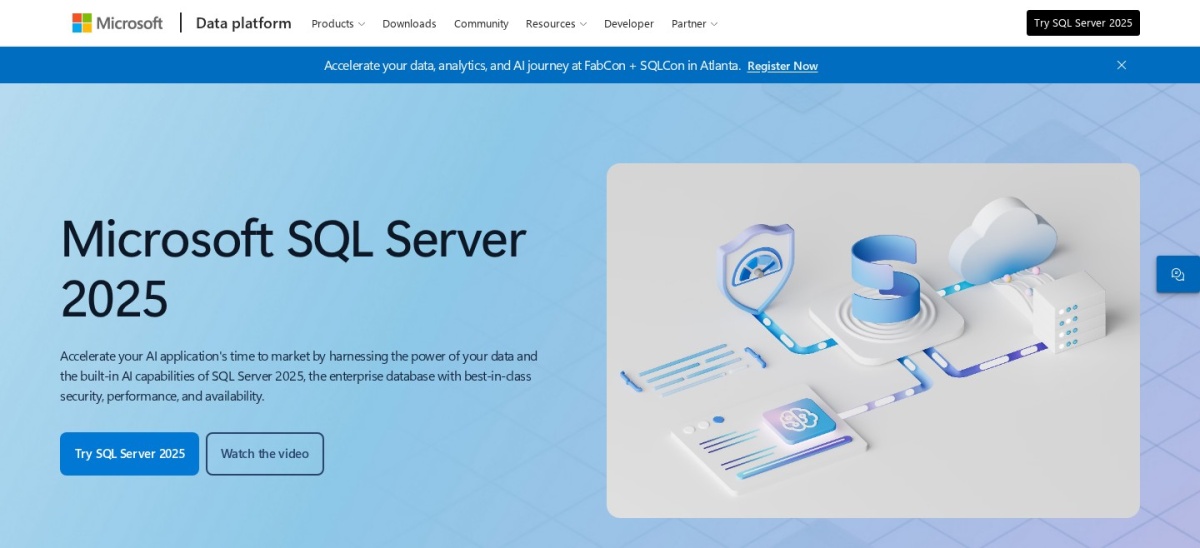
Microsoft SQL Server is the database of the Microsoft enterprise, integrating with Active Directory, Azure, Power BI and the .NET stack in ways nothing else can. SQL Server 2025 adds AI query optimisation and built-in columnar storage, and Express and Developer editions are free.
The trade off is licensing. Standard and Enterprise editions are priced per core or by Azure pay-as-you-go, with no simple published starting price. It suits organisations standardised on Microsoft that need compliance and management tooling.
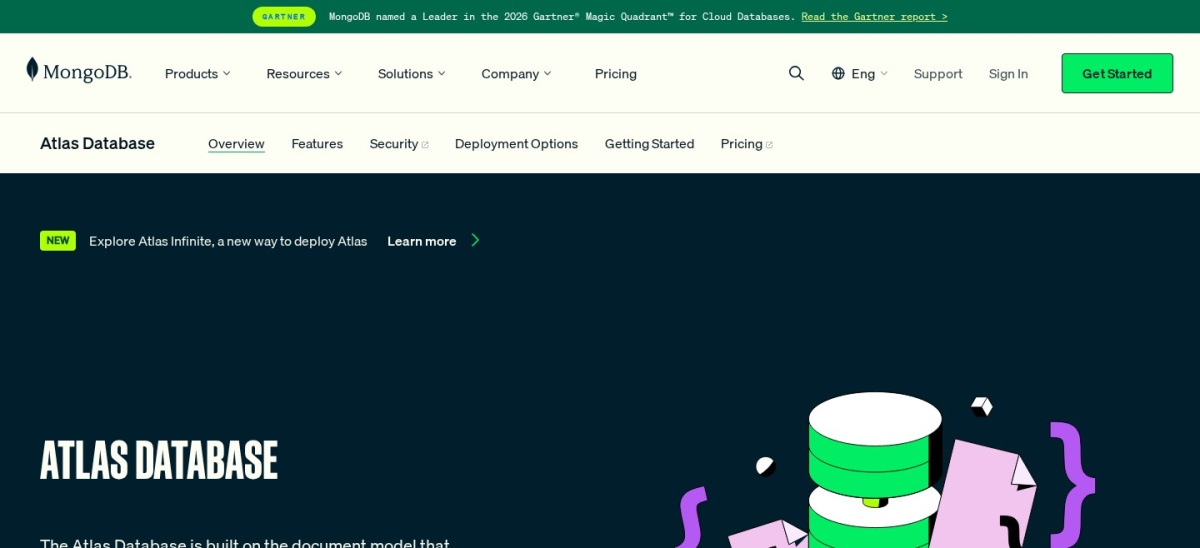
MongoDB Atlas is the managed cloud version of MongoDB, with a free M0 tier at 512 MB, a Flex tier from about $8 a month capped near $30, and dedicated M10 clusters from about $57 a month. Vector search powers AI apps, and the pricing ladder is the clearest in this category.
The trade off is the meter. Data transfer, extra storage and backup retention add up on top of the cluster price, and there is no spend cap on dedicated tiers. It suits applications with evolving schemas and heavy read and write scale.
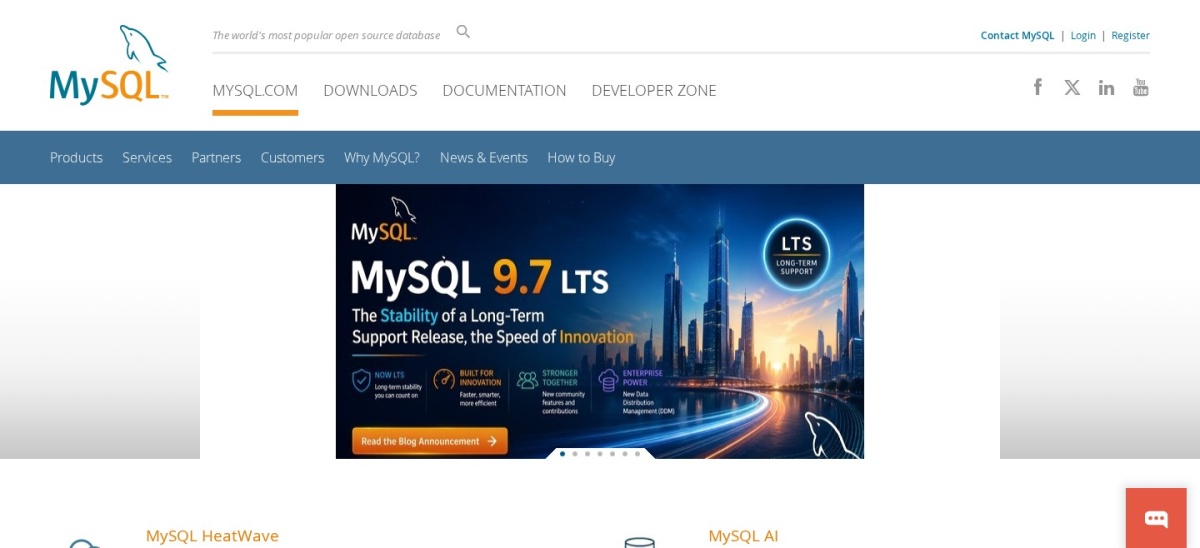
MySQL is the simplest reliable choice for web applications and read-heavy workloads, with the widest hosting support in the industry. The Community edition is free and open source, and every major cloud offers it as a managed service for teams that do not want to run it themselves.
The trade off is flexibility. MySQL is less extensible than PostgreSQL for JSON, geospatial and vector work, and its enterprise edition is priced by quote. It suits web applications where read speed and broad hosting support matter most.
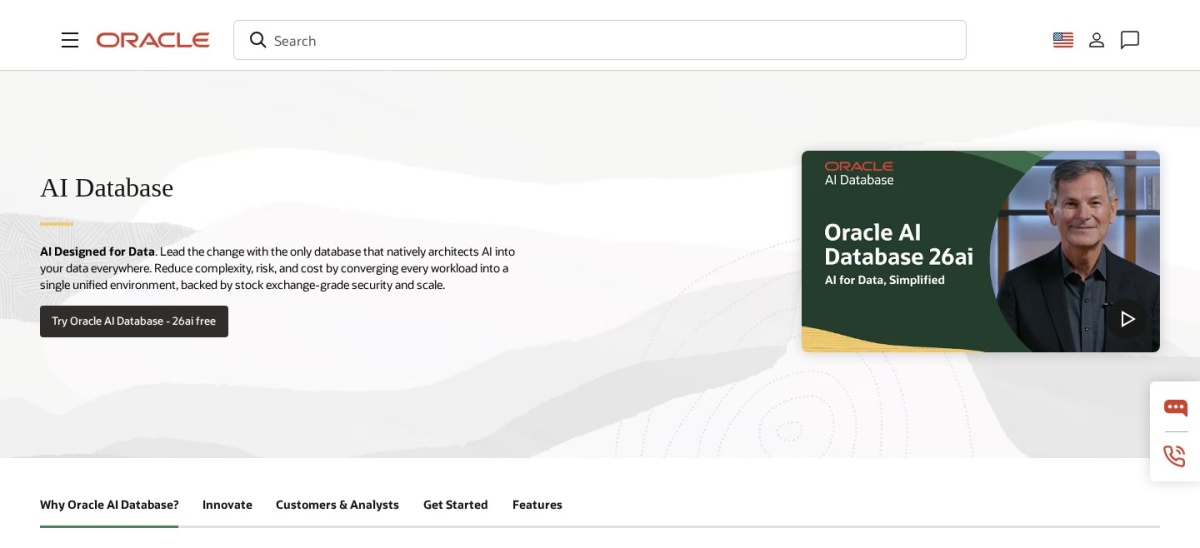
Oracle AI Database is the converged engine, version 26ai, that still sets the bar other enterprise databases are measured against. It runs relational, document, graph, spatial and vector workloads in one engine, with autonomous AI tuning and multitenant architecture.
The trade off is licensing cost and complexity. Enterprise licensing is custom and starts high, and the platform needs specialist skill to run well. It suits regulated industries and legacy estates where downtime is not an option.
Supabase is a managed Postgres platform that bundles authentication, file storage, realtime subscriptions, edge functions and an auto-generated API around the database. The free plan covers 500 MB and 50,000 monthly active users, and Pro costs $25 a month per organisation.
The trade off is the free plan limit. Free projects pause after 7 days of inactivity, and each project needs a compute instance on top of the Pro fee. It suits startups shipping a new app that need a full backend, not just a database.
Open source databases cost $0 to license, but you pay for hosting, backups and the people who run them.
Usage-based cloud databases cost nothing to start and scale to zero, but a heavy month can cost far more than a fixed server.
For most teams, the cheapest production database is a managed free tier like Supabase Pro at $25 a month or MongoDB Atlas Flex from about $8 a month.
How we chose
We started from the enterprise databases with the largest G2 review bases and a published price or free tier, then kept those a team can actually buy or run.
Prices come from each vendor's pricing page as quoted in price checks dated November 2026, and ratings come from G2 listings read on 26 November 2026. Usage-based tools show no fixed price by design.
We left out tools with no G2 rating and tools sold only as custom enterprise contracts with no trial. No vendor paid for a place, and we do not claim hands-on testing for this list.
How to choose an enterprise database
Start with the workload, then check the pricing model against your real usage.
Name the workload first. Transactions point to Oracle or SQL Server, analytics points to Snowflake, and flexible documents point to MongoDB Atlas, so pick by workload before comparing speed claims.
Test on the free tier. PostgreSQL, MySQL, MongoDB Atlas and Supabase all offer free tiers, so run your real queries there before paying for a managed service.
Model the usage bill. For Snowflake and Databricks, price a heavy month and a light month from your real query volume, since usage bills vary far more than fixed prices.
Check who will run it. Open source saves licence fees but needs operations skill, while managed cloud databases cost more per month and need less staff time.
FAQ
What is the best performing database for enterprise?
Snowflake is the best pick for enterprise analytics, with storage and compute scaling independently and Cortex AI running on governed data. For transactions, Oracle AI Database and SQL Server 2025 remain the safest picks for mission-critical work.
Is PostgreSQL really free for enterprise use?
Yes. PostgreSQL is open source and free forever, with full ACID compliance and extensions for JSON, geospatial and vector work. You still pay for hosting, backups and the people who run it, unless you use a managed service.
How much does MongoDB Atlas cost?
MongoDB Atlas has a free M0 tier with 512 MB of storage, a Flex tier from about $8 a month capped near $30, and dedicated M10 clusters from about $57 a month. Data transfer and backup fees sit on top.
Why is Snowflake pricing hard to compare?
Snowflake bills by usage-based credits, so there is no fixed monthly price. Storage and compute scale independently, which is flexible, but a heavy query month costs far more than a light one.
Which database is best for AI applications?
Databricks and Snowflake lead for AI at enterprise scale, with machine learning and AI agents built into the platform. PostgreSQL with the pgvector extension and MongoDB Atlas vector search are strong lower-cost options.
Do I need Oracle or SQL Server for a new app?
Usually not. New apps most often start on PostgreSQL, MySQL or MongoDB Atlas, which are free or cheap and run anywhere. Oracle and SQL Server fit regulated industries and legacy estates best.
SaaS SEO and WordPress specialist with about 8 years of experience. Rakib compares WordPress plugins, themes, hosting and software using public pricing, documentation and user reviews. See how we rank.