WooCommerce is the best open source ecommerce platform for most stores, with the largest plugin and theme library and no licence cost. Pick PrestaShop for a small shop that needs a free store out of the box, and Magento Open Source for a large catalogue that needs deep control.
How we make this list: we compare pricing pages, product documentation and public user reviews, then re-check every price before each update. No product paid for a place. Disclosure.
WooCommerce is free to use and powers more than 5 million WordPress stores, with the largest plugin and theme library here.
PrestaShop and OpenCart are the easiest free options for a small shop that wants a store up fast without a developer.
Magento Open Source suits large catalogues and custom builds, but it needs a developer and a server with enough power.
Shopware, Sylius and Bagisto are the developer-friendly picks, built on modern PHP frameworks with a free community edition.
Every platform here is free at its core. The real cost is hosting, payment fees and paid themes or extensions.
What free really means in open source ecommerce
Open source means the code is free to download and change, and no vendor can shut your store down. You still pay for hosting, a domain, payment processing and any paid extensions you add.
The cheapest platform to start is the one you can run yourself. WooCommerce needs a WordPress site, PrestaShop and OpenCart ship as complete stores, and Magento needs a developer to set up well.
Scale changes the choice. A shop with 50 products can run on almost anything in this list. A catalogue with 50,000 products needs Magento, Shopware or Sylius and a server built for it. Our roundup of the best CRM software covers tools that pair with these stores once orders grow.
Check the community before you commit. A platform with active developers, recent releases and a plugin marketplace is easier to fix and extend than one that has gone quiet.
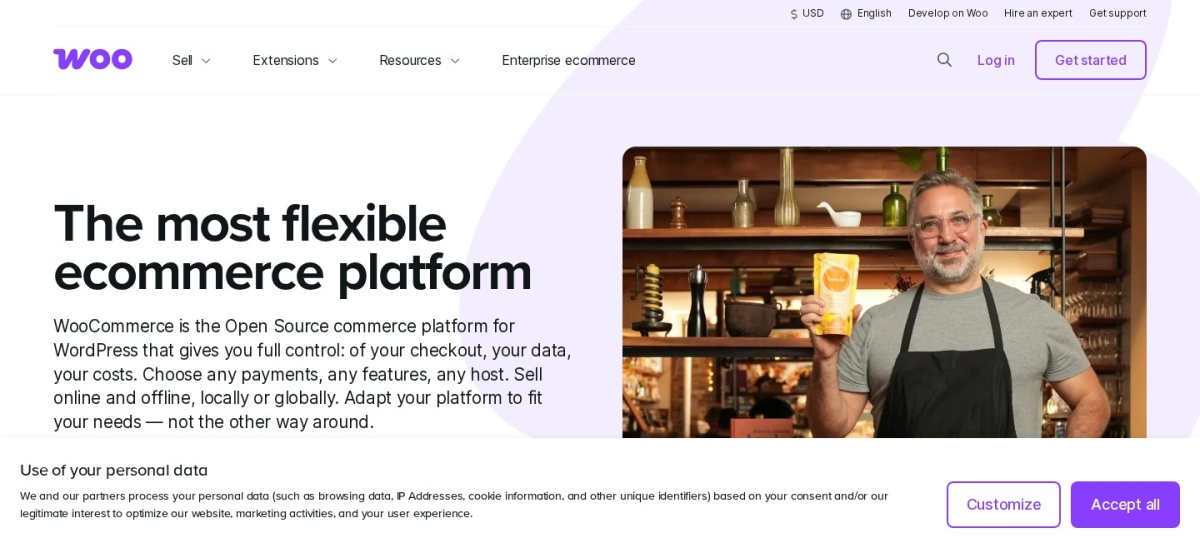
WooCommerce is a free open source plugin that turns a WordPress site into a full online store, with product pages, checkout, shipping, tax and payment options. It powers more than 5 million stores and has the largest plugin and theme library in this list, so almost any feature exists already.
The trade off is that WooCommerce is only as good as its setup. Hosting, security, backups and updates are your job, and a store loaded with extensions can slow down without careful maintenance. It suits shops that already run WordPress or want full control of their store.
PrestaShop is a free open source store that ships with product management, checkout, shipping, tax, discount rules and customer accounts. The Classic edition costs nothing, and a store owner can set up a working shop without writing code.
The trade off is that many useful modules are paid, and the hosted PrestaShop edition starts at 24 euros a month. It suits small and mid-size shops that want a complete free store with room to grow.
Magento Open Source is a free ecommerce platform built for large and complex stores, with multi-store support, a large catalogue, advanced pricing rules and a deep extension marketplace. It is the most capable free platform here for stores with thousands of products.
The trade off is complexity. Magento needs a developer to install and maintain, a strong server, and more time to customise than any other tool in this list. It suits large stores with technical help, not first-time shop owners.
OroCommerce is a free open source B2B ecommerce platform built by the creators of Magento, with a Community Edition that costs nothing. It includes custom price lists, company accounts, quote workflows and a built-in CRM, which no other free platform here offers.
The trade off is complexity. OroCommerce is built for manufacturers, distributors and wholesalers, so a small retail shop will find it heavier than PrestaShop or OpenCart, and it needs a developer to run. It suits B2B sellers that need account hierarchies and quotes.
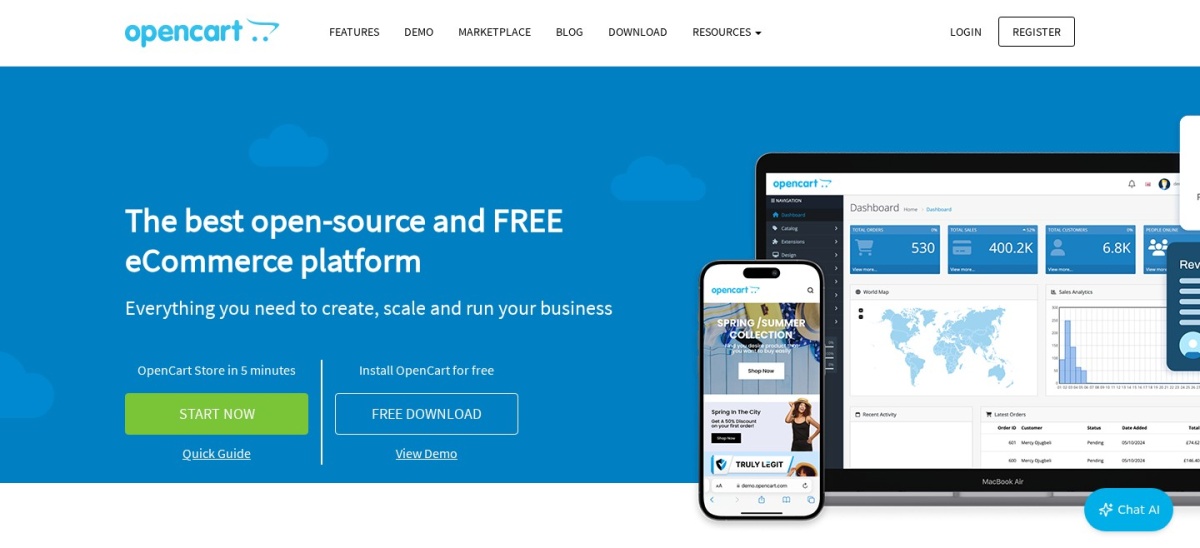
OpenCart is a light free open source store with product management, orders, coupons, shipping and a large extension marketplace. It is one of the quickest platforms in this list to install and launch.
The trade off is polish. The default theme looks plain next to PrestaShop or WooCommerce, and some extensions are dated. It suits small shops that want a simple free store with minimal setup.
Shopware is a modern open source ecommerce platform from Germany, built on the Symfony framework with a free Community edition. It includes a visual store builder, a rule engine for discounts and shipping, and a marketplace of apps and themes.
The trade off is cost in euros. The paid Rise, Evolve and Beyond plans are priced in euros, and the community is smaller outside Europe. It suits shops that want a modern storefront and a developer-friendly platform.
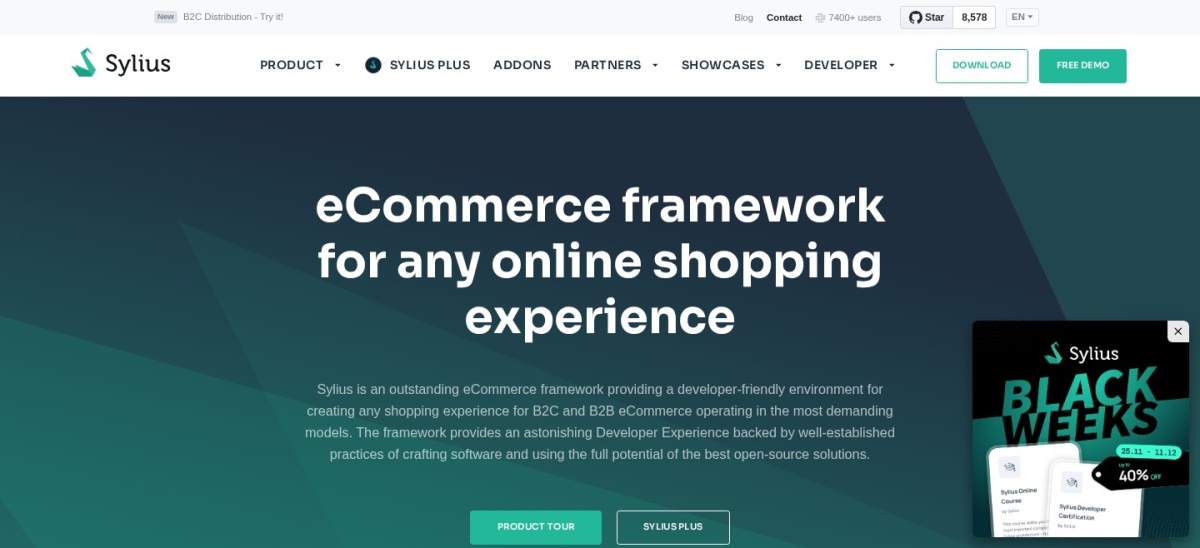
Sylius is a free open source ecommerce framework built on Symfony, designed for teams that build a custom store rather than configure one. It holds a 4.9 out of 5 rating on Capterra, the highest in this list, though from only 11 reviews.
The trade off is that Sylius is a framework, not a ready store. There is no admin-ready shop to install; a developer builds the storefront on top of it. It suits development teams that need full control over every part of the shop.
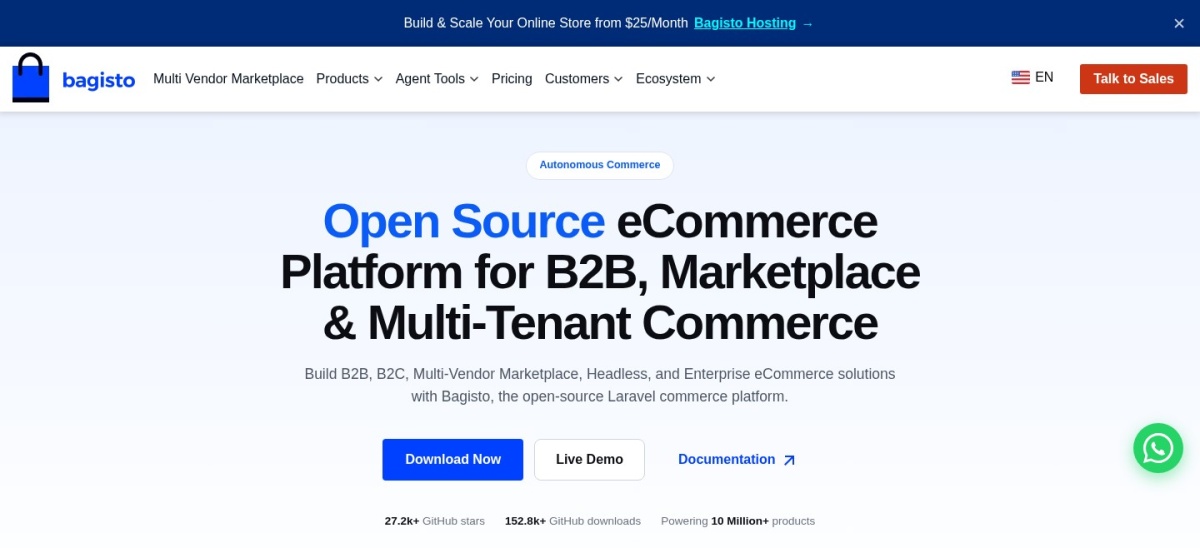
Bagisto is a free open source ecommerce platform built on Laravel, with a clean admin panel, multi-store and multi-currency support, and a marketplace of extensions. It holds a 4.7 out of 5 rating on Capterra from 17 reviews.
The trade off is community size. Bagisto is younger and smaller than PrestaShop or Magento, so fewer developers and ready extensions exist. It suits Laravel teams that want a free store on a familiar framework.
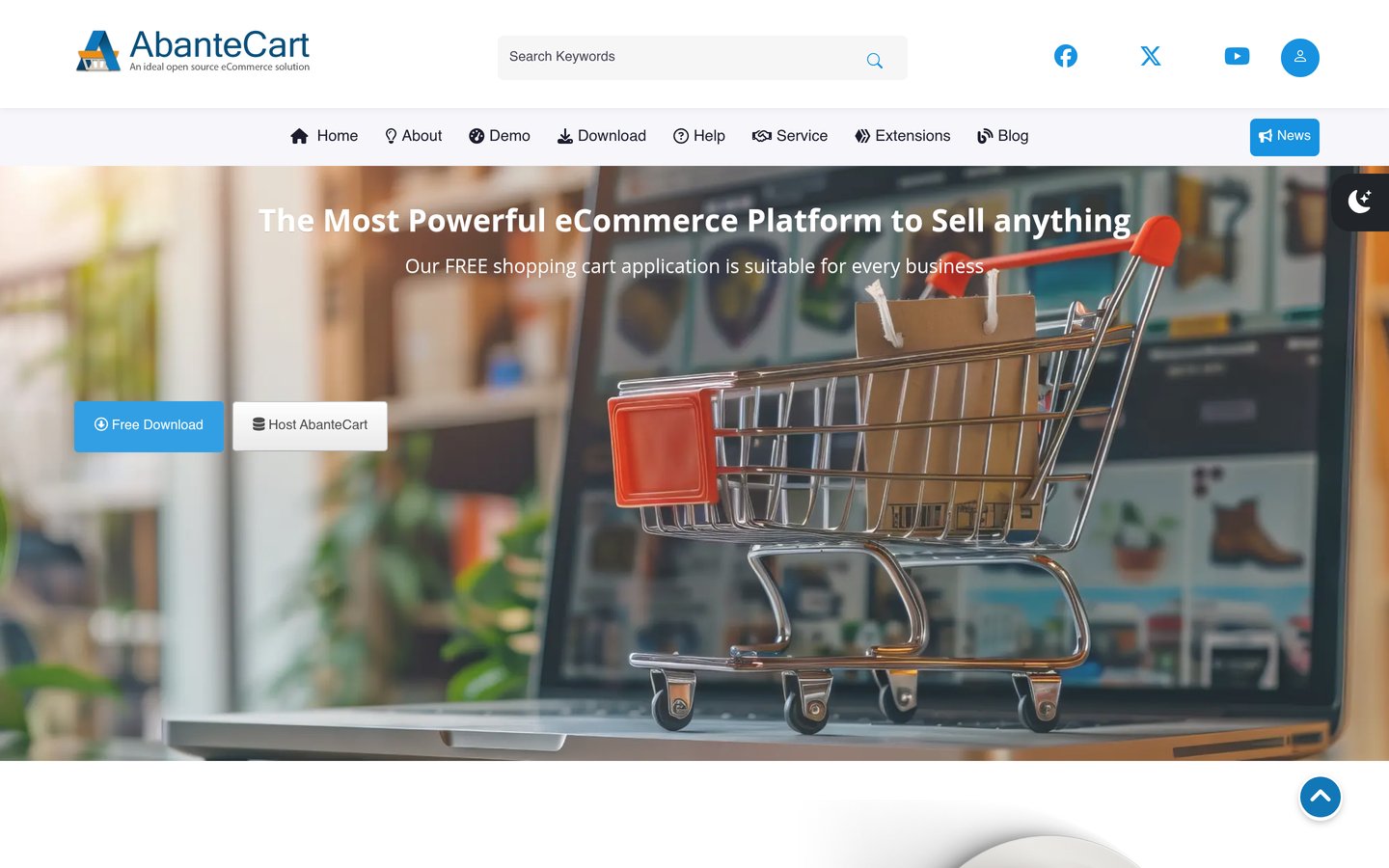
AbanteCart is a free open source store that is quick to install and easy to run, with product management, orders, coupons, shipping and a marketplace of extensions. It holds a 4.7 out of 5 rating on Capterra from 139 reviews.
The trade off is design. The default themes look plain, and the admin interface feels older than Shopware or Bagisto. It suits small shops that want a free store without the weight of Magento.
The software costs nothing, but a store does not run on software alone. Hosting, a domain, an SSL certificate and payment processing are the base costs for every platform here.
A shared host works for a small shop. A store with hundreds of daily orders needs managed hosting or a virtual server, and that is where the monthly bill grows.
Payment fees are the same on every platform, usually around 2.9% plus 30 cents per order with a card processor. Themes and extensions are the other cost, and they vary from free to several hundred dollars.
Budget for the first year as a whole. Add hosting, a domain, one theme and the two or three extensions you actually need, then compare that total across platforms.
How we chose
We started from the open source stores people actually run, then kept the nine with a verified rating on G2 or Capterra and a free core. Every platform here is free to download and use without a licence fee.
Prices come from each vendor's pricing page, checked on 25 November 2026. All nine cores cost $0, so the comparison focuses on hosting, extensions and how much developer help each one needs.
We left out platforms with no verified rating and hosted-only tools that are not open source. No vendor paid for a place, and we do not claim hands-on testing for this list.
How to choose an open source ecommerce platform
Start with your catalogue size and your technical help, then match the platform to that reality.
Count your products. Under 500 products, almost any platform here works. Over 5,000, look at Magento, Shopware or Sylius and a strong server.
Check your technical help. WordPress users suit WooCommerce. PHP teams suit PrestaShop or Shopware. No developer on hand means PrestaShop, OpenCart or AbanteCart.
Price the whole first year. Hosting, a domain, a theme and payment fees add up. A free core does not mean a free store, so add the extras before you commit.
Test with your own products. Install the platform, add ten real products and run a test order. Slow checkouts and missing features show up fast.
FAQ
What is the best open source ecommerce platform?
WooCommerce is the best open source ecommerce platform for most stores. It is free, runs on WordPress, powers more than 5 million stores and has the largest plugin and theme library in this list.
Is WooCommerce really free?
Yes, the WooCommerce plugin is free and open source. You pay for WordPress hosting, a domain, payment processing fees and any paid extensions or themes you choose to add.
Which open source platform is easiest for beginners?
PrestaShop and OpenCart are the easiest in this list. Both ship as complete stores that a shop owner can set up without writing code, and both have free themes and extensions.
Is Magento free?
Magento Open Source is free to download and use. Adobe Commerce is the paid edition and is priced by quote. Magento Open Source needs a developer and a strong server to run well.
What is the cheapest way to run an online store?
A free platform such as WooCommerce, PrestaShop or AbanteCart on low-cost hosting is the cheapest route. Expect to pay for hosting, a domain and payment fees, which are the main costs once the software is free.
Do open source stores handle taxes and shipping?
Yes. Every platform here handles tax rules, shipping rates and discounts out of the box or through a free extension. Check that your country and tax rules are covered before you launch.
SaaS SEO and WordPress specialist with about 8 years of experience. Rakib compares WordPress plugins, themes, hosting and software using public pricing, documentation and user reviews. See how we rank.