Zoho Inventory is the best multi channel inventory management software for most small and growing retailers, supporting 500 monthly orders and two locations from $29 per month billed annually. Cin7 Core is better for complex retail and wholesale operations, while Veeqo offers affordable inventory syncing for shipping-focused sellers.
How we make this list: we compare pricing pages, product documentation and public user reviews, then re-check every price before each update. No product paid for a place. Disclosure.
Zoho Inventory Standard costs $348 per year and includes 500 monthly orders.
Cin7 Core Standard supports unlimited inventory locations and five users for $349 per month.
Veeqo starts at $19 per month for automated multichannel inventory syncing.
inFlow Inventory starts at $1,188 per year with unlimited sales orders and products.
Ordoro Inventory Advanced supports unlimited warehouses and sales channels for $349 per month.
What multichannel inventory management software should cover
Selling through multiple marketplaces and online stores creates a stock management problem. A sale on one channel must reduce the available quantity elsewhere before another customer purchases the same item.
Look for centralized stock records, automatic inventory synchronization and order importing. Product identifiers should remain consistent across channels, even when listings use different names or descriptions.
Pricing depends on more than the subscription fee. Vendors may limit monthly orders, warehouse locations, user accounts or connected sales channels, making the cheapest plan unsuitable for growing businesses.
Check how each platform handles product bundles, returns, reserved inventory and warehouse transfers. These workflows become increasingly important as your product catalog and fulfillment network expand.
For small marketplace sellers and product listings
$29/mo
Free plan
4.7/5
Price ladder: cheapest paid plan per year
List prices, USD, checked Nov 2026
LinnworksCustom
VeeqoFREE$228
ZohoFREE$348
SellbriteFREE$348
inFlow$1,188
Cin7 Core$4,188
OrdoroFREE$4,188
The 7 best multi channel inventory management software tools
01
Zoho Inventory
4.4/5on G2 (93 reviews, checked Nov 2026)
Paid from$29/mo
Best for small and growing multichannel retailers
Entry planStandard
Monthly orders500
Users2
Locations2
zoho.com
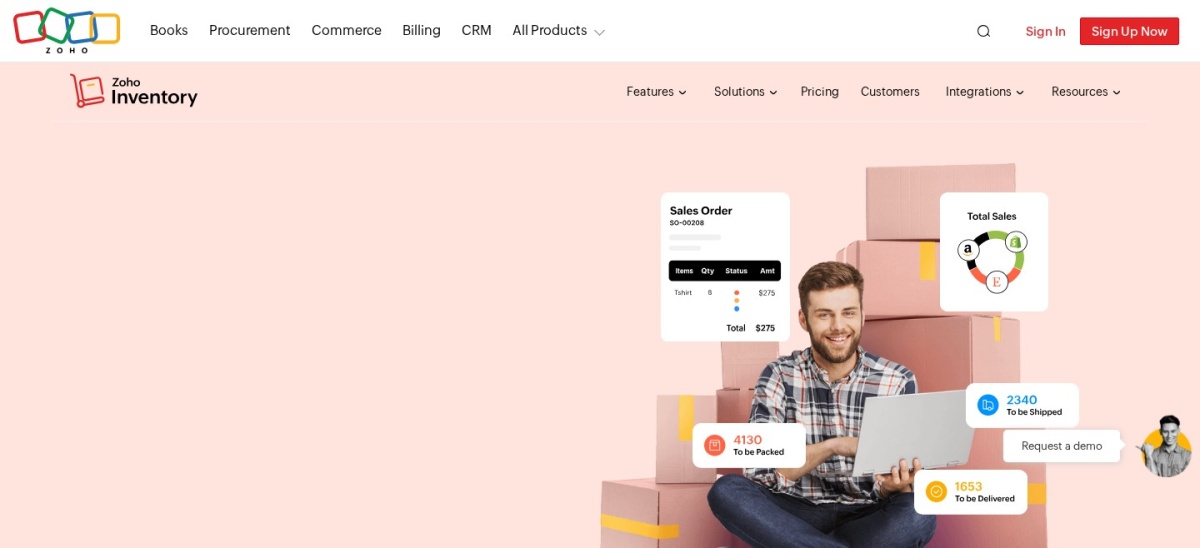
Zoho Inventory homepage, captured Nov 2026.
Zoho Inventory is a cloud inventory management platform that connects online sales, purchasing and fulfillment workflows. Standard includes 500 monthly orders, two users, two inventory locations, composite products and backorder management.
The trade off is that order allowances and user limits can restrict growing teams on the $29 monthly plan billed annually. Serial and batch tracking require Professional at $79 per month billed annually. It suits smaller retailers seeking affordable inventory control and integrated business applications.
What we like
Affordable annual subscription
Purchasing and sales management together
Composite product support
Integrates with the wider Zoho ecosystem
Watch out for
Monthly order allowances apply
Advanced inventory tracking requires upgrades
Limited included user accounts
Standard increases order capacity and adds composite items.Visit zoho.com
02
Cin7 Core
4.3/5on G2 (353 reviews, checked Nov 2026)
Starts at$349/mo
Best for growing retail and wholesale businesses
Entry planStandard
Annual sales orders6,000
Users5
Inventory locationsUnlimited
cin7.com
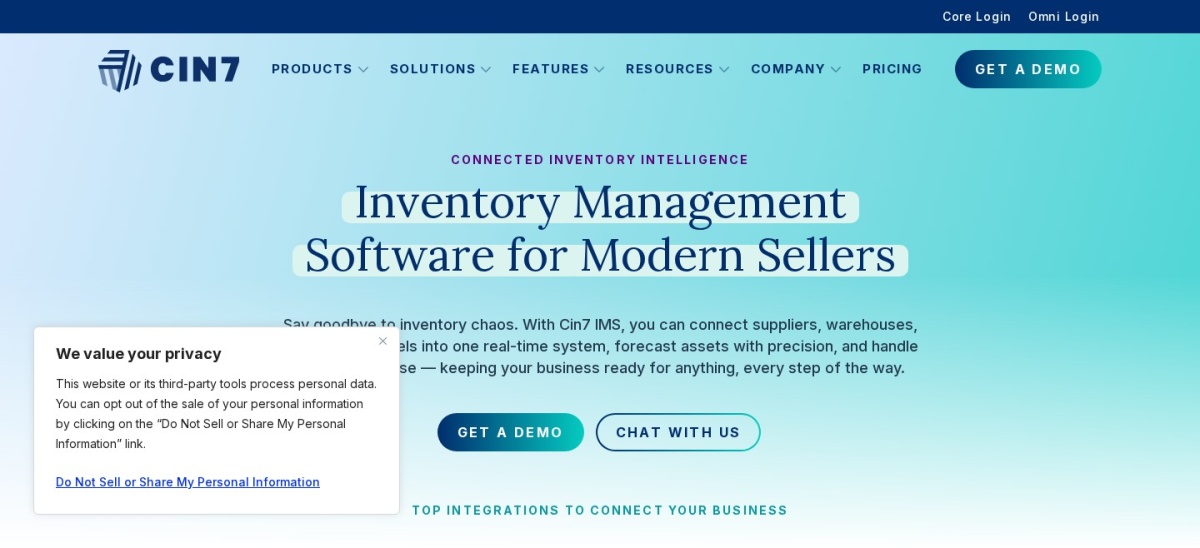
Cin7 Core homepage, captured Nov 2026.
Cin7 Core is an inventory and operations platform for businesses selling through retail, wholesale and ecommerce channels. Its Standard subscription includes five users, 6,000 annual sales orders, unlimited stock locations and two ecommerce or application integrations.
The trade off is the $349 monthly starting price and additional costs when businesses exceed their integration allowances. Advanced warehouse functionality and forecasting may also increase expenses. It suits established retailers that need purchasing, inventory accounting and fulfillment coordination.
What we like
Combines purchasing and inventory operations
Unlimited inventory locations
Accounting integrations
Supports wholesale and ecommerce workflows
Watch out for
High starting subscription cost
Additional integrations may cost extra
Advanced warehouse features require upgrades
Standard includes inventory control and basic warehouse management.Visit cin7.com
03
Veeqo
4.5/5on G2 (47 reviews, checked Nov 2026)
Paid from$19/mo
Best for affordable inventory syncing and shipping
Entry inventory planInventory
UsersUnlimited
Stock synchronizationPaid plan
Free shipping planAvailable
veeqo.com
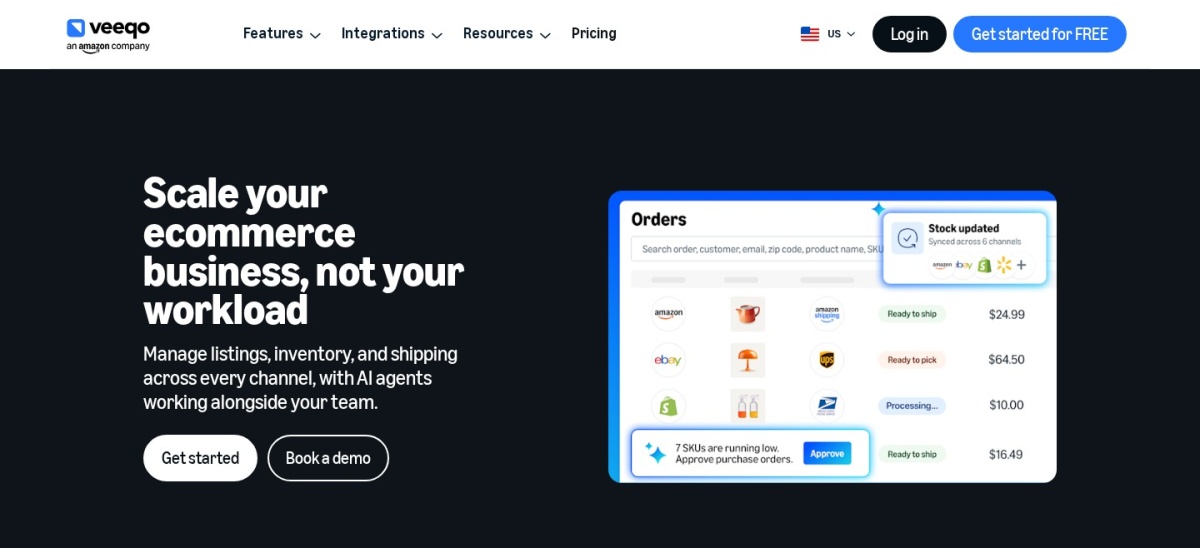
Veeqo homepage, captured Nov 2026.
Veeqo is a multichannel shipping and inventory platform that connects marketplaces and online storefronts. Its Inventory subscription starts at $19 per month and adds automated stock synchronization, demand forecasting and digital picking to its shipping features.
The trade off is that the free Shipping subscription does not include automated inventory synchronization, and paid pricing scales with monthly order volume. The advertised $19 monthly rate is therefore a starting price. It suits ecommerce sellers that prioritize shipping and stock accuracy.
What we like
Low inventory subscription entry price
Unlimited user accounts
Integrated shipping workflows
Demand forecasting included with Inventory
Watch out for
Automatic stock syncing requires payment
Pricing increases with order volume
Shipping-focused rather than a full ERP
Inventory adds automatic stock synchronization and forecasting.Visit veeqo.com
04
inFlow Inventory
4.4/5on G2 (58 reviews, checked Nov 2026)
Starts at$99/mo
Best for product-heavy businesses with unlimited orders
Entry planLite
Sales ordersUnlimited
Team members2
Inventory locations1
inflowinventory.com
inFlow Inventory homepage, captured Nov 2026.
inFlow Inventory is an inventory management system that connects sales, purchasing, barcode workflows and ecommerce integrations. The Lite subscription includes unlimited products, sales, purchases and integrations, with access for two team members at one inventory location.
The trade off is that the $99 monthly rate requires annual billing, while monthly billing costs $129. Additional users, locations and certain inventory features increase the subscription cost. It suits smaller distribution and ecommerce teams processing substantial order volumes from a central warehouse.
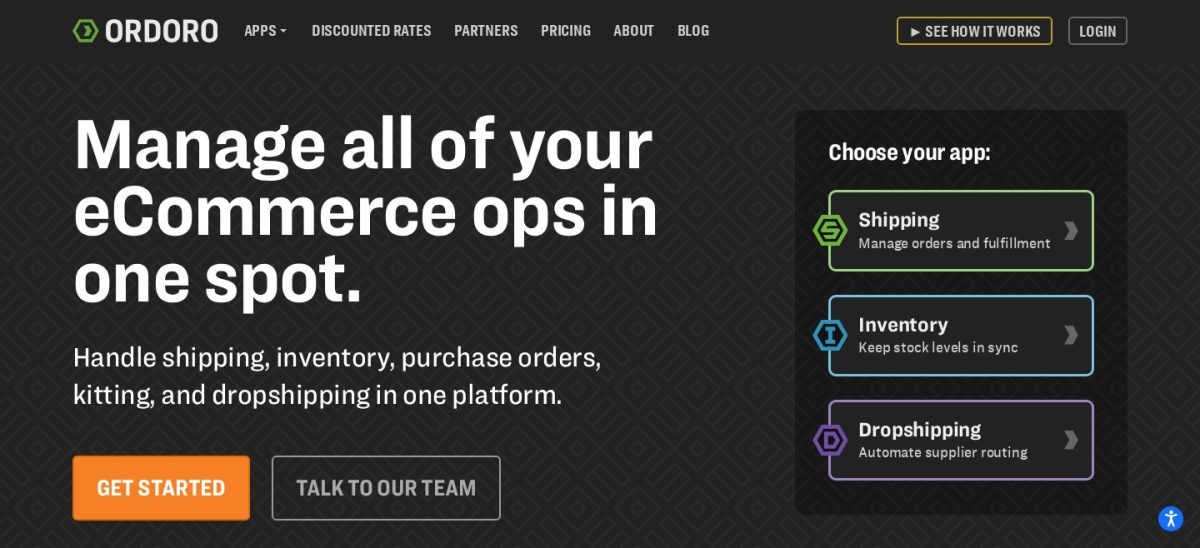
Ordoro is an ecommerce operations platform offering separate shipping, inventory and dropshipping applications. Its Inventory Advanced plan supports 1,000 monthly orders, unlimited users, sales channels and warehouses, alongside product bundling and stock allocation.
The trade off is that inventory management starts at $349 per month, despite the availability of a free shipping application. Additional blocks of 1,000 monthly orders cost $100, while purchase orders require the $499 Premium plan. It suits established sellers managing distributed stock and product bundles.
What we like
Unlimited connected sales channels
Unlimited warehouses and users
Product kitting and bundling
Warehouse transfers and allocation
Watch out for
No free inventory management subscription
Order overage charges apply
Purchase orders require Premium
Inventory Advanced adds stock control, bundles and warehouse transfers.Visit ordoro.com
06
Linnworks
4.4/5on G2 (122 reviews, checked Nov 2026)
PricingCustom pricing
Best for high-volume marketplace operations
Pricing modelOrder volume
Stock synchronizationSupported
Order routingSupported
Warehouse managementAvailable
linnworks.com
Linnworks homepage, captured Nov 2026.
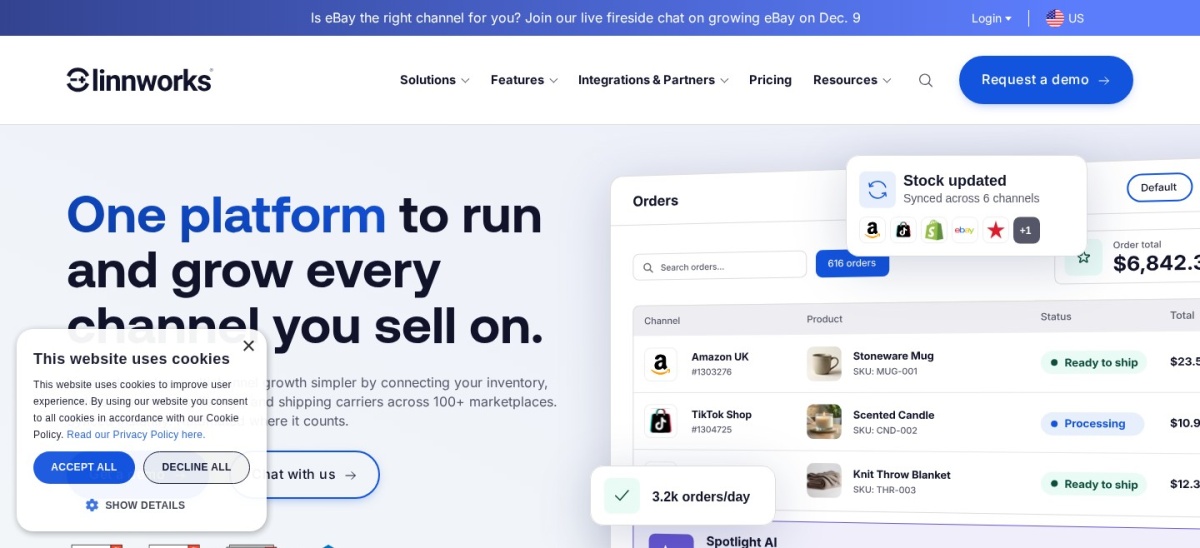
Linnworks is a multichannel commerce management platform covering marketplace listings, inventory, order processing and fulfillment. Its subscription pricing depends on order volume rather than a percentage of sales revenue, with automation options for routing orders and updating stock records.
The trade off is that Linnworks uses custom pricing, making subscription comparisons difficult without a sales quote. Onboarding requirements and optional modules can also influence the total cost. It suits established ecommerce businesses with complex fulfillment operations and multiple selling channels.
What we like
Centralized marketplace operations
Configurable order routing
No percentage-of-revenue pricing
Inventory and warehouse management
Watch out for
No public starting subscription price
Implementation requires planning
Optional modules can increase costs
Paid subscriptions combine inventory, listings and order management.Visit linnworks.com
07
Sellbrite
4.7/5on G2 (24 reviews, checked Nov 2026)
Paid from$29/mo
Best for small marketplace sellers and product listings
Entry planPro 100
Monthly free orders30
Monthly paid orders100
Paid sync interval15 minutes
sellbrite.com
Sellbrite homepage, captured Nov 2026.
Sellbrite is a multichannel selling platform for managing product listings, inventory quantities and marketplace orders. Its free subscription supports 30 monthly orders, unlimited SKUs and unlimited sales channels, with inventory updates every two hours.
The trade off is slower synchronization on the free subscription and relatively low order allowances. Pro 100 costs $29 per month and updates inventory every 15 minutes, while FBA inventory integration costs an additional $19 monthly. It suits smaller marketplace sellers with straightforward inventory requirements.
What we like
Permanent free subscription
Unlimited SKUs and sales channels
Marketplace listing management
Affordable paid entry plan
Watch out for
Free inventory updates occur every two hours
Paid subscriptions have order limits
FBA inventory integration costs extra
Pro 100 increases order capacity and accelerates stock synchronization.Visit sellbrite.com
Why inventory synchronization frequency matters
Inventory synchronization is particularly important when multiple marketplaces sell products from the same warehouse. Longer intervals between updates increase the possibility of accepting orders for unavailable stock.
Sellbrite illustrates how synchronization frequency can differ between subscriptions. Its free plan updates inventory every two hours, compared with every 15 minutes on paid plans.
Businesses selling fast-moving products should also evaluate inventory reservations, safety stock buffers and failed synchronization alerts. Automatic updates alone cannot guarantee that overselling will never happen.
How we chose
We shortlisted established inventory management platforms that support multiple ecommerce stores, marketplaces or retail sales channels. We prioritized centralized stock control, order management, integration coverage, subscription costs and public customer feedback.
The editorial check date is 22 Nov 2026. Pricing and ratings are based on the official vendor pages, G2 and Capterra sources opened for this comparison. Annual costs are calculated from published subscription rates, excluding optional services and taxes; historical snapshots for the editorial date were not independently verified.
We excluded single-channel inventory applications, shipping-only products without paid inventory capabilities and platforms lacking sufficient public review evidence. Custom pricing is included where the vendor explicitly requires a quote. No vendor paid for a place, and we do not claim testing for this list.
How to choose multi channel inventory management software
Evaluate your sales channels, fulfillment processes and expected order growth before committing to an inventory management subscription.
**Confirm your sales channel integrations.** Check whether the platform connects directly to your existing marketplaces, storefronts and accounting applications. Identify integrations that require additional subscriptions or third-party connectors.
**Calculate your expected annual cost.** Include subscription fees, additional users, warehouse charges, order overages and integration costs. Compare plans using your expected peak-season order volume rather than average monthly sales alone.
**Evaluate stock synchronization and warehouse controls.** Check update frequency, stock reservation rules, warehouse allocation and product bundle handling. Make sure returns and canceled orders update inventory quantities correctly.
**Validate your workflows before subscribing.** Use an available trial or vendor demonstration to confirm SKU mapping, order importing, purchasing and fulfillment processes. Check whether you can export your inventory data if you change providers later.
FAQ
What is the best multi channel inventory management software?
Zoho Inventory is our top pick for most smaller ecommerce businesses because its Standard subscription costs $29 per month billed annually and supports 500 monthly orders. Cin7 Core is better suited to retailers with more complex purchasing, wholesale and inventory operations.
What is multichannel inventory management software?
Multichannel inventory management software centralizes stock quantities, sales orders and product information across connected sales channels. It helps businesses coordinate inventory availability, fulfillment and purchasing without manually updating each marketplace or storefront whenever products are sold.
Is there free multichannel inventory management software?
Yes. Zoho Inventory offers a free subscription with 50 orders, while Sellbrite supports 30 monthly orders on its free plan. Veeqo also provides free shipping management, although automated multichannel inventory synchronization requires its paid Inventory subscription.
How much does multichannel inventory management software cost?
Public entry prices in this comparison range from $19 per month for Veeqo Inventory to $349 per month for Cin7 Core and Ordoro Inventory. Actual expenses depend on order volumes, warehouse requirements, additional users, integrations and billing arrangements.
Which inventory software supports multiple warehouses?
Zoho Inventory, Cin7 Core, Ordoro and Sellbrite support inventory management across multiple locations. Cin7 Core and Ordoro include unlimited inventory locations or warehouses in their entry inventory subscriptions, although specific warehouse management functions may require additional features.
Can multichannel inventory software prevent overselling?
Inventory software reduces overselling by updating available stock across connected sales channels when purchases occur. However, delayed updates, integration failures and incorrect SKU mappings can still cause problems. Inventory buffers and synchronization monitoring provide additional protection.
Which multichannel inventory software is best for high order volumes?
Linnworks suits established businesses requiring centralized order automation and warehouse coordination. inFlow Inventory is another option because its subscriptions include unlimited sales orders, although warehouse locations and team access depend on the selected subscription tier.
What is the difference between multichannel inventory software and ERP software?
Multichannel inventory software primarily manages stock, orders and fulfillment across sales channels. ERP software typically covers broader operations such as finance, procurement, manufacturing and business planning. Businesses needing both may prefer an inventory platform with accounting and manufacturing integrations.
SaaS SEO and WordPress specialist with about 8 years of experience. Rakib compares WordPress plugins, themes, hosting and software using public pricing, documentation and user reviews. See how we rank.