OneSignal is the best mobile-first customer engagement platform for most businesses, with paid subscriptions starting at $19 per month plus messaging charges. Customer.io suits teams building behavior-driven customer journeys, while Pushwoosh offers flexible usage-based pricing and free omnichannel engagement for up to 1,000 monthly active users.
How we make this list: we compare pricing pages, product documentation and public user reviews, then re-check every price before each update. No product paid for a place. Disclosure.
OneSignal holds a 4.7/5 G2 rating from 1,258 reviews, with paid plans starting at $19 per month.
Customer.io starts at $100 per month for 5,000 customer profiles.
Pushwoosh supports up to 1,000 monthly active users and 20,000 monthly emails for free.
Braze holds a 4.5/5 G2 rating from 1,999 reviews and offers custom subscriptions.
MoEngage reports adoption by more than 1,350 businesses and holds a 4.5/5 G2 rating.
What mobile-first customer engagement platforms should cover
Mobile-first customer engagement platforms help businesses communicate with customers through mobile push notifications, in-app messages and other messaging channels. They connect application behavior with targeted campaigns designed to improve activation, retention and repeat purchases.
Look for behavioral segmentation and event-triggered messaging. These capabilities let marketers send relevant communications when customers complete an action, abandon a purchase or stop using an application.
Customer journey automation helps coordinate messages across mobile push, email, SMS and other supported channels. Frequency controls, consent management and delivery timing are important for avoiding excessive notifications.
Pricing can depend on monthly active users, stored customer profiles, messaging volume or platform subscriptions. Compare the complete cost of reaching your expected audience rather than relying only on the advertised starting price.
The 7 best mobile-first customer engagement platforms
01
OneSignal
4.7/5on G2 (1,258 reviews, checked Nov 2026)
Paid from$19/mo
Best for mobile push and multichannel messaging
Free mobile audience1,000 monthly active users
Paid mobile push$0.012 per monthly active user
In-app messagingIncluded with mobile push
Paid planGrowth
onesignal.com
OneSignal homepage, captured Nov 2026.
OneSignal is a customer messaging platform rated 4.7/5 from 1,258 G2 reviews. Its free subscription includes basic automation, segmentation and mobile messaging for organizations with up to 1,000 monthly active users.
The trade off is additional channel usage charges beyond the $19 monthly Growth platform fee. Mobile push costs $0.012 per monthly active user on Growth. It suits mobile application businesses looking for accessible notification tools and expandable customer engagement workflows.
What we like
Permanent free subscription
Published platform and mobile push pricing
Mobile push and in-app messaging
Developer SDKs and messaging API
Watch out for
Usage charges increase with audience size
Advanced experimentation requires higher tiers
Some channels require separate pricing
Growth adds expanded automation, integrations, analytics and personalization.Visit onesignal.com
02
Customer.io
4.4/5on G2 (1,016 reviews, checked Nov 2026)
Starts at$100/mo
Best for behavior-driven customer journeys
Entry profiles5,000
Monthly email allowance1 million
Workflow builderVisual
Paid planEssentials
customer.io
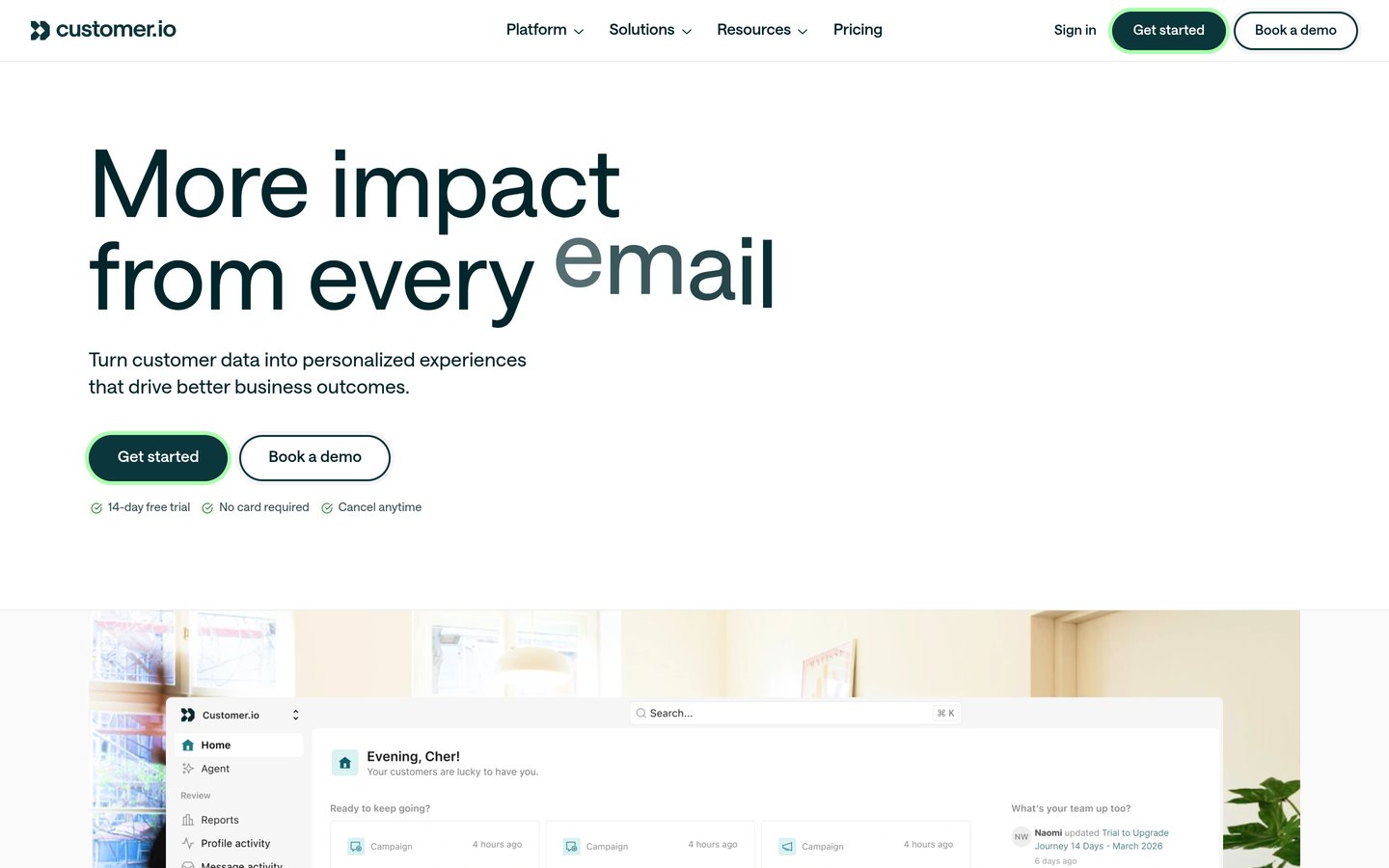
Customer.io homepage, captured Nov 2026.
Customer.io is a messaging automation platform that uses customer events and profile attributes to coordinate lifecycle campaigns. Its Essentials subscription includes 5,000 profiles, a monthly allowance of 1 million emails and a visual workflow editor.
The trade off is a higher entry subscription of $100 per month and the need to configure reliable customer event tracking. Premium starts at $1,000 per month with annual billing. It suits product-led businesses building detailed customer onboarding and retention campaigns.
What we like
Event-based campaign triggers
Visual customer journey editor
Mobile push and in-app messaging
Published entry subscription pricing
Watch out for
No permanent free subscription
Technical setup requires reliable event data
Large profile databases increase costs
Essentials provides data-driven messaging and visual campaign automation.Visit customer.io
03
Pushwoosh
4.4/5on G2 (56 reviews, checked Nov 2026)
Paid from$13/mo
Best for flexible usage-based engagement
Free audience1,000 monthly active users
Free emails20,000 per month
Push notificationsUnlimited sends
Paid pricing$13 per 1,000 MAU, omnichannel
pushwoosh.com
Pushwoosh homepage, captured Nov 2026.
Pushwoosh is a customer engagement platform offering mobile push, in-app messaging, email and other communication channels. Its free allowance covers up to 1,000 monthly active users, with unlimited push notifications and 20,000 monthly email sends.
The trade off is audience-based billing and separate third-party messaging charges. Standard omnichannel usage costs $13 per 1,000 monthly active users, while a restricted push-only offer is advertised at $7. It suits mobile businesses wanting flexible billing without extensive feature restrictions.
What we like
Free omnichannel engagement allowance
Published usage-based pricing
Campaign automation and audience segmentation
Unlimited push notifications
Watch out for
Monthly costs depend on active audience size
External messaging providers charge separately
Smaller G2 review sample than competing platforms
Paid usage expands audience capacity while retaining platform features.Visit pushwoosh.com
04
Braze
4.5/5on G2 (1,999 reviews, checked Nov 2026)
PricingCustom pricing
Best for enterprise customer journeys
Journey automationCanvas
Mobile channelsPush and in-app messaging
PersonalizationReal-time customer data
Paid planCustom subscription
braze.com
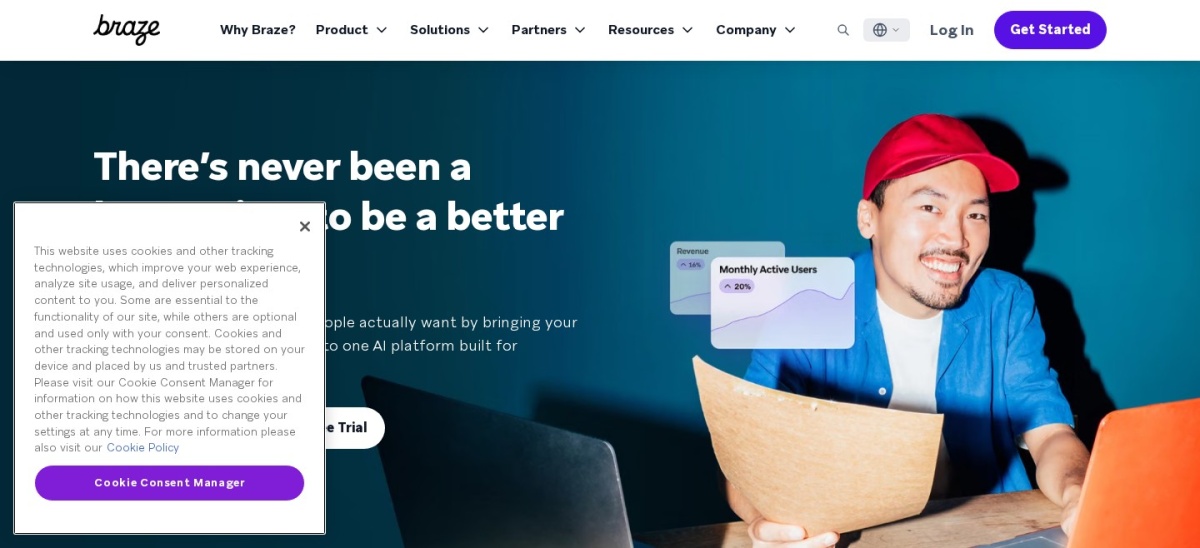
Braze homepage, captured Nov 2026.
Braze is an enterprise customer engagement platform rated 4.5/5 from 1,999 G2 reviews. Its campaign orchestration capabilities connect customer data with mobile notifications, in-app experiences, email and other messaging channels.
The trade off is custom subscription pricing and greater implementation requirements than simpler notification tools. Braze does not offer a permanent free plan. It suits established consumer businesses coordinating complex customer journeys across multiple channels.
What we like
Cross-channel customer journey automation
Real-time customer personalization
Campaign experimentation
Established enterprise review history
Watch out for
No published starting subscription price
Implementation requires technical resources
No permanent free plan
Paid subscriptions combine customer data, messaging and journey orchestration.Visit braze.com
05
MoEngage
4.5/5on G2 (535 reviews, checked Nov 2026)
PricingCustom pricing
Best for analytics-driven mobile retention
Vendor adoption1,350+ businesses
Messaging coverage16+ channels
Customer analyticsBehavioral segmentation
Paid planSales-based subscription
moengage.com
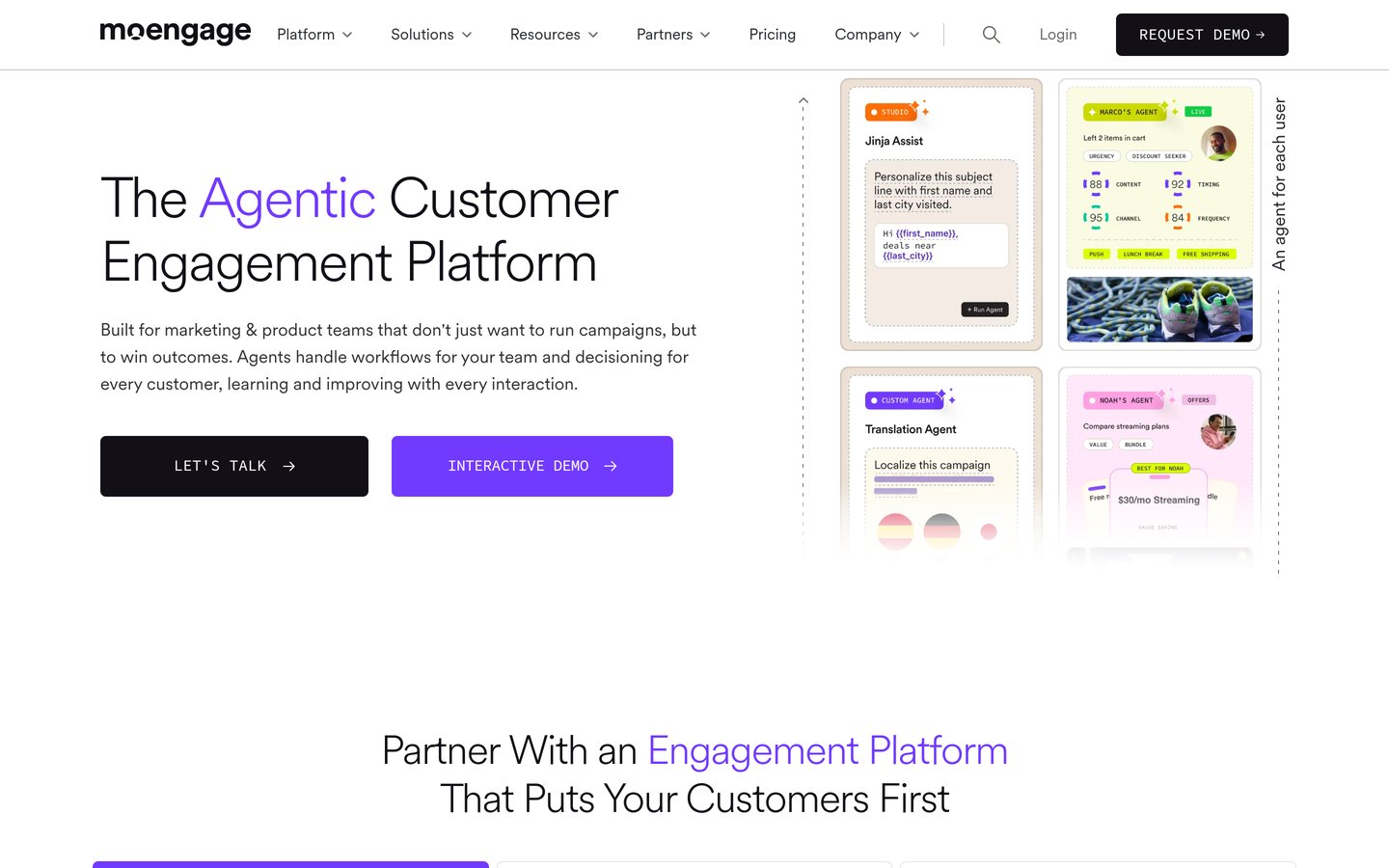
MoEngage homepage, captured Nov 2026.
MoEngage is a customer engagement platform combining audience analytics, campaign automation and personalized messaging. The vendor reports adoption by more than 1,350 businesses and supports engagement across more than 16 communication channels.
The trade off is quote-based pricing and the need to configure customer data integrations. Subscription costs depend on the selected package and business requirements. It suits consumer brands that want to connect mobile retention campaigns with detailed behavioral insights.
Paid packages combine customer analytics, personalization and campaign automation.Visit moengage.com
06
Airship
4/5on G2 (83 reviews, checked Nov 2026)
PricingCustom pricing
Best for native mobile app experiences
Native experiencesNo-code editor
Mobile messagingPush and in-app
Mobile walletSupported
Entry productAirship Essentials
airship.com
Airship homepage, captured Nov 2026.
Airship is a customer experience platform rated 4.0/5 from 83 G2 reviews. Its Essentials offering focuses on creating native application and web experiences using a no-code interface, while its broader platform supports customer journeys and cross-channel messaging.
The trade off is limited pricing transparency, with enterprise subscriptions requiring a quote and no confirmed public starting price for Essentials. It suits mobile product teams that want to improve onboarding and customer interactions without rebuilding application interfaces for every campaign.
What we like
No-code native application experiences
Mobile wallet support
Cross-channel customer journey management
Customer preference collection
Watch out for
Public entry subscription price requires confirmation
Smaller G2 review sample
Enterprise features require package evaluation
Paid offerings provide native experience creation and customer journey management.Visit airship.com
07
Iterable
4.4/5on G2 (846 reviews, checked Nov 2026)
PricingCustom pricing
Best for coordinated lifecycle marketing
Campaign managementCross-channel
Journey automationVisual workflows
Audience managementCustomer data segmentation
Paid planSubscription requires confirmation
iterable.com
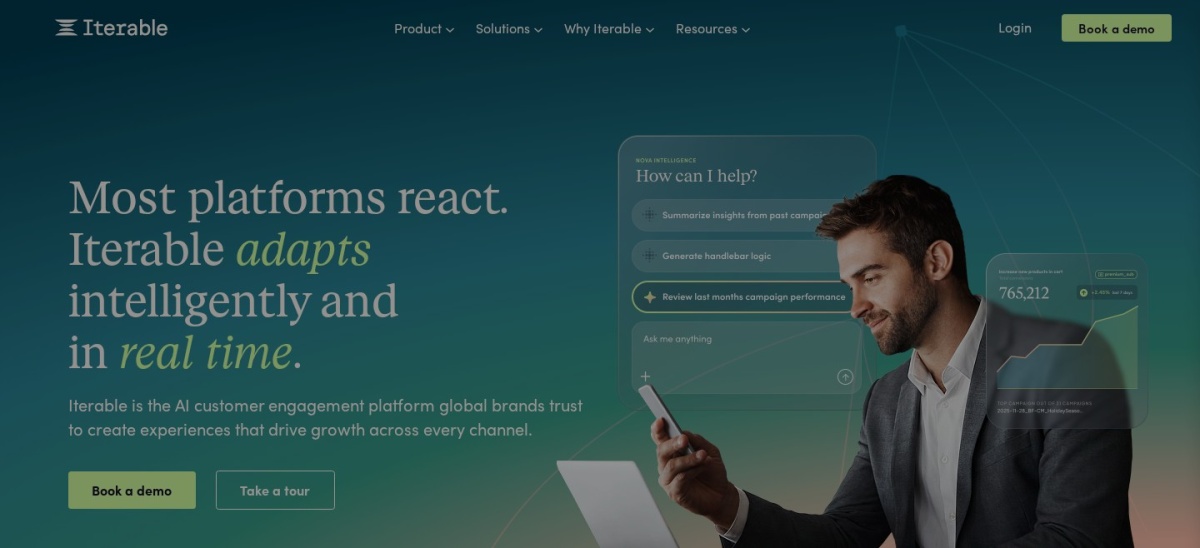
Iterable homepage, captured Nov 2026.
Iterable is a customer engagement platform rated 4.4/5 from 846 G2 reviews. It combines audience management, campaign workflows and personalized customer communications for businesses managing engagement across mobile and other digital channels.
The trade off is the absence of public subscription pricing, with its pricing URL redirecting to the main website. Buyers must confirm costs and included features directly with the vendor. It suits established marketing teams coordinating customer engagement throughout the customer lifecycle.
What we like
Cross-channel lifecycle marketing
Customer audience segmentation
Visual campaign workflows
Substantial public review history
Watch out for
Pricing page redirects to the homepage
Subscription costs require confirmation
Implementation can require data integration work
Confirm messaging channels, usage allowances and automation features with sales.Visit iterable.com
Mobile push notifications vs in-app messaging
Mobile push notifications reach customers outside an application, provided they have granted the necessary permissions. They are useful for transaction updates, abandoned purchase reminders and campaigns encouraging inactive customers to return.
In-app messages appear while customers are actively using an application. They work well for feature announcements, onboarding guidance, relevant offers and customer feedback requests.
Combining both channels helps businesses communicate at appropriate moments. Use push notifications to encourage customers to return and in-app messaging to guide their next actions without interrupting important workflows.
How we chose
We shortlisted established mobile customer engagement platforms using official product pages, pricing information and G2 reviews. We prioritized mobile messaging, behavioral segmentation, customer journey automation, personalization and transparent subscription costs.
The editorial reference date is 22 Nov 2026. Prices and ratings reflect the accessible source pages rather than an independently verified historical snapshot. Pushwoosh's annual figure represents its standard omnichannel usage rate for 1,000 billable monthly active users. OneSignal's annual figure excludes channel charges. Custom pricing entries use zero to represent unavailable annual costs, not free access.
We excluded CleverTap because a regular USD subscription price could not be confirmed. Iterable was retained under the custom pricing exception, although its pricing URL redirects. We also excluded products without relevant mobile engagement capabilities. No vendor paid for a place, and we do not claim testing for this list.
How to choose a mobile-first customer engagement platform
Compare customer communication requirements, application integrations, audience size and campaign automation capabilities before selecting an engagement platform.
Identify your essential messaging channels. Determine whether your business needs mobile push notifications, in-app messages, email, SMS, mobile wallet experiences or other communication channels.
Define your customer journey requirements. List the onboarding, activation, retention and reactivation campaigns you want to automate. Check whether each platform supports the necessary event triggers and personalization rules.
Calculate your expected subscription costs. Estimate monthly active users, stored customer profiles and expected message volumes. Include platform fees, usage charges and additional communication provider costs.
Review integration and privacy requirements. Confirm compatibility with your application SDKs, customer databases and analytics systems. Review consent management, customer data protection and communication frequency controls.
FAQ
What is the best mobile-first customer engagement platform?
OneSignal is our top recommendation because it combines mobile push notifications, in-app messaging and accessible subscription pricing. Customer.io is a suitable alternative for event-driven automation, while Pushwoosh offers flexible audience-based pricing with a generous free allowance.
Are there free mobile-first customer engagement platforms?
Yes. OneSignal provides a free subscription for organizations with up to 1,000 monthly active mobile users. Pushwoosh also offers free omnichannel engagement for up to 1,000 monthly active users, including unlimited push notifications and in-app impressions.
How much do mobile customer engagement platforms cost?
OneSignal starts at $19 per month before channel charges, while Customer.io starts at $100 per month. Pushwoosh charges $13 per 1,000 monthly active users for standard omnichannel usage beyond its free allowance. Enterprise subscriptions generally require custom quotes.
What is the difference between customer engagement software and CRM software?
CRM software primarily organizes customer records, relationships and associated business activities. Customer engagement platforms use customer data to personalize communications, automate journeys and encourage customer actions. Many businesses integrate both systems to coordinate customer information and engagement campaigns.
Can mobile engagement platforms improve customer retention?
Mobile engagement platforms can support retention through personalized onboarding, relevant notifications, automated reactivation campaigns and customer behavior analysis. Results depend on campaign quality, customer preferences, product experience and how effectively businesses use their customer data.
Do mobile engagement platforms require application development work?
Most platforms require initial SDK or API integration to collect application events and deliver mobile messages. After implementation, visual campaign editors and no-code tools can allow marketing teams to manage many engagement activities without ongoing developer involvement.
SaaS SEO and WordPress specialist with about 8 years of experience. Rakib compares WordPress plugins, themes, hosting and software using public pricing, documentation and user reviews. See how we rank.