365Talents is the best career management software for most employers, with AI skills matching and personalised career paths rated 4.8/5 on G2. Pick Leapsome for the cheapest priced plan at $7 a month, or Fuel50 for dedicated career pathing with mentoring and gigs.
How we make this list: we compare pricing pages, product documentation and public user reviews, then re-check every price before each update. No product paid for a place. Disclosure.
365Talents leads with a 4.8 out of 5 G2 rating from 112 reviews, the highest score in this list.
Leapsome is the cheapest priced option here, with its Reviews module at $7 per user a month.
Seven of the nine tools publish no price, so expect a sales quote and an annual contract.
Fuel50 is the most focused career pathing tool, covering skills profiles, mentoring and internal gigs.
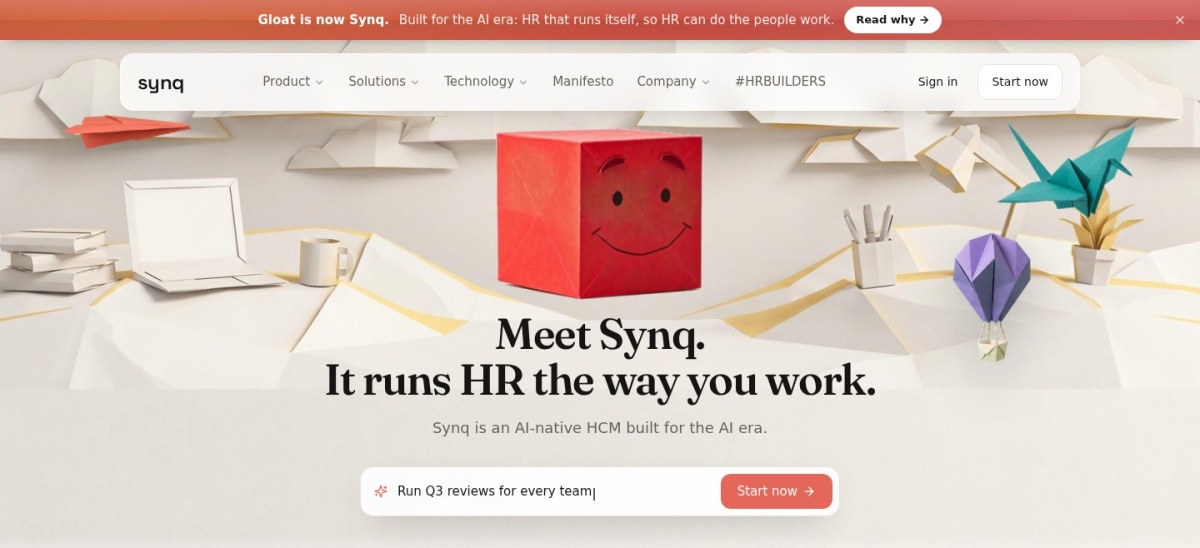
Gloat rebranded as Synq in 2026, so its homepage now shows the Synq name.
What career management software should cover
Career management software shows employees where they can go next inside the company, and shows managers who is ready for the move.
The core pieces are career paths, a skills record for each employee, and a way to match people to open roles, projects or mentors.
Most dedicated tools in this list are built for large employers. They sell annual contracts and publish no price, so budget talks start with a sales call.
Suites such as Leapsome and Lattice add career paths to reviews and goals, which suits mid-size teams that want one platform. Check whether pathing is in the base plan or a paid add-on before you shortlist.
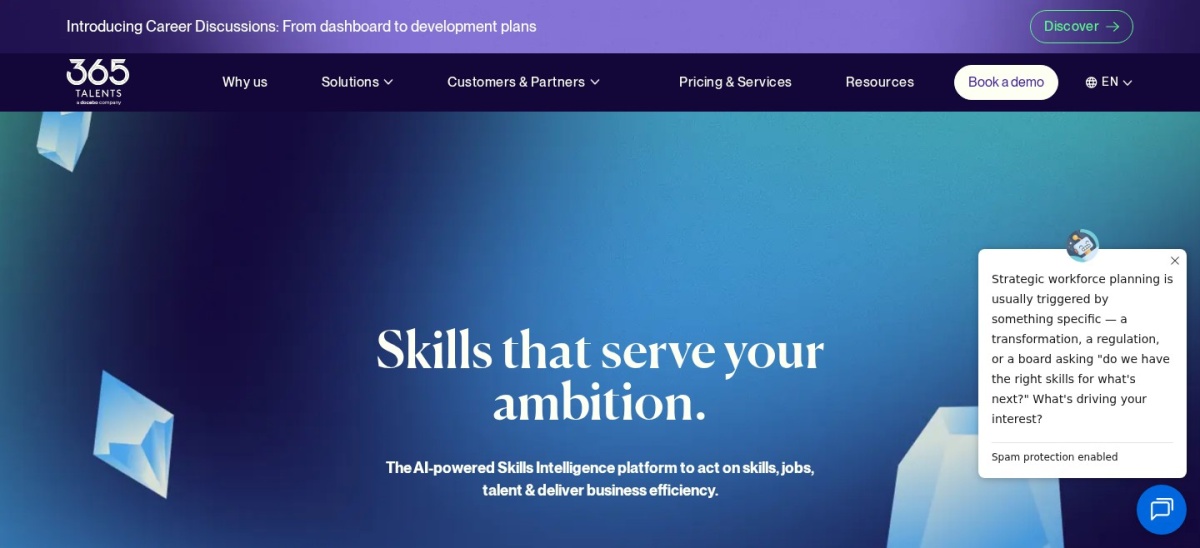
365Talents is an AI skills platform that matches employees to roles, gigs and projects from their skills profile. It builds personalised career paths from declared and inferred skills, and shows managers where skills sit across the company.
The trade off is price. 365Talents publishes no price and sells by quote, so it suits larger employers with a skills strategy rather than a small team buying its first HR tool. It fits companies that want skills data driving internal moves.
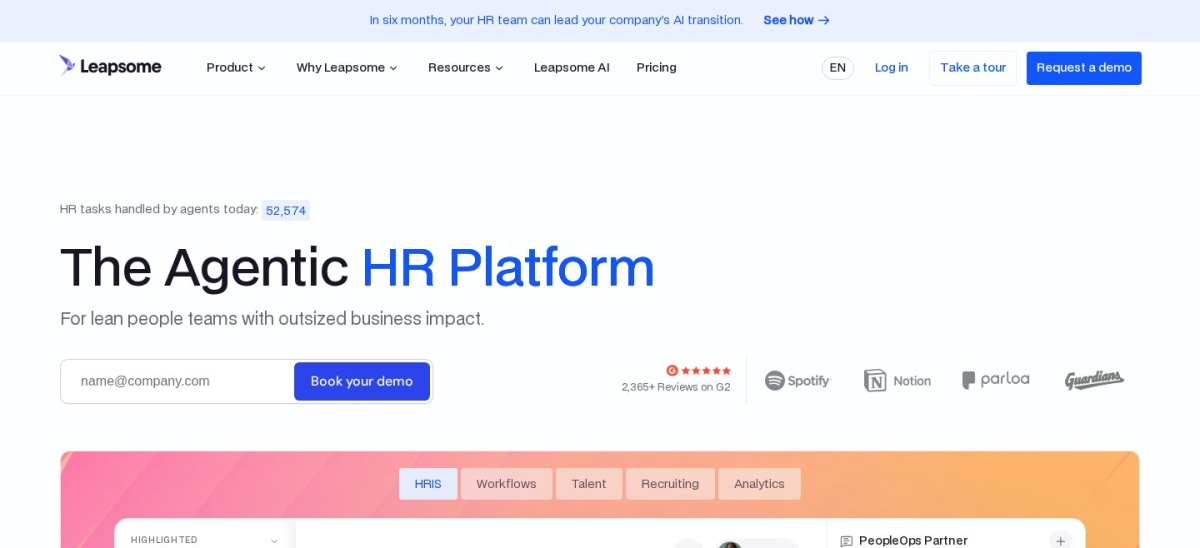
Leapsome is a people platform that links reviews, goals, learning and career paths in one place. Its Reviews module costs $7 per user a month, and the HRIS Foundation is free with a module until 31 December 2026, when its regular price of $7 applies.
The trade off is modular pricing. Each module is priced per user, so reviews plus goals plus learning costs more than the $7 starting figure. It suits mid-size teams that want reviews and development paths without an enterprise sales cycle.
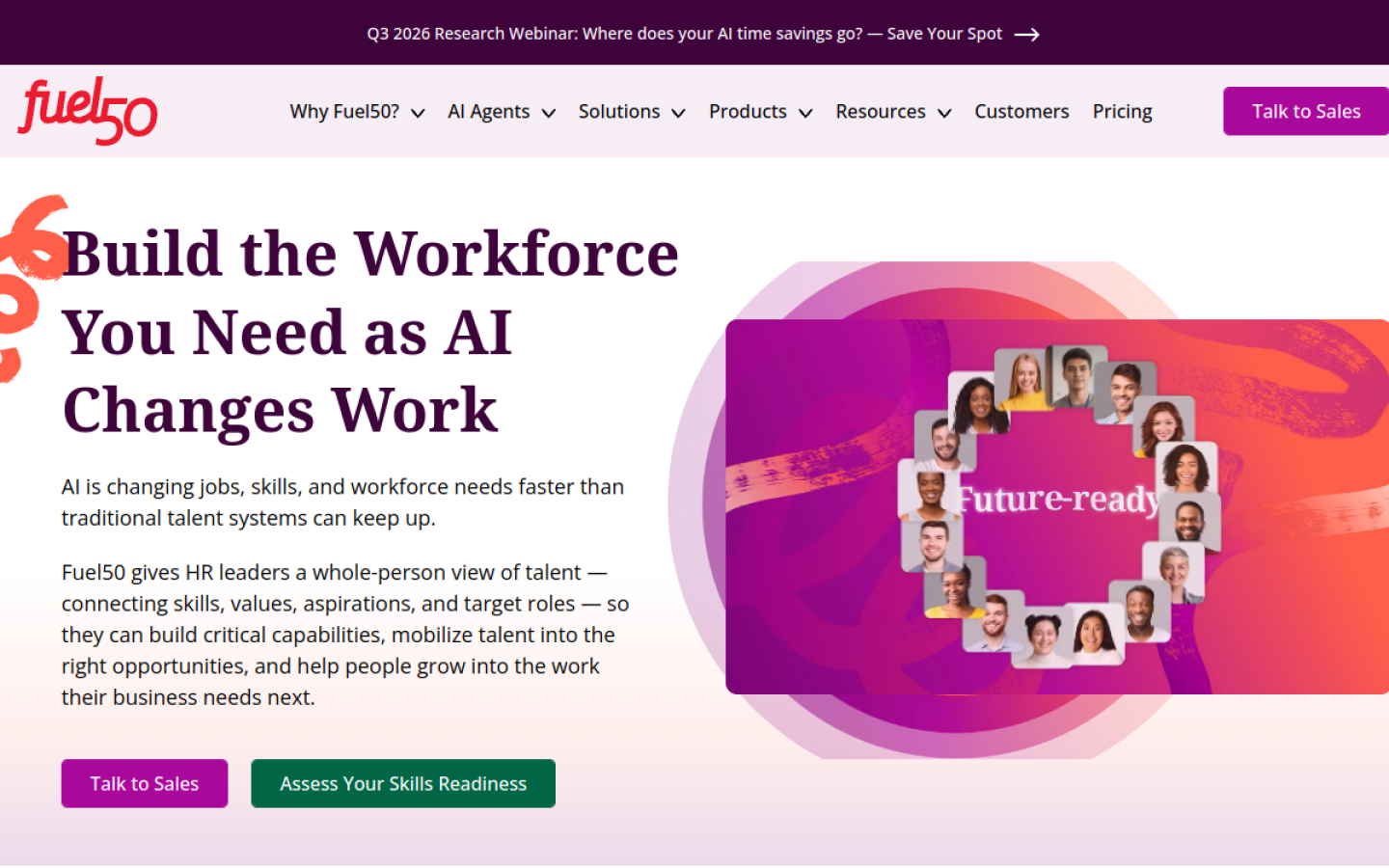
Fuel50 is a dedicated career platform built around skills profiles, career pathing, mentoring and internal gigs. It gives each employee a visible path to lateral and vertical moves, with gap analysis showing the skills they still need.
The trade off is effort. Fuel50 publishes no price and G2 reviewers report about 6 months to implement, so it suits employers ready to invest in a skills framework rather than teams wanting a quick start.
Lattice is a performance platform that adds career development through its Grow add-on. It covers reviews, goals, one-to-ones and feedback, with career tracks and growth areas in Grow at $4 a seat a month on top of a base plan.
The trade off is the maths. The cheapest base plan is Goals and OKRs at $8 a seat a month, and Lattice applies a $4,000 minimum annual agreement, so small teams pay the floor rate. It suits growing teams that already run reviews in Lattice.
Gloat is an internal talent marketplace that matches employees to roles, projects, mentors and learning from a workforce skills graph. Its homepage states that Gloat is now Synq, an AI-native HCM, so new buyers will see the Synq name.
The trade off is scale. Gloat publishes no price and is built for large global employers, so it suits companies running internal mobility at scale rather than a first career tool for a small team.
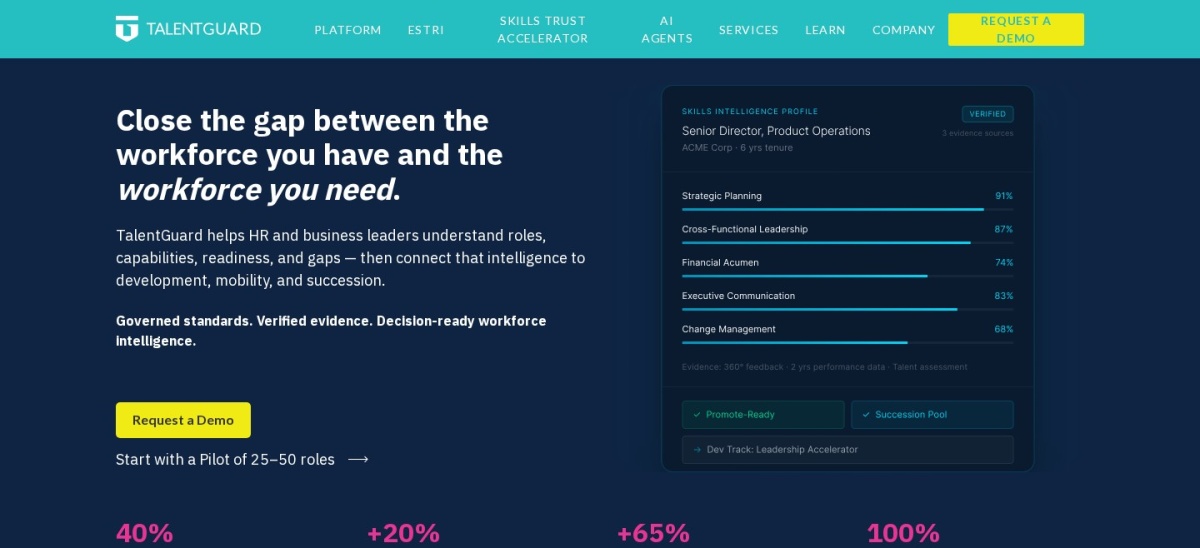
TalentGuard is a competency platform that builds career paths from structured role profiles. It scores readiness against each role, tracks certifications and records why each succession choice was made, which suits regulated employers.
The trade off is evidence. TalentGuard holds a 4.6 out of 5 G2 rating from only 4 reviews, and it publishes no price. It suits mid-market teams that need an audit trail behind career and succession decisions.
What we like
Competency frameworks with audit-ready records
Career pathing, succession and certification tracking
Degreed is a learning platform that ties skills data to career development. It pulls content from providers such as Udemy and Skillsoft into one place, and its Skills+ layer tags skills for each role and pathway.
The trade off is scope. Degreed is learning-led, so career pathing depends on the learning catalogue, and Skills+ is sold separately. It suits employers where learning is the main route to the next role.
Eightfold AI is a talent intelligence platform that builds a profile for every employee from resumes, reviews and project history. It infers skills with deep learning and matches people to internal roles, projects and succession plans.
The trade off is size. Eightfold publishes no price and is built for very large employers, so it suits enterprises that already use it for hiring and want the same intelligence for internal moves.
Cornerstone is a talent suite that covers learning, performance, skills and succession in one platform. Its career tools sit beside a large learning catalogue, so development plans can link straight to courses.
The trade off is complexity. Cornerstone publishes no price, and reviewers note it takes time to set up and administer. It suits large employers that want learning and careers in one suite.
Seven of the nine tools here publish no price. Expect a quote based on headcount, modules and contract length, with implementation charged on top.
Lattice lists a $4,000 minimum annual agreement across its plans, so a small team pays the floor rate rather than the per-seat maths.
Leapsome's HRIS Foundation is free with a Talent Suite module until 31 December 2026, when its regular price of $7 per employee a month applies.
Ask every vendor for the full first-year cost in writing, including implementation, data migration and training, before you sign.
How we chose
We started from the dedicated career pathing and internal mobility tools with G2 listings, then added Leapsome and Lattice, whose career pathing sits inside a wider people platform.
Prices come from each vendor's pricing page, checked on 24 November 2026. Ratings and review counts come from G2 on the same day. Where a vendor shows a sale or a limited-time offer, the list shows the regular price.
We left out general HR suites with no career pathing feature and tools with no public review base. No vendor paid for a place, and we do not claim hands-on testing for this list.
How to choose career management software
Start with the size of your workforce, then match the tool to how careers actually move in your company.
Map your career paths first. List the roles people move between and the skills each move needs. A tool cannot build paths from a blank org chart.
Check whether pathing is core or an add-on. In Lattice, career tracks come with the Grow add-on at $4 a seat a month, while in Fuel50 and 365Talents pathing is the main product.
Ask for the full first-year price. Seven tools here are quote only, and implementation can take months. Get implementation, migration and training in the written quote.
Pilot with one department. Run the tool with one team and a real set of open roles first, so you can see whether employees actually apply for internal moves.
FAQ
What is the best career management software?
365Talents is the best pick for most employers. It combines AI skills matching with personalised career paths and internal mobility, and it holds the highest G2 rating in this list at 4.8 out of 5 from 112 reviews.
How much does career management software cost?
Most dedicated tools publish no price and sell annual contracts by quote. The priced options here start at $7 per user a month for Leapsome and $8 a seat a month for Lattice, before add-ons and minimums.
Is Gloat now called Synq?
Yes. Gloat's homepage states that Gloat is now Synq, an AI-native HCM platform. Its G2 listing still appears under Gloat, and its internal talent marketplace is the same product.
Do any of these tools have a free plan?
Leapsome offers free features such as meetings and instant feedback, with paid modules for reviews and goals. The other eight tools have no free plan, and most need a demo or a sales call to start.
What is the difference between career pathing and an internal talent marketplace?
Career pathing shows an employee the steps to a target role and the skills they still need. A talent marketplace goes further, matching people to open roles, gigs, projects and mentors across the company.
Which tool is best for a mid-size company?
Leapsome or Lattice fit mid-size teams best, because both publish prices and cover reviews, goals and career paths in one platform. The dedicated tools suit larger employers with a skills strategy and a bigger budget.
SaaS SEO and WordPress specialist with about 8 years of experience. Rakib compares WordPress plugins, themes, hosting and software using public pricing, documentation and user reviews. See how we rank.