WLWPLegible EditorsLast verified 23 Nov 2026How we rank12 min read
★ Short answer
LabWare LIMS is the best LIS software for large labs that need maximum configurability, while Clinisys (Orchard LIS) is the best pick for clinical labs running patient samples. Small labs should start with LabCollector at $35 a user a month, the cheapest published price here.
How we make this list: we compare pricing pages, product documentation and public user reviews, then re-check every price before each update. No product paid for a place. Disclosure.
LIS and LIMS solve different problems: clinical labs need LIS, research and QC labs need LIMS, and buying the wrong one is the costliest mistake.
Seven of the nine tools here are quote-only, with enterprise implementations measured in months and services bills to match.
LabCollector and QBench are the only tools with published pricing, at $35 and $275 a user a month.
STARLIMS has the most G2 reviews here at 159, and Labguru and QBench share the highest rating at 4.6 out of 5, from 165 and 151 reviews.
NovoPath launched built-in digital pathology in September 2026, a first for a cloud LIS aimed at pathology labs.
LIS vs LIMS: which one do you actually need
A laboratory information system (LIS) manages the clinical testing workflow: orders arrive from physicians and EHR systems, the LIS routes them to instruments, applies reference ranges, flags abnormal values and returns verified results to the patient record. It is built for high-volume standardized testing on patient samples.
A laboratory information management system (LIMS) manages samples, tests and data in research, pharmaceutical, environmental and industrial labs, with heavier emphasis on configurable workflows, regulatory documentation and instrument integration. Our guide to lab management software covers the wider category.
Most large organizations need both, connected by an interface that passes result data from LIMS to LIS. If you run a hospital or reference lab processing patient samples, shortlist the LIS vendors (Clinisys/Orchard, NovoPath for pathology). If you run a research, QC or testing lab, shortlist the LIMS vendors.
Confirm the compliance bar early. Clinical labs need HIPAA and CLIA-friendly controls; pharma and food labs need 21 CFR Part 11, GMP or ISO 17025. Every vendor on this list claims compliance, but the depth varies, so ask for validation documentation before shortlisting.
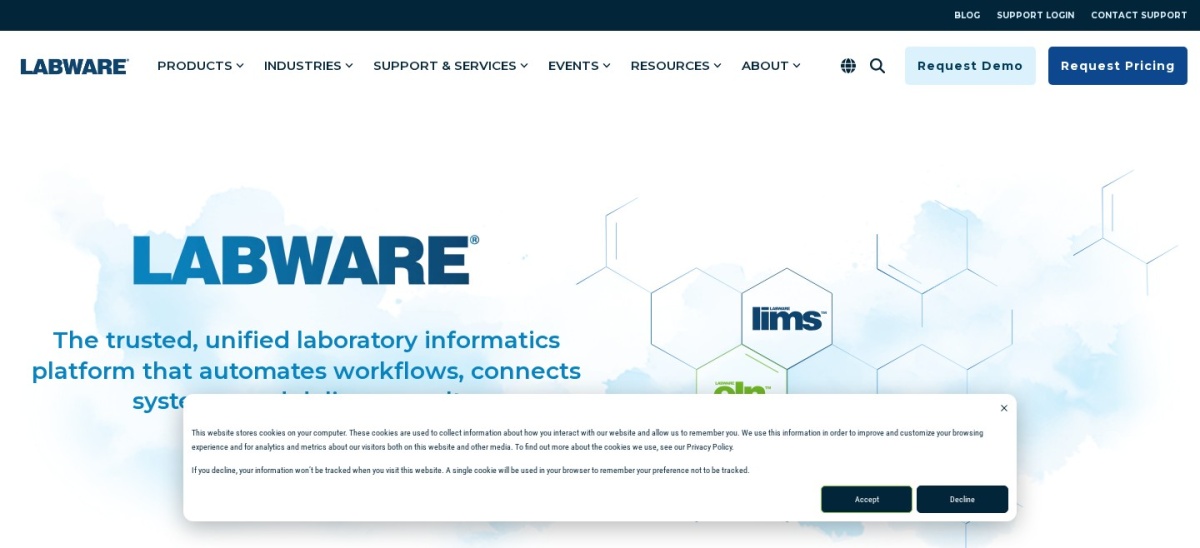
LabWare LIMS is the LIMS that enterprise labs buy when configurability matters more than simplicity. Founded in 1986, the company built its reputation on a platform that can be shaped to almost any laboratory workflow, from pharma manufacturing and stability testing to clinical research and environmental analysis.
The trade off is complexity and cost. Pricing is quote-only and sits firmly at enterprise levels, reviewers note it is costly for small companies, and full implementations are measured in months. It suits labs whose workflows are too specific for a template product.
What we like
Among the most configurable LIMS platforms available
Deployments across pharma, clinical research and environmental testing
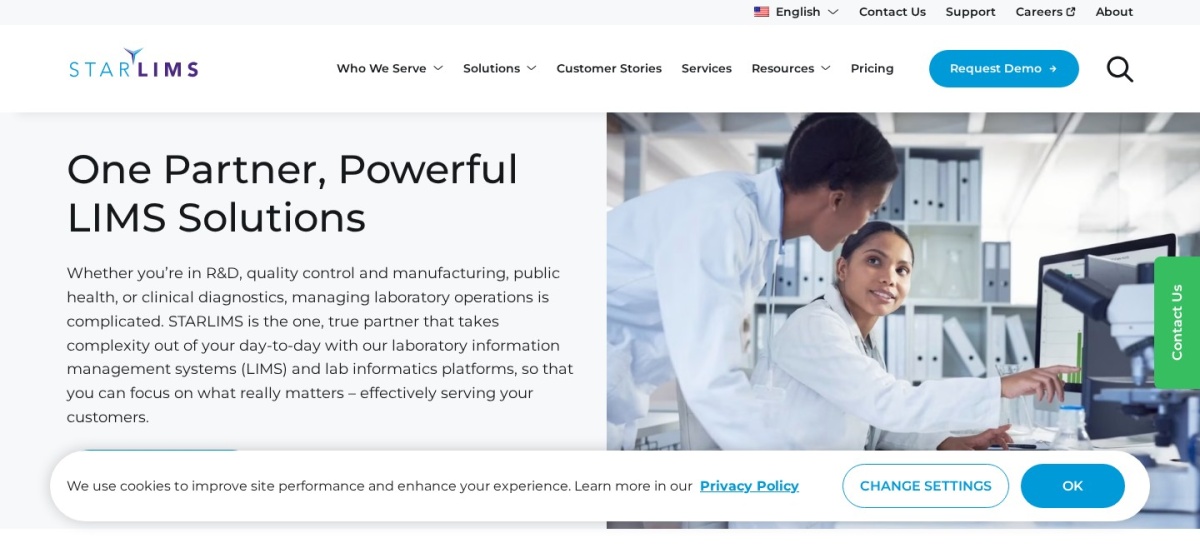
STARLIMS is one of the most widely deployed LIMS platforms in regulated industries, with a footprint spanning pharmaceutical quality control, clinical laboratories and food safety testing. It handles the full laboratory workflow from sample login through testing, review and reporting.
The trade off is the buying experience. Pricing is quote-only with sales-led evaluations and implementations that run for months with professional services, and there is no public pricing or trial. It suits large organizations that want a vendor with decades of regulated-industry proof.
What we like
Decades-long track record in regulated industries
Strong multi-industry support (pharma, clinical, food safety)
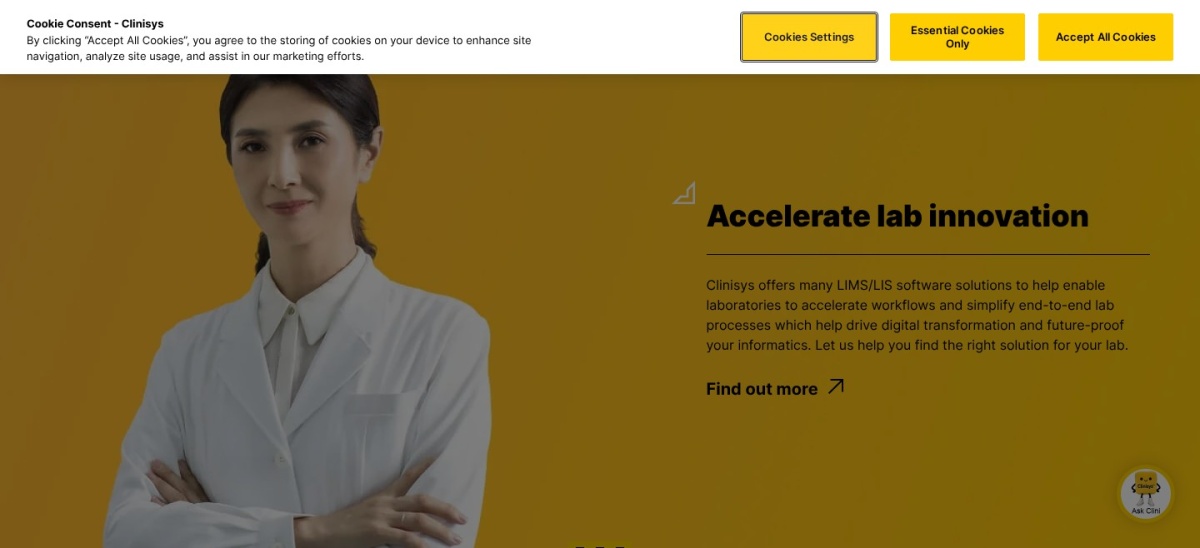
Clinisys is the home of Orchard Software's LIS, one of the most widely deployed clinical LIS vendors in the US, with systems in hundreds of hospital, reference, physician-office and public health laboratories. Orchard Harvest LIS covers toxicology, microbiology, molecular and anatomic pathology, with a rules engine for workflow automation.
The trade off is the transition. The Orchard brand now lives under Clinisys, which complicates evaluation, and pricing is quote-only. It suits clinical labs that want a proven LIS with deep outreach and interfacing experience.
What we like
Decades of clinical LIS expertise via the Orchard acquisition
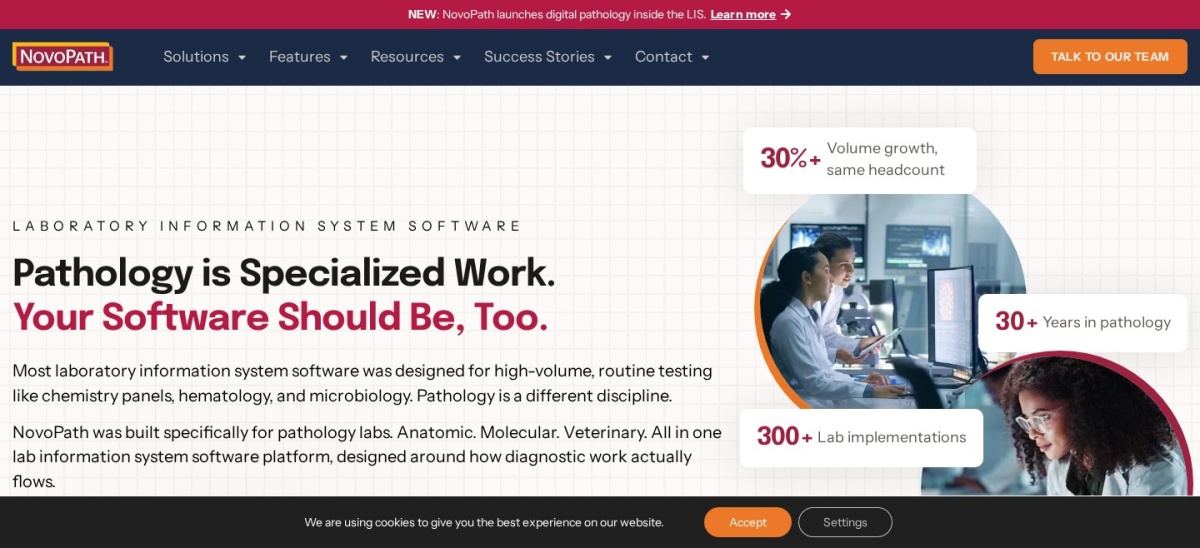
NovoPath is the cloud-native challenger in pathology, and its September 2026 launch put digital pathology inside the LIS itself. Instead of bolting an image management system onto the LIS, the new NovoPath 360 platform keeps the case, the slides, the report and the lab workflow in one system.
The trade off is scope. This is anatomic and molecular pathology, not a general clinical LIS, and pricing is quote-only. It suits pathology groups planning a digital transition who want one source of truth for pathologists, the lab and the business.
What we like
Cloud-native LIS built for pathology
Digital pathology workflow built in (September 2026)
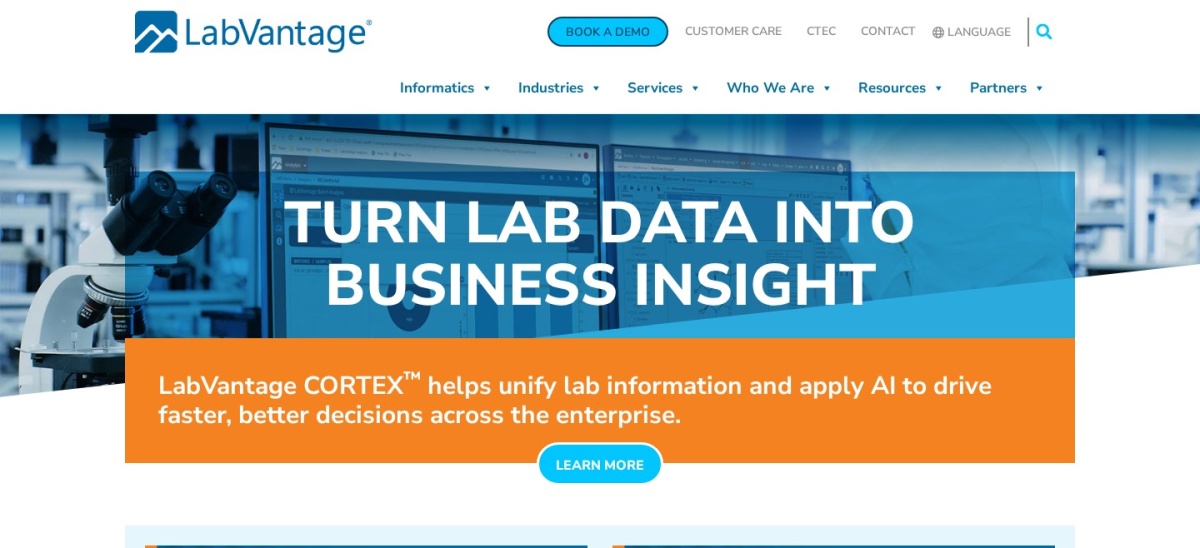
LabVantage is the pharma industry's comfort choice, with four decades of deployments in regulated environments. Founded in 1981, it grew up alongside the FDA's electronic records regulations, and compliance is in its DNA: 21 CFR Part 11, GMP and GLP support are core features, not add-ons.
The trade off is usability. Reviewers describe LabVantage as expensive and difficult to configure, with complex setup and slow performance in places. It suits pharma and biotech QC labs where auditors scrutinize everything and the budget allows a proper implementation.
What we like
Purpose-built for GMP/GLP and 21 CFR Part 11 environments
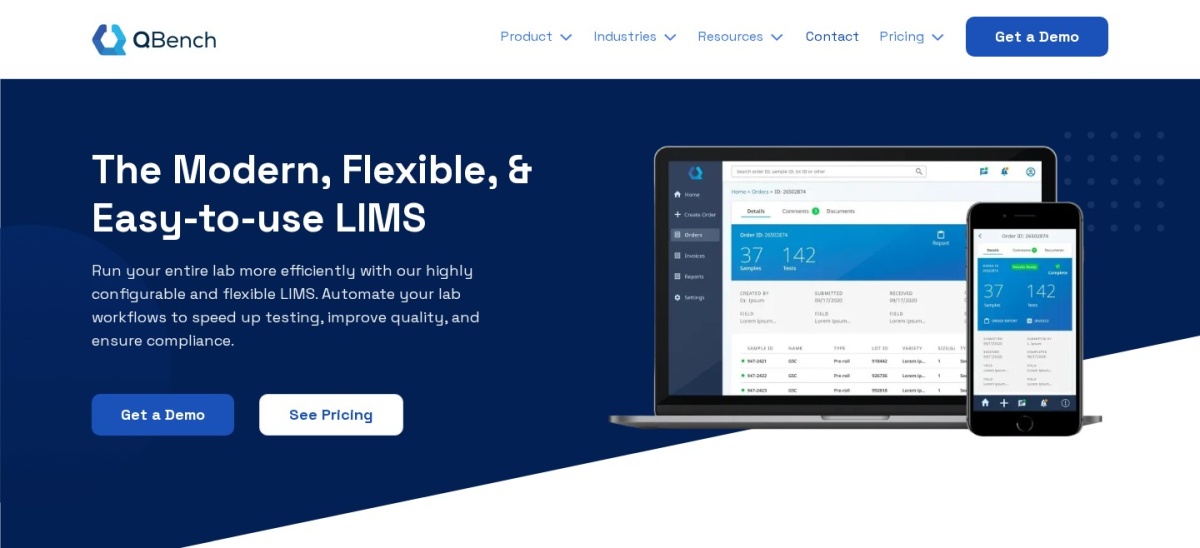
QBench is a modern cloud LIMS with no-code tools for sample tracking, quality control, audit trails and reporting. It is built for small to mid-size labs and holds a 4.6 out of 5 G2 rating from 151 reviews.
The trade off is the price. Starter costs $275 a user a month with no free plan or trial, so it suits labs that can fund a per-user subscription and want configurability without custom code.
What we like
No-code configuration for lab workflows
Rated 4.6 out of 5 from 151 G2 reviews
Customer portal and instrument integrations on Growth
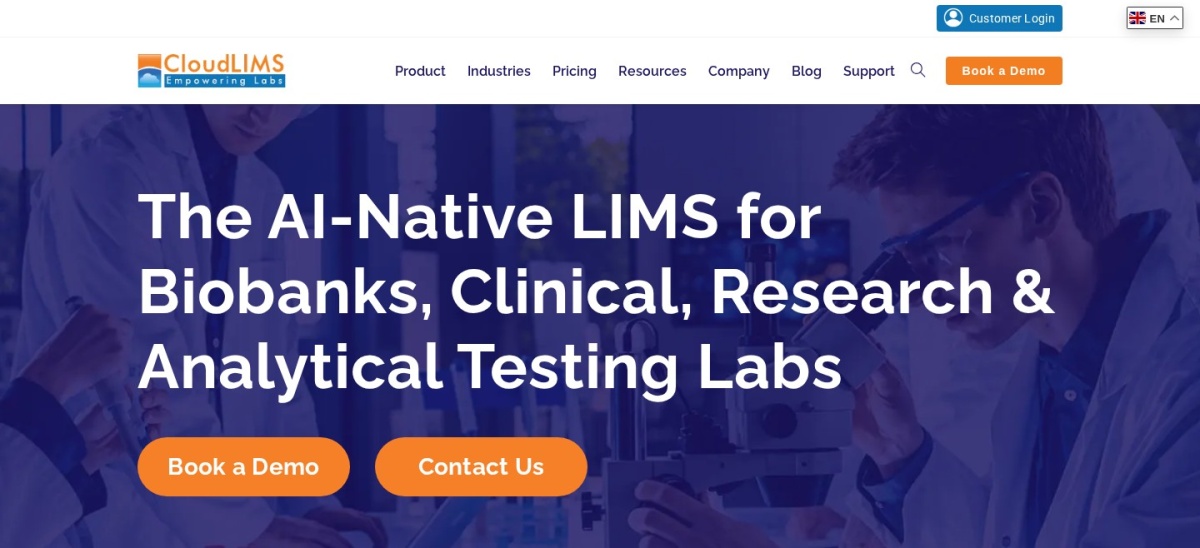
CloudLIMS is LIMS delivered as pure SaaS, with none of the infrastructure baggage. Founded in 2013, the company bet that laboratories, like everyone else, would rather subscribe to software than install and maintain it, so there are no servers to provision and no upgrades to schedule.
The trade off is depth. Pricing is not published, customization depth does not match LabWare or STARLIMS, and labs with strict data-residency requirements need to verify hosting details. It suits small and mid-size labs without IT departments.
What we like
True SaaS delivery with no infrastructure to manage
Faster deployment than on-premise platforms
Modern interface
Watch out for
Pricing not published
May lack the depth of enterprise platforms for complex workflows
Subscription turns a capital purchase into an operating expenseVisit cloudlims.com
08
LabCollector
4.2/5on G2 (11 reviews, checked Nov 2026)
Starts at$35/mo
Best for small labs on a budget
Founded2002
Pricing$35/user/month
Typical annualAround $4,500/yr
Paid plan$35/user/mo
labcollector.com
LabCollector homepage, captured Nov 2026.
LabCollector is the modular, budget-friendly option from French-American vendor AgileBio, founded in 2002. Instead of selling a monolithic enterprise platform, it offers LIMS, ELN and lab management as modules you combine to fit, which keeps costs down for labs that do not need everything.
The trade off is ceiling. LabCollector does not match the enterprise platforms for complex regulated manufacturing or multi-site pharma deployments, and the vendor's support operation is smaller. It suits research labs, core facilities and small testing labs.
What we like
Published pricing from $35/user/month
Modular design lets you buy only what you need
Serves academic and biotech labs well
Watch out for
Less depth than enterprise platforms for regulated manufacturing
Labguru is a cloud platform built for life science R&D that combines an electronic lab notebook, LIMS and inventory management in one place. Experiment planning, protocol management, sample tracking and equipment scheduling live together, so a researcher does not switch systems between designing an experiment and logging its samples.
The trade off is the lab type. Labguru is built for research and development, not for clinical diagnostics running patient samples or manufacturing QC under GMP, and pricing is not published. It suits biotech R&D labs, academic core facilities and pharma discovery groups.
What we like
Unified ELN, LIMS and inventory in one platform
Designed by scientists for bench workflows
750-plus customers including pharma and academia
Watch out for
Research-focused, not a fit for clinical diagnostics or manufacturing QC
The first failure mode is underestimating services. Enterprise LIMS and LIS implementations are measured in months, and the services bill often rivals the license cost. Get the services estimate in writing during evaluation.
The second failure mode is interface optimism. Lab software lives or dies by its connections to instruments, EHRs and billing systems. Ask for the exact interface list for your instruments and EHR, with reference customers running the same combinations.
The third failure mode is buying for today. Labs consolidate, add test menus and acquire other labs. A system that fits a single site may not handle multi-site operations, outreach billing or molecular testing added later.
How we chose
We started from the LIS and LIMS platforms with G2 or Capterra reviews and real adoption in 2026, then kept nine that cover clinical LIS, enterprise LIMS and affordable options for smaller labs.
Prices come from vendor pricing pages, checked on 23 November 2026. Ratings and review counts come from G2 or Capterra on the same day. Where a vendor only sells on quote, the list shows Custom instead of a guessed number.
We left out tools with no G2 or Capterra reviews at all. No vendor paid for a place, and this list is based on pricing, docs and reviews, not on using the tools ourselves.
How to choose LIS software
Start from the lab type, then the compliance bar, then the implementation budget.
Name the lab type first. Clinical labs processing patient samples need LIS; research, QC and testing labs need LIMS. Buying the wrong category is the costliest mistake.
Confirm the compliance bar early. Clinical labs need HIPAA and CLIA-friendly controls; pharma and food labs need 21 CFR Part 11, GMP or ISO 17025.
Get services in writing. Enterprise implementations run 6 to 18 months, and the services bill often matches the license cost, so get both estimates before shortlisting.
Verify your interfaces. Ask for the exact interface list for your instruments and EHR, with reference customers running the same combinations.
FAQ
What is the difference between LIS and LIMS software?
LIS software manages clinical diagnostic workflows: test orders, specimen tracking, instrument interfacing and results reporting for patient samples, usually integrated with EHR systems. LIMS manages samples, tests and data in research, pharmaceutical, environmental and industrial labs.
How much does LIS and LIMS software cost?
Enterprise platforms such as LabWare, STARLIMS and LabVantage are quote-only, typically running into six figures for licenses plus comparable services fees. LabCollector publishes pricing from $35 a user a month.
What is the best LIMS software for a small lab?
LabCollector at $35 a user a month and Labguru offer real LIMS functionality without enterprise budgets or implementations. CloudLIMS provides pure SaaS delivery for labs without IT staff.
How long does a LIMS implementation take?
SaaS products such as LabCollector, Labguru or CloudLIMS can be live in weeks. Enterprise platforms such as LabWare, STARLIMS and LabVantage typically take 6 to 18 months, including workflow analysis, configuration, instrument interfacing and validation.
Can LIMS software integrate with our instruments and EHR?
Yes, but verify the specifics. Most platforms support HL7 and ASTM interfaces for clinical systems and offer instrument drivers or APIs. QBench covers instrument integrations on its Growth tier and above.
What is the best LIS software for pathology labs?
NovoPath is the modern pick for pathology, with built-in digital pathology launched in September 2026. LigoLab is another pathology-focused LIS with billing built in, while Clinisys covers anatomic pathology as part of a wider clinical LIS.