WLWPLegible EditorsLast verified 23 Nov 2026How we rank11 min read
★ Short answer
CoCounsel is the best legal AI software for most firms, grounding research and drafting in Westlaw and Practical Law with citations you can check. Pick Harvey for a firm-wide platform and Spellbook for contract work inside Microsoft Word.
How we make this list: we compare pricing pages, product documentation and public user reviews, then re-check every price before each update. No product paid for a place. Disclosure.
CoCounsel has the strongest G2 rating among research tools at 4.7, with answers grounded in Westlaw primary law.
Harvey is the platform large firms buy for one AI system, at several hundred dollars per user a month on quote.
Spellbook is the most accessible contract tool, living inside Microsoft Word with a 7-day free trial.
Genie AI and Clio Duo are the only tools here with published prices: Genie Pro at $59 a month and Duo at $59 a month on top of Clio.
Most legal AI is quote-only, so budget for a sales conversation and a pilot before comparing prices.
What legal AI software should do
Legal AI software researches the law, drafts documents and reviews files. The best tools ground every answer in real authority, with citations you can check, rather than generating text that only looks right.
Hallucinations are the main risk. A Stanford study found leading legal research tools produced fabricated or unsupported citations on 17 to 33% of queries, so a tool that links each claim to a source is worth more than a fast one.
Pricing is mostly quote-only in this category. Six of these nine tools show no public price, and the ones that do start at $59 a month for an add-on and reach $499 a month for a solo plan. Our guide to legal document software covers the wider category.
Confidentiality matters as much as accuracy. Check whether the vendor uses your matters to train models, and whether your data stays in your region, before uploading client files.
CoCounsel is the research-first legal AI for firms that cannot risk an invented citation. It reasons from Westlaw and Practical Law content plus the firm's own documents, links every authority it relies on, and shows a step-by-step plan the attorney can inspect.
The trade off is price and access. There is no public price list, and firms go through sales or an online configurator. It suits firms already on Westlaw that want cited research, brief drafting and document review in one assistant.
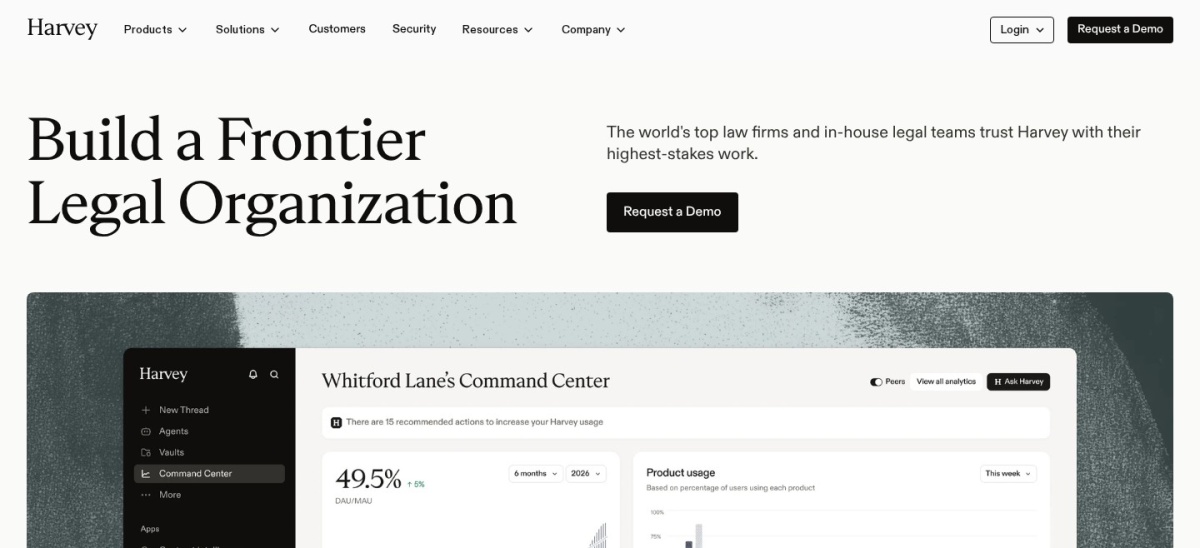
Harvey is the platform large firms buy when they want one AI system rather than five point tools. It covers research, document review, drafting and custom agent workflows, and its Vault keeps firm documents inside the platform for 200,000+ lawyers.
The trade off is cost. Harvey says it costs several hundred dollars per user a month on average, with pricing by seat and product. It suits large firms and legal departments that want one platform for research, review, drafting and agents.
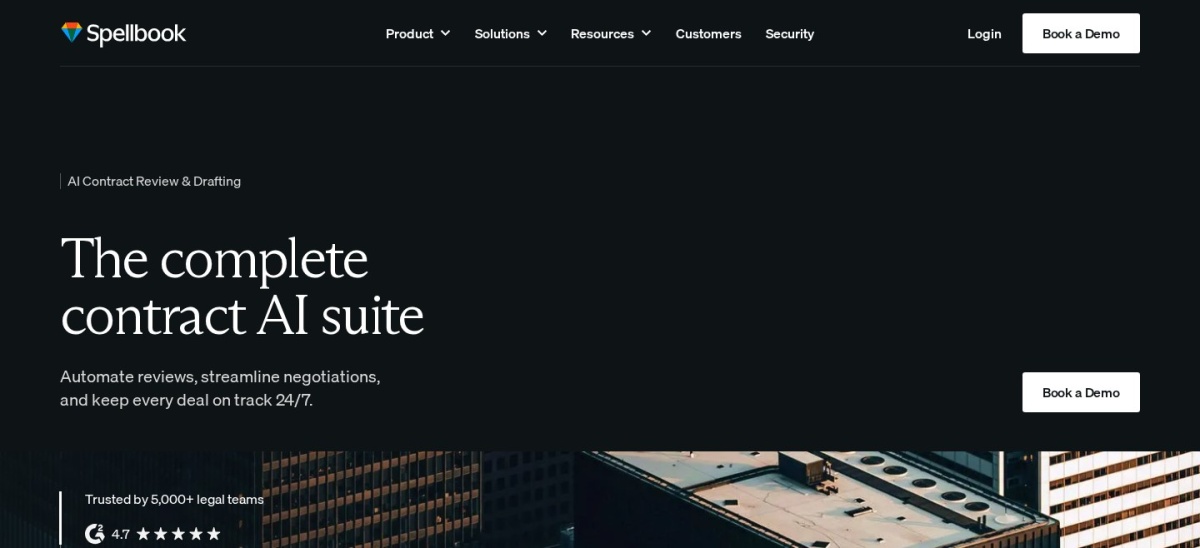
Spellbook is an AI assistant that lives inside Microsoft Word, where transactional lawyers actually draft. Clause suggestions, risk flagging and benchmarking appear in the document workflow, and the Suite adds Associate, an agent for multi-document matters.
The trade off is pricing. Spellbook publishes no list price and quotes per seat after a demo, with third-party estimates around $99 to $199 a user a month. It suits mid-market legal teams that draft and review contracts entirely in Word.
Everlaw is the litigation specialist: an e-discovery and investigation platform with AI built in, designed to handle massive document sets for complex cases. Predictive coding, clustering and an AI review assistant sit in one evidentiary system of record.
The trade off is pricing. Everlaw charges by data volume with AI credits on top, and no public price is listed. It suits litigation teams that need AI document review, analytics and trial preparation in one platform.
Robin AI is a contract review tool that automates review for in-house legal teams: upload agreements, get risk analysis and suggested redlines, and track obligations in one place. A free tier with 10 messages a day is the only free start among the contract tools here.
The trade off is scale. Paid plans are quote-based and tiered by features and volume, starting around $500 a month for small teams. It suits in-house teams and firms doing high-volume contract review with a managed service behind it.
Legora is an AI workspace that gives lawyers one place across public legal sources and the firm's own documents. Its aOS plans, executes and delivers full matters end to end, with tabular review, research, an agent and monitors, plus Word and Outlook add-ins.
The trade off is buying. Its pricing page returns a 404 and access starts with a demo, with the top Agent Pro tier moving to consumption pricing in 2026. It suits firms wanting one agent across matter types, including cross-border work.
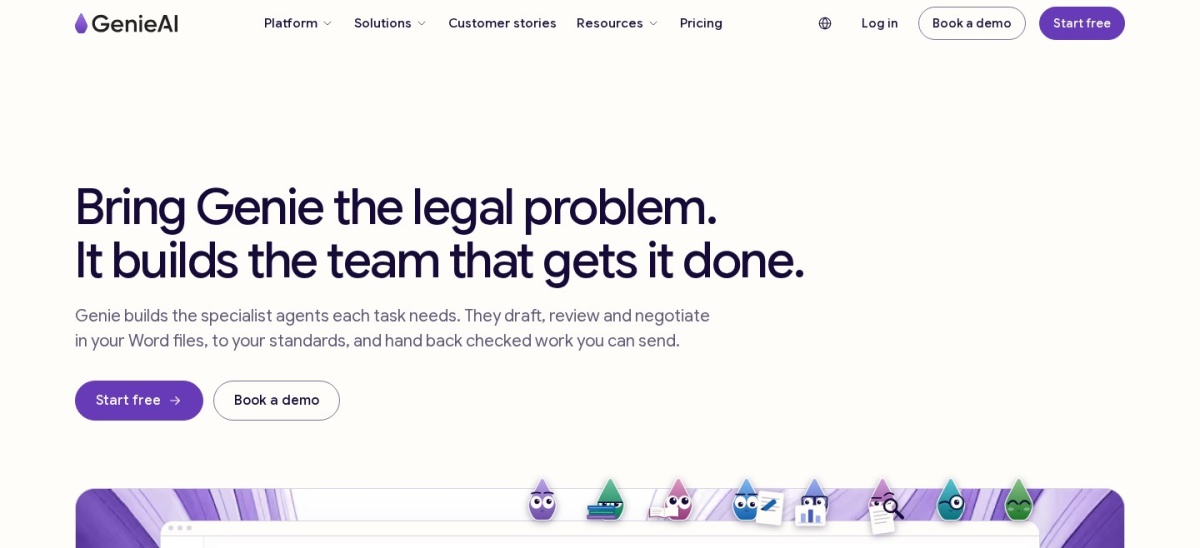
Genie AI is a contract AI for small in-house legal teams and solo lawyers, drafting, reviewing and redlining with legal specialist agents and a template library. The Trial plan is free, and Pro costs $59 a month billed yearly for one user with about five documents a month.
The trade off is volume. Pro covers about five documents a month on its token allowance, so heavy users need top-ups or the Business plan at $259 a month. It suits small teams that want contract AI with a free start and a published price.
Supio is an AI platform built for plaintiff and personal injury firms, turning medical records and case files into chronologies, demand letters and case analysis. It holds the highest G2 rating in this list at 4.9 out of 5 from 86 reviews.
The trade off is fit. Supio is built for injury work, so firms outside that practice get little from it, and pricing is custom. It suits plaintiff firms that want AI agents across intake, records and demands.
Clio Duo is the AI add-on for Clio Manage, the practice management platform rated 4.6 out of 5 on G2 from 1,161 reviews. Duo drafts and researches grounded in your own matter data, so the AI works where the cases, documents and bills already live.
The trade off is the stack. Duo costs $59 a user a month on top of a Clio plan that starts at $49 a user a month, so the real cost is two subscriptions. It suits solo and small firms already running on Clio.
Seven of these nine tools publish no price at all. Harvey, CoCounsel, Spellbook, Everlaw, Robin AI, Legora and Supio all sell through demos and custom contracts, which is normal for enterprise legal software.
The published numbers that exist are far apart. Genie Pro costs $59 a month, Clio Duo is a $59 a month add-on, and Harvey averages several hundred dollars a user a month.
Treat any third-party price estimate as directional. Only Genie AI and Clio publish a number you can hold them to, so get every other quote in writing before you budget.
How we chose
We started from the legal AI tools with G2 reviews and real adoption in 2026, then kept nine that cover research, drafting, review and litigation.
Prices come from each vendor's pricing page, checked on 23 November 2026. Ratings and review counts come from G2 on the same day. Where a vendor only sells on quote, the list shows Custom instead of a guessed number.
We left out tools with no G2 reviews at all. No vendor paid for a place, and this list is based on pricing, docs and reviews, not on using the tools ourselves.
How to choose legal AI software
Start with the task you do most, then check the citations and the confidentiality terms.
Pick by task, not by brand. Research needs Westlaw or Lexis grounding, contracts need a Word tool such as Spellbook, and litigation needs a review platform such as Everlaw.
Check every citation yourself. Run ten of your own research questions through the trial or demo and verify each cited authority before you trust the answers.
Read the data terms. Confirm your matters are never used to train models and that data stays in your region, in writing, before uploading client files.
Get the quote in writing. Most vendors quote by seat and product, so compare the full first-year cost, including any pilot, onboarding or minimum seats.
FAQ
What is the best legal AI software?
CoCounsel is the best pick for most firms. It grounds research and drafting in Westlaw and Practical Law with citations you can check, and G2 rates it 4.7 out of 5 from 115 reviews.
How much does legal AI software cost?
Most legal AI is quote-only. The published prices are Genie Pro at $59 a month and the Clio Duo add-on at $59 a month, while Harvey averages several hundred dollars a user a month on custom contracts.
Is Harvey or CoCounsel better?
CoCounsel is better for research you must stand behind, since it reasons from Westlaw primary law. Harvey is better as a firm-wide platform covering research, review, drafting and custom agents in one system.
Can AI write legal documents?
Yes, but every draft needs a lawyer's review. Legal AI still produces fabricated citations in some queries, so check each authority against the source before filing or sending anything.
Is there a free legal AI tool?
Robin AI has a free tier with 10 messages a day, and Genie AI has a free Trial plan. Spellbook and Clio offer 7-day free trials, while Harvey, CoCounsel, Everlaw, Legora and Supio start with a demo.
Do these tools use my client data to train AI?
Harvey states that your data is never used to train models. Check the same promise in writing from any other vendor before uploading client files.