Best General Ledger Software in 2026: 7 Tools Compared
WLWPLegible EditorsLast verified 22 Nov 2026How we rank12 min read
★ Short answer
QuickBooks Online is the best general ledger software for most small businesses, with automated transaction categorization, financial reporting and a Simple Start plan at $38 monthly. It has a 4.0/5 G2 rating from 3,895 reviews. Choose Zoho Books for affordable double-entry accounting or Xero for collaborative bookkeeping and bank reconciliation.
How we make this list: we compare pricing pages, product documentation and public user reviews, then re-check every price before each update. No product paid for a place. Disclosure.
QuickBooks Online starts at $38 monthly for Simple Start and has a 4.0/5 G2 rating from 3,895 reviews.
Zoho Books offers free accounting below its published revenue threshold; Standard costs $15 monthly billed annually and supports 3 users.
Xero Early costs $27 monthly at its regular rate, with bank reconciliation, reporting and no per-user license fees.
Wave offers unlimited bookkeeping records on its free Starter plan, while Pro costs $190 annually with annual billing.
FreshBooks Lite costs $23 monthly or $248.40 annually and is rated 4.5/5 from 983 G2 reviews.
GnuCash is free, open-source accounting software with double-entry bookkeeping, while Sage 50 Pro costs $132.17 monthly.
What good general ledger software should include
A general ledger is the central record of a business's financial transactions. It organizes activity into accounts such as assets, liabilities, revenue, expenses and equity, forming the foundation for financial statements.
Look for double-entry accounting, journal entries, a customizable chart of accounts and reliable reconciliation tools. These functions help maintain balanced records and make financial activity easier to review.
Reporting is equally important. Useful software should produce a trial balance, general ledger detail, balance sheet and profit and loss statement. Businesses with more complex operations may also need audit trails, period locking, departmental reporting and approval controls.
Consider how transactions enter the ledger. Automated bank feeds, invoice posting and integrations reduce manual entry, but accountants still need to review classifications, reconciliation differences and closing adjustments.
QuickBooks Online is a cloud accounting platform that organizes financial transactions into general ledger accounts. Simple Start costs $38 monthly and supports 1 user plus accountant access. It includes automated transaction categorization, invoicing, expense tracking, bank connections and financial reports. A separate QuickBooks Free offering provides basic bookkeeping features.
The trade off is that more advanced reporting, additional users and accounting controls require higher subscriptions. Essentials costs $85 monthly, while Plus costs $140; promotional discounts may temporarily reduce these prices. It suits small businesses that want accounting automation and an established bookkeeping ecosystem.
What we like
Automated transaction categorization
Financial reporting and bank connections
Accountant collaboration
Large ecosystem of connected applications
Multiple upgrade options for growing businesses
Watch out for
Simple Start supports only 1 regular user
Advanced reporting requires higher plans
Subscription costs increase with additional features
Frequent interface changes can affect established workflows
Best value for small business general ledger accounting
Free eligibilityRevenue up to $50,000 annually
Free users1 user plus 1 accountant
Free reporting50+ financial reports
Paid planStandard, $15/mo annually
zoho.com
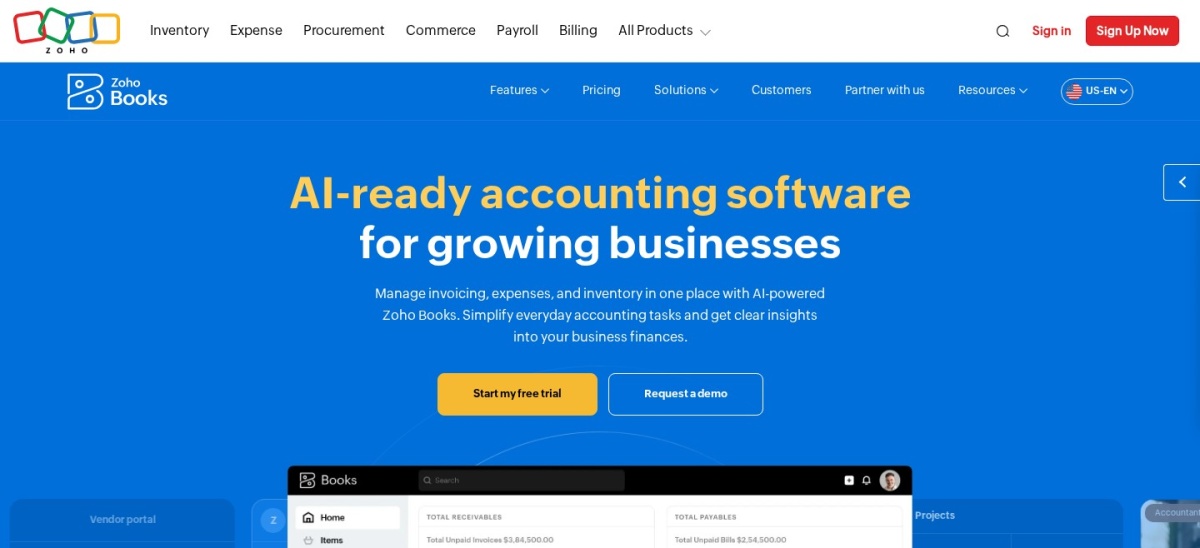
Zoho Books homepage, captured Nov 2026.
Zoho Books is cloud accounting software with general ledger journals, bank reconciliation, invoicing, expenses and financial statements. Its free plan supports 1 user plus 1 accountant, with over 50 reports and up to 1,000 annual invoices. Free eligibility applies while annual revenue remains within the published $50,000 threshold.
The trade off is that connected bank feeds, custom reports, journal templates and period locking require Standard. That plan costs $15 monthly billed annually, or $180 yearly, compared with $20 monthly billing. It suits smaller businesses seeking structured bookkeeping without a high subscription cost.
What we like
Free accounting plan with journal entries
Affordable Standard subscription
Bank reconciliation and financial statements
Customer and vendor management
Integrates with other Zoho applications
Watch out for
Free plan has a revenue eligibility threshold
Bank feeds require Standard
Advanced inventory requires higher editions
Some reporting customization is restricted
Standard adds bank feeds, period locking, custom reports, journal templates and additional users.Visit zoho.com
03
Xero
4.4/5on G2 (1,864 reviews, checked Nov 2026)
Starts at$27/mo
Best for collaborative bookkeeping and reconciliation
User licensingNo per-user license fees
Early invoices20
Early bills5
Paid planEarly, $27/mo
xero.com
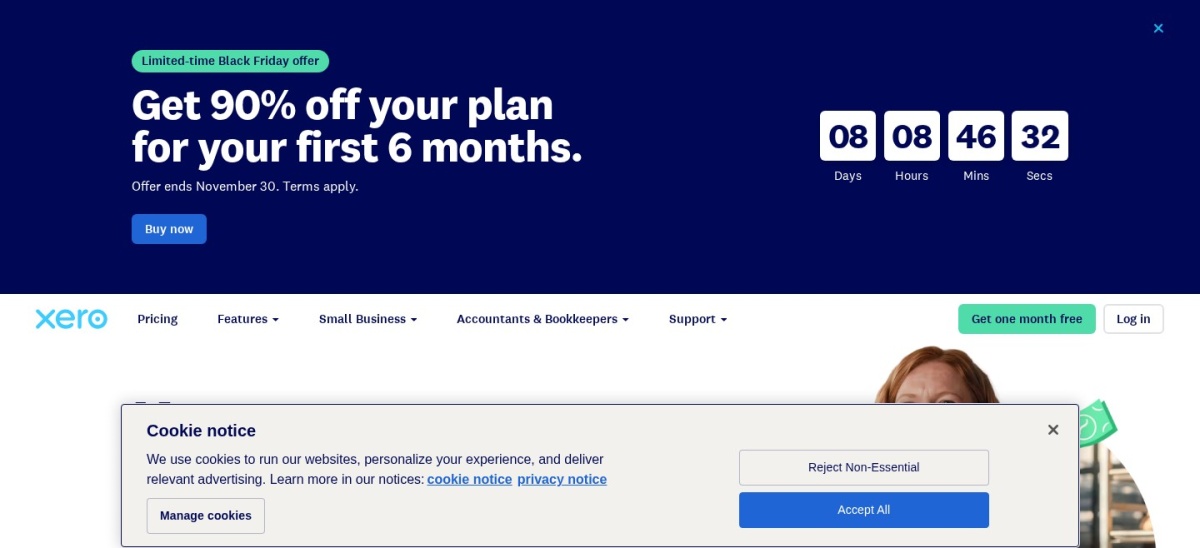
Xero homepage, captured Nov 2026.
Xero is a cloud accounting platform with a general ledger, bank reconciliation, invoicing and financial reports. Early costs $27 monthly at its regular rate and supports 20 invoices and 5 bills. Xero also offers document capture, financial reporting and accountant collaboration without charging separate per-user license fees.
The trade off is that Early restricts invoice and bill volumes, while advanced features require higher subscriptions. Growing costs $59 monthly, and Established costs $97; introductory promotions may temporarily reduce these rates. It suits businesses working closely with bookkeepers or external accountants.
What we like
No per-user license fees
Bank reconciliation tools
Financial reports and cash flow information
Connected accounting application ecosystem
Supports accountant and bookkeeper collaboration
Watch out for
Early limits invoices and bills
Advanced features require higher plans
Additional services can introduce separate charges
No permanent free accounting subscription
Growing removes basic transaction restrictions and adds expanded automation; Established adds advanced analytics.Visit xero.com
04
Sage 50
3.9/5on G2 (164 reviews, checked Nov 2026)
Starts at$132.17/mo
Best for detailed accounting controls
Entry users1 on Pro
AccountingLedger and bank reconciliation
OperationsInventory and job management
Paid planPro Accounting, $132.17/mo
sage.com
Sage 50 homepage, captured Nov 2026.
Sage 50 is an accounting platform for businesses needing detailed financial and operational records. Its cloud-first Pro Accounting plan costs $132.17 monthly and supports 1 user. Features include invoice and bill tracking, automated bank reconciliation, inventory, purchase orders, reporting, cash flow management and job management.
The trade off is its higher entry price and annual subscription commitment. Pro costs approximately $1,586.04 over a year, while Premium starts at $182.50 monthly and adds advanced budgeting, inventory and multi-company features. It suits businesses whose accounting needs extend beyond basic invoicing and expense tracking.
Best free general ledger software for basic bookkeeping
Free bookkeepingUnlimited records
Free invoicingUnlimited invoices
Bank connectionsIncluded with Pro
Paid planPro, $190/yr
waveapps.com
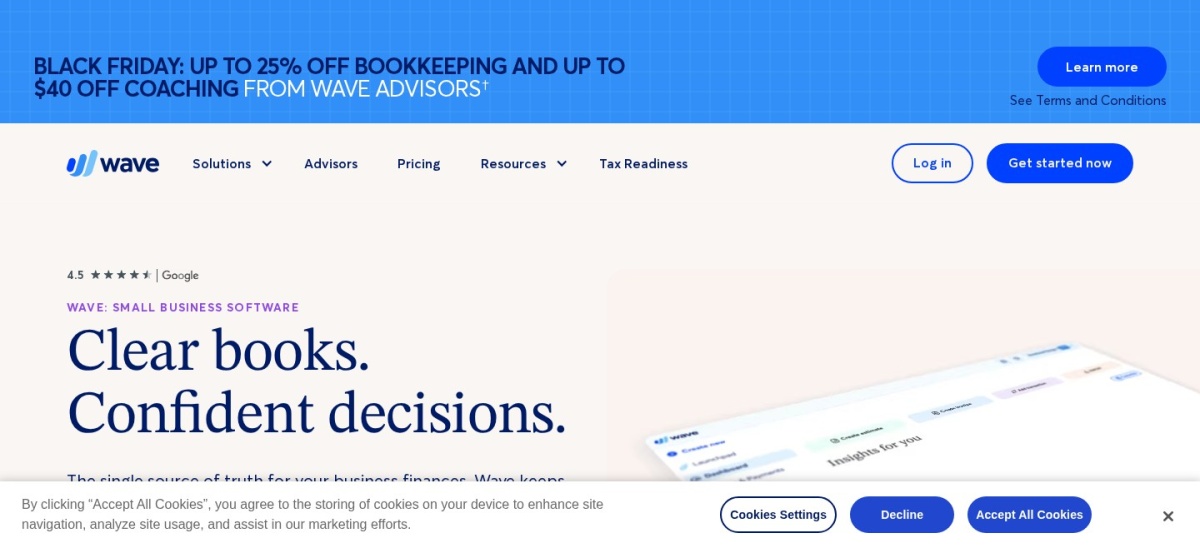
Wave homepage, captured Nov 2026.
Wave is a cloud bookkeeping platform with a free Starter plan for unlimited invoices, estimates, bills and accounting records. It provides tools for organizing income, expenses and basic financial activity without a software subscription. Users can maintain accounting records and generate financial information from their transactions.
The trade off is that automatic bank imports, transaction categorization and expanded receipt capture require Pro. The regular subscription costs $19 monthly or $190 annually with yearly billing, excluding temporary discounts. It suits freelancers and small businesses needing affordable bookkeeping rather than extensive financial controls.
What we like
Free accounting and invoicing
Unlimited bookkeeping records
Simple financial management interface
Affordable annual Pro subscription
Automatic bank imports available with Pro
Watch out for
Bank connections require a paid plan
Less suited to complex accounting structures
Limited advanced operational accounting
Additional payment and payroll services have fees
Pro adds bank imports, automatic categorization, unlimited receipt capture and payment reminders.Visit waveapps.com
06
FreshBooks
4.5/5on G2 (983 reviews, checked Nov 2026)
Starts at$23/mo
Best for service businesses and client billing
Lite subscription$23/mo regular
Annual subscription$248.40
Core workflowInvoicing and expense tracking
Paid planLite
freshbooks.com
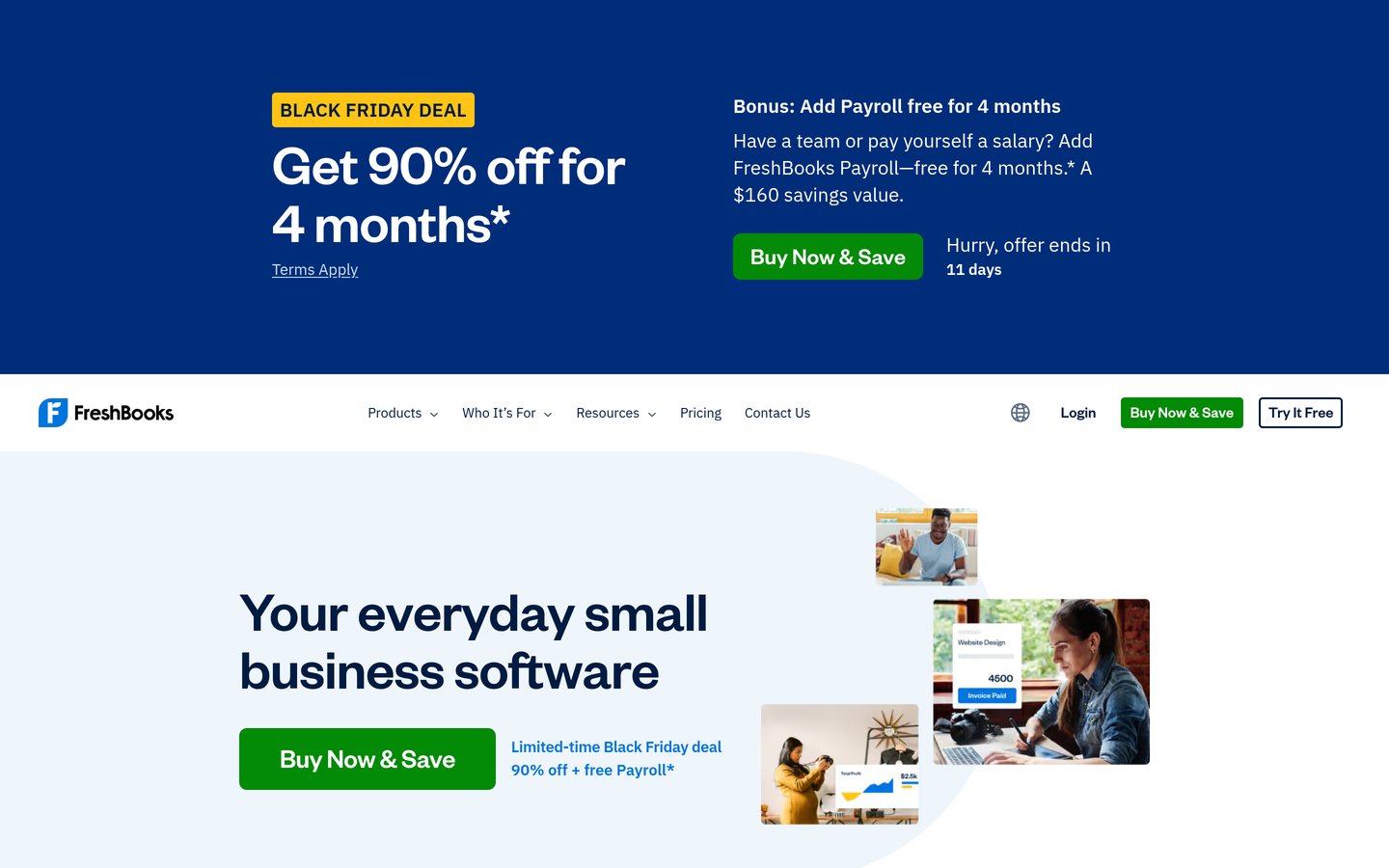
FreshBooks homepage, captured Nov 2026.
FreshBooks is an accounting platform aimed at freelancers and service businesses that manage client billing. Its Lite plan costs $23 monthly or $248.40 annually and includes invoicing, expenses and client payment workflows. FreshBooks also provides double-entry accounting features for recording financial activity.
The trade off is that Lite emphasizes invoicing rather than the full range of general ledger controls. Plus costs $43 monthly or $464.40 annually and provides broader accounting features, including additional financial reporting capabilities. It suits service providers needing client billing alongside basic bookkeeping.
What we like
Client invoicing and payment management
Expense and income tracking
Double-entry accounting capabilities
Time and project-related workflows
Accessible cloud interface
Watch out for
Lite has limited accounting functionality
Broader financial reporting requires upgrades
Additional team access may cost extra
Less suited to complex inventory accounting
Plus expands client capacity and accounting capabilities, including broader financial reporting.Visit freshbooks.com
07
GnuCash
4.2/5on G2 (23 reviews, checked Nov 2026)
PriceFree
Best free desktop general ledger software
Software licenseOpen source
Accounting methodDouble-entry
InstallationDesktop application
Paid planNo paid plan
gnucash.org
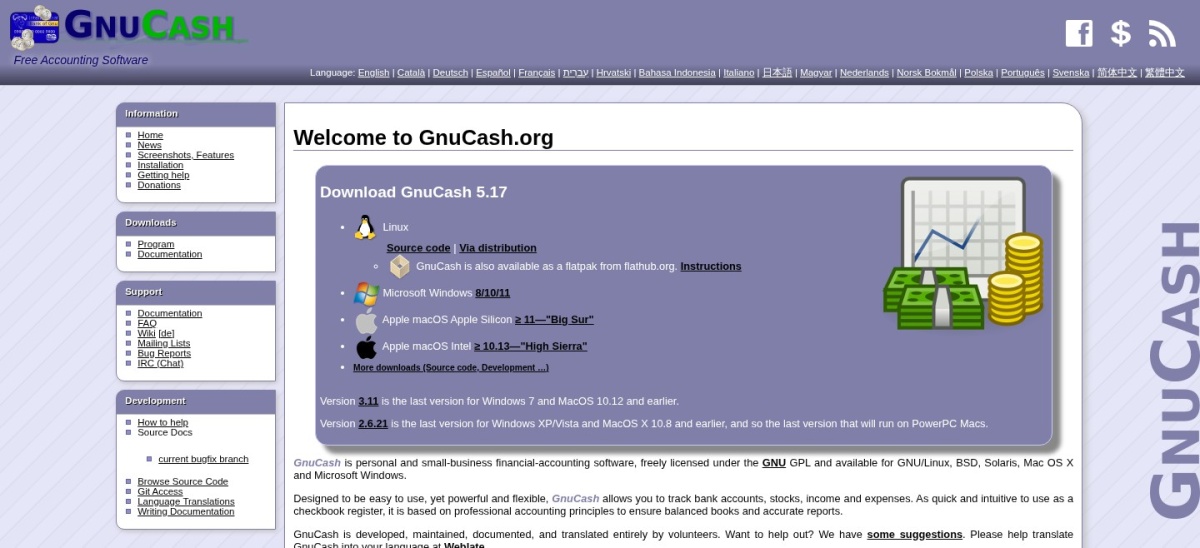
GnuCash homepage, captured Nov 2026.
GnuCash is free, open-source accounting software for personal and small-business financial records. It provides double-entry bookkeeping, a chart of accounts, transaction registers, reconciliation, financial reports and scheduled transactions. Users can manage income, expenses, bank accounts, investments and business transactions without subscription fees.
The trade off is that GnuCash is a desktop application without the built-in cloud collaboration of subscription accounting platforms. There is no paid upgrade, so users manage their own installation, backups and workflow. It suits individuals and small organizations comfortable maintaining local accounting records.
What we like
Completely free and open source
Double-entry accounting and general ledger
Reconciliation and financial reporting
No subscription or user licensing fees
Local control over accounting data
Watch out for
No native cloud collaboration platform
Interface has a learning curve
Users are responsible for local backups
Fewer built-in business integrations
No paid plan; core ledger, reconciliation and reporting features remain free.Visit gnucash.org
How general ledger software works
General ledger software records financial activity using accounts organized into a chart of accounts. Each transaction changes the balances of the appropriate accounts.
In double-entry accounting, transactions affect debit and credit accounts so the books remain balanced. For example, paying an expense from a bank account records both the expense and the reduction in cash.
Software typically creates ledger entries from invoices, bills, payments and other transactions. Accountants can also post manual journals for accruals, depreciation and adjustments.
The ledger ultimately supports the trial balance, balance sheet and income statement. Regular reconciliation helps identify incorrect postings and missing transactions before financial reporting.
General ledger software vs bookkeeping software
Bookkeeping software focuses on recording daily financial activity such as income, purchases, payments and expenses. A general ledger organizes those transactions into accounts used for financial reporting.
Many modern accounting platforms combine both functions. QuickBooks Online, Zoho Books and Xero connect everyday bookkeeping activities to the underlying ledger.
Businesses with more complicated accounting may need manual journal controls, period locking, detailed audit trails, inventory valuation and customized reports.
Choose based on accounting complexity rather than product terminology. A basic bookkeeping tool may be sufficient for straightforward financial records, while larger operations may require more detailed ledger controls.
How we chose
We selected established accounting platforms offering general ledger functionality, journal records, reconciliation or financial reporting. The comparison includes cloud subscriptions and desktop accounting software, using official vendor descriptions and public customer reviews.
Official pricing pages and review listings were opened on 23 Nov 2026 for this article dated 22 Nov 2026. Prices reflect the regular entry-tier subscription or a confirmed free edition. Ratings and review counts come from G2, with promotional prices excluded from annual cost calculations.
We excluded products without confirmable public pricing, discontinued accounting services and specialized enterprise platforms available only through custom quotes. We also distinguished basic bookkeeping from more detailed general ledger controls. No vendor paid for a place, and we do not claim testing for this list.
How to choose the best general ledger software
Start by reviewing your accounting requirements, then compare ledger controls, financial reporting, integrations and subscription costs.
Identify your accounting complexity. Determine whether you need basic income and expense tracking or detailed journal entries, reconciliation, audit trails and period closing. Businesses with multiple departments, inventory or complex adjustments need more sophisticated ledger controls.
Check the chart of accounts and reports. Look for flexible account structures, transaction detail, a trial balance, balance sheet and profit and loss statement. Ask whether the software supports the reporting and closing process used by your accountant.
Review bank connections and integrations. Confirm how transactions enter the ledger from bank accounts, invoices, payments, payroll and other systems. Reliable integrations reduce repetitive entry, but review and reconciliation remain important.
Calculate long-term licensing costs. Compare the regular subscription rate, additional users, optional services and feature restrictions. Consider future requirements for advanced reporting, multiple organizations and collaboration before choosing an entry plan.
FAQ
What is the best general ledger software for small businesses?
QuickBooks Online is our overall recommendation because it combines transaction recording, bank connections and financial reporting with a broad accounting ecosystem. Zoho Books is an affordable alternative with journal controls, while Xero is well suited to businesses working closely with accountants.
Is there free general ledger software?
Yes. GnuCash is free, open-source double-entry accounting software with general ledger records and financial reporting. Zoho Books has a free edition subject to eligibility limits, and Wave offers free bookkeeping functionality. These tools differ in automation, collaboration and advanced accounting controls.
What is the difference between a general ledger and a trial balance?
A general ledger contains the transactions and balances for individual accounts. A trial balance summarizes those account balances at a particular point in time, listing debits and credits to check whether they balance. Both are important parts of the accounting process.
Does QuickBooks Online include a general ledger?
Yes. QuickBooks Online maintains financial transactions in ledger accounts and supports general accounting reports. Features vary by subscription tier, so businesses needing detailed audit, reporting or closing workflows should confirm the available functionality before purchasing.
Which general ledger software is best for accountants?
Xero and QuickBooks Online are practical choices for collaboration between businesses and accountants. Zoho Books also provides accountant access and journal management. The best choice depends on the accountant's preferred processes, the client's financial complexity and integration requirements.
Can general ledger software automatically reconcile bank transactions?
Several accounting platforms offer bank connections and reconciliation tools. QuickBooks Online, Xero and Zoho Books support these workflows, although availability may depend on the subscription. Automated matching reduces manual work but should not replace checking unexplained differences or incorrect classifications.
How much does general ledger software cost?
Entry prices range from completely free tools such as GnuCash to subscription accounting platforms. Zoho Books Standard costs $15 monthly billed annually, Xero Early costs $27 monthly and QuickBooks Online Simple Start costs $38 monthly. Advanced platforms can cost substantially more.
What reports should general ledger software provide?
Important reports include a trial balance, general ledger detail, balance sheet and profit and loss statement. Many businesses also need accounts receivable, accounts payable, cash flow and transaction history reports. The required reporting depth depends on management and accounting needs.
Can I migrate my general ledger from spreadsheets?
Many accounting platforms provide data import tools, although supported formats and transaction types vary. Prepare a clean chart of accounts, opening balances and historical transaction records before migrating. Reconcile imported balances against the previous books before using the new system for reporting.