Tenable One is the best exposure management platform for most enterprises, unifying vulnerability, cloud and attack surface data into one exposure score. Pick Rapid7 InsightVM for the most transparent published pricing, or Wiz if your estate is mostly cloud.
How we make this list: we compare pricing pages, product documentation and public user reviews, then re-check every price before each update. No product paid for a place. Disclosure.
Tenable One leads for enterprises, unifying vulnerability, cloud and attack surface data into one exposure score.
Rapid7 InsightVM has the most transparent pricing, from $1.62 per asset a month at 500 assets.
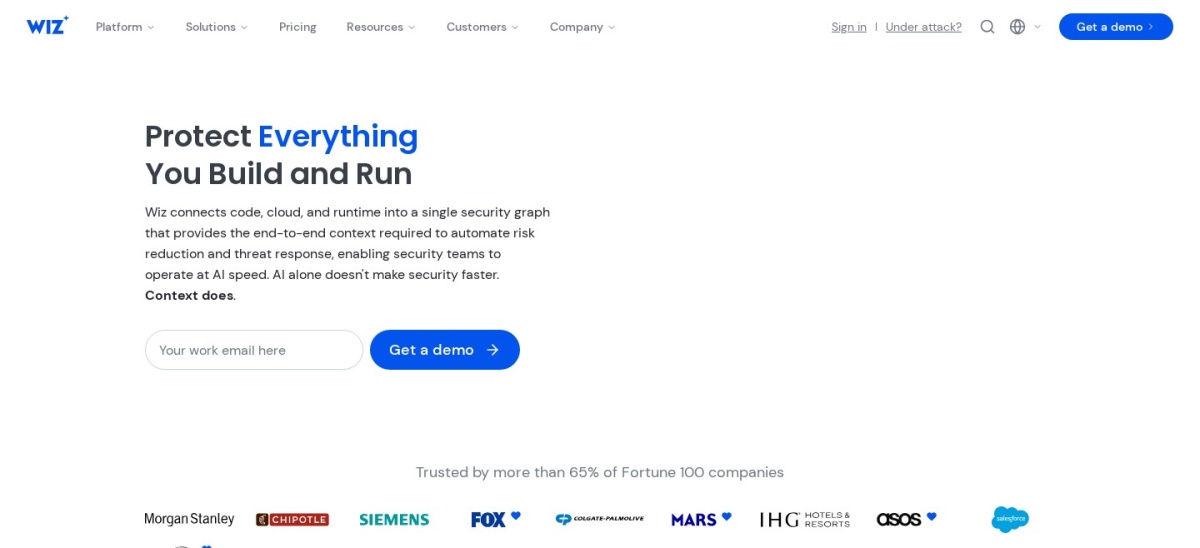
Wiz is the cloud pick at 4.7/5 on G2 from 794 reviews, with agentless cloud visibility and attack-path mapping.
Cymulate tops the ratings at 4.9/5 on G2, validating exposures by continuously testing your controls.
Almost every platform here sells by quote; only Tenable, Rapid7 and Qualys publish starting prices.
What an exposure management platform should cover
Exposure management answers one question: which weaknesses can an attacker actually reach, and what should you fix first? It pulls vulnerability scans, cloud misconfigurations, identity risks and external attack surface data into one prioritized list.
The best platforms rank fixes by reachability, not by severity alone. A critical flaw on an isolated server matters less than a medium flaw on an internet-facing asset an attacker can chain into your crown jewels.
Most tools in this category sell by quote, so budget for an annual enterprise contract and a sales conversation. Only Tenable, Rapid7 and Qualys publish starting prices, and even those depend on asset counts. Our guide on choosing analytics software covers the same quote-only pattern in a different category.
Attack-path tools such as Cymulate and XM Cyber validate exposures by modelling how an attacker would move. They answer a different question from scanners, so many teams run one of each.
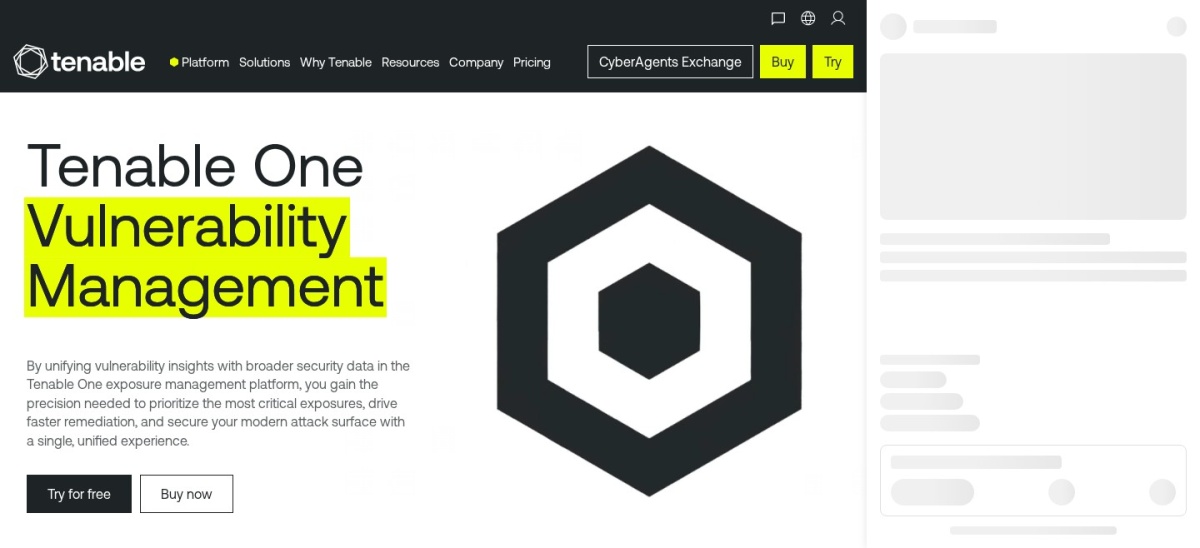
Tenable One is an exposure management platform that unifies vulnerability management, cloud security and attack surface data into exposure scores that tell teams what to fix first. Tenable Vulnerability Management is rated 4.5 out of 5 on G2 from 122 reviews, and the Nessus engine behind it carries the widest plugin coverage in this list.
The trade off is price transparency. Tenable One Vulnerability Management is listed at $3,500 a year for 100 assets, but another published read of the same buy page puts it at $6,112, so confirm the figure in writing. It suits enterprises standardizing exposure management across IT, cloud and OT.
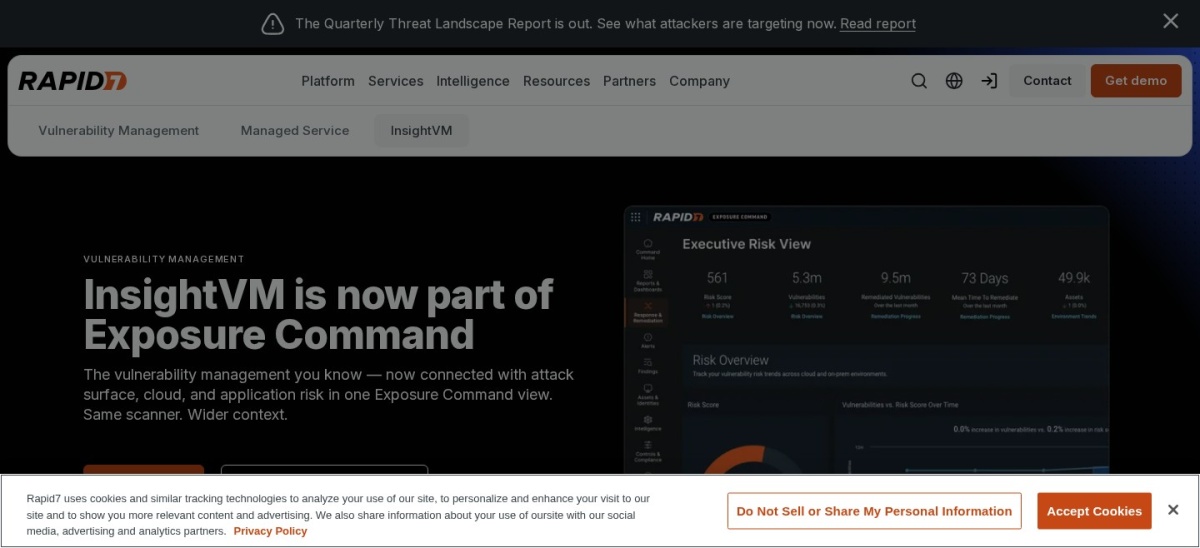
Rapid7 InsightVM is a vulnerability management platform now packaged in Exposure Command, with live dashboards, active risk scoring and remediation projects that assign fix work with deadlines. It is rated 4.4 out of 5 on G2 from 81 reviews.
The trade off is scale. InsightVM's published price starts at $1.62 per asset a month for 500 assets, or $9,720 a year, and smaller estates may not be quoted at all. It suits mid-market teams that want exposure management without enterprise-suite complexity.
What we like
Most transparent pricing in this list
Remediation projects with deadlines
Metasploit data feeds prioritization
Watch out for
Starting price is quoted at 500 assets
No patching built in, routes to ticketing
Exposure Command packaging is quote-based above 500 assetsVisit rapid7.com
03
Qualys VMDR
4.4/5on G2 (168 reviews, checked Nov 2026)
Starts at$596/mo
Best for compliance-driven teams
Free planFree trial only
PatchingIncluded in base
Risk scoringTruRisk
Paid planFrom $596/mo
qualys.com
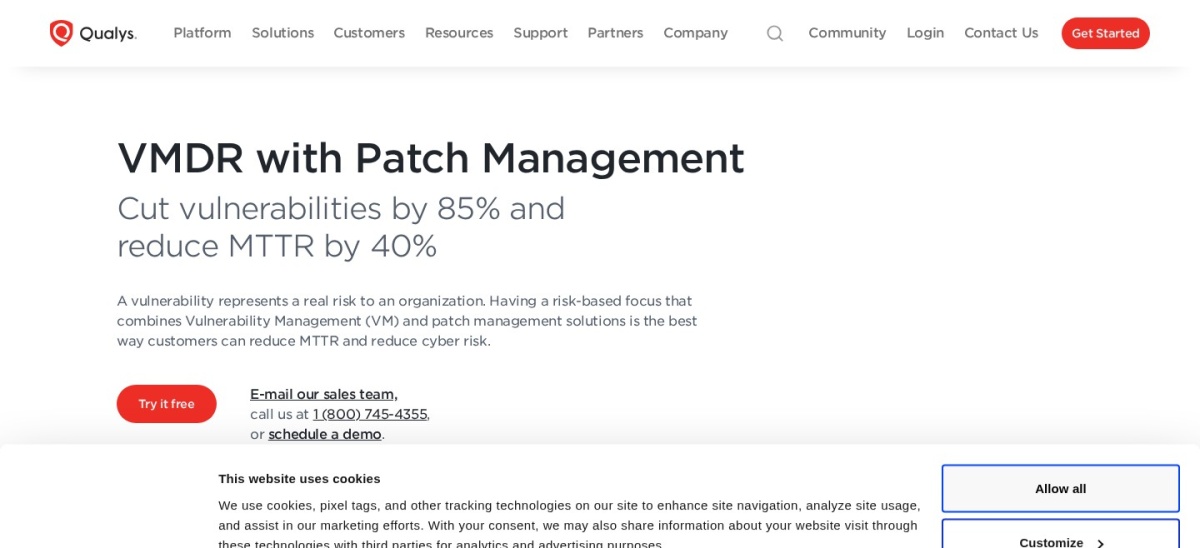
Qualys VMDR homepage, captured Nov 2026.
Qualys VMDR is a cloud vulnerability management platform that unifies asset inventory, scanning, prioritization with TruRisk and patching in one tenant. It is rated 4.4 out of 5 on G2 from 168 reviews, and Qualys claims more than 10,000 customers globally.
The trade off is pricing clarity. VMDR is listed from $596 a month, while another published read puts the TruRisk base package at $2,195, so the entry figure depends on the module mix. It suits global enterprises where audit-ready reporting matters.
Wiz is a cloud exposure platform that connects to cloud accounts without agents and shows every resource, vulnerability, misconfiguration and identity risk in one graph. It is rated 4.7 out of 5 on G2 from 794 reviews, and its toxic-combination detection finds risky paths attackers could chain.
The trade off is pricing. Wiz sells by quote, with street pricing reported around $24,000 a year per 100 workloads, and there is no free plan. It suits cloud-native teams managing multi-cloud exposures.
What we like
Agentless cloud visibility
Toxic-combination attack paths
Highest-rated cloud tool here
Watch out for
Quote-only pricing
No free plan, demo only
Enterprise plans are quoted per workloadVisit wiz.io
05
CrowdStrike Falcon Exposure Management
4.6/5on G2 (16 reviews, checked Nov 2026)
PricingCustom/yr
Best for CrowdStrike customers
Free planNo, demo only
Endpoint dataYes, Falcon sensor
Threat intelYes, live adversary data
Paid planCustom quote, Falcon module
crowdstrike.com
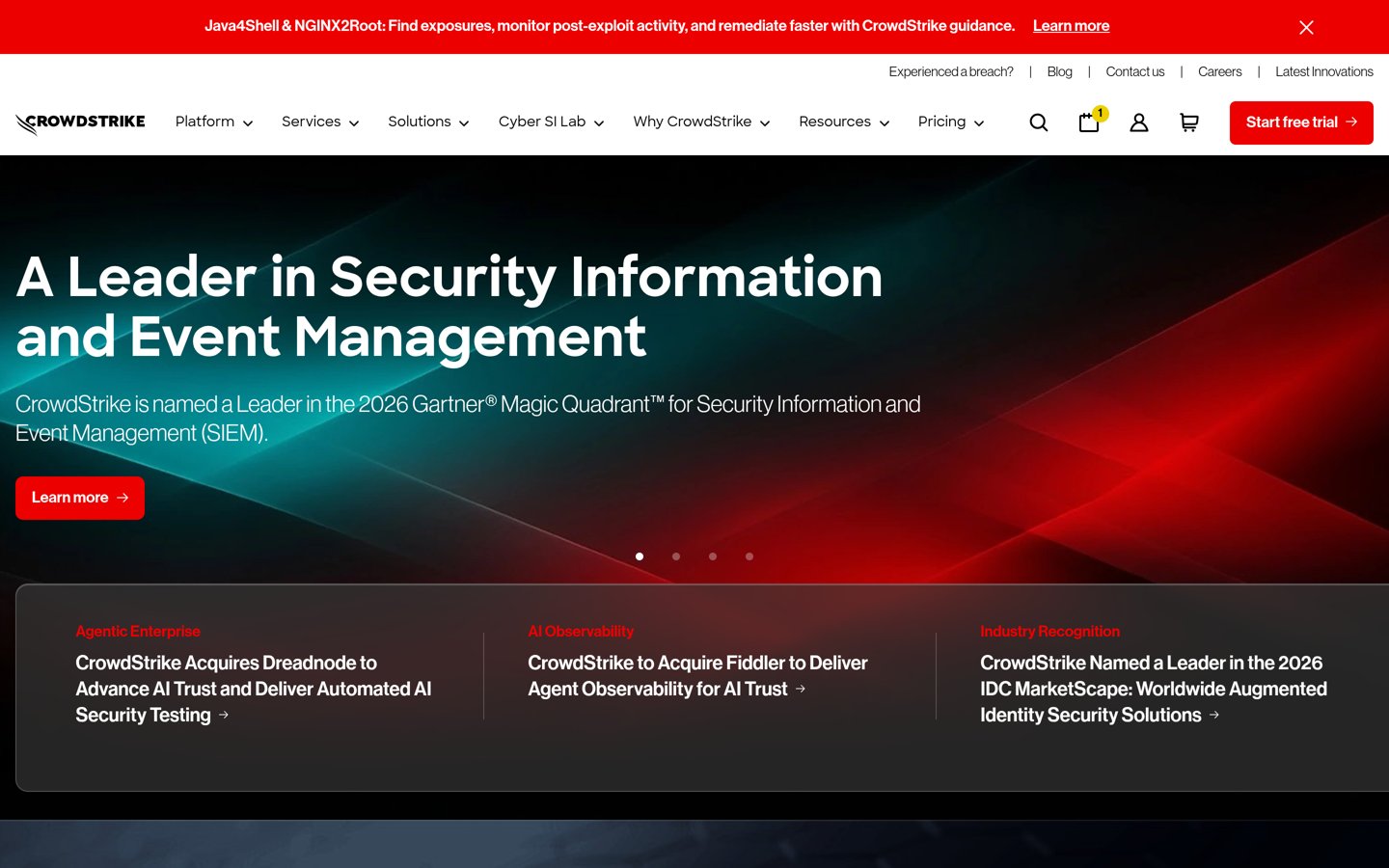
CrowdStrike Falcon Exposure Management homepage, captured Nov 2026.
CrowdStrike Falcon Exposure Management is a module that ties exposures to endpoint context from the Falcon sensor, ranking risks by live adversary behavior from CrowdStrike's threat intelligence. It is rated 4.6 out of 5 on G2 from 16 reviews.
The trade off is evidence and access. Only 16 G2 reviews back the rating, and it is a module inside the Falcon platform, so it suits organizations already running Falcon rather than buyers starting fresh.
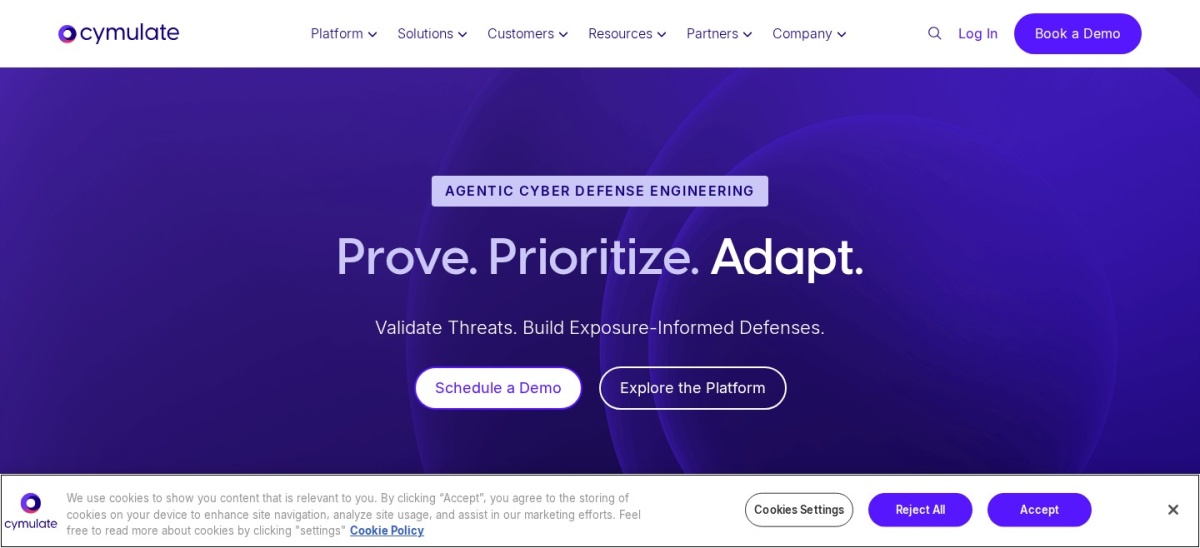
Cymulate is a security validation platform that continuously tests your controls across the IT environment, exposing risky threats, dangerous attack paths and unknown gaps before a breach. It is rated 4.9 out of 5 on G2 from 177 reviews, the highest score in this list.
The trade off is scope. Cymulate validates exposures rather than scanning for them, so it complements a scanner instead of replacing one, and pricing is quote-only. It suits teams that want proof of which fixes matter most.
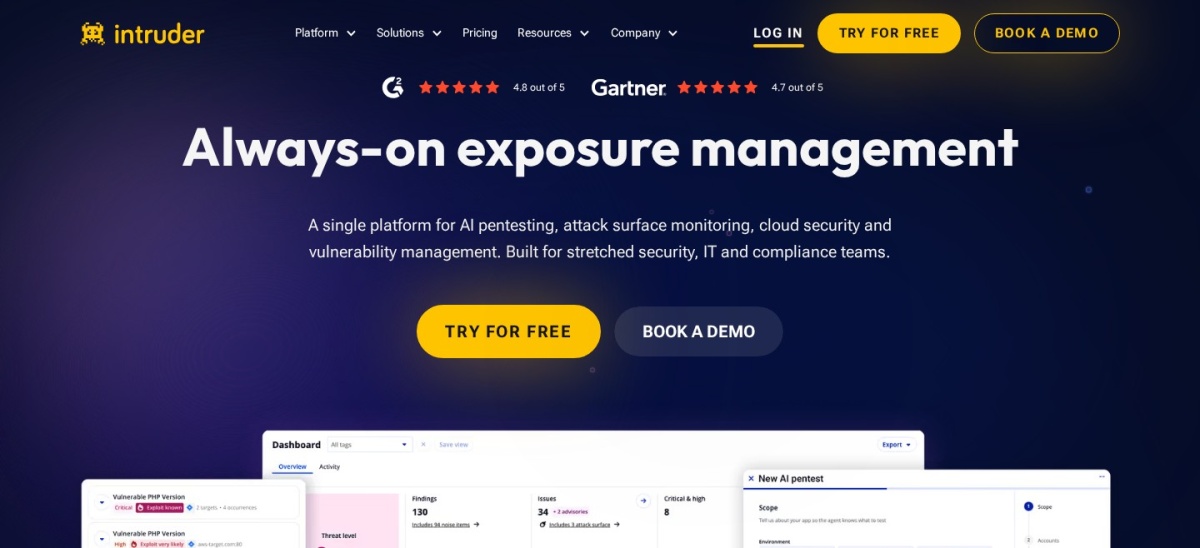
Intruder is a vulnerability management platform for external infrastructure, web apps, cloud and containers, with weekly external scans on its free tier. It is rated 4.8 out of 5 on G2 from 206 reviews.
The trade off is depth. Intruder's paid Cloud and Pro plans are sold through its sales team with prices not shown on its pricing page, and it covers less of the internal estate than Tenable or Qualys. It suits small teams that want a fast start on external exposure.
Cisco Vulnerability Management homepage, captured Nov 2026.
Cisco Vulnerability Management is a platform, formerly Kenna Security, that prioritizes vulnerabilities by exploitability and business risk across the estate. It is rated 4.3 out of 5 on G2 from 217 reviews.
The trade off is pricing and focus. Cisco sells it by quote as part of its security portfolio, and it is a prioritization layer rather than a full exposure platform. It suits organizations already standardized on Cisco security.
Scanners such as Tenable, Qualys and Rapid7 find weaknesses across your estate and rank them by risk scores.
Attack-path tools such as Cymulate model the routes an attacker would actually take, then surface the single fixes that collapse the most routes.
Most mature programs run both: scanning for coverage, validation for prioritization. If you can only buy one, start with scanning.
How we chose
We started from the exposure management platforms that appear on most 2026 shortlists, then kept those with a verifiable rating on G2 and a published price or a clear quote-only model.
Prices in this category are mostly quote-only. The three published figures come from recent reads of the vendors' own purchase and pricing pages in October 2026, checked again on 25 November 2026; the Tenable figure conflicts with another published figure and is flagged in our notes. Ratings and review counts come from G2 on the same day.
We left out XM Cyber, whose G2 profile holds a single review, and Cortex Xpanse, which has no verifiable G2, Capterra or Trustpilot rating. No vendor paid for a place, and we do not claim hands-on testing for this list.
How to choose an exposure management platform
Start with what your estate looks like: cloud, on-premises, or both.
Map your estate first. Cloud, on-premises, OT and identity: the mix decides the platform.
Check what is published vs quoted. Only three tools here publish prices; the rest need a sales quote.
Ask for the asset-count basis. Per-asset prices change with volume, so compare quotes at your asset count.
Trial the scanner before signing. Most vendors offer a trial or demo; run it against a real segment.
FAQ
What is the best exposure management platform?
Tenable One is the best pick for most enterprises. It unifies vulnerability management, cloud security and attack surface data into exposure scores, and Tenable Vulnerability Management is rated 4.5 out of 5 on G2 from 122 reviews.
How much does exposure management software cost?
Almost every platform here sells by quote. Published starting prices are Tenable One at $3,500 a year for 100 assets and Rapid7 InsightVM from $1.62 per asset a month at 500 assets. Qualys VMDR is listed from $596 a month.
Is there a free exposure management platform?
No full platform here has a free plan. Intruder has a free tier for getting started with external scans, and most vendors offer a free trial or a demo. Nessus Essentials is a free scanner, not an exposure platform.
What is the difference between vulnerability management and exposure management?
Vulnerability management finds and ranks flaws. Exposure management adds cloud, identity and external attack surface data, then ranks fixes by what an attacker can actually reach. Tenable One, Wiz and Qualys VMDR all do the second.
Which exposure platform is best for cloud teams?
Wiz is the cloud pick. It is rated 4.7 out of 5 on G2 from 794 reviews, connects to cloud accounts without agents, and maps attack paths across resources, identities and misconfigurations in one graph.
Do I need attack-path validation as well as scanning?
It helps once scanning is mature. Cymulate continuously tests whether your controls would stop an attack path, which tells you which fixes matter most. Teams early in the journey should fix scanning coverage first.
SaaS SEO and WordPress specialist with about 8 years of experience. Rakib compares WordPress plugins, themes, hosting and software using public pricing, documentation and user reviews. See how we rank.