Statsig is the best experimentation platform for most product teams, with a generous free tier up to 2 million events a month and Pro from $150 a month. Pick GrowthBook for open-source, warehouse-first testing from $40 a seat a month, or LaunchDarkly when experiments ride on feature flags.
How we make this list: we compare pricing pages, product documentation and public user reviews, then re-check every price before each update. No product paid for a place. Disclosure.
Statsig leads at 4.7/5 on G2 from 347 reviews, free up to 2 million events a month, with Pro at $150 a month.
GrowthBook is the open-source pick at 4.6/5 on G2, free for up to 3 users, with Pro at $40 a seat a month.
LaunchDarkly pairs feature flags with experiments on a usage-based model, with a free Developer tier.
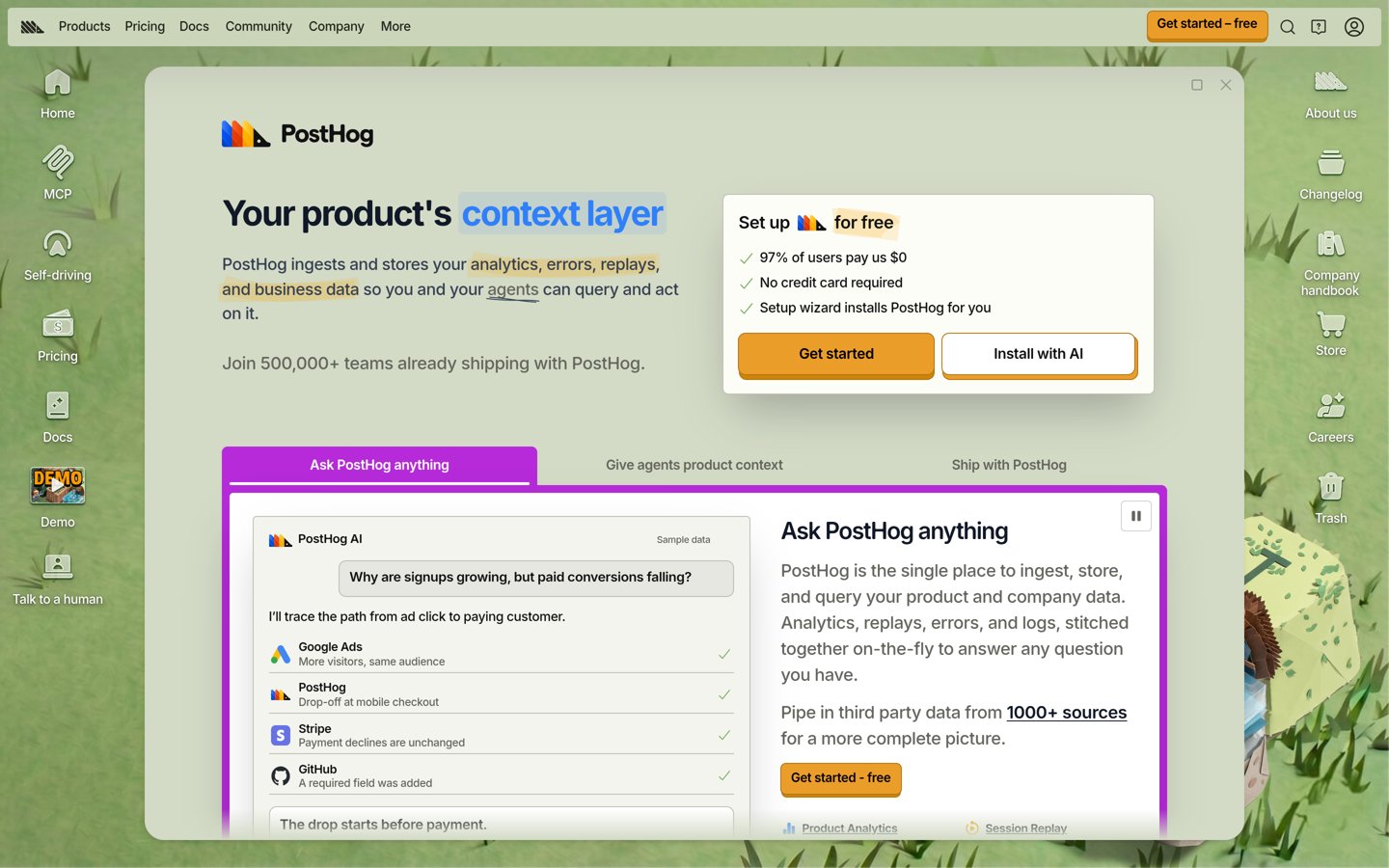
PostHog bundles experiments with analytics and session replay on a generous free tier.
Optimizely, VWO and Kameleoon are the enterprise group: strong stats engines, quote-only pricing.
What an experimentation platform should cover
Product teams run experiments to learn what actually moves a metric, not what a meeting thinks will. An experimentation platform runs the test, guards the statistics and reports a trustworthy result.
The best platforms pair feature flags with statistics: flags decide who sees a variant, and the stats engine decides whether the result is real. Sequential testing, CUPED variance reduction and SRM checks separate serious tools from basic A/B widgets.
Free tiers are generous here. Statsig is free up to 2 million events a month, GrowthBook is free for up to 3 users, and PostHog gives a free tier on every product. Our guide on choosing analytics software covers the same free-first pattern.
Enterprise tools such as Optimizely, VWO and Kameleoon sell by quote, so budget for annual contracts in the tens of thousands before a demo. The open-source and mid-market tools below publish their prices.
The 9 best experimentation platforms for product teams
01
Statsig
4.7/5on G2 (347 reviews, checked Nov 2026)
Paid from$150/mo
Best experimentation platform overall
Free planUp to 2M events/mo
Feature flagsYes
StatisticsSequential, Bayesian, CUPED
Paid planPro, $150/mo
statsig.com
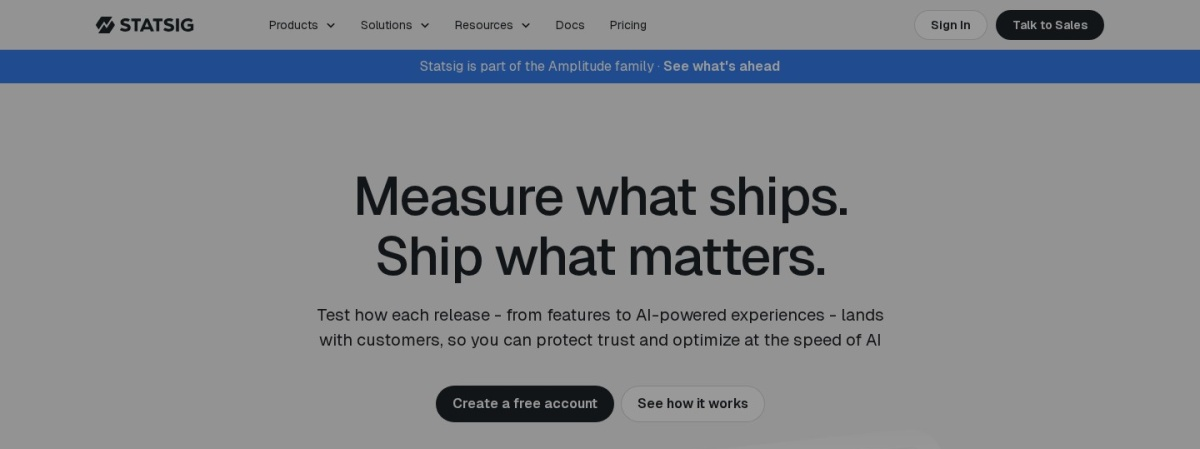
Statsig homepage, captured Nov 2026.
Statsig is a modern experimentation and feature management platform built by ex-Facebook engineers, covering flags, experiments, product analytics and session replay. It is rated 4.7 out of 5 on G2 from 347 reviews, and the free tier covers up to 2 million events a month.
The trade off is the event meter. Pro costs $150 a month with 5 million events, and experiment exposures count toward events, so heavy teams pay more. It suits product teams that want the most complete statistics without an enterprise contract.
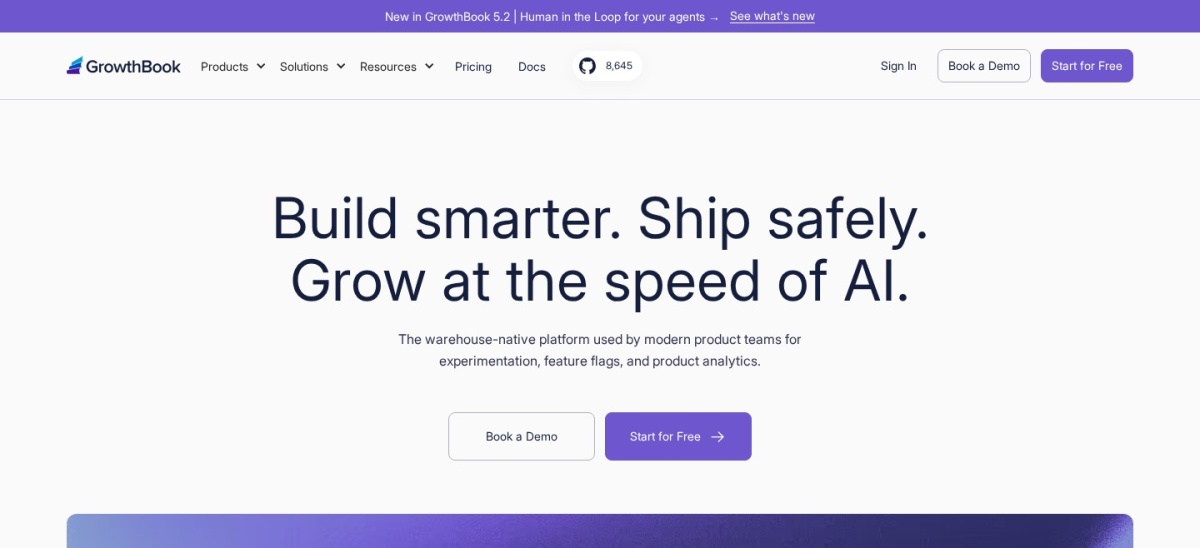
GrowthBook is an open-source feature flag and experimentation platform that runs against your own data warehouse, so your data never leaves your infrastructure. It is rated 4.6 out of 5 on G2 from 26 reviews, and the cloud Starter plan is free for up to 3 users.
The trade off is the seat cap. Pro costs $40 a seat a month for up to 30 users and adds the AI visual editor, CUPED and sequential testing. It suits data teams that want warehouse-native experiments at a predictable seat price.
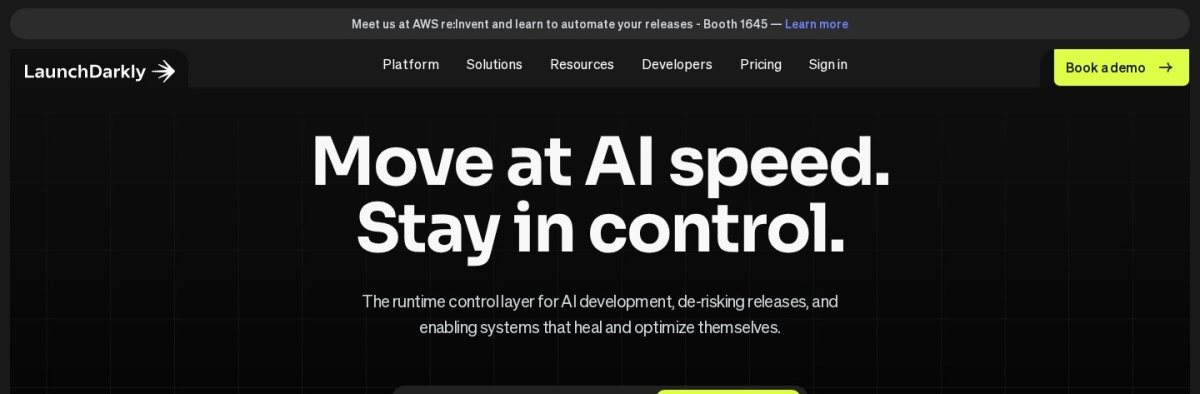
LaunchDarkly is a feature management platform with experimentation built on top: flags control rollout and targeting, and experiments measure the result. It is rated 4.5 out of 5 on G2 from 824 reviews, the largest review base among the flag-first tools here.
The trade off is pricing. LaunchDarkly now bills by usage with free limits, including 5 service connections and 1,000 client-side users a month, so there is no flat starting price to budget. It suits release teams whose experiments ride on flags.
PostHog is an all-in-one product analytics platform with experiments, feature flags, session replay and surveys in one product. It is rated 4.5 out of 5 on G2 from 1,054 reviews, the largest review base in this list.
The trade off is depth. PostHog's experiments are strong for product teams but lighter on statistics than Statsig, and billing is usage-based across every product. It suits startups that already use PostHog for analytics.
Optimizely is the most recognizable name in experimentation, with Web Experimentation for marketers and Feature Experimentation for engineers. It is rated 4.2 out of 5 on G2 from 411 reviews, and its stats engine is widely regarded as best in class.
The trade off is price and access. Optimizely publishes no prices; every plan is a custom quote, with third-party reports putting Web Experimentation from about $36,000 a year. It suits large companies with a dedicated experimentation team.
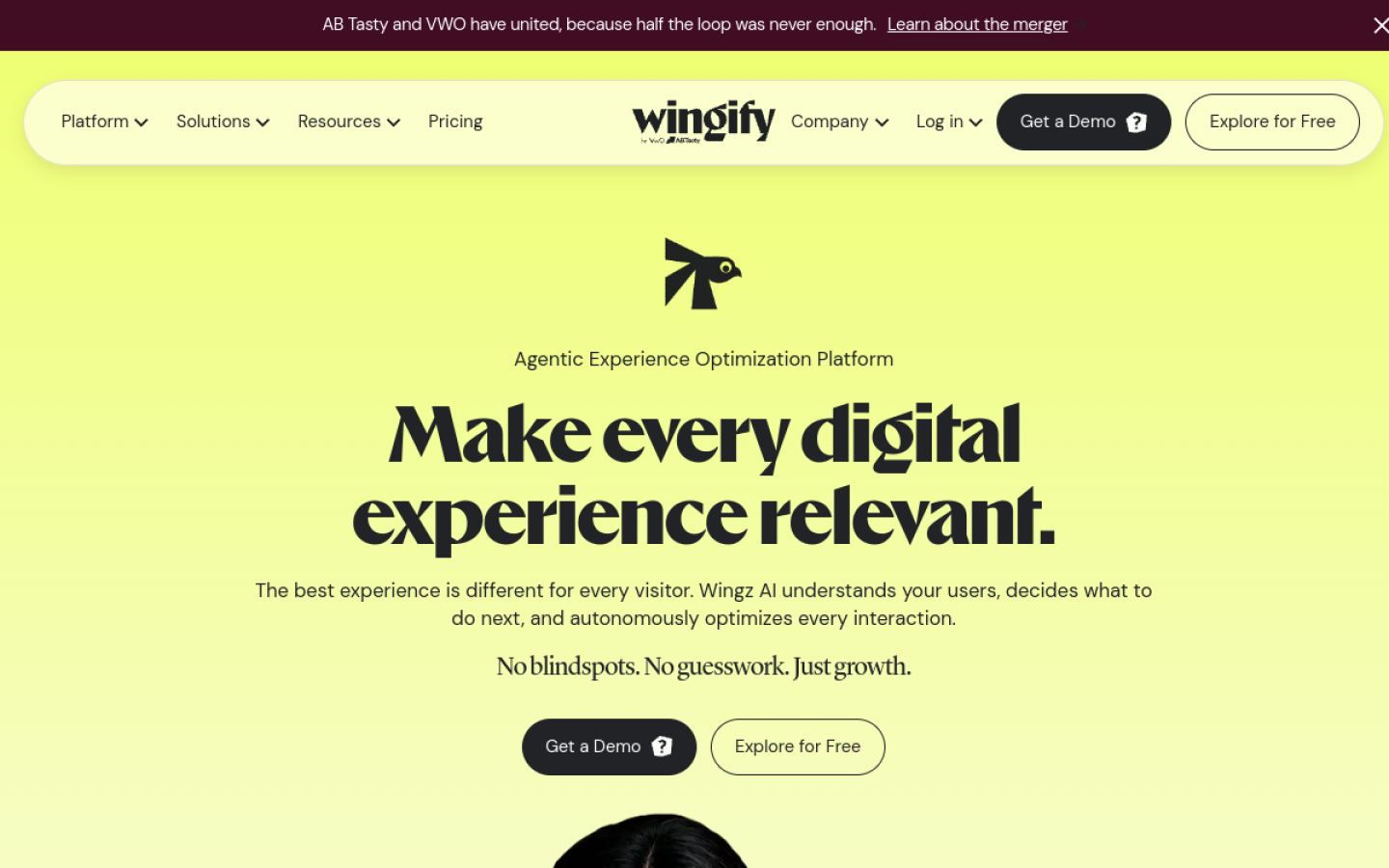
VWO is the classic Google Optimize successor: visual editor, A/B and multivariate testing, split URL tests, plus heatmaps, recordings and surveys as separate modules. It is rated 4.4 out of 5 on G2 from 929 reviews.
The trade off is pricing. VWO merged with AB Tasty under Wingify in January 2026 and now sells by quote based on monthly tracked users, with a limited free Starter plan. It suits mid-market teams that want testing and behavioral data from one vendor.
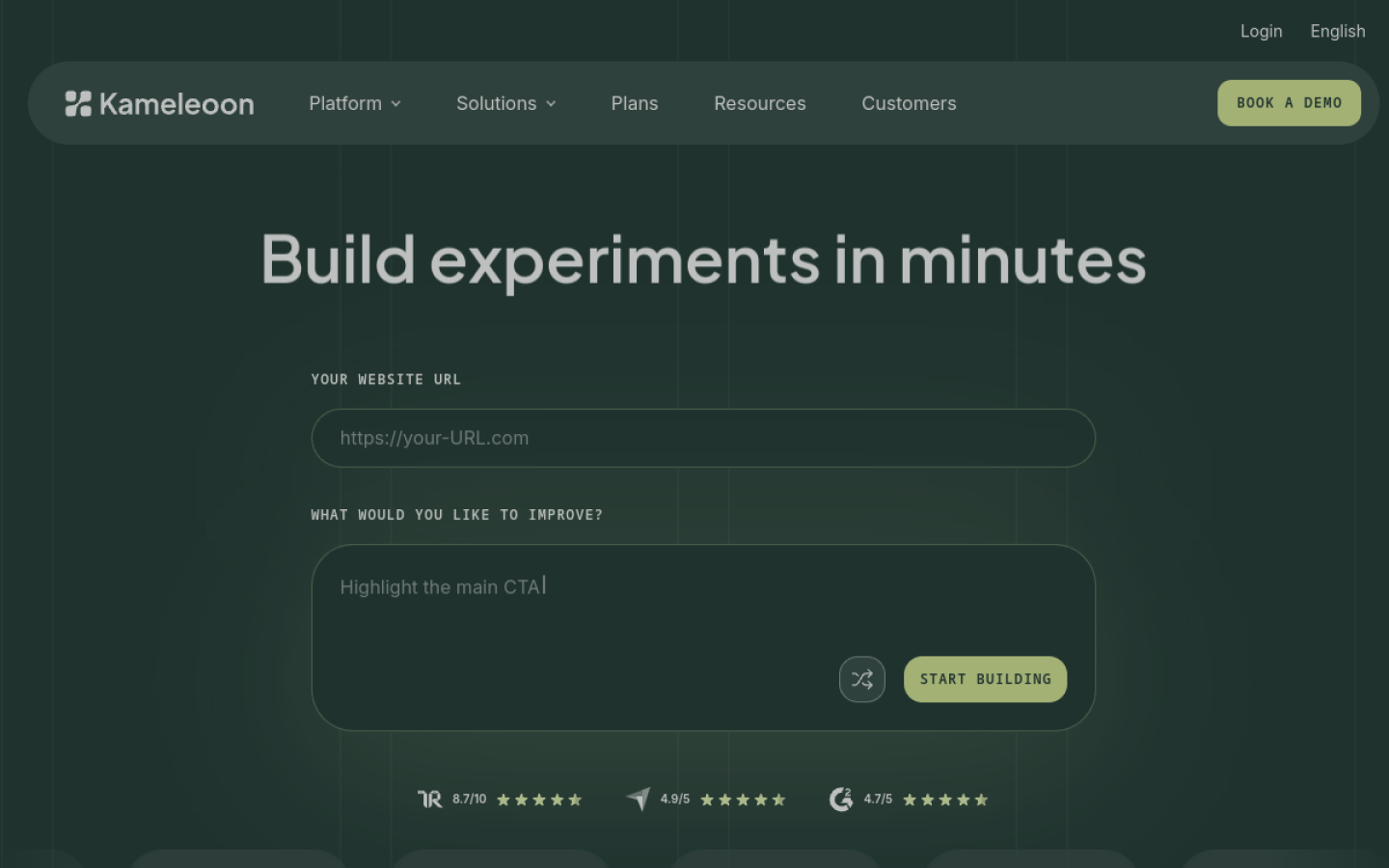
Kameleoon is a web and feature experimentation platform known for AI-assisted testing, trusted by over 1,000 brands. It is rated 4.6 out of 5 on G2 from 137 reviews, and its AI features generate variant copy, predict winners and auto-allocate traffic.
The trade off is price. The Prompt-Based Experimentation Starter plan starts from $495 a month, and feature experimentation and personalization need a custom Enterprise plan. It suits teams that want AI to build and run variants.
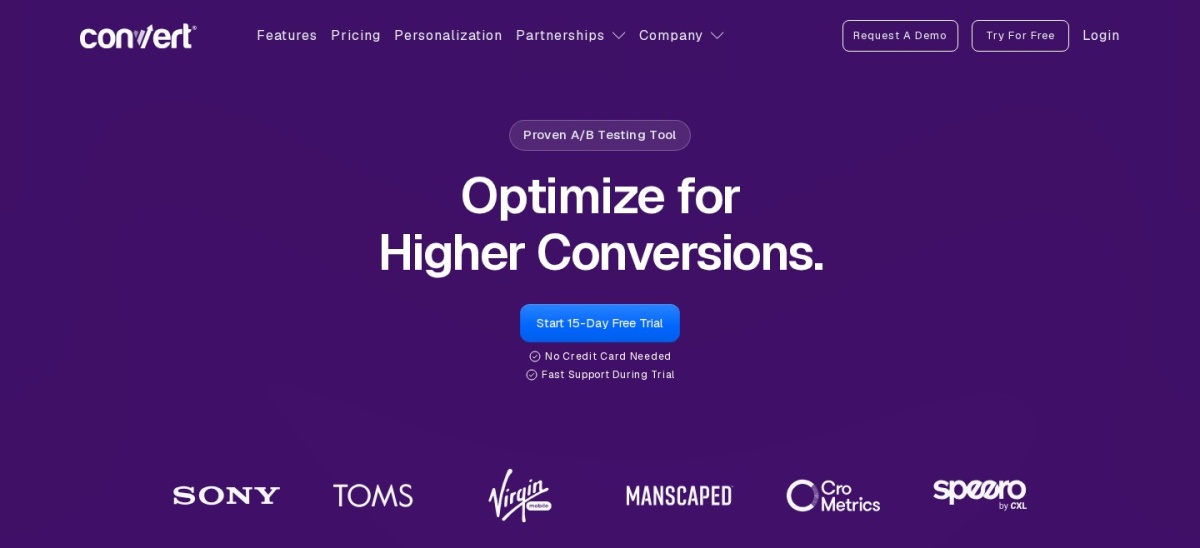
Convert is a privacy-focused experimentation platform with flat-rate pricing and unsampled results, aimed at marketers and CRO agencies. It is rated 4.6 out of 5 on G2 from 100 reviews, with support and price the most-cited strengths.
The trade off is the editor. Growth costs $299 a month billed yearly for 100,000 tested users, and reviewers describe the visual editor as more basic than Optimizely or VWO. It suits teams that want predictable pricing and accurate results.
AB Tasty is a European experimentation and personalization platform, strong on AI-driven audience segmentation and a large widget library for social proof, countdowns and urgency messages. It is rated 4.5 out of 5 on G2 from around 200 reviews.
The trade off is access. AB Tasty merged with VWO under Wingify in January 2026 and sells by quote only, with typical contracts reported in the tens of thousands a year. It suits enterprise teams that need personalization as much as testing.
Product experimentation platforms such as Statsig, GrowthBook and LaunchDarkly run tests behind feature flags, so engineers control who sees what.
Web testing tools such as Optimizely, VWO and Kameleoon use a visual editor, so marketers can build variants without code.
Many teams need both: flags for product releases and a visual editor for landing pages. Pick the side you use more, then add the other later.
How we chose
We started from the experimentation platforms that appear on most 2026 shortlists, then kept those with a verifiable rating on G2 and a published price or a clear quote-only model.
Prices come from each vendor's pricing page, checked on 25 November 2026, except Convert and Kameleoon, whose pricing pages render no prices to a text fetch; their figures come from recent reads of the same vendor pages and are flagged in our notes. Ratings and review counts come from G2 on the same day.
We left out tools with no verifiable G2, Capterra or Trustpilot rating. No vendor paid for a place, and we do not claim hands-on testing for this list.
How to choose an experimentation platform
Start with where your experiments run: inside the product or on the website.
Decide where experiments run. Product tests need feature flags; website tests need a visual editor.
Check the statistics, not just the editor. Sequential testing, CUPED and SRM checks decide whether results are trustworthy.
Price the free tier against your volume. Event caps and seat caps decide when free stops being free.
Run one real experiment before paying. Every tool here has a free tier or trial, so test the workflow first.
FAQ
What is the best experimentation platform for product teams?
Statsig is the best pick for most product teams. It is rated 4.7 out of 5 on G2 from 347 reviews, has a free tier up to 2 million events a month, and covers feature flags, experiments, analytics and session replay in one product.
Is there a free experimentation platform?
Yes. GrowthBook is free and open source for up to 3 cloud users, Statsig is free up to 2 million events a month, and PostHog has a free tier on every product including experiments. LaunchDarkly also has a free Developer tier with usage limits.
How much does experimentation software cost?
Paid plans in this list start at $40 a seat a month for GrowthBook Pro and $150 a month for Statsig Pro. Convert starts at $299 a month billed yearly, while Optimizely, VWO and Kameleoon sell by quote only.
What happened to VWO and AB Tasty?
VWO and AB Tasty merged under Wingify in January 2026. Both products still exist and are sold together, so this list covers them as separate entries with their own G2 ratings.
Do I need feature flags to run experiments?
Not for website tests, where a visual editor is enough. For product tests inside an app, flags are the standard route: they control rollout, target users and roll back a bad variant in one place.
What is the difference between Statsig and GrowthBook?
Statsig is a hosted platform with the most complete statistics and a generous free tier. GrowthBook is open source and warehouse-first: your data never leaves your own warehouse, and Pro costs $40 a seat a month.
SaaS SEO and WordPress specialist with about 8 years of experience. Rakib compares WordPress plugins, themes, hosting and software using public pricing, documentation and user reviews. See how we rank.