Fivetran is the best ETL tool for most teams, with more than 700 managed connectors and a free plan up to 500,000 monthly active rows. Airbyte is the best open source option, and Skyvia is the best no-code pick for smaller teams.
How we make this list: we compare pricing pages, product documentation and public user reviews, then re-check every price before each update. No product paid for a place. Disclosure.
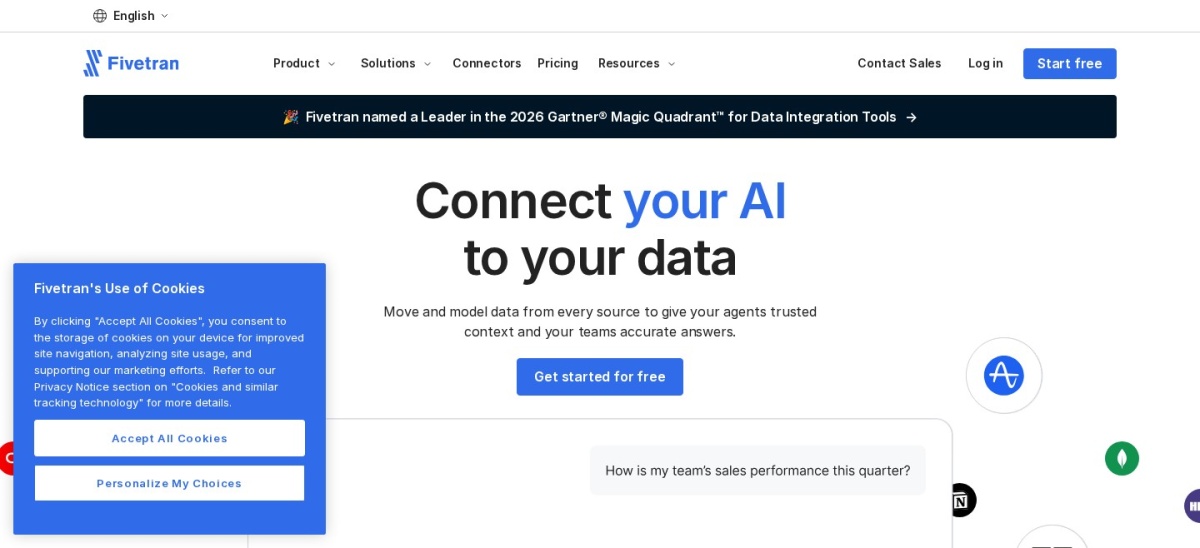
Fivetran leads on reliability and connector breadth, with more than 700 managed connectors and a free plan to 500,000 rows.
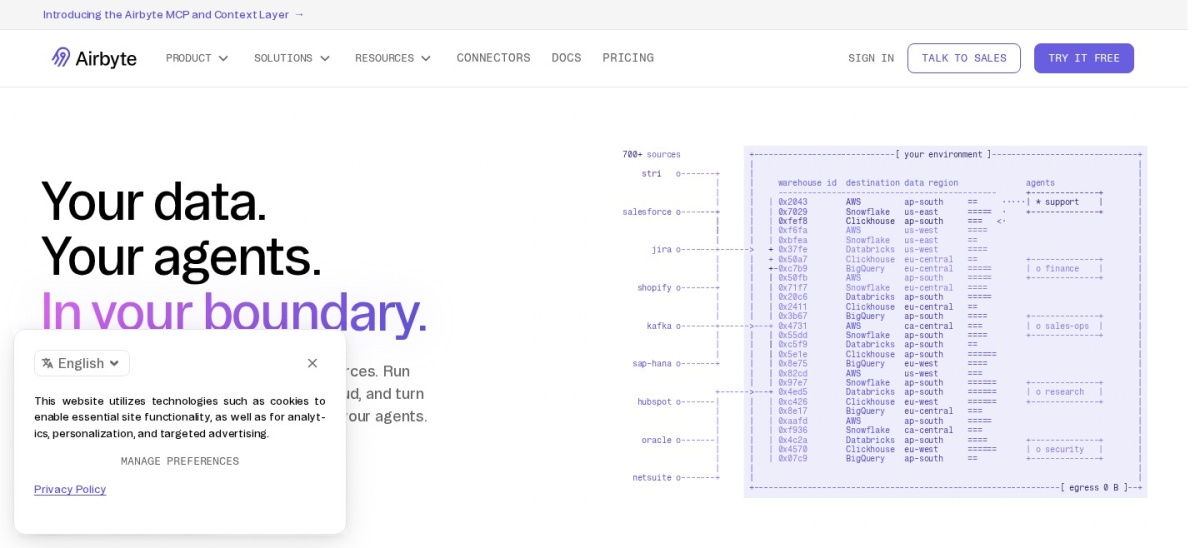
Airbyte is the best open source ETL tool, with a free self-hosted Core and managed cloud from $20 a month.
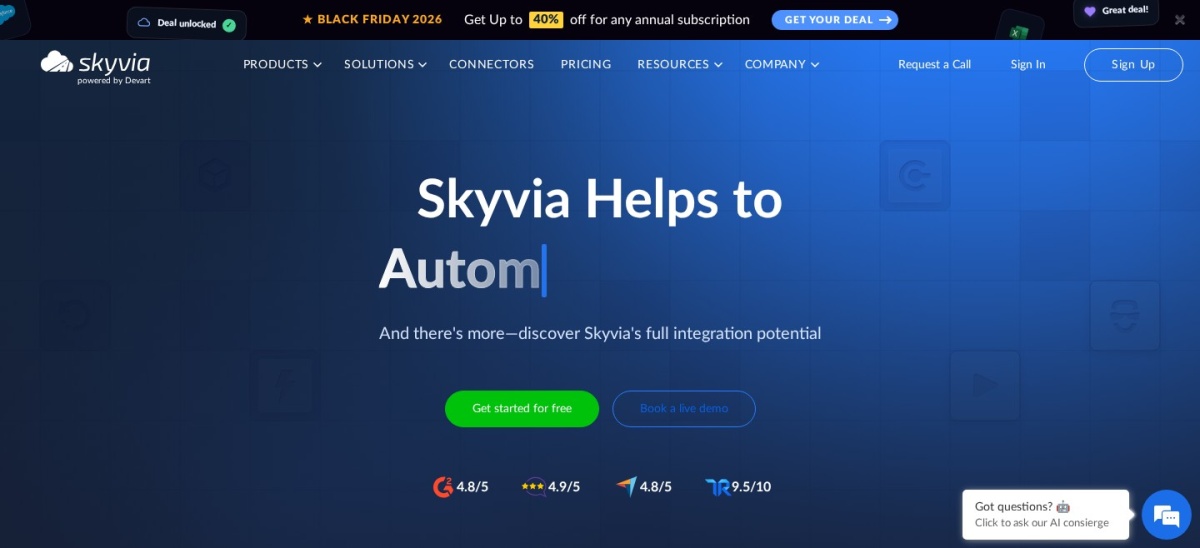
Skyvia is the best no-code pick for small teams, at $79 a month billed annually with a 4.8/5 G2 rating.
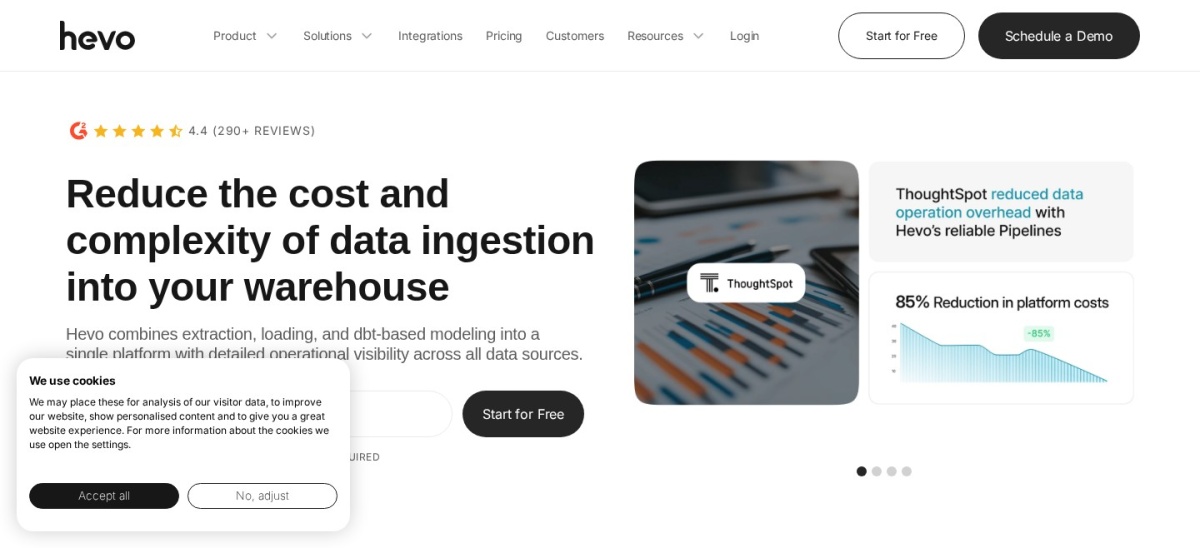
Hevo Data is the best no-code ELT tool for real-time sync, but Starter now costs $265 a month.
Talend and Matillion are the enterprise picks, with governance and orchestration that lighter tools lack.
What an ETL tool should do
ETL tools move data from apps, databases and files into a warehouse, transforming it on the way so analysts can query it. The modern version is usually ELT: load first, transform inside the warehouse.
Every vendor meters something different. Fivetran bills monthly active rows, Airbyte sells credits, Hevo counts events, Estuary charges per gigabyte and Matillion sells compute credits, so the same 10 sources can cost tens of dollars or thousands a month depending on the meter. Our guide to data pipeline software compares the same tools on pipeline breadth.
Free tiers are real but small. Fivetran is free to 500,000 monthly active rows, Airbyte Core is free to self-host, and Hevo is free to 1 million events a month.
Enterprise ETL is a different world. Talend and Matillion add governance, data quality and orchestration, but both need a sales conversation before any price appears.
Fivetran is a fully managed ELT platform that moves data from more than 700 SaaS apps, databases and event streams into cloud warehouses with automatic schema drift handling. Its permanent free plan covers up to 500,000 monthly active rows, 3,500 activation rows and 5,000 model runs a month with 15-minute syncs.
The trade off is per-row billing on high-churn tables. Pay-as-you-go Standard connections start at a $5 a month base charge per connection, and annual contracts start at a $12,000 minimum. It suits teams that want business-critical pipelines with almost no maintenance.
Airbyte is an open source data movement platform supporting ELT and log-based change data capture across more than 700 connectors, plus an AI-assisted Connector Builder for custom sources. Teams can self-host Airbyte Core for free under the Elastic License 2.0, or start Airbyte Cloud Standard at $20 a month for 5 credits.
The trade off is maintenance. Self-hosting needs 10 to 15 engineering hours a month for Kubernetes management and upgrades, and cloud pricing varies enough across sources to need a pricing page check. It suits engineering-heavy teams that want maximum connector breadth at low cost.
Skyvia is a no-code data integration platform for CRM and database sync, with more than 200 connectors across SaaS apps, databases and warehouses. Its free plan covers 10,000 records a month, and the Basic plan costs $79 a month billed annually, or $99 month to month, with unlimited users and connections.
The trade off is scale. Skyvia is built for straightforward pipelines, and high-volume or complex transformation work fits Fivetran or Matillion better. It suits data-driven teams that want no-code pipelines across 200+ sources without a dedicated data engineer.
Hevo Data is a no-code ELT platform with real-time change data capture, so source changes stream to the warehouse quickly without engineering work. It covers more than 150 sources with dbt integration, SSH and SSL security, and 24-hour live chat support on paid plans.
The trade off is the new price. Starter now starts at $265 a month, up from $239 in earlier 2026 comparisons, and Professional costs $750 a month. It suits mid-market data teams that want a managed ETL service with stronger transformation features than Stitch.
Stitch is a lightweight ELT loader, now part of Qlik, for simple SaaS-to-warehouse replication, with more than 140 connectors and published pricing from $100 a month for 5 million rows and one destination. It does one job, moves data on a schedule, and stays out of the way.
The trade off is depth. Stitch has no free plan, no real-time sync and lighter transformation than Hevo or Matillion, so complex pipelines outgrow it. It suits small teams with 10 or fewer standard sources and one warehouse that want predictable pricing.
Coupler.io is a data loader that moves data from more than 400 sources into spreadsheets and BI tools, so a team can build reports in Google Sheets, Excel, Looker Studio or Power BI without a warehouse. Its paid plans start at $24 a month billed annually for 3 accounts, with a 4.8/5 G2 rating from 104 reviews.
The trade off is the destination. Coupler.io is not a warehouse loader, so teams that need a cloud warehouse should pick Fivetran, Airbyte or Skyvia instead. It suits small teams and analysts who report in spreadsheets and dashboards rather than SQL.
Matillion is a cloud-native ETL platform purpose-built for Snowflake, BigQuery, Databricks and Redshift, covering ingestion, transformation and orchestration in one visual designer. It combines drag-and-drop pipelines with code components for engineers, plus AI-assisted pipeline building.
The trade off is the meter. Matillion prices by credits, with Basic at $2 per credit, and costs rise with data volume and user counts, so the bill needs a pricing page check. It suits cloud data teams that want ingestion through orchestration on a modern warehouse.
Estuary Flow is a real-time data integration platform for replicating databases at high volume, with log-based change data capture and streaming pipelines. It charges $0.50 per gigabyte plus connector fees, which makes it cheap for steady high-volume replication and open source at its core.
The trade off is the audience. Estuary is built for engineers replicating databases in real time, not for analysts who want no-code SaaS sync. It suits teams moving operational databases into a warehouse or lake with minimal lag.
Talend is an enterprise data integration platform, now part of Qlik, with data quality, stewardship and governance alongside connectivity. Its component library covers more than 1,000 connectors, from legacy mainframes to modern SaaS, with consistent governance across all of them.
The trade off is weight and price. Talend is heavier than modern ELT tools, needs Java expertise and a dedicated team, and Data Fabric pricing is custom by quote. It suits enterprises with mixed estates where data trust and breadth outweigh speed.
Classic ETL transforms data before loading it, which suits strict schemas and legacy warehouses. Modern ELT loads raw data first and transforms it inside the warehouse, which is faster and cheaper on cloud warehouses.
Most tools here are ELT tools in practice, even when they call themselves ETL. Fivetran, Airbyte, Hevo and Stitch all load first and transform with dbt or SQL afterwards.
The distinction matters for cost. ELT bills on rows, credits or events moved, while classic ETL bills on compute used to transform, so compare the meter that matches your volume.
How we chose
We started from the ETL and ELT tools that appear most often in 2026 comparisons, then kept those with a verifiable rating on G2.
Prices come from each vendor's pricing page, checked on 25 November 2026. Usage-based tools are listed at their entry rate with the meter named, and quote-only tools are listed as Custom. Ratings and review counts come from G2 on the same day.
We left out tools with no verifiable rating on G2, Capterra or Trustpilot. No vendor paid for a place, and we do not claim hands-on testing for this list.
How to choose an ETL tool
Start with your sources and your volume, then pick the meter that makes the bill predictable.
List your sources and destinations. Count SaaS apps, databases and files, and check each tool's connector list before shortlisting. A missing connector costs more than any licence saving.
Model cost at your real volume. Run your monthly rows, events or gigabytes through each vendor's meter. A $5 entry price can become thousands at high volume.
Try the free tier on real data. Fivetran, Airbyte, Hevo and Skyvia all have free tiers. Load one real source and watch the sync, schema handling and error messages.
Check who maintains the pipelines. No-code tools suit analysts, while custom connectors and dbt transforms need an engineer. Pick the tool your team can actually run.
FAQ
What is the best ETL tool?
Fivetran is the best ETL tool for most teams, with more than 700 managed connectors, automatic schema handling and a 4.3/5 G2 rating from more than 850 reviews. Airbyte is the best open source option, and Skyvia is the best no-code pick for smaller teams.
Is there a free ETL tool?
Yes. Fivetran is free up to 500,000 monthly active rows, Airbyte Core is free to self-host, Hevo is free to 1 million events a month, and Skyvia has a free plan for 10,000 records a month. Matillion offers a 30-day trial rather than a permanent free plan.
How much does ETL software cost?
Entry prices here run from $5 a month on Fivetran pay-as-you-go to $265 a month on Hevo Starter, but usage-based billing means the real bill depends on volume. Fivetran annual contracts start at a $12,000 minimum, and Talend and Matillion are quote-only.
What is the difference between ETL and ELT?
ETL transforms data before loading it into the warehouse, while ELT loads raw data first and transforms it inside the warehouse with SQL or dbt. Most modern tools are ELT tools, including Fivetran, Airbyte and Hevo.
Which ETL tool is best for small teams?
Skyvia is the best no-code pick for small teams, at $79 a month billed annually with a free plan for 10,000 records. Coupler.io is cheaper still at $24 a month, but it loads into spreadsheets and BI tools rather than a warehouse.
Do ETL tools need a data engineer?
Not always. Fivetran, Hevo, Skyvia, Stitch and Coupler.io are no-code tools that a data analyst can run. Airbyte, Matillion and Talend suit teams with engineers, because custom connectors and transformations need code.
SaaS SEO and WordPress specialist with about 8 years of experience. Rakib compares WordPress plugins, themes, hosting and software using public pricing, documentation and user reviews. See how we rank.