Anaplan is the best EPM software for large enterprises that need connected planning across finance, sales, supply chain and workforce in one model. Pick OneStream when the close and consolidation matter as much as planning, or Workday Adaptive Planning if you already run Workday.
How we make this list: we compare pricing pages, product documentation and public user reviews, then re-check every price before each update. No product paid for a place. Disclosure.
Anaplan leads for connected planning, rated 4.6 out of 5 on G2 from 462 reviews, but it publishes no price and model building is steep.
OneStream unifies close, consolidation and planning on one model, rated 4.6 out of 5 from 160 reviews, with implementations of 6 to 18 months.
Workday Adaptive Planning is the only tool here with a 30-day free trial, and it suits teams already running Workday HCM or Financials.
Oracle is the only vendor with a published rate: EPM Standard at $250 per user a month, though its Capterra rating rests on only 9 reviews.
Vena and Datarails keep Excel as the interface, rated 4.5 and 4.6 on G2, for teams that do not want to leave spreadsheets.
What EPM software covers
Enterprise performance management, or EPM, covers budgeting, forecasting, consolidation, close management and reporting in one governed system, so the plan and the actuals sit on the same data model.
The tools split by the module they lead with. Consolidation-led suites such as OneStream are strongest on the group close, planning-led platforms such as Anaplan lead on models and scenarios, and Excel-led tools such as Vena suit teams that already live in spreadsheets.
Almost all EPM pricing is quote-based. Only Oracle publishes a per-user rate in this list, so compare implementation time, admin burden and three-year total cost, not just the licence fee. Our guide on financial reporting software covers the reporting side in more depth.
Check the review base as well as the score. A 4.3 from 9 reviews means far less than a 4.3 from 508, and several vendors here publish no customer counts at all.
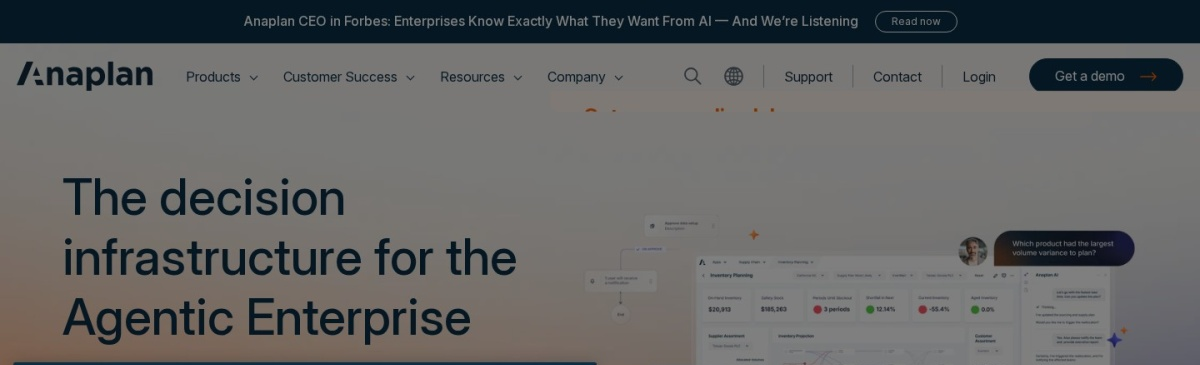
Anaplan is a connected planning platform built on its in-memory Hyperblock engine, running scenarios across finance, sales, supply chain and workforce in one model. It is rated 4.6 out of 5 on G2 from 462 reviews, the largest review base among the enterprise tools here, and it connects to NetSuite, SAP and Snowflake.
The trade off is price and complexity: Anaplan publishes no rate card, its pricing page is a contact form, and model building has a steep learning curve. It suits large enterprises with complex, driver-based models that span departments.
What we like
Most powerful calculation engine in this list
Connected planning across every department
Largest G2 review base of the enterprise tools
Watch out for
No published price; pricing page is a contact form
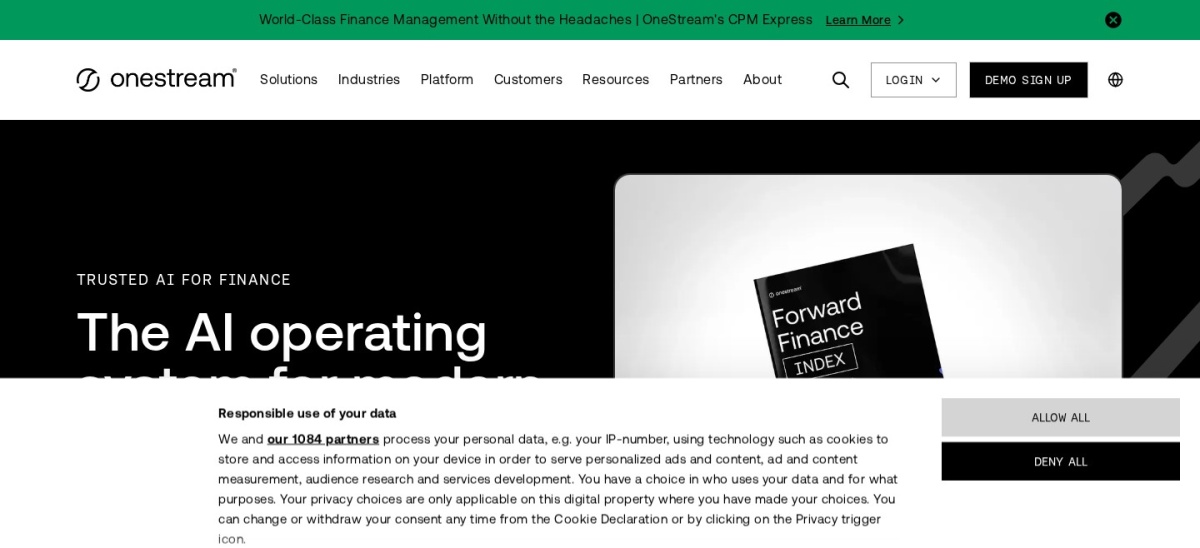
OneStream is a unified platform that runs financial close, consolidation and planning on one data model, with eliminations, intercompany matching, reconciliations and audit trails built in. It is rated 4.6 out of 5 on G2 from 160 reviews, and it replaces fragmented Hyperion or EPM systems.
The trade off is scope and time: it can be over-engineered for pure FP&A, implementations run 6 to 18 months, and pricing is quote-only. It suits complex global enterprises where the group close is the hard part.
Workday Adaptive Planning homepage, captured Nov 2026.
Workday Adaptive Planning is a cloud FP&A platform for financial, workforce and operational planning, with unlimited what-if scenarios, Monte Carlo simulations and Excel reports that refresh from the model. It is rated 4.3 out of 5 on G2 from 307 reviews, and it is the only tool here with a 30-day free trial.
The trade off is fit: it shines for teams already running Workday HCM or Financials, and pricing is quote-only with two packages. It suits Workday shops that want planning tied directly to their Workday data.
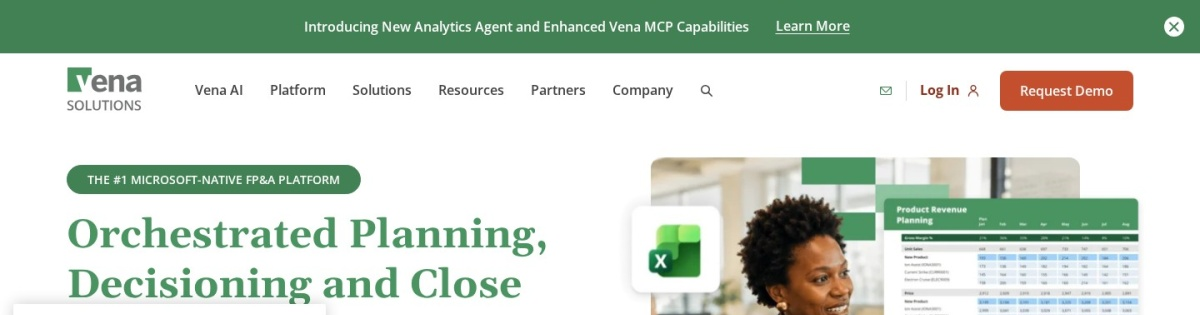
Vena is an Excel-native planning platform with a central database underneath, so finance teams keep spreadsheets as the interface while gaining workflows, version control and a long list of ledger connectors. It is rated 4.5 out of 5 on G2 from 480 reviews, and implementations typically take 8 to 10 weeks.
The trade off is depth: Vena lacks the real-time updates and AI forecasting of the enterprise suites, and pricing is quote-only. It suits mid-market teams that live in Excel and want planning without leaving it.
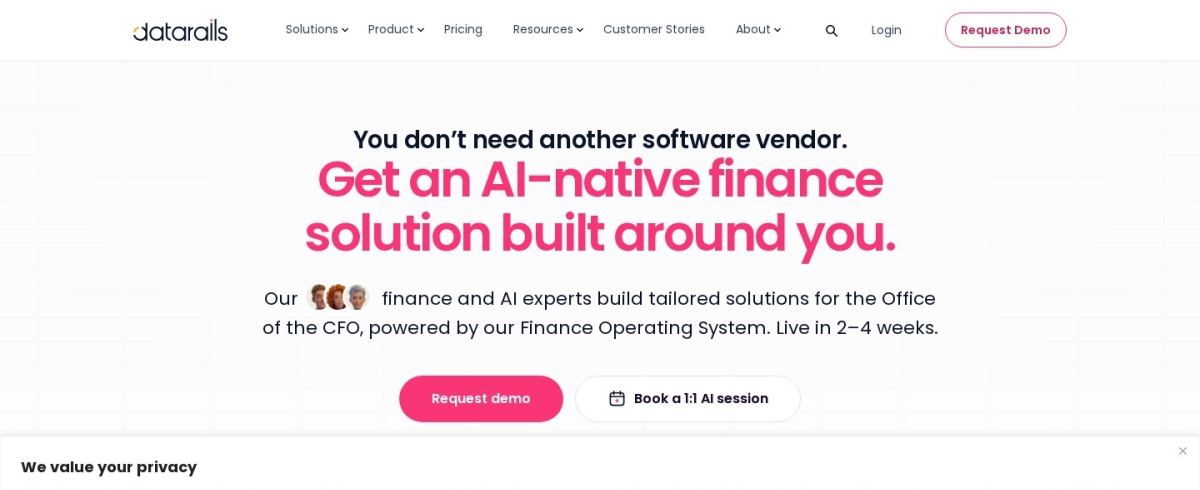
Datarails is an FP&A platform that builds Excel and PowerPoint report packs from mapped ledger data held in a central database, with consolidation and a month-end close add-on. It is rated 4.6 out of 5 on G2 from 371 reviews, and it is praised for reporting efficiency and Excel integration.
The trade off is scope: it is strongest on reporting packs rather than enterprise-wide connected planning, and pricing is quote-only. It suits finance teams that spend their month building report packs from ledger data.
Best for financial consolidation at enterprise scale
Standard$250/user/mo
Enterprise$500/user/mo
CoveragePlanning, close, consolidation
TrialNone
oracle.com
Oracle Fusion Cloud EPM homepage, captured Nov 2026.
Oracle Fusion Cloud EPM is the enterprise standard for many large finance teams, covering planning, budgeting, forecasting, consolidation, close, reconciliation and reporting in one cloud suite. EPM Standard starts at $250 per user a month and EPM Enterprise at $500, and it is rated 4.3 out of 5 on Capterra from 9 reviews.
The trade off is the thin review base: the Capterra rating rests on only 9 reviews, and per-module pricing varies, so the real quote depends on the components you license. It suits Oracle-centric enterprises that want the full EPM suite from one vendor.
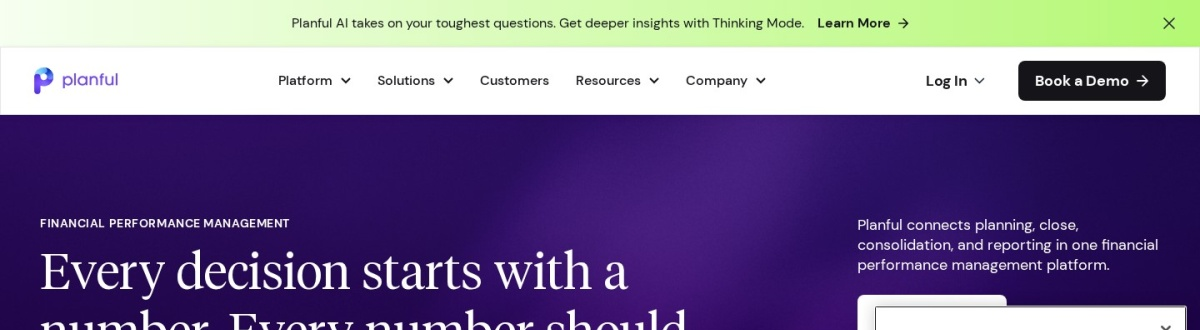
Planful is a cloud EPM platform for the upper mid-market, pairing close and consolidation with rolling forecasts, eliminations and minority interest handling. It is rated 4.3 out of 5 on G2 from 508 reviews, the largest review base in this list, and it deploys faster than the enterprise suites.
The trade off is that there is no pricing page and no trial listed, so budgeting needs a sales conversation, and advanced features cost extra. It suits mid-market teams that want close, consolidation and planning together without an enterprise project.
Best modern challenger for visual scenario planning
InterfaceVisual, modern
ScenariosFast model changes
TrialDemo request
PricingQuote only
pigment.com
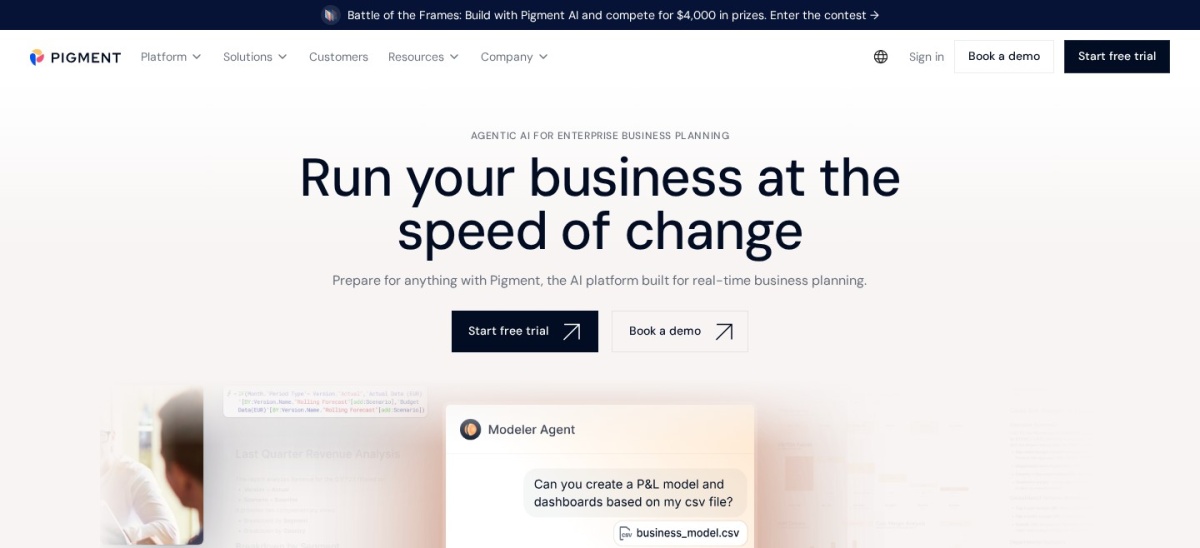
Pigment homepage, captured Nov 2026.
Pigment is the modern challenger in this list, with a visual interface that makes scenario planning feel accessible to non-modelers and fast model changes for FP&A, headcount and revenue planning. It is rated 4.6 out of 5 on G2 from 111 reviews, and its median contract is about $74,000 a year per Vendr.
The trade off is scale: it has no pricing page, the quote follows the use cases you license, and it is not built for supply chain planning at SKU level. It suits high-growth companies that want modern tooling and faster deployment.
Board is an integrated planning and analytics platform that combines budgeting, forecasting and reporting with business intelligence on one system. It is rated 4.4 out of 5 on G2 from 321 reviews, and reviewers praise its integrated planning and analytics breadth.
The trade off is that pricing is quote-only and Board is less known than Anaplan or OneStream in the enterprise EPM market. It suits teams that want planning and analytics together rather than two separate systems.
Planning-led platforms such as Anaplan, Workday Adaptive Planning and Pigment are built around models, drivers and scenarios. They suit teams that reforecast often and plan across departments.
Consolidation-led suites such as OneStream, Planful and Oracle EPM start from the group close: eliminations, currency translation and audit trails, with planning on the same model.
Excel-led tools such as Vena, Datarails and Cube keep the spreadsheet as the interface and add a central database, workflows and version control underneath.
Pick by your hardest problem. If the close is the pain, start with a consolidation-led suite; if the forecast is the pain, start with a planning-led platform.
How we chose
We started from the EPM platforms enterprises actually evaluate in 2026, using the December 2025 Gartner Magic Quadrant for Financial Planning Software as a cross-check: Oracle, Anaplan, OneStream, SAP and Workday sit in the Leaders quadrant.
Prices come from vendor pricing pages where they exist, checked in November 2026 by the comparison guides we cite. Anaplan, OneStream, Workday Adaptive Planning, Planful, Pigment, Vena, Datarails and Board publish no rate card, so the list says Custom rather than inventing a figure.
Ratings and review counts come from G2, except Oracle, whose rating comes from Capterra. No vendor paid for a place, and we do not claim hands-on testing for this list.
How to choose EPM software
Start from your hardest problem, then price the whole project, not just the licence.
Name your hardest problem first. A painful close points to OneStream, Oracle or Planful; a painful forecast points to Anaplan, Workday or Pigment; Excel habits point to Vena or Datarails.
Get implementation quoted as a fixed scope. Licence fees are only part of the cost. Implementations run 3 to 18 months, so ask for a fixed-scope quote before you compare vendors.
Ask for a pilot on your own data. Most vendors offer demos or scoped pilots. Run your own budget cycle through the pilot and watch how model changes are made.
Check who changes the model later. Some platforms need a retained partner or specialist for metadata and rule changes. Confirm your team can maintain the model day to day.
FAQ
What is the best EPM software?
Anaplan is the best EPM software for large enterprises that need connected planning across departments. OneStream is the best pick when financial close and consolidation matter as much as planning, and Workday Adaptive Planning leads for teams already running Workday.
How much does EPM software cost?
Almost every EPM vendor quotes custom pricing, so there is no standard rate card. Oracle publishes the only per-user price here: EPM Standard at $250 per user a month and EPM Enterprise at $500. Third-party data puts Anaplan contracts near $108,000 a year at the median.
Is Anaplan or OneStream better?
Anaplan is better for connected planning across finance, sales, supply chain and workforce on large multidimensional models. OneStream is better when the group close, consolidation and statutory reporting drive the purchase, since planning runs on the same unified model.
What is the difference between EPM and FP&A software?
The terms overlap heavily. FP&A software usually means budgeting, forecasting and reporting, while EPM adds financial consolidation, close management and statutory reporting. Vendors use both terms, and this list treats them as the same category.
Which EPM tool is best for mid-market companies?
Planful is the strongest mid-market pick, with close, consolidation and rolling forecasts at a lower project weight than the enterprise suites. Vena and Datarails suit mid-market teams that want to keep Excel as the interface.
Can I try EPM software before buying?
Usually only Workday Adaptive Planning offers a free trial, for 30 days. The rest offer demos or scoped pilots, so ask for a pilot on your own data before signing, and get implementation quoted as a fixed scope.
SaaS SEO and WordPress specialist with about 8 years of experience. Rakib compares WordPress plugins, themes, hosting and software using public pricing, documentation and user reviews. See how we rank.