Workiva is the best financial reporting software for most teams, with linked data across filings and reports and a 4.5 out of 5 rating from more than 2,200 G2 reviews. Pick FloQast for close management, or Fathom for small-team reporting at $59 a month.
How we make this list: we compare pricing pages, product documentation and public user reviews, then re-check every price before each update. No product paid for a place. Disclosure.
Workiva leads on connected reporting: one linked figure updates across filings, board packs and disclosures.
Seven of the nine tools publish no price, so expect a sales quote for everything except Fathom and QuickBooks Advanced.
Fathom is the cheapest stated price at $59 a month for one company, with unlimited users and a 14-day trial.
QuickBooks Advanced rose to $340 a month in August 2026, up from $275, so older price lists understate it.
Excel-native tools (Datarails, Vena, Cube) suit teams that refuse to leave spreadsheets; Workiva and Planful suit governed enterprise reporting.
What financial reporting software should cover
Financial reporting software turns ledger data into board packs, statements and filings without rebuilding the same spreadsheet every month.
The tools split into two camps. Excel-native platforms keep the spreadsheet as the front end and add a governed database behind it, while connected platforms replace the spreadsheet with linked documents and workflows.
Price transparency is the weak spot in this category. Our guide on integrating WooCommerce with QuickBooks shows how reporting starts from clean ledger data, and the same rule applies here: check what your ledger already exports before you pay for a reporting layer.
Start from the report you actually produce each month, then check consolidation, multi-entity support and audit trails before you look at forecasting extras.
Workiva is a connected reporting platform that links one figure across filings, statements, board packs and disclosures, so a correction updates everywhere at once. It covers SEC reporting, SOX controls, audit trails and management reporting, and G2 reviewers give it 4.5 out of 5 from more than 2,200 reviews.
The trade off is price and setup. Workiva publishes no price list, so every deal is a custom quote, and G2 data puts average implementation at about 4 months. It suits listed companies and large finance teams that file regulated reports and need one audited source of truth.
What we like
Linked data keeps every report consistent
Covers SEC filings and SOX in one platform
Strongest connected-reporting feature set in this list
Watch out for
No published price
Implementation takes months
More than small teams need
Custom quotes cover reporting, compliance and GRC modulesVisit workiva.com
02
FloQast
4.6/5on G2 (1,414 reviews, checked Nov 2026)
PricingCustom/yr
Best for close management and reconciliations
Close checklistsYes
ReconciliationsAutoRec matching
Reporting moduleSeparate package
Paid planCustom quote
floqast.com
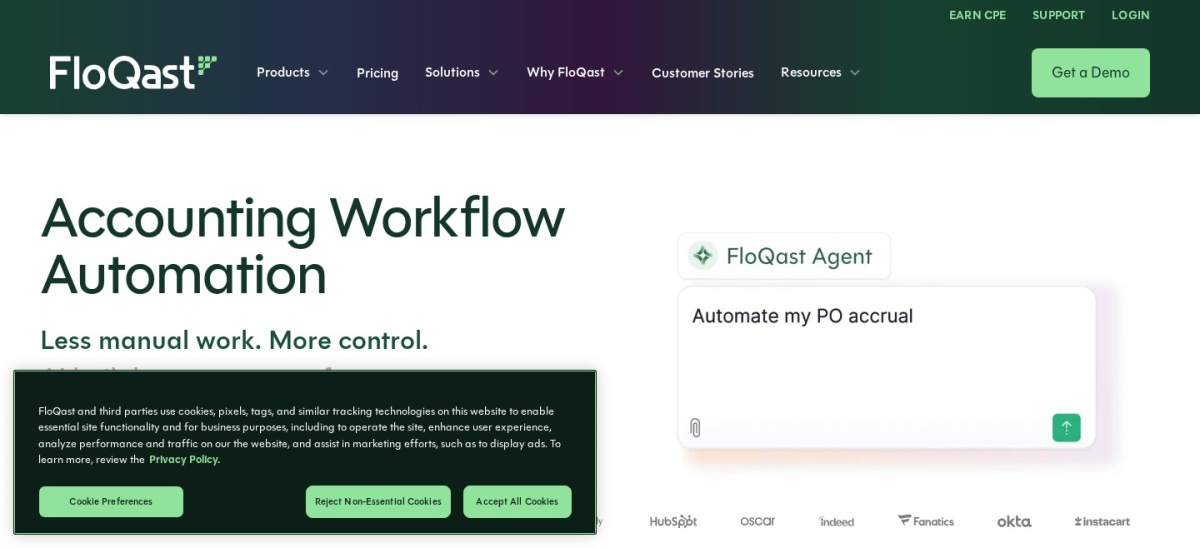
FloQast homepage, captured Nov 2026.
FloQast is close management software that organises the month-end checklist, balance-sheet reconciliations and journal entries around the Excel and Google Sheets workbooks teams already use. Its packages cover task tracking, AutoRec matching and flux analysis, and the vendor says more than 3,500 companies use it.
The trade off is price. Every package is quote-only on the vendor site, so a team cannot tell what the contract costs until sales writes it down, and reporting and SOX compliance are separate packages. It suits mid-market teams that want the close organised without leaving spreadsheets.
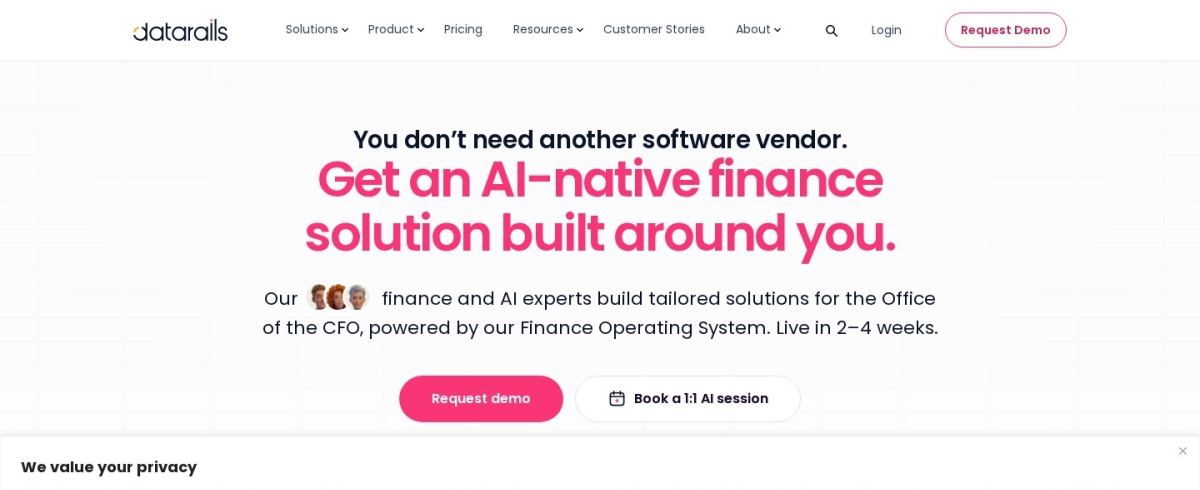
Datarails is an Excel-native FP&A platform that feeds mapped ledger data into a central database, then builds P&L, balance sheet and cash flow packs in Excel and PowerPoint. It consolidates entities with currency translation and intercompany eliminations, and G2 reviewers rate it 4.6 out of 5.
The trade off is price and setup. Every tier is quote-only, with Professional, Premium and Expert plans that differ by users and integrations, and the vendor quotes 4 to 6 weeks to implement. It suits mid-market teams that build the monthly pack in Excel and want it fed from live data.
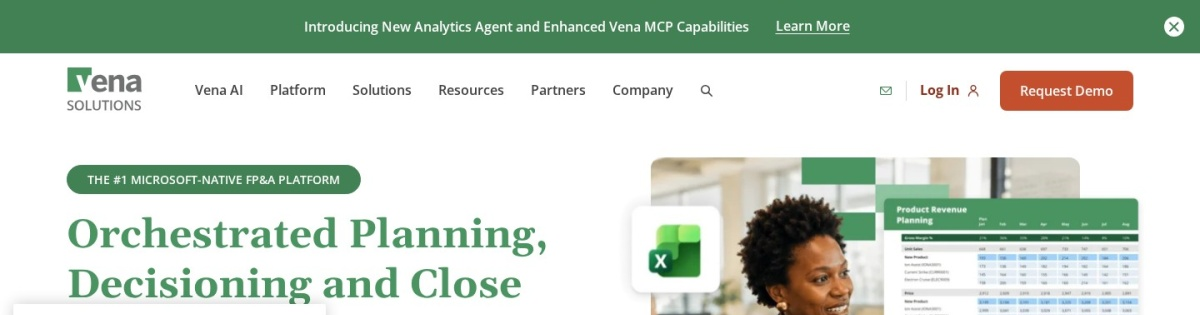
Vena is an Excel-native FP&A platform that lets finance teams keep their existing Excel templates while storing planning data in its central CubeFLEX database. It covers budgeting, forecasting, consolidation and workforce planning, and the vendor reports more than 2,000 customers.
The trade off is cost and implementation. Pricing is quote-only across Professional and Complete plans, and G2 data puts average implementation at about 5 months. It suits Microsoft 365 shops that want governed planning without retraining the team on a new interface.
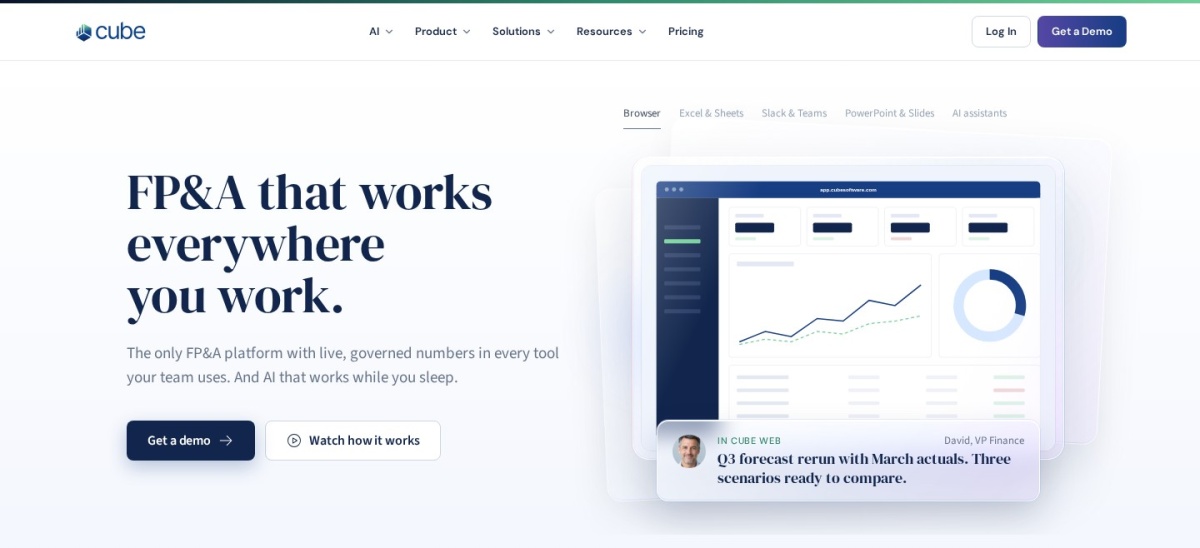
Cube is a spreadsheet-native FP&A platform that connects Excel and Google Sheets to a governed database, so plans and reports update from live source data. It is the only tool here that works natively in both spreadsheet apps, and G2 reviewers rate it 4.5 out of 5.
The trade off is price transparency. Cube no longer publishes fixed tiers on its site, so every deal is a custom quote, and older lists showing plans from about $1,250 a month are out of date. It suits lean finance teams that live in spreadsheets and want fast onboarding.
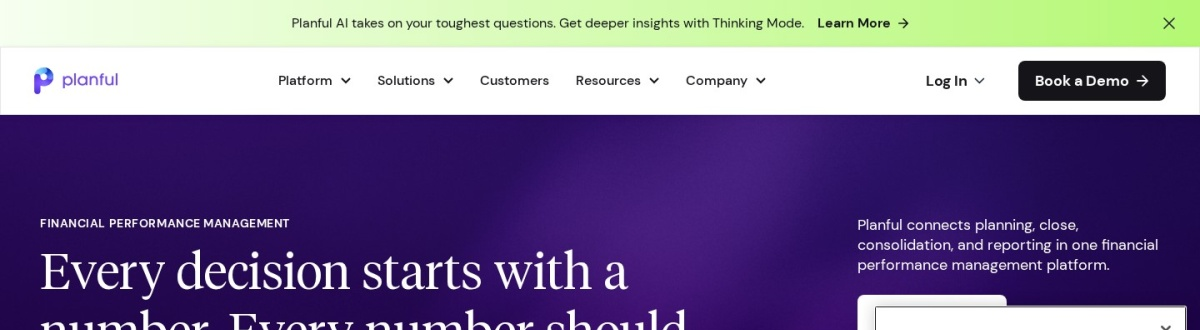
Planful is a financial performance management platform that combines budgeting, forecasting, consolidation and reporting on one data model. It handles multi-entity consolidation with eliminations and minority interest next to rolling forecasts, and G2 reviewers rate it 4.3 out of 5.
The trade off is cost and learning curve. Planful publishes no prices, and each module is priced separately, so quotes vary widely by scope. It suits upper mid-market teams that want close, consolidation and planning together without buying an enterprise suite.
Sage Intacct is a cloud financial management system built around a dimensional general ledger, so one transaction can be tagged by department, location and project at once. It consolidates entities natively and adds audit trails and approval workflows, with a 4.3 out of 5 G2 rating from more than 4,400 reviews.
The trade off is price and setup. Sage publishes no price list, and partner estimates put entry subscriptions around $9,000 to $12,000 a year before implementation. It suits mid-market teams with several entities that have outgrown small-business ledgers.
What we like
Native multi-entity consolidation
Dimensional reporting without extra GL codes
Largest review base in this list
Watch out for
No published price
Implementation often costs as much as a year of subscription
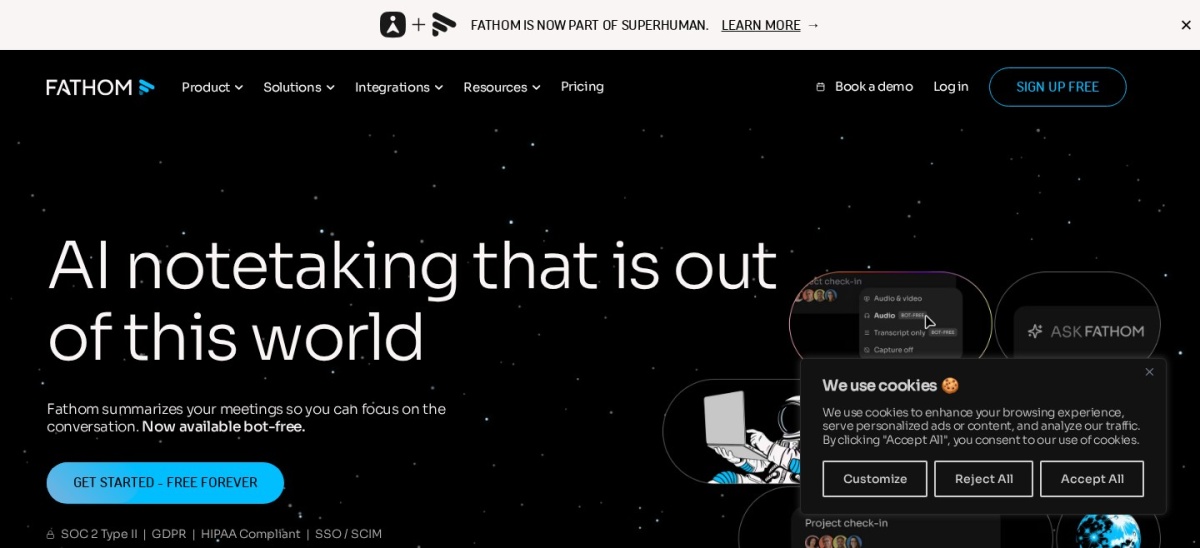
Fathom is a financial reporting and analysis tool that builds visual management reports, budgets and three-way cash flow forecasts from QuickBooks, Xero or Excel data. Starter costs $59 a month for one company with unlimited users, and every plan unlocks all features.
The trade off is scale. Pricing rises by company count, so a firm with many clients pays Silver at $315 a month for 10 companies, and there is no free plan, only a 14-day trial. It suits small businesses and accounting firms that want clear client-ready reports fast.
QuickBooks Online Advanced homepage, captured Nov 2026.
QuickBooks Online Advanced is the top QuickBooks Online plan, adding custom reports, workflow automation, custom user roles and priority support to the standard ledger. It covers 25 users plus 3 accountants, and G2 reviewers rate it 4.4 out of 5.
The trade off is the price jump. Advanced rose to $340 a month in August 2026, up from $275, and new customers see 50% off for 3 months before paying the full rate. It suits growing businesses that already run on QuickBooks and need deeper reporting without a new system.
Workiva, FloQast, Datarails, Vena, Cube, Planful and Sage Intacct all sell on custom quotes. That is normal for enterprise finance software, but it means the first number you hear is a starting point, not a price.
Ask for software, implementation and support on separate lines. Implementation alone can cost as much as a year of subscription, and modules such as consolidation or SOX compliance are often priced apart from the base platform.
Compare three-year totals, not first-year prices. Discounts in year one are common, and renewal rates are where the real cost sits.
How we chose
We started from the best-known financial reporting and FP&A platforms on G2, then kept nine that cover SEC reporting, close management, Excel-native planning, consolidation and small-team reporting.
Prices come from each vendor's pricing page, checked on 25 November 2026, and ratings and review counts come from G2 on the same day. Where a vendor shows a sale, the list shows the regular price, and where a vendor publishes no price, the list says so.
We left out tools with no public review base and personal finance apps, which solve a different problem. No vendor paid for a place, and we do not claim hands-on testing for this list.
How to choose financial reporting software
Start with the report you produce every month, then match the tool to who reads it.
List the reports you actually produce. Monthly packs, board reports, statutory filings and lender reports each need different depth. A tool that cannot build your hardest report is the wrong tool.
Check your ledger first. Fathom and QuickBooks Advanced read QuickBooks or Xero directly, while Workiva, Datarails and Vena connect to ERPs. Pick the tool that already talks to your system.
Ask for an itemised quote. Seven tools here publish no price, and implementation can cost as much as a year of subscription. Get software, implementation and support on separate lines before you sign.
Trial the report build, not the demo. Rebuild one real monthly pack in the trial and time it. If the pack takes longer than your spreadsheet, the tool is not saving time yet.
FAQ
What is the best financial reporting software?
Workiva is the best pick for most finance teams. Its linked data keeps filings, statements and board packs consistent, and G2 reviewers rate it 4.5 out of 5 from more than 2,200 reviews.
How much does financial reporting software cost?
Prices range from $59 a month for Fathom Starter to custom quotes for Workiva, FloQast, Datarails, Vena, Cube, Planful and Sage Intacct. QuickBooks Online Advanced costs $340 a month, and most enterprise tools need a sales quote.
Which financial reporting tool is best for small businesses?
Fathom is the best fit for small teams, at $59 a month for one company with unlimited users and a 14-day trial. QuickBooks Online Advanced also works well if the business already runs on QuickBooks.
Do I need to leave Excel to use these tools?
No. Datarails, Vena and Cube keep Excel as the working tool and add a governed database behind it. Workiva and Planful replace spreadsheets with linked documents, which suits larger teams better.
Why do so many tools hide their prices?
Enterprise reporting tools price by users, entities and modules, so vendors quote each deal. Ask for software, implementation and support on separate lines, and compare three-year totals rather than first-year prices.
Can these tools consolidate multiple companies?
Yes. Datarails, Vena, Cube, Planful and Sage Intacct all consolidate entities, with currency translation and intercompany eliminations. Fathom also consolidates, and its Silver plan covers 10 companies for $315 a month.
SaaS SEO and WordPress specialist with about 8 years of experience. Rakib compares WordPress plugins, themes, hosting and software using public pricing, documentation and user reviews. See how we rank.