Benchling is the best electronic lab notebook for most biotech teams, with molecular biology tools built into the notebook and a leading G2 rating from 65 reviews. LabArchives is the clearest budget pick at $575 per user a year for companies, while SciNote suits regulated labs that want a free plan with compliance features.
How we make this list: we compare pricing pages, product documentation and public user reviews, then re-check every price before each update. No product paid for a place. Disclosure.
Benchling leads for biotech R&D, with molecular biology, registry and inventory in one cloud platform.
LabArchives is the only tool here with published per-user pricing: $575 a year for companies, $330 for academic labs.
SciNote pairs a free plan with 21 CFR Part 11 features, including e-signatures and audit trails.
Labguru and SciSure combine the notebook with LIMS and inventory, so one system covers the whole lab.
Signals Notebook is the only enterprise ELN with a published list price, $1,425 per user a year.
What to look for in an electronic lab notebook
An electronic lab notebook replaces paper records with searchable, timestamped experiment entries. The best ones also link each entry to samples, protocols and results, so a result can be traced back to the exact method and material used.
Compliance is the first filter for regulated labs. Look for electronic signatures, audit trails, version history and 21 CFR Part 11 support before comparing anything else, because a notebook without them cannot serve a GxP workflow.
The notebook rarely stands alone. Most labs also need inventory, sample tracking or a LIMS, so check whether the vendor covers those in the same platform or expects a second system. Our guide to lab management software covers the wider tools that sit around the notebook.
Pricing is almost never published in this market. Only LabArchives and Signals Notebook list a per-user price, so budget on a sales quote for the rest and ask for the minimum contract value, not just the per-seat rate.
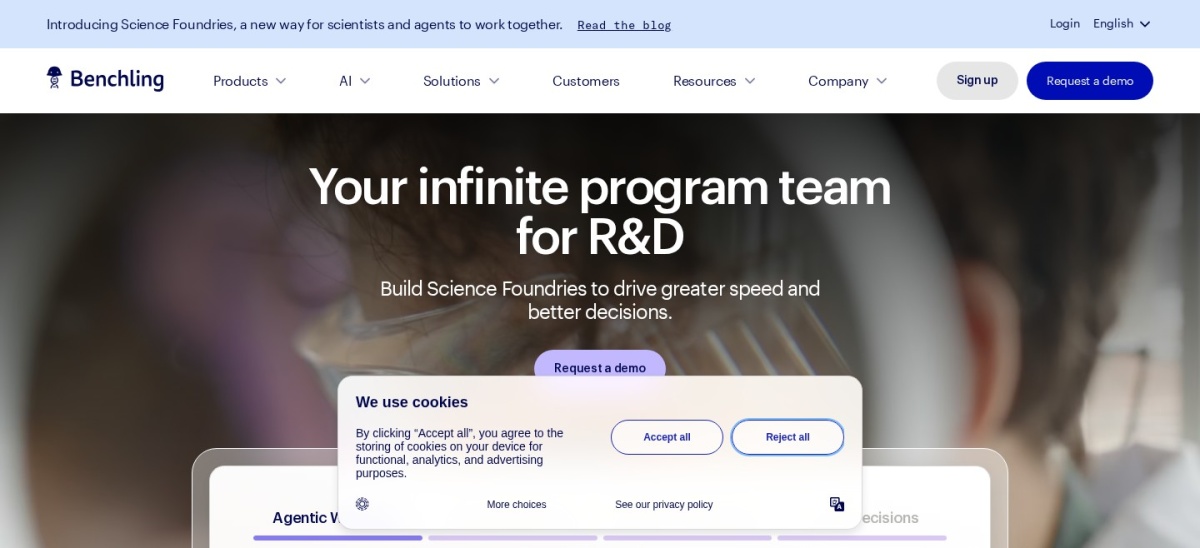
Benchling is a cloud R&D platform built for biotech teams, with the notebook, molecular biology tools, registry and inventory in one place. Sequence design, plasmid mapping, CRISPR guide design and primer design sit inside the same notebook where experiments are recorded, and the academic plan is free with no user limit.
The trade off is commercial pricing. Industry plans are sold by quote only, and third-party reports put them in the thousands of dollars per user a year, so a small company should ask for the minimum contract value early. It suits biotech and pharma teams that want one system for the whole R&D workflow.
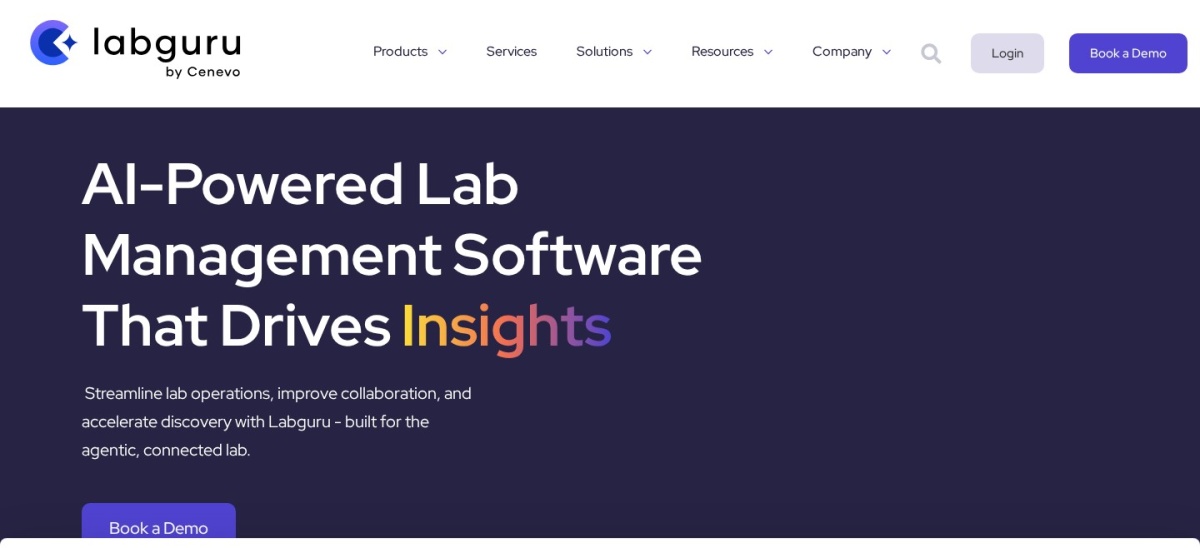
Labguru is a combined electronic lab notebook, LIMS and inventory platform for life science labs. Experiments, samples, stocks, equipment and protocols live in one system, with dashboards and automations on the Pro plan, and a validated cloud option for GxP work.
The trade off is price transparency. Labguru publishes no prices and sells by quote, so buyers cannot compare costs without a sales conversation. It suits labs that want to replace a notebook, a LIMS and spreadsheets with one governed system.
Best ELN with inventory and compliance on a budget
Cheapest paid planCustom, by quote
Free planYes
InventoryBuilt in
Compliance21 CFR Part 11
scinote.net
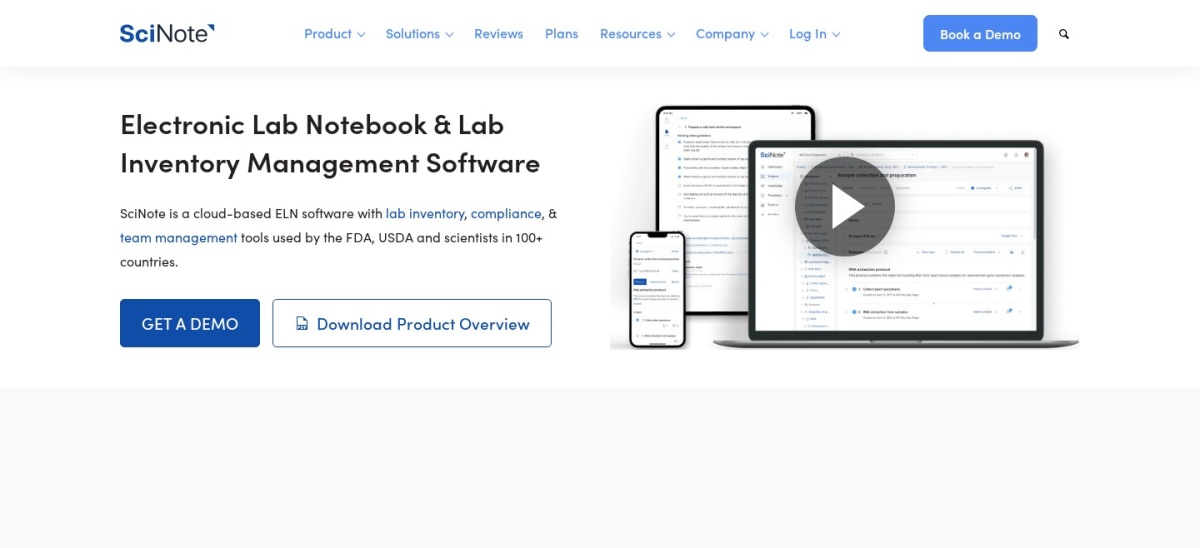
SciNote homepage, captured Nov 2026.
SciNote is a cloud electronic lab notebook with lab inventory, protocol templates and team management built in. The free plan covers the notebook and core workflows, while paid plans add 21 CFR Part 11 features such as electronic signatures, audit trails and validated installation, and it is used by the FDA and USDA.
The trade off is that paid pricing is not published. Premium plans are sold by quote, so the free plan is the only cost a small lab can see before talking to sales. It suits academic and regulated labs that want compliance features without an enterprise budget.
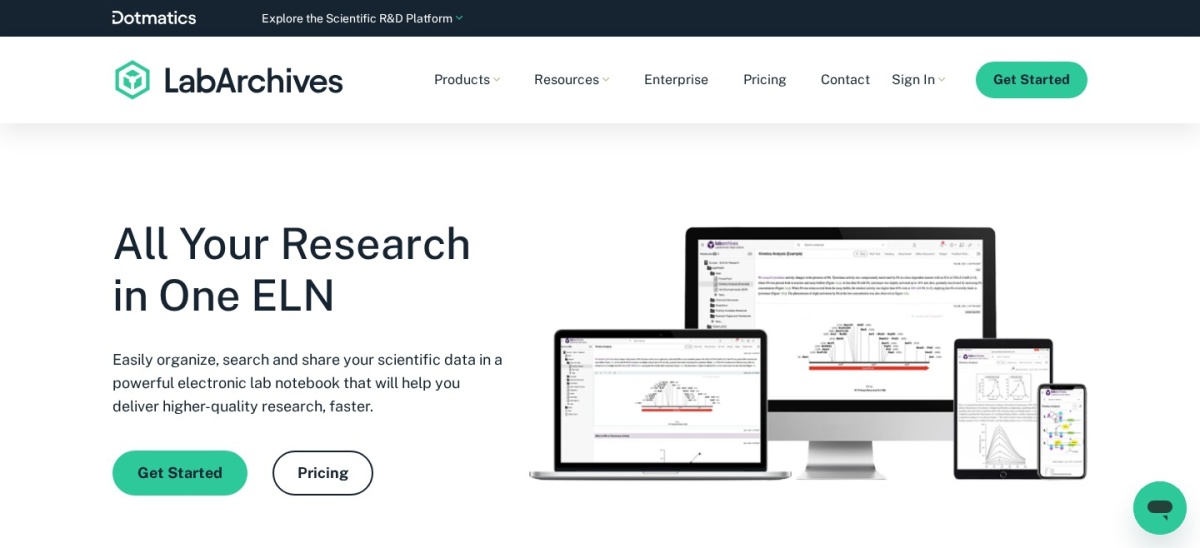
LabArchives is a cloud electronic lab notebook used by more than 650 research organizations, including the NIH. The free plan gives two notebooks, 1 GB of storage per user and a 25 MB file limit, while Professional costs $330 per academic user a year or $575 per corporate user, with unlimited notebooks and 100 GB per user.
The trade off is the interface, which reviewers describe as dated, with awkward copy-paste from Word and aggressive auto-logout. It suits academic and government labs that want clear published pricing and a straightforward notebook without a sales negotiation.
What we like
Only tool here with clear published per-user pricing
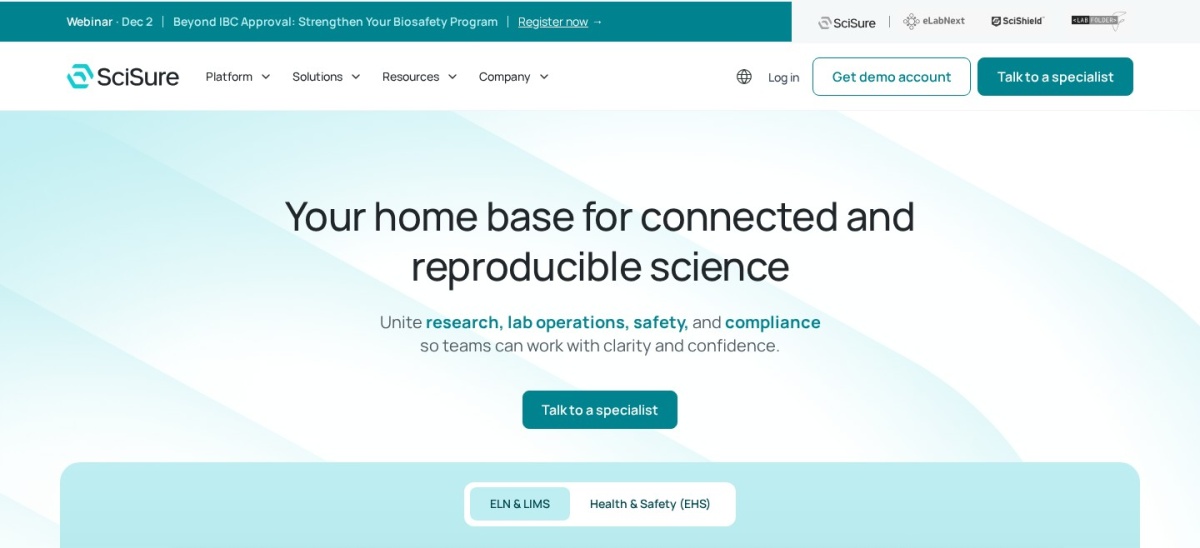
SciSure is a combined electronic lab notebook, LIMS and health and safety platform, formerly sold as eLabNext. Experiments use structured templates with version control and electronic signatures, and samples, inventory and instruments connect through the same system and its API.
The trade off is that it is a platform sale, not a notebook sale. Pricing is by quote, and the breadth means a longer evaluation and rollout than a standalone ELN. It suits labs that want documentation, sample tracking and safety oversight on one system.
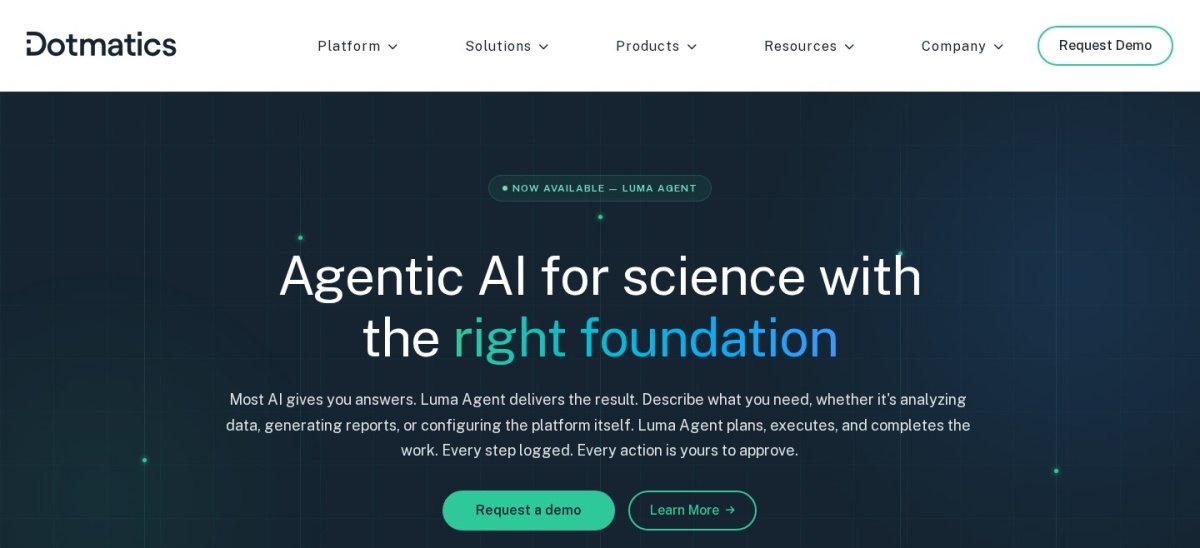
Dotmatics is the electronic lab notebook inside the Dotmatics R&D data platform, built for chemistry, biology, screening and materials work in one place. It supports chemical structure and reaction capture, protocol templates, hierarchical experiment networks and AI search across experiment data, and connects to registration, inventory and analytics in the same platform.
The trade off is enterprise weight. Pricing is by quote, onboarding is heavy, and reviewers report a steep learning curve before the platform pays off. It suits large discovery organizations that want one informatics layer across chemistry and biology.
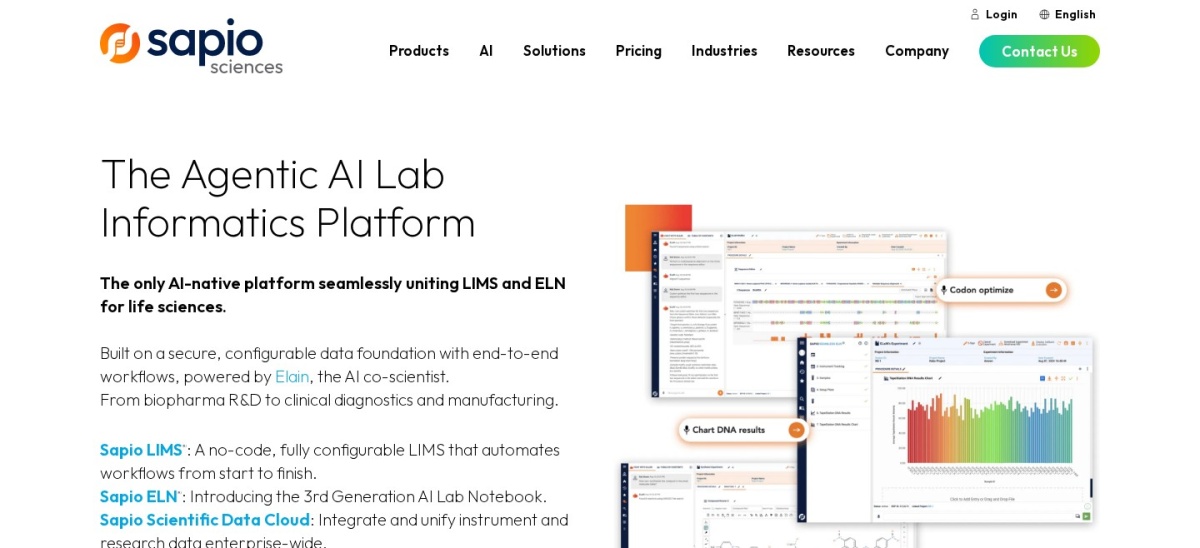
Sapio is a unified ELN and LIMS platform that labs can configure without code, from the data model to record views and workflows. It covers experiment capture, sample tracking, inventory and scientific data management, and includes ELaiN, an AI assistant that works inside the notebook.
The trade off is implementation time. G2 reviewers report about six months to go live, and the flexibility that makes it powerful also means a steep learning curve for new users. It suits mid-to-large GxP labs that need a configurable system rather than a fixed notebook.
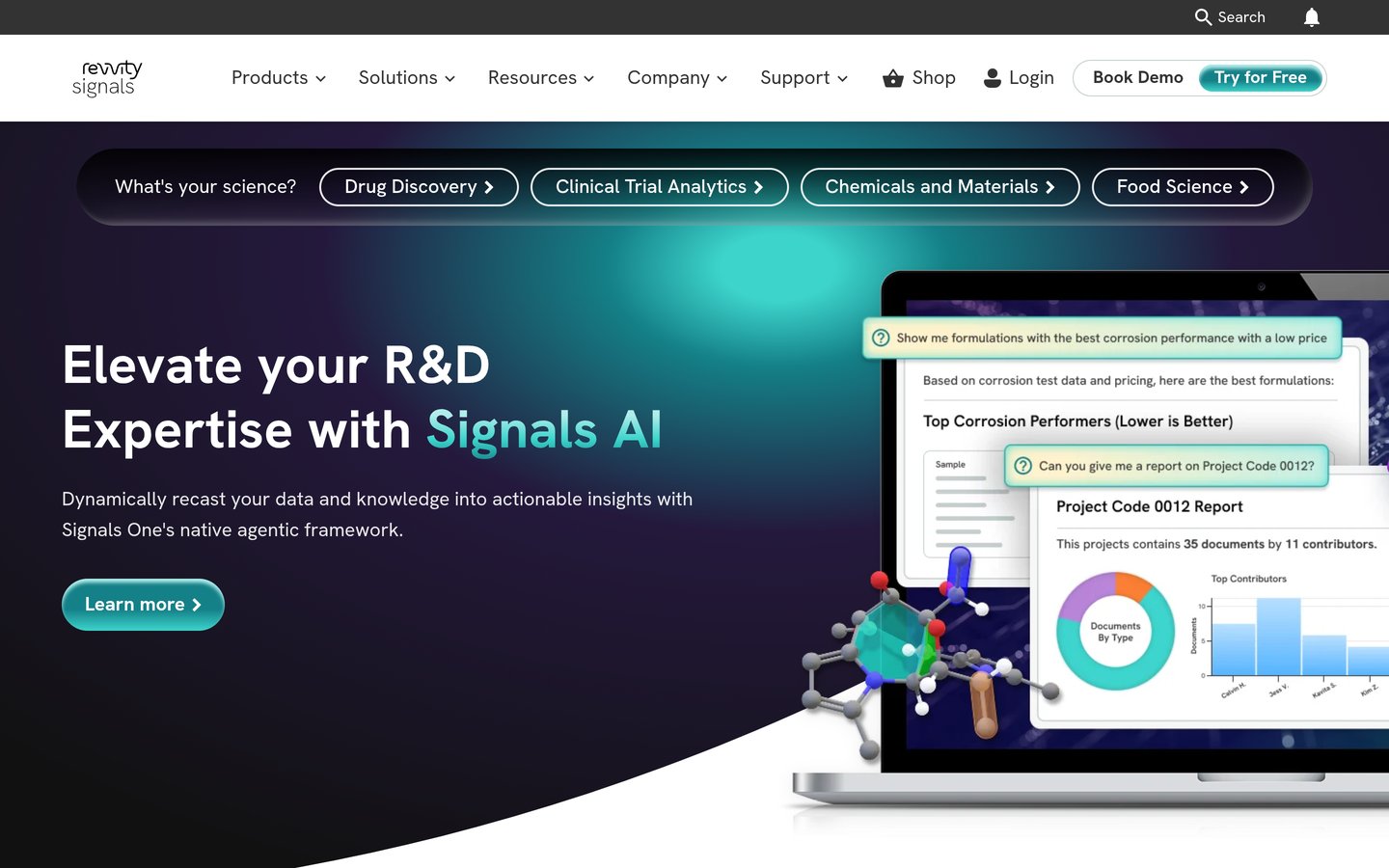
Signals Notebook is a cloud ELN from Revvity Signals for chemistry and biology R&D in larger commercial and regulated organizations. It includes native ChemDraw, Spotfire analytics, live collaboration and open APIs, and its Standard Edition is listed at $1,425 per user a year in the vendor online shop, with one production tenant and standard support.
The trade off is cost at scale. The per-user price climbs fast for a large team, and implementation packages such as Jump Start Essentials at $6,700 sit on top. It suits enterprise chemistry and biology teams that want a published price and deep ChemDraw integration.
What we like
Published list price, rare for enterprise ELNs
Native ChemDraw and Spotfire integration
15-day free trial to evaluate it
Watch out for
Only 1 G2 review, so the rating is a very thin base
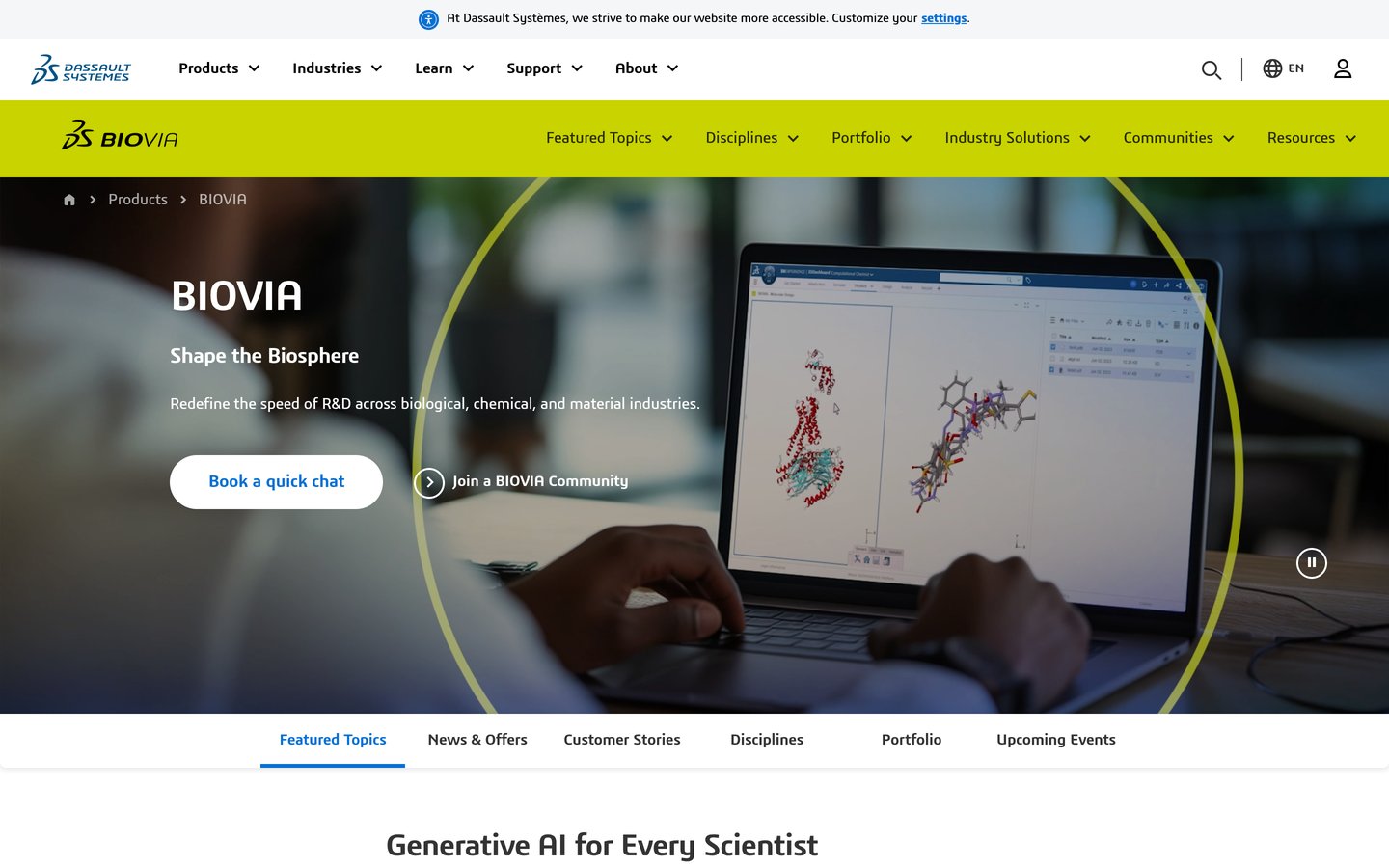
BIOVIA Notebook is the electronic lab notebook inside the BIOVIA scientific suite from Dassault Systemes, on the 3DEXPERIENCE platform. It keeps experiment records with samples and materials in a governed repository, and connects to modeling, simulation and lab informatics tools in the same suite.
The trade off is that it is an enterprise suite purchase. Pricing is by quote, the notebook makes most sense inside a wider Dassault deployment, and its 3.9 G2 rating is the lowest in this list. It suits organizations already running Dassault scientific software.
Only two tools in this list publish a per-user price. LabArchives lists Professional at $575 per corporate user a year, and Signals Notebook lists its Standard Edition at $1,425 per user a year in the vendor online shop.
The rest sell by quote because the price depends on user count, modules, validation and implementation. Benchling, Labguru, SciNote, SciSure, Dotmatics, Sapio and BIOVIA all route buyers to a sales conversation, and the academic and commercial prices for the same product can differ several times over.
Budget for implementation as well as the licence. G2 reviewers report about two months to implement Labguru and about six months for Sapio, and Signals Notebook sells a $6,700 Jump Start package on top of the subscription.
How we chose
We started from the ELN tools with a G2 listing and kept those with a verifiable rating and a real notebook product, covering academic, biotech, pharma and enterprise labs.
Prices come from each vendor's pricing page or online shop, checked on 25 November 2026. Ratings and review counts come from G2 on the same day. Where a vendor sells by quote, the list shows Custom and says so in the text.
We left out tools with no verifiable rating on G2, Capterra or Trustpilot, including RSpace and Labfolder, whose current pricing is also unpublished. No vendor paid for a place, and we do not claim hands-on testing for this list.
How to choose electronic lab notebook software
Start with compliance, then match the notebook to the size and shape of your lab.
Check the compliance bar first. If your lab works under GxP, you need e-signatures, audit trails and 21 CFR Part 11 support. Filter the list on that before comparing features.
Decide whether you need a LIMS too. A notebook-only tool is cheaper and faster to adopt, but labs that also track samples and inventory save effort with a combined platform such as Labguru, SciSure or Sapio.
Ask for the minimum contract value. Most ELN vendors quote, and a per-seat rate can hide a contract floor. Ask what the smallest annual commitment costs before comparing per-user figures.
Trial the notebook with real experiments. Use a free plan or trial to record a full experiment, including attachments and a signature, and check exports before you commit.
FAQ
What is the best electronic lab notebook software?
Benchling is the best pick for most biotech teams, with molecular biology tools built into the notebook and a 4.5 out of 5 G2 rating. LabArchives suits labs that want published pricing, and SciNote suits regulated labs on a budget.
How much does electronic lab notebook software cost?
Most ELN vendors sell by quote and publish no prices. The published figures here are LabArchives Professional at $575 per corporate user a year and Signals Notebook Standard at $1,425 per user a year, with free plans from Benchling, SciNote and LabArchives.
Is there a free electronic lab notebook?
Yes. Benchling is free for academic researchers, SciNote has a free plan with a notebook and inventory, and LabArchives has a free plan with two notebooks and 1 GB of storage per user.
What is the difference between an ELN and a LIMS?
An ELN records experiments, methods and results, while a LIMS tracks samples, tests and inventory. Tools such as Labguru, SciSure and Sapio combine both, so one system covers documentation and sample management.
Do electronic lab notebooks support 21 CFR Part 11?
Many do, including SciNote, LabArchives, Labguru and Benchling on paid plans, with electronic signatures and audit trails. Confirm the exact compliance scope in writing before buying for a regulated lab.
Which ELN is best for academic labs?
LabArchives is the strongest academic pick, with a free plan and Professional at $330 per academic user a year. Benchling is free for academics, and SciNote offers a free plan plus a classroom option for teaching.
SaaS SEO and WordPress specialist with about 8 years of experience. Rakib compares WordPress plugins, themes, hosting and software using public pricing, documentation and user reviews. See how we rank.