Best Ecommerce Platform for Grocery in 2026: 7 Tools Compared
WLWPLegible EditorsLast verified 23 Nov 2026How we rank10 min read
★ Short answer
Local Express is the best ecommerce platform for grocery for independent grocers, unifying web, app, kiosk and delivery in one system. Shopify is the best general pick at $29 a month.
How we make this list: we compare pricing pages, product documentation and public user reviews, then re-check every price before each update. No product paid for a place. Disclosure.
Local Express is the only grocery-first platform here, unifying web, app, kiosk and delivery in one system.
Shopify is the best general pick for grocers at $29 a month, but grocery features need apps.
Square Online is the cheapest route for a small grocer, with a free plan and Plus at $29 a month.
WooCommerce is free as a plugin, with delivery and substitution features from plugins.
Freshop, Mercatus, Rosie and Instacart are not in this list: none has a verifiable public rating.
Grocery needs more than a storefront
A grocery store needs things a generic store does not: weighed products, substitutions when an item is out of stock, delivery slots, curbside pickup and picker workflows. Only Local Express in this list is built for those jobs from the start.
General platforms can work, with apps. Shopify, WooCommerce and BigCommerce all handle grocery through third-party apps for delivery slots, substitutions and weighed catalogs, but the apps add cost and setup time.
Own the customer relationship. Marketplace delivery takes the customer data with it, while a white-label storefront keeps the brand and the data with the retailer. Our live chat software guide covers the support side of the same store.
Price by store count, not by seat. Grocery platforms quote on stores, banners and order volume, so a single-store grocer and a 50-store chain pay very different amounts. Ask for a quote at your real store count.
Local Express is a unified commerce platform built for regional and independent grocery retailers. It combines white-labelled ecommerce websites, branded mobile apps, self-service kiosks for prepared food and last-mile delivery in one system.
The trade off is price clarity. Local Express publishes no prices, so the cost is a quote, and its G2 rating rests on only 3 reviews. It suits independents that want one connected stack.
Shopify is the general platform most grocers start with: fast setup, unlimited products and the largest app catalog, with Basic at $29 a month billed annually. Perishables, substitutions and delivery slots need third-party apps rather than built-in tools.
The trade off is grocery depth. Shopify is not grocery-specific, so weighed products, substitutions and picker workflows come from apps. It suits small grocers that want a generic store fast.
Square Online is the simplest route for a small grocer adding online orders: a free plan with card fees, Plus at $29 a month billed annually, and tight integration with Square POS for unified online and in-store sales.
The trade off is grocery depth. Square Online has no built-in weighed catalog, picker workflows or delivery slot management. It suits small grocers adding simple online orders affordably.
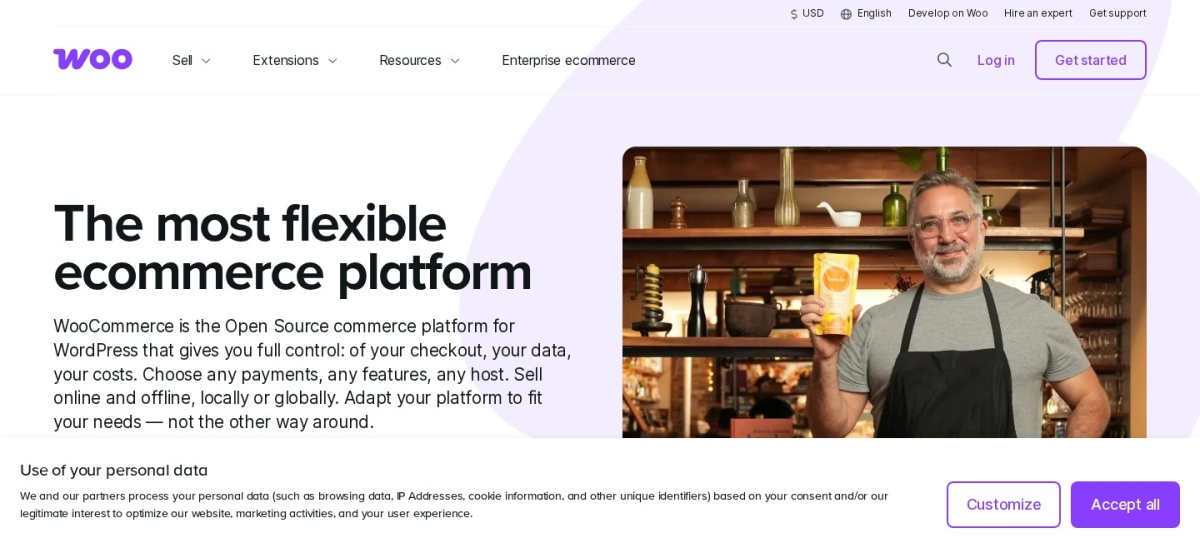
WooCommerce is a free WordPress plugin that turns a site into a grocery store with full control over design, data and checkout. There is no platform fee, and grocery features such as delivery slots and substitutions come from plugins.
The trade off is that hosting, extensions and upkeep add real cost, and the owner handles updates and security. It suits grocers already on WordPress.
BigCommerce is the catalog pick for grocery chains: unlimited products, multi-storefront from the entry tier and no platform fee on embedded payment providers. Core costs $29 a month billed annually.
The trade off is grocery depth and sales caps. Grocery features need apps, and Core caps annual sales at $30,000 of gross merchandise value. It suits growing chains with several banners.
Wix is the easiest route to a simple grocery storefront: a drag-and-drop builder, templates and selling from Core at $29 a month billed annually, with no platform fee through Wix Payments.
The trade off is scale and grocery depth. Wix has no weighed catalog, picker workflows or delivery slots built in. It suits a single store adding basic online ordering.
Squarespace is the design pick for specialty food brands: polished templates, a simple builder and unlimited products. Basic costs $19 a month billed annually, and Core at $29 removes the 2% transaction fee.
The trade off is grocery depth. Squarespace has no weighed products, substitutions or delivery slots built in. It suits specialty food brands with small catalogs.
Weighed products: can the catalog sell by weight, with the price set at the till or by the item?
Substitutions: what happens when a picked item is out of stock, and who chooses the replacement?
Delivery slots and curbside: can shoppers book a slot, and can staff manage the queue?
Picker workflows: does the platform give pickers a route through the store and a way to flag problems?
Loyalty and promotions: do digital circulars and loyalty points work in the same checkout?
How we chose
We started from the established ecommerce platform for grocery vendors most often shortlisted for online stores, then kept those with a verifiable rating on G2, Capterra or Trustpilot and a published pricing page or a clear quote-based model.
Prices come from each vendor's pricing page or, where the vendor publishes no price, from the vendor's own statement that pricing is by quote. Ratings and review counts come from G2, Capterra or Trustpilot, checked on 23 November 2026. Where a vendor shows a sale, the list shows the regular price.
We left out tools with no verifiable public rating. No vendor paid for a place, and we do not claim hands-on testing for this list.
How to choose ecommerce platform for grocery
Start with the size of your store and the problem that costs the most, then match the tool to that problem.
List the problem that costs you most. Fraud losses, manual work, stockouts and slow replies each point at a different tool. Pick the one problem first and judge every vendor on it.
Check the real price at your volume. Most of these tools bill by orders, seats or usage, so the entry price is not the price at your volume. Model a busy month before you sign.
Confirm the integrations you already use. A tool that lacks your store platform, payment provider or warehouse system will cost more in workarounds than it saves. Check the connector list first.
Run a short trial on real orders. A trial with live traffic shows whether the tool fits your workflow. Keep your old process running beside it until the trial proves itself.
FAQ
What is the best ecommerce platform for grocery stores?
Local Express is the only grocery-first platform in this list, unifying web, app, kiosk and delivery in one system for independent grocers. Shopify is the best general pick at $29 a month, with grocery features added through apps.
How much does a grocery ecommerce platform cost?
It ranges from free for WooCommerce and Square Online to $19 a month for Squarespace and $29 a month for Shopify, BigCommerce, Wix and Square Online Plus. Local Express and the other grocery specialists are quote-only.
Can I use Shopify for a grocery store?
Yes, with apps. Shopify handles the store, checkout and orders, while third-party apps add weighed products, substitutions, delivery slots and picker workflows. Budget for the apps on top of the $29 a month plan.
What is the cheapest way to sell groceries online?
Square Online is the cheapest route, with a free plan and Plus at $29 a month, tied to Square POS. WooCommerce is free as a plugin, with delivery features from paid extensions.
Do grocery platforms charge per order?
Some do. Marketplace models charge a share of each order, while white-label platforms such as Freshop charge a flat monthly fee per store. Local Express and Mercatus quote per store and scope.
Which platform is best for an independent grocer?
Local Express is built for independent and regional grocers, with a branded storefront, app, kiosk and delivery in one system. Freshop is the flat-fee alternative at about $600 a month per store, though it has no verifiable public rating.