Best Ecommerce Integration Software in 2026: 9 Tools Compared
WLWPLegible EditorsLast verified 23 Nov 2026How we rank11 min read
★ Short answer
Workato is the best ecommerce integration software for governed enterprise automation, rated 4.7/5 on G2. Boomi is the practical pick at $99 a month, and Zapier starts at $19.99 a month.
How we make this list: we compare pricing pages, product documentation and public user reviews, then re-check every price before each update. No product paid for a place. Disclosure.
Workato leads on G2 at 4.7/5, but it publishes no prices, so every deal is a quote.
Boomi is the only enterprise iPaaS with a published entry: $99 a month plus $0.05 per message.
Zapier starts at $19.99 a month and Make at $9 a month, the cheapest paid entries here.
MuleSoft is the most expensive published entry at $2,000 a month billed annually.
Celigo, Jitterbit, Tray.ai and SnapLogic are all quote-only, so budget for a sales cycle.
Pick the integration style first
Integration tools split into two groups. Simple automation tools such as Zapier and Make connect apps with triggers and actions, and a small team can ship a flow the same day. Enterprise iPaaS platforms such as Boomi, Workato, Celigo and MuleSoft govern integrations across departments, with reusable APIs, versioning and access controls.
The billing unit matters more than the headline price. Boomi charges per message, MuleSoft sells credit packages, Workato bills consumption, Zapier bills tasks and Make bills credits. A flow that is cheap at 100 runs a month can be expensive at 100,000.
For ecommerce, check the ERP first. Celigo is deepest for NetSuite, Boomi covers EDI and B2B trading, and MuleSoft fits Salesforce-heavy estates. Our CRM software guide covers the systems these tools usually connect.
Use the trials. Boomi, MuleSoft and Celigo all offer 30 days, so build one real integration in each shortlisted platform before talking price.
Workato is an enterprise integration and automation platform that connects SaaS apps with recipes business teams can read and IT can govern. It covers integration, automation and AI agents on one platform, with 1,200-plus prebuilt connectors.
The trade off is price opacity. Workato publishes no dollar amounts, so every deal is a quote based on recipe volume and add-ons. It suits companies that want business and IT automating together.
Boomi is a low-code integration platform covering application integration, APIs, data tools, EDI and B2B trading in one designer. Pay-As-You-Go costs $99 a month plus $0.05 per message, signs up by credit card with no contract, and gives full platform access.
The trade off is the meter. The bill grows with every message, so a successful integration program costs more each quarter. It suits mid-size and enterprise teams that want one platform.
What we like
Published $99 a month entry with no contract
Covers integration, API, data and EDI in one place
Zapier is a no-code automation tool that connects thousands of apps through triggers and actions. The free plan covers 100 tasks a month, and Professional starts at $19.99 a month billed annually, with 750 tasks included.
The trade off is depth. Zapier is fast for simple app-to-app flows, but task pricing and limits show at volume, and complex integrations need a heavier platform. It suits small teams automating handoffs.
Make is a visual automation platform, formerly Integromat, where scenarios show data flowing between modules. Paid plans start at $9 a month, and the free plan lets a small team build real workflows before paying anything.
The trade off is scale. Make gives the most visual power per dollar for multi-step scenarios, but it is not built for high-volume or heavily governed enterprise work. It suits SMBs and mid-market teams.
Celigo is an integration platform built around prebuilt Integration Apps for business systems such as NetSuite, Shopify and Salesforce. Operations users run ready flows while technical users extend them with scripts, and pricing is by endpoints and flows rather than per message.
The trade off is that Celigo publishes no prices, so cost depends on edition and usage. It suits mid-market finance and ecommerce teams integrating an ERP.
MuleSoft is the integration platform for companies that treat integration as an engineering discipline. Teams build reusable APIs over ERP, CRM and databases, govern them with policies, and now extend the same controls to AI agents. Packages start at $2,000 a month billed annually.
The trade off is cost and staffing. MuleSoft is the most expensive entry here and needs specialist developers. It suits large enterprises with dedicated integration teams.
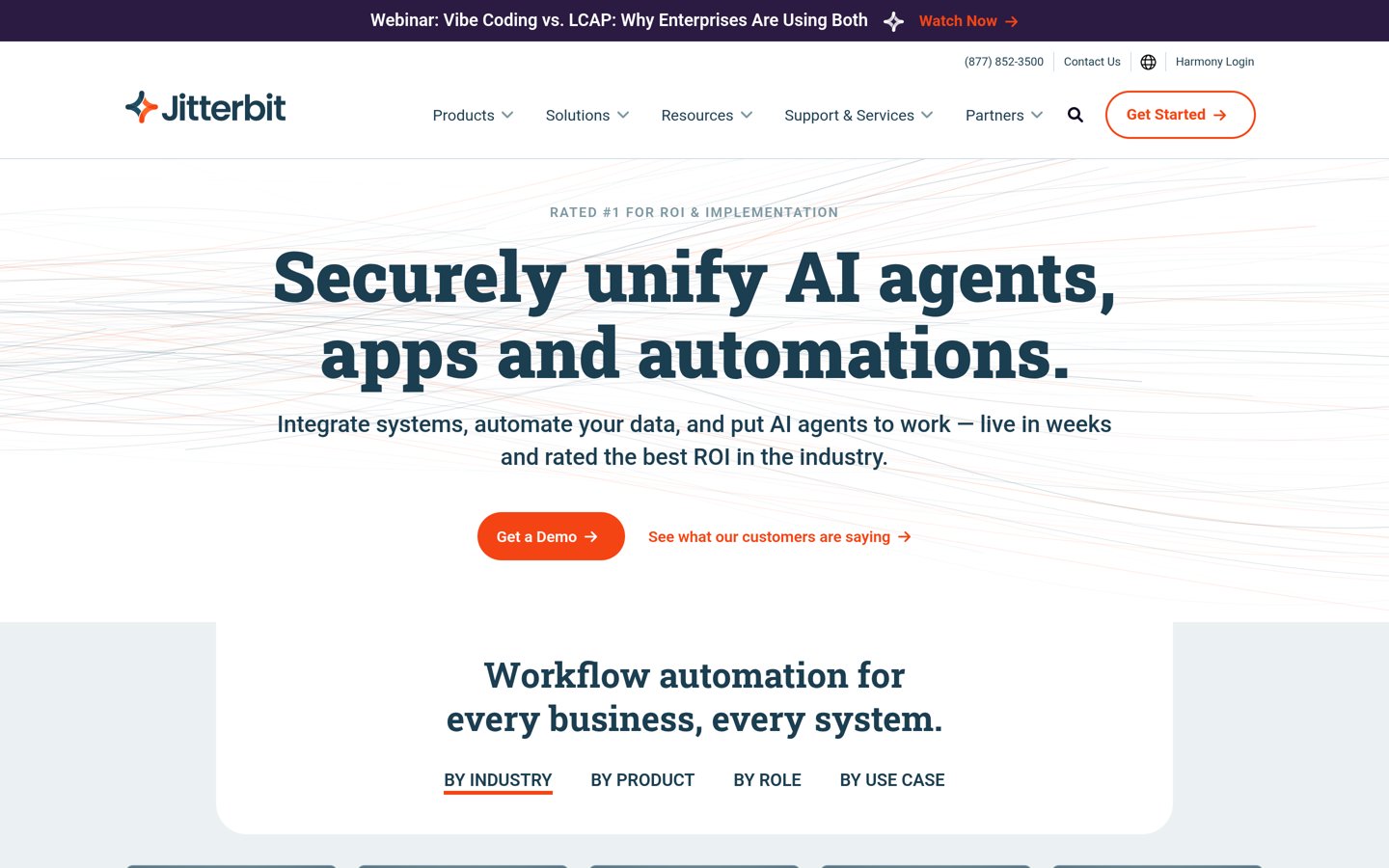
Jitterbit is an integration platform for mid-market teams that need application integration, API management and EDI in one product. It stands up quickly for ERP-to-SaaS work and runs in the cloud or on premises.
The trade off is polish. Reviewers note the interface feels less modern than newer rivals, and pricing is quote-only. It suits hybrid mid-market teams.
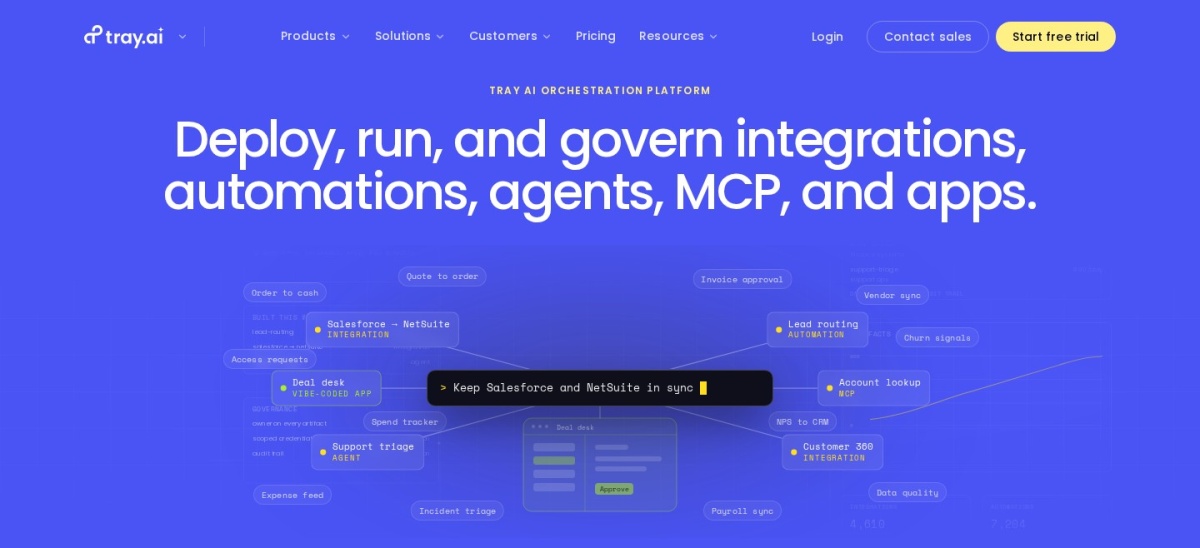
Tray.ai is an integration and automation platform for technical teams that want API-level control over their workflows. It offers flexible customization and AI agent features, and suits teams that build integrations as code rather than clicking through wizards.
The trade off is scale. Reviewers note limited performance at high volume, and pricing is quote-only. It suits technical automation teams with moderate loads.
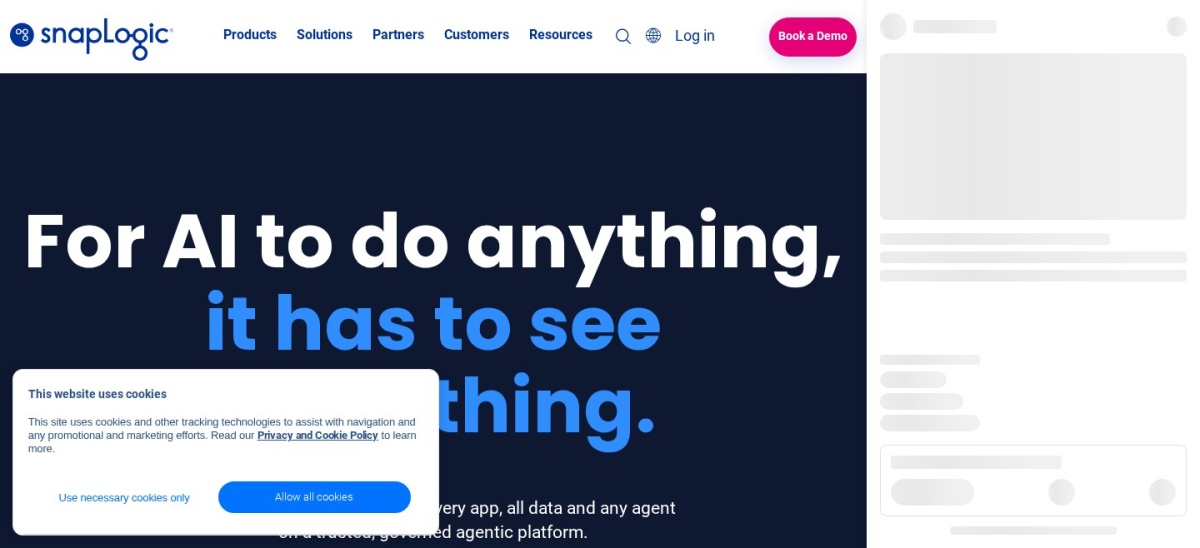
SnapLogic is an integration platform that covers application integration and data pipelines, with AI features for building and running flows. It suits teams whose integration problem is as much about data movement as about connecting apps.
The trade off is enterprise positioning. SnapLogic publishes no prices and is priced for larger teams, so small businesses should start elsewhere. It suits data-heavy enterprise work.
Zapier bills tasks, Make bills operations, Boomi bills messages, MuleSoft bills credits and Workato bills consumption. None of these units maps cleanly to the others.
Before you compare prices, count the runs your busiest flow will make in a month, then price that count on each platform. The cheapest entry price often belongs to the most expensive platform at your volume.
Watch renewals too. Published reports put annual uplifts at 3 to 24 percent depending on vendor, so ask for the renewal cap in writing.
How we chose
We started from the established ecommerce integration software vendors most often shortlisted for online stores, then kept those with a verifiable rating on G2, Capterra or Trustpilot and a published pricing page or a clear quote-based model.
Prices come from each vendor's pricing page or, where the vendor publishes no price, from the vendor's own statement that pricing is by quote. Ratings and review counts come from G2, Capterra or Trustpilot, checked on 23 November 2026. Where a vendor shows a sale, the list shows the regular price.
We left out tools with no verifiable public rating. No vendor paid for a place, and we do not claim hands-on testing for this list.
How to choose ecommerce integration software
Start with the size of your store and the problem that costs the most, then match the tool to that problem.
List the problem that costs you most. Fraud losses, manual work, stockouts and slow replies each point at a different tool. Pick the one problem first and judge every vendor on it.
Check the real price at your volume. Most of these tools bill by orders, seats or usage, so the entry price is not the price at your volume. Model a busy month before you sign.
Confirm the integrations you already use. A tool that lacks your store platform, payment provider or warehouse system will cost more in workarounds than it saves. Check the connector list first.
Run a short trial on real orders. A trial with live traffic shows whether the tool fits your workflow. Keep your old process running beside it until the trial proves itself.
FAQ
What is the best ecommerce integration software?
Workato is the highest rated at 4.7 out of 5 on G2, and it suits companies that want business and IT teams automating together. Boomi is the closest enterprise alternative with a published entry price of $99 a month plus usage.
How much does integration software cost?
It ranges from $9 a month for Make and $19.99 a month for Zapier to $2,000 a month for MuleSoft packages. Workato, Celigo, Jitterbit, Tray.ai and SnapLogic publish no prices, so those deals are quoted.
What is iPaaS?
An iPaaS, or integration platform as a service, connects cloud apps, databases and on-premises systems without custom code for every link. Boomi, Workato, Celigo, MuleSoft and Jitterbit are iPaaS platforms, while Zapier and Make are lighter automation tools.
Is Zapier enough for ecommerce integration?
Zapier is enough for simple flows such as syncing orders to a spreadsheet or alerting a channel on new sales. For ERP sync, EDI or governed multi-system work, an iPaaS such as Celigo or Boomi fits better.
Which tool is best for NetSuite integration?
Celigo is the strongest pick for NetSuite and ecommerce stacks, with prebuilt Integration Apps for orders, inventory and invoices. It is rated 4.6 out of 5 on G2 from 1,105 reviews.
Do these tools offer free trials?
Yes. Boomi, MuleSoft and Celigo offer 30-day trials, and Zapier and Make have free plans. Use the trial to build one real integration before you discuss price.