WLWPLegible EditorsLast verified 23 Nov 2026How we rank13 min read
★ Short answer
Jobber and Housecall Pro are the practical picks for home-service crews, from $29 and $59 a month with published pricing and no contracts. Workiz suits phone-heavy trades, ServiceTitan and FieldPulse serve larger operations, and Onfleet, Detrack, and DispatchTrack dispatch delivery drivers and parcels.
How we make this list: we compare pricing pages, product documentation and public user reviews, then re-check every price before each update. No product paid for a place. Disclosure.
Jobber and Housecall Pro are the practical picks for small crews, from $29 and $59 a month.
Workiz suits phone-heavy trades, with a free Lite tier and a $225 Kickstart plan.
ServiceTitan and FieldPulse serve larger operations, but both hide pricing behind sales calls.
Delivery dispatch prices per vehicle or month: Detrack $29 per vehicle, Onfleet $619 a month.
Buy from the half that matches your operation: field-service tools and delivery tools are not interchangeable.
What dispatch software should cover
Dispatch software sounds like one category, but it is really two: software that dispatches technicians to service calls, and software that dispatches drivers to deliveries. Field-service dispatch assumes jobs that take an hour or more, with a customer record, a quote, an invoice, and often a service agreement. Delivery dispatch assumes many short stops, where the job is a route, a proof of delivery, and a tracking link.
Five tools here dispatch field crews: Jobber, Housecall Pro, Workiz, ServiceTitan, and FieldPulse. They cover HVAC, plumbing, electrical, pest control, locksmiths, and other trades that send technicians to customers. Three dispatch deliveries: Onfleet, Detrack, and DispatchTrack, covering couriers, food delivery, pharmacies, and retail last mile.
Pricing splits the same way. Field-service tools charge per user or per month, from $29 a month for Jobber Core to quote-only enterprise pricing for ServiceTitan. Delivery tools charge per vehicle or per month: Detrack at $29 per vehicle a month, and Onfleet at $619 a month for 2,500 tasks.
Buying from the wrong half is the most expensive mistake in this category. A courier company does not need invoicing, quotes, and QuickBooks sync; it needs auto-dispatch and per-task costing. A plumbing company does not need barcode custody chains; it needs recurring service plans and equipment records. If your operation does both, expect to run two systems or compromise on one half.
Jobber is the most approachable field service platform for small businesses, with scheduling, quoting, invoicing, online booking, and payments in one flow and a mobile app that technicians genuinely like. Core starts at $29 a month billed annually for one user, and every price is on the website with no contract. Route optimization is included at lower tiers than rivals.
The trade off is that each plan caps users and the price jumps with headcount, with extra users at $29 a month each beyond the cap. Marketing Suite, Receptionist, and Pipeline are separate paid add-ons below the Plus tier, so a mid-size team with add-ons can land at $400 to $900 a month before payment processing fees.
What we like
Lowest entry price with fully published pricing
Route optimization included at lower tiers
No-contract monthly billing available
Smooth mobile app for technicians
Watch out for
Each plan caps users; price jumps with headcount
Marketing, AI receptionist, pipeline are paid add-ons
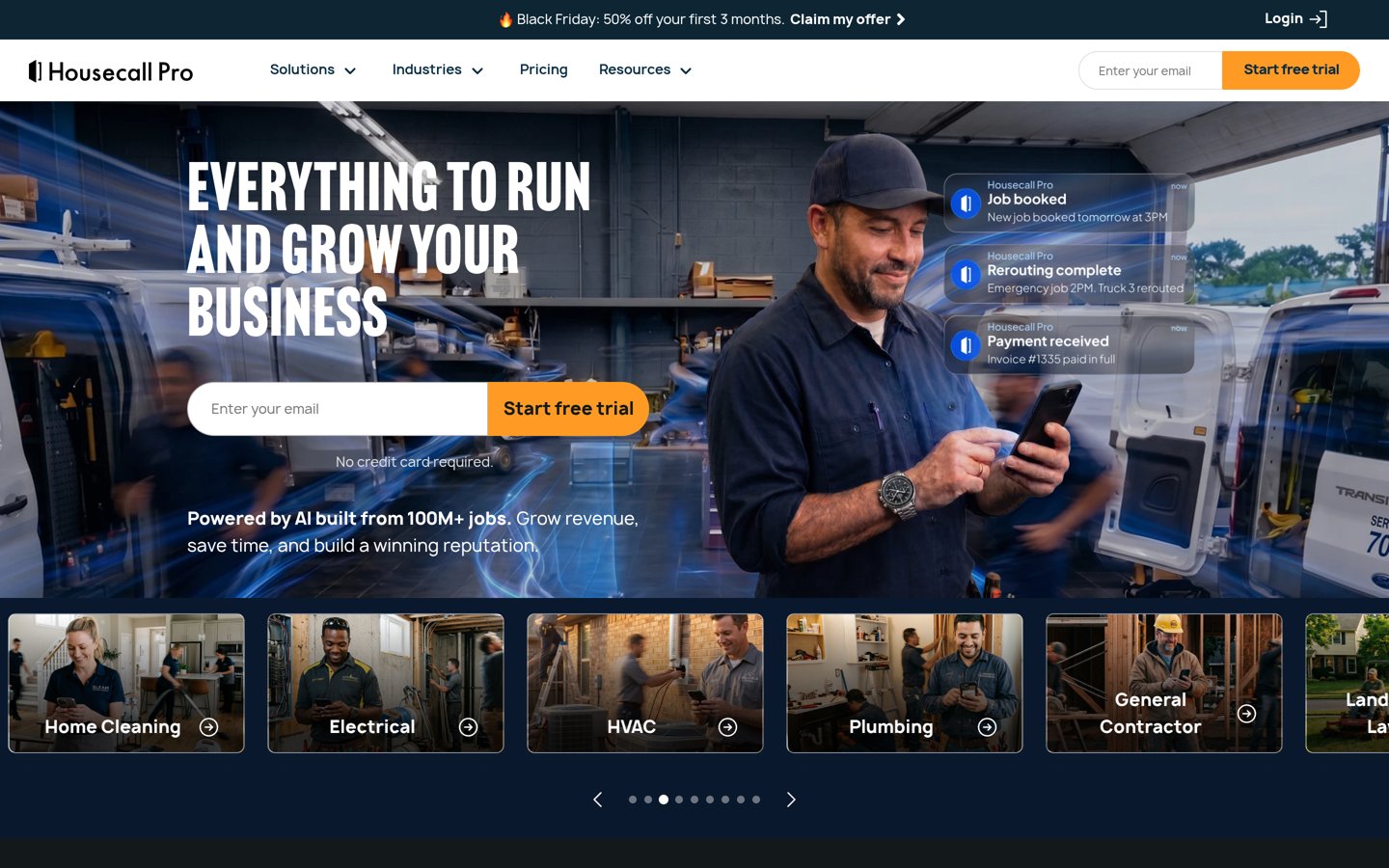
Housecall Pro is built for residential trades, with booking, scheduling, dispatching, quotes, invoices, and payments in one flow, plus consumer financing and review management. Basic starts at $59 a month billed annually for one user, with Essentials at $149 and MAX at $299. The Spanish-language app and support matter for bilingual crews.
The trade off is that pricing is quirky: HVAC and plumbing businesses see a different package after a pricing quiz, with Essentials and MAX running $299 to $649, and several features are paid add-ons. Route optimization and the open API are MAX-only, and extra users cost $100 a month on Essentials and $75 on MAX.
What we like
Built for residential trades with consumer financing
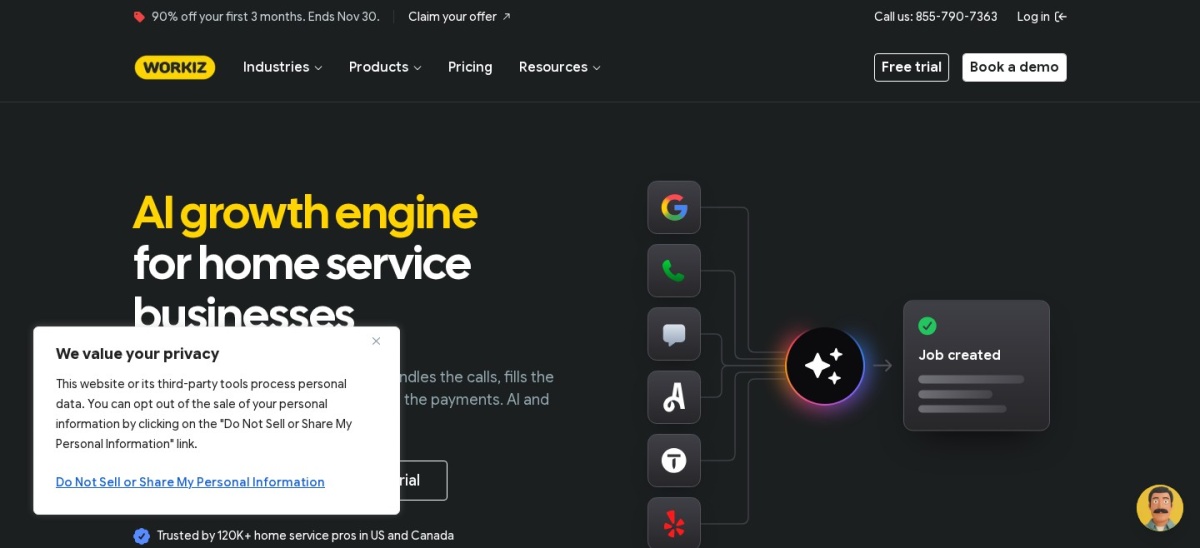
Workiz is built for trades where the phone never stops ringing: locksmiths, garage door repair, and appliance service. Its dispatch board, job notes, and customer communication are designed around call-heavy workflows, and the built-in phone system with call recording is a real differentiator. Lite is free for up to 2 users with roughly 20 jobs.
The trade off is that the phone system is sold separately from every plan, and Genius Answering, the AI call dispatcher, costs roughly $200 a month extra. Paid plans start at $225 a month for Kickstart, so a five-person shop on Pro with phone and AI answering can clear $500 to $800 a month. Compare the all-in number, not the plan sticker.
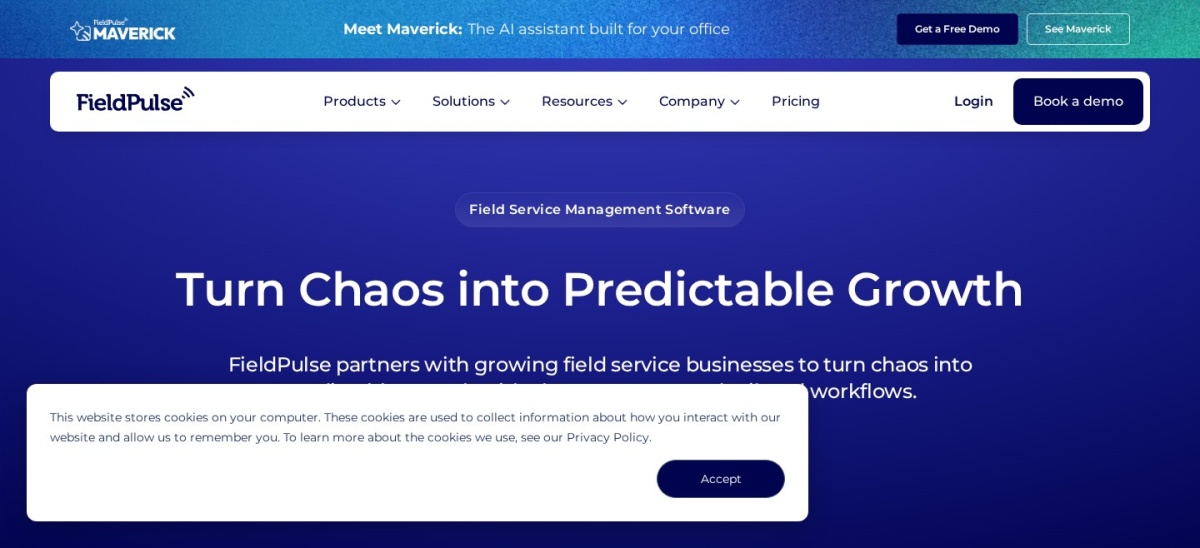
FieldPulse is one deep platform instead of a cheap entry tier with add-ons: scheduling, dispatching, customer management, estimates, invoices, time tracking, GPS tracking, inventory, and QuickBooks integration together. The mobile app works well offline, which field crews notice immediately, and customer service gets consistently strong marks in reviews.
The trade off is commercial, not technical: FieldPulse does not publish plan prices, so comparison shopping starts with a sales call. Contractor-reported figures range from roughly $99 a month for small teams to $399 or more for larger crews, before add-ons like GPS and VoIP. If you want prices in ten minutes, start with Jobber or Housecall Pro.
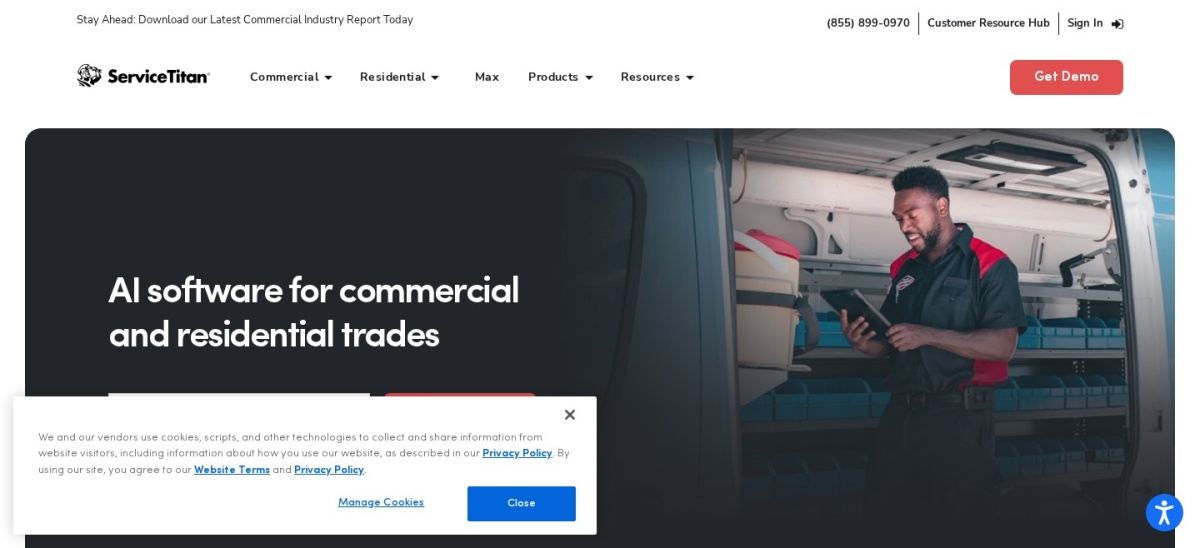
ServiceTitan is the enterprise option for home services, built for operations running 20-plus technicians across multiple locations with dispatchers, office managers, and a marketing team. Its depth is real: advanced dispatch intelligence, call recording, payroll, inventory, Marketing Pro, and Phones Pro. Large HVAC and plumbing companies that outgrow Jobber usually end up here.
The trade off is that ServiceTitan publishes no pricing; you book a demo and get a custom quote. Independent 2026 estimates put it at roughly $245 to $500 per technician per month, with implementation fees estimated between $5,000 and $50,000, and it requires a 12-month-plus contract. This is software for enterprise budgets, not a ten-truck shop.
What we like
Deepest dispatch, reporting, and call-center tooling
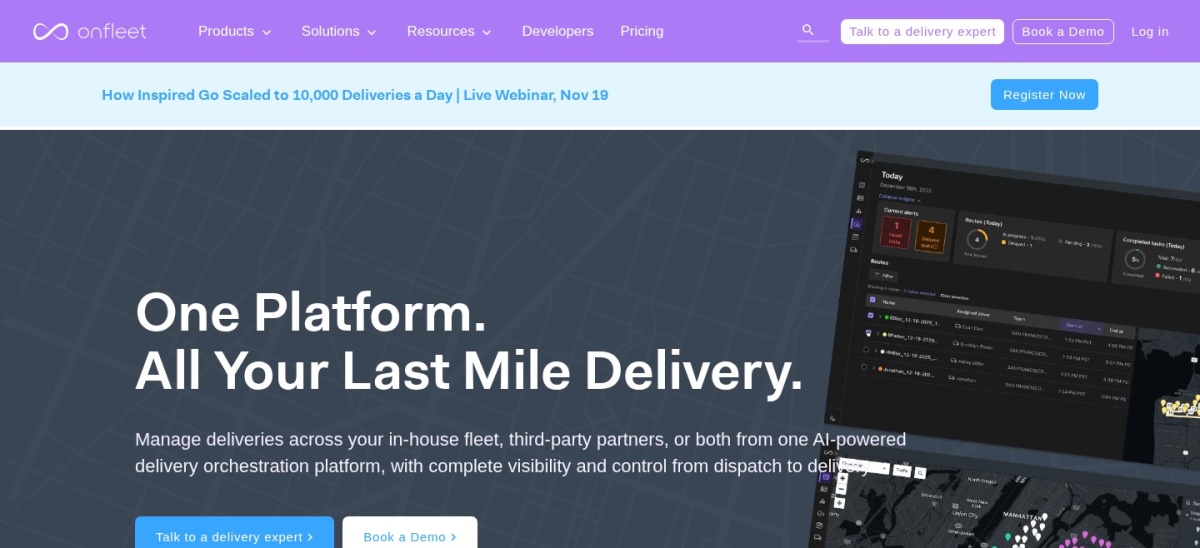
Onfleet is built for delivery operations where tasks arrive dynamically and drivers are dispatched in real time: couriers, same-day delivery, pharmacy, and regulated-product delivery. Launch at $619 a month covers 2,500 tasks with route optimization, proof of delivery, and API access. Unlimited users sit on every plan, so headcount never inflates the bill.
The trade off is that the entry price is steep for small operations, and auto-dispatch is gated behind the $1,349 Scale plan. SMS notifications and driver-call anonymization are billed separately, and the Courier Suite add-on for client portals and invoicing costs $299 more a month. A five-driver operation should model its task volume against Detrack first.
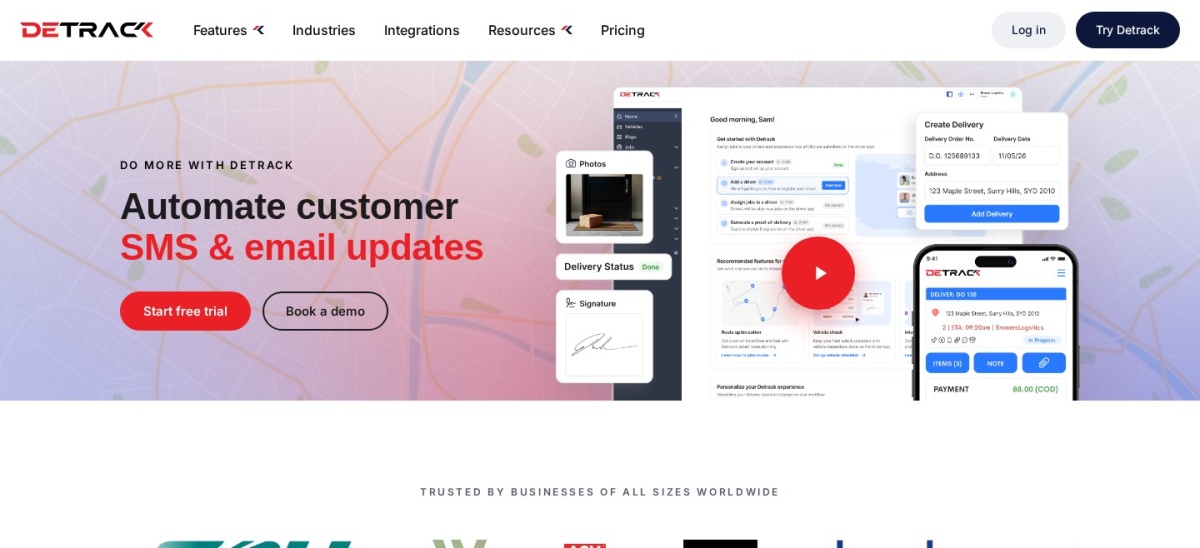
Detrack is the accessible entry point for businesses that run their own delivery vans or drivers. Pro costs $29 per vehicle per month, or $26 with annual billing, with unlimited sub-users, live driver tracking, proof of delivery with signatures and photos, and branded customer notifications. There is no minimum driver count, and setup takes about an hour.
The trade off is that route optimization is only on the $39 per vehicle Advanced tier, which also adds vehicle safety checks and rate cards. Complex operations will hit a ceiling: multi-depot routing and deep logistics configuration belong to pricier platforms. For straightforward delivery dispatch, though, the value is hard to beat.
What we like
Simple per-vehicle pricing, no minimum drivers
Set up in about an hour
Real-time tracking and electronic proof of delivery
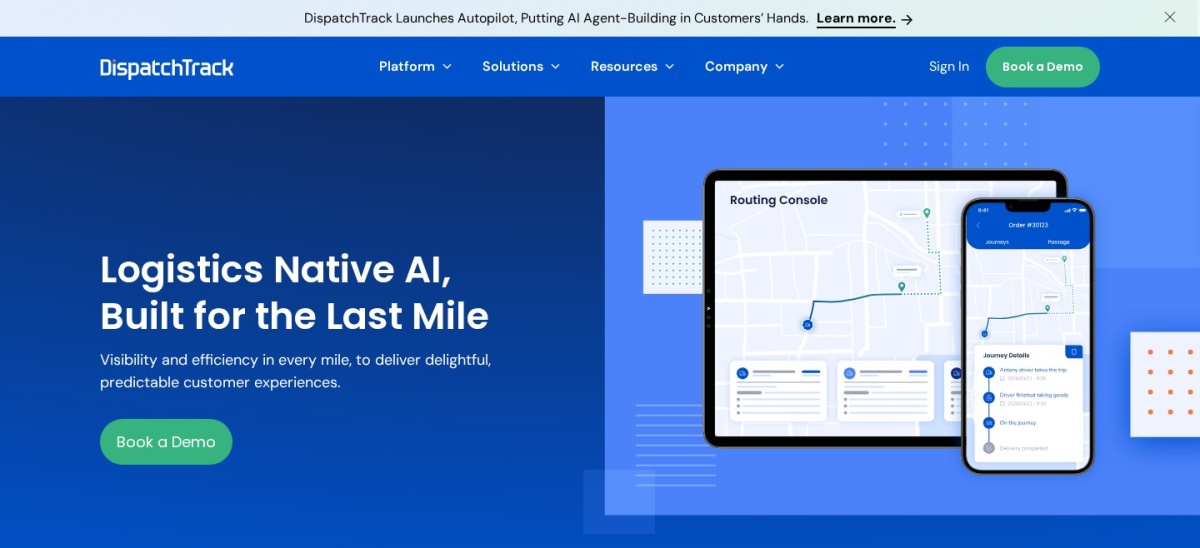
DispatchTrack is built for retailers delivering furniture, appliances, and other big-ticket items, where the delivery is really an appointment with a two-person crew and possibly an install. The platform handles AI route optimization, driver voice briefings, customer self-scheduling, and tight ERP integrations with systems like NetSuite and SAP.
The trade off is that pricing is custom-quoted per vehicle licence, so there is no way to compare without a sales conversation. Third-party aggregators cite roughly $75 per vehicle per month as a starting reference, and implementation and training fees have been reported. If you just need dispatch plus proof of delivery, Detrack will do it cheaper.
What we like
Built for scheduled big-ticket deliveries with crews
Field-service tools sell add-ons aggressively: Workiz's phone system and AI answering, Housecall Pro's proposal tool and flat-rate price book, Jobber's marketing suite. Add per-user or per-vehicle costs at your real headcount, then add payment processing fees, because card rates of 2.59 to 2.9 percent apply to every invoice you collect through the platform.
Check the exit terms before you sign. Housecall Pro and Jobber offer month-to-month billing with no contract. ServiceTitan typically requires 12 months or more, with reported early termination fees. FieldPulse and DispatchTrack quote custom terms, so get the contract length, renewal terms, and data export process in writing before the demo ends.
How we chose
We evaluated dispatch software actively sold in 2026, covering field-service dispatch for technicians and last-mile dispatch for delivery drivers. Research covered vendor pricing pages and product documentation, G2 user reviews, and independent comparison guides published in October and November 2026. We weighted the dispatch board, route optimization, GPS tracking, mobile app quality, proof of delivery, and invoicing.
Jobber's $29 a month and Housecall Pro's $59 a month were confirmed on the vendors' own pricing pages on 23 November 2026. Workiz's $225 a month rests on rankite's October 2026 read of the vendor pricing page, because the page's pricing table is JavaScript-rendered and shows no figures in fetched text. ServiceTitan, FieldPulse, and DispatchTrack publish no prices, so they show Custom rather than estimates.
No vendor paid for a place, and we do not claim hands-on testing for this list. Ratings come from G2, with the date we checked them, and every price in this list was checked on 23 November 2026.
How to choose dispatch software
Start with which half you are in, then match the tool to your operation size.
Pick your half first. Field-service dispatch manages technician jobs with quotes and invoices; delivery dispatch manages driver routes with proof of delivery. Buying from the wrong half costs months of workarounds.
Match the tool to your size. Solo operators and small crews start with Jobber or Housecall Pro. Larger HVAC and plumbing operations look at ServiceTitan or FieldPulse. Delivery fleets compare Detrack and Onfleet by task volume.
Price the whole bill. Add the add-ons, per-user or per-vehicle costs at your real headcount, and payment processing fees. Workiz's phone system and AI answering, for example, can double the plan price.
Ask for a live demo. Test the dispatch board with your actual service area loaded, not a canned dataset. Check the exit terms, contract length, and data export process before you sign.
FAQ
What is the best dispatching software for a small service business?
For home-service trades with under 15 users, Jobber and Housecall Pro are the standard picks: published pricing, no contracts, and dispatch plus invoicing in one app. Jobber starts cheaper at $29 per month billed annually; Housecall Pro is stronger on payments and consumer financing at $59 per month.
How much does dispatch software cost?
Field-service tools for small crews run $29 to $225 per month depending on the vendor and user count. Delivery dispatch varies more: Detrack starts at $29 per vehicle per month, and Onfleet at $619 per month. Enterprise tools like ServiceTitan are quote-only.
Is there free dispatch software?
Workiz offers a free Lite tier for up to 2 users with limited jobs. Most vendors offer 14-day free trials instead of free plans. Free tiers in this category are genuinely limited, so plan on paying once you have real dispatch volume.
What is the difference between field service dispatch and delivery dispatch?
Field-service dispatch manages technician jobs with quotes, invoices, and service agreements, for trades like HVAC and plumbing. Delivery dispatch manages driver routes with proof of delivery and tracking links, for couriers and retail last mile. Buy from the half that matches your operation.
Can dispatch software integrate with QuickBooks?
Yes, most field-service tools integrate with QuickBooks Online: Jobber includes it from Connect, Housecall Pro from Essentials, and FieldPulse natively. Delivery-focused tools are weaker here, so check each vendor's integration page if accounting sync matters.
Does dispatch software include route optimization?
Most tools include some route optimization, but the tier matters. Jobber includes it at lower tiers than rivals, Housecall Pro gates it to MAX, Detrack to its $39 Advanced tier. Confirm which plan your routes need before buying.