Pearl Second Opinion is the best dental AI software for patient care in most single-location practices, because its FDA-cleared X-ray detection shows patients their own findings chairside. Overjet suits practices where insurance claims matter most, while Denti AI is the best value bundle with a published price.
How we make this list: we compare pricing pages, product documentation and public user reviews, then re-check every price before each update. No product paid for a place. Disclosure.
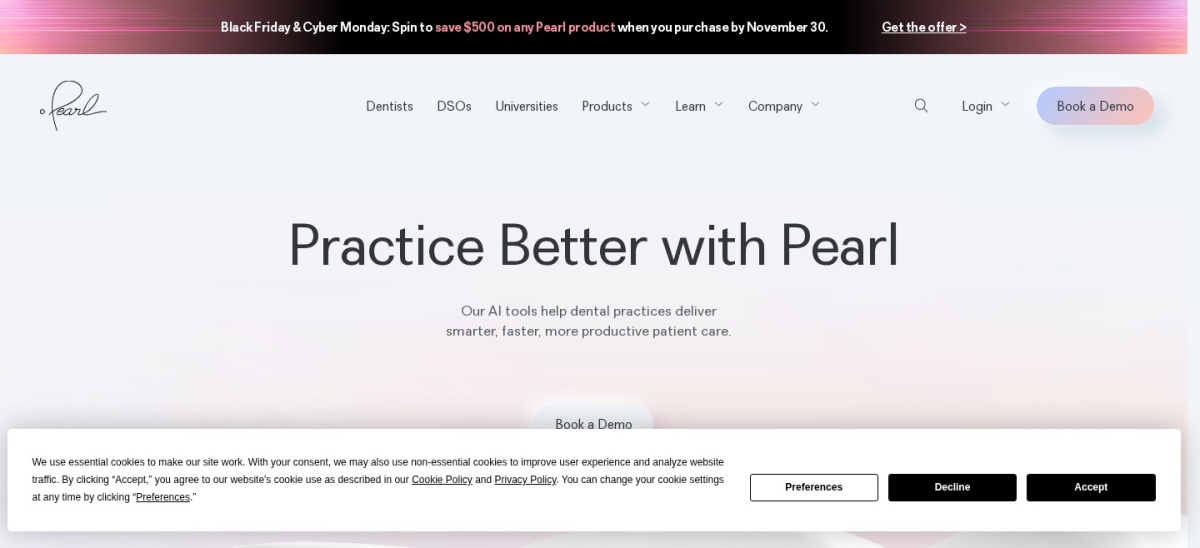
Pearl Second Opinion is the best chairside X-ray AI for most single-location practices, with FDA clearance for 2D and 3D imaging.
Overjet is the strongest choice when insurance claims and documentation drive the decision.
Denti.AI Detect is the cheapest published-price FDA-cleared detection, at 49 dollars a month per location.
Weave and Mango Voice cover the front desk, with published prices from 119 dollars a month.
Most vendors sell by quote, so budget from a written quote, not from figures seen online.
What dental AI does for patient care
Dental AI now reads X-rays, charts perio exams by voice and answers the front-desk phone. The clinical tools flag caries and bone loss on radiographs, while the front-office tools cut missed calls and no-shows.
Every clinical tool here holds FDA clearance for at least some of its detection, but clearance covers specific findings, not the whole product. A dentist still reviews and signs off on every AI finding before it reaches a treatment plan.
Prices are the hard part of this category. Most vendors sell by quote and publish no price at all, so the prices in this list are either published plan prices or clearly marked quote-only entries. Any monthly figure seen online before a sales call is an estimate, not a quote.
Review volume is also thin. The biggest tools have only a handful of Capterra reviews, and one major vendor has none at all, so this list leans on FDA clearance records and published prices as well as ratings.
Pearl Second Opinion is FDA-cleared AI that reads 2D and 3D dental X-rays and flags caries, bone loss and other findings directly on the image, in real time. It layers onto the imaging software a practice already uses, works with more than 30 imaging brands, and Pearl says it is used in over 4,000 US practices.
The trade off is price opacity. Pearl publishes no price, and Capterra lists a starting price of $299 a month, which is a directory figure rather than a vendor quote. It suits single-location practices that want chairside X-ray AI without changing their imaging system.
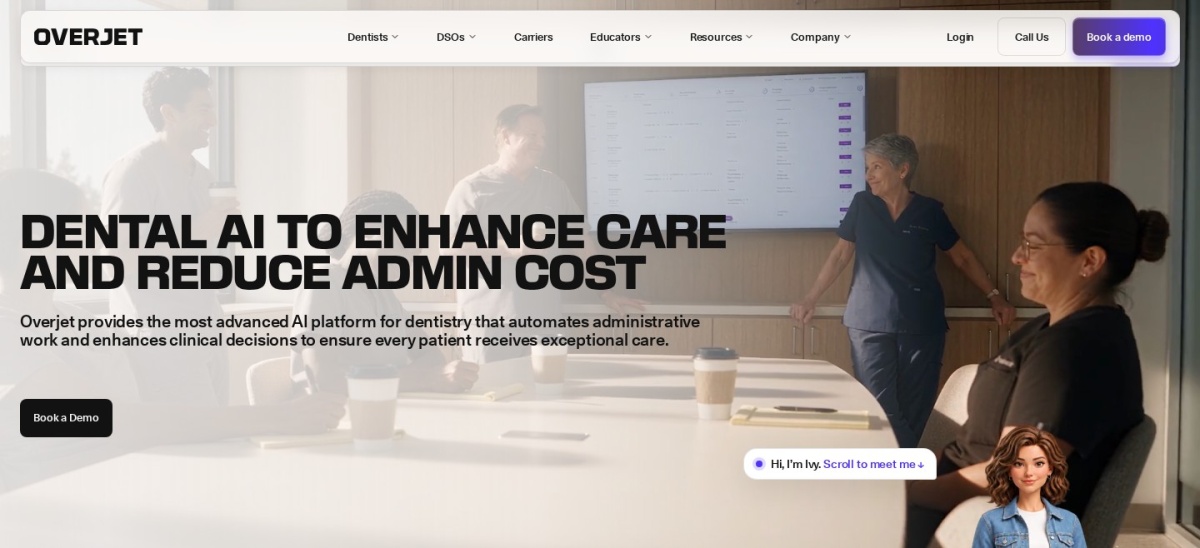
Overjet is the most established name in dental AI, and its strength is breadth. Its Vision AI flags caries and bone loss on X-rays, its IRIS imaging platform adds AI image quality checks at capture, and its claims tools help a practice submit cleaner documentation to payers, with 12 FDA clearances claimed.
The trade off is that Overjet publishes no price at all, so budgeting starts with a sales call, and third-party estimates range widely from $250 to $2,000 a month. It suits practices and groups where insurance claims and documentation shape daily work.
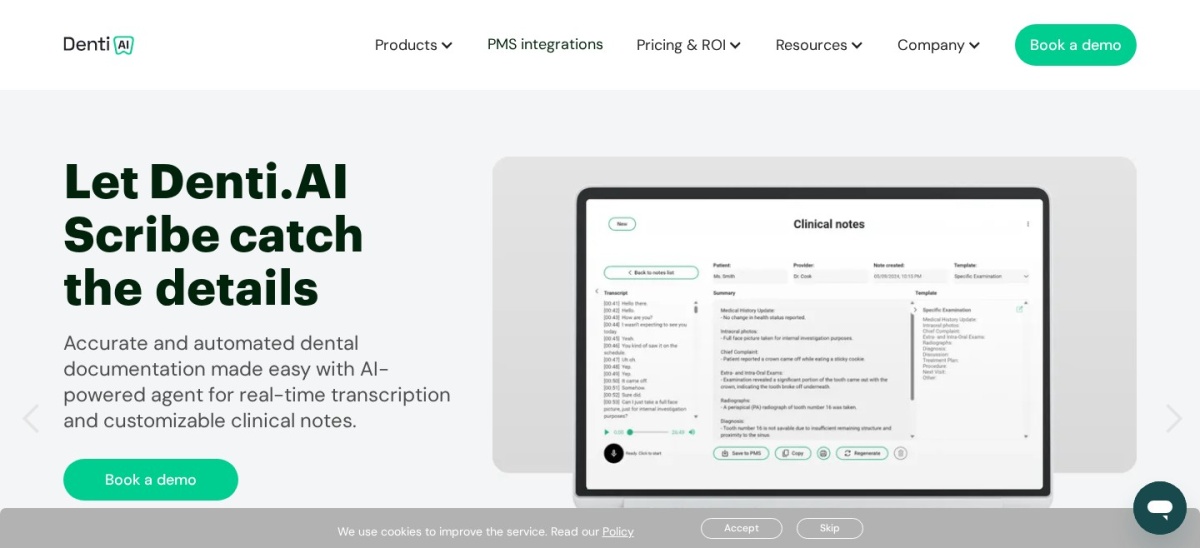
Denti.AI is the only tool here with a published bundle price covering notes, voice perio and X-ray analysis. Its Detect product is FDA-cleared for caries, periapical radiolucencies and bone loss on panoramic and intraoral radiographs, at a flat $49 a month per location, with Voice Perio adding $10 per user a month.
The trade off is reach. Denti.AI has a smaller install base than Overjet or Pearl, with just over 10,000 professionals reported, and its integrations cover fewer practice management systems. It suits independent practices that want one low, published price.
NexHealth is a patient experience platform that connects a practice's management system to online scheduling, digital forms, two-way messaging and payments, so patients can book and pay without calling the front desk. It lists 15 integrations on G2 and is rated 4.8 out of 5 from 137 reviews there.
The trade off is that NexHealth publishes no price, so budgeting starts with a sales call, and it is a scheduling and messaging platform rather than a clinical AI tool. It suits practices that lose patients to phone tag and want booking to happen online.
Weave is the standard front-office platform in dentistry, combining VoIP phones with Call Pop caller ID, two-way texting, missed-call auto-text, reminders, online scheduling, digital forms, review generation and payments in one system. Its AI Receptionist answers calls, books appointments and takes payments without a human on the line.
The trade off is cost above the entry tier. The Base plan starts at $199 a month, Pro is listed from $249 a month, and Elite and the AI Receptionist are quote-only, with setup fees and renewal increases commonly reported. It suits practices that want phones and texting done well under one bill.
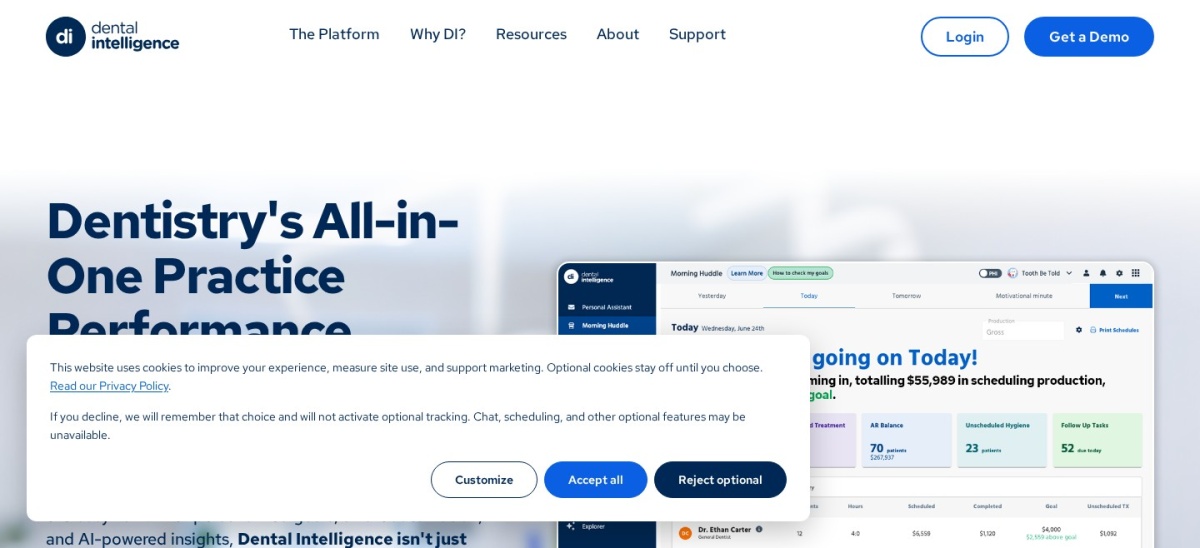
Dental Intelligence is a practice performance platform that syncs with a practice management system and adds analytics, patient communication, online scheduling, payments and insurance tools on top of it. Its morning huddle and KPI dashboards have a loyal following, and it now includes an AI receptionist for overflow calls.
The trade off is price opacity and data freshness. Pricing is on request, and several Capterra reviewers say the data is not real time and refreshes only overnight. It suits practices that want dashboards, goals and patient texting without switching systems.
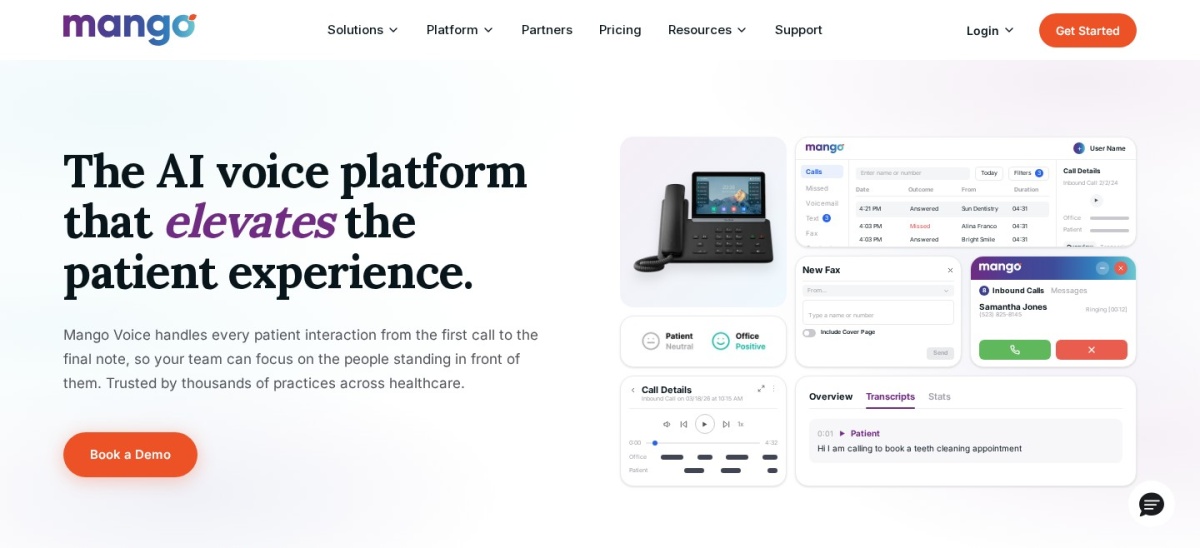
Mango Voice is a cloud phone platform for healthcare practices that puts calls, texting, fax, AI call summaries and an AI receptionist named Margo in one system. Its pricing page lists three plans from $119 a month, and the phone system ties into the practice management system so the patient name and chart appear when the phone rings.
The trade off is reliability history. Many Capterra reviewers describe outages and dropped calls, mostly from spring 2022, and the AI receptionist Margo is not named in any of the 111 Capterra reviews. It suits a dental office that wants a VoIP phone system with AI call summaries.
Four of the seven tools here sell through a demo and a written quote, with no published price. The quote depends on location count, modules and contract length.
Only Denti.AI, Weave and Mango Voice publish starting prices on their own sites. Treat any other monthly figure as a third-party estimate.
Before signing, get the quote in writing with the contract term and the cancellation terms, since several reviewers describe renewal disputes.
How we chose
We started from the standalone dental AI products that 2026 guides and FDA records name most, covering X-ray analysis, voice charting and patient communication, and kept those with an active vendor site and a verifiable rating.
Prices come from each vendor's published pricing page where one exists, checked on 25 November 2026. Where a vendor publishes no price, the list shows Custom and the notes say so. Ratings come from Capterra or G2 on the same day.
We left out VideaHealth, Diagnocat and Bola AI because no G2, Capterra or Trustpilot rating could be verified for them. No vendor paid for a place, and we do not claim hands-on testing for this list.
How to choose dental AI software
Start with the job that costs your practice the most time, then check clearance and price.
Pick the job first. Choose X-ray detection, voice charting or front-desk calls, since no single tool does all three well.
Check the FDA clearance scope. Confirm the clearance covers the findings and image types you use, and that it covers your patient ages.
Ask for a written quote. Most vendors sell by quote, so get the price, contract term and cancellation terms in writing before signing.
Trial it on real cases. Run the tool on your own X-rays or calls during the trial and check whether it saves time without adding false positives.
FAQ
What is the best dental AI software for patient care?
Pearl Second Opinion is the best dental AI software for most single-location practices, because its FDA-cleared X-ray detection shows patients their own findings chairside. Overjet suits practices where claims matter most, and Denti.AI is the best value bundle.
Is dental AI FDA approved?
The clinical tools here hold FDA 510(k) clearance for specific findings, such as caries or bone loss detection on certain X-ray types. Clearance covers those findings only, and a licensed dentist must still review every AI result before treatment.
How much does dental AI software cost?
Most dental AI vendors sell by quote and publish no price. Published starting prices in this list run from 49 dollars a month for Denti.AI Detect to 199 dollars a month for Weave Base, while Pearl, Overjet and others need a written quote.
Does dental AI replace the dentist?
No. Dental AI flags possible findings on X-rays and drafts notes, but diagnosis and treatment planning stay with the dentist. The tools raise case acceptance by showing patients what the dentist already sees.
Which dental AI tool is best for a small practice?
Pearl Second Opinion fits most single-location practices, because it layers onto the imaging software you already use. Denti.AI is the cheapest published-price route, at 49 dollars a month for X-ray detection per location.
Can dental AI answer patient phone calls?
Yes. Weave and Mango Voice both offer AI receptionists that answer overflow and after-hours calls, take messages and book appointments. Weave prices its AI receptionist by quote, and Mango Voice lists it on its Complete plan.
SaaS SEO and WordPress specialist with about 8 years of experience. Rakib compares WordPress plugins, themes, hosting and software using public pricing, documentation and user reviews. See how we rank.