Best Demand Generation Software in 2026: 8 Tools Compared
WLWPLegible EditorsLast verified 22 Nov 2026How we rank13 min read
★ Short answer
HubSpot Marketing Hub is the best demand generation software overall, combining CRM records, lead capture, email marketing and campaign reporting, with a 4.4/5 G2 rating from 16,100 reviews. EngageBay offers a lower-cost all-in-one alternative, while GetResponse suits teams focused on email campaigns, landing pages and lead nurturing.
How we make this list: we compare pricing pages, product documentation and public user reviews, then re-check every price before each update. No product paid for a place. Disclosure.
HubSpot Marketing Hub leads overall with a 4.4/5 G2 rating from 16,100 reviews, free marketing tools and a regular Starter price of $20 per seat monthly.
EngageBay combines marketing, CRM and support tools in one platform, with a free plan for 250 contacts and Basic pricing of $14.99 per user monthly on annual billing.
GetResponse Starter costs $19 monthly and includes unlimited monthly email sends, landing pages and one custom automation workflow.
Instantly is suited to outbound demand generation, with unlimited email accounts, 1,000 uploaded contacts and 5,000 monthly emails on its $47 Growth plan.
lemlist offers outbound prospecting with a 650M+ lead database and an Email plan listed at $69 monthly, or $55 monthly on annual billing.
Unbounce starts at $29 monthly for landing page lead capture, while its $149 Experiment plan adds A/B testing.
What demand generation software should help you accomplish
Demand generation builds awareness, attracts relevant audiences and develops interest before prospects are ready to buy. Software supports this process through campaigns, content distribution, lead capture, email nurturing, prospecting and conversion reporting.
The most useful platform depends on your acquisition strategy. Inbound demand generation emphasizes landing pages, forms, educational content and email campaigns. Outbound demand generation relies more on prospect research, targeted messaging, sales engagement and coordinated follow-ups.
Lead capture alone is not enough. Look for audience segmentation, behavioral triggers, automated nurturing and CRM connections that preserve a prospect's activity history as they move toward a sales conversation.
Pricing deserves careful attention. Marketing platforms may charge by contacts, seats, email volume or website traffic. The lowest subscription price does not always include advanced workflows, attribution, testing or the capacity required for a growing campaign.
HubSpot Marketing Hub homepage, captured Nov 2026.
HubSpot Marketing Hub is a marketing automation platform connecting lead capture, email campaigns, advertising and customer records through HubSpot CRM. Its free tools support up to 2 users, while Starter has a regular price of $20 per seat monthly and includes 1,000 marketing contacts. Starter also includes forms, email marketing, ad management and simple automation capabilities.
The trade off is that advanced campaign automation, sophisticated attribution and broader reporting require Professional, starting at $800 monthly with an annual commitment and additional onboarding costs. HubSpot also advertises temporary Starter discounts for eligible new customers. It suits businesses building a connected demand generation process between marketing and sales.
What we like
Marketing and CRM records share one platform
Free tools for lead capture and basic marketing
Forms, email campaigns and advertising features
Contact activity supports marketing and sales alignment
Broad ecosystem of business integrations
Watch out for
Advanced automation requires a substantially more expensive plan
Marketing contact tiers affect ongoing costs
Professional includes an additional onboarding fee
Starter expands marketing limits and removes basic free-tier restrictions; Professional adds advanced automation and attribution.Visit hubspot.com
02
EngageBay
4.6/5on G2 (810 reviews, checked Nov 2026)
Paid from$14.99/mo
Best value for small demand generation teams
Free contacts250
Entry paid planAll-in-One Basic
Basic contacts500
Included toolsMarketing, CRM and support
engagebay.com
EngageBay homepage, captured Nov 2026.
EngageBay is an all-in-one customer engagement platform combining email campaigns, contact management, landing pages, sales CRM and customer support. Its free plan supports 250 contacts, while the All-in-One Basic plan costs $14.99 per user monthly on annual billing and supports 500 contacts. Basic includes email templates, web pop-ups, landing page tools and lead scoring.
The trade off is that Basic has a limited contact allowance and advanced marketing automation requires higher plans. Its reporting and workflow depth are also less extensive than dedicated enterprise platforms. It suits smaller businesses that need lead capture, CRM visibility and campaign management without buying several separate applications.
What we like
Free plan includes marketing, CRM and support
Affordable entry-level paid subscription
Landing pages and lead capture forms
Contact records connect marketing and sales activities
Email sequences and lead scoring capabilities
Watch out for
Basic has a relatively small contact allowance
Advanced automation requires an upgrade
Additional team members increase subscription costs
Basic expands contact capacity and adds lead scoring, pop-ups, integrations and marketing tools.Visit engagebay.com
03
GetResponse
4.3/5on G2 (1,149 reviews, checked Nov 2026)
Starts at$19/mo
Best for email-driven demand generation
Entry paid planStarter
Monthly emailsUnlimited
Custom automation1 workflow
Advanced workflowsMarketer plan
getresponse.com
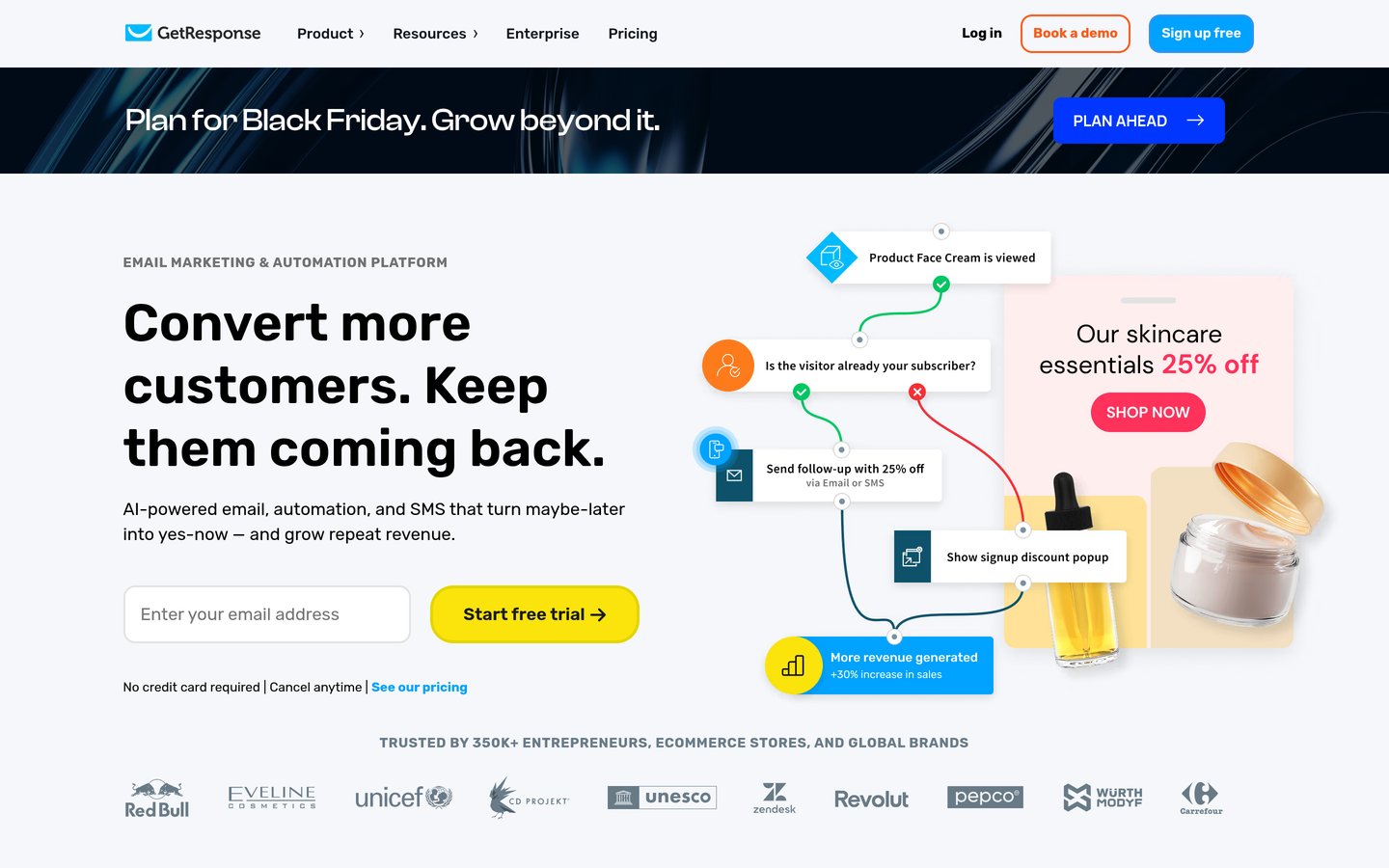
GetResponse homepage, captured Nov 2026.
GetResponse is a lifecycle marketing platform for collecting subscribers, sending email campaigns and nurturing prospects toward conversion. Starter costs $19 monthly and includes unlimited monthly email sends, signup forms, pop-ups, a landing page builder, welcome email series and one custom automation workflow. AI-assisted content generation is also included.
The trade off is that Starter limits custom automation, while unlimited workflows, advanced segmentation and sales funnels require Marketer at $59 monthly. It also lacks the extensive native sales CRM functionality of broader customer platforms. It suits businesses that primarily build demand through newsletters, downloadable resources and email nurturing.
What we like
Unlimited monthly email sends on Starter
Landing pages, signup forms and pop-ups included
Welcome sequences and basic automation
AI-assisted email content creation
Advanced nurturing options available through upgrades
Watch out for
Starter includes only one custom automation workflow
Advanced segmentation and funnels require Marketer
Less comprehensive sales CRM functionality
Starter provides email campaigns and lead capture; Marketer adds unlimited workflows and advanced segmentation.Visit getresponse.com
04
lemlist
4.6/5on G2 (2,786 reviews, checked Nov 2026)
Starts at$69/mo
Best for personalized B2B outbound campaigns
Entry paid planEmail
Lead database650M+ leads
Monthly email capacity50,000
Email sendersUnlimited
lemlist.com
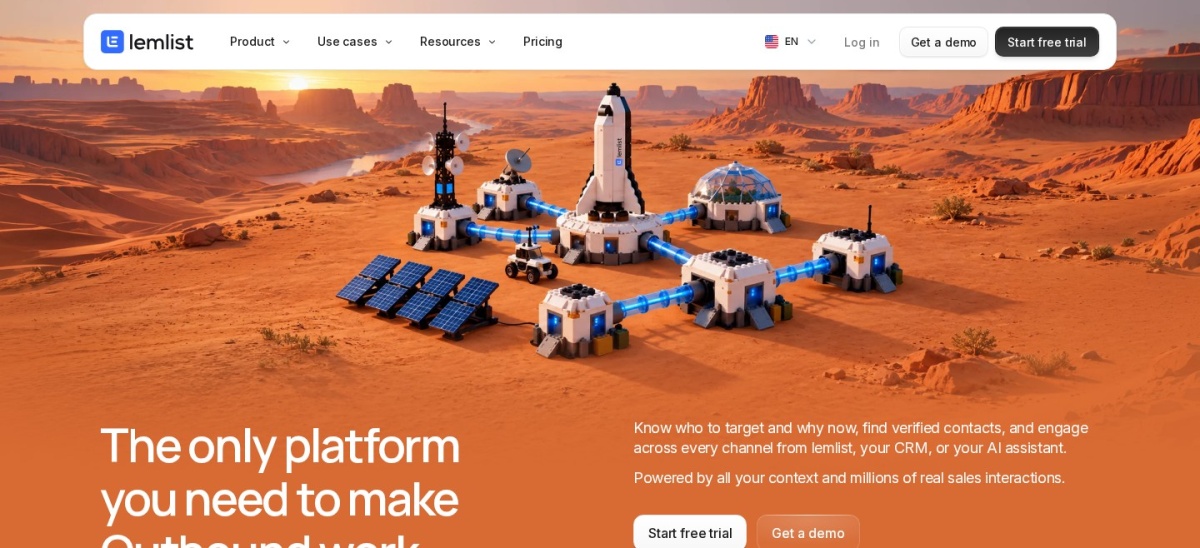
lemlist homepage, captured Nov 2026.
lemlist is an outbound sales platform combining B2B prospect discovery, contact enrichment, personalized campaigns and email deliverability tools. Its Email plan is listed at $69 monthly, or $55 monthly with annual billing, and includes unlimited email senders, a 650M+ lead database, CRM integrations and a 50,000-email monthly allowance.
The trade off is that access to a large prospect database does not mean unlimited contact enrichment, and advanced multichannel outreach may require higher-priced features or plans. Separate enrichment credits can also increase campaign costs. It suits B2B marketing and sales teams using targeted outbound outreach to create demand and book conversations.
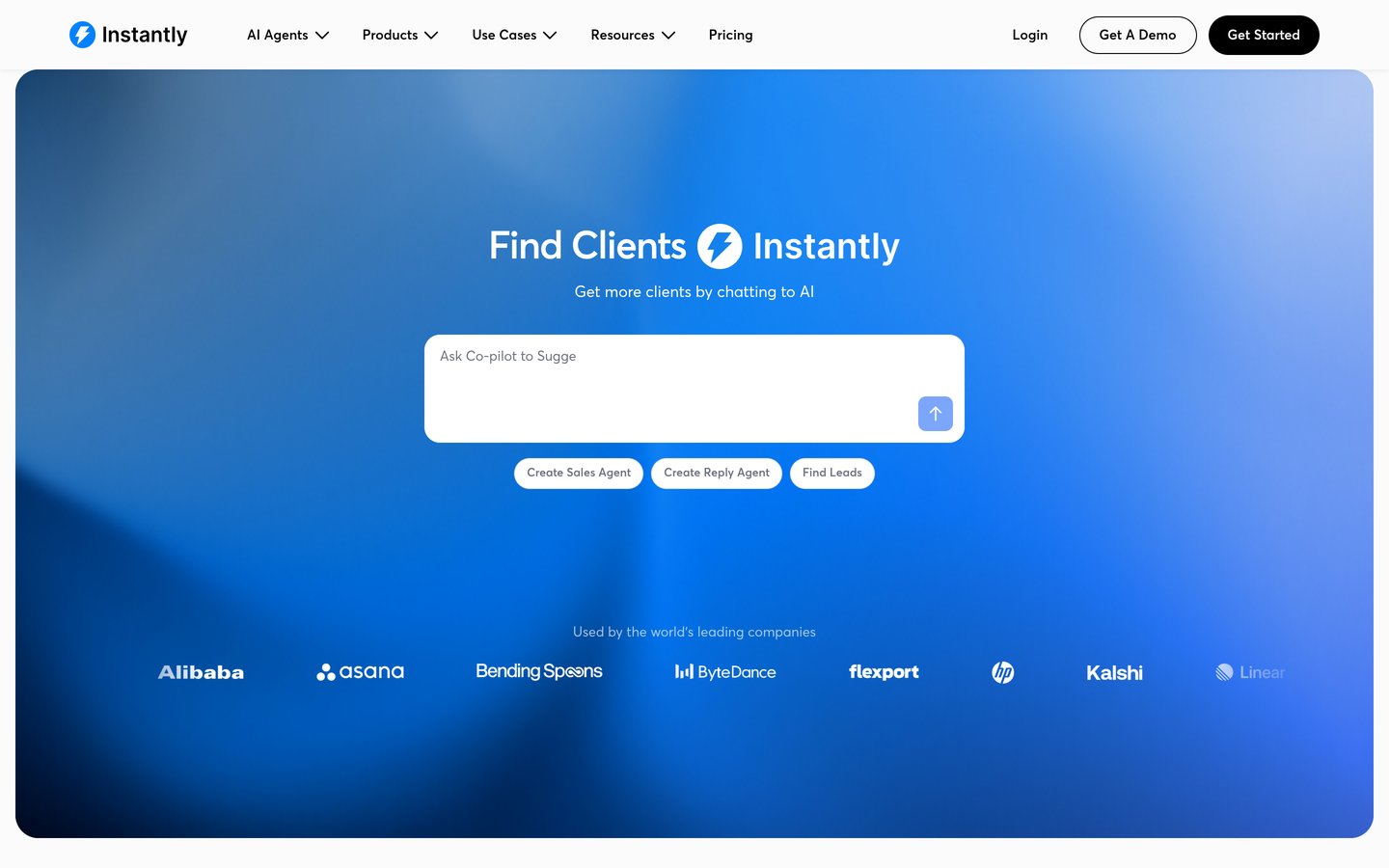
Instantly is an outbound sales engagement platform for managing cold email campaigns, sending accounts and prospect replies. Its Outreach Growth plan costs $47 monthly and includes unlimited connected email accounts, unlimited warm-up, 1,000 uploaded contacts and 5,000 monthly emails. Higher tiers expand campaign capacity and sending limits.
The trade off is that the Growth outreach subscription does not include unlimited prospect data or enrichment credits; separate Credits plans start at $47 monthly. The entry plan also has relatively limited campaign volume for larger operations. It suits outbound-focused teams that already source prospects and need centralized campaign sending.
What we like
Unlimited connected email accounts
Email warm-up included
Centralized outbound campaign management
Suitable for managing multiple sending identities
Higher plans support larger outbound campaigns
Watch out for
Prospect data and enrichment require separate credits
Growth limits uploaded contacts and monthly emails
Not a complete inbound marketing platform
Growth includes unlimited sender accounts and warm-up; higher plans increase outreach volume.Visit instantly.ai
06
Unbounce
4.3/5on G2 (390 reviews, checked Nov 2026)
Starts at$29/mo
Best for paid campaign landing pages
Entry paid planStarter
Landing pages5
Traffic allowance500
A/B testingExperiment plan
unbounce.com
Unbounce homepage, captured Nov 2026.
Unbounce is a landing page platform for capturing leads from advertising and other acquisition campaigns. Starter costs $29 monthly and includes 5 landing pages, a traffic allowance of 500, one user, one root domain, lead generation forms and 4,000 AI credits. The service also includes hosting and landing page templates.
The trade off is that Starter has restrictive page and traffic limits, while unlimited pages require Build at $99 monthly and A/B testing requires Experiment at $149 monthly. It also needs a separate CRM or email platform for lead nurturing. It suits marketers who already attract traffic but need dedicated pages to convert visitors.
What we like
Dedicated landing page creation tools
Lead capture forms and hosting included
AI-assisted copywriting
Higher plans include custom scripts and integrations
Experiment provides A/B testing
Watch out for
Starter limits pages and traffic
A/B testing is not included in cheaper plans
Requires separate tools for complete lead nurturing
Starter enables hosted lead capture pages; Build expands capacity and Experiment adds A/B testing.Visit unbounce.com
07
Constant Contact
4.1/5on G2 (7,640 reviews, checked Nov 2026)
Starts at$12/mo
Best for straightforward campaign execution
Entry paid planLite
Annual billing$10.20/mo equivalent
Campaign toolsEmail and social
Advanced automationHigher plans
constantcontact.com
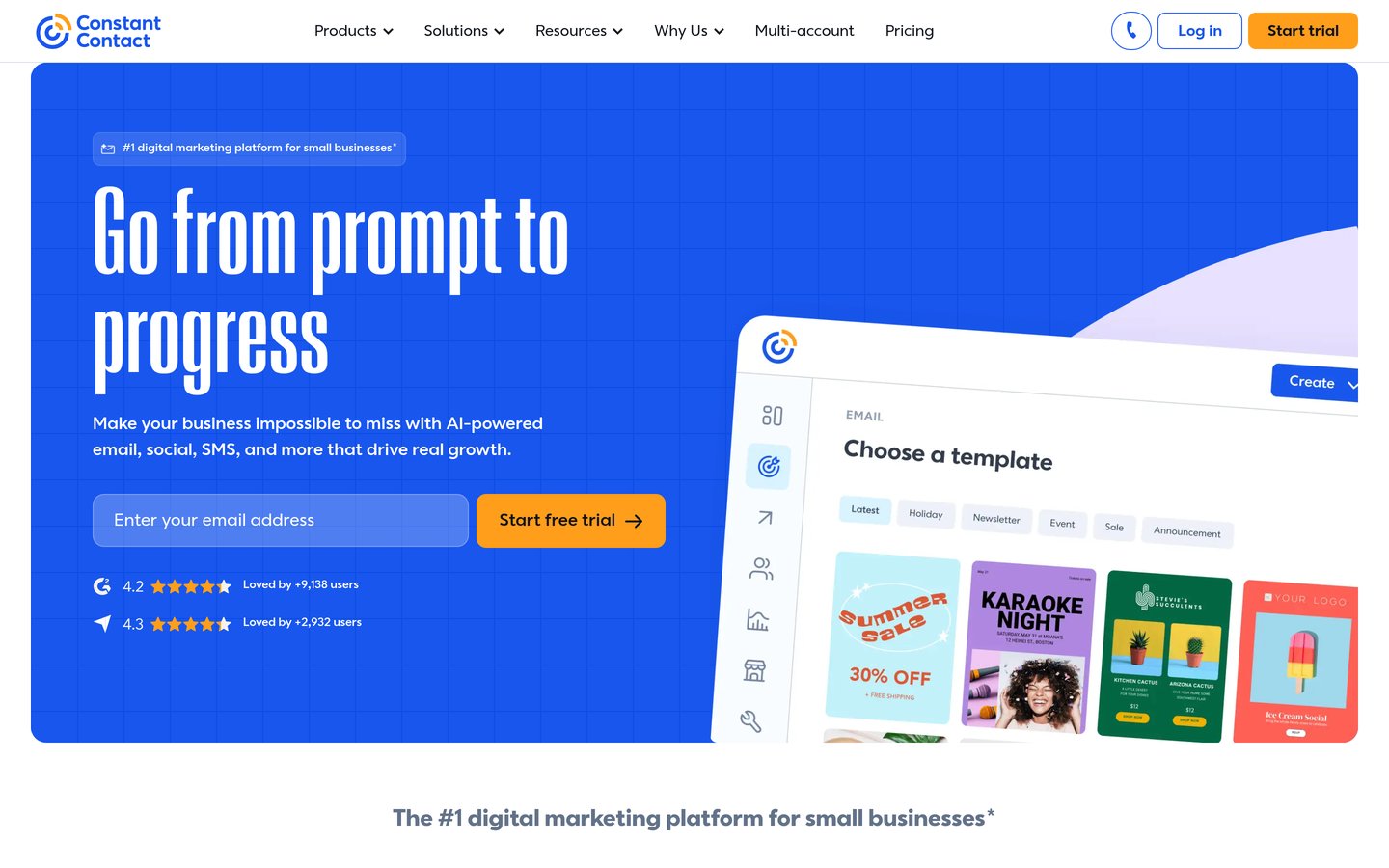
Constant Contact homepage, captured Nov 2026.
Constant Contact is an email marketing platform for building subscriber audiences and distributing campaigns. Lite starts at a regular monthly price equivalent to $12, while annual billing reduces the displayed rate to $10.20 monthly. The entry subscription includes a drag-and-drop email editor, AI copy generation, templates and basic social media marketing tools.
The trade off is that more advanced marketing automation requires Standard, listed at $29.75 monthly on annual billing, while contact volume and email sending affect pricing. The platform is also less focused on B2B account targeting than outbound prospecting tools. It suits smaller marketing teams prioritizing recurring email campaigns and audience engagement.
What we like
Straightforward email campaign builder
AI-assisted email copy and templates
Social media marketing features
Affordable entry subscription
Higher plans provide expanded automation
Watch out for
Advanced automation requires higher plans
Pricing depends on contacts and email volume
Limited native B2B prospecting functionality
Lite provides email and social campaign tools; Standard adds expanded automated marketing.Visit constantcontact.com
08
Leadpages
4.3/5on G2 (232 reviews, checked Nov 2026)
Starts at$49/mo
Best for lead capture pages and offers
Entry paid planBusiness
Published pages50
Custom domains2
A/B testingGrow plan
leadpages.com
Leadpages homepage, captured Nov 2026.
Leadpages is a landing page and conversion platform for marketers capturing inquiries, registrations and subscribers. Business costs $49 monthly and includes 50 pages, 2 custom domains, 10 GB storage, analytics exports and 20,000 monthly AI credits. Its tools support campaign pages, lead capture and publishing without a custom development workflow.
The trade off is that A/B testing, unlimited pages and more advanced conversion features require Grow at $99 monthly. The entry plan also does not replace a dedicated marketing automation system for nurturing captured leads. It suits small businesses and marketers who need campaign-specific landing pages connected to their existing sales process.
What we like
Landing page creation and publishing
Lead capture and conversion-oriented features
Custom domain support
Analytics and UTM reporting
Higher tiers add testing and personalization
Watch out for
A/B testing requires Grow
Business limits the number of pages
Full email nurturing requires additional software
Business provides publishing and analytics; Grow adds A/B testing, personalization and unlimited pages.Visit leadpages.com
Inbound vs outbound demand generation software
Inbound demand generation attracts prospective buyers through helpful content, search visibility, educational campaigns, webinars and landing pages. HubSpot Marketing Hub, GetResponse and EngageBay offer tools for collecting and nurturing this interest.
Outbound demand generation identifies suitable prospects and initiates relevant conversations. Instantly and lemlist are more appropriate when teams rely on targeted email campaigns and coordinated sales outreach.
Conversion-focused platforms such as Unbounce and Leadpages address another part of the process: turning campaign traffic into identifiable leads. They are useful additions but do not replace CRM records or long-term nurturing.
Businesses with longer sales cycles may need a combination of these approaches. Match the software to the stage where your current process loses the most opportunities.
Which demand generation metrics should you track?
Start with the number of qualified inquiries and the percentage progressing into sales conversations. Raw lead counts can be misleading when campaigns attract people who do not match your target customer profile.
Track landing page conversion rates, campaign engagement, lead-to-opportunity conversion and the contribution of different acquisition channels. Outbound campaigns also benefit from monitoring valid replies and qualified meetings rather than email volume alone.
Connect marketing activities to CRM opportunity records whenever possible. This helps distinguish campaigns that generate attention from those that contribute to measurable pipeline and revenue.
Compare reporting capabilities before subscribing. Some entry plans offer basic campaign analytics but reserve advanced attribution, journey reporting or experimentation for higher tiers.
How we chose
We selected established software products covering the primary stages of demand generation: attracting audiences, capturing leads, researching prospects, automating outreach, nurturing contacts and improving landing page conversions. The shortlist includes connected marketing platforms, outbound engagement tools and specialized conversion software, with G2 customer feedback used to assess market adoption.
Official product pricing pages and G2 review listings were checked using the requested 22 November 2026 reference date. Prices represent the lowest verifiable regular paid plan, expressed as an annual equivalent where appropriate, while advertised introductory promotions are excluded from the price comparison.
We excluded platforms without a verifiable flat paid entry plan, products with insufficient public reviews and enterprise-only vendors that did not publish comparable prices. Contact, credit, traffic and email limits were considered because these can change the practical cost of a campaign. No vendor paid for a place, and we do not claim testing for this list.
How to choose demand generation software
Identify your most important acquisition channel, then compare platforms against the complete journey from audience interest to qualified sales opportunities.
Define your demand generation strategy. Determine whether your primary objective is attracting inbound traffic, collecting website leads, developing an email audience or reaching target accounts through outbound campaigns. This decision narrows the software category before you compare individual products.
Check lead capture and nurturing capabilities. Look for forms, landing pages, contact segmentation, automated follow-ups and CRM integrations. Confirm that the entry plan supports the workflows you actually need rather than assuming every advertised feature is available at the lowest price.
Evaluate reporting and sales alignment. Choose tools that measure meaningful outcomes such as qualified inquiries, campaign conversions and sales opportunities. If your team has an existing CRM, verify how contact activity and campaign attribution transfer between systems.
Calculate the total recurring cost. Add contact tiers, user seats, email volume, enrichment credits, traffic limits and required upgrades to the base subscription. A lower entry price may be less economical when essential automation or campaign capacity requires additional purchases.
FAQ
What is the best demand generation software?
HubSpot Marketing Hub is our overall pick because it connects lead capture, email campaigns, advertising and CRM records. Its free tools support small teams, while Starter has a regular price of $20 per seat monthly. EngageBay is a lower-cost alternative, and GetResponse is well suited to email-led nurturing.
What is demand generation software used for?
Demand generation software helps businesses build awareness, attract relevant audiences, collect inquiries and nurture interest before a purchase decision. Depending on the platform, it can include email campaigns, landing pages, prospect databases, marketing automation, CRM integrations and reporting. Its broader purpose is creating qualified sales opportunities rather than simply increasing lead counts.
What is the difference between demand generation and lead generation?
Demand generation builds market awareness and interest across the buyer journey, including audiences that are not ready to provide contact information. Lead generation focuses on capturing identifiable prospects through forms, registrations or outreach. Lead generation is often one component of a larger demand generation strategy.
Is there free demand generation software?
Yes. HubSpot Marketing Hub provides free marketing tools for up to 2 users, while EngageBay offers a free plan supporting 250 contacts. These are useful starting points for collecting and organizing inquiries. More advanced automation, larger contact allowances and specialized prospecting capabilities generally require paid plans.
Which demand generation software is best for B2B companies?
HubSpot Marketing Hub is a strong option when B2B marketing and sales teams need shared contact records and connected campaigns. lemlist and Instantly are more suitable for outbound-focused teams approaching specific prospects. The right choice depends on whether demand primarily comes from inbound content, outbound prospecting or both.
How much does demand generation software cost?
Entry subscriptions vary considerably. Constant Contact Lite has a regular monthly equivalent of $12, GetResponse Starter costs $19 monthly, and Instantly Outreach Growth costs $47 monthly. Larger marketing automation platforms can cost substantially more. Budget separately for contact volume, additional seats, prospecting credits and advanced reporting.
Can demand generation software replace a CRM?
Some platforms combine marketing and CRM capabilities, including HubSpot Marketing Hub and EngageBay. Others focus on specific activities such as outbound email or landing page conversion and work alongside a CRM. Before replacing an existing system, check contact records, opportunity tracking, sales workflows, reporting and integration requirements.
What is the best software for outbound demand generation?
lemlist and Instantly are established options for outbound email campaigns. lemlist combines a large B2B lead database, enrichment and personalized outreach, while Instantly emphasizes sender management, email warm-up and campaign volume. Both require attention to contact quality, permission requirements and email deliverability.
How do you measure demand generation software ROI?
Compare subscription and campaign expenses against qualified opportunities and revenue attributed to your marketing activities. Useful supporting metrics include lead-to-opportunity conversion, landing page conversion and qualified meeting rates. CRM-connected reporting provides a clearer picture than relying exclusively on website traffic, email opens or raw inquiry totals.