Supabase is the best database software for consistent performance across typical relational applications, offering managed PostgreSQL with configurable compute and paid plans starting at $25/month. Choose MongoDB Atlas for flexible document workloads or Redis Cloud for latency-sensitive caching and real-time data access.
How we make this list: we compare pricing pages, product documentation and public user reviews, then re-check every price before each update. No product paid for a place. Disclosure.
Supabase starts at $25/month and offers configurable database compute, storage throughput and IOPS.
MongoDB Atlas offers production-oriented dedicated clusters starting at $56.94/month, with a 4.5/5 G2 rating.
Redis Cloud starts at $5/month, while dedicated Pro deployments have a $200 monthly minimum.
Microsoft SQL Server 2022 offers Standard server licensing at $989 before required client access licenses.
CockroachDB offers a distributed database platform with a published 99.99% availability SLA on its Standard cloud tier.
MySQL has a 4.4/5 G2 rating from 1,686 reviews and supports transactional workloads through InnoDB.
What makes database performance consistent?
Consistent database performance means maintaining predictable query response times as application traffic, concurrent connections and stored data increase. Average query speed alone does not reveal how a database behaves during traffic spikes.
Resource isolation is particularly important for production applications. Dedicated compute, configurable storage throughput and connection pooling reduce the risk of competing workloads creating unexpected latency.
Replication and automatic failover help applications remain available during infrastructure failures. However, replication across distant regions can increase write latency depending on the consistency model.
Evaluate database monitoring, query execution plans, backup procedures and scaling options alongside pricing. An inexpensive database can become costly if maintaining acceptable response times requires frequent infrastructure changes.
The 7 best database software tools for consistent performance
01
Supabase
4.6/5on G2 (242 reviews, checked Nov 2026)
Paid from$25/mo
Best for managed relational database performance
Database enginePostgreSQL
Connection managementBuilt-in pooling
Entry compute1 GB RAM
Paid planPro, $25/month
supabase.com
Supabase homepage, captured Nov 2026.
Supabase is a managed PostgreSQL platform with configurable compute, connection pooling and database monitoring. Its $25 monthly Pro subscription includes $10 in compute credits, covering a Micro instance with 1 GB RAM.
The trade off is that entry-level compute uses shared resources, while larger instances and advanced storage configurations increase costs beyond $25/month. It suits SaaS developers who want relational database control without maintaining their own database servers.
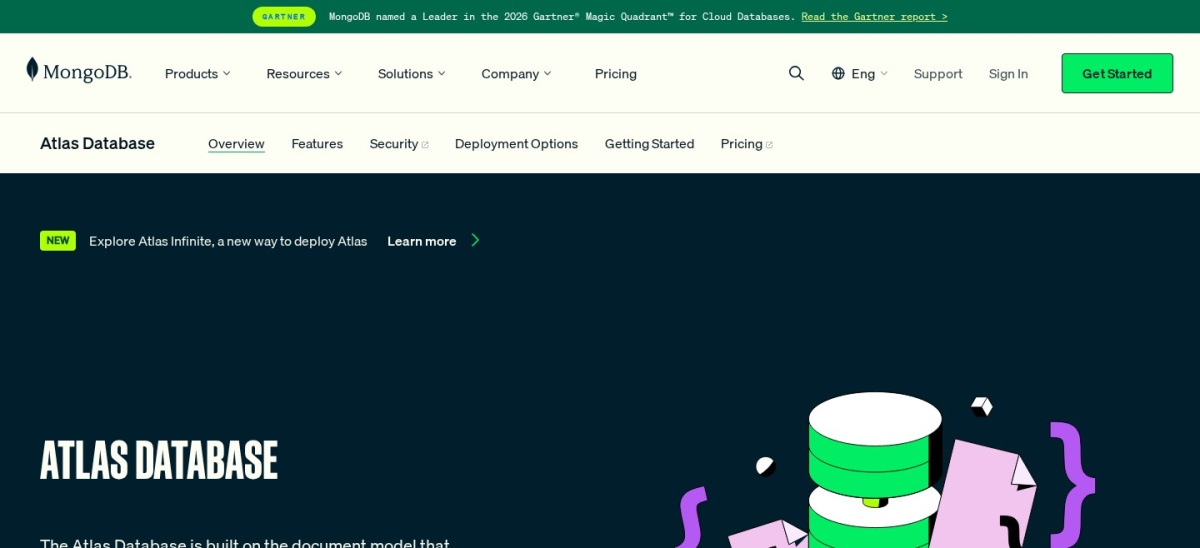
MongoDB Atlas is a managed document database with replication, indexing, monitoring and configurable cluster resources. Its Flex tier starts at $0.011/hour with 5 GB of storage, while dedicated clusters support production workloads requiring greater resource control.
The trade off is that Flex uses shared compute and variable billing capped at $30/month, whereas dedicated clusters start at $56.94/month. It suits applications with evolving data structures and document-oriented access patterns.
Redis Cloud is a managed database designed for fast data retrieval, caching and real-time application operations. Its Essentials tier starts at $5/month, with capacity options beginning at 250 MB.
The trade off is that Essentials uses shared infrastructure, while dedicated Pro deployments require a $200 monthly minimum. It suits teams reducing repetitive database queries, managing sessions or serving latency-sensitive application features.
What we like
Memory-oriented data access
Managed infrastructure
Useful for reducing primary database load
Dedicated deployment options
Watch out for
Memory-intensive workloads can become expensive
Not a general replacement for relational databases
Pro adds dedicated deployments and active-active replication.Visit redis.io
04
Microsoft SQL Server
4.4/5on G2 (2,289 reviews, checked Nov 2026)
Paid from$989 one-time
Best for enterprise transactional databases
Database modelRelational
Query monitoringQuery Store
Free editionExpress
Paid edition2022 Standard server license
microsoft.com
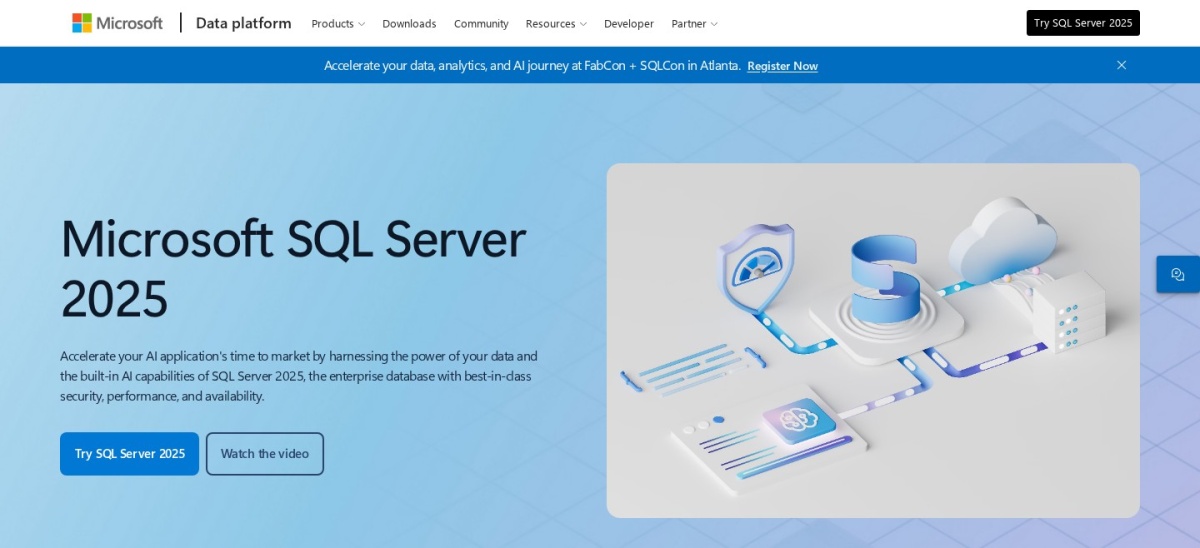
Microsoft SQL Server homepage, captured Nov 2026.
Microsoft SQL Server is a relational database platform for transactional applications, reporting and enterprise data management. Its 2022 Standard server license costs $989, with query monitoring and transaction management capabilities.
The trade off is licensing complexity because the $989 server license requires separately purchased client access licenses. It suits organizations with established SQL Server expertise and business applications requiring detailed database administration.
What we like
Detailed query performance diagnostics
Established transactional database engine
Enterprise administration ecosystem
High-availability deployment options
Watch out for
Client access licensing adds expenses
Requires database administration expertise
Standard adds production capabilities beyond Express limitations.Visit microsoft.com
05
CockroachDB
4.3/5on G2 (29 reviews, checked Nov 2026)
Starts at$203/mo
Best for distributed SQL consistency
Database modelDistributed SQL
Standard availability SLA99.99%
Example compute2 vCPUs
Paid planStandard, estimated $203/month
cockroachlabs.com
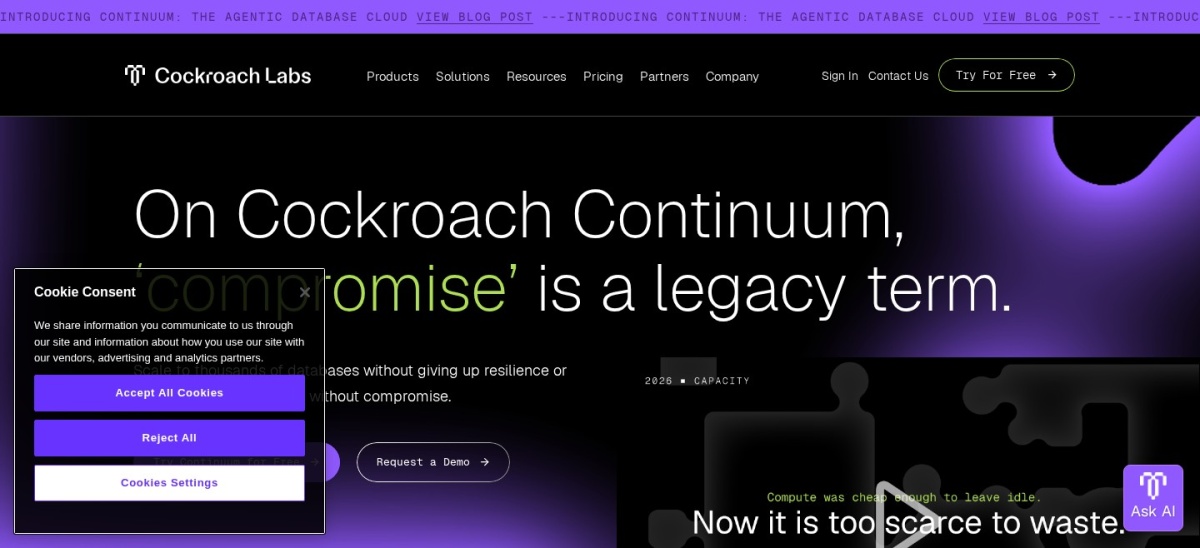
CockroachDB homepage, captured Nov 2026.
CockroachDB is a distributed SQL database designed for resilient transactional applications. Its current Cockroach Continuum Standard cloud offering provides a published $203 monthly configuration example with 2 vCPUs and 100 GB of storage.
The trade off is that $203/month represents an estimated usage configuration rather than a fixed subscription, and distributed transactions can introduce coordination overhead. It suits applications that require transactional consistency and resilience across distributed infrastructure.
What we like
Distributed transactional consistency
Automatic data replication
Multi-region deployment options
PostgreSQL-compatible connectivity
Watch out for
Distributed writes can introduce additional latency
Actual charges depend on resource consumption
Mission Critical adds dedicated infrastructure and higher availability commitments.Visit cockroachlabs.com
06
MySQL
4.4/5on G2 (1,686 reviews, checked Nov 2026)
PricingCustom pricing
Best for established web application workloads
Database modelRelational
Storage engineInnoDB
ReplicationSupported
Paid editionStandard Edition
mysql.com
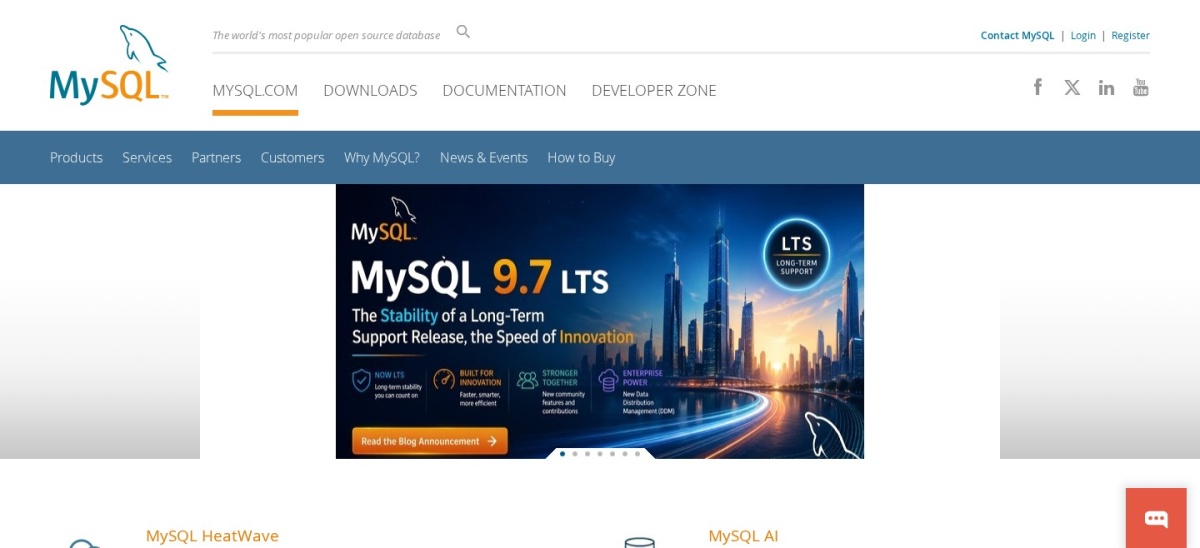
MySQL homepage, captured Nov 2026.
MySQL is a relational database used for web applications, transactional systems and ecommerce platforms. It has a 4.4/5 G2 rating from 1,686 reviews, and its Standard Edition includes InnoDB transaction processing and replication.
The trade off is that consistent performance depends heavily on index design, memory configuration and workload management. Commercial licensing is presented as custom pricing here because an exact regular price was not confirmed from the opened edition page. It suits established web development teams.
What we like
Established developer ecosystem
ACID-compliant InnoDB transactions
Replication for read scaling
Free Community Edition
Watch out for
Self-managed deployments require maintenance
Poorly optimized queries can create bottlenecks
Commercial editions add vendor support and edition-specific capabilities.Visit mysql.com
07
Oracle Database
4.3/5on G2 (1,023 reviews, checked Nov 2026)
PricingCustom pricing
Best for complex enterprise database workloads
Database modelRelational and multimodel
DeploymentCloud or self-managed
Performance managementQuery optimization
Commercial licensingConfiguration dependent
oracle.com
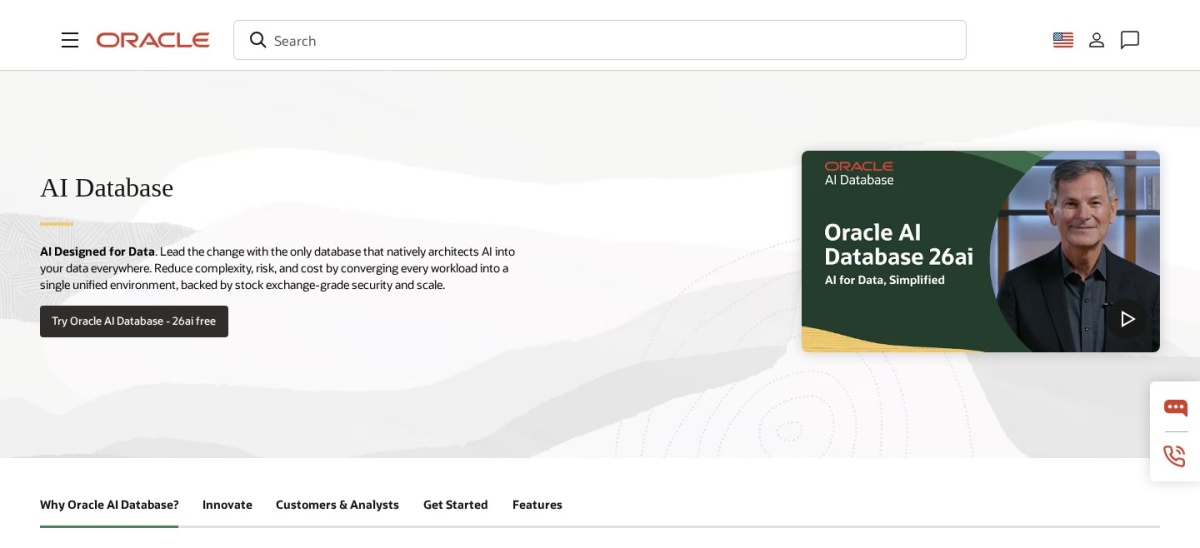
Oracle Database homepage, captured Nov 2026.
Oracle Database is an enterprise database platform supporting transactional processing, analytics and complex data management. It has a 4.3/5 G2 rating from 1,023 reviews and provides deployment options for demanding business applications.
The trade off is that licensing and infrastructure requirements can be complicated, with commercial costs depending on the selected edition and configuration. It suits organizations with experienced database administrators and demanding enterprise workloads.
What we like
Advanced database administration capabilities
Supports complex transactional workloads
High-availability architecture options
Multiple deployment models
Watch out for
Complex licensing requirements
Specialized administration skills are often necessary
Commercial editions add enterprise features according to licensing.Visit oracle.com
Database performance metrics worth monitoring
Monitor tail latency rather than relying exclusively on average response times. Slow queries during peak traffic can affect users even when average database performance appears acceptable.
Track CPU utilization, memory pressure, storage throughput, connection saturation and replication lag. These measurements help identify whether performance variability comes from insufficient resources, inefficient queries or network delays.
Availability commitments do not guarantee query response times. Evaluate latency and throughput separately using representative workloads before selecting a production database configuration.
How we chose
We compared established relational, document, distributed SQL and key-value databases using official product documentation, pricing pages and public G2 reviews. Ranking priorities included resource isolation, monitoring, replication, transactional behavior and scaling flexibility.
Prices and ratings were checked on 25 Nov 2026. Monthly prices were annualized, hourly pricing was calculated for continuous operation, and perpetual licensing was recorded as an initial acquisition cost. Usage-based estimates are not fixed subscriptions. Exact commercial entry prices for MySQL and Oracle Database could not be confirmed from the opened edition pages, so configuration-dependent pricing is shown.
We excluded database administration utilities, discontinued products and platforms without sufficient public review information. Rankings reflect documented capabilities rather than measured latency or independent performance benchmarks. No vendor paid for a place, and we do not claim testing for this list.
How to choose database software for consistent performance
Choose a database by matching its architecture, resource controls and operating costs to your application's performance requirements.
Identify your primary workload. Determine whether your application primarily processes transactions, retrieves documents, serves cached data or performs analytical queries.
Define acceptable latency. Set response-time and throughput targets for normal operations and peak traffic rather than relying on average vendor performance claims.
Compare resource isolation options. Check whether compute, memory and storage throughput are shared or dedicated, and determine how additional capacity affects monthly costs.
Evaluate recovery and monitoring. Review replication, failover, backup restoration and query diagnostics before committing important production workloads.
FAQ
What is the best database software for consistent performance?
Supabase is a strong general choice for managed relational applications because it combines PostgreSQL with configurable compute and connection pooling. MongoDB Atlas is better suited to document workloads, while Redis Cloud specializes in fast data retrieval.
Which database is best for consistently low latency?
Redis Cloud is particularly suitable for latency-sensitive caching and key-value access because it prioritizes fast data retrieval. Actual latency depends on deployment configuration, network distance, memory availability and the complexity of database operations.
Do dedicated database servers improve performance consistency?
Dedicated database resources can reduce competition with unrelated workloads and make capacity planning easier. However, consistent performance still requires appropriate indexes, efficient queries, sufficient memory, suitable storage throughput and effective connection management.
Is PostgreSQL or MySQL better for consistent performance?
Both PostgreSQL and MySQL can deliver predictable transactional performance when configured appropriately. PostgreSQL offers extensive query and data-type capabilities, while MySQL is widely used for established web applications. The workload and deployment configuration matter more than the database name.
Does database replication improve query performance?
Replication can improve read capacity by distributing eligible queries across replicas. It also improves resilience against infrastructure failures. However, synchronous replication can add write latency, while asynchronous replication may introduce delays before updated data becomes visible.
How much does database software for consistent performance cost?
Entry plans in this comparison start at $5/month for Redis Cloud and $25/month for Supabase. Production configurations with dedicated resources, additional storage, replication and advanced support can cost substantially more than their advertised entry plans.
What causes inconsistent database performance?
Common causes include inefficient queries, missing indexes, insufficient memory, connection saturation, storage bottlenecks, resource contention and replication delays. Monitoring these conditions helps teams identify performance problems before increasing infrastructure capacity unnecessarily.
SaaS SEO and WordPress specialist with about 8 years of experience. Rakib compares WordPress plugins, themes, hosting and software using public pricing, documentation and user reviews. See how we rank.