Delphix is the best data masking software for enterprises, combining masking with data virtualization so masked copies arrive in minutes. K2view is the best pick for entity-level consistency, and Tonic suits developers who need realistic test data fast.
How we make this list: we compare pricing pages, product documentation and public user reviews, then re-check every price before each update. No product paid for a place. Disclosure.
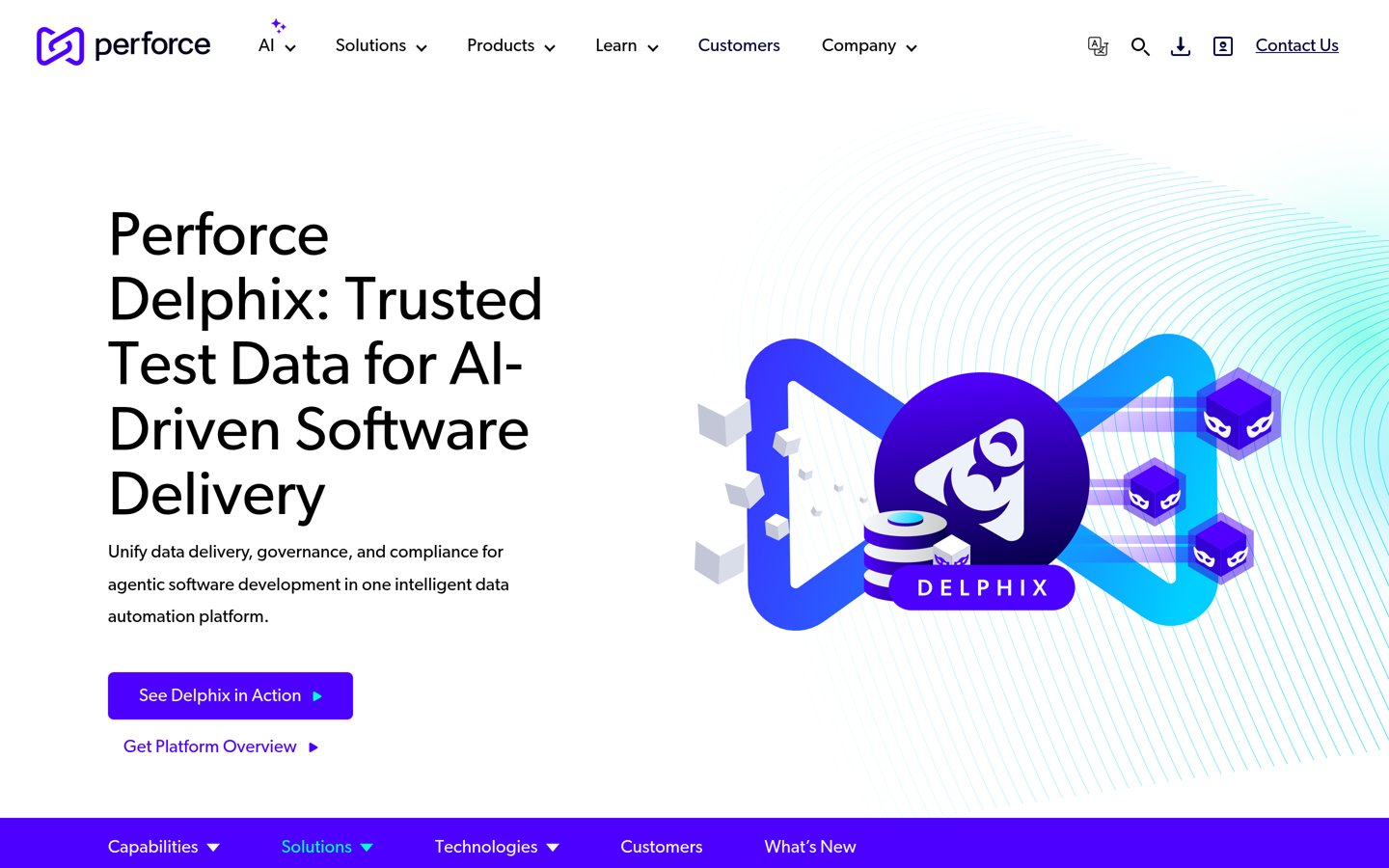
Delphix is the best data masking software for enterprises, combining masking with data virtualization so masked copies arrive in minutes.
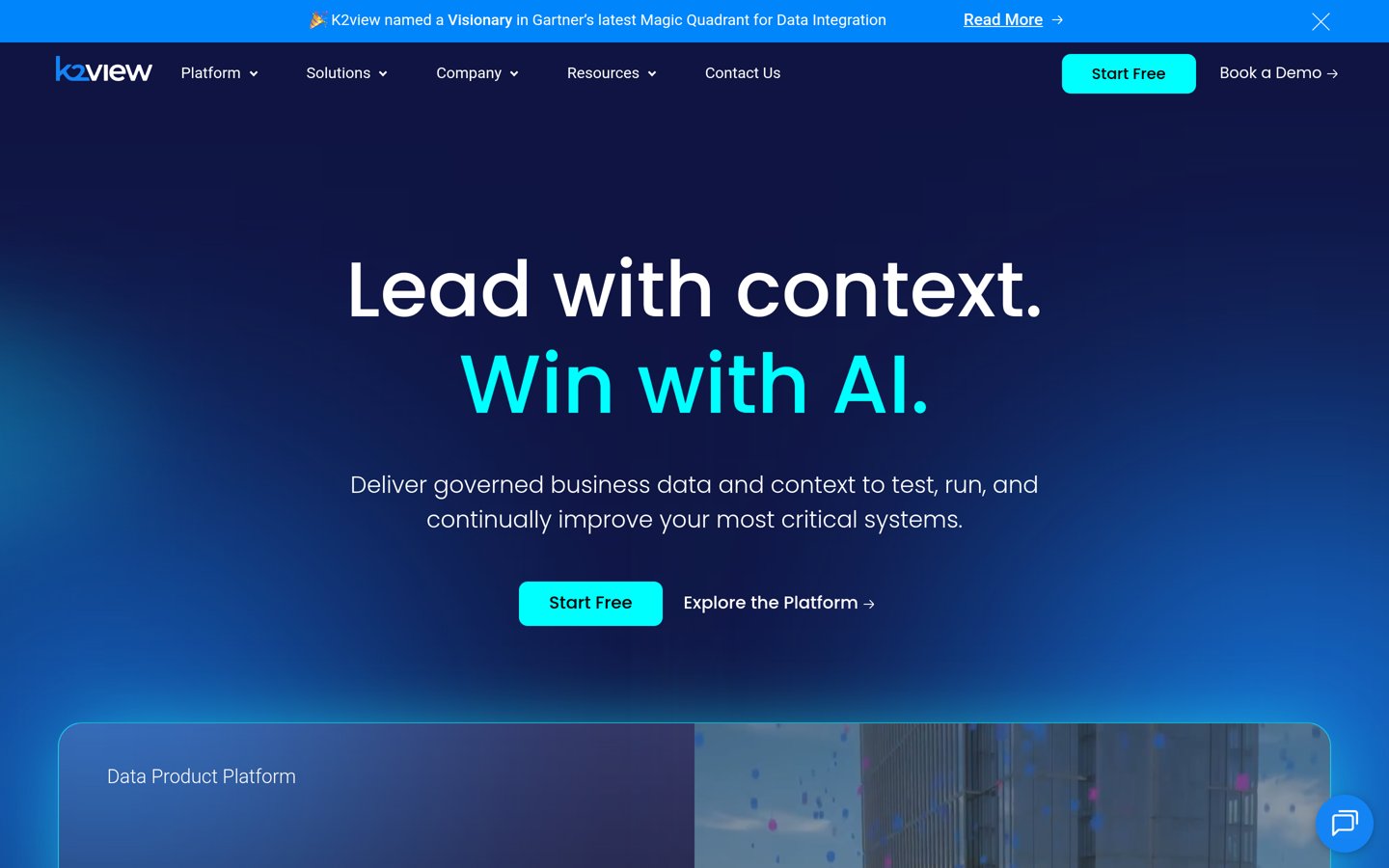
K2view is the best pick for entity-level consistency, masking every record tied to one customer identically across systems, with a 4.6 out of 5 G2 rating from 56 reviews.
Most masking tools are quote-only. Only Redgate publishes a starting price, at $1,495 a year, and that figure rests on November 2026 secondary reads.
Redgate, DATPROF, K2view, IRI and Tonic.ai offer trials you can start without a sales call, while Delphix, Informatica and Immuta start with a demo.
Static masking suits test data, dynamic masking suits live queries. Immuta masks at query time; the rest provision masked copies for development.
What to look for in data masking software
Data masking replaces sensitive values such as names, card numbers and national identifiers with realistic substitutes, so databases can be shared with developers, testers or analysts without exposing real customer data.
Static masking rewrites a copy of the data for test environments, while dynamic masking hides values at query time on live systems. Most teams need static masking for development and dynamic masking for analytics, and only a few tools do both well.
Referential integrity is what separates good masking from broken test data. If the same customer is masked differently in the CRM, the billing system and the warehouse, joins fail and tests lie. Entity-level tools such as K2view mask one person identically everywhere.
Prices are mostly quoted. The enterprise tools publish no list price, and implementations run into months. Our guide to database software covers the databases these tools mask.
Delphix is a data automation platform, now part of Perforce, that combines data masking with data virtualization, so DevOps teams get masked, production-like copies without waiting on manual provisioning. It discovers sensitive data, applies masking that keeps values realistic, and generates audit reports for compliance teams.
The trade off is the buying process. Delphix pricing is quote-based, implementations run into months, and a small team with one database will find it far heavier than necessary. It suits large organisations running a formal test data programme.
K2view is an enterprise data masking platform that masks data at the business-entity level, gathering every record tied to one customer, order or device across systems and masking them together. It covers static, dynamic and in-flight masking from one platform, with reversible pseudonymisation and tokenisation for controlled access.
The trade off is enterprise weight. K2view is built for large estates with complex multi-system data, so a single-database team will find it heavy, and pricing is quoted per engagement. It suits organisations masking linked customer records across mainframes, files and databases.
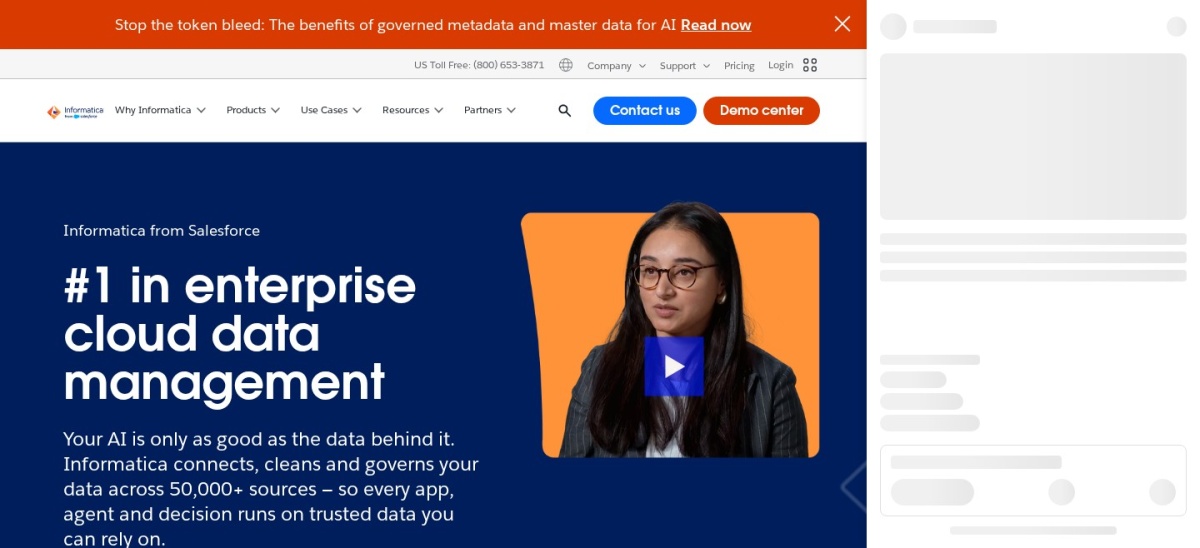
Informatica IDMC is an enterprise data management cloud with built-in Cloud Data Masking that masks sensitive fields for non-production copies using rules for Social Security numbers, credit cards, emails and phone numbers. It pairs with Informatica access governance for dynamic masking down to individual rows and columns.
The trade off is buying friction. Pricing runs on consumption-based Informatica Processing Units with no public rate, and the platform is built for large estates. It suits enterprises already invested in Informatica that need masking beside governance.
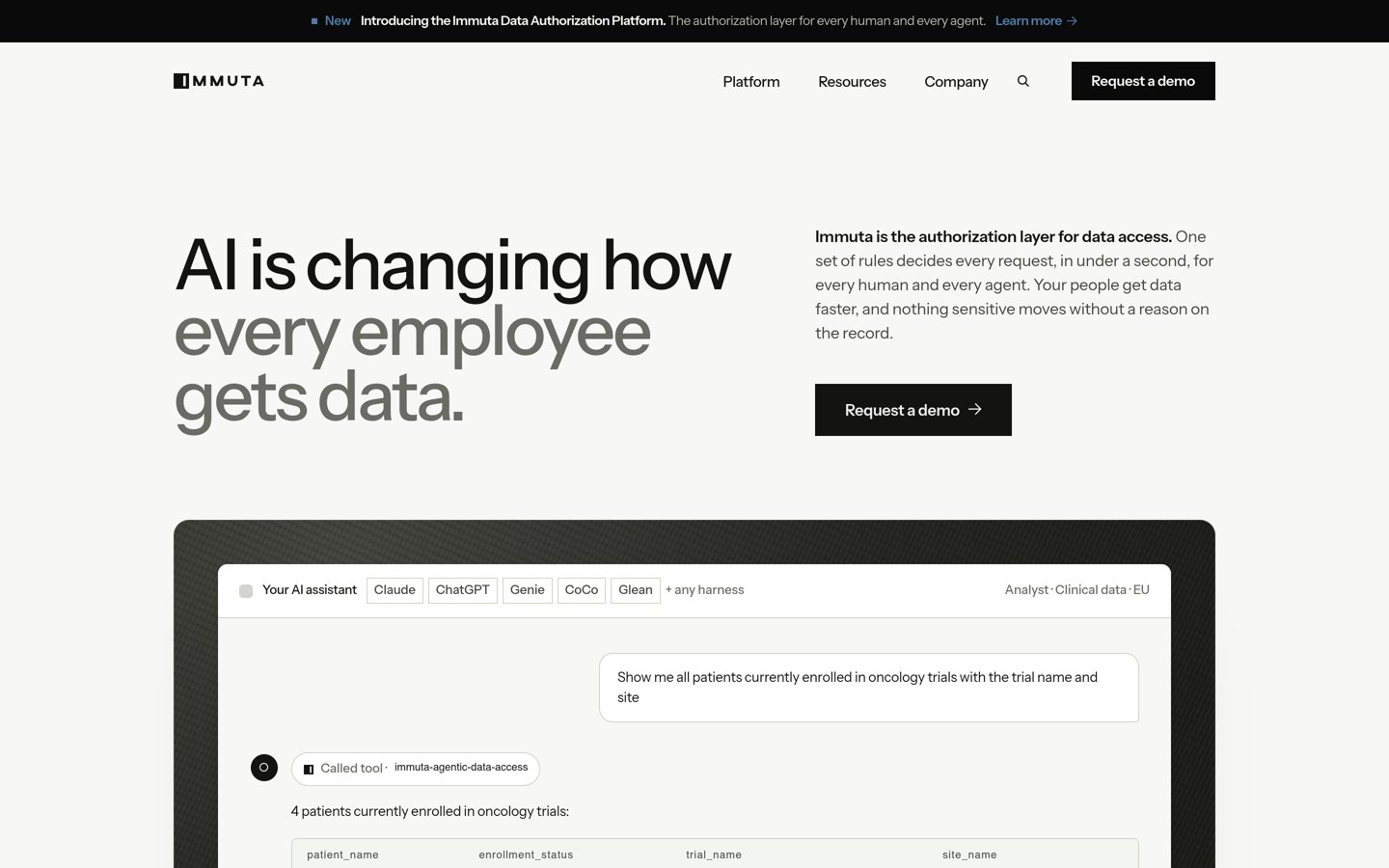
Immuta is the authorisation layer for data access, enforcing dynamic masking natively inside cloud platforms such as Snowflake and Databricks. Policies written once in plain language enforce k-anonymisation, hashing and nulling per user attribute, with no copies and no pipeline rework.
The trade off is scope. Immuta masks at query time on production platforms rather than provisioning masked copies for development, and pricing is quoted. It suits data teams on Snowflake or Databricks that need policy-based access control.
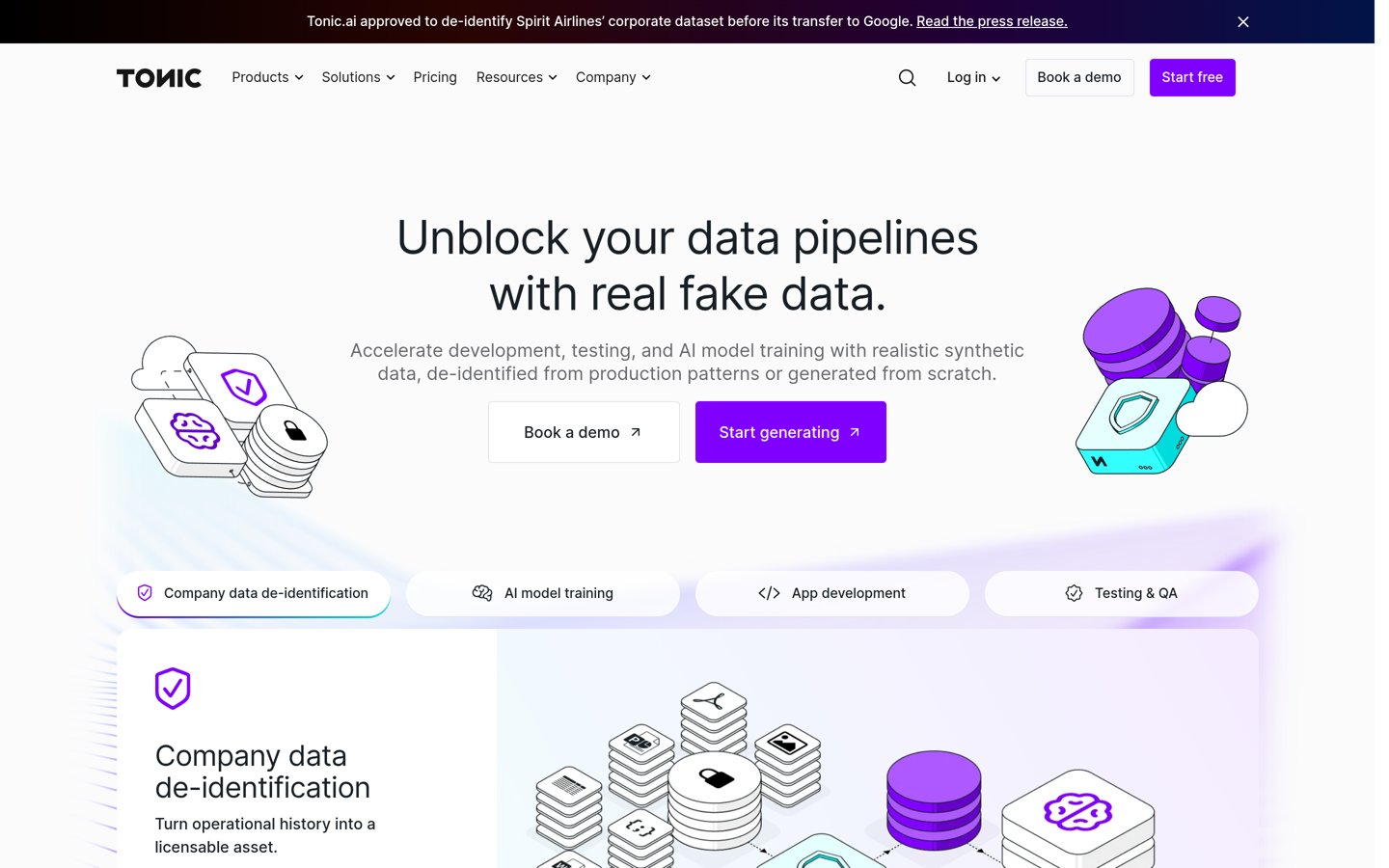
Tonic.ai is a test data platform that builds test data behaving like production, masking sensitive values while keeping the relationships, distributions and formats developers need. Its Fabricate product offers a self-serve tier, and Structural and Textual cover databases, files and unstructured text.
The trade off is pricing clarity. Structural and Textual are priced by data volume or words, and the self-serve tier covers Fabricate only. It suits engineering teams masking several database engines and files under one contract.
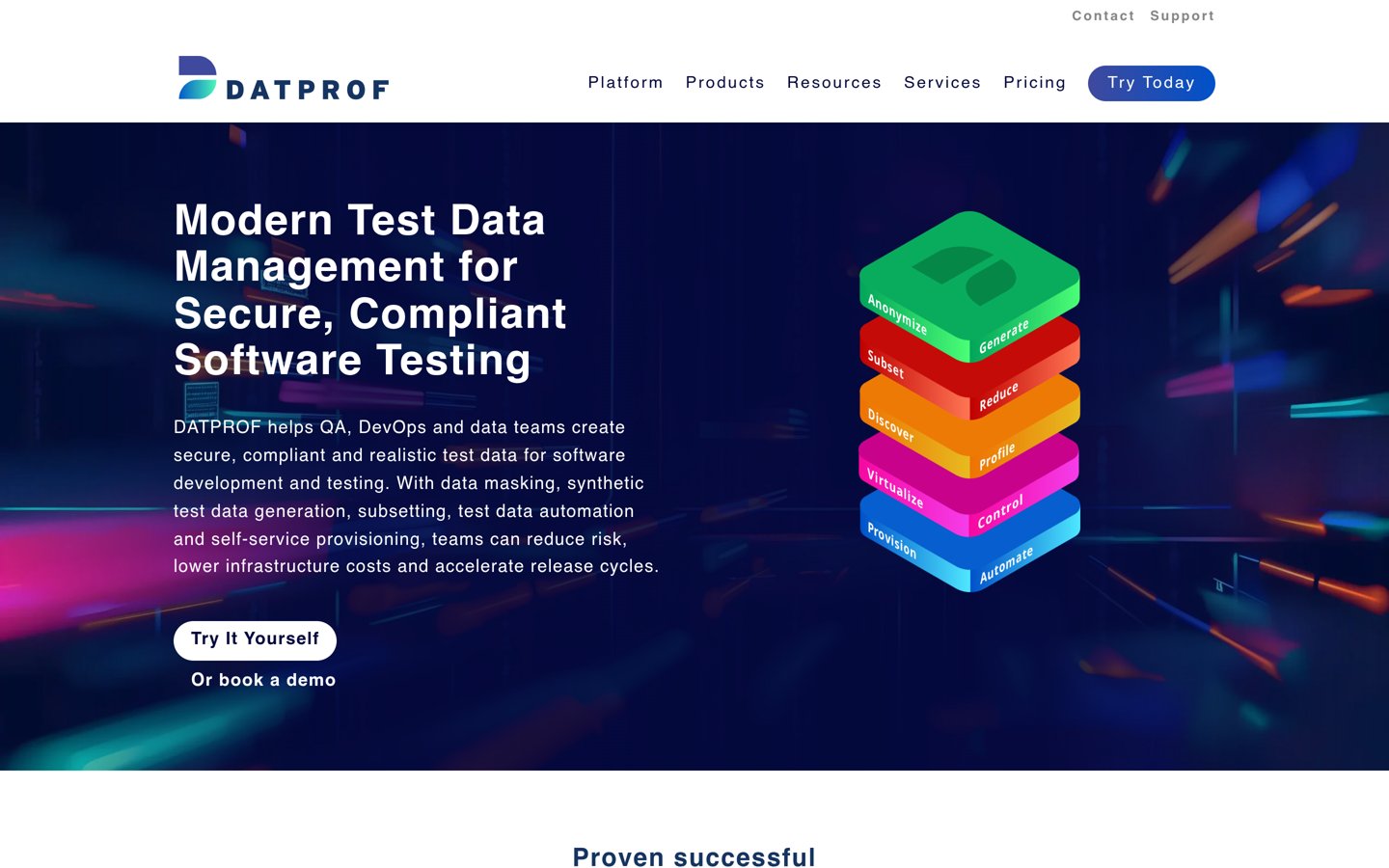
DATPROF is a test data management platform built around masking and subsetting non-production databases, with self-service provisioning and CI/CD integration for development and QA teams. It supports Oracle, SQL Server, DB2, PostgreSQL and MySQL, and its patented subsetting algorithm keeps test sets small and fast.
The trade off is live-query masking. DATPROF masks databases for test and development, not production queries, and licences are modular fixed fees quoted per engagement. It suits test teams that want masking joined to subsetting and a self-service portal.
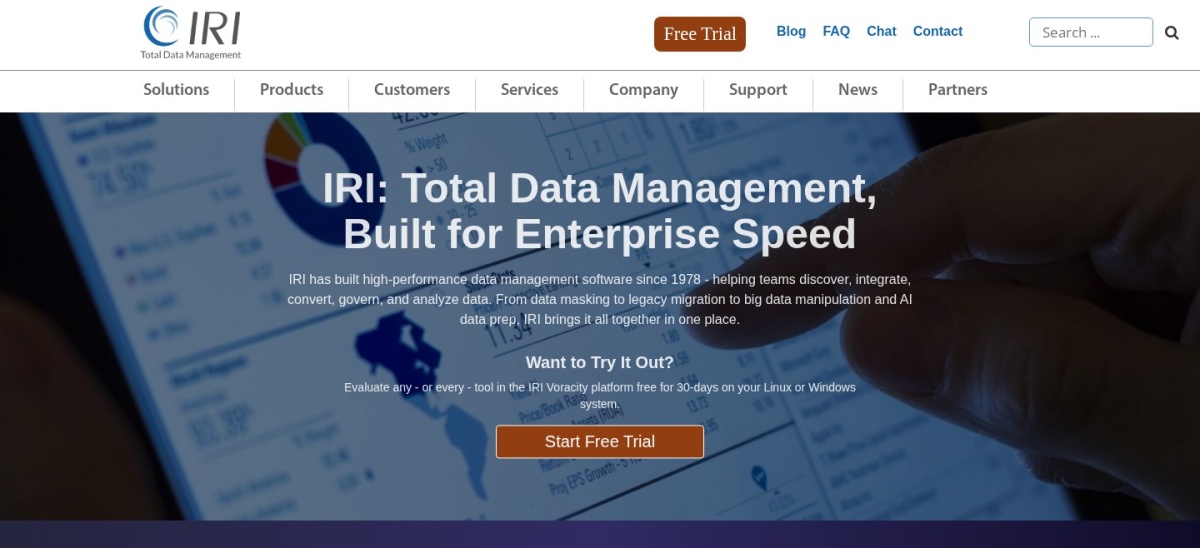
IRI FieldShield is a data discovery and masking package that masks structured and semi-structured data across databases, files, spreadsheets, JSON, XML, mainframe files and cloud storage, designed and run from the Eclipse-based IRI Workbench. It masks data inside ETL jobs and batch workflows, which suits organisations moving large volumes through pipelines.
The trade off is polish. FieldShield is built for speed and volume rather than a modern interface, and its first production licence runs into low five figures. It suits budget-conscious teams masking in existing ETL jobs.
What we like
High-volume masking inside ETL jobs
Covers databases, files and mainframes
Rated 4.5 out of 5 on G2 from 24 reviews
30-day free trial
Watch out for
Dated Eclipse-based interface
First licence in low five figures
First production licence in low five figuresVisit iri.com
08
Redgate Data Masker
3.8/5on G2 (5 reviews, checked Nov 2026)
Starts at$1,495/yr
Best masking for SQL Server teams
MaskingStatic, rule-based
DatabasesSQL Server, Oracle
Pricing$1,495/yr
Free trialYes
red-gate.com
Redgate Data Masker homepage, captured Nov 2026.
Redgate Data Masker is the pragmatic choice for database teams on SQL Server and Oracle. It masks data inside existing workflows, with rule sets you can store, version and rerun as part of a deployment pipeline, and it is the only tool here with a published starting price.
The trade off is breadth. Data Masker covers SQL Server and Oracle well but not the warehouses, files and document stores a general platform handles, and its G2 base is just 5 reviews. It suits database teams wanting scripted, repeatable masking of dev copies.
Static masking rewrites data in a non-production copy. Developers get realistic data that behaves like production, and the original values never leave the secure environment.
Dynamic masking hides values at query time, based on who is asking. Analysts see masked values on live systems without any copy being made.
Pick static masking for test data and dynamic masking for live analytics. Tools such as Immuta do dynamic masking natively, while Delphix, K2view and Tonic.ai provision masked copies.
How we chose
We started from the data masking tools most commonly shortlisted for compliance and test data, then kept the eight with a verifiable G2 or Capterra rating, a live product and masking as a core feature.
Prices come from each vendor's pricing page, checked on 25 November 2026. Where a vendor publishes no price, the list says Custom; the Redgate $1,495 starting price rests on November 2026 secondary reads and is flagged as second-hand.
We left out Oracle Data Masking and IBM InfoSphere Optim, which have no verifiable G2 rating with a review count for their masking product. No vendor paid for a place, and we do not claim hands-on testing for this list.
How to choose data masking software
Start with where the masked data will be used — test copies or live queries — then check referential integrity.
Name the use case. Test data needs static masking and subsetting; live analytics needs dynamic masking. The use case picks the tool class.
Demand referential integrity. Ask the vendor to show one customer masked identically across two systems. If joins break, the test data is useless.
Start with a trial. Redgate, DATPROF, K2view, IRI and Tonic.ai offer trials you can start without a sales call. Prove the masking depth before talking to enterprise sales.
Budget for implementation. Enterprise tools take months to roll out. See our database software guide for the databases you will mask.
FAQ
What is the best data masking software?
Delphix is the best data masking software for enterprises, combining masking with data virtualization so masked copies arrive in minutes. K2view is the best pick for entity-level consistency, with a 4.6 out of 5 G2 rating from 56 reviews.
What is data masking?
Data masking replaces sensitive values such as names, card numbers and national identifiers with realistic substitutes. It lets teams share databases with developers, testers and analysts without exposing real customer data, and it supports GDPR, HIPAA and PCI DSS compliance.
How much does data masking software cost?
Most data masking tools are quote-only, with enterprise implementations running into months. Redgate Data Masker publishes a starting price of $1,495 a year, though that figure rests on secondary reads, and IRI FieldShield licences start in the low five figures.
What is the difference between static and dynamic masking?
Static masking rewrites data in a non-production copy, so developers get realistic test data. Dynamic masking hides values at query time on live systems, based on who is asking, without making a copy.
Is there free data masking software?
Yes, for small jobs. Open-source tools such as ARX Data Anonymization anonymise extracts free of charge, and IRI offers a free starter edition. The enterprise tools in this list start with a trial or a sales quote instead.
Does data masking keep data realistic?
Yes, when it is done well. Good masking preserves formats, distributions and relationships, so masked data behaves like production in tests. Deterministic masking keeps the same input masked the same way every time, which preserves joins.
SaaS SEO and WordPress specialist with about 8 years of experience. Rakib compares WordPress plugins, themes, hosting and software using public pricing, documentation and user reviews. See how we rank.