Health Catalyst is the best data management platform for healthcare for large health systems, with a governed data model and outcomes-improvement services. InterSystems IRIS for Health is the best interoperability pick, while Snowflake suits data teams building a governed healthcare data cloud.
How we make this list: we compare pricing pages, product documentation and public user reviews, then re-check every price before each update. No product paid for a place. Disclosure.
Health Catalyst is the top pick for large health systems, with a governed healthcare data model and outcomes-improvement services — but it publishes no price and its G2 base is just 2 reviews.
InterSystems IRIS for Health is the best interoperability pick, with native HL7 and FHIR support and a 4.6 out of 5 G2 rating from 31 reviews.
No healthcare-native vendor publishes a list price, so budget for a sales-led quote, an implementation project and a multi-year contract.
Snowflake, Databricks and BigQuery publish usage rates — $2 per credit, $0.15 per DBU and $6.25 per TiB — for teams that build their own healthcare data cloud.
Every platform here signs a HIPAA Business Associate Agreement, but confirm BAA coverage and FHIR depth for your own sources before signing.
What to look for in healthcare data platforms
Healthcare data lives in EHRs, claims systems, labs, imaging and finance tools that were never designed to work together. A data management platform pulls those sources into one governed model so clinicians, analysts and payers work from the same numbers.
HIPAA changes the buying rules. Every platform here must sign a Business Associate Agreement, and data residency, audit trails and de-identification matter as much as query speed. Ask for the BAA before the demo.
FHIR is the standard that decides how well a platform exchanges data. InterSystems, Fabric and BigQuery ingest FHIR natively, while the healthcare-native suites add clinical models and content on top. Our guide to database software covers the warehouses these platforms run on.
Prices are mostly quoted. The healthcare-native vendors publish no list price, and third-party reports put large-system deals at $150,000 to $500,000 a year or more. The general cloud platforms publish usage rates instead.
The 8 best data management platforms for healthcare
01
Health Catalyst
5/5on G2 (2 reviews, checked Nov 2026)
PricingCustom/yr
Best platform for large health systems
PlatformIgnite data ecosystem
Data modelHealthcare-specific
PricingQuote only
ServicesOutcomes improvement
healthcatalyst.com
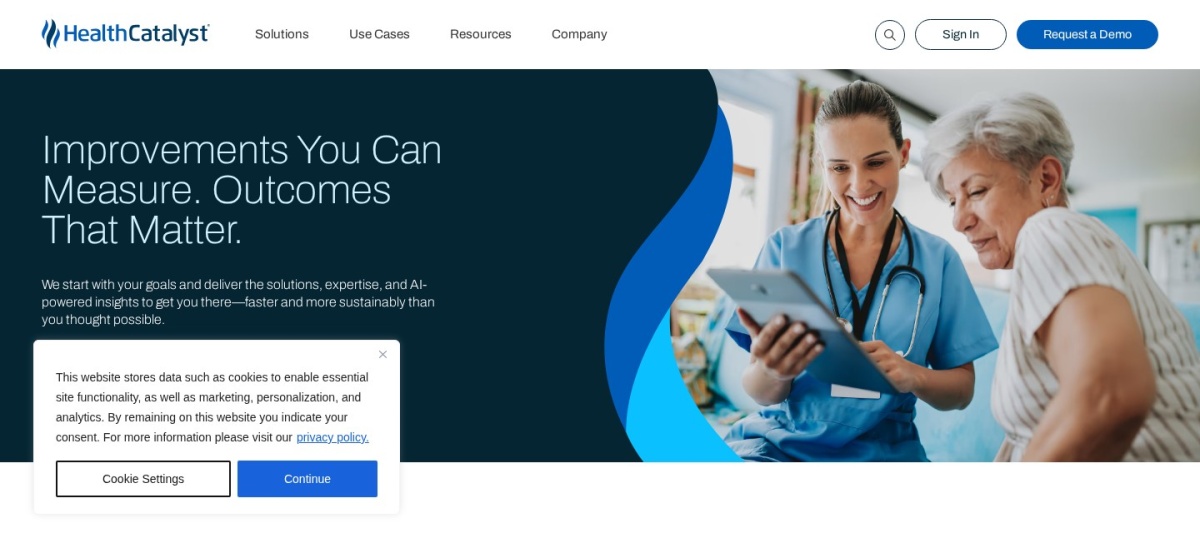
Health Catalyst homepage, captured Nov 2026.
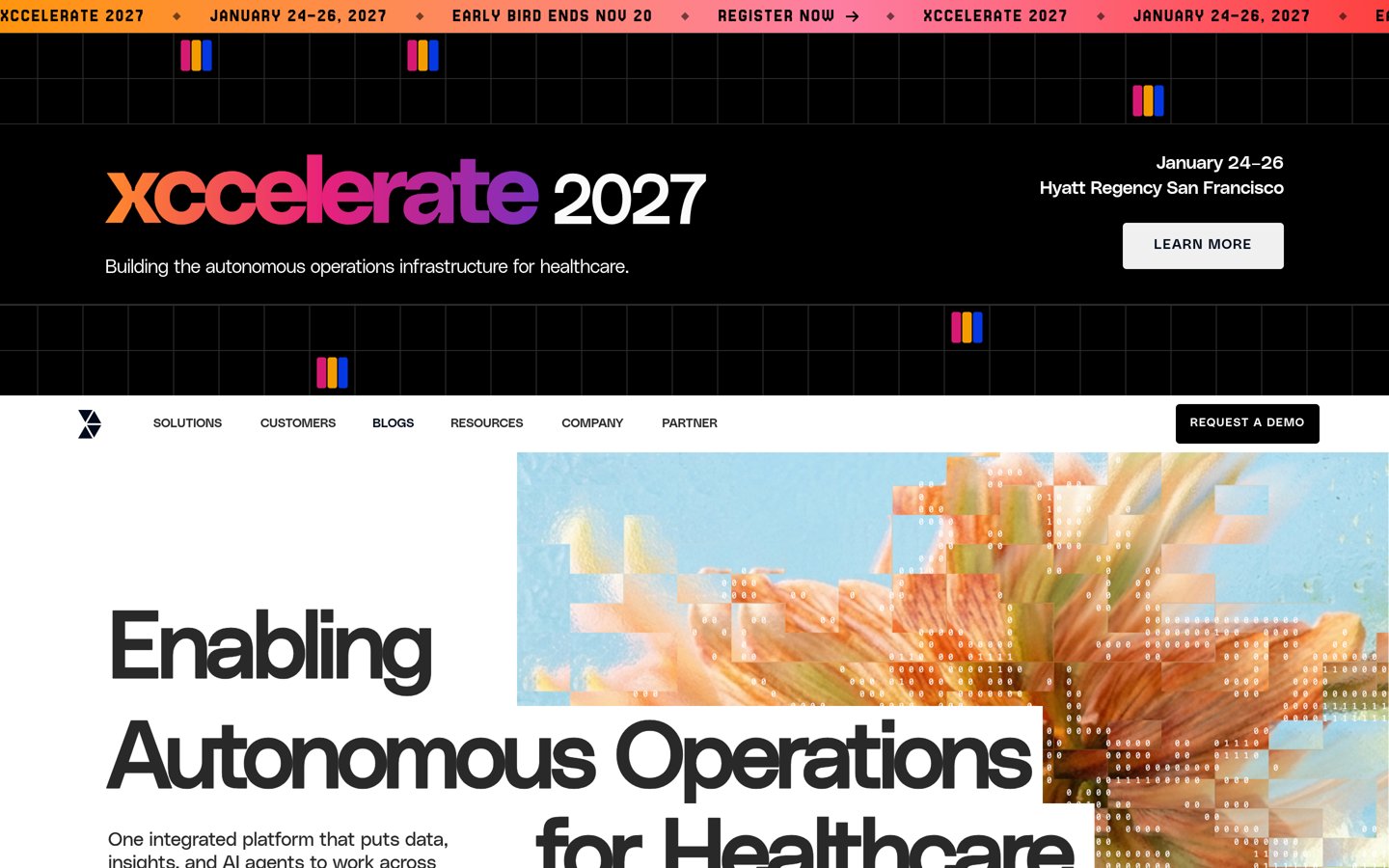
Health Catalyst is a healthcare-only data platform that combines a governed data model with analytics applications for quality, cost and operations. Its Ignite ecosystem brings EHR, claims and financial data into one model, and its services team runs improvement programmes on top of the platform.
The trade off is cost and commitment. Health Catalyst publishes no price, third-party reports put large-system subscriptions at $500,000 or more a year, and implementations are long services-led projects. It suits large health systems with dedicated analytics staff.
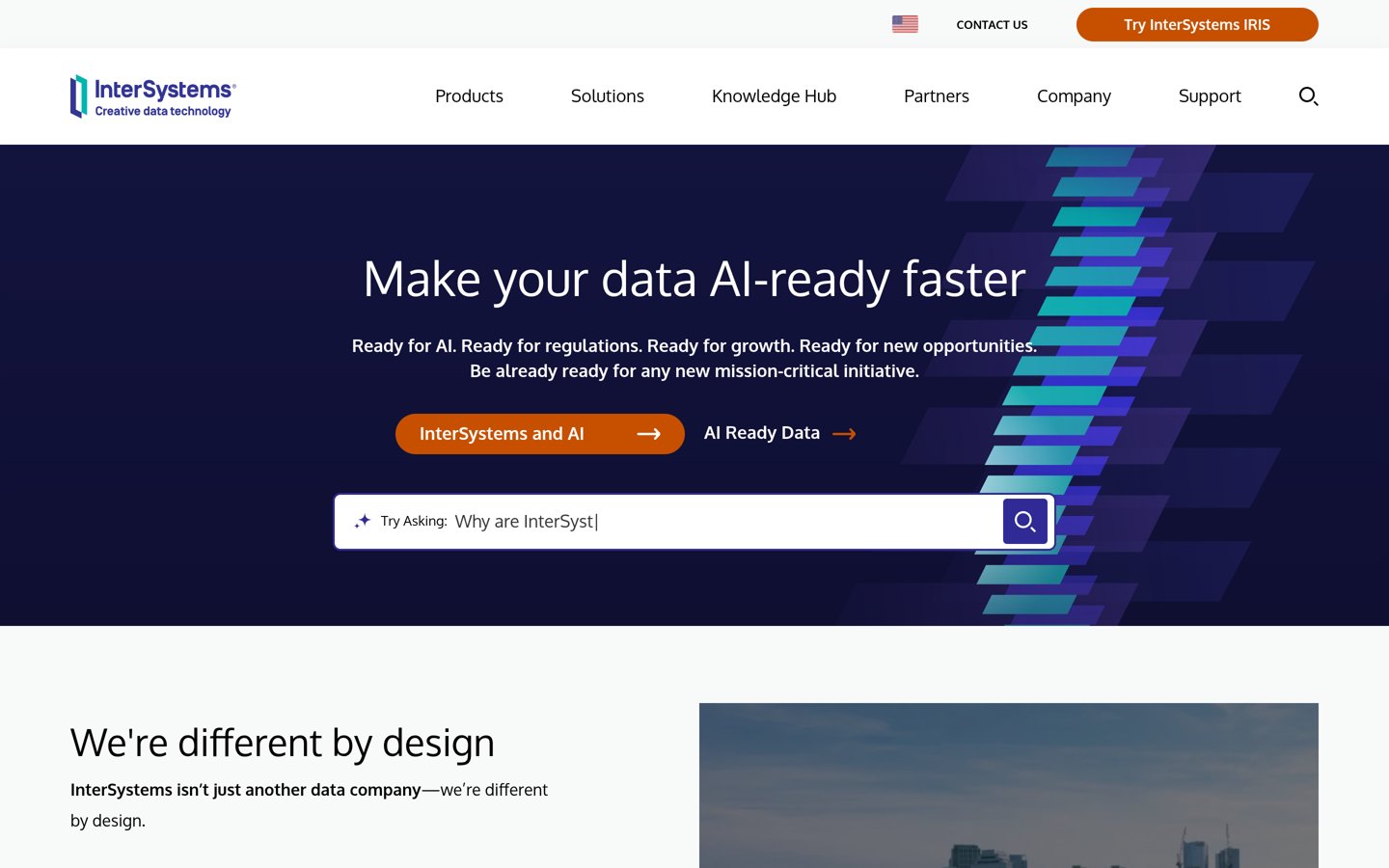
InterSystems IRIS for Health homepage, captured Nov 2026.
InterSystems IRIS for Health is a data platform built for healthcare interoperability, combining integration, a FHIR repository and analytics in one product. It connects to any EHR, exchanges HL7 and FHIR data, and runs in the cloud or on premises.
The trade off is the learning curve. Reviewers praise the integration engine but warn that developers new to the InterSystems ecosystem face a steep climb, and ObjectScript knowledge helps. It suits integration teams that need standards-based exchange at scale.
Innovaccer is a healthcare data platform that unifies clinical, claims and operational data into a single patient view. Its Data Activation Platform powers population health analytics, care management and AI assistants for provider networks and payers.
The trade off is transparency. Innovaccer publishes no price, charges per member per month, and public review data is thin, with one Capterra review and no G2 rating shown. It suits accountable care groups and payers managing populations.
Snowflake is a cloud data platform with a dedicated Healthcare and Life Sciences Data Cloud, prebuilt models for member, provider, claims and clinical 360 views, and data sharing with labs, registries and life sciences partners. Cortex AI runs LLM inference inside the warehouse.
The trade off is that it is a general platform, not a healthcare suite. You build the clinical data model yourself, and HIPAA workloads need the Business Critical edition at $4 per credit. It suits data teams that want a governed cloud with healthcare content.
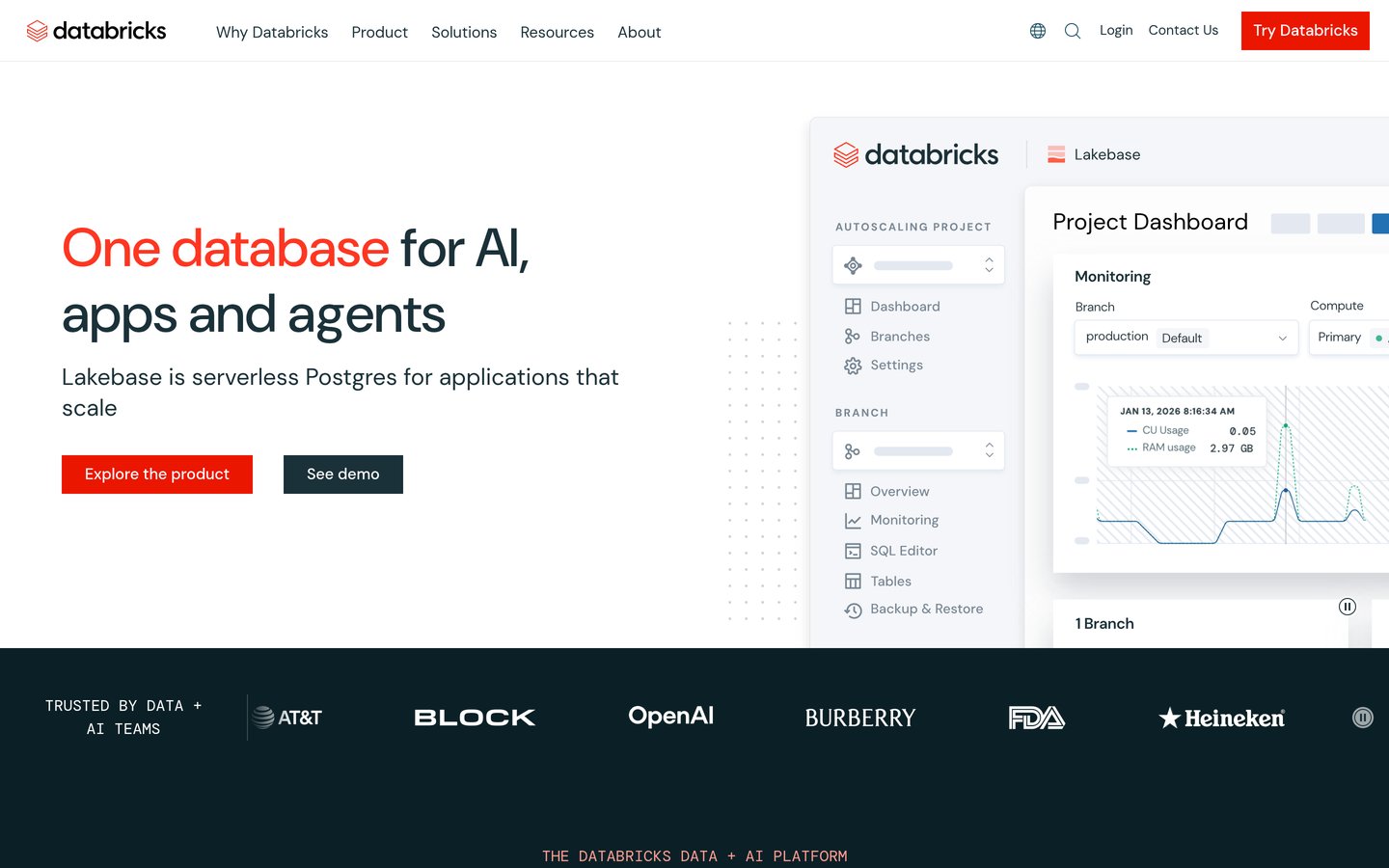
Databricks is a lakehouse platform with healthcare and life sciences accelerators for claims analytics, patient-level prediction and clinical NLP. It handles real-world data, genomics and imaging at scale, with Mosaic AI under Unity Catalog governance.
The trade off is build effort. Databricks is a general platform, so healthcare models and governance are assembled by your team, and usage rates vary by workload. It suits health and life sciences teams running analytics and AI at scale.
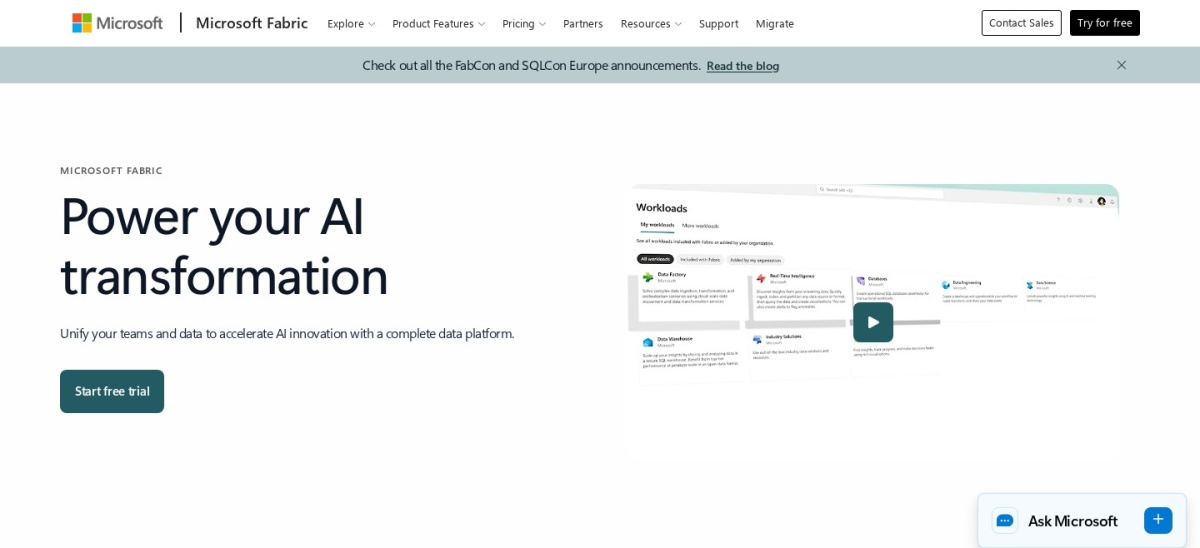
Microsoft Fabric is a unified analytics platform, and Microsoft Cloud for Healthcare adds HIPAA-aligned BAAs, FHIR ingestion and prebuilt models for population health, claims and EHR data on top. It suits organisations already running Epic on Azure or deep in Microsoft 365.
The trade off is capacity pricing. Fabric starts at $262.80 a month for the smallest capacity, and healthcare features ride on top of the platform. It suits Microsoft-aligned health systems that want one analytics surface.
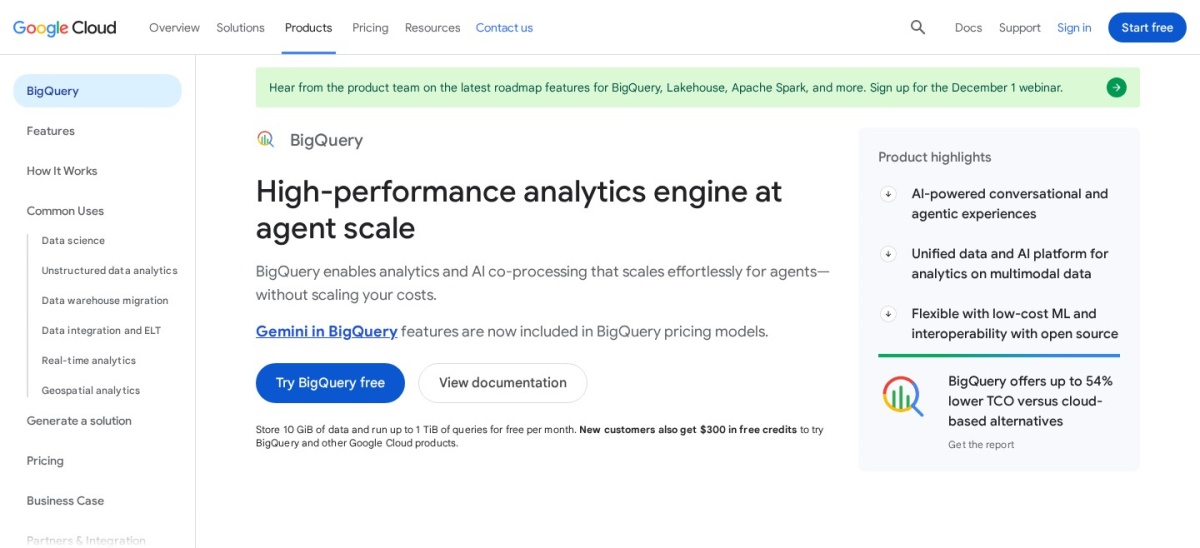
Google BigQuery is a serverless data warehouse with a Cloud Healthcare API for FHIR, HL7v2 and DICOM data, and strong support for research workloads such as OMOP and genomics. It suits academic medical centres and digital health teams that query petabytes without managing servers.
The trade off is that it is a warehouse, not a care platform. You assemble the clinical data model, governance and apps yourself, and on-demand queries cost $6.25 per TiB scanned. It suits research teams and digital health builders.
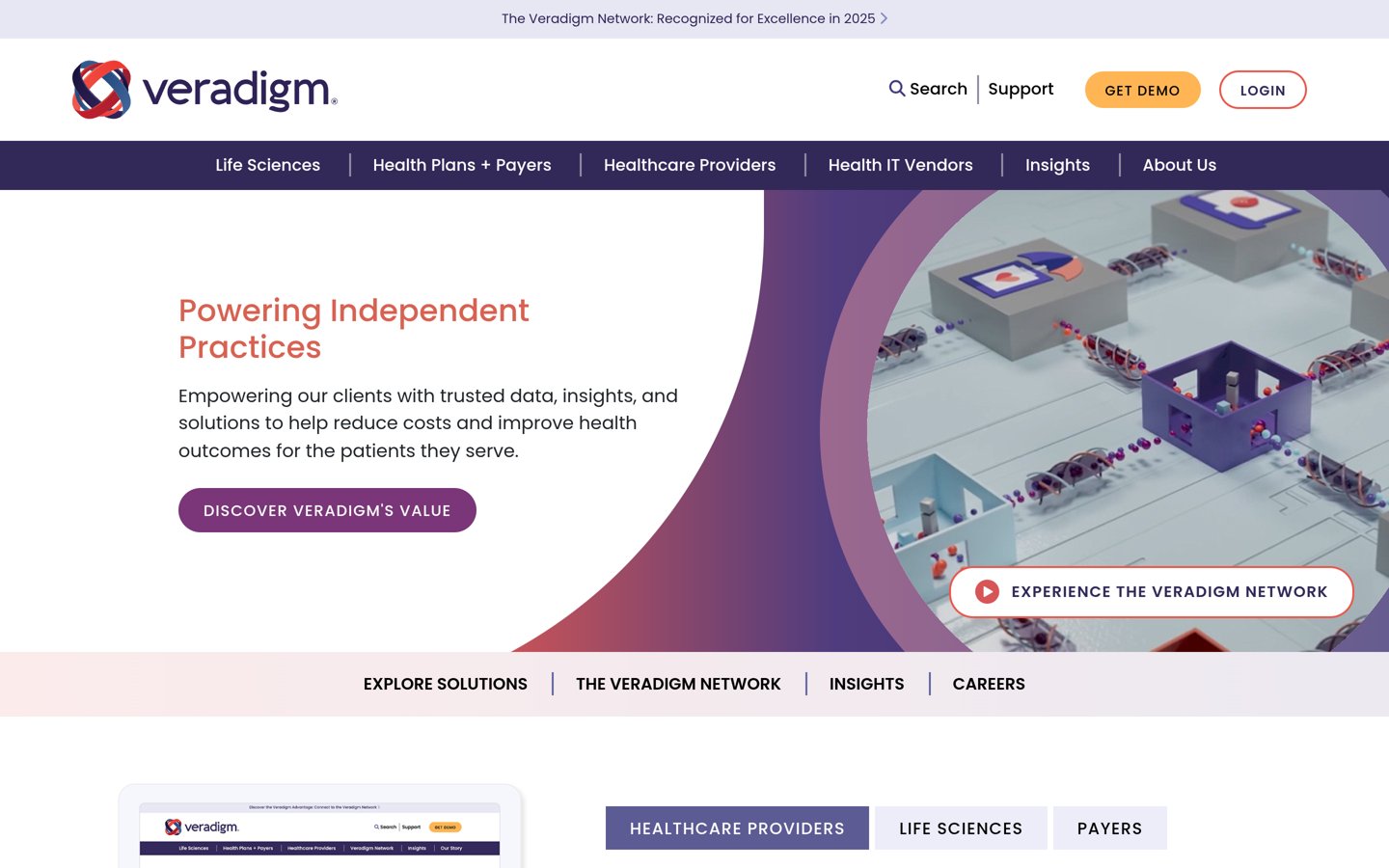
Veradigm is an ambulatory EHR vendor whose data value sits in the Veradigm Network, connecting providers, payers and life sciences teams. It adds e-prescribing, diagnostic connectivity and data services on top of the practice record.
The trade off is that it is an EHR first, not a data platform. The 3.4 out of 5 G2 rating covers the EHR product, and the data platform is quoted separately. It suits ambulatory practices and health IT vendors that already live in the Veradigm world.
What we like
Network connects providers, payers and life sciences
A HIPAA Business Associate Agreement is table stakes. Confirm the vendor signs one, where data is stored, and how de-identification works before any patient data moves.
FHIR R4 ingestion separates platforms that read a full bundle from Epic, Oracle Health, Meditech or Athena from those that need a separate clinical data warehouse.
Ask for a reference customer of your size and type. Healthcare-native vendors sell through services, and implementation quality varies more than feature lists.
How we chose
We started from the healthcare data platforms most commonly shortlisted by health systems and payers, then kept the eight with a verifiable G2 or Capterra rating, a live product and a real healthcare offering.
Prices come from each vendor's pricing page, checked on 25 November 2026. Where a vendor publishes no price, the list says Custom; Snowflake, Databricks and BigQuery usage rates rest on vendor pages and multiple independent November 2026 reads.
We left out Arcadia and IMO Health, which have no verifiable G2, Capterra or Trustpilot rating for their data platform. No vendor paid for a place, and we do not claim hands-on testing for this list.
How to choose a healthcare data platform
Start with your buyer type — health system, payer or research team — then check HIPAA and FHIR coverage.
Name your buyer type. Health systems need governed models and services, payers need population views, and research teams need open warehouses. The right platform follows the buyer.
Confirm the BAA and FHIR depth. Ask the vendor to sign a Business Associate Agreement and to show FHIR R4 ingestion from your own EHR before the demo.
Ask for a reference customer. Healthcare platforms sell through services. Talk to a customer of your size about implementation time and total cost.
Compare usage rates for cloud builds. If you build on Snowflake, Databricks or BigQuery, model the usage bill first. See our database software guide for the warehouse side.
FAQ
What is the best data management platform for healthcare?
Health Catalyst is the best data management platform for healthcare for large health systems, with a governed data model and outcomes-improvement services. InterSystems IRIS for Health is the best interoperability pick, and Snowflake suits data teams building a governed healthcare data cloud.
How much do healthcare data management platforms cost?
Most healthcare-native platforms are quote-only, with third-party reports putting large-system deals at $150,000 to $500,000 a year or more. Snowflake charges from $2 per credit, Databricks from $0.15 per DBU, and BigQuery $6.25 per TiB scanned.
What is a healthcare data platform?
A healthcare data platform pulls clinical, claims, financial and operational data from EHRs and other systems into one governed model. It supports analytics, population health, quality reporting and research, and it signs a HIPAA Business Associate Agreement.
Do healthcare data platforms support FHIR?
Yes. InterSystems IRIS for Health, Microsoft Fabric and Google BigQuery ingest FHIR natively, and most healthcare-native platforms add FHIR APIs on top of their data model. Confirm FHIR R4 support for your own EHR before signing, because depth varies by vendor.
Is Snowflake HIPAA compliant?
Snowflake is HIPAA-eligible and signs a Business Associate Agreement, with HIPAA workloads running on the Business Critical edition at $4 per credit. Confirm BAA coverage for your region and data types with Snowflake before moving patient data.
What is the difference between Health Catalyst and Innovaccer?
Health Catalyst targets large health systems with a governed data model, analytics applications and improvement services. Innovaccer targets population health and payers, unifying clinical and claims data into a single patient view with care management apps.
SaaS SEO and WordPress specialist with about 8 years of experience. Rakib compares WordPress plugins, themes, hosting and software using public pricing, documentation and user reviews. See how we rank.