Ideanote is the top crowdsourcing platform for structured idea management, holding a 4.7 out of 5 rating across 286 G2 reviews. For creative funding and fan support, Kickstarter and Patreon let creators raise money directly from backers, while Canny and Prolific fit customer feedback and human research.
How we make this list: we compare pricing pages, product documentation and public user reviews, then re-check every price before each update. No product paid for a place. Disclosure.
Ideanote earns 4.7/5 from 286 G2 reviewers for centralizing idea collections, voting, and stage-gate workflows.
Kickstarter charges a 5% platform fee plus 3% + $0.30 payment processing per pledge only on successfully funded campaigns.
Patreon takes a 10% platform fee on earned income plus processing and applicable fees, with free setup before you earn.
Canny starts with a free tier for 25 tracked users and scales to Pro at $79/mo billed yearly for 100+ tracked users.
Prolific uses pay-as-you-go pricing with no monthly subscription, adding a 42.8% platform fee for corporate studies on top of participant pay.
What to look for in a crowdsourcing platform
Crowdsourcing covers very different workflows, from collecting employee or customer ideas to funding a hardware launch or recruiting paid research participants. A platform built for structured idea triage will not solve campaign fundraising, and a funding site will not organize internal innovation pipelines.
Pricing models split into percentage-based revenue fees, per-seat or per-user SaaS plans, pay-as-you-go task pools, and fixed contest packages. Before picking a tool, check whether fees are charged upfront, taken as a share of pledges, or scaled by active users.
Moderation, workflow structure, and crowd quality matter just as much as cost. Look for clear evaluation stages, deduplication, or vetted participant pools so raw submissions do not turn into noise.
Ideanote is an idea and crowdsourcing platform that helps teams gather, score, and track submissions from employees, customers, or external partners. Its workspace includes idea collections, custom forms, kanban boards, and AI deduplication and summarization tools.
The trade off is that Ideanote's pricing page scales by user seat tier rather than a single flat dollar rate for small teams, with 100 user seats listed at $899/mo on its calculator. It suits organizations that want structured idea campaigns and stage-gate tracking in one workspace.
What we like
High 4.7/5 score across 286 G2 reviews
Kanban stages, custom forms, and workflow automations
AI duplicate detection, tagging, and summaries
Integrations with Microsoft Teams, Zapier, and webhooks
Watch out for
Seat-based pricing can grow quickly as team size expands
More setup required than a simple feedback form
Paid seat tiers unlock larger team capacities, SSO, and enterprise governance controls.Visit ideanote.io
02
Canny
4.5/5on G2 (110 reviews, checked Nov 2026)
Paid from$79/mo
Best for product feedback and roadmaps
Rating4.5/5 (110 reviews)
Regular price$79/mo billed yearly
Free tierUp to 25 tracked users
Key integrationsJira, Linear, Slack, HubSpot
canny.io
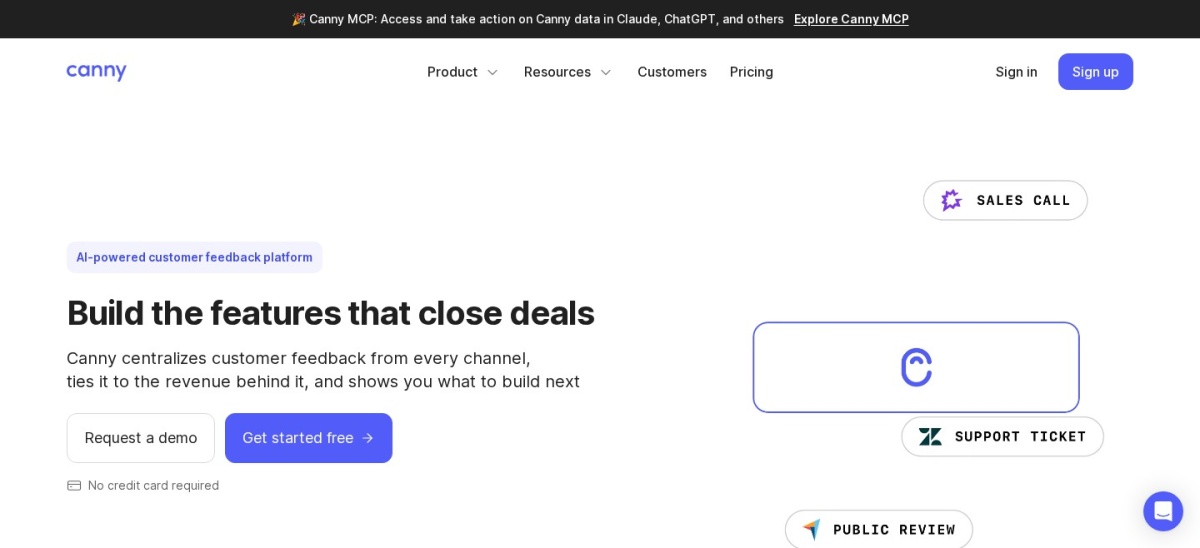
Canny homepage, captured Nov 2026.
Canny is a customer feedback and feature-request platform that centralizes user suggestions, upvoting, and product roadmaps. Its free plan covers up to 25 tracked users with unlimited feedback posts and Autopilot AI feedback capture.
The trade off is that moving past 25 tracked users starts at $79/mo billed yearly ($948/yr) on the Pro plan, and CRM integrations sit on higher tiers. It suits software teams turning crowd requests into prioritized roadmap items.
What we like
Free plan includes 25 tracked users and unlimited feedback posts
Autopilot AI captures, deduplicates, and triages feedback
Connects feedback directly to issue trackers and roadmaps
Watch out for
Tracked-user pricing rises as active contributors grow
Some enterprise and CRM features sit above the entry Pro plan
Pro at $79/mo billed yearly supports 100+ tracked users, project management integrations, and advanced privacy.Visit canny.io
03
Prolific
4.6/5on G2 (280 reviews, checked Nov 2026)
PriceFree
Best for crowdsourced research and AI data
Rating4.6/5 (280 reviews)
Subscription$0 monthly fee
Platform fee42.8% corporate / 33.3% academic
Participant pool300,000+ active participants
prolific.com
Prolific homepage, captured Nov 2026.
Prolific is a crowdsourced research and AI evaluation platform connecting teams with over 300,000 active participants. Researchers can sign up with no monthly subscription and pay only when launching studies, filtering audiences across hundreds of attributes.
The trade off is that platform fees are added on top of participant rewards—typically 42.8% for corporate users and 33.3% for academic or non-profit accounts. It suits research and AI teams that need verified human responses rather than open public crowds.
What we like
No monthly subscription or mandatory annual contract
Access to 300,000+ active participants with detailed screening filters
Discounted 33.3% platform fee rate for academic and non-profit teams
Watch out for
42.8% corporate platform fee increases total study budgets
Requires setting fair participant rewards for every study
Pay-as-you-go study launches include self-serve audience screening, API access, and participant management.Visit prolific.com
04
Kickstarter
1.1/5on Trustpilot (1,359 reviews, checked Nov 2026)
PriceFree
Best for all-or-nothing creative and product launches
Rating1.1/5 (1,359 reviews)
Platform fee5% if funded ($0 if unfunded)
Processing fee3% + $0.30 per pledge
Funding modelAll-or-nothing campaigns
kickstarter.com
Kickstarter homepage, captured Nov 2026.
Kickstarter is a reward-based crowdfunding platform built around time-boxed campaigns for creative works, games, design, and hardware. Creators pay no platform fee if a campaign misses its goal, and 5% plus payment processing if it succeeds.
The trade off is that all-or-nothing rules mean you receive zero funds if you fall short of your target, and Trustpilot scores reflect backer frustration over delayed or unfulfilled rewards. It suits creators launching tangible products or media with a pre-built audience.
What we like
No platform or processing fees collected if a project is not funded
Strong discovery for creative, publishing, game, and hardware backers
Discounted micropledge fee rate on pledges under $10
Watch out for
All-or-nothing funding pays out nothing if the goal is missed
Low 1.1/5 Trustpilot score driven by backer fulfillment complaints
Successful campaigns deduct a 5% Kickstarter fee alongside payment processing fees from collected pledges.Visit kickstarter.com
05
Patreon
1.2/5on Trustpilot (971 reviews, checked Nov 2026)
PriceFree
Best for recurring fan memberships and community
Rating1.2/5 (971 reviews)
Platform fee10% of earned income
Upfront costFree to set up before earning
PayoutsRecurring memberships & sales
patreon.com
Patreon homepage, captured Nov 2026.
Patreon is a membership and creator commerce platform that lets audiences fund ongoing work through recurring subscriptions or one-time sales. Setting up a page is free, and creators pay a 10% platform fee once they earn income.
The trade off is that payment processing, currency conversion, payout fees, and applicable taxes apply on top of the 10% platform cut, and its Trustpilot score is 1.2/5. It suits podcasters, artists, and writers building steady recurring crowd support.
What we like
Free to build a page and launch before you start earning
Supports both recurring memberships and one-time digital sales
Handles multi-currency payments, chats, and community posts
Watch out for
10% platform fee plus processing, conversion, and payout fees
Low 1.2/5 Trustpilot score with complaints around support and billing
Active earning tiers include member messaging, community posts, digital product sales, and tax handling.Visit patreon.com
06
GoFundMe
3.3/5on Trustpilot (24,405 reviews, checked Nov 2026)
PriceFree
Best for personal, community, and charity fundraising
Rating3.3/5 (24,405 reviews)
Platform fee$0 to create or manage
Transaction fee2.9% + $0.30 per donation
Charity rate2.2% + $0.30 for certified charities
gofundme.com
GoFundMe homepage, captured Nov 2026.
GoFundMe is a crowdfunding platform for personal causes, community initiatives, and charitable campaigns with no fee to start or manage a fundraiser. In the United States, it charges a single transaction fee of 2.9% + $0.30 per donation (2.2% + $0.30 for certified charities).
The trade off is that it lacks structured product-ideation or reward-commerce workflows for business launches, and its Trustpilot rating sits at 3.3/5 across 24,405 reviews. It suits individuals, community groups, and nonprofits rallying quick financial support.
What we like
$0 platform fee to create or run a fundraising page
Lower 2.2% + $0.30 transaction rate for certified charities
Supports team fundraising and direct bank payouts
Watch out for
Per-donation processing fees reduce net funds received
Mixed 3.3/5 Trustpilot score with complaints about payout delays
Every fundraiser includes campaign sharing tools, team fundraising, and automated donation processing.Visit gofundme.com
99designs is a creative crowdsourcing marketplace where designers submit competing concepts for a brief and you pick the winner. Logo design contests start at $249 for the Bronze package before sales tax, while other categories vary in price.
The trade off is that there is no free tier to run a contest and higher design categories or tiers cost significantly more. It suits businesses that want multiple visual concepts quickly for a logo, brand pack, or illustration.
What we like
Multiple designers compete with distinct concepts on one brief
Full copyright ownership transfers with the winning design
Bronze logo contests start at a clear $249 fixed price
Watch out for
Requires upfront contest payment rather than a free plan
Prices rise across Silver ($399), Gold ($799), and Platinum ($1,050) tiers
Contest packages include multiple designer submissions, revision rounds, and full copyright ownership of the selected entry.Visit 99designs.com
Percentage fees vs. subscriptions
Fundraising and research platforms like Kickstarter, Patreon, GoFundMe, and Prolific charge based on campaign totals, creator earnings, or study payouts rather than flat monthly software seats. That keeps upfront fixed costs low if a launch or study stays small.
Ongoing ideation and feedback tools like Ideanote and Canny fit continuous team workflows where ideas are collected, discussed, and prioritized over months. Match the billing model to how often your crowd participates.
How we chose
We selected established crowdsourcing platforms across idea management, product feedback, human research, crowdfunding, and design contests based on public product listings and user review directories.
All prices, fee structures, and review ratings were checked on 22 Nov 2026 from official vendor pricing/fee pages and G2 or Trustpilot review listings.
We excluded platforms without clear public pricing or verified review figures on the pages we opened today, and we did not include custom enterprise quotes as fixed yearly prices. No vendor paid for a place, and we do not claim testing for this list.
How to choose a crowdsourcing platform in 4 steps
Follow these four steps to match a crowdsourcing tool to your goal and budget:
Define the exact crowd output you need. Decide whether you are collecting product ideas, funding a launch or cause, testing concepts with paid participants, or commissioning visual designs.
Check how platform and payment fees apply. Compare percentage-based revenue or study fees against recurring subscription tiers and per-user or per-seat limits.
Review moderation and workflow controls. Look for voting, status stages, screening filters, or contest rules that keep submissions organized as volume grows.
Verify payout and data rules before launching. Confirm funding release conditions, processing deductions, privacy controls, and integration options before inviting your audience.
FAQ
What is the best crowdsourcing platform for business ideas?
Ideanote is a strong fit for structured idea management, with a 4.7/5 rating from 286 G2 reviews and features for idea collections, voting, and kanban workflows. Teams focused specifically on software feature requests can also consider Canny.
Does Kickstarter charge anything if a campaign is not funded?
No, Kickstarter charges no platform or payment processing fees if a campaign does not reach its funding goal. If it succeeds, Kickstarter takes a 5% fee plus payment processing fees.
How does Patreon pricing work for creators?
Patreon is free to set up and charges a 10% platform fee on earned income once you start making money. Payment processing, currency conversion, payout fees, and applicable taxes can also apply.
How much does Canny cost once you outgrow the free plan?
Canny offers a free plan for up to 25 tracked users and starts paid Pro plans at $79/mo billed yearly for 100+ tracked users. Higher-volume Business plans require custom pricing.
How does Prolific charge for research participants?
Prolific has no monthly subscription fee and uses pay-as-you-go pricing where you pay participant rewards plus a platform fee. The standard platform fee is 42.8% for corporate users and 33.3% for academic or non-profit accounts.
How much does a 99designs logo contest start at?
A 99designs logo design contest starts at $249 for the Bronze package, excluding sales tax, with higher tiers ranging up to $1,050 for Platinum. Other design categories have their own package prices.
SaaS SEO and WordPress specialist with about 8 years of experience. Rakib compares WordPress plugins, themes, hosting and software using public pricing, documentation and user reviews. See how we rank.