Best Business Continuity Management Software in 2026: 8 Tools Compared
WLWPLegible EditorsLast verified 24 Nov 2026How we rank11 min read
★ Short answer
Fusion Risk Management is the best business continuity management software for most large enterprises, with business impact analysis, dependency mapping, continuity plans and crisis response on Salesforce, rated highly on G2. Pick Riskonnect for a dedicated continuity platform in regulated industries and SafetyCulture when frontline teams need mobile checks.
How we make this list: we compare pricing pages, product documentation and public user reviews, then re-check every price before each update. No product paid for a place. Disclosure.
Fusion leads for large enterprises, with business impact analysis, dependency mapping and crisis response on Salesforce.
Riskonnect is the most dedicated BCM platform here, built for regulated industries with ISO 22301 support.
Noggin starts at $11,760 a year and is strongest for live incident and crisis response.
SafetyCulture is the only tool here with a free plan and a published per-seat price, at $24 a seat a month.
Most enterprise BCM tools are quote-only, and published cost reports disagree widely, so get a scoped quote.
What business continuity software should cover
Business continuity software keeps a plan alive. It links critical services to their owners, dependencies and recovery targets, then tests whether the plan works.
The core features are business impact analysis, dependency mapping, plan templates, tabletop exercises and crisis activation. Without them, a tool is just document storage.
Most enterprise tools sell by quote, so price is rarely the first filter. Fit matters more: a dedicated platform for a formal program, or a GRC suite when continuity sits beside risk and audit.
The 8 best business continuity management software tools
01
Fusion Risk Management
4.4/5on G2 (148 reviews, checked Nov 2026)
PricingCustom/yr
Best business continuity software overall
BIA and dependency mappingYes
Crisis responseYes
Built onSalesforce
PricingQuote-based
fusionrm.com
Fusion Risk Management homepage, captured Nov 2026.
Fusion Risk Management is a Salesforce-based operational resilience platform for large enterprises with formal continuity teams. It covers business impact analysis, dependency mapping, continuity and disaster recovery plans, exercises and executive dashboards in one system of record.
The trade off is cost and effort. Fusion does not publish prices, and third-party reports disagree sharply, citing averages near $93,000 a year and starting figures near $30,000 a year. Implementation is heavy, so it suits enterprises with a dedicated continuity team and a Salesforce footprint.
Best dedicated BCM platform for regulated industries
ISO 22301 alignmentYes
BIA automationYes
Crisis activationYes
PricingQuote-based
riskonnect.com
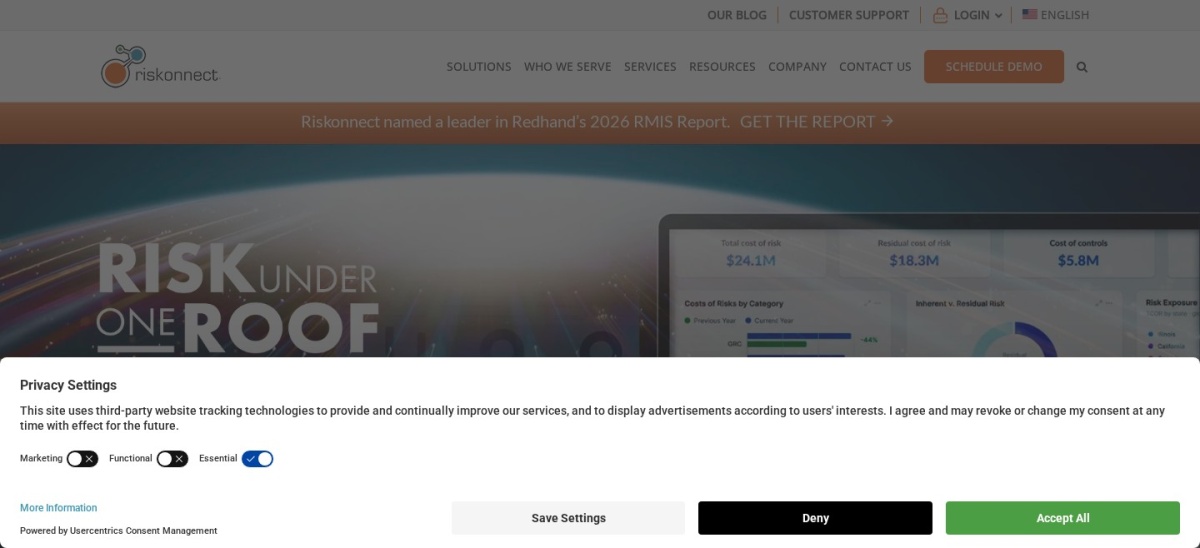
Riskonnect Business Continuity homepage, captured Nov 2026.
Riskonnect Business Continuity is a dedicated continuity platform for regulated enterprises that need deep BCM capability rather than a module inside a wider GRC suite. It covers business impact analysis, plan templates, automated dependency mapping, crisis activation and post-incident review.
The trade off is evidence and cost. Its G2 rating of 4.5 out of 5 rests on only 12 reviews, and one independent estimate puts licensing near $283,000 a year. Riskonnect bought Castellan in 2023, so buyers get a broad combined GRC and BCM suite. It suits banks, insurers and healthcare groups with strict regulatory duties.
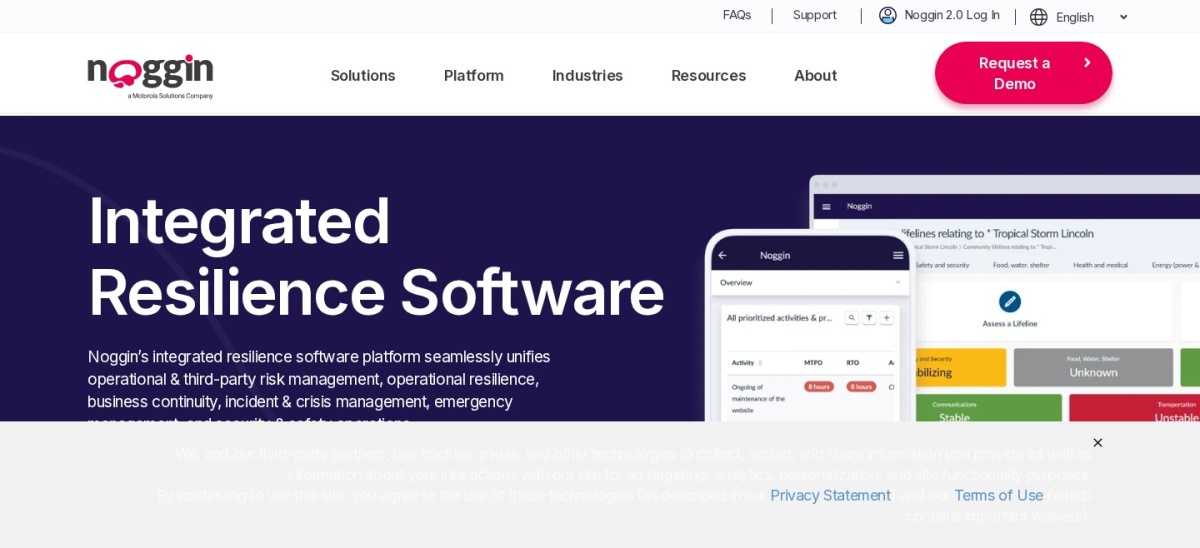
Noggin is a resilience and critical event management platform with dedicated business continuity planning built in. It grew out of incident management, so live activation, field response, notifications and exercise tooling are its strongest suit.
The trade off is breadth. Continuity planning sits beside crisis and emergency workflows rather than leading the product, and pricing starts near $11,760 a year with extra costs per user or hour. It suits teams that run live incidents often and want continuity in the same workspace.
ServiceNow Business Continuity Management homepage, captured Nov 2026.
ServiceNow Business Continuity Management is the continuity module inside ServiceNow Governance, Risk, and Compliance. It ties continuity plans, business impact analysis and recovery sequencing directly to the CMDB, so dependencies stay linked to live configuration data.
The trade off is lock-in and cost. It makes most sense where ServiceNow is already the platform of record, and third-party reports put annual costs near $60,000. It suits large IT-led organizations that already run ServiceNow ITSM and GRC.
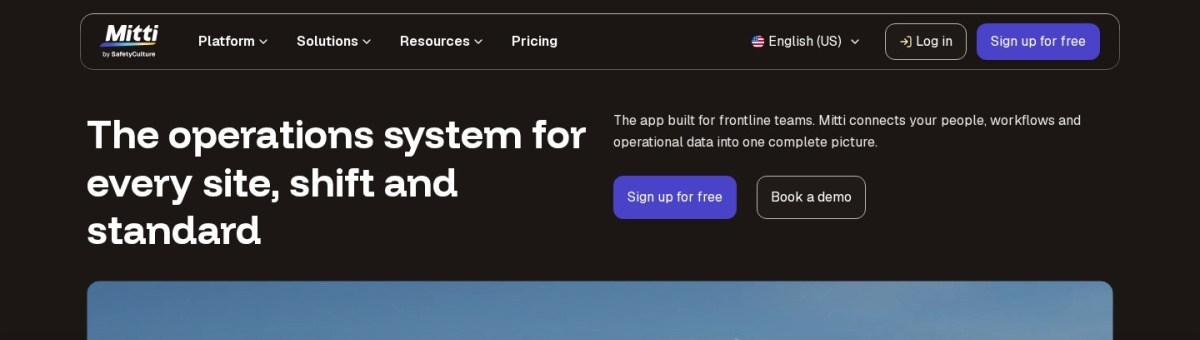
SafetyCulture is a workplace operations platform for inspections, training, asset management and tasks, with continuity checks run from a phone. It is the only tool here with a free plan and a published per-seat price, which makes it the easiest to try.
The trade off is depth. It covers frontline checks, incident tracking and tasks well, but it is not a dedicated BCM suite, so formal business impact analysis and recovery sequencing are basic. It suits operations teams that run continuity checks in the field rather than a formal enterprise program.
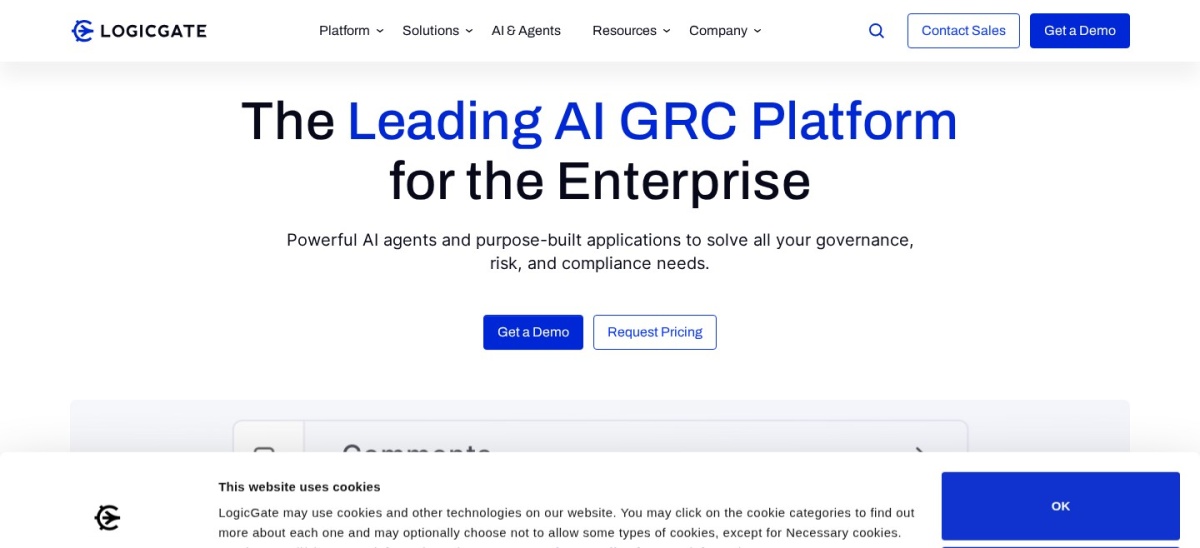
LogicGate Risk Cloud is a flexible governance, risk and compliance platform with business continuity workflows built on its no-code automation engine. Teams can shape BIA, continuity planning and incident workflows to their own process instead of adapting to fixed templates.
The trade off is that continuity sits inside a wider GRC platform, so dedicated BCM depth depends on how the workflows are built. Pricing is quote-based and varies by modules and users. It suits mid-size and large teams that want continuity inside a customizable risk stack.
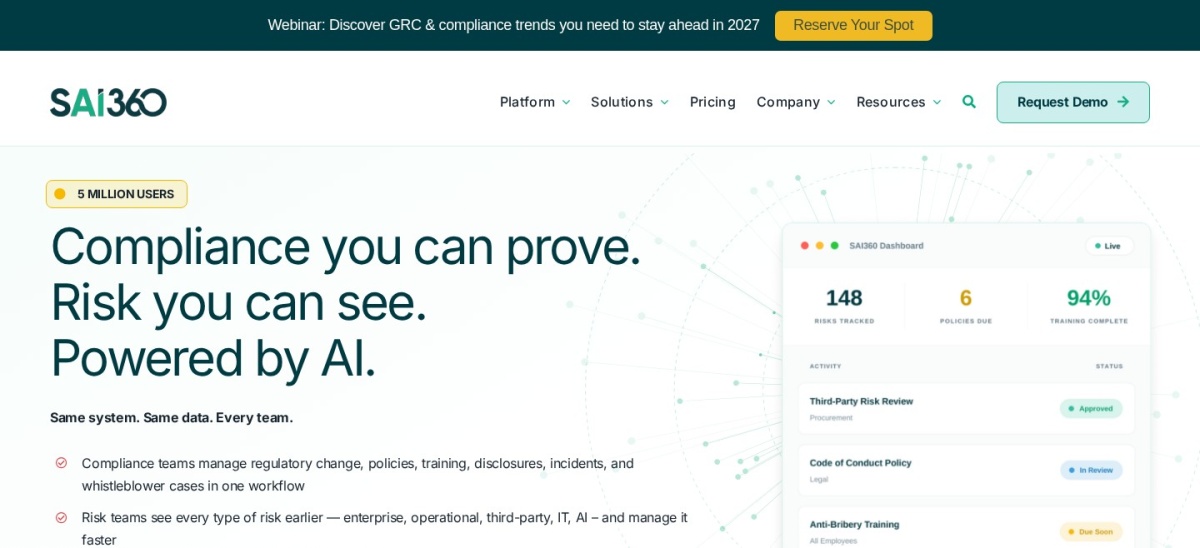
SAI360 is an AI-powered governance, risk and compliance platform for ethics, risk and compliance workflows, with continuity support inside its resilience packages. It suits organizations that want continuity beside compliance, third-party risk and audit in one system.
The trade off is focus and price. Continuity is one module among roughly twenty, and pricing is quote-based by edition and module, with no public figure. It suits large regulated teams that already buy SAI360 for compliance and want continuity in the same platform.
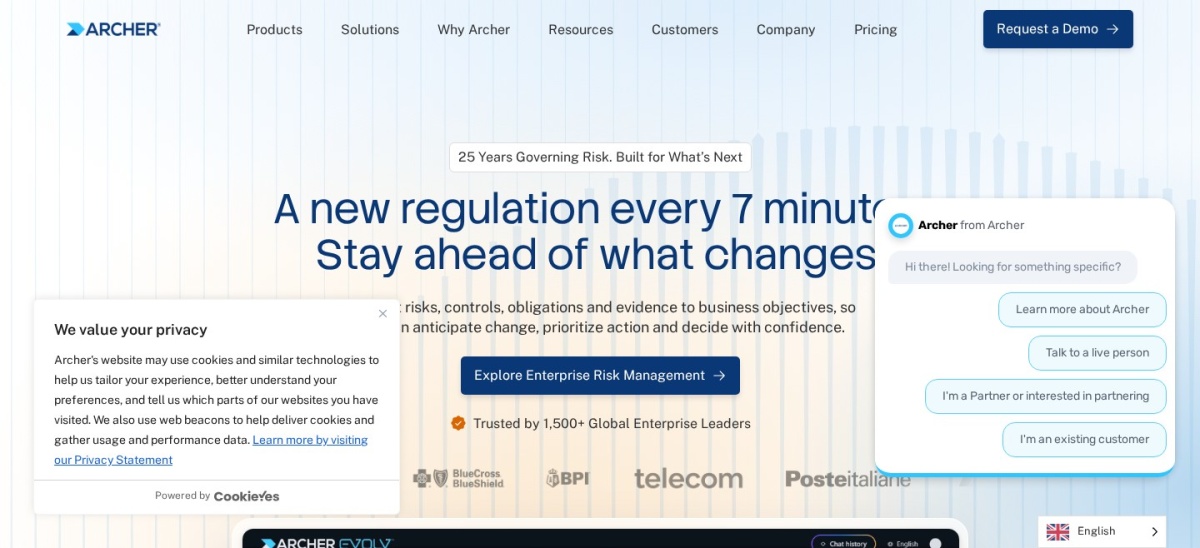
Archer Business Resiliency homepage, captured Nov 2026.
Archer Business Resiliency is the continuity module inside the Archer integrated risk management platform. It manages business impact analysis, continuity and disaster recovery plans, incident and crisis workflows and scenario analysis for large regulated organizations.
The trade off is age and effort. It is deeply configurable but configuration-heavy with a dated interface, and its G2 rating of 3.6 out of 5 from 20 reviews is the lowest here. It suits organizations that already run Archer GRC and want continuity in the same system.
A dedicated platform such as Fusion or Riskonnect is built around continuity first. Business impact analysis, dependency mapping and plan testing are the core product, not an add-on.
A GRC suite such as ServiceNow, LogicGate, SAI360 or Archer puts continuity beside risk, compliance and audit. That suits teams that already run the suite and want one system of record.
The trade off is depth against breadth. Dedicated tools go deeper on continuity workflows, while suites save the cost and effort of running a second platform.
Small teams should look elsewhere. SafetyCulture is the only option here with a free plan, and the enterprise tools are priced and built for large programs.
How we chose
We started from the business continuity platforms ranked on G2 and in 2026 buyer guides, then kept those with a verifiable G2 rating and real BCM features such as business impact analysis, plan testing and crisis response.
Prices come from vendor pages and third-party reports checked on 24 November 2026. Most enterprise BCM vendors sell by quote, so the list shows Custom where no public price exists, and notes where published reports disagree.
We left out point tools with no verifiable G2 rating. No vendor paid for a place, and we do not claim hands-on testing for this list.
How to choose business continuity management software
Start with what must keep running, then match the tool to the shape of your program.
Map what must keep running. List critical services, their owners and recovery targets before comparing tools. A BCM platform is only useful if it models your real dependencies.
Check the BIA and testing depth. Confirm the tool runs business impact analysis, dependency mapping and tabletop exercises, not just document storage.
Decide between dedicated and GRC. Pick a dedicated platform such as Riskonnect for BCM depth, or a GRC suite such as ServiceNow when continuity must sit beside risk and audit.
Get a scoped quote. Most vendors price by scope and users, so ask for a written quote that covers implementation and training before signing.
FAQ
What is the best business continuity management software?
Fusion Risk Management is the best pick for most large enterprises. It covers business impact analysis, dependency mapping, continuity plans and crisis response on Salesforce, and it is rated 4.4 out of 5 on G2 from 148 reviews.
How much does business continuity software cost?
Most enterprise platforms are quote-based, with third-party reports citing roughly $30,000 to $93,000 a year for Fusion and from $11,760 a year for Noggin. SafetyCulture is the exception, with a free plan and Premium at $24 a seat a month.
What is the difference between BCM and disaster recovery software?
Business continuity management covers the whole organization: which services must keep running, who owns them and how teams respond. Disaster recovery is narrower and covers restoring IT systems and data after an outage.
Is SafetyCulture a real BCM tool?
SafetyCulture is a workplace operations platform, not a dedicated BCM suite. It suits frontline teams that run continuity checks, inspections and incident tracking from a phone, but formal impact analysis and recovery sequencing are basic.
Do I need BCM software for ISO 22301?
No, you can run an ISO 22301 program on documents and spreadsheets. Software helps as the program grows: it links plans to live dependencies, schedules tests and keeps audit evidence in one place.
Which BCM tool is best for a small business?
SafetyCulture is the practical pick for small teams, with a free plan and a $24 a seat monthly Premium plan. The enterprise platforms here are priced and built for large organizations with dedicated continuity staff.