WLWPLegible EditorsLast verified 24 Nov 2026How we rank11 min read
★ Short answer
MarqVision is the best brand protection software for marketplace counterfeits, with the highest G2 rating on this list and AI detection across more than 1,500 marketplaces. Red Points suits brands drowning in counterfeits, with unlimited takedowns, while BrandShield fits teams fighting phishing and impersonation.
How we make this list: we compare pricing pages, product documentation and public user reviews, then re-check every price before each update. No product paid for a place. Disclosure.
MarqVision is the best brand protection software for marketplace counterfeits, with a 4.9 G2 rating and AI detection across more than 1,500 marketplaces.
Red Points suits brands drowning in marketplace counterfeits, with unlimited takedowns as its headline feature and a flat-fee model.
BrandShield fits cybersecurity-led teams fighting phishing, impersonation and fake domains, with AI clustering of related threats.
Corsearch is the pick when trademark lifecycle work and legal enforcement matter as much as detection.
Nobody in this category publishes prices: every vendor here is quote-only, so ask each vendor for a live detection test against your actual brand before you sign.
What brand protection should cover
Brand protection software finds and removes abuse of your brand online: counterfeit listings, fake domains, phishing sites, social impersonation, rogue apps and affiliates bidding on your trademark. Detection without enforcement is just expensive anxiety, so the takedown model matters as much as the monitoring.
Match the tool to the threat. Marketplace counterfeits, phishing domains, paid-search abuse and social impersonation are different problems, and vendors specialize. Red Points and MarqVision lead on marketplace counterfeits, BrandShield and Fortra on phishing, Corsearch on trademarks, and BrandVerity on paid search and affiliate compliance.
Check the enforcement model before you buy. Some vendors charge per takedown or per analyst hour, which makes costs spike exactly when attacks spike. Unlimited or flat-fee enforcement models, like Red Points, are easier to budget, and human review on edge cases matters because automated systems can hit legitimate sellers.
Clarify geographic coverage too. China, Southeast Asia and Latin America have platform-specific enforcement processes, and MarqVision's strongest coverage is Asian e-commerce platforms and domestic Chinese marketplaces. Our guide to the best fraud detection software covers the wider fraud stack these tools sit in.
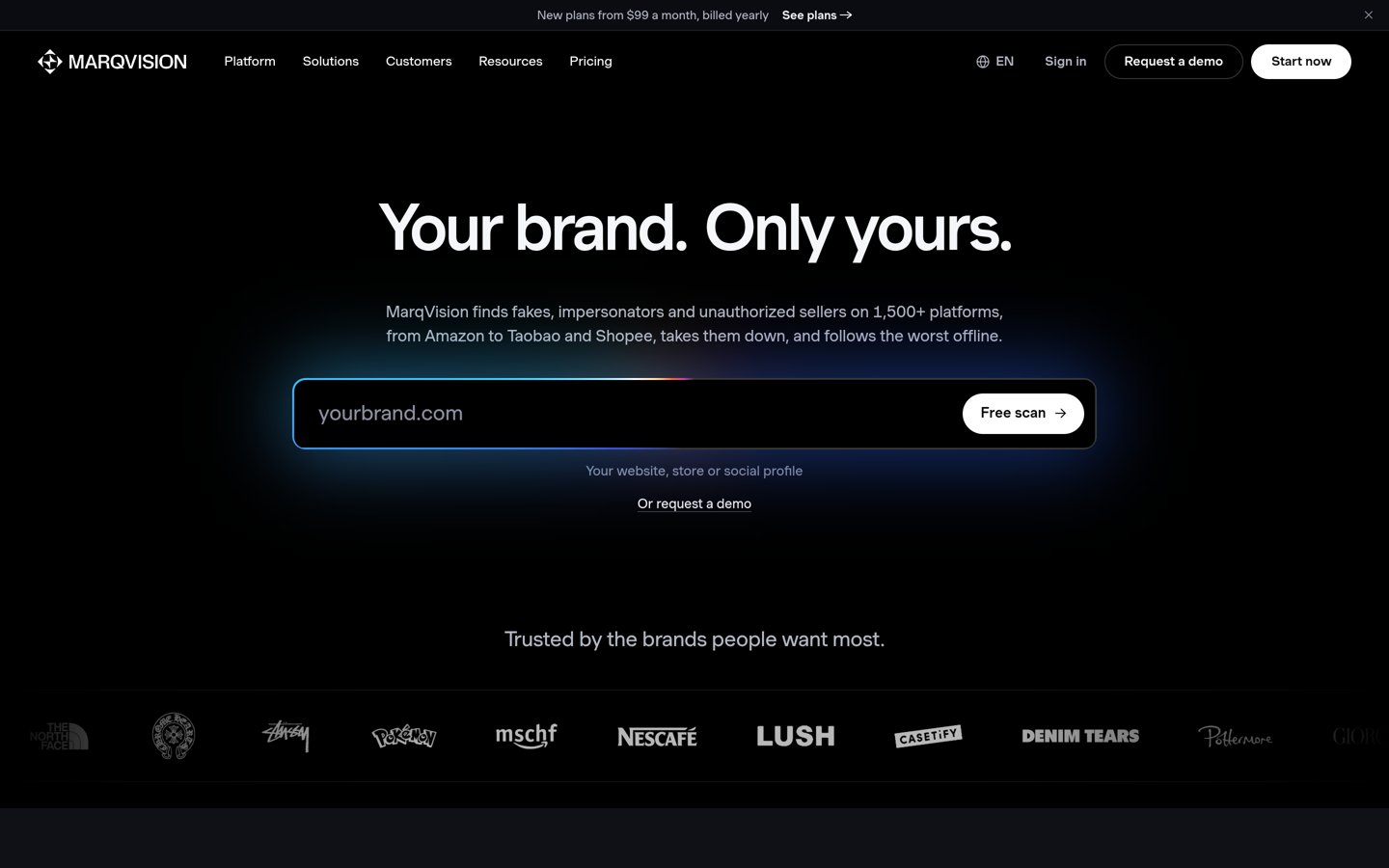
MarqVision is an AI-driven brand protection platform used to identify counterfeit listings, impersonation, piracy and unauthorized sellers across global digital channels. Founded in 2020, it covers more than 1,500 marketplaces and has particularly strong coverage of Asian e-commerce platforms and domestic Chinese marketplaces, with image recognition, fingerprinting, logo recognition and OCR.
The trade off is enforcement speed. Multiple G2 reviewers noted that removing reported listings can take longer than expected, and the platform was slow to adapt when TikTok Shop launched, with about a one-month lag. It also does not cover rogue mobile apps.
What we like
Highest G2 rating here at 4.9 from 29 reviews
AI detection across 1,500-plus marketplaces
Strong Asian and Chinese marketplace coverage
Responsive account management and weekly check-ins
Watch out for
Takedown speed flagged by multiple reviewers as slower than expected
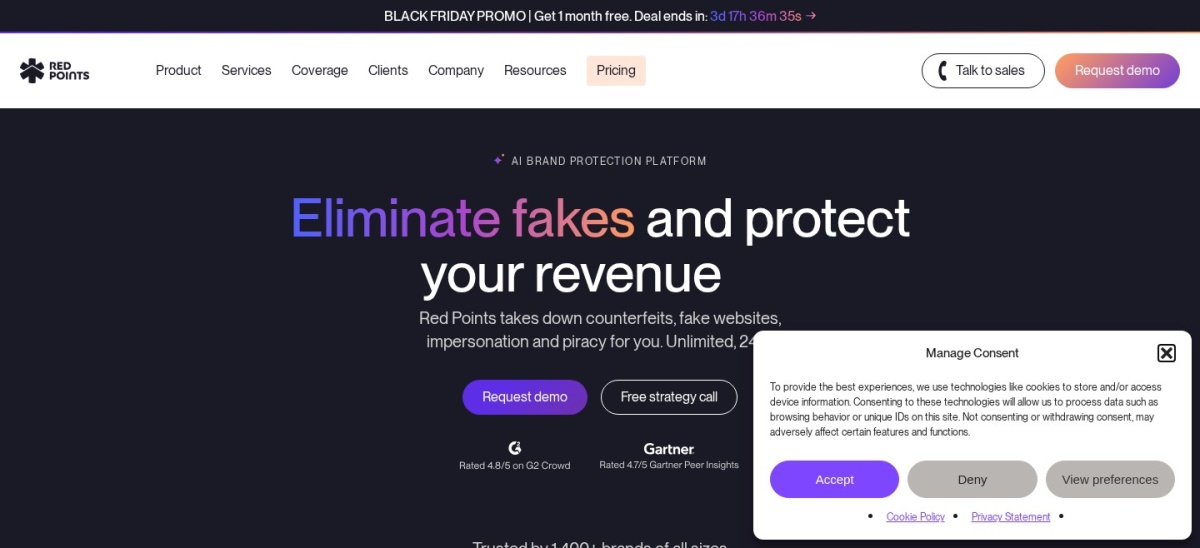
Red Points is the brand protection platform built for brands drowning in marketplace counterfeits. Its AI scans marketplaces, websites, social media, domains and ads, then files takedowns automatically, with no cap on volume, and the company says it processes tens of millions of digital signals daily.
The trade off is price and complexity. Pricing is custom and enterprise-grade, and the dashboards carry a learning curve, but for high-volume counterfeit problems it is the most purpose-built option here, and it is fully managed so smaller brand teams get enforcement without hiring specialists.
What we like
Unlimited detections and takedowns
Strong marketplace and China coverage
AI trained on huge infringement datasets
Flat-fee model keeps takedown volume off the invoice
Watch out for
Enterprise pricing only
Analytics can overwhelm small teams
Dashboards carry a learning curve
Pricing is custom flat-fee; 4.3M infringements detected in 2024Visit redpoints.com
03
BrandShield
4.7/5on G2 (119 reviews, checked Nov 2026)
PricingCustom/yr
Best for phishing and impersonation
Founded2014
G2 rank#1 Leader, Fall 2025
ClientseToro, Dropbox, Levi's
CoverageWeb, social, dark web
brandshield.com
BrandShield homepage, captured Nov 2026.
BrandShield is a brand protection platform that comes at brand protection from the cybersecurity side. Instead of starting with counterfeit listings, it starts with phishing sites, fake domains, social media impersonation and fraudulent ads, then clusters related threats so one investigation can take down a whole network.
The trade off is focus. If your main pain is counterfeit products on Amazon and eBay, a marketplace-first tool will serve you better, and BrandShield went through ownership changes as a listed company, so ask about the current roadmap during evaluation. For digital-first threats it is one of the strongest picks.
What we like
Strong phishing and domain takedown speed
AI clustering of related threats
Good fit for finance and pharma
Ranked number one Leader in G2's Fall 2025 Brand Protection category
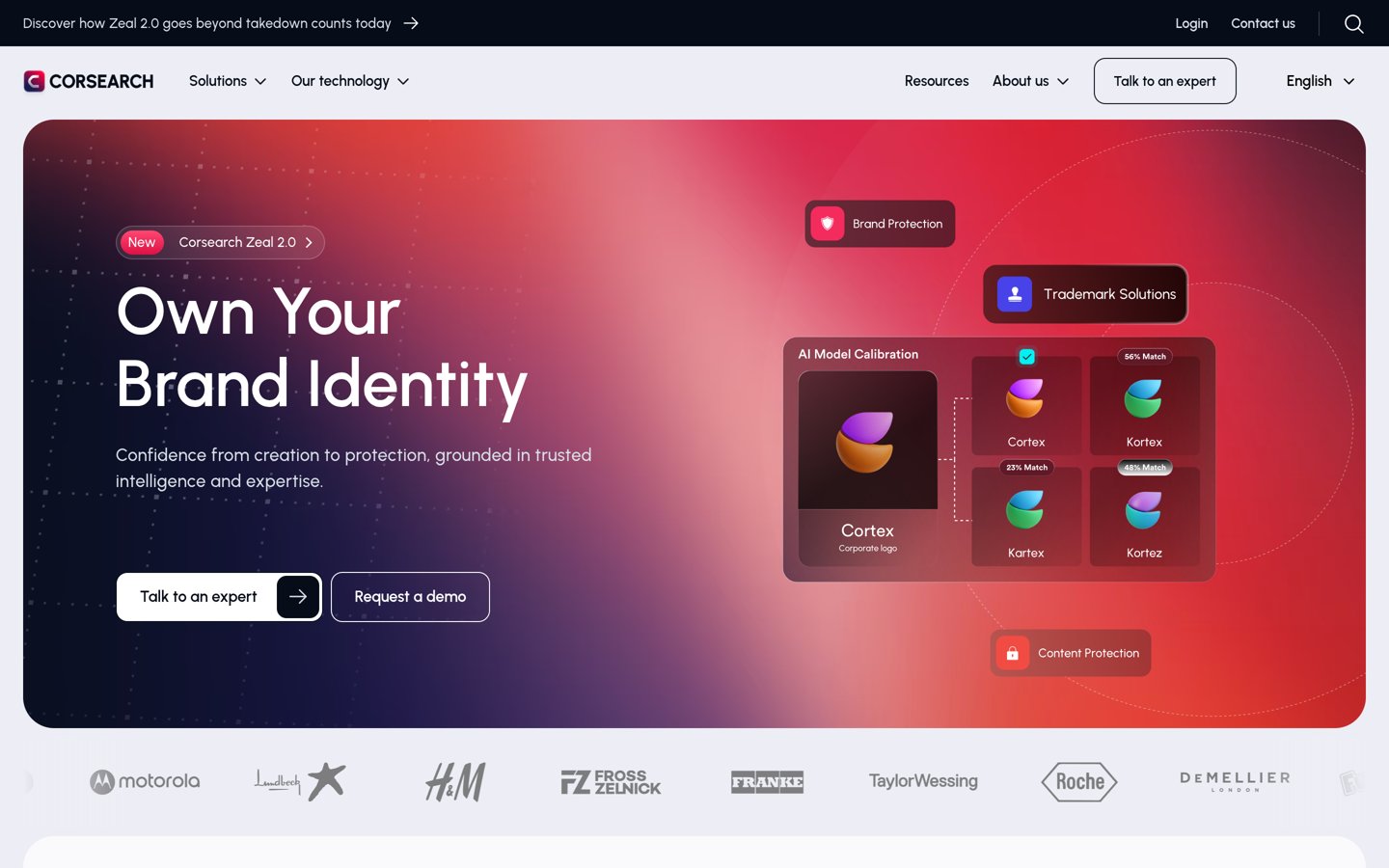
Corsearch is the only vendor here that covers the full trademark lifecycle, from clearance searches with TrademarkNow through watching, enforcement and investigations. That matters because brand protection works best when the legal team and the enforcement team share data, and thousands of brands and law firms use it.
The trade off is weight. It acquired Pointer Brand Protection and Yellow Brand Protection, folding their enforcement tech into the Zeal platform, so the result is broad but complex, and pricing reflects the enterprise positioning. Pure enforcement teams may find it heavier than they need.
What we like
End-to-end trademark lifecycle coverage
Deep legal and investigation expertise
Large enterprise client base
Zeal platform covers 300-plus platforms
Watch out for
Heavier and more expensive than pure-play tools
Platform can feel dated in places
G2 rating rests on only 24 reviews
Pricing is custom enterprise; trademark clearance through enforcement in one platformVisit corsearch.com
05
ZeroFox
4.4/5on G2 (170 reviews, checked Nov 2026)
PricingCustom/yr
Best for security-led brand protection
PlatformHNTR
CoverageSocial, dark web, domains
TakedownsHours, not days
ManagedServices included
zerofox.com
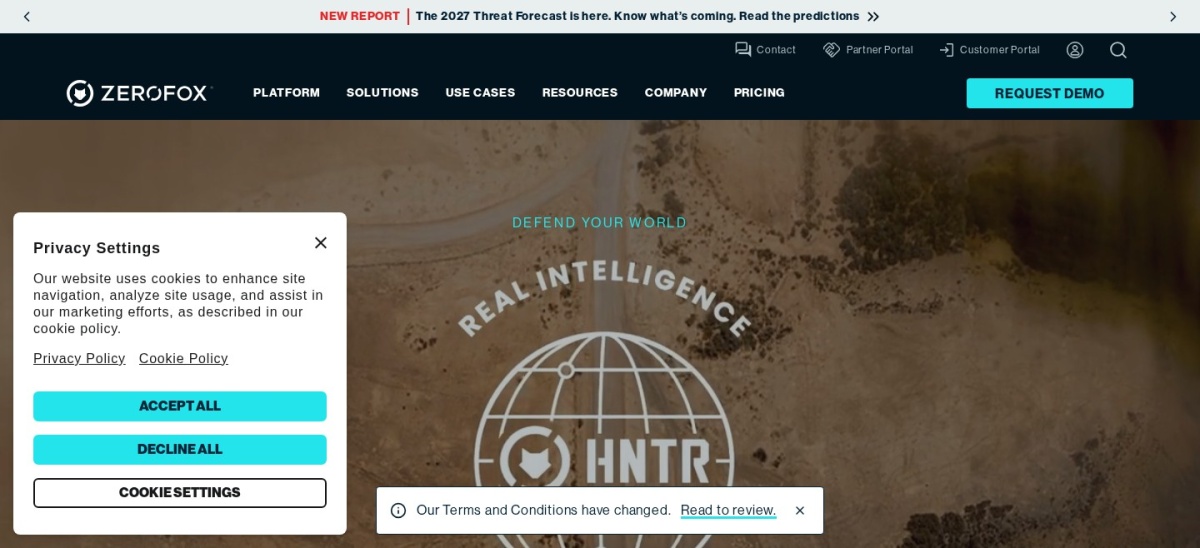
ZeroFox homepage, captured Nov 2026.
ZeroFox is an external threat protection platform that built its reputation on social media impersonation, phishing, executive threats and dark web chatter. Its disruption network has long-standing relationships with platforms and registrars, which means takedowns often happen in hours rather than days, and the HNTR platform fuses threat intel with brand protection in one console.
The trade off is counterfeits. ZeroFox detects brand abuse brilliantly but does not specialize in marketplace seller enforcement the way Red Points does, and pricing is premium and aimed at security budgets. If your brand protection program sits inside the SOC, it is a natural fit.
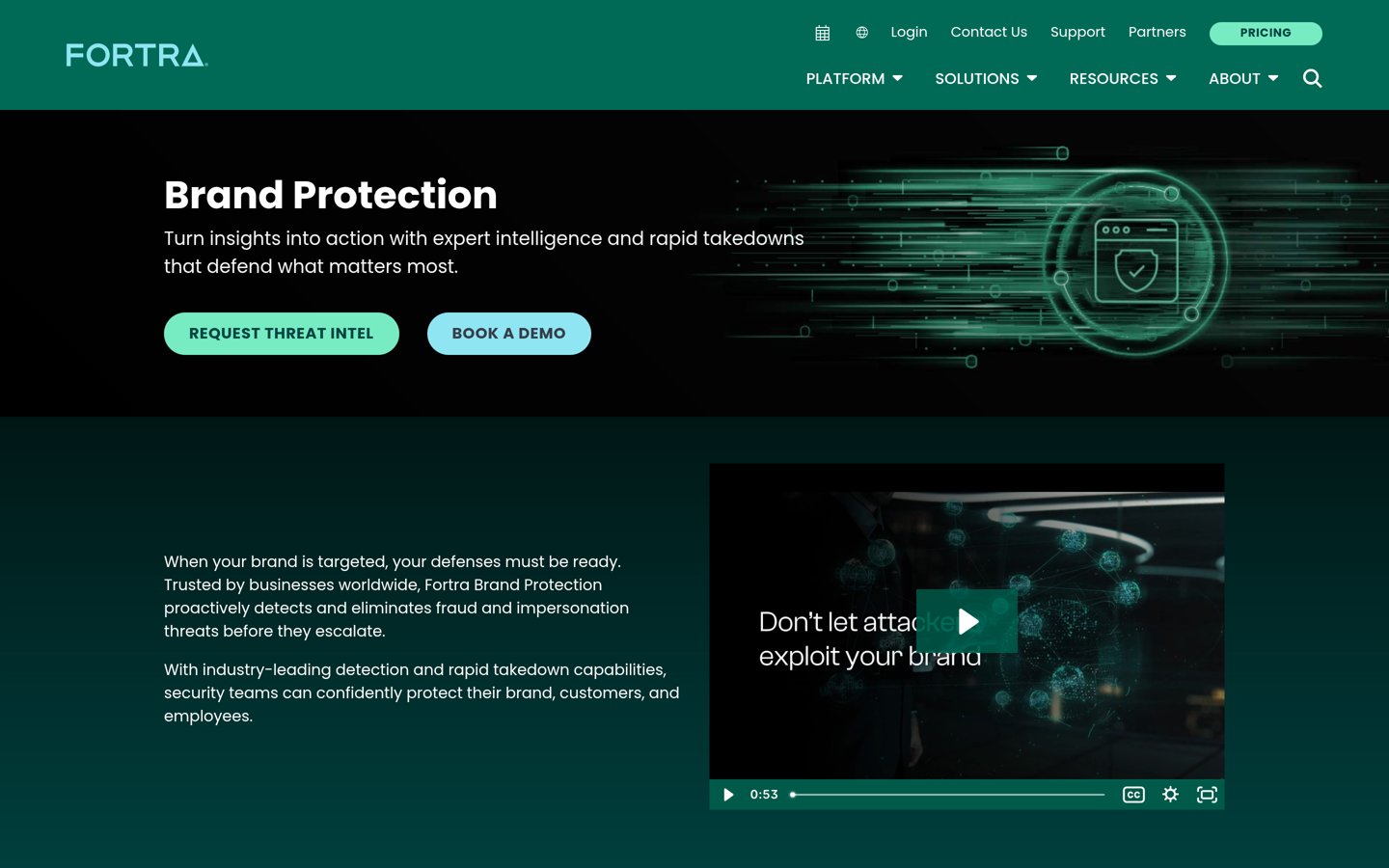
Fortra Brand Protection homepage, captured Nov 2026.
Fortra Brand Protection is a managed digital risk protection service built on PhishLabs, which Fortra acquired in 2021. It monitors phishing, fake domains, social impersonation and dark web threats, with timely, actionable alerts, and its brand experts handle takedowns with automated kill switches and API connections to hosts and platforms.
The trade off is cost and control. G2 reviewers call it expensive for smaller organizations, and reviewers mention limited reporting, a learning curve and, in one August 2026 review, slow takedowns. It suits large banks and regulated enterprises that want hands-off, analyst-managed takedowns.
What we like
Proactive monitoring across phishing, fake domains, social and dark web
Analyst-managed takedowns
Timely, actionable alerts
Customer logos include Citigroup, Scotiabank and Delta
Watch out for
Expensive for smaller organizations
Limited reporting
One August 2026 review reports slow takedowns
Pricing is by quote; formerly PhishLabs, part of Fortra since 2021Visit fortra.com
07
BrandVerity
4.4/5on G2 (19 reviews, checked Nov 2026)
PricingCustom/yr
Best for paid-search compliance
Founded2008
ParentPartnerize since 2020
Tiers100 to 1,000s keywords
Capterra5.0 from 15 reviews
brandverity.com
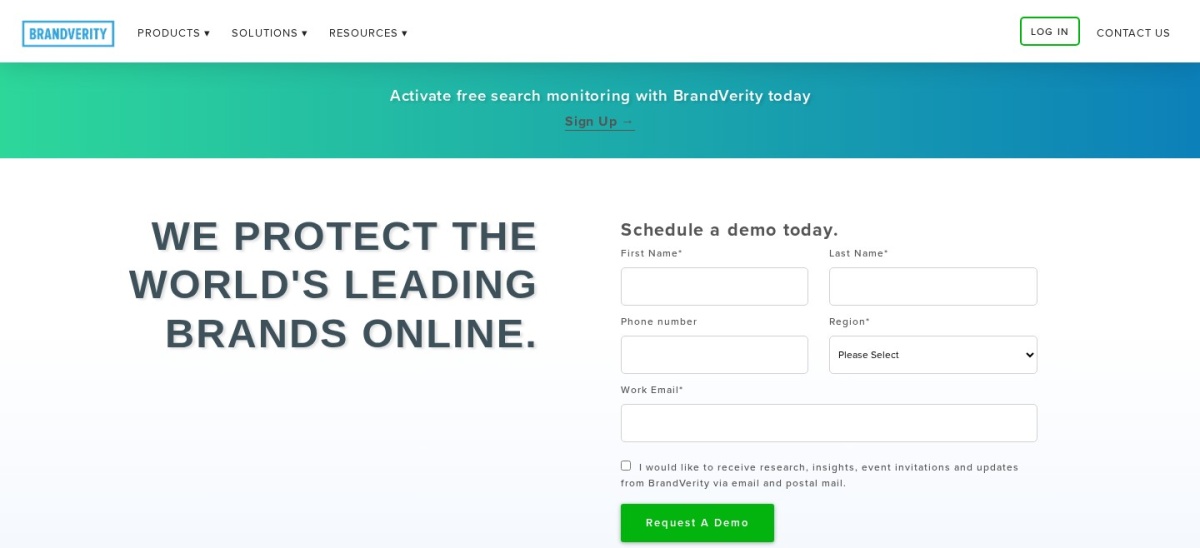
BrandVerity homepage, captured Nov 2026.
BrandVerity is a paid search and affiliate compliance specialist that does one thing: it watches paid search and affiliate marketing for brand abuse. It scans thousands of search results across locations daily, flags affiliates bidding on your branded keywords or violating terms, and helps you file bulk takedowns.
The trade off is narrow scope. Partnerize acquired BrandVerity in 2020, and it now sits inside the partnership automation ecosystem. Do not buy it expecting marketplace or social monitoring; that is not what it does. But if your brand protection problem is affiliates and trademark bidding on Google, nothing on this list does that job better.
What we like
Deep paid-search coverage across geographies
Bulk takedown workflows
Affiliate compliance focus
Capterra 5.0 from 15 reviews
Watch out for
Narrow scope, not a full brand protection suite
Small team
G2 rating rests on only 19 reviews
Pricing is custom; starts at about $1,500/month per a secondary comparisonVisit brandverity.com
What to look for before you buy
Match the tool to the threat. Marketplace counterfeits, phishing domains, paid-search abuse and social impersonation are different problems, and vendors specialize, so ask each vendor for a live detection test against your actual brand before you sign. If they will not run one, that tells you something.
Check the enforcement model. Some vendors charge per takedown or per analyst hour, which makes costs spike exactly when attacks spike, so unlimited or flat-fee enforcement models are easier to budget. Also ask who files the takedowns: automated systems are fast but can hit legitimate sellers, so human review on edge cases matters.
Clarify geographic coverage. China, Southeast Asia and Latin America have platform-specific enforcement processes, and if you sell there, confirm the vendor has direct filing access, not just monitoring. And check contract terms: most brand protection contracts run 12 months with auto-renewal, so negotiate the renewal cap and the exit data export up front.
Ask about ownership and roadmap. MarkMonitor moved to Com Laude in January 2026, BrandShield went through ownership changes as a listed company, and OpSec joined Crane NXT in 2024, so buyers should ask about roadmap continuity during evaluation.
How we chose
We started from the nine brand protection platforms in the rankite comparison, then kept those with a verifiable G2 or Capterra rating, and added MarqVision and Fortra Brand Protection, which have verified G2 ratings and are ranked in the same category by G2 and Red Points' own comparison.
Prices come from vendor pages and G2 listings checked on 24 November 2026. Nobody in this category publishes prices: every vendor here is quote-only, so all seven show Custom. Ratings and review counts come from G2 on the same day.
We left out Brand Protector, MarkMonitor, Tracer and OpSec Security because none has a verifiable G2 or Capterra rating. Brand Protector publishes $199 a month with a 7-day trial, but without a rating it cannot be ranked. No vendor paid for a place, and we do not claim hands-on testing for this list.
How to choose brand protection software
Start with your main threat, then test detection against your own brand before you sign.
Match the tool to your main threat. Marketplace counterfeits go to Red Points or MarqVision; phishing and impersonation to BrandShield or Fortra; trademarks to Corsearch; paid search to BrandVerity.
Ask for a live detection test on your brand. Ask each vendor for a live detection test against your actual brand before you sign, and check geographic coverage where you sell.
Check the enforcement model and who files takedowns. Unlimited or flat-fee enforcement is easier to budget than per-takedown billing, and human review on edge cases protects legitimate sellers.
Negotiate the contract up front. Most brand protection contracts run 12 months with auto-renewal, so negotiate the renewal cap and the exit data export before signing.
FAQ
What is the best brand protection software?
MarqVision is the best brand protection software for marketplace counterfeits, with a 4.9 G2 rating and AI detection across more than 1,500 marketplaces. Red Points suits high-volume counterfeits with unlimited takedowns.
What does brand protection software do?
Brand protection software finds and removes abuse of your brand online: counterfeit listings, fake domains, phishing sites, social impersonation, rogue apps and affiliates bidding on your trademark.
How much does brand protection software cost?
Nobody in this category publishes prices: every vendor here is quote-only, so you negotiate an annual contract. Brand Protector, which is not on this list, publishes $199 a month with a 7-day trial.
What is the difference between Red Points and BrandShield?
Red Points leads on marketplace counterfeits with unlimited takedowns and a flat-fee model, while BrandShield leads on phishing, impersonation and fake domains with AI clustering of related threats.
Which brand protection software is best for Amazon counterfeits?
Red Points and MarqVision are the strongest picks for Amazon counterfeits, with unlimited or high-volume takedowns across marketplaces. Brand Protector also targets Amazon sellers but has no verifiable G2 or Capterra rating.
Does brand protection software remove counterfeit listings automatically?
Red Points files takedowns automatically with no cap on volume, while Brand Protector keeps a person in the loop to approve each takedown before it is sent. Automated systems are fast but can hit legitimate sellers, so human review on edge cases matters.